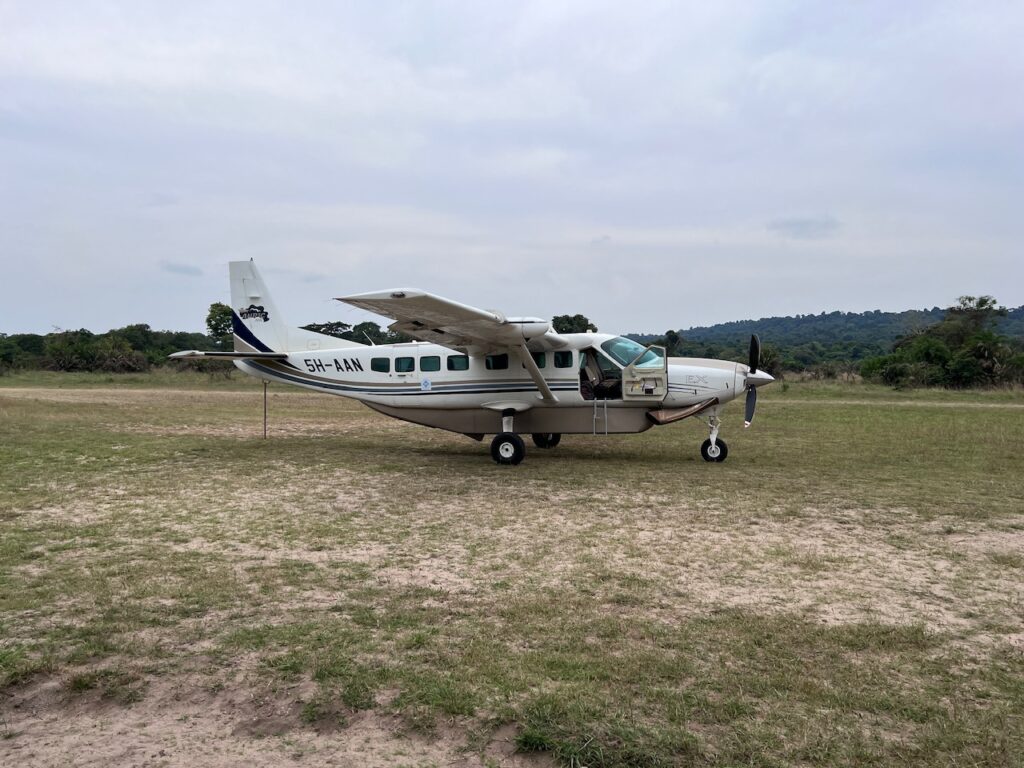
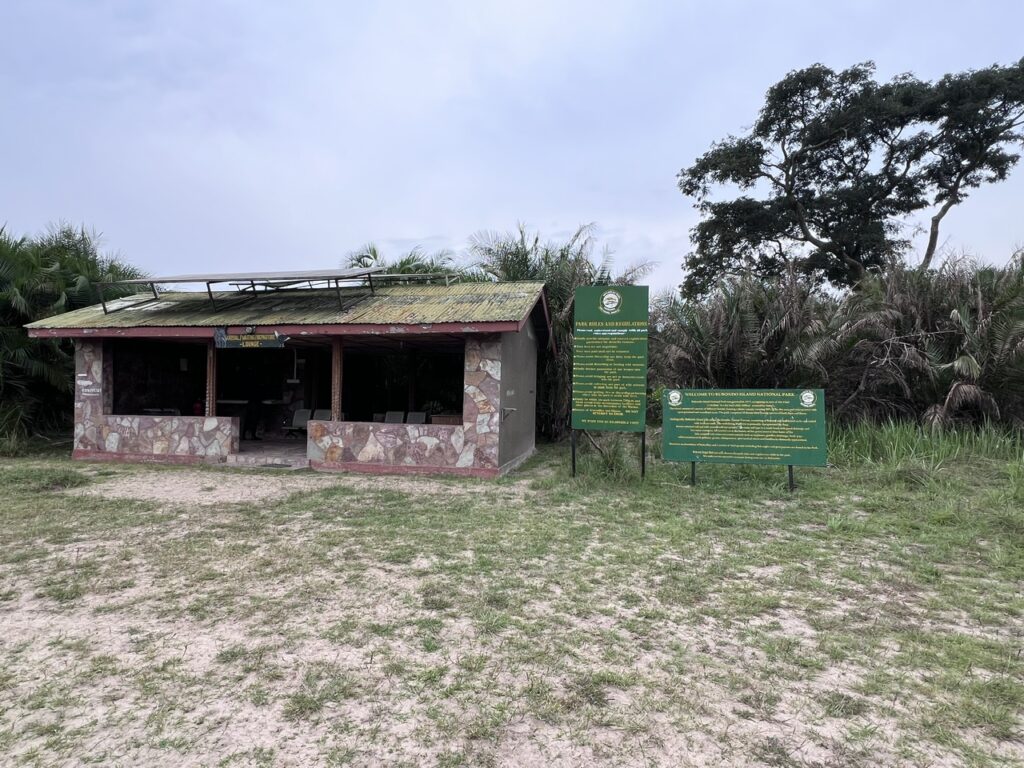
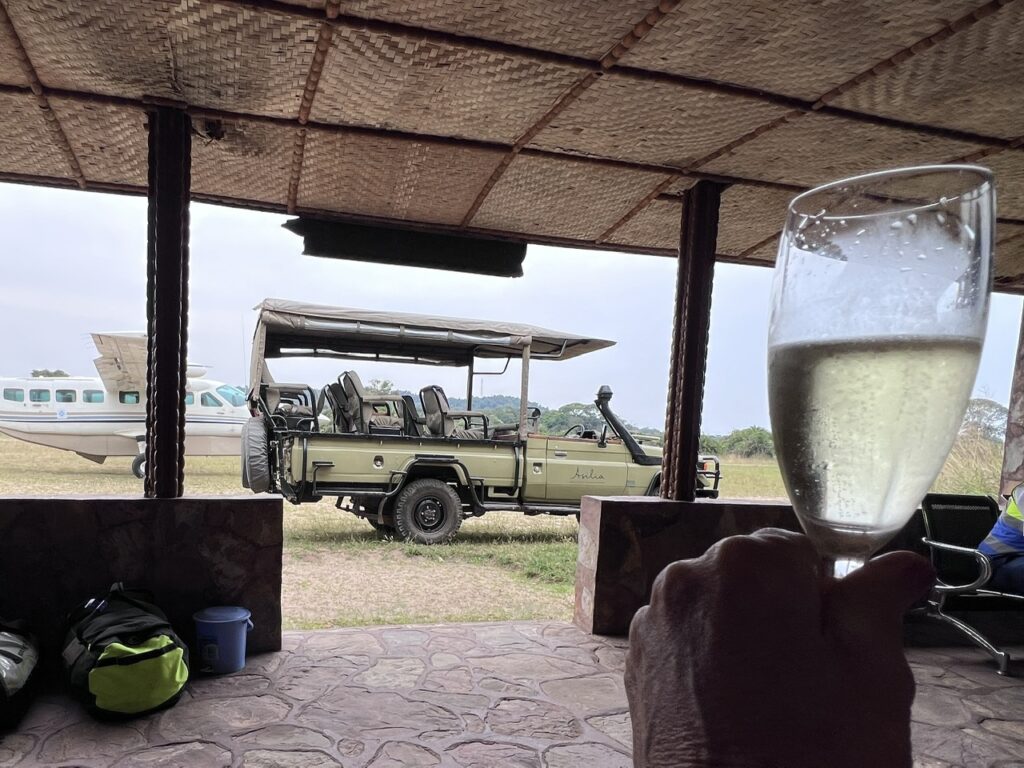
We land at the tiny landing strip on the lush island of Rubondo. The island is uninhabited by humans today, with the original Zinza tribe being resettled to the mainland in the 1960s. 80-90% of the island remains untouched forest. We are shown to a little waiting area and before long a vehicle arrives to transport us to our accommodation, but before we do so a cold box is unloaded and we are served champagne and refreshments. What a lovely welcome!
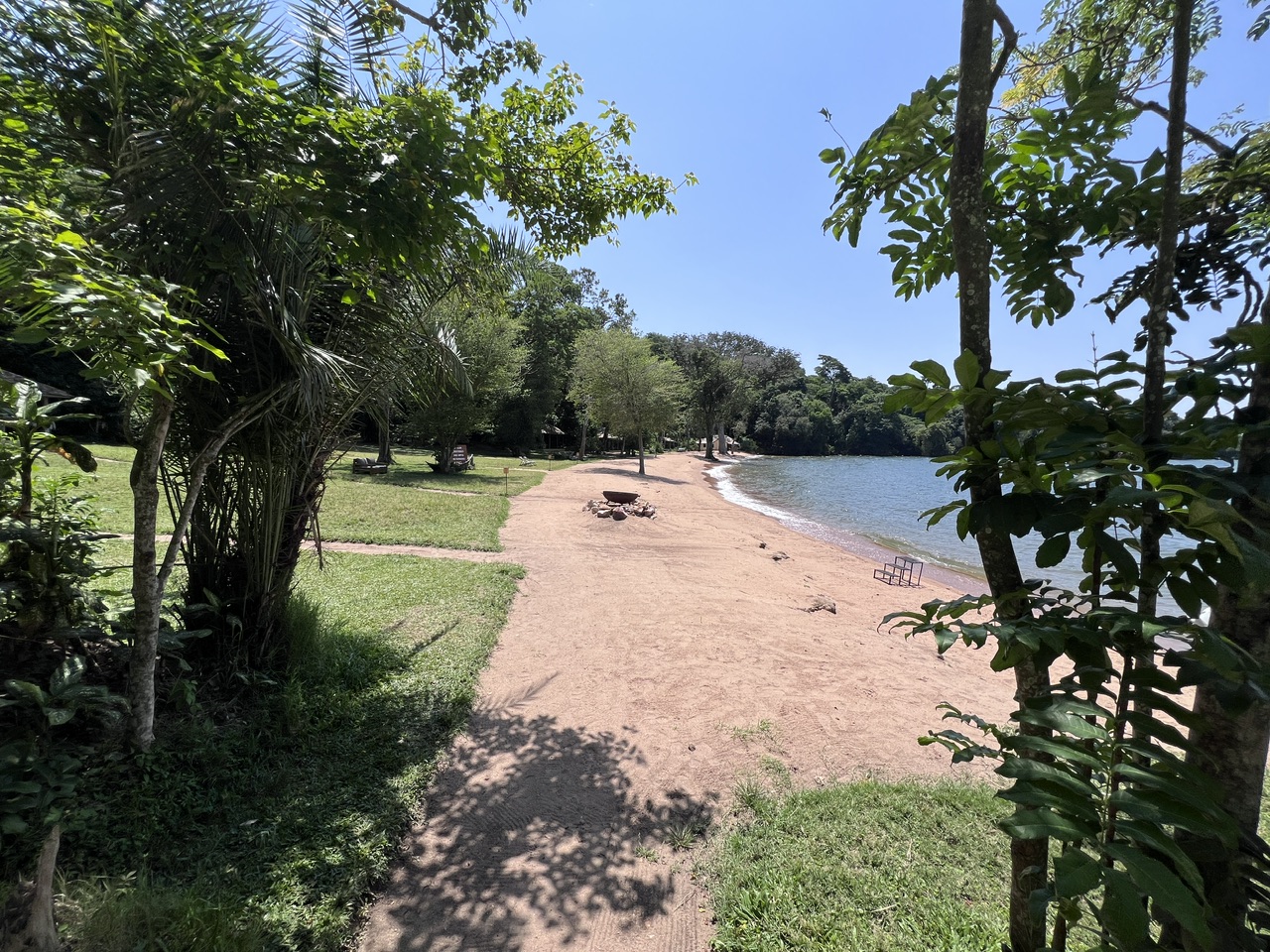
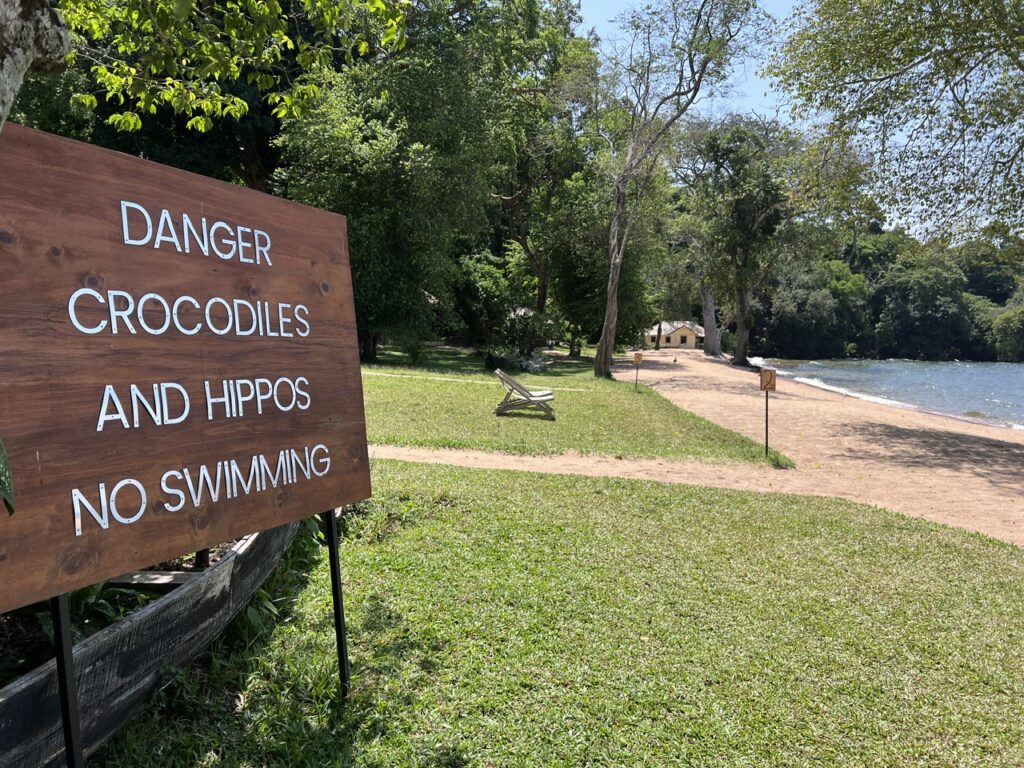
The drive to Rubondo Island Camp is a short one and the location is just stunning, being set on a beautiful sandy bay with immaculate green lawns and just eight guest cottages along the shoreline. However, the sign makes it very clear that this is not an ordinary beach and staying alert is advisable.
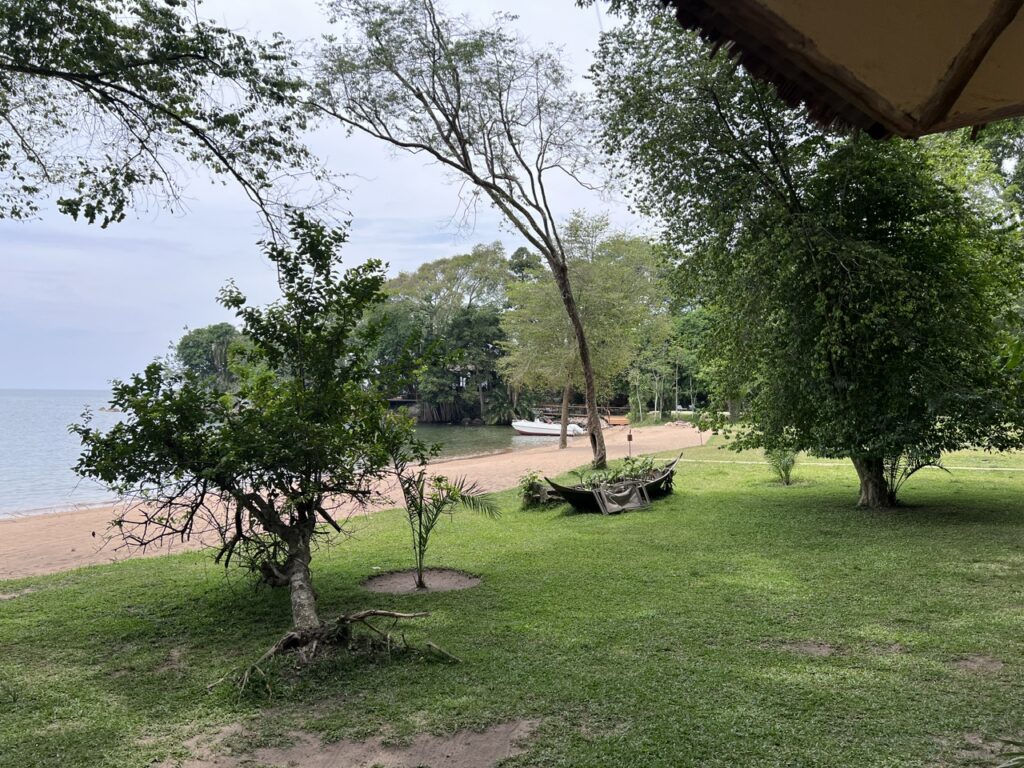
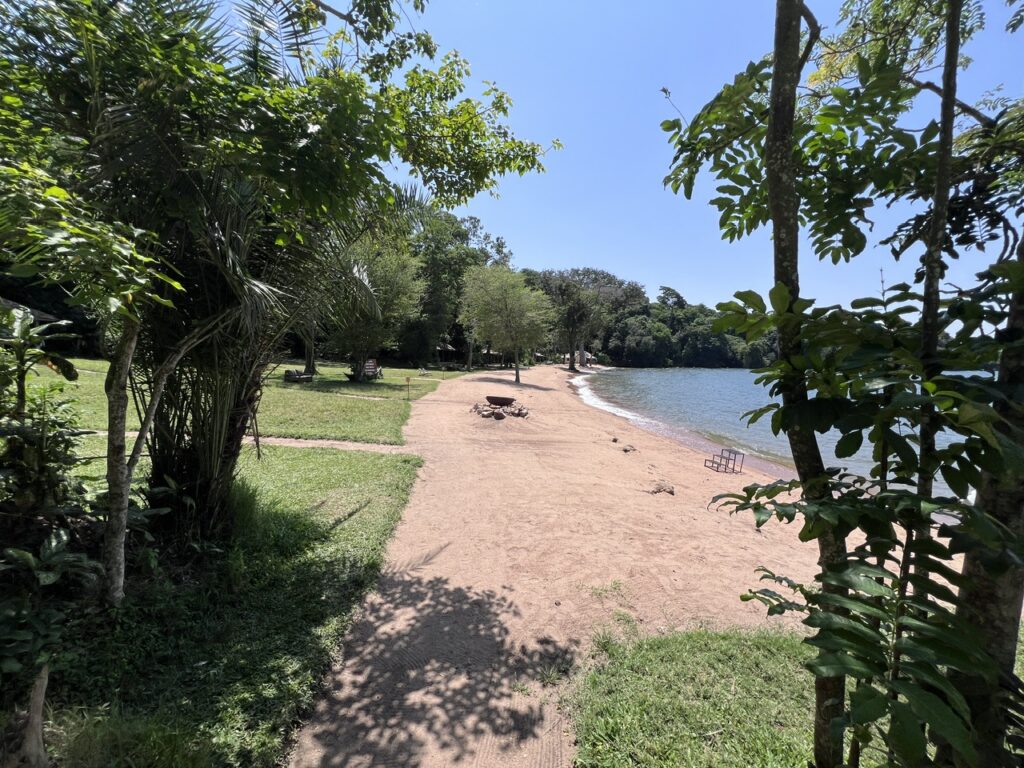
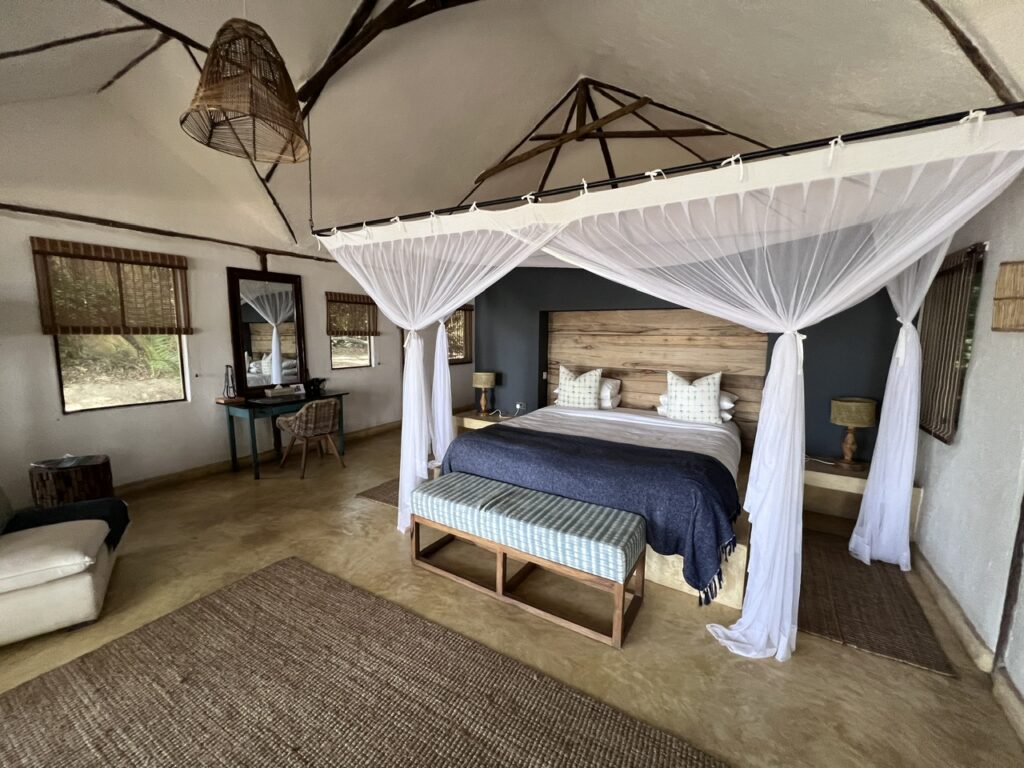
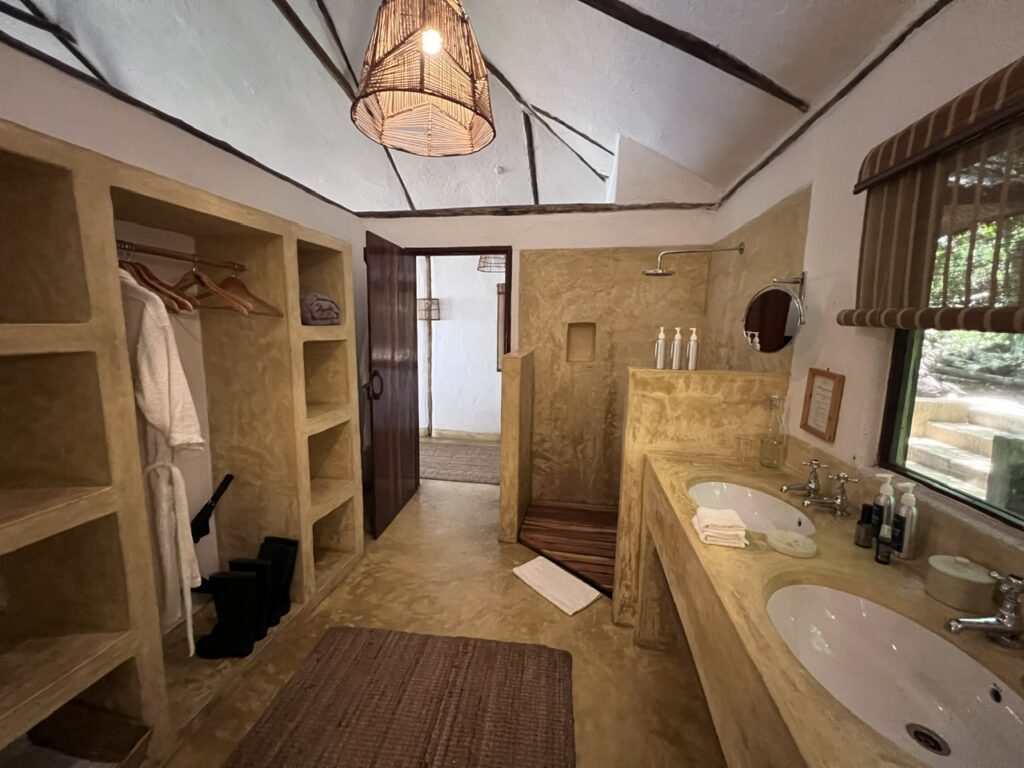
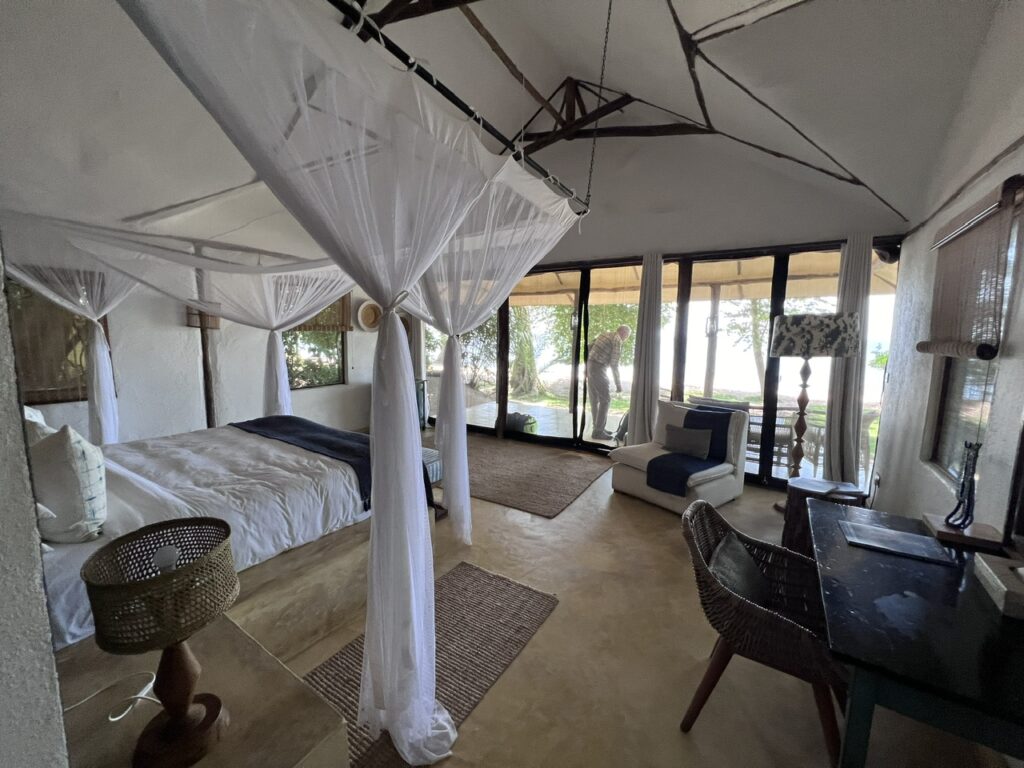
Our room is very comfortable with a large verandah. An idyllic haven to relax in.
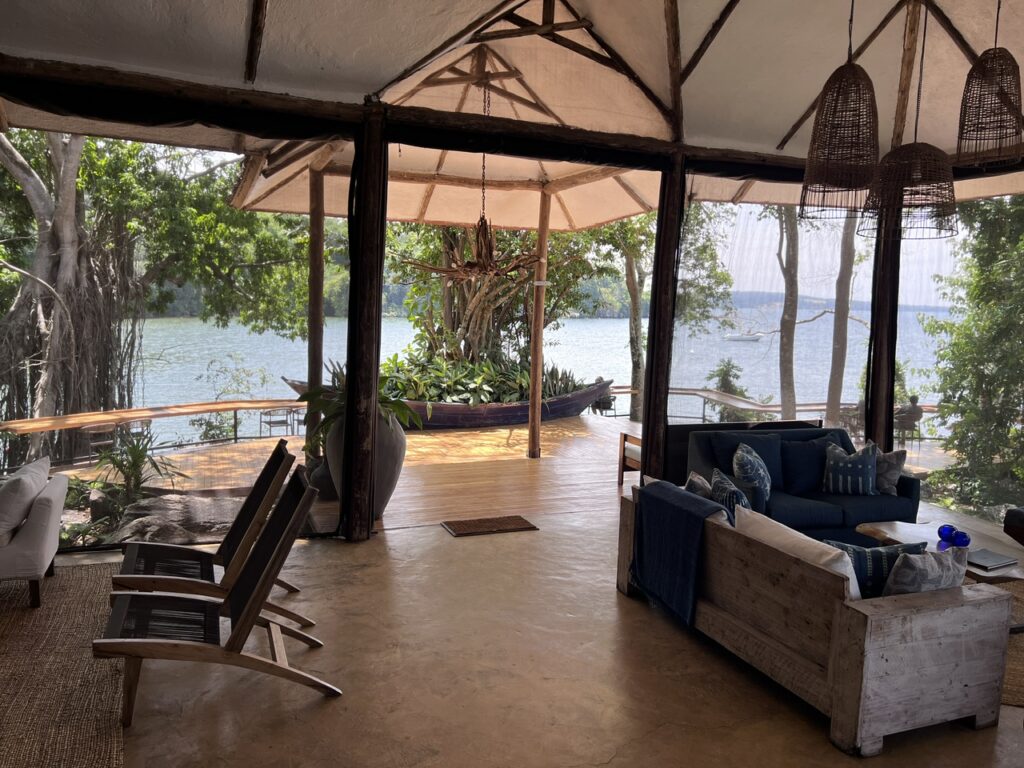
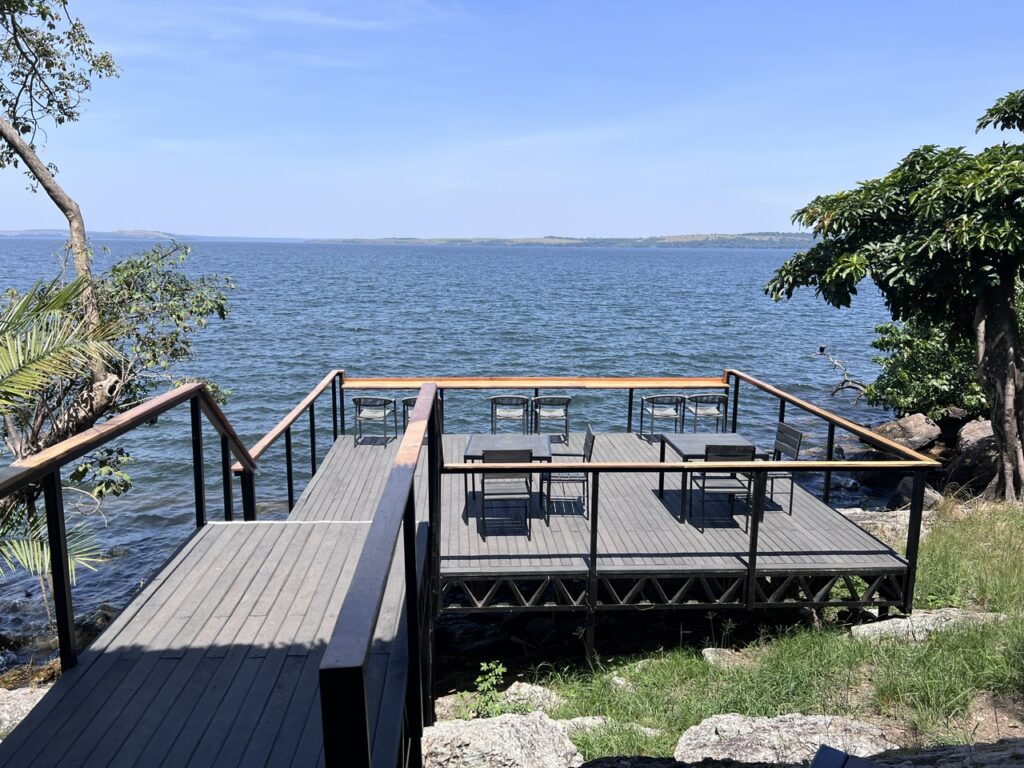
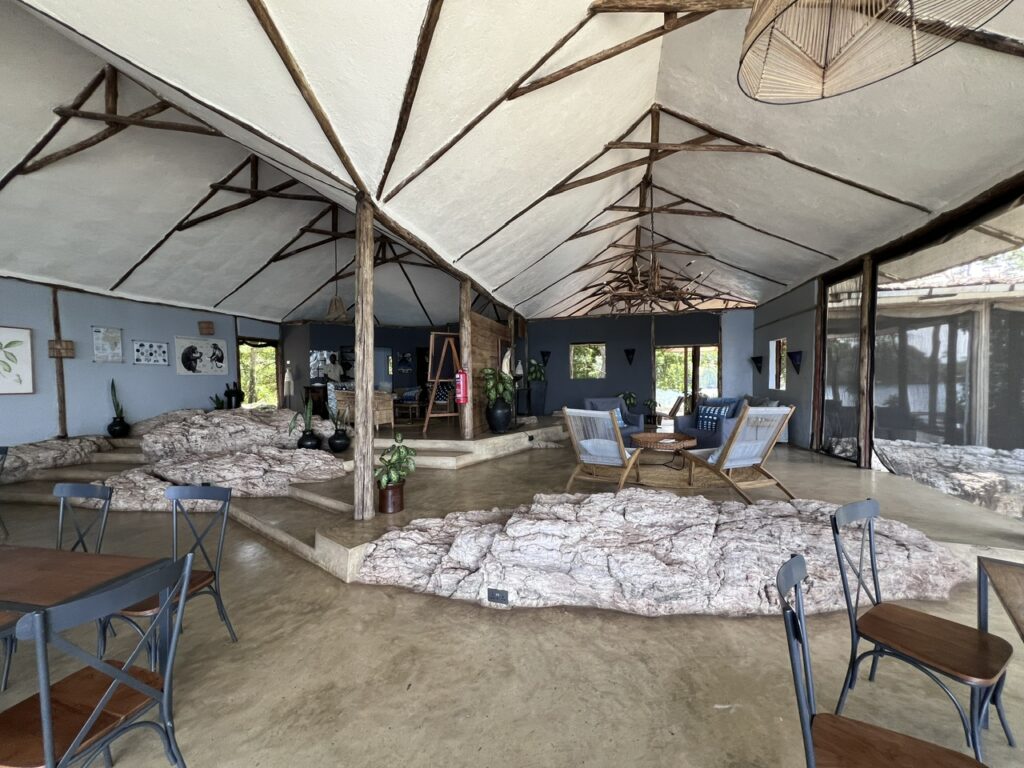
We freshen up then head for lunch in the main building. It is very cleverly designed and built into the rocky headland. There is decking all around the building with bar type seating along the edges and fabulous views from wherever you are sitting.
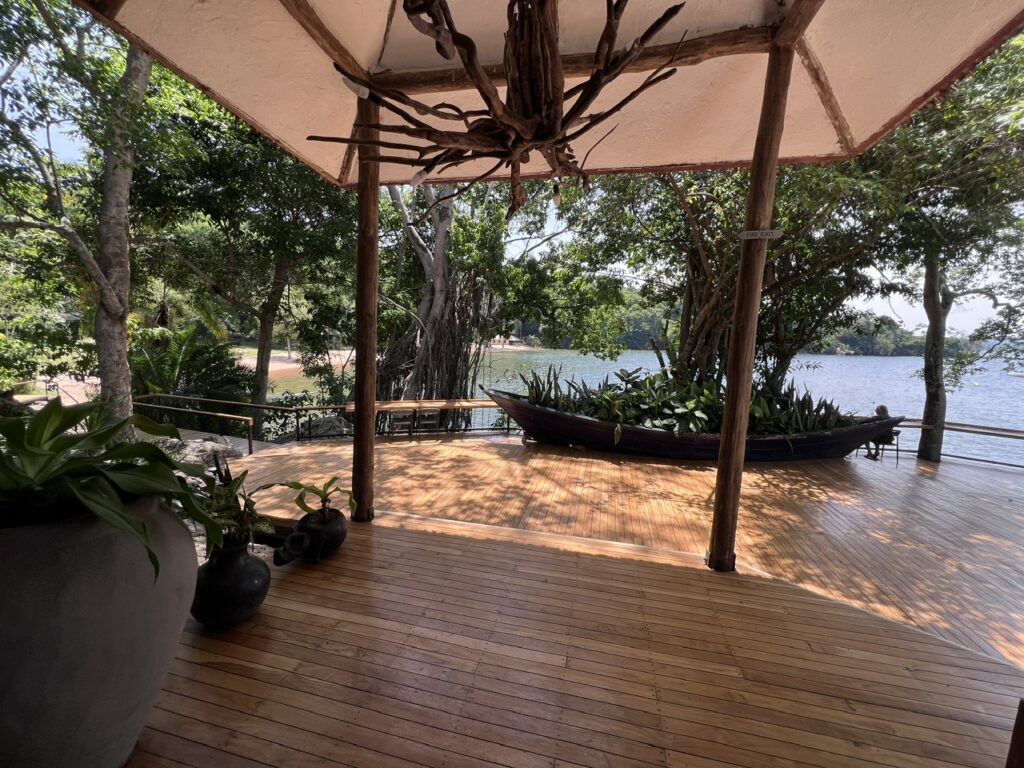
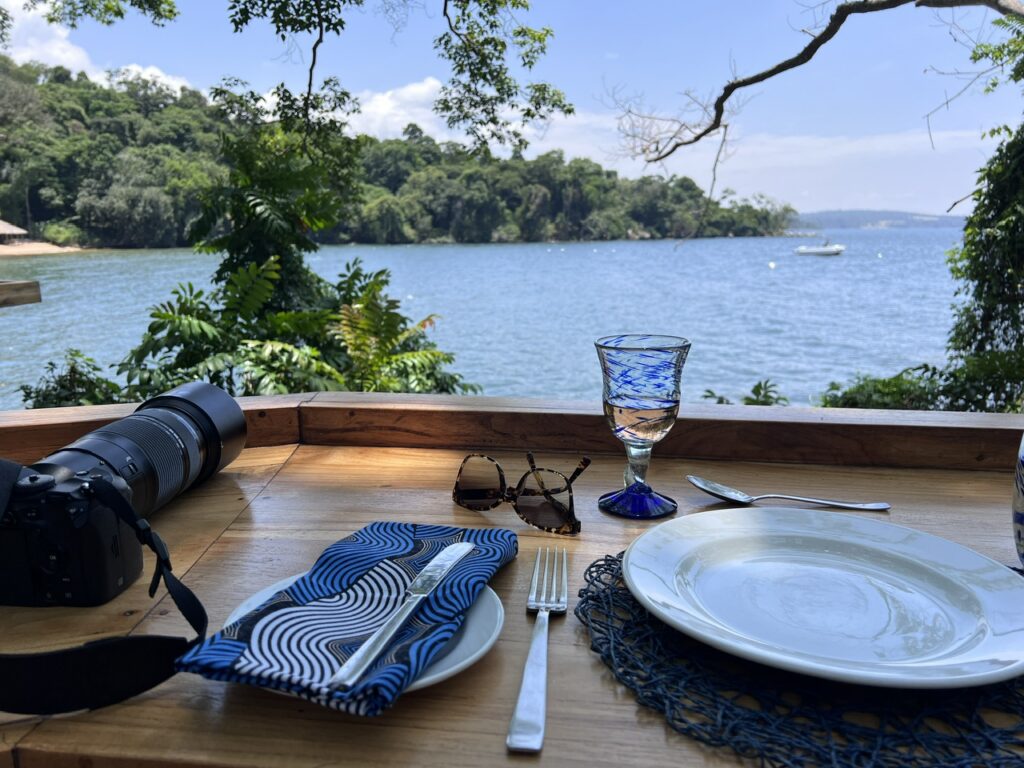
We are seated under the trees and looking out over the beach. Chilled rose is poured into our glasses and we enjoy a tasty lunch.
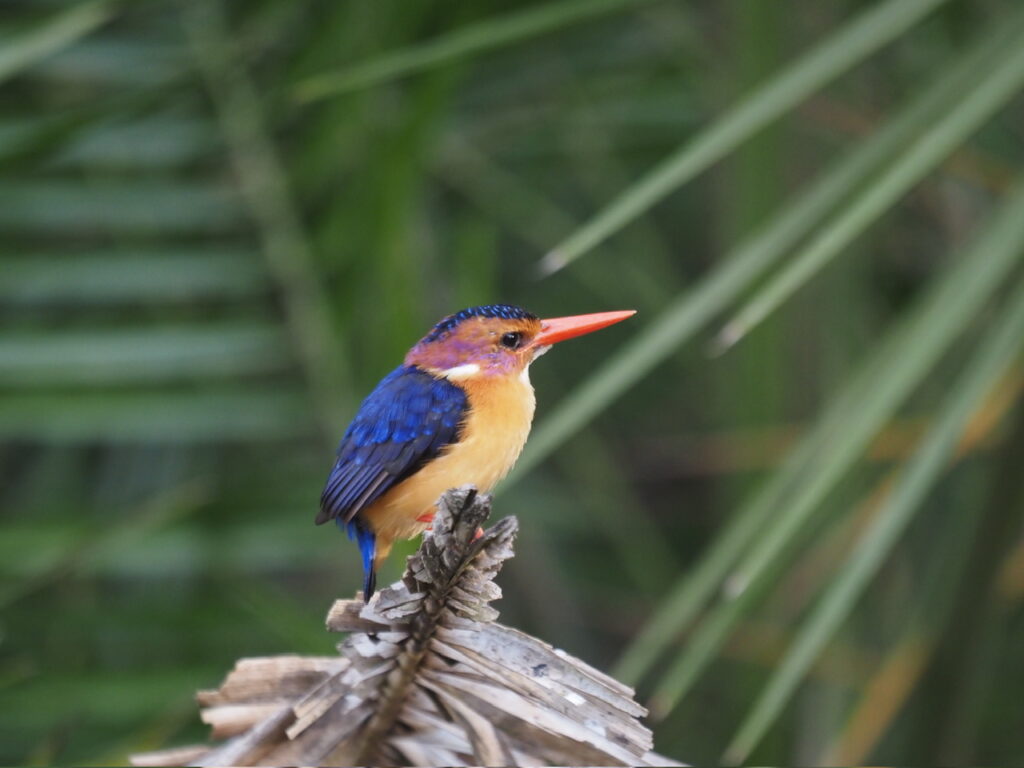
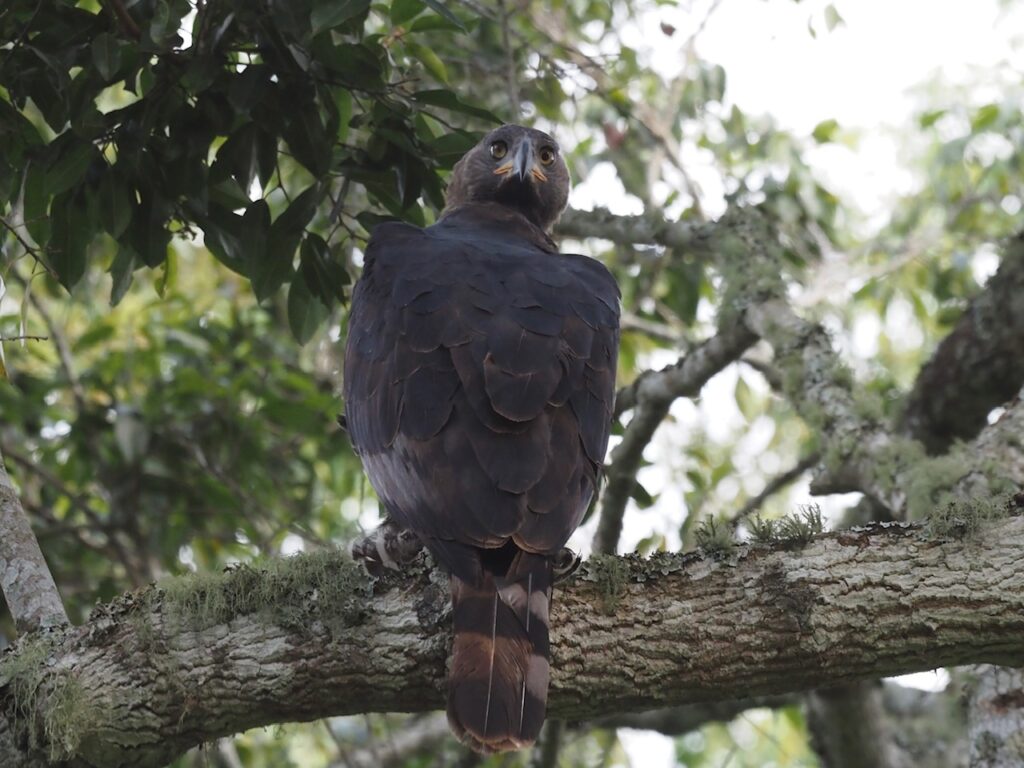
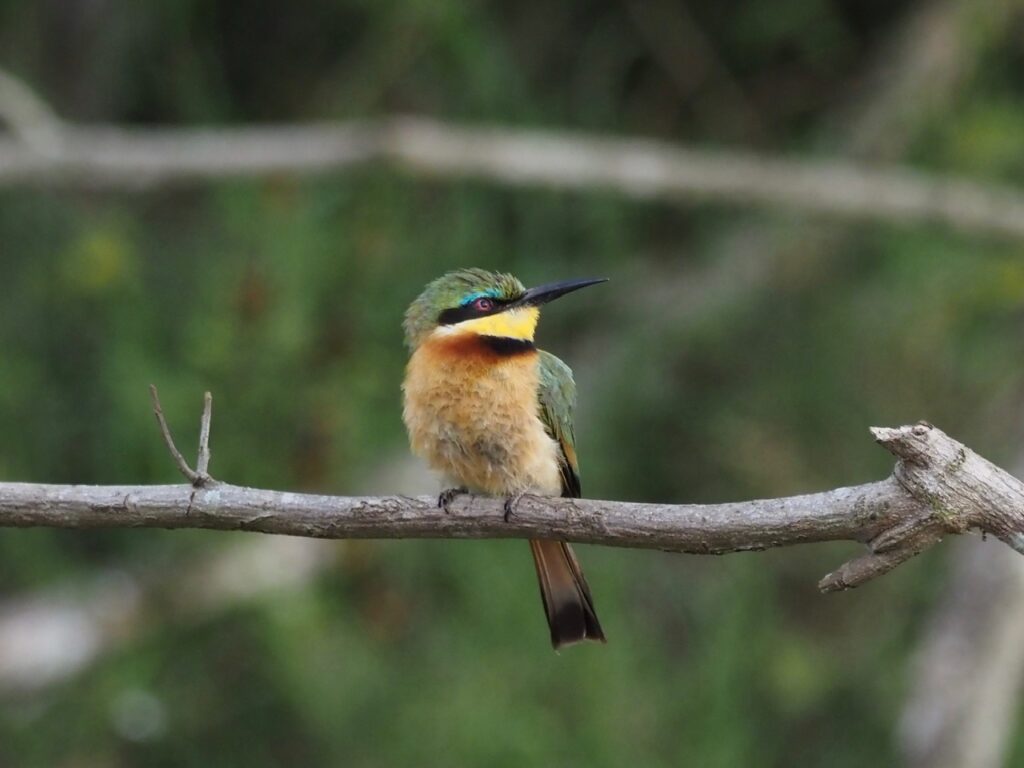
At 16.30 we head out for a drive. The road is a dirt track and very, very rutted and pot-holed on the steep slope out of the camp. It’s quite a bumpy start but the road soon flattens out. We drive at a leisurely pace, eyes peeled for wildlife. The island is small yet boasts nearly 300 recorded species of birds. We start well with a Pygmy kingfisher, a crowned eagle and a little bee-eater.
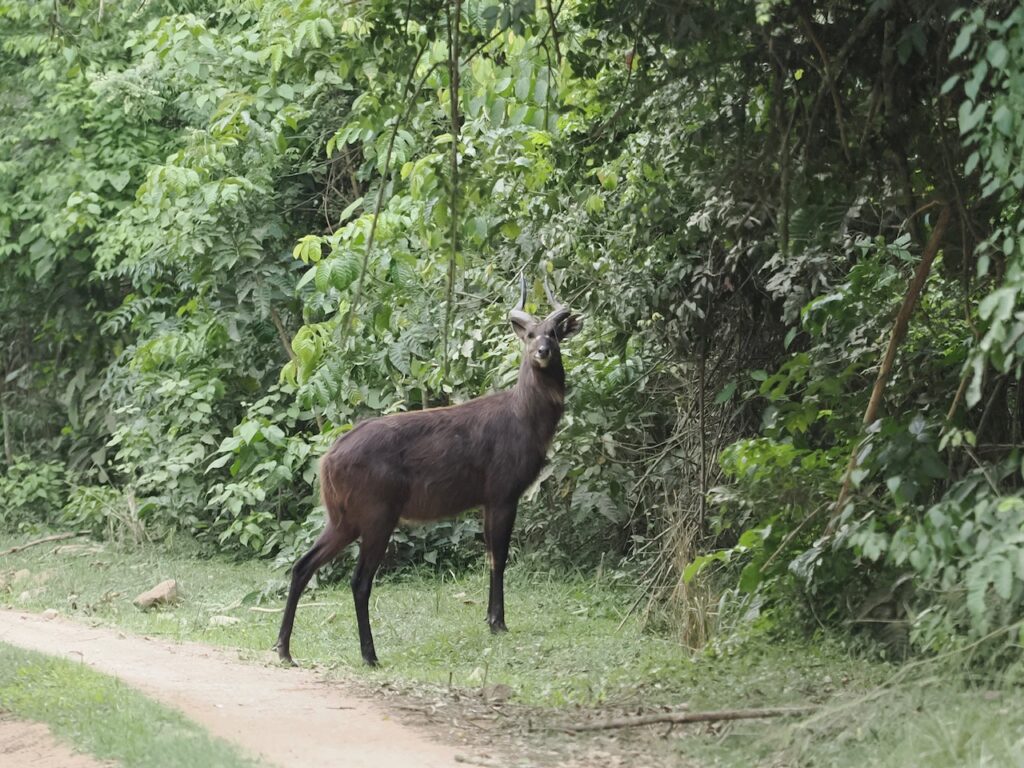
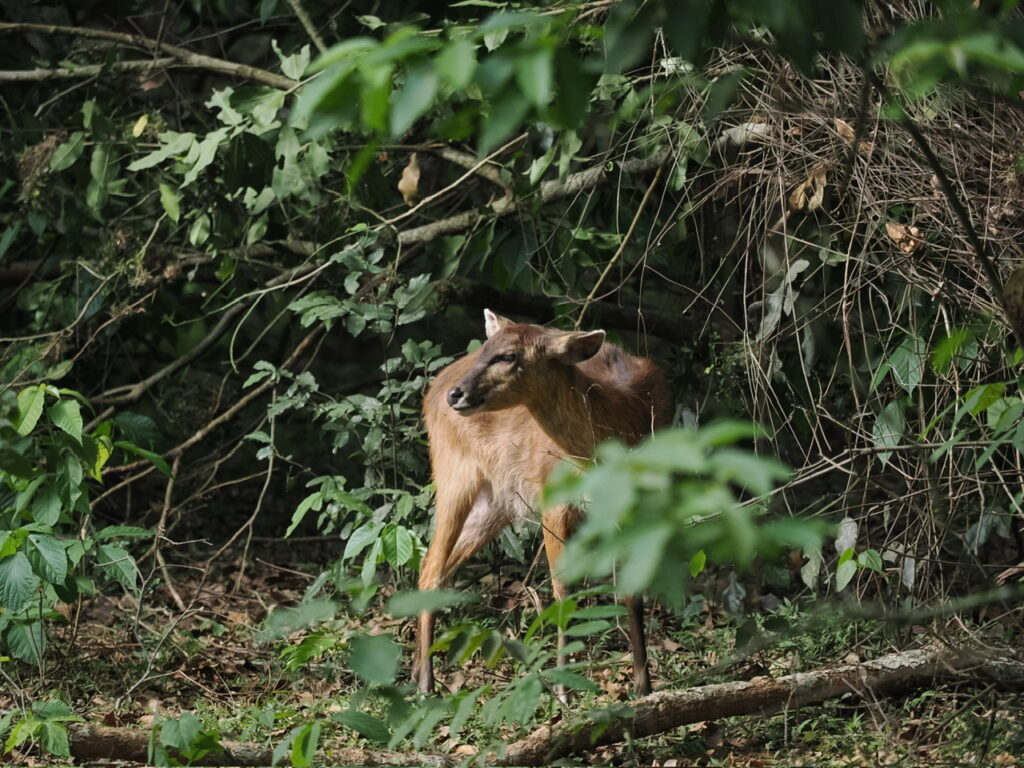
The mammals are not to be outdone though and we also see both a male and female of the shy and elusive sitatunga.
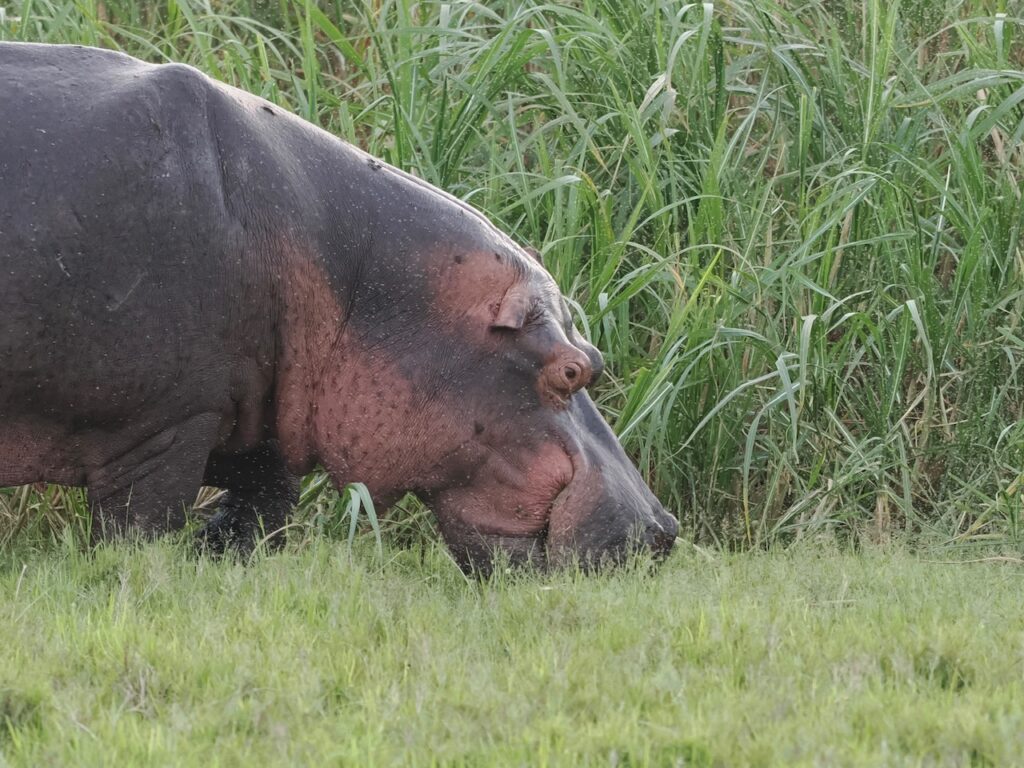
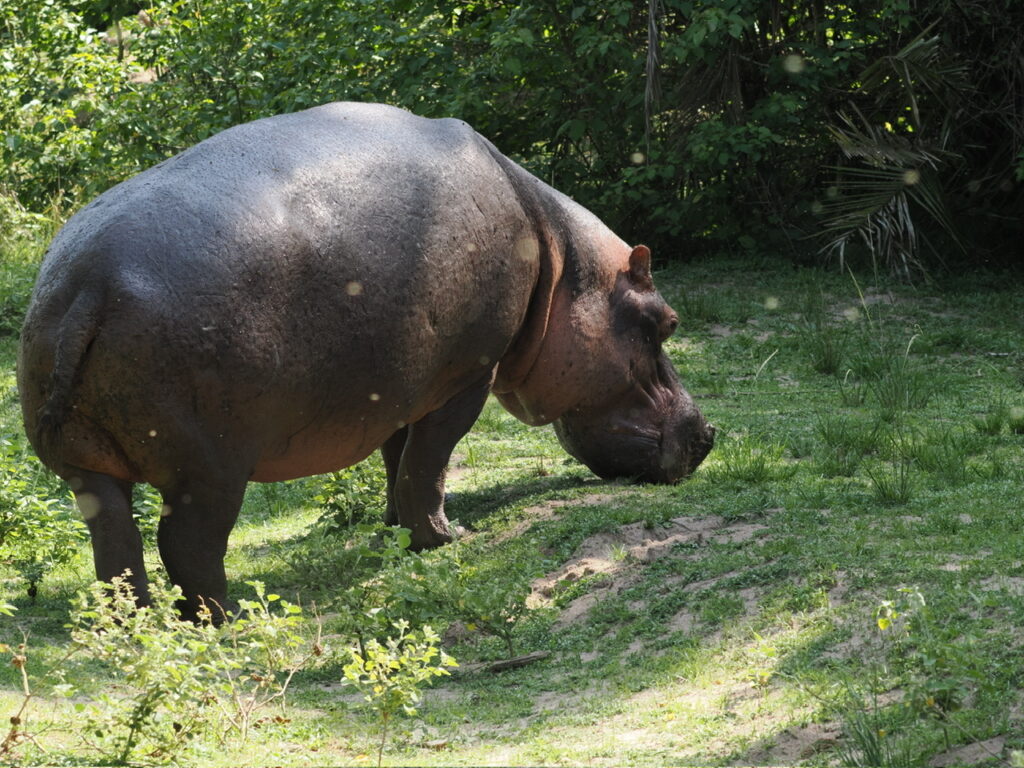
Eventually we arrive at a large clearing by the side of the lake. A super place to watch the sunset. The variety of bird species is astonishing and I am not quite sure where to point my camera. I start with a large hippo who is happily grazing despite being engulfed by a myriad of small flies. They are not midges though and we do not get bitten.
Then I concentrate on the abundant birdlife.


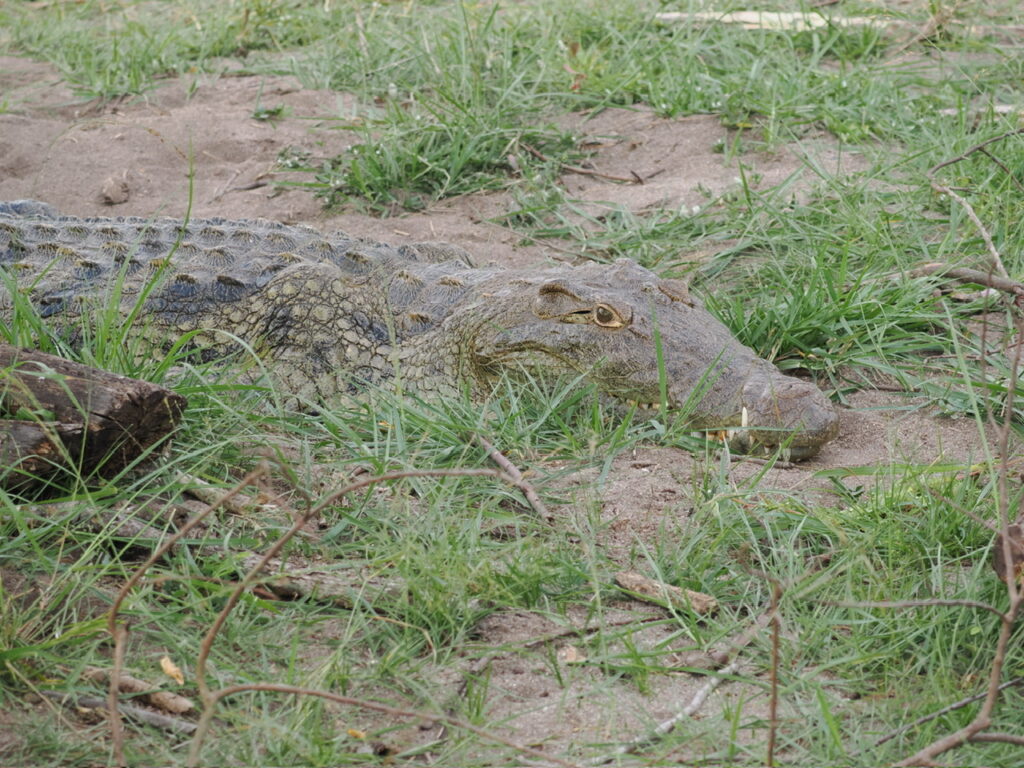
There are lots of crocodiles swimming in the lake and I also notice a rather large one not far away from where I am standing. He is pretty camouflaged. Note to self – look carefully before wandering around!
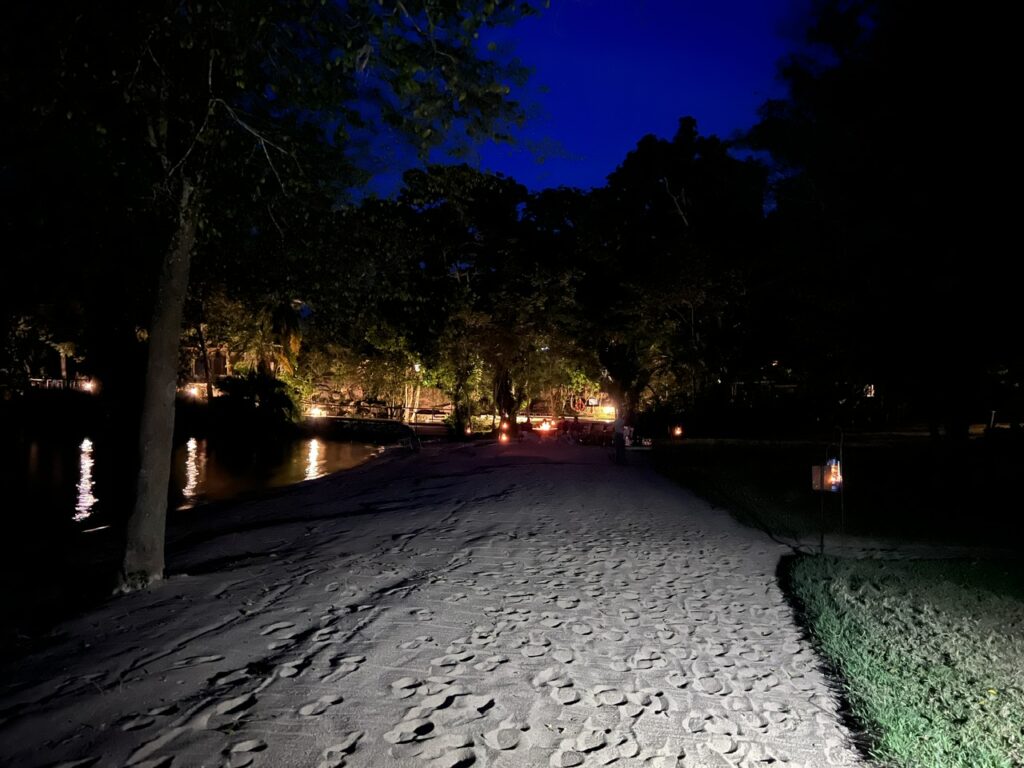
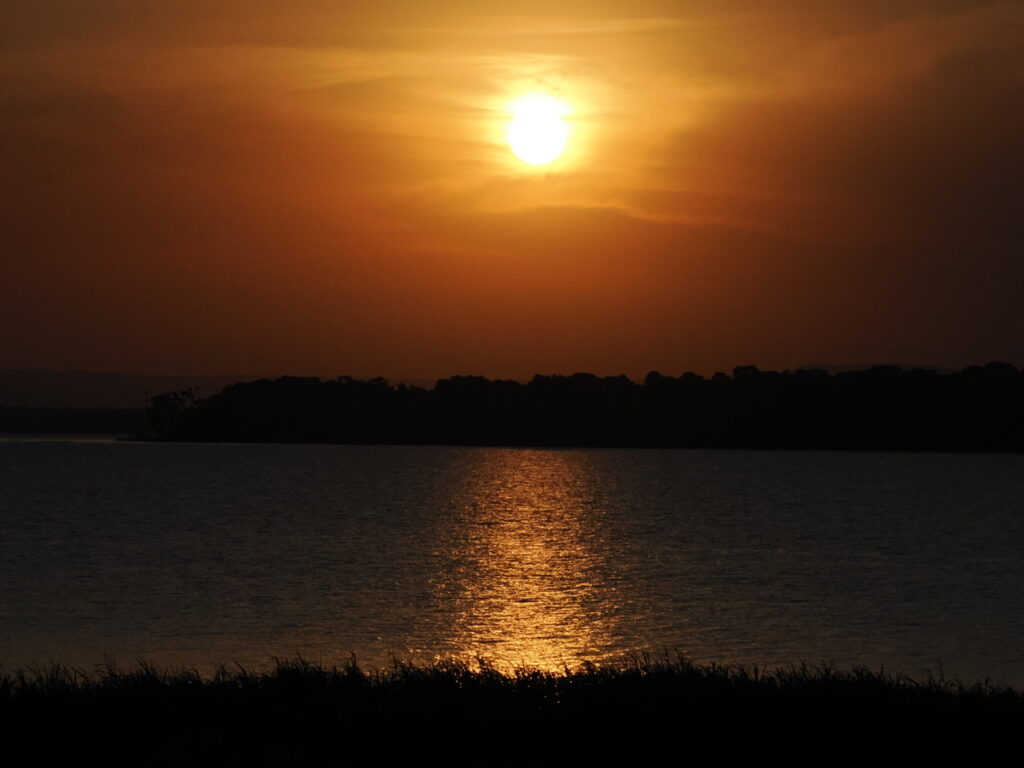
It will soon be dark so we had back for sundowners which have been setup on the beach.
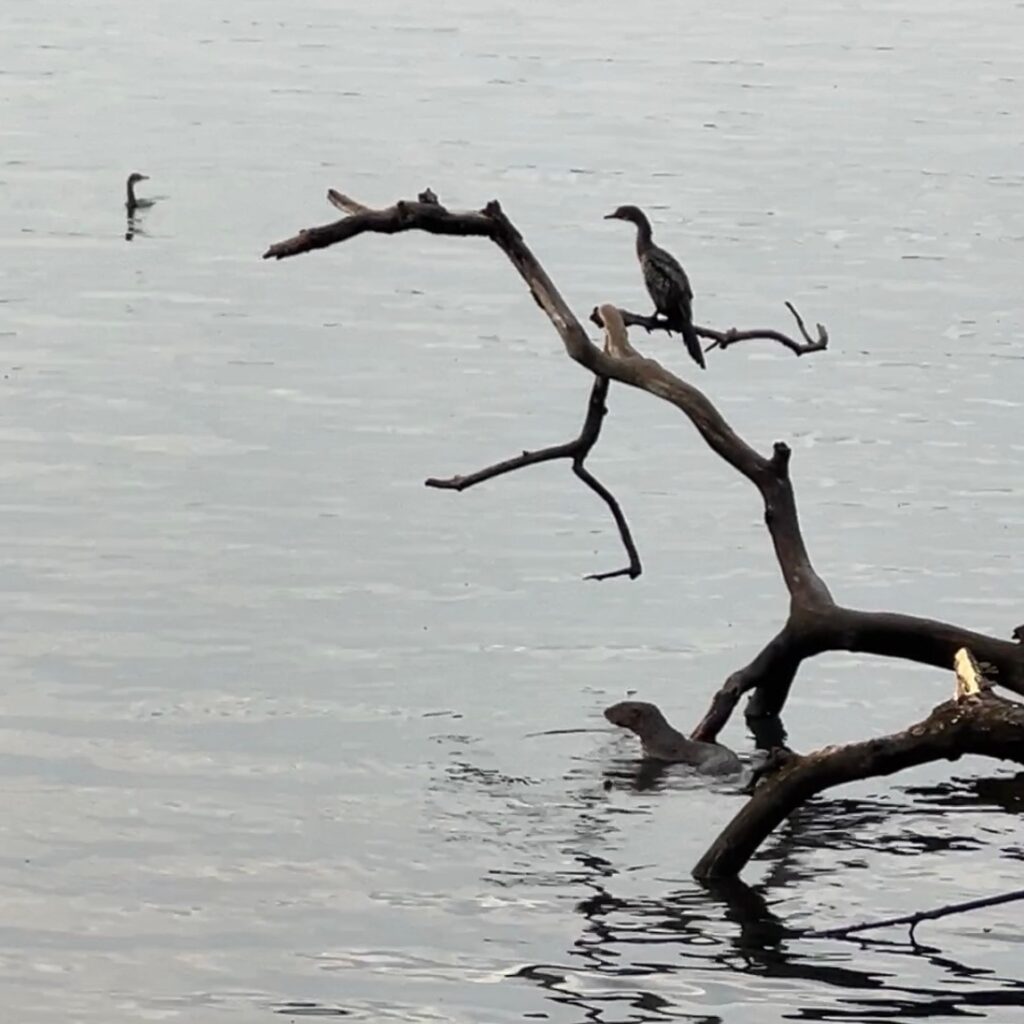
Breakfast is served on the deck overlooking the lake. Vervet monkeys scamper over the rocks on the shoreline below us, foraging for food. We are surprised and delighted to see a family of otters swimming close by and also on the hunt for their breakfast. I did not have my camera with me but captured some video with my phone when one of them surfaced. I’ve taken a screen shot to prove we saw them.
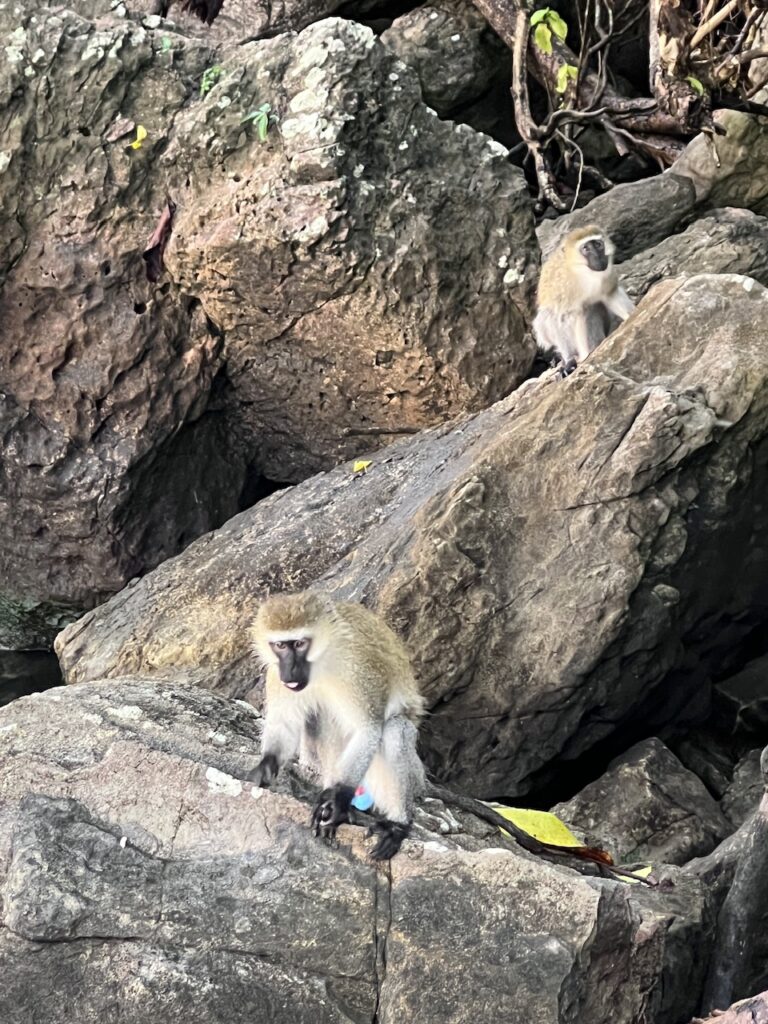
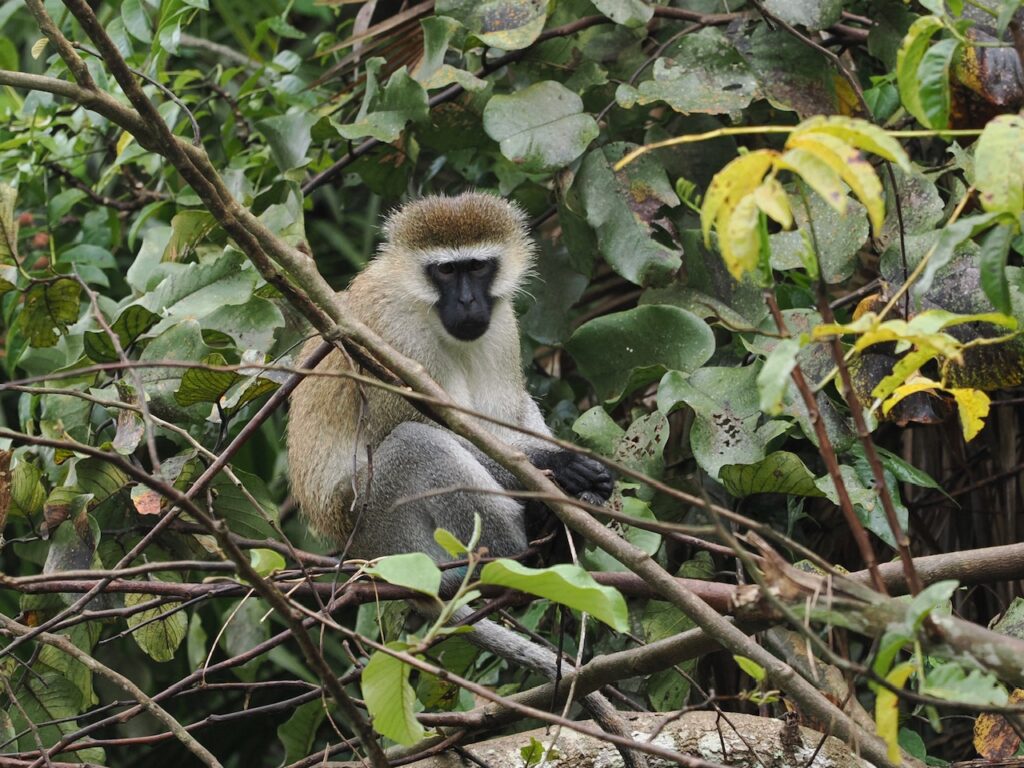
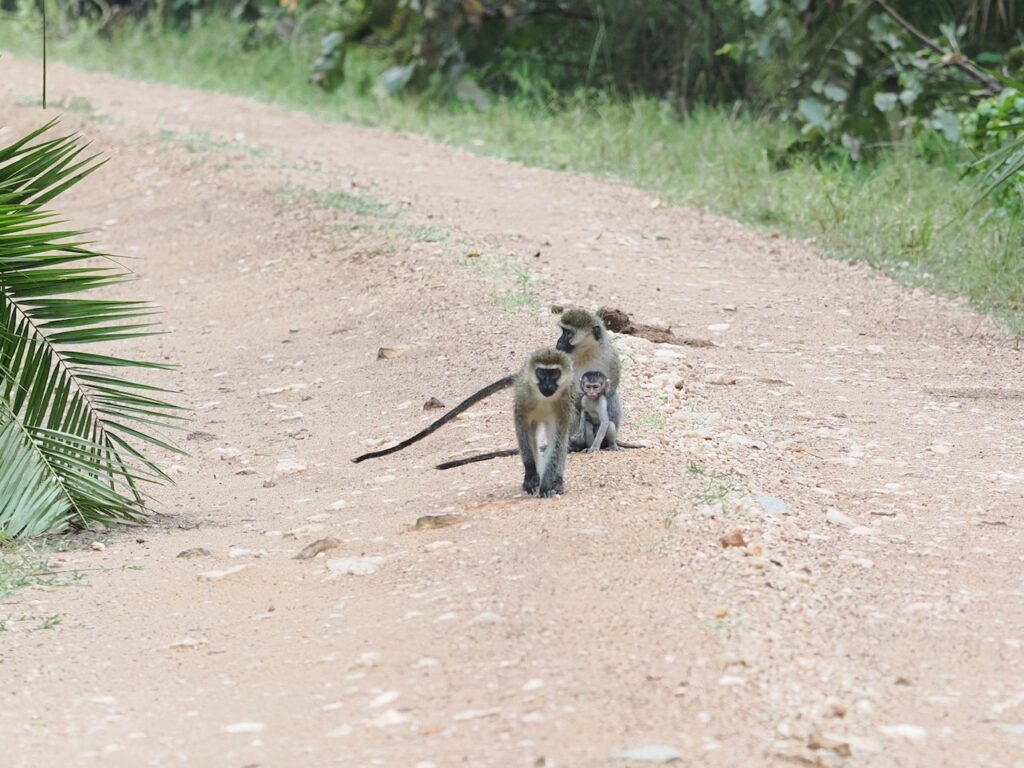
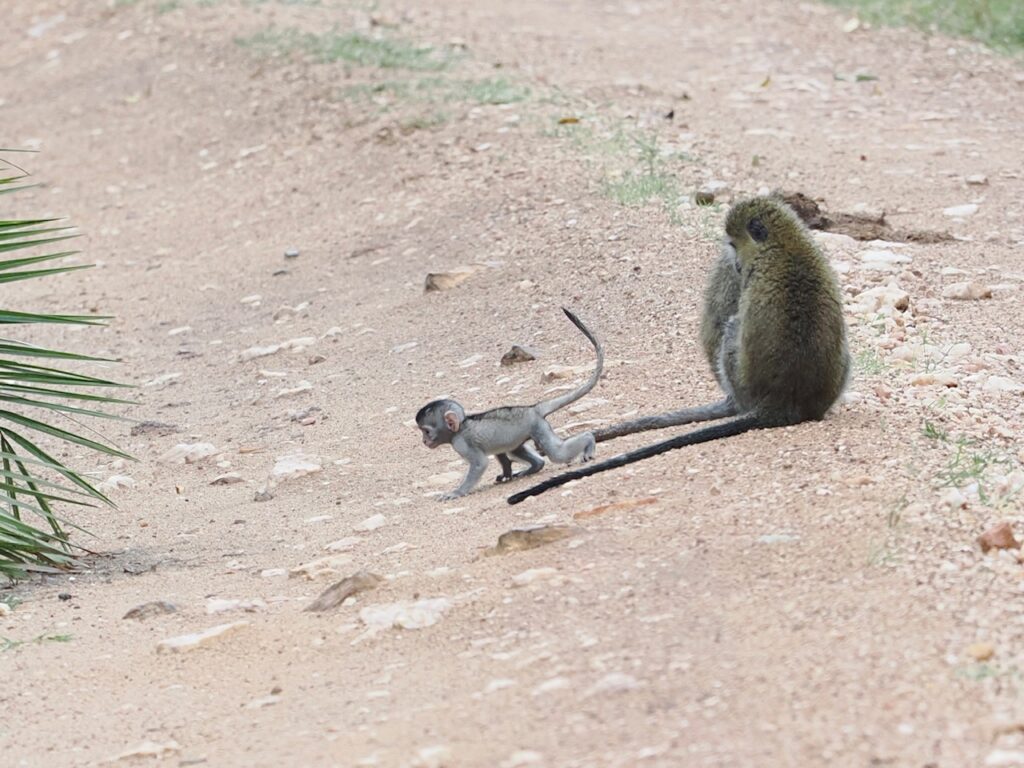
Today is rather exciting. We shall be trekking through the jungle in the search for chimpanzees. 16 chimpanzees were introduced in the 1960’s from European zoos and circuses and there are now believed to be between 60-80 chimpanzees living wild in the forest. They are not fully habituated to humans yet and visitors are encouraged to engage in the habituation process. Trackers have been sent out to try and locate the chimps. We are told they are very distant. Accordingly we set off with little hope of a successful encounter. En route we stop to watch a family of vervet monkeys wth a very cute baby.
We drive to the north of the island and park in a clearing. Here we wait while the trackers try to gain sight of a chimpanzee. We are not feeling particularly optimistic and having waited for the best part of an hour, we are delighted to see two trackers returning to tell us that the chimps have been found, but that we will have a long hard trek to access them. We quickly gather our kit and walking poles and set off.
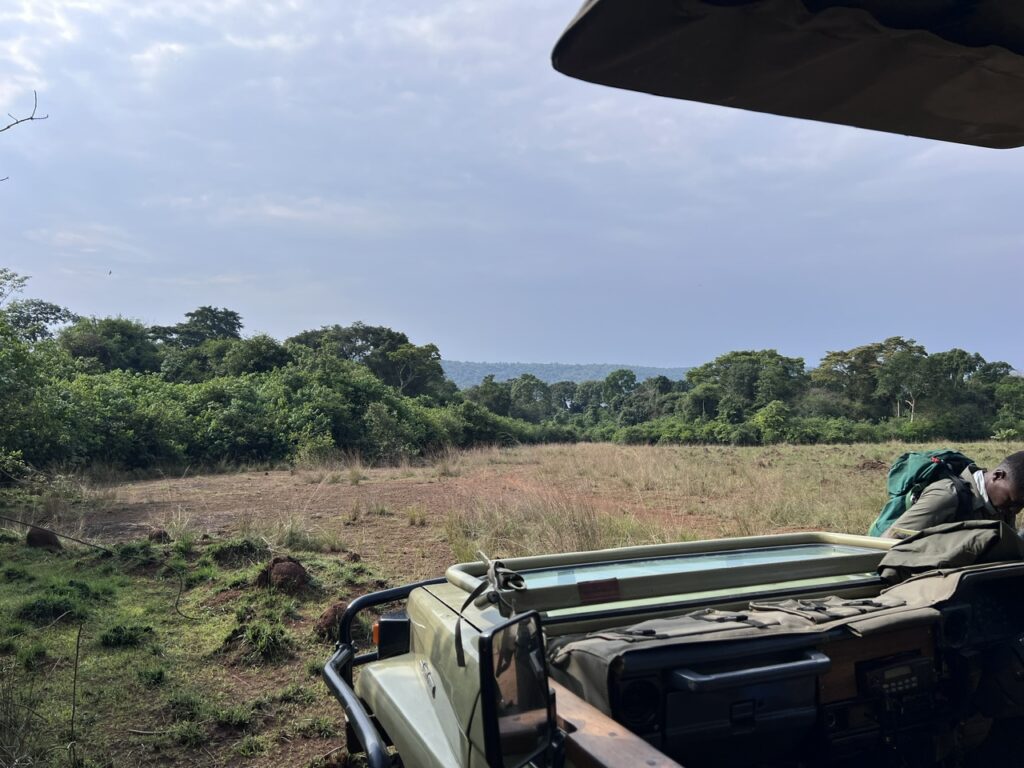
Our party comprises the two of us, our guide, a ranger with a rifle and two of the five trackers, who have returned to guide us to the chimps. Initially the going is easy on a rough track, but before long we are scrabbling up steep and banks. The trackers set a fast pace. This is definitely more hardcore than the gorilla trek. Chimpanzees are very mobile and speed is of the essence. The scrub below the trees is dense and often thorny. We have to duck beneath or step over branches and muscle our may through tiny gaps with twigs and thorns snaring our backpacks. Vines abound and prove to be a great tripping hazard. They are really strong and even thin stems cannot be broken by hand. Paul is tall and definitely has the hardest job to squeeze through some of the small openings. After nearly two hours, we finally find the chimps and they are very close. A male peers at us through the undergrowth. He tugs on branches and puts on a power show then decides to recede. A youngster is more curious but its mother quickly scoops it onto her back and hurries away. We watch spell bound, the encounter is brief but breath-taking. Impossible to take photos as there is far too much vegetation. I am happy to just observe, but our guide does take my phone and records a little of the encounter. I’ve taken a couple of screen shots from it. It is much easier to see what is happening on the video, but you can at least see how close they were. I would say 10-15 feet maximum.
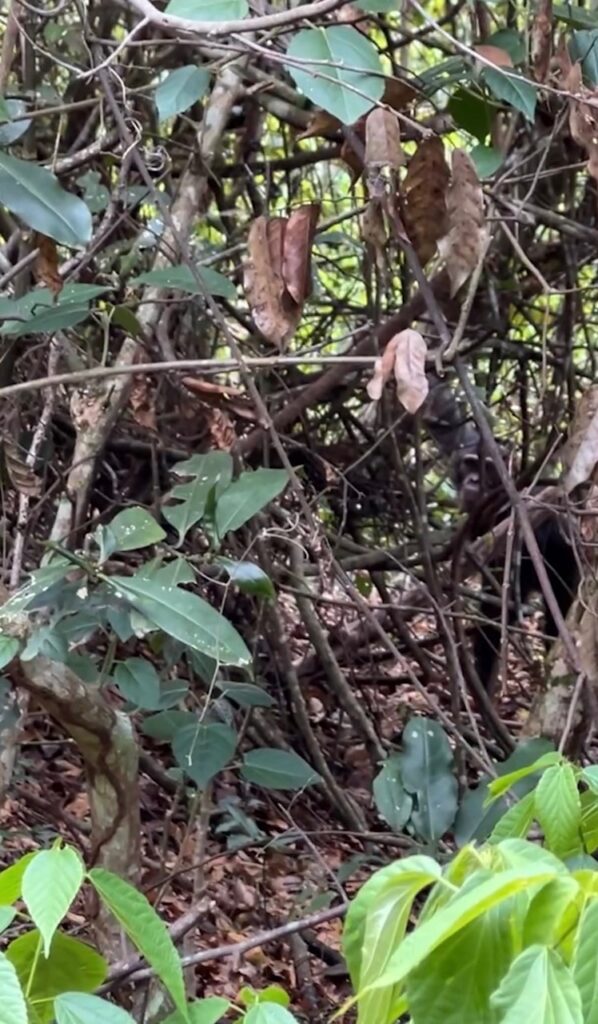
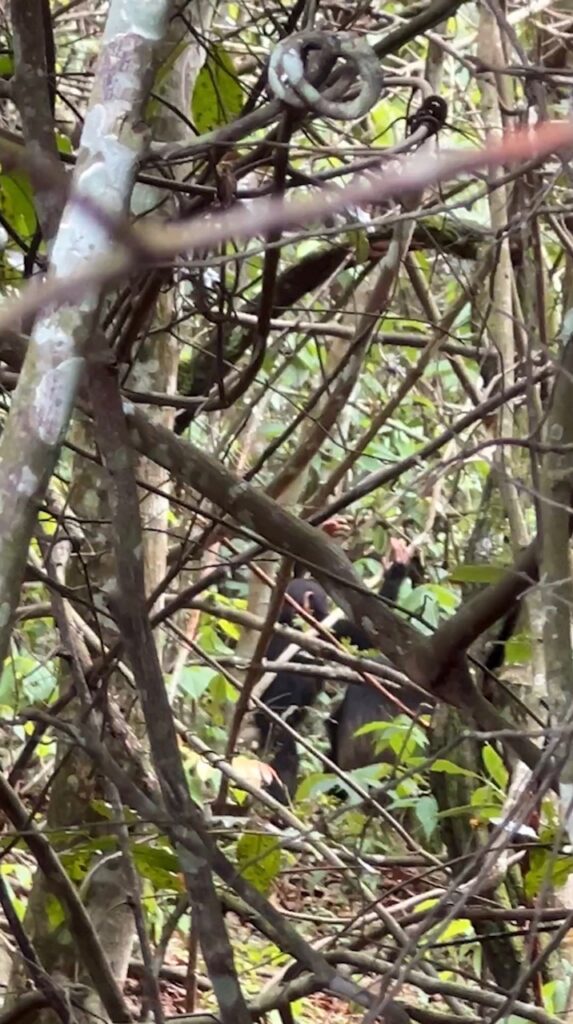
We started to follow the chimps through the forest, but elephants were heard close by. They can be extremely dangerous in the confines of the forest so we make a hasty retreat. Our return to the vehicle is much quicker as we can detour onto a forest trail.
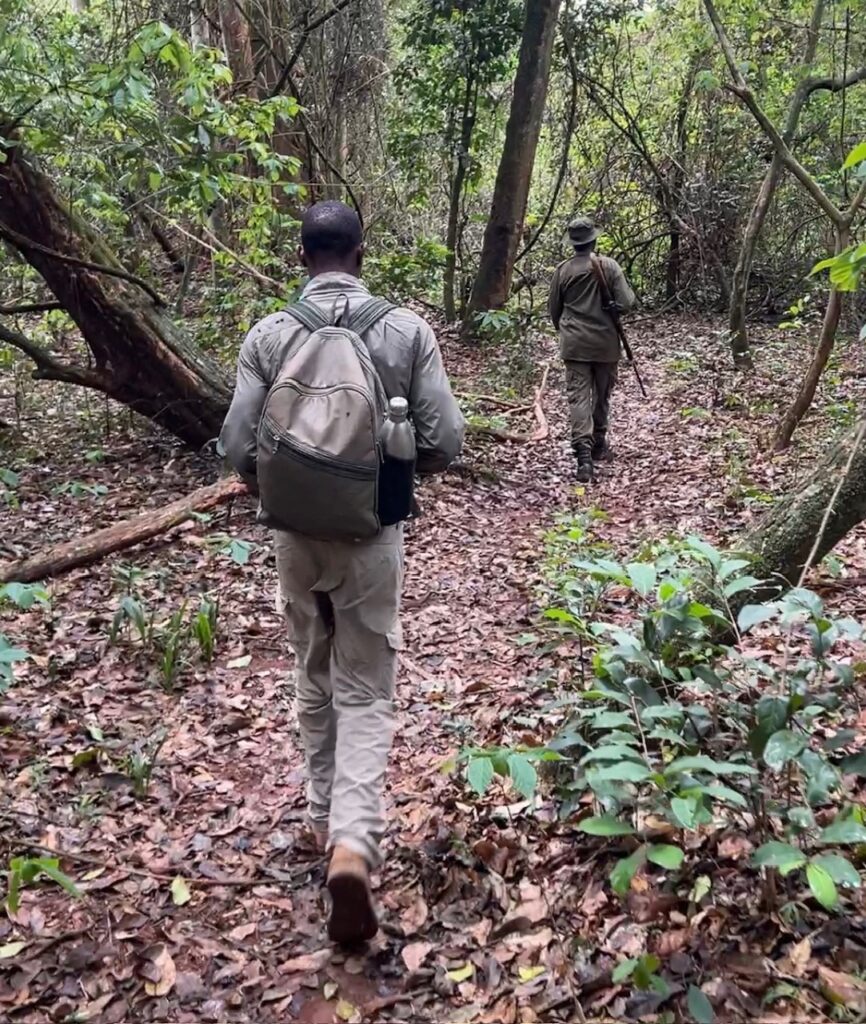
It is close to 14.00 when we arrive back at camp. A very long and satisfying morning has left us with a healthy appetite and we head straight for lunch. We eat inside as a heavy rain shower is approaching.
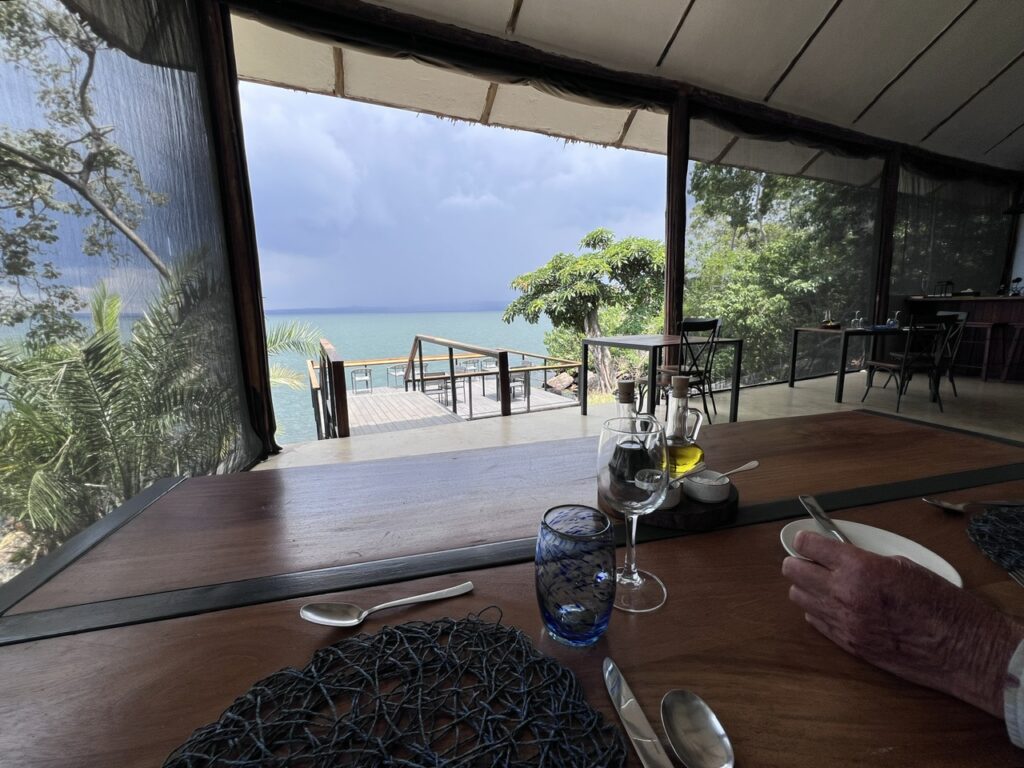
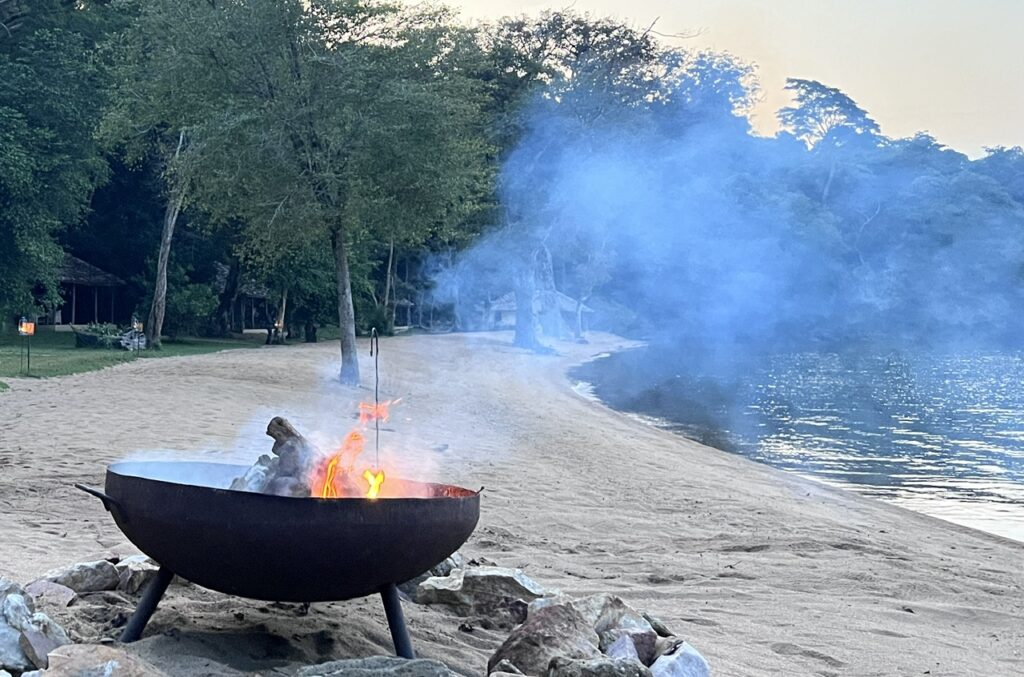
The afternoon is spent relaxing, followed by sundowners on the beach.
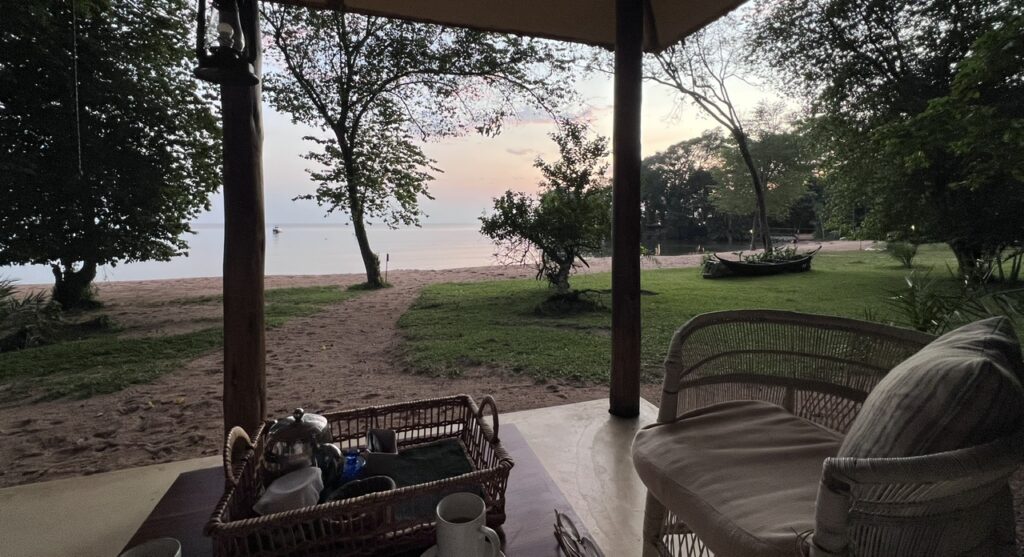
Next day we enjoy a leisurely start. A tray of early morning tea is brought to us on our verandah, which we drink whilst watching the sunrise. The morning birdsong is wonderful and we are again entertained by vervet monkeys scampering on the lawn and beach in front of us.
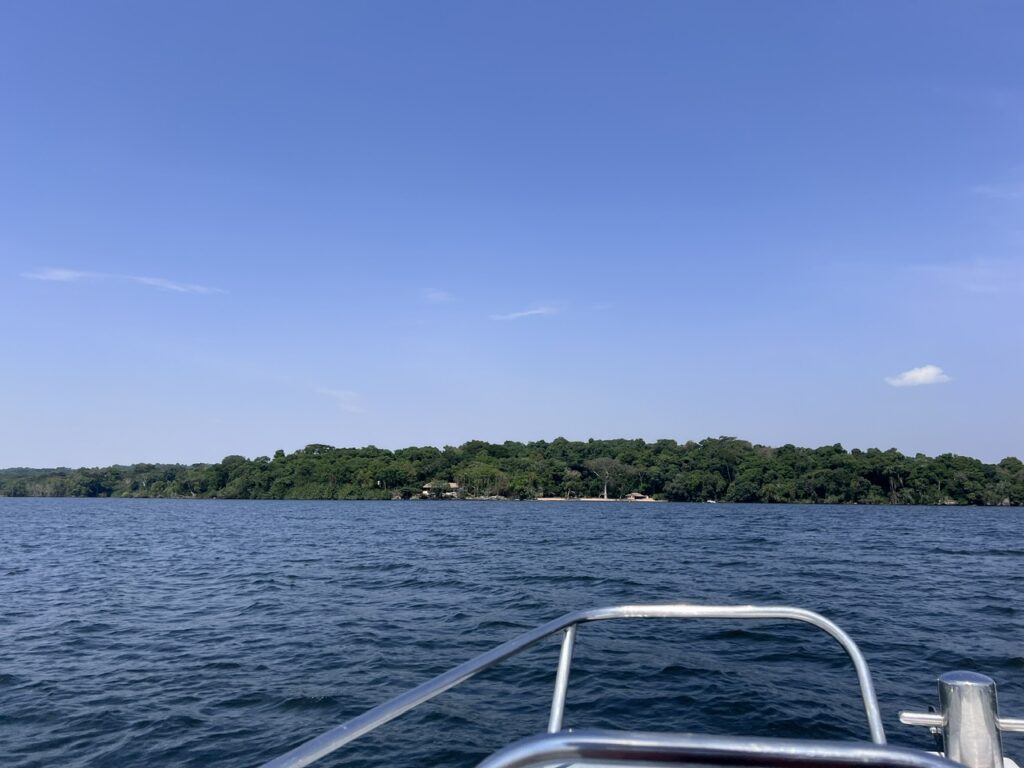
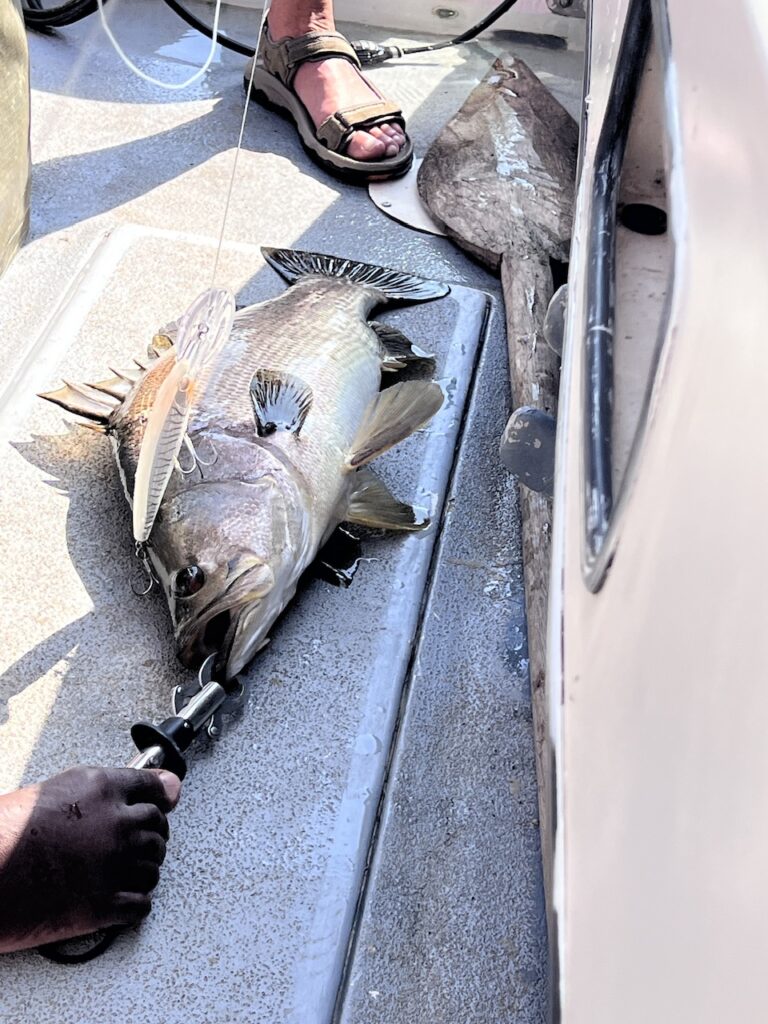
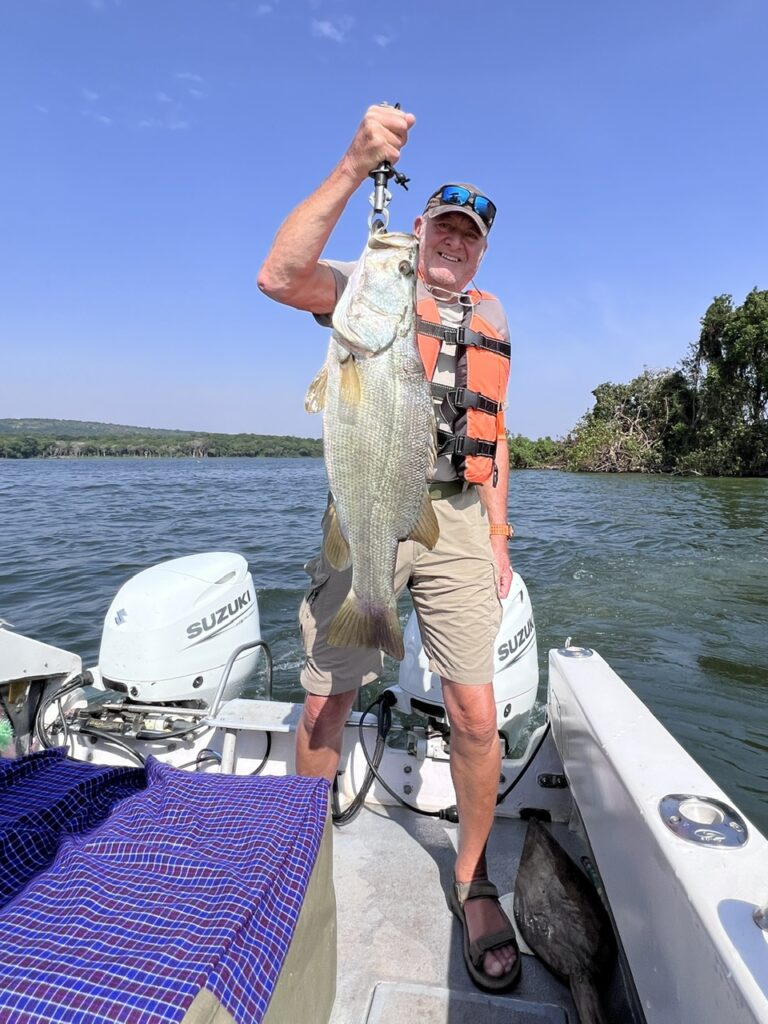
After breakfast we head out in a boat across Lake Victoria, with the main aim of Paul catching a nile perch. This is a lovely change of pace. The boat is fast and speeds out across the lake. The coast looks so beautiful from the water.
While Paul fishes, I concentrate on photographing the abundant wildlife.


Paul is successful in his mission and lands a huge nile perch.
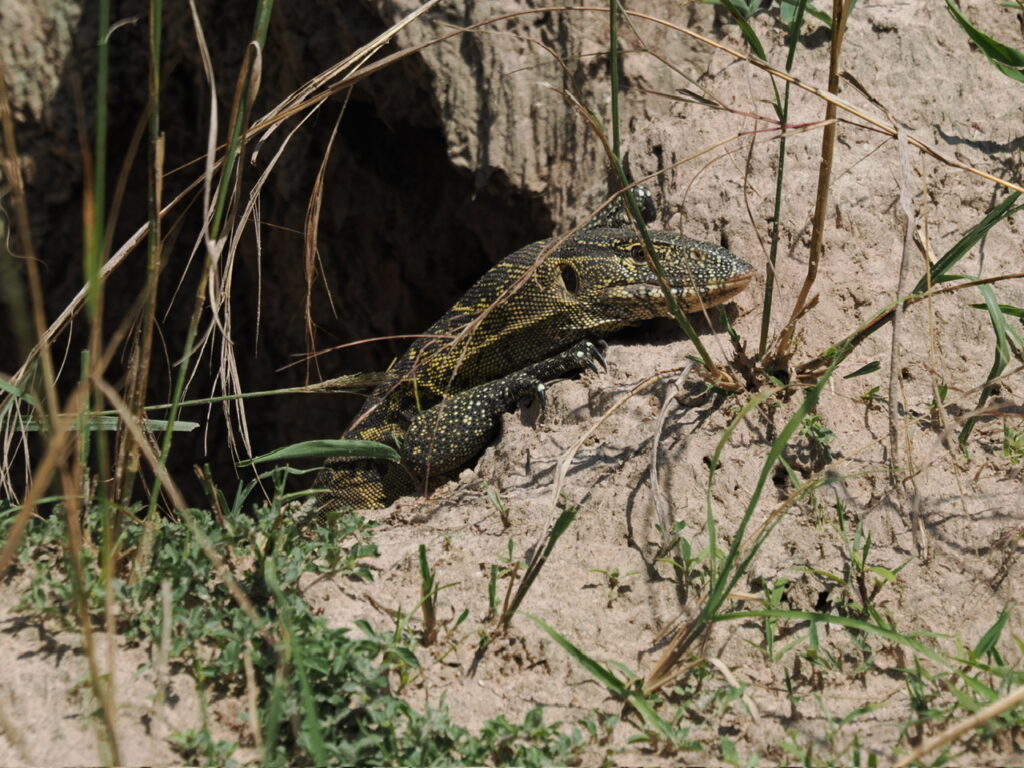
In the afternoon we drive to the south of the island. The vegetation is dense so spotting wildlife is challenging. Today we are lucky. It is hot and sunny and that means the reptiles are active. We see a large monitor lizard…
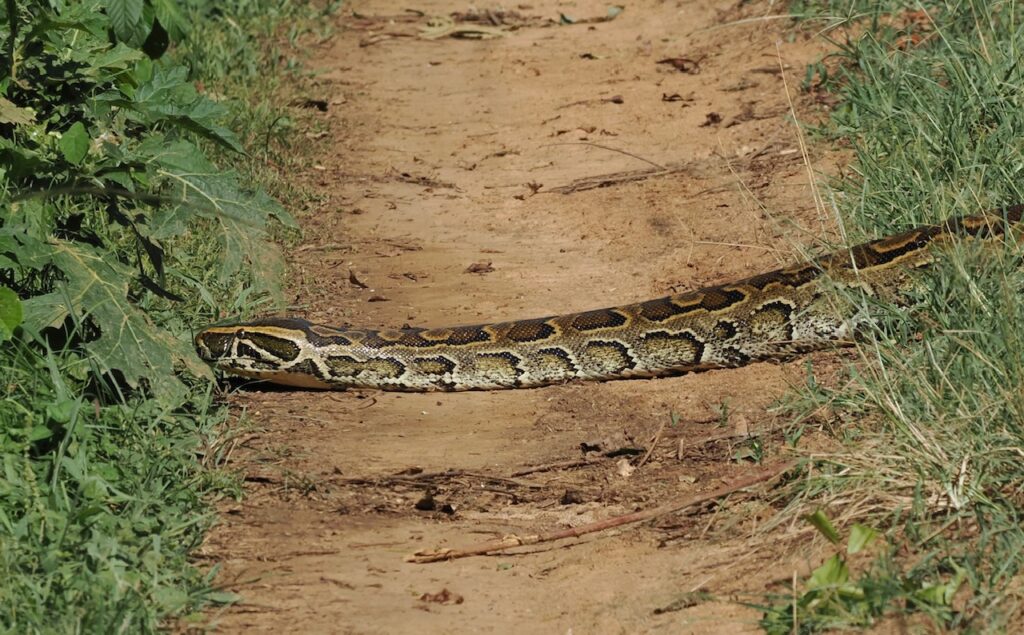
… and shortly afterwards, a fully grown rock python crosses the track in front of us. It is huge. Easily 20ft long if not more. Its markings are beautiful. Our guide is crazy. He gets out of the vehicle and follows it into the bushes to try to capture some good video. This he achieves but it seems like a bit of a risky enterprise to me!
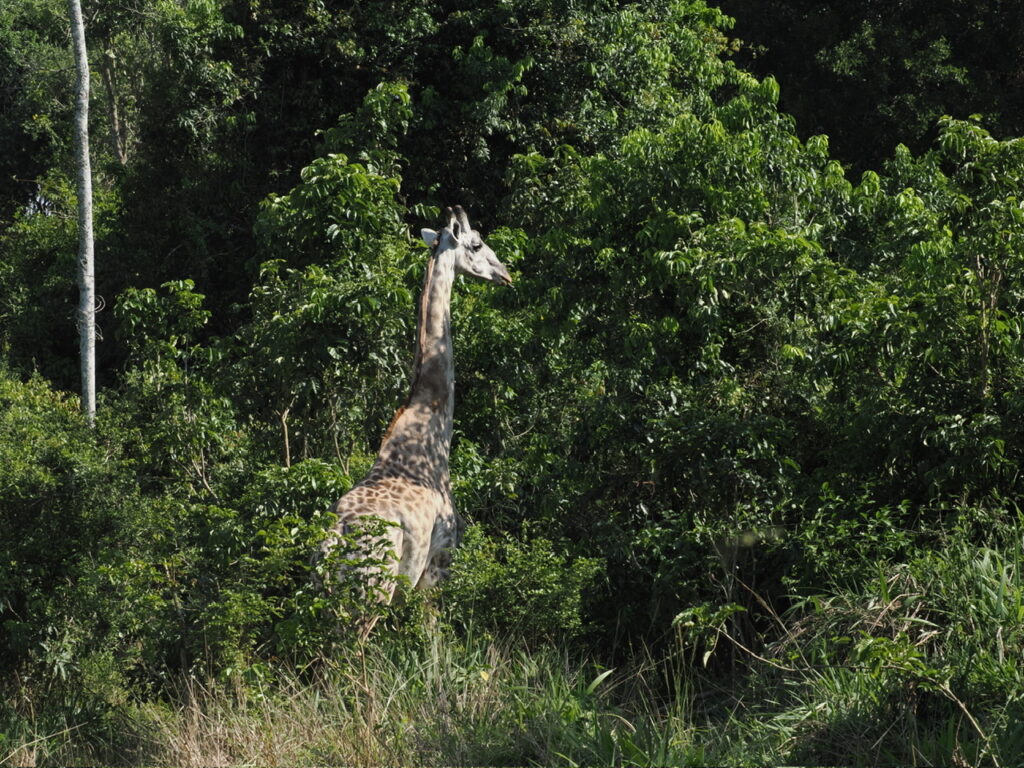
A hippo grazes by the side of the track and a giraffe pops its head out of the greenery.
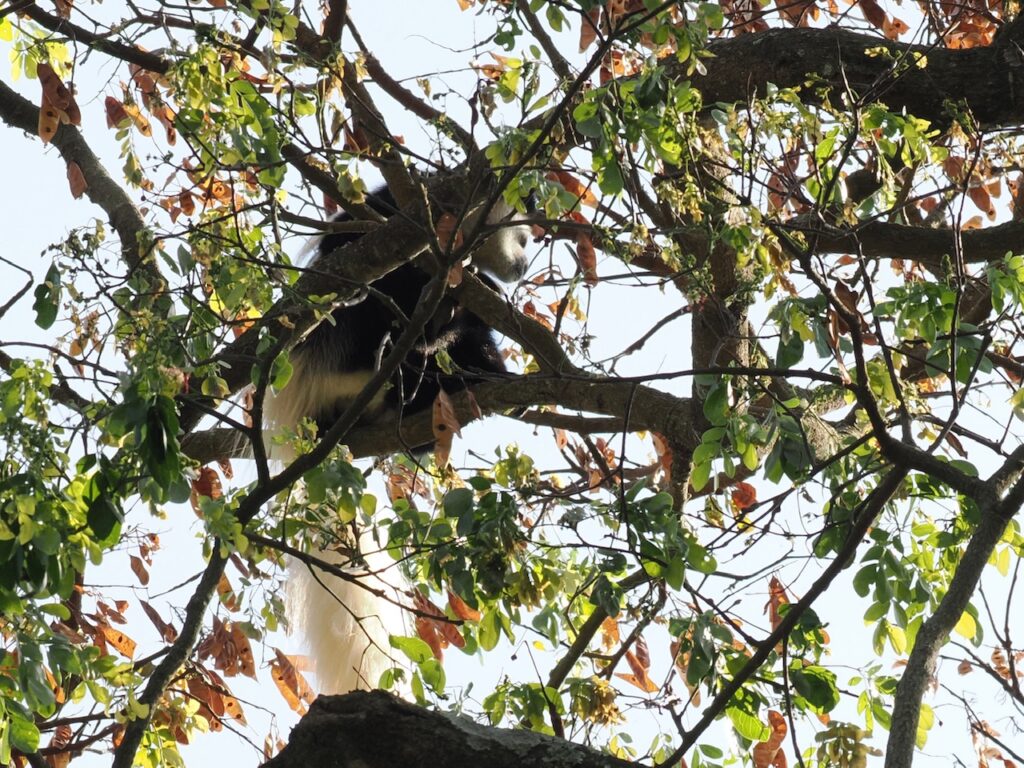
We were also very lucky to encounter a troop of colobus monkeys. They are however rather shy and taking any type of picture was difficult.
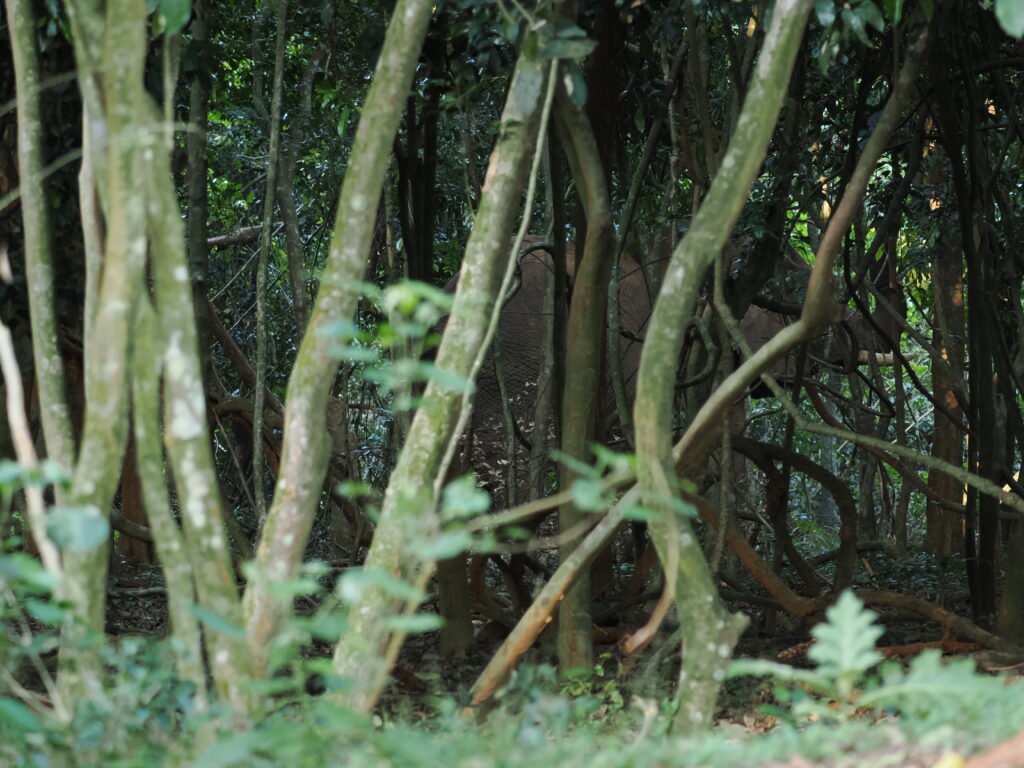
We also manage to catch a glimpse of two forest elephants as we drive along the track. It amazes me that they can find a path through such dense forest.
The gentle drive was followed by sundowners which were setup on the bay where we stopped on our first night.
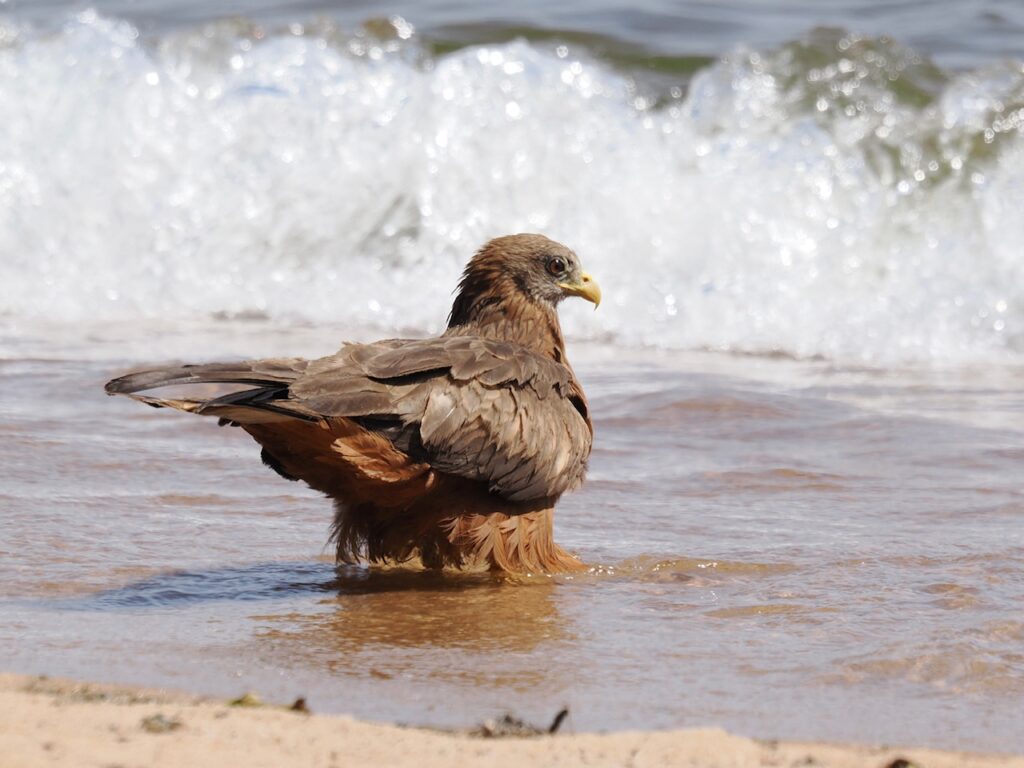
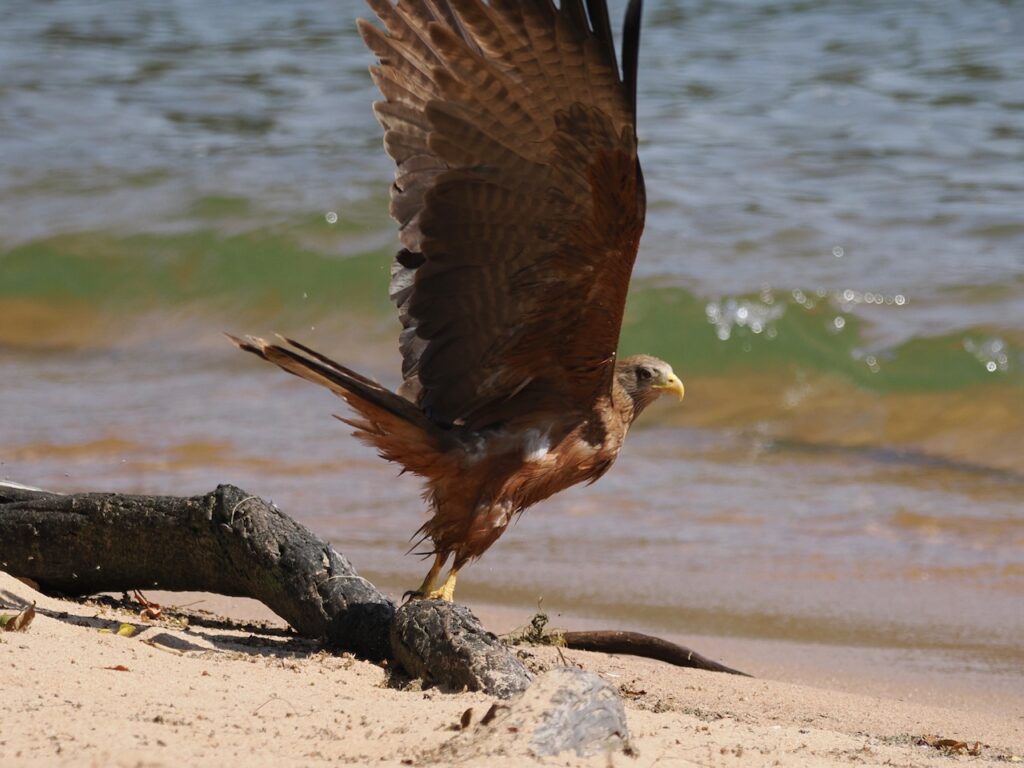
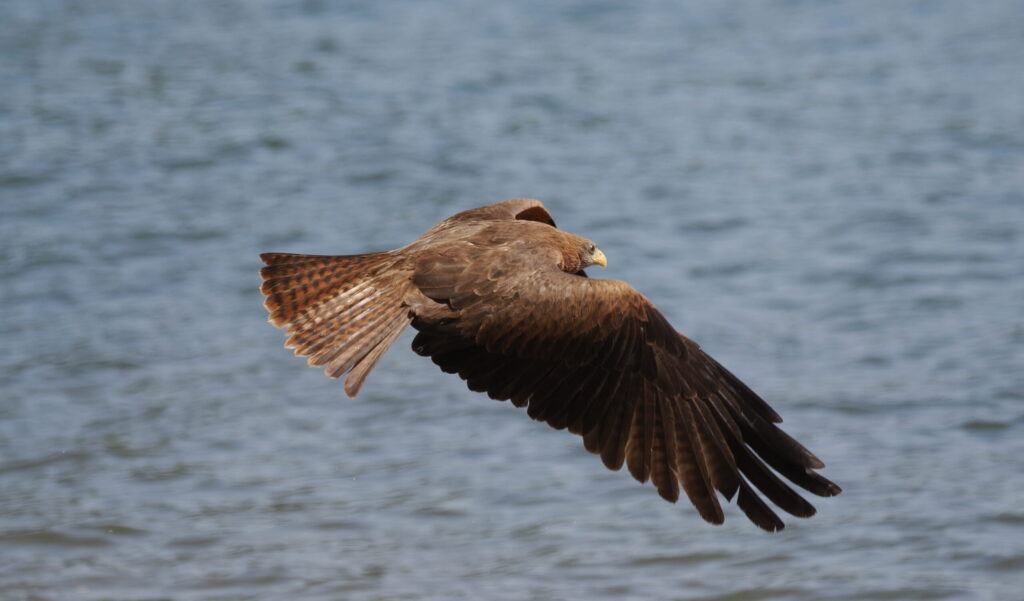
On our final morning we opt to take it easy. Just sitting on our verandah and imprinting this beautiful location in our memories is idyllic. There a lots of red kites here and they like to wash on the shoreline. Of course I cannot resist a few parting photos!
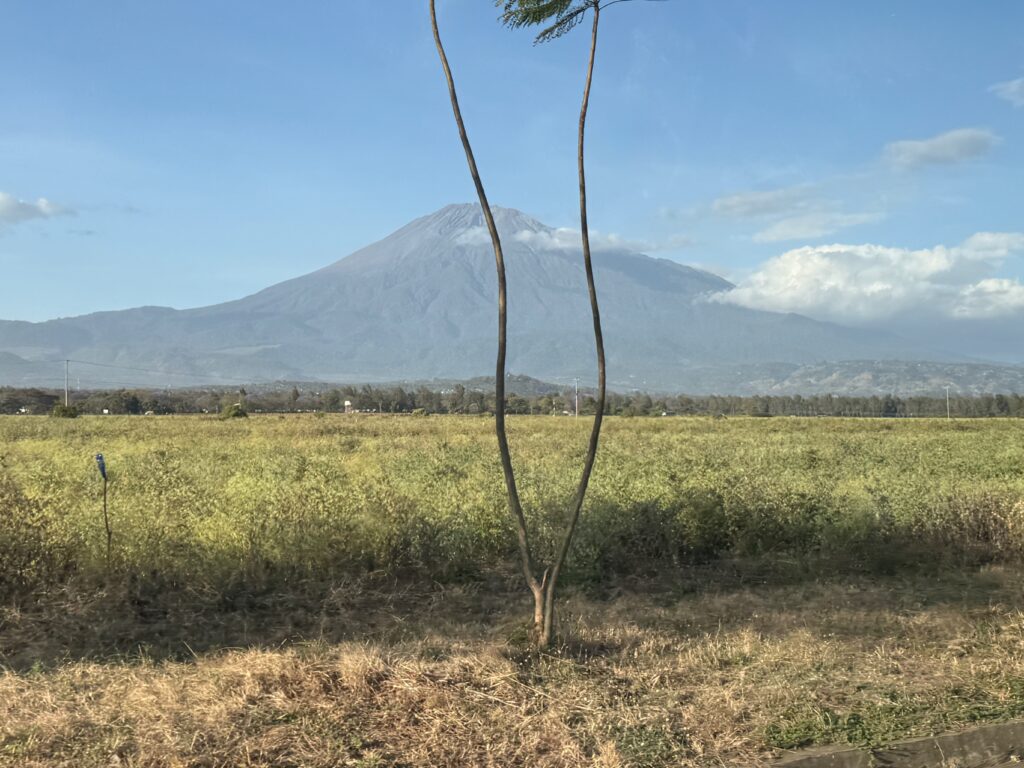
We say goodbye to Rubondu and take the short flight to Arusha where we shall transfer to Rivertrees Inn before our flight back to the UK. On the drive from the airport to Rivertrees, we have a good view of Mt Meru, which for once is not shrouded in cloud.
Leave a Reply