Photography and Travel Blog

Author: Maggie Page 8 of 36

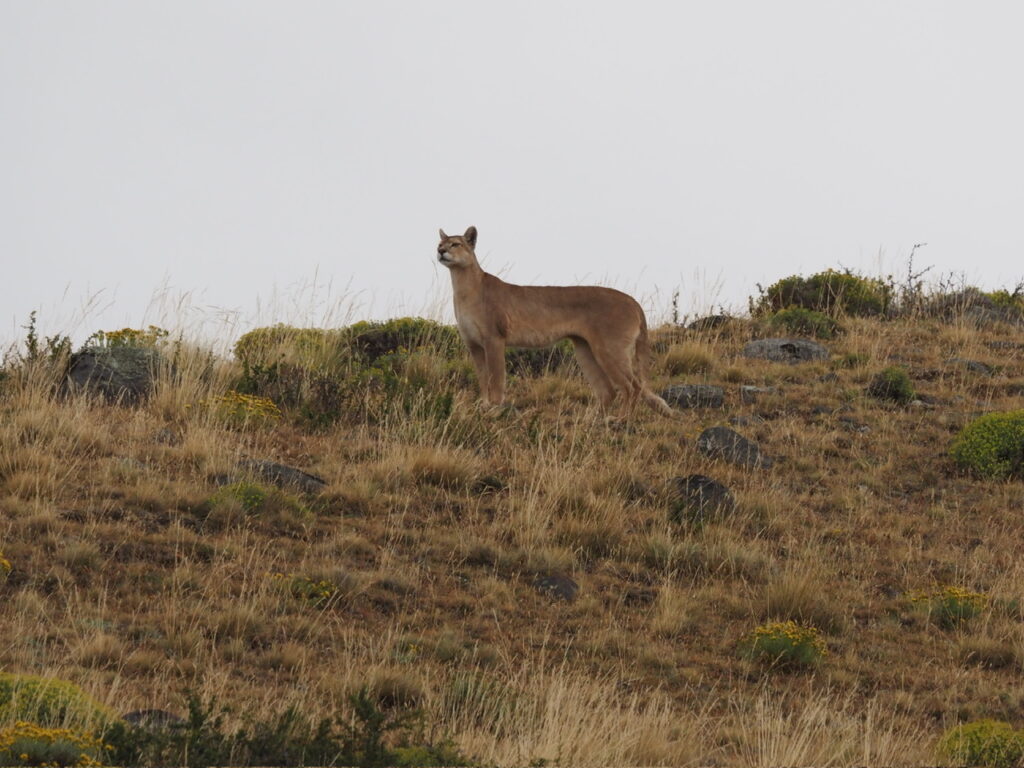
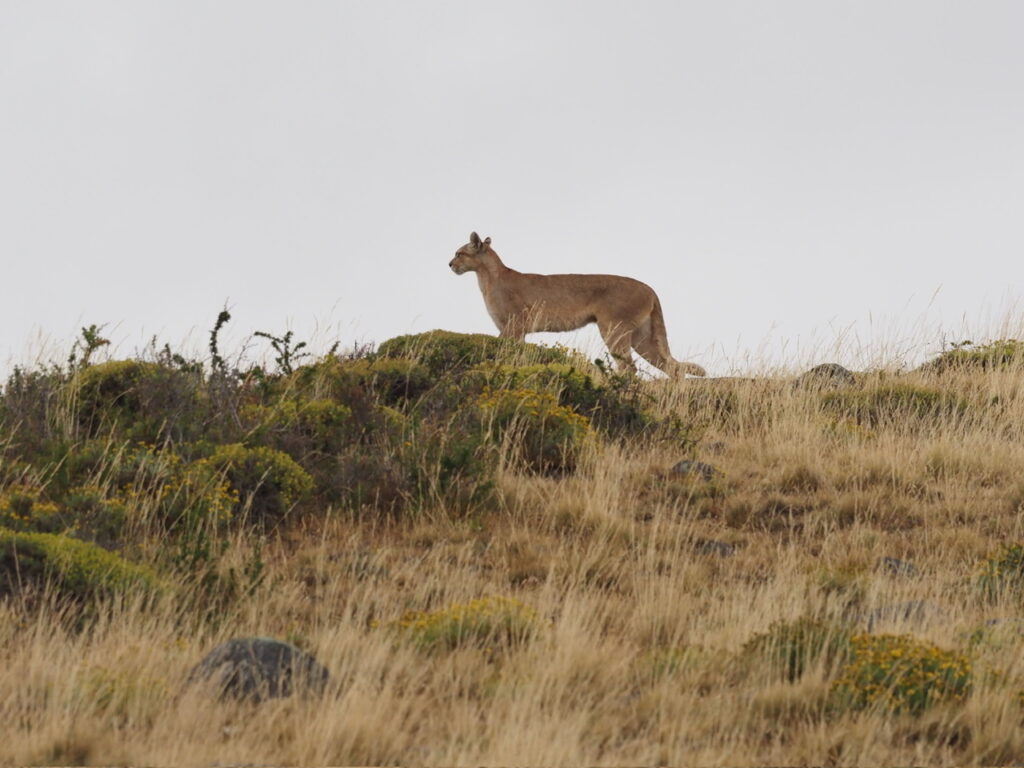
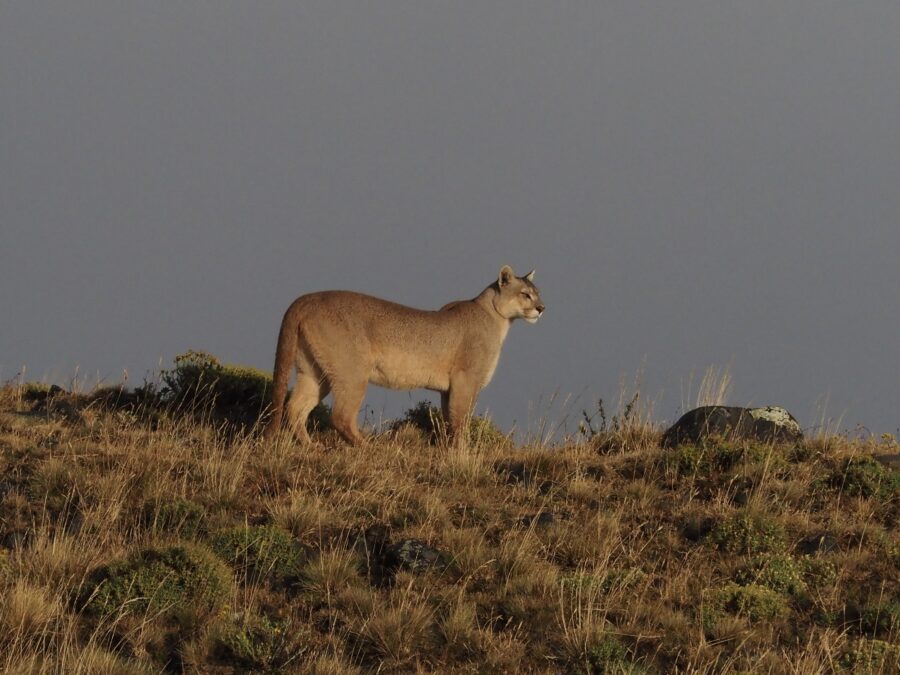
Puma Action

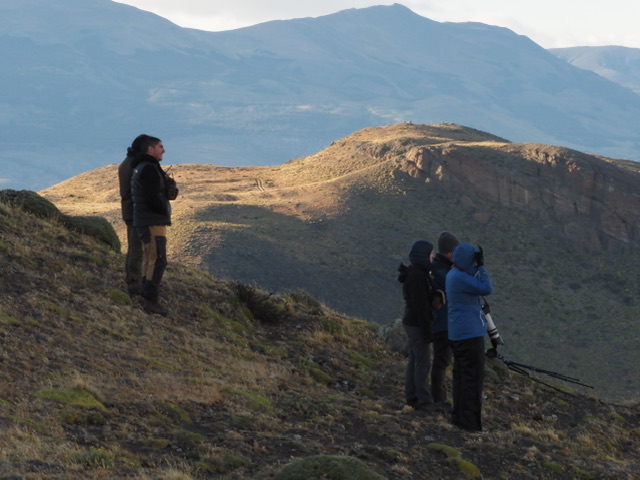
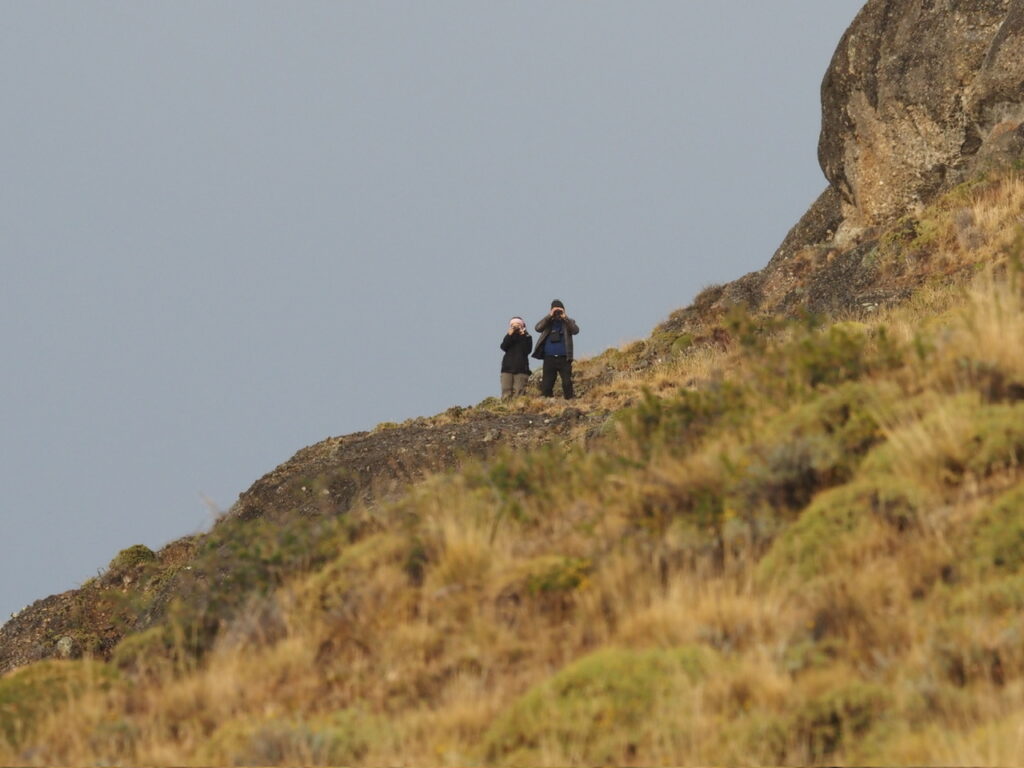
We think it would be a good idea to return to where we saw the pumas last night. They may still be there. There are three more groups going out this morning. A guide and his guest stand on a distant hill trying to see what we are looking at. They will have a very long and difficult walk!

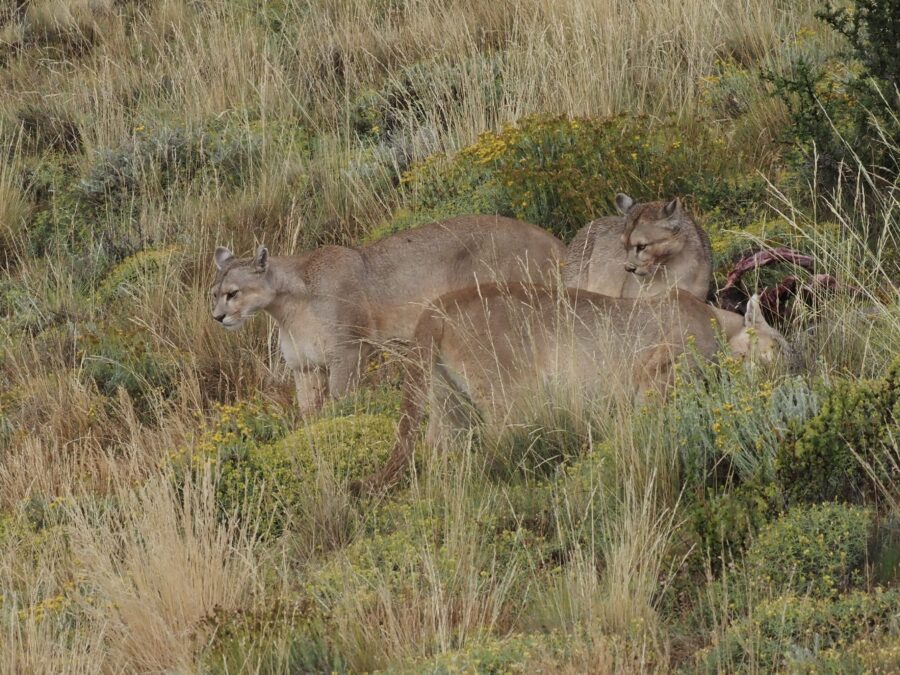
Nana has gone ahead of us and confirms that she can still see the male puma in the bush. We drive along the bumpy track to the top of the hill and walk downhill to join her. It is raining and cold. The ground is steep and slippery underfoot so we must tread carefully. We take a wide course around the bush but have to suddenly change our direction as we see a second puma lying in the grass directly ahead of us. This is SOOOOOO exciting. The male is Carnasa. He is huge and still eating the carcass.

Carnasa

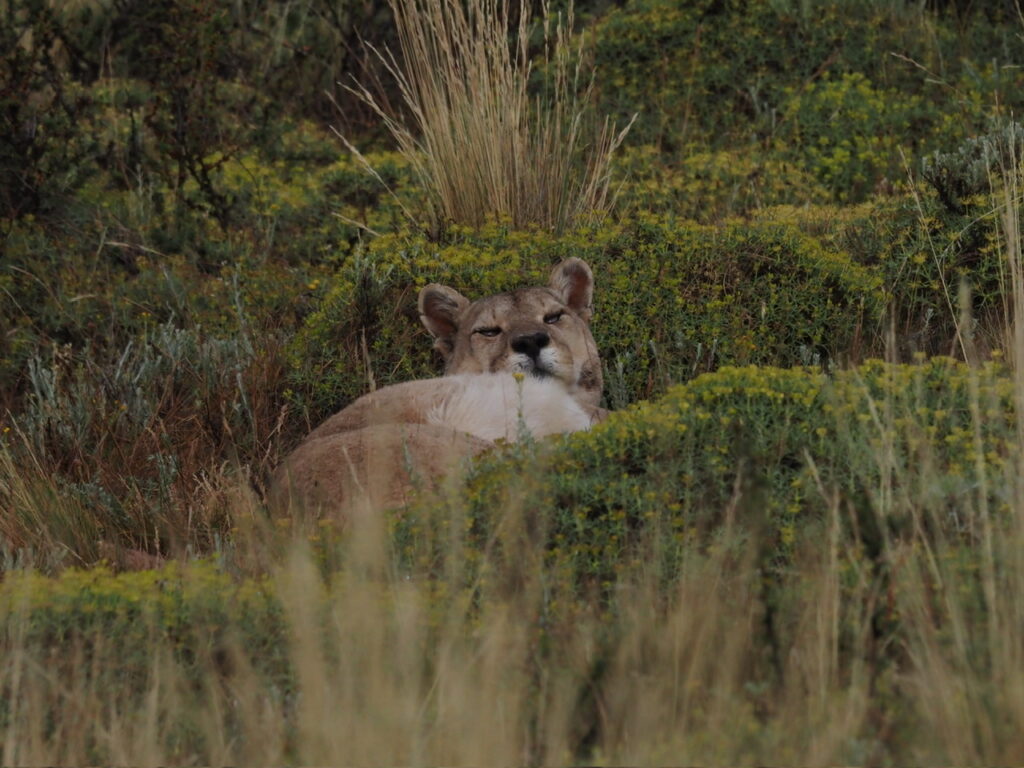
When he looks straight at you, it makes a chill run down your spine. This is the first time I have been a little apprehensive as the males are less tolerant than the females. They deserve an extremely large measure of respect.

Carnasa

From our position we can now see the female puma – it is Ginger. She is waiting patiently for Carnasa to leave the kill.

Ginger

This will be a long wait. Carnasa is in no rush. We then notice a third puma on the ridge above Carnasa. This turns out to be Coiran.

Coiran

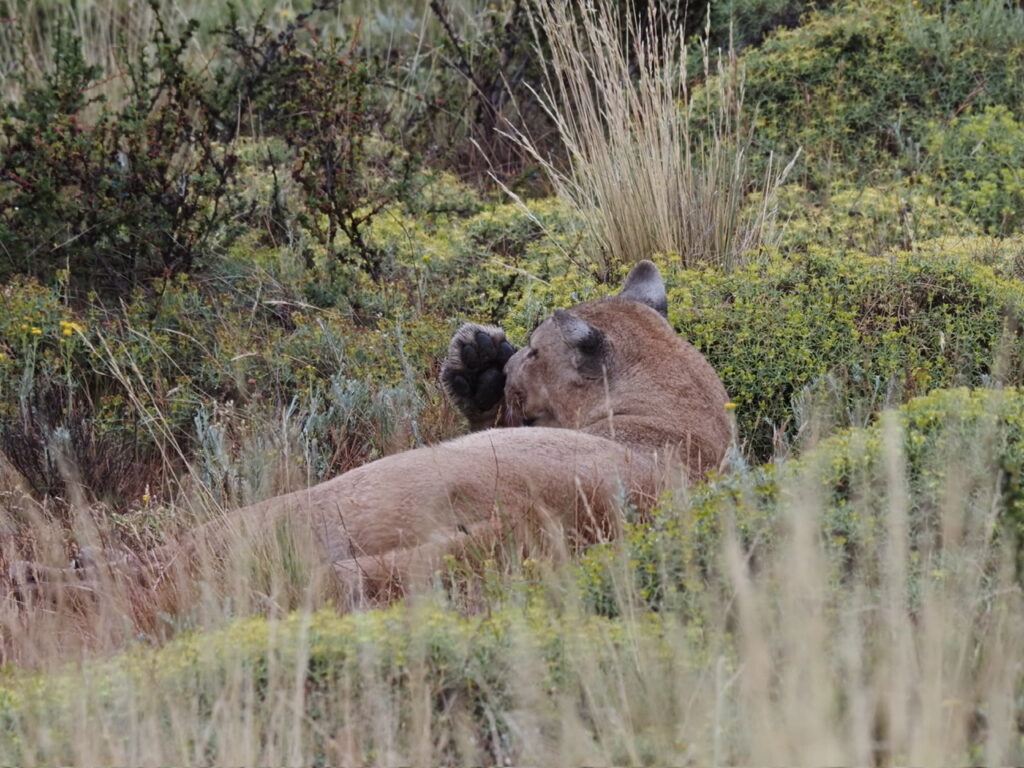
Carnasa eventually stands up and starts to cover the kill with foliage to hide it from birds and other scavengers. I had no idea that pumas did this. He then moves a few feet away and settles down for some grooming and relaxation. He licks his paws, which are huge.
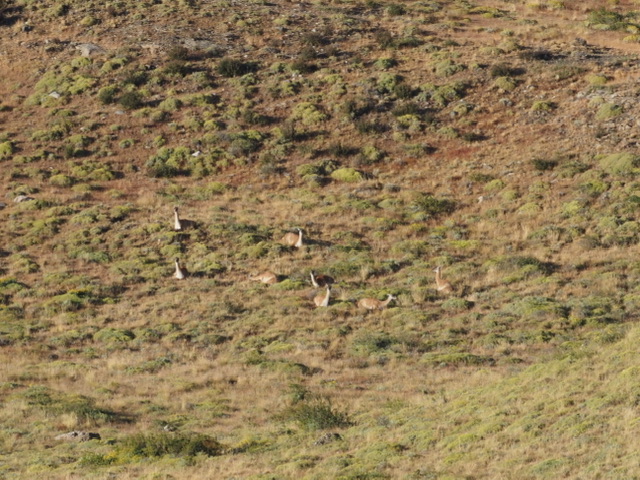
As it is our sighting, the protocol is that we shall choose our viewing position and anyone else must setup around us. We are joined by one of the cameramen who was involved with the filming of Dynasties. We sit and wait for movement. I have marked the position of the three pumas in the photo below.

Eventually Carnasa walks away and settles down in the shelter of a bush on the edge of the hillside. Here he can survey the landscape and check if any more pumas are approaching. Ginger sees her chance and stealthily creeps down to the kill.

Ginger

She starts eating but Carnasa notices. What will happen now? He gets up and comes back to the kill, slowly at first and then with a charge. Ginger springs back quickly but there is no direct conflict. They stare at each other for a few minutes and then Carnasa decides he is pretty full and goes back to his resting spot. Ginger now tucks into the kill and it is not long before Coiran inches down the hillside and joins her.

Coiran

This is all pretty awesome but becomes even more so as a fourth puma is spotted on the ridge behind us. This turns out to be Dania – easily distinguishable as she has a torn left ear. She is much more wary and takes her time to descend down the mountain.
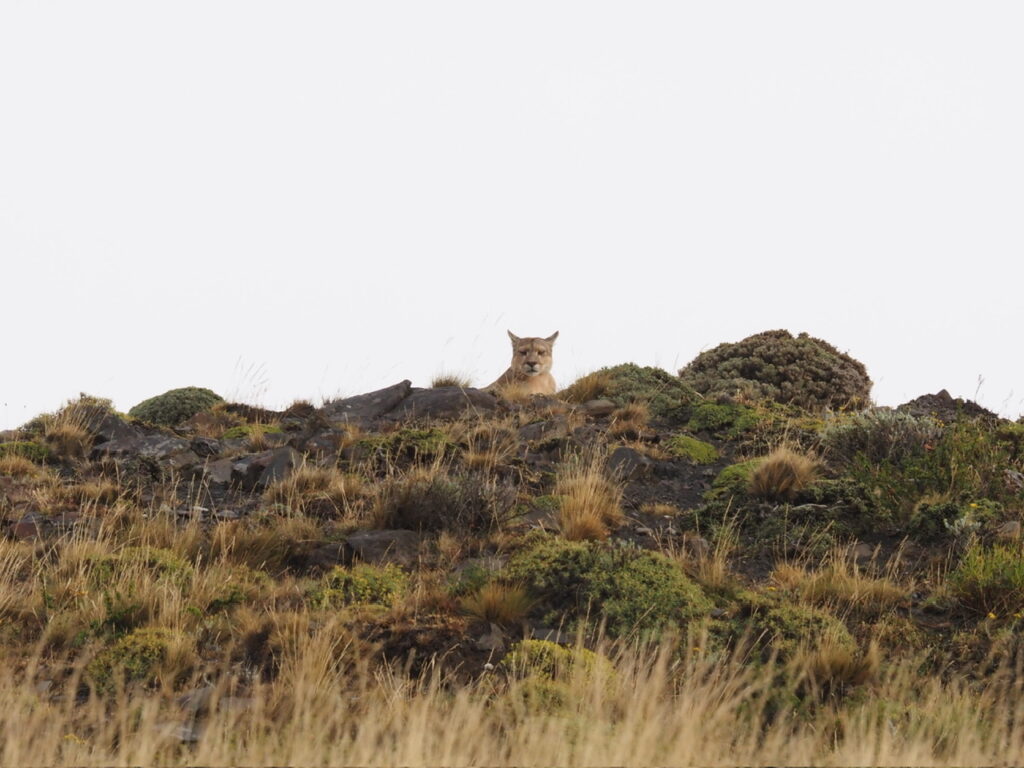
There is some hissing, followed by some deep growls as Dania joins Ginger and Coiran but then they all peaceably go back to eating. Eventually they are fully sated and one by one saunter off into the distance.
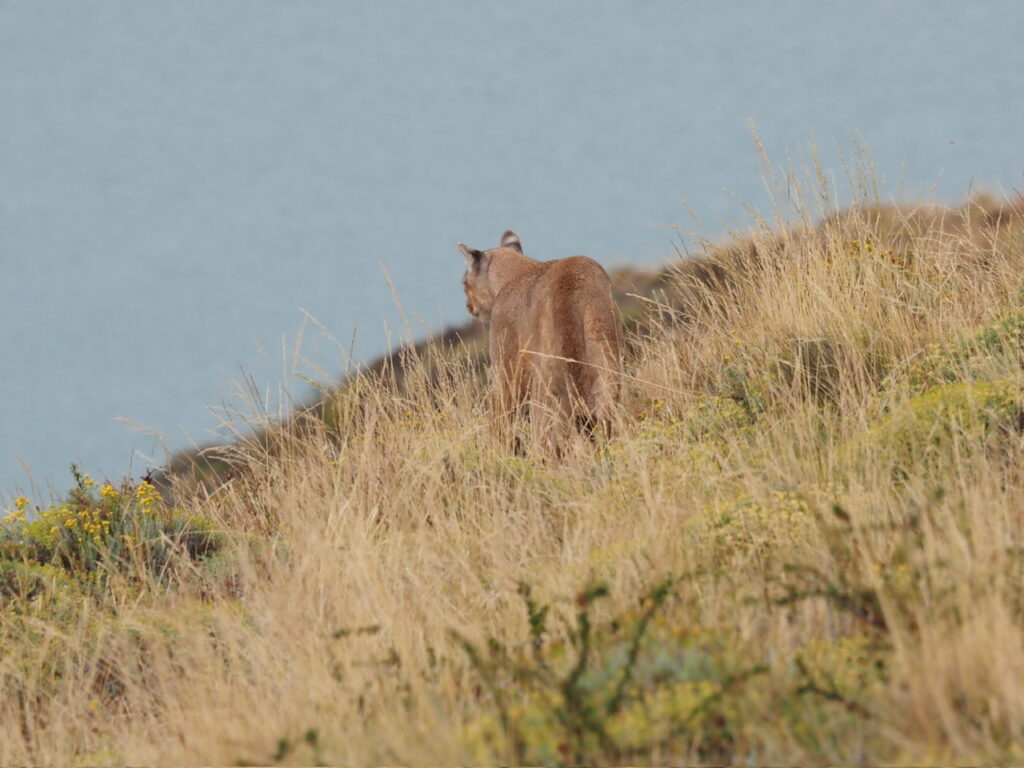
We have spent over three hours with the pumas and it feels like no time at all despite the fact it was cold, wet and uncomfortable for we are standing and sitting on steep uneven ground. What an adrenalin rush though. A totally AWESOME morning!

We decide to have a leisurely afternoon and will be driving to a nearby estancia in the hope of seeing some of the other wildlife that lives here. The weather has changed completely. It is now hot with a strong wind blowing. You really can get four seasons in a day here.

We spot an armadillo along the roadside. He is sitting beside his burrow and ready to disappear at any moment. I do at least capture a few shots of him, though he is a bit hidden.
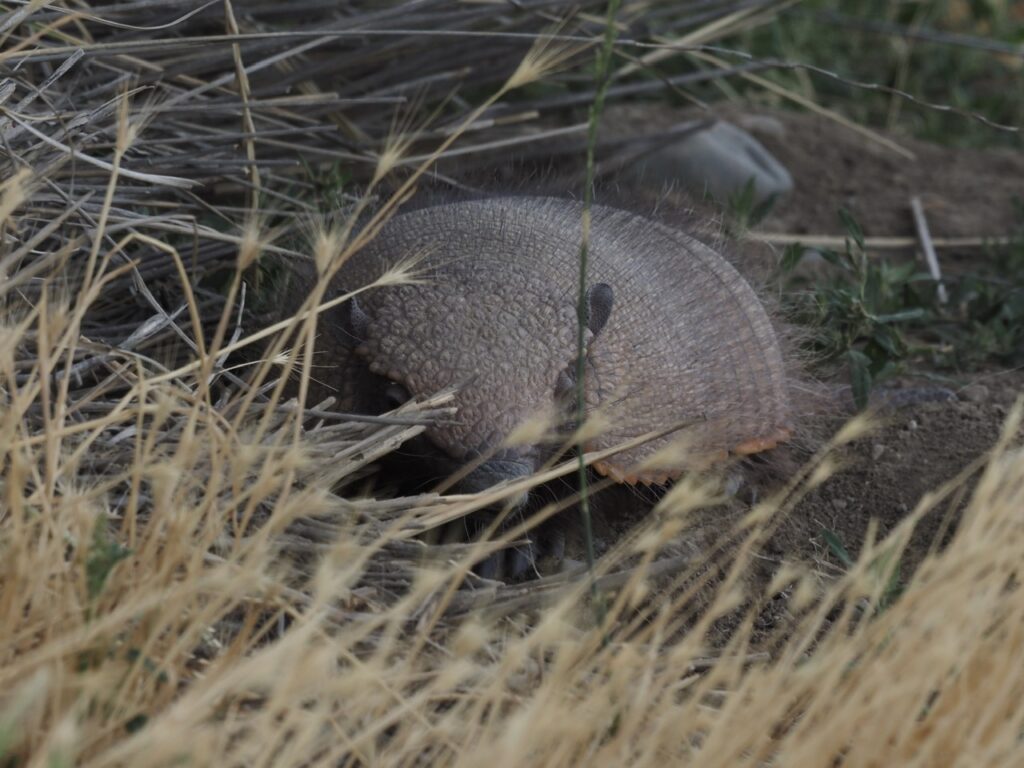
At the estancia a family of guanacos graze casually in the meadow. We watch a young guanaco feeding.

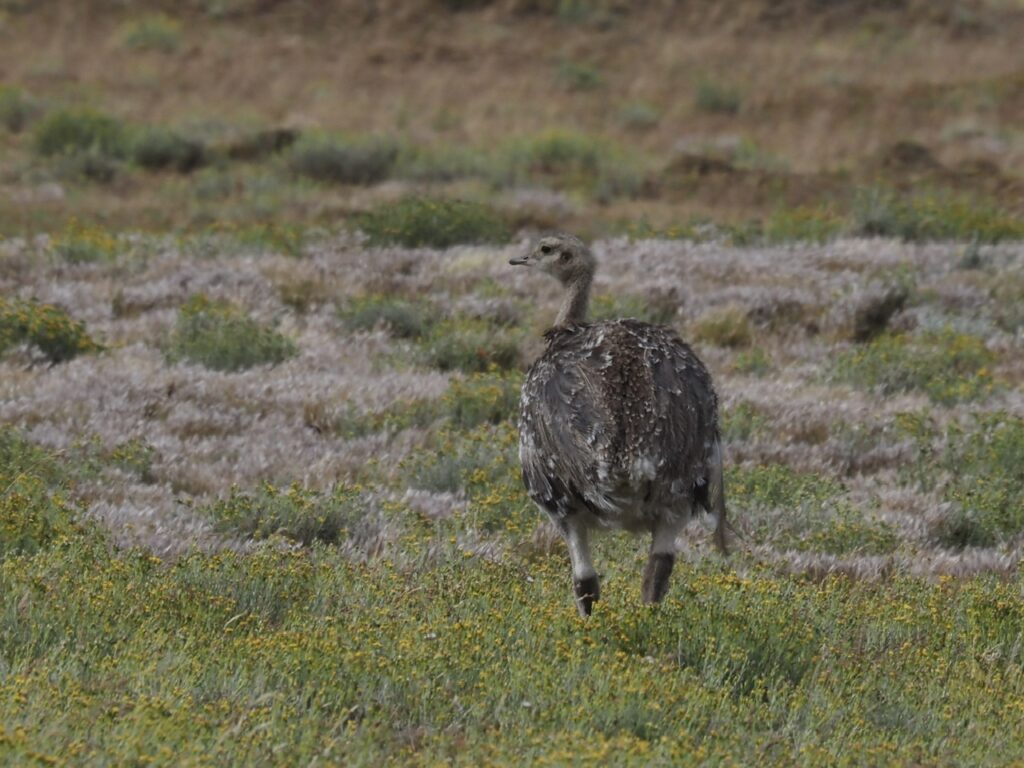
A lapwing and crested caracara search amongst the flowers for seeds and insects and a rhea runs across the plains disturbing clouds of insects as it passes by.

The scenery is different here but still spectacular.
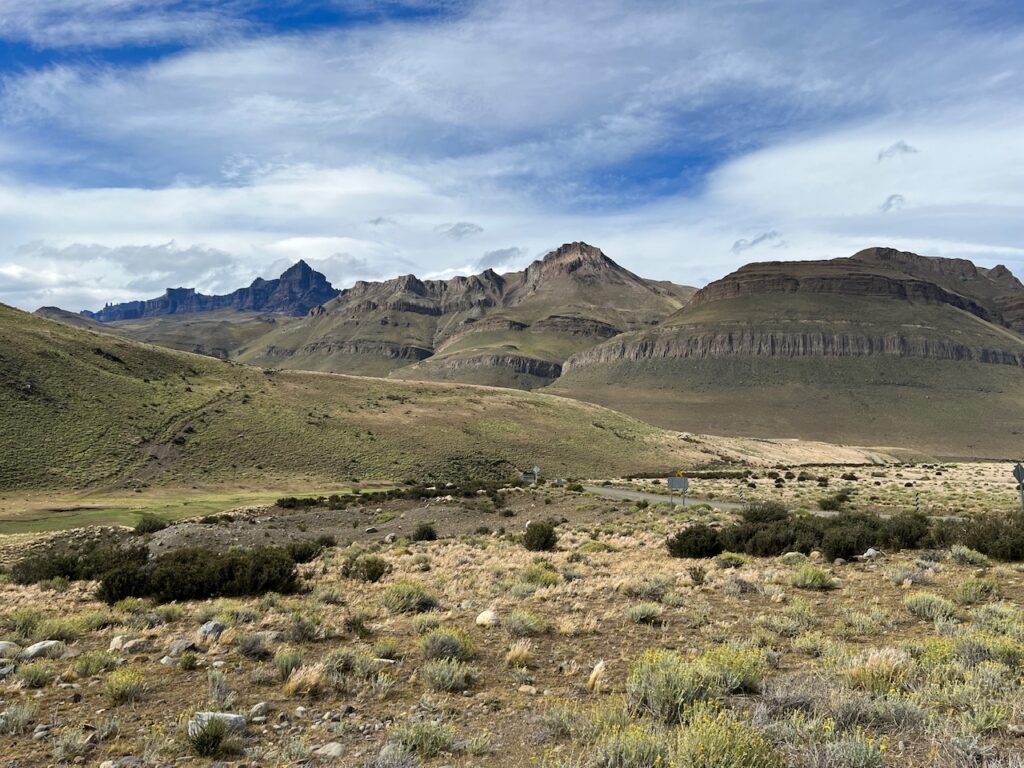
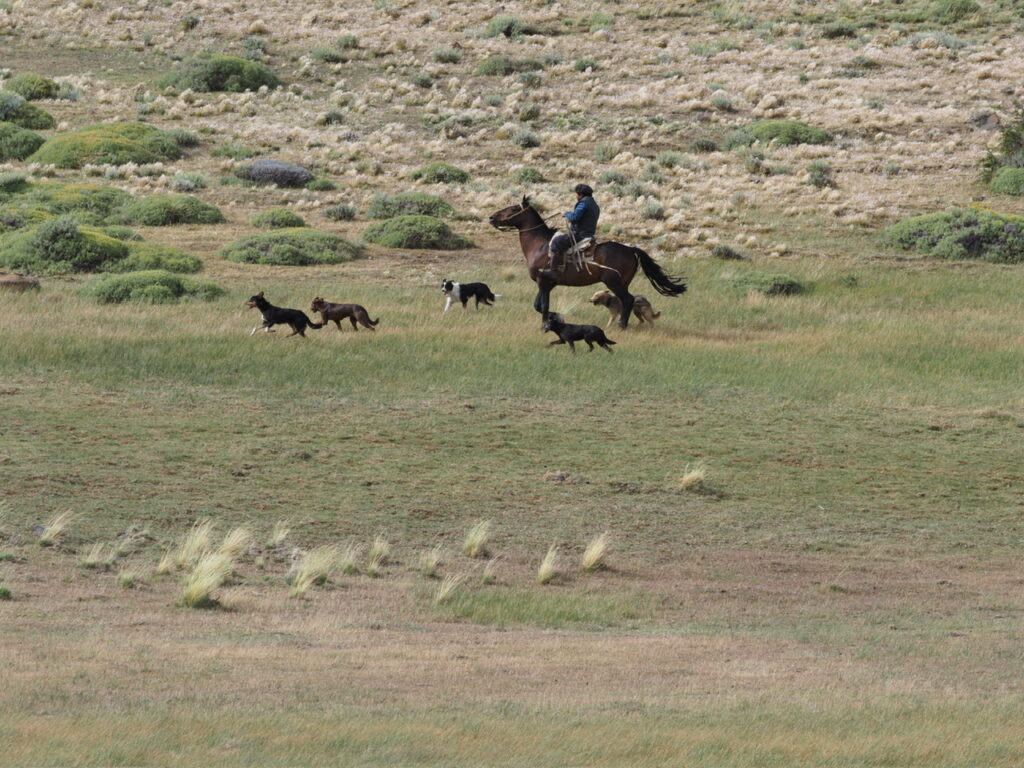
Sheep are grazing in the valley and being herded by a gaucho on horseback. The sheep are protected from pumas by large white dogs. This is a step in the right direction to prevent the pumas being shot, which until recently happened in huge numbers. Hopefully times are changing, though many pumas are still being hunted and killed.

We discovered, whilst walking through the brush in the pursuit of pumas, that there are lots of tiny and very prickly seed heads, which generously attach themselves to your shoe laces, trousers and socks. During the process of trying to remove them, tiny thorns inevitably break off and im-bed themselves in your fingers where they remain for the next few days. Annoying (and painful). The poor sheep below is absolutely covered in them.

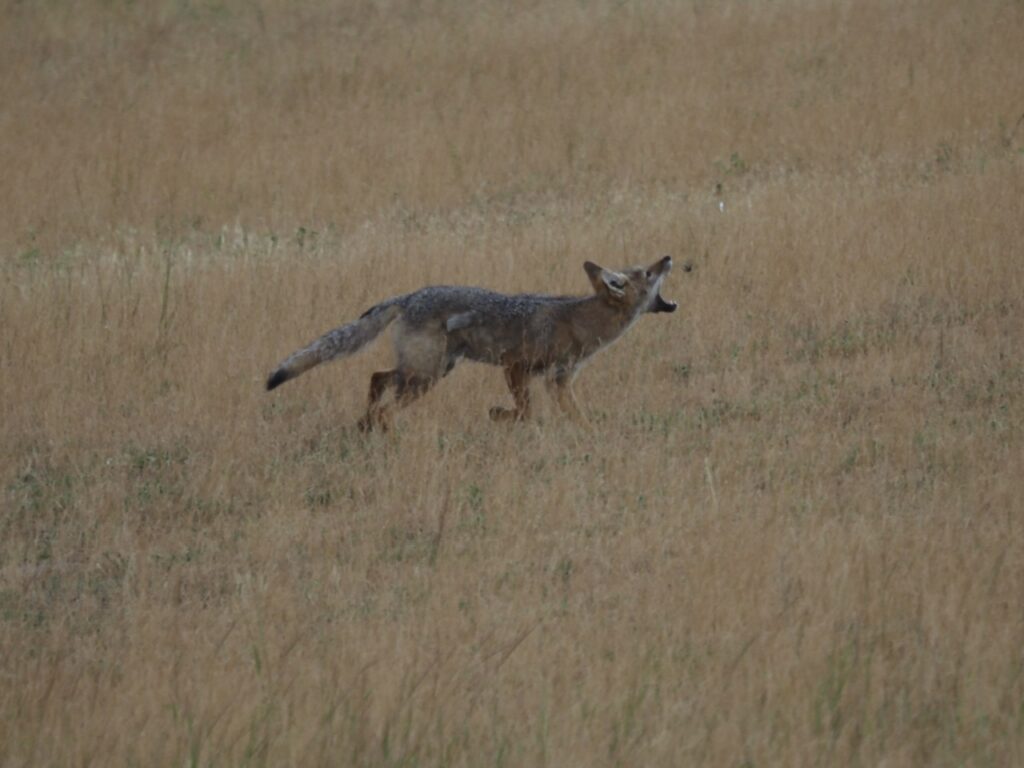
We head back and see a large family of rheas and a distant fox trying to catch butterflies.

Our final stop is at a huge estancia called Cerro Guido. It is huge at 100,000 hectares and owned by an extremely well-connected family. They have huge wealth and influence and the resources to market themselves as the main instigators behind conservation here, although this is not the case. Until four years ago, they were killing vast numbers of pumas every year. Following the puma documentaries, they have changed their ways, which has to be a very positive thing. However, the reality is that they are late to the party. Estancia Laguna Amarga (where we did all our tracking) were the front runners in puma conservation some 20+ years ago.
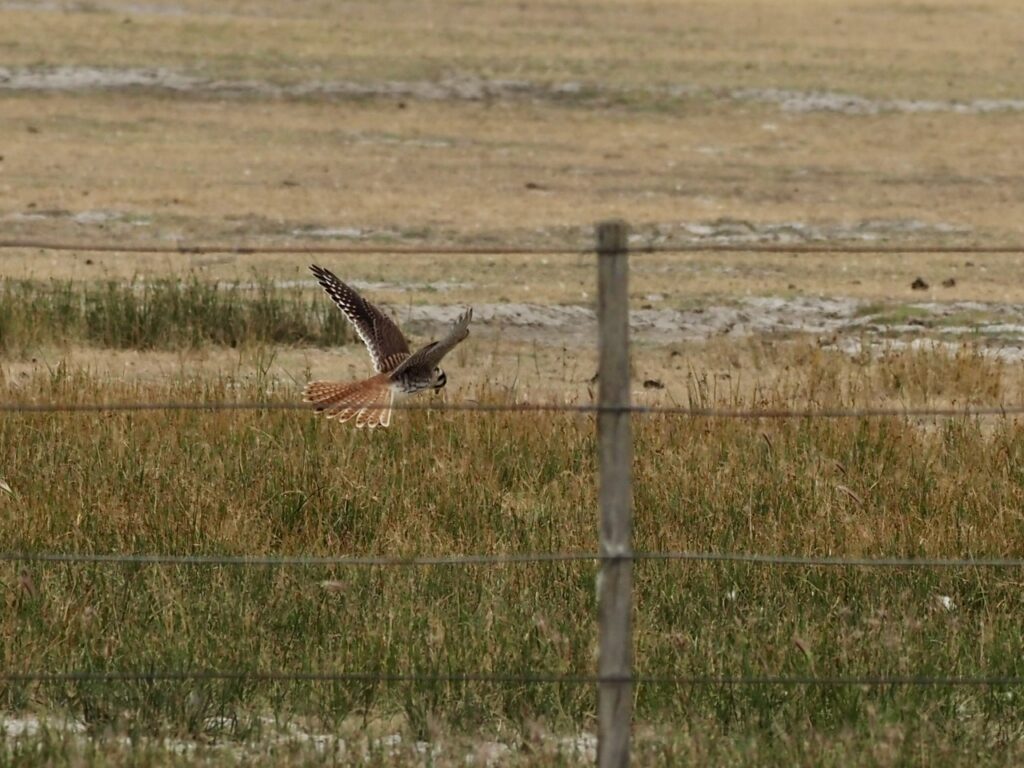
Our final sighting for the day is of an American kestrel, which perches on fence posts to spot prey and then hovers over the grass and swoops down to catch them. Again it is distant but at least we have seen one and they are very beautiful birds.

As we drive back the wind is very strong indeed and blows clouds of dust and gravel across the road. The car is often buffeted and knocked slightly off course. Victor tells us this is nothing. He once was driving, along this stretch of road with guests, when the wind was so powerful that it hurled rocks at the back window which broke. The vehicle was immediately filled with dust and stones. He says it was quite terrifying. I imagine it was. In fact we were told, when we first arrived, that the only thing that might inhibit our puma tracking would be the wind. Sometimes it is just much too dangerous to venture out.

This is our last night here. It has been exhausting but a truly once in a lifetime experience. The hotel was so clean and staff welcoming. Food was somewhat repetitive with every meal (lunch and dinner) comprised of soup followed by a choice of steak, chicken, lamb or salmon with rice or chips and salad. However it was always cooked nicely and I discovered they made a very good lemon meringue pie which became my go to dessert. Yum!

Victor and Nana are heading back to Puerto Natales tonight. We say our farewells and thank them profusely for their company and truly astonishing guiding and tracking skills. What an absolutely fabulous time we have had here. It has exceeded all our expectations a hundred times over.
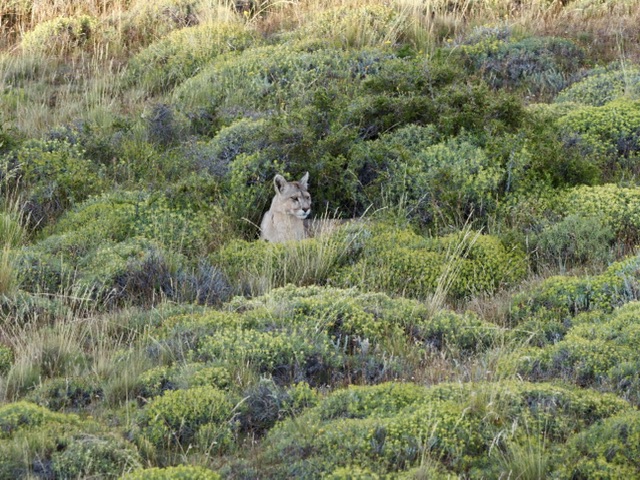
Patagonian Splendour

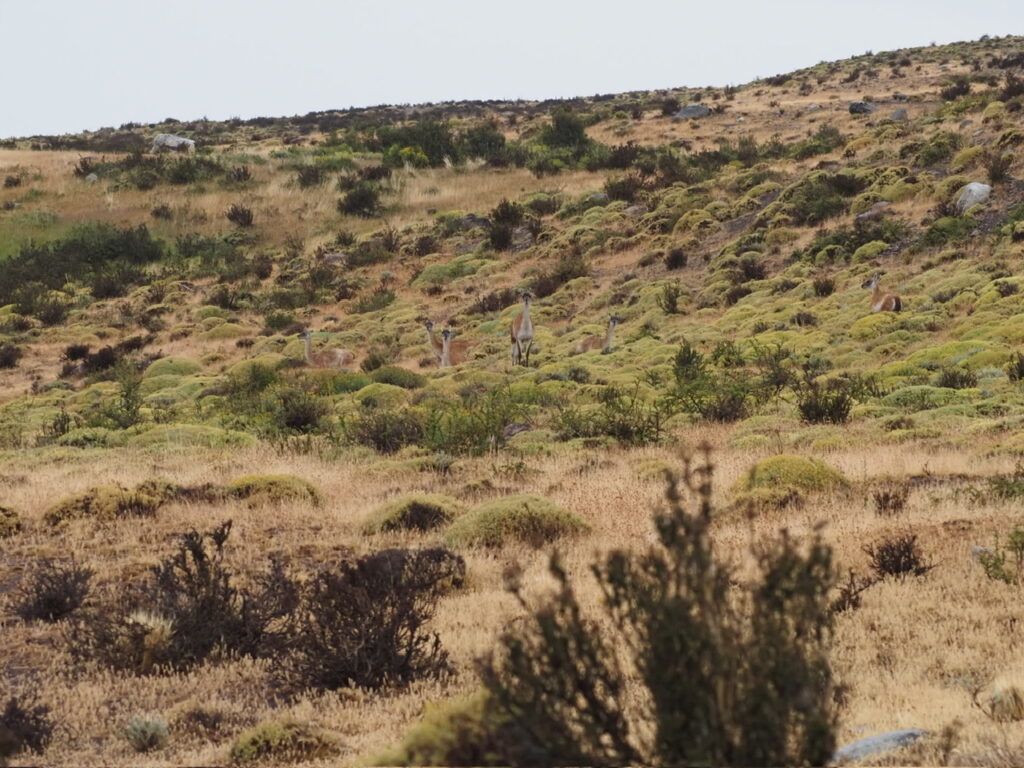
The weather today is much improved, which is good as the plan is to enter Torres del Paine National Park and see some of the spectacular scenery. On our way there we receive a call from another guide that he has found a puma. Of course we have to investigate. A puma is lying in the scrub and watching a group of guanacos across the valley.

It is early and cold on the slope where we are standing but the view is quite something. It is very reminiscent of the Scottish Highlands but on a much grander scale.

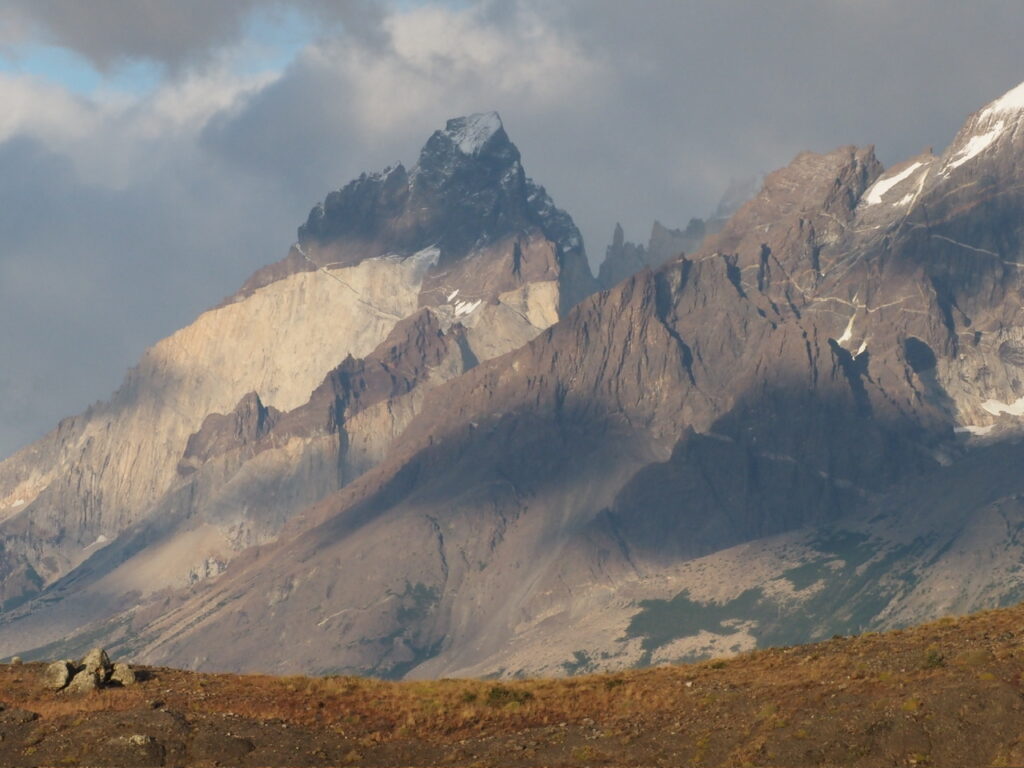
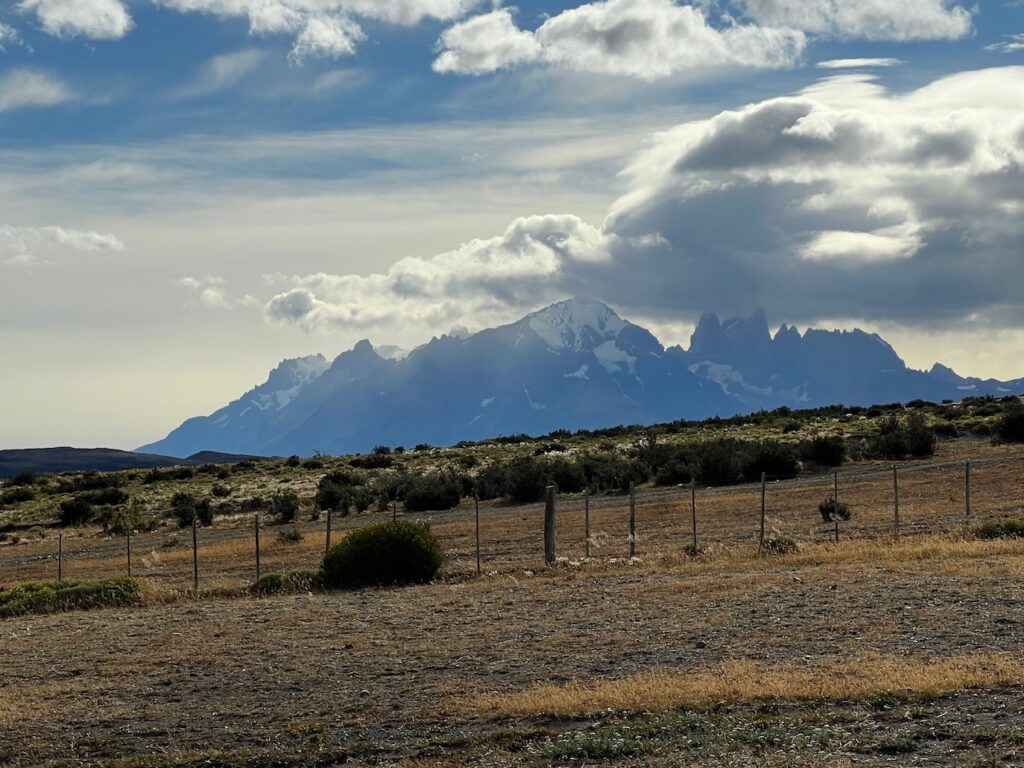
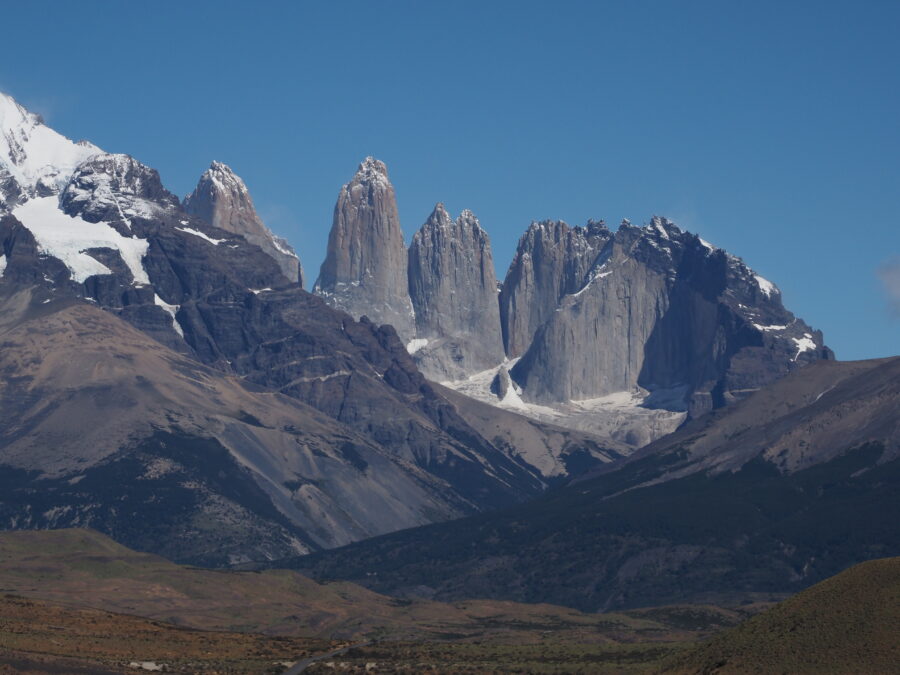
There does not look like there will be much action for a while so I walk back up the hill to where the rising sun is providing a little warmth. The view from here is breathtaking with the sun illuminating the huge granite massifs.

We return to look at the puma who is now lying down. This looks like a Mexican standoff. There is no cover for the puma between him and the guanacos so it is not about to move any time soon. They will need to come to him. We do not think that likely – they are grazing but very aware of where the danger lies.

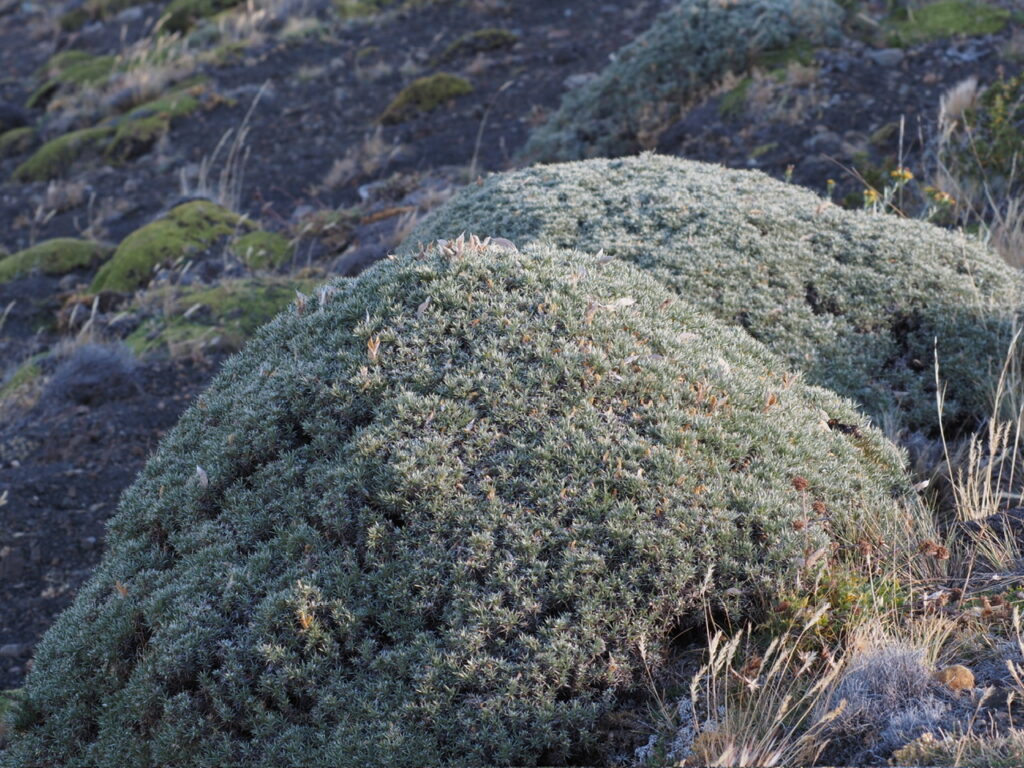
We decide to leave but not before photographing the cushion forming shrub and a beautiful slipper orchid.

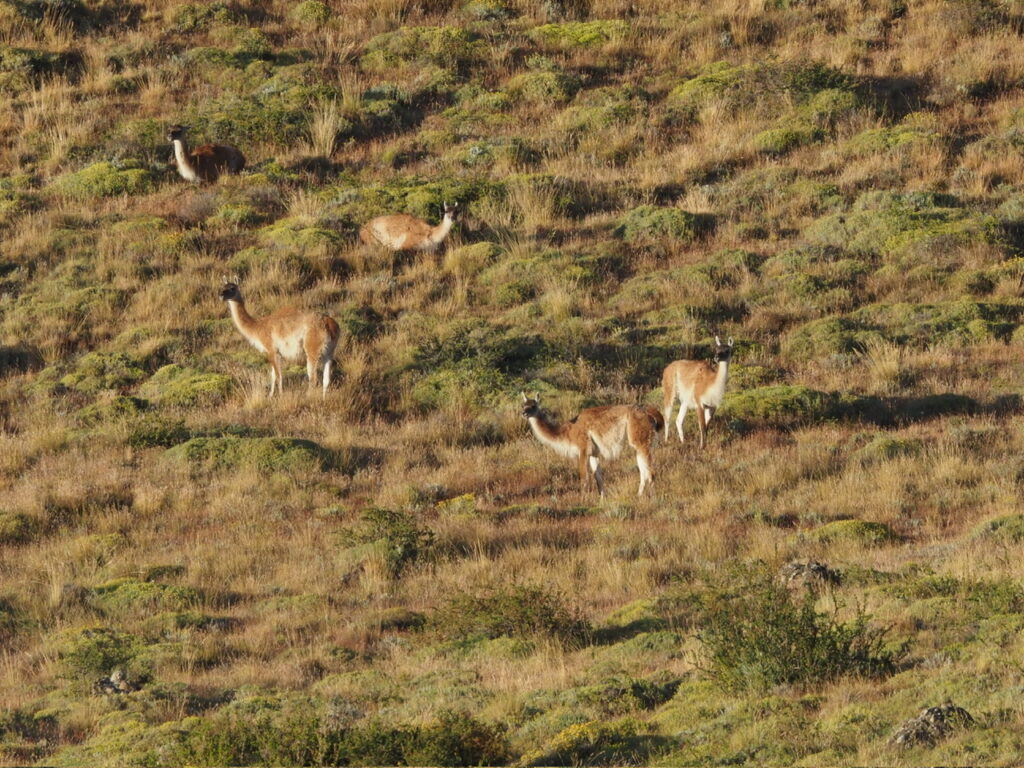
As we depart a small group of guanacos are grazing by the side of the track.

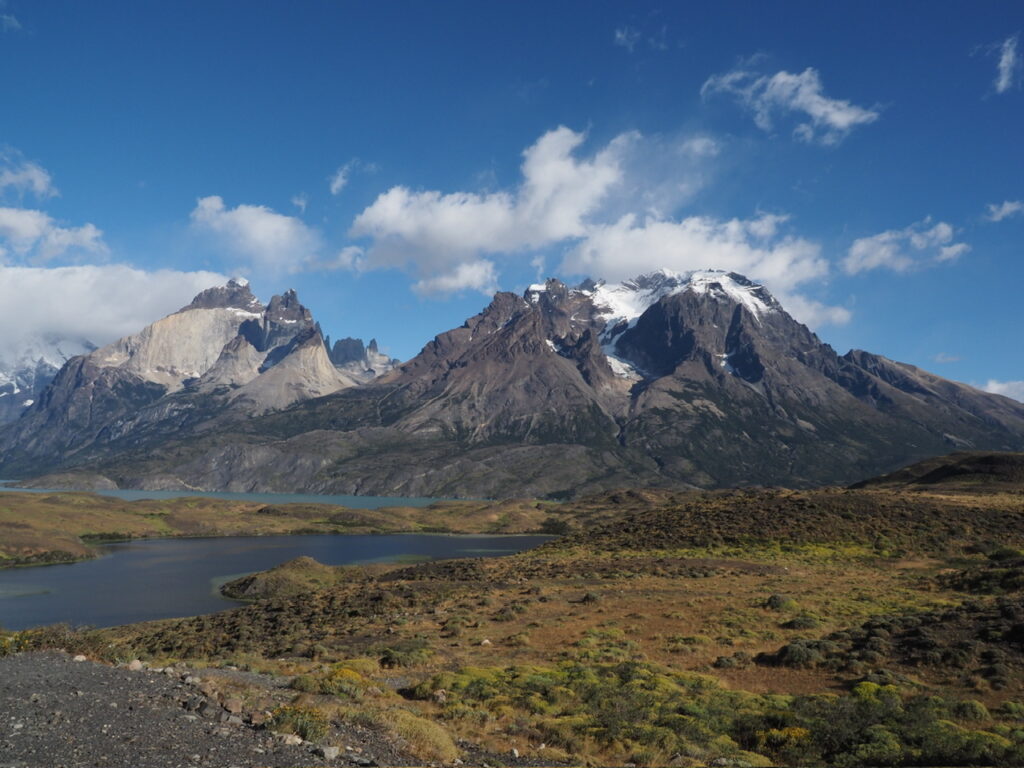
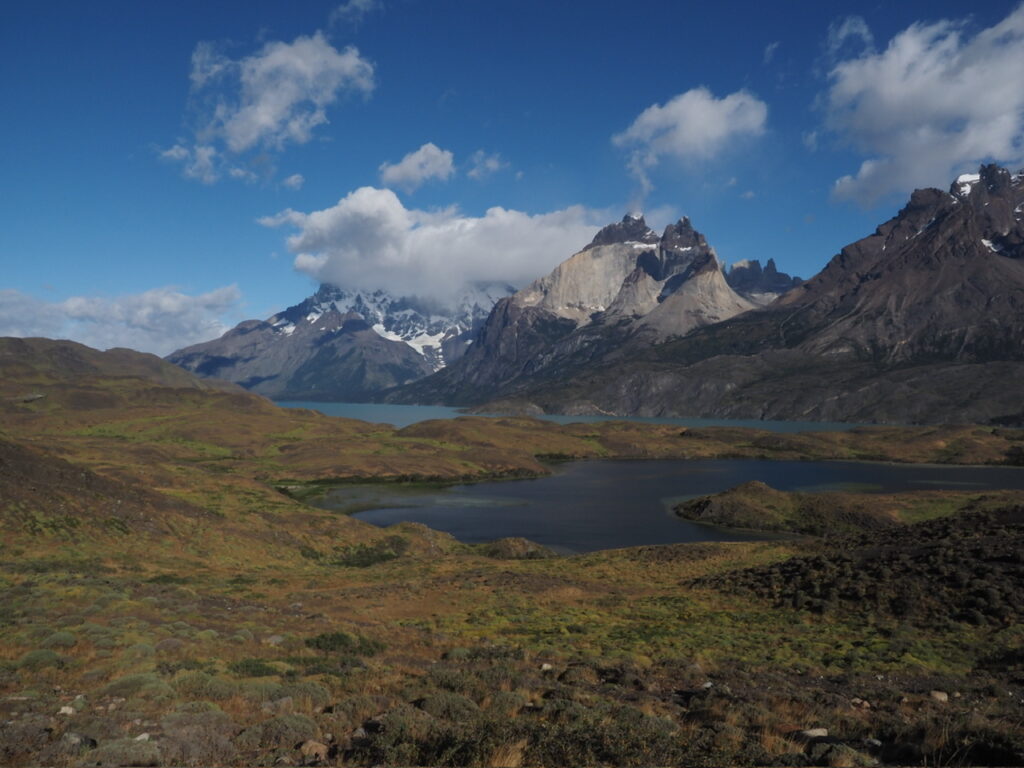
The entrance to the park is teeming with people – buses bringing in day-trippers and lots of hikers. There are pumas here but the odds of seeing them will be low. I am so glad I did my research and found a private guide with access to Estancia Laguna Amarga. It is where all the recent puma documentaries have been filmed. There are only 20 guides allowed to operate in it and yesterday we were the only ones there, so it is a real wilderness experience with the ability to go off road and track on foot. Despite the people, the park is a real wow. The views are just stunning.

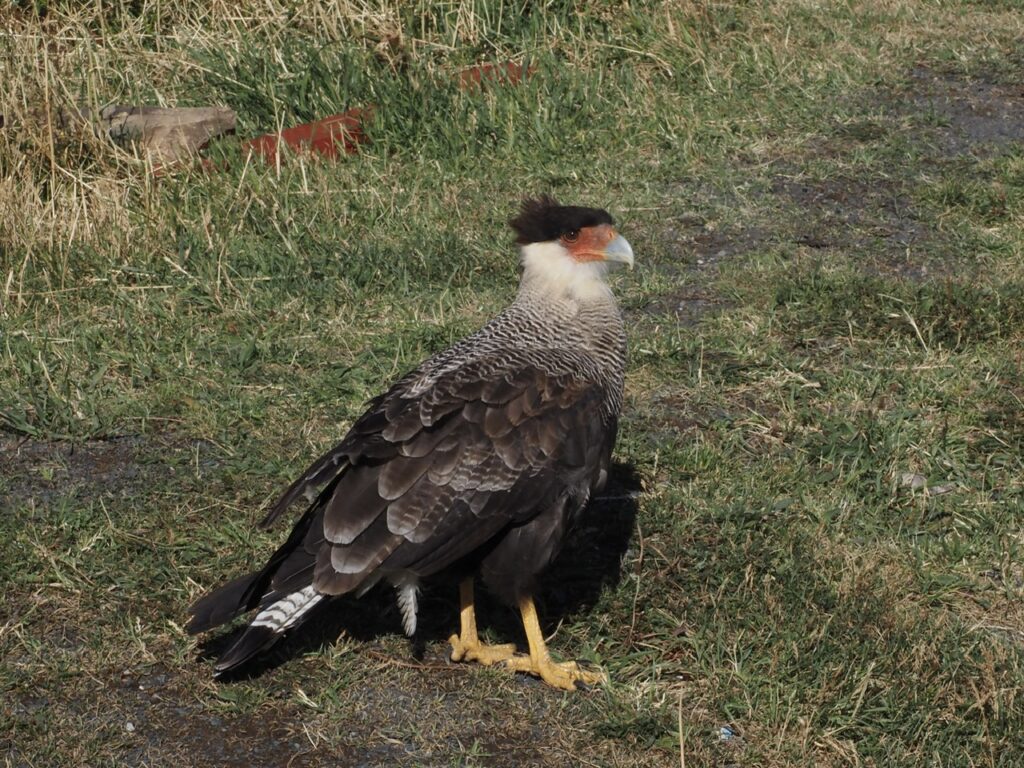
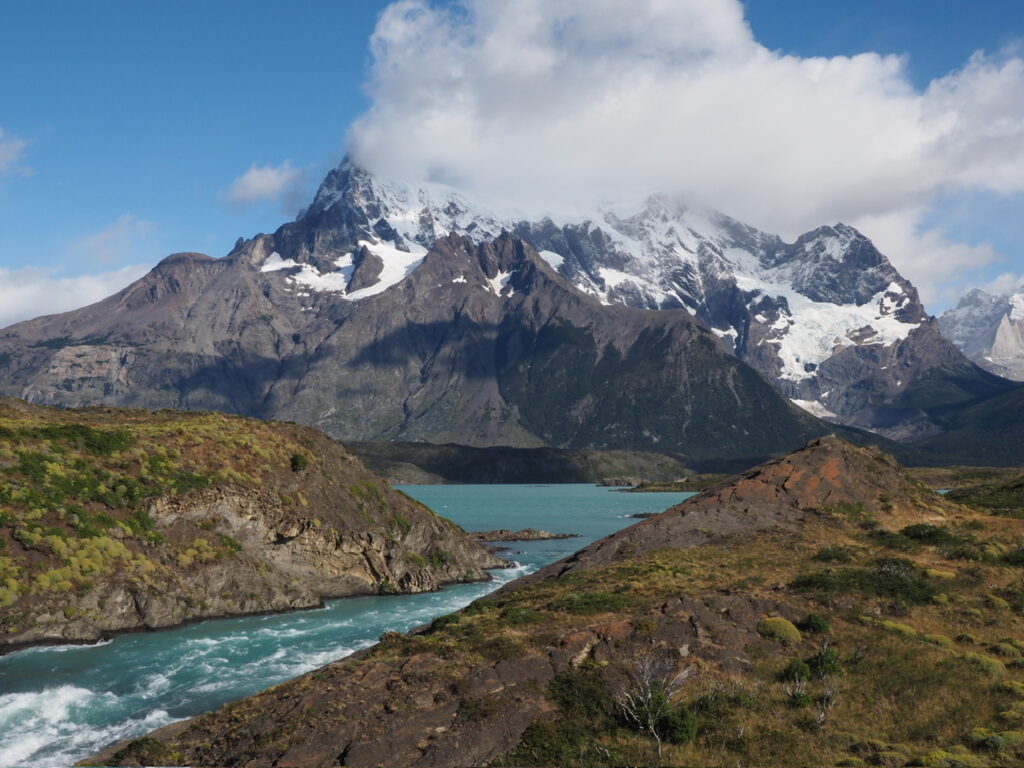
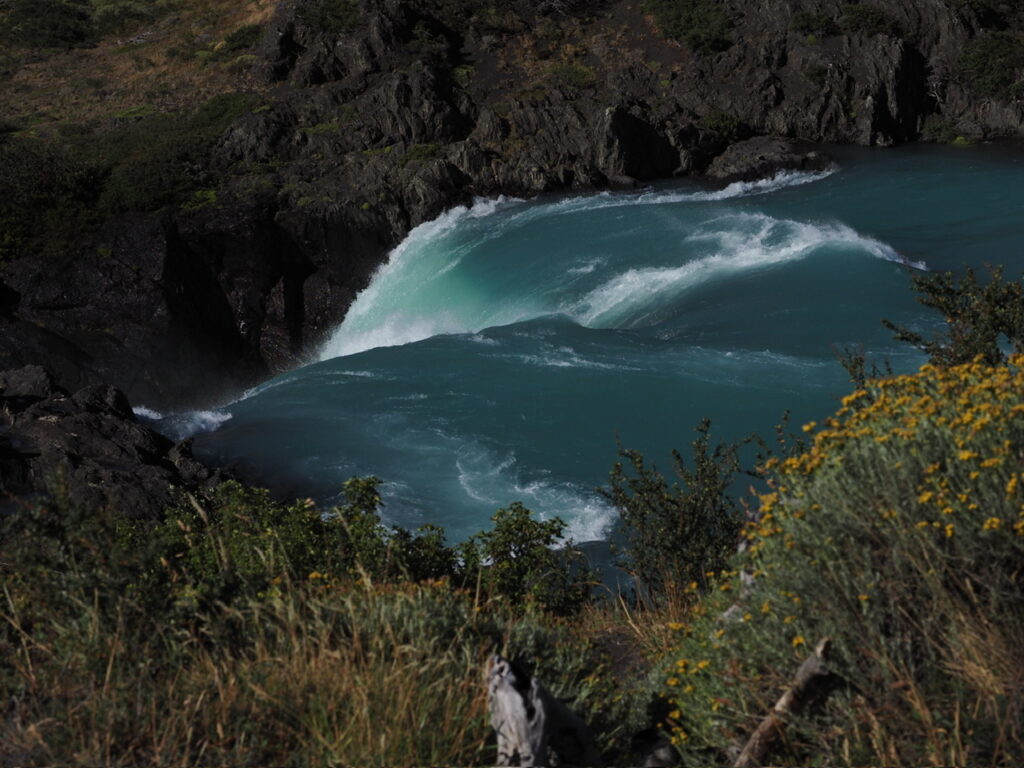
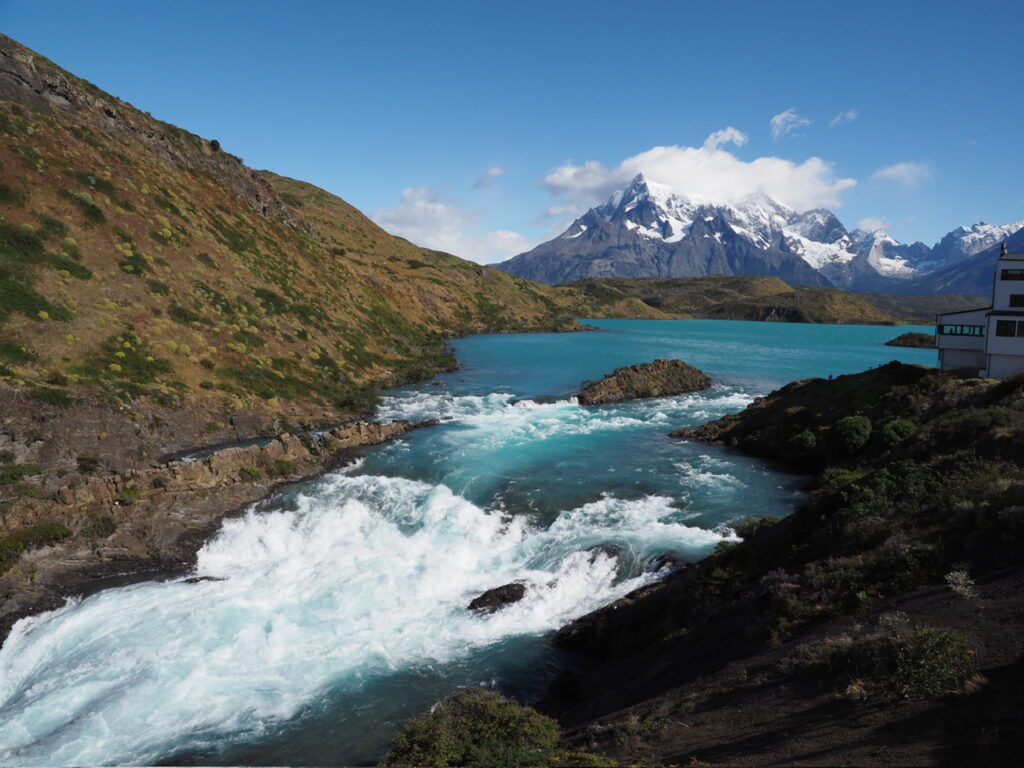
Victor is taking us to see the Salto Grande waterfall with its impressive water flow from Lake Nordenskjöld. We park the car and are warned to open the doors carefully. It will be very windy. Caracaras are common here. They are handsome birds – quite eagle like. They are opportunistic and are scavenging the carpark edges.

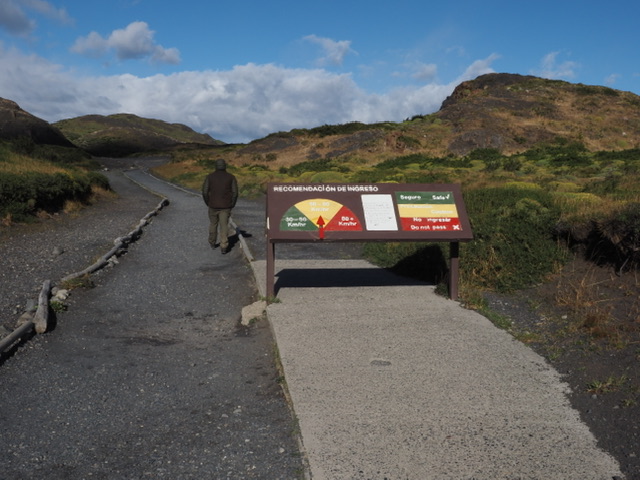
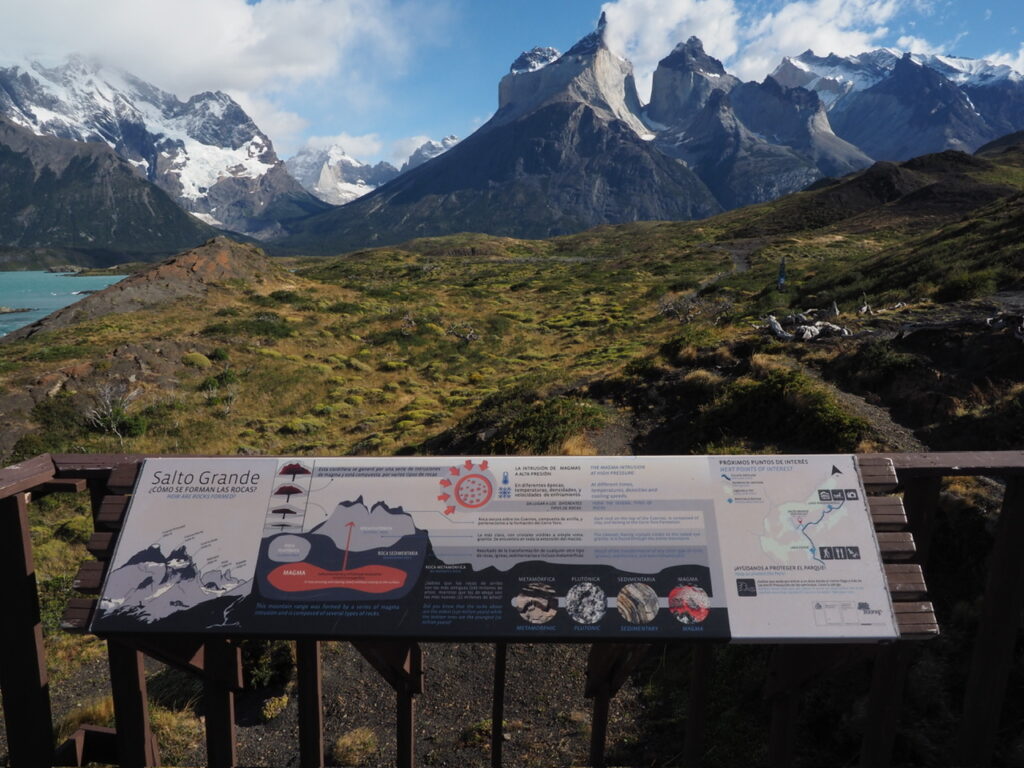
We head off along the path to the waterfall. Until now we have not really experienced the Patagonian wind. Oh my! To say it is windy is somewhat of an understatement. It is seriously powerful. The board below indicates the wind is between 50-80 km/hr and we estimate verging on the 80km/hr limit.

When the falls come into view we gasp. They are powerful and stunning. The immense wind makes it hard to hold the camera steady or even stand. It just adds to the intensity of the experience.

A board describes how the massif was formed. Magma forced its way through sedimentary rock. Over the years erosion has just left the granite core protruding. Strictly speaking Torres del Paine is not part of the Andes but an independently formed geological formation.

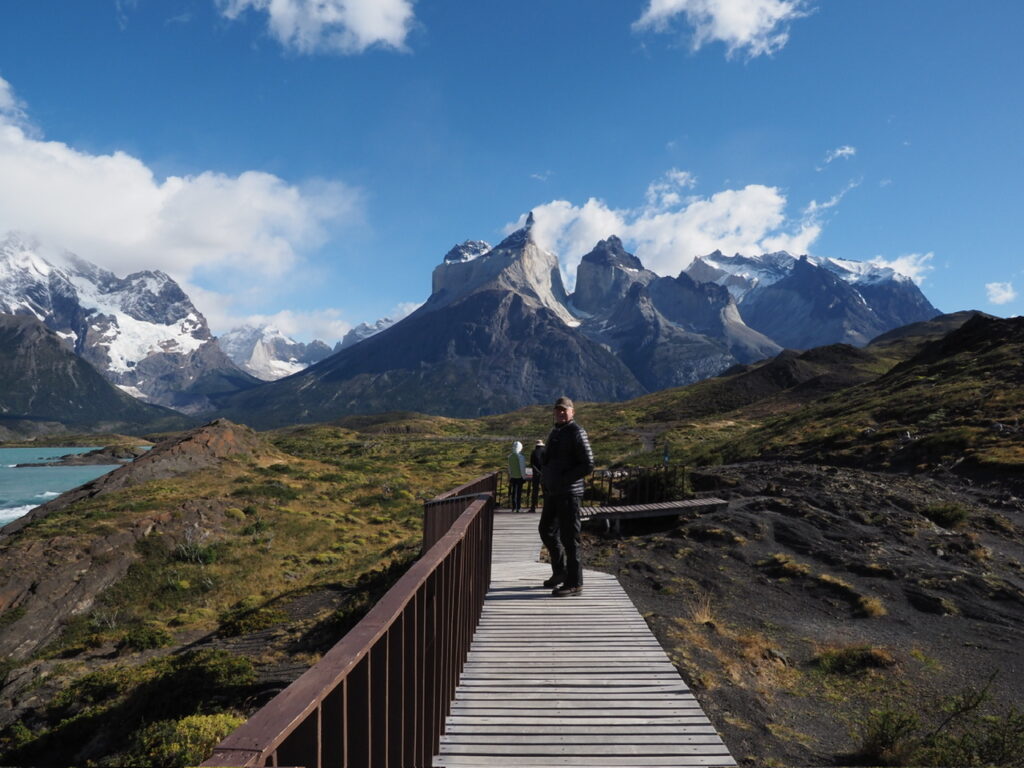
The view looking over the lake is also amazing – in fact every direction affords gorgeous scenery. We continue on our tour around the park and the views just keep coming! Lake Pehoe and it’s waterfall are also spectacular.

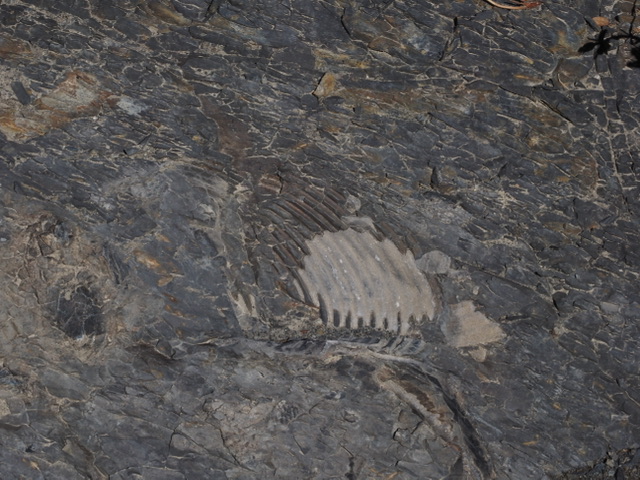
Victor shows us the outline of a large fossilised scallop on the rock, proving that all of this land was originally beneath the ocean.

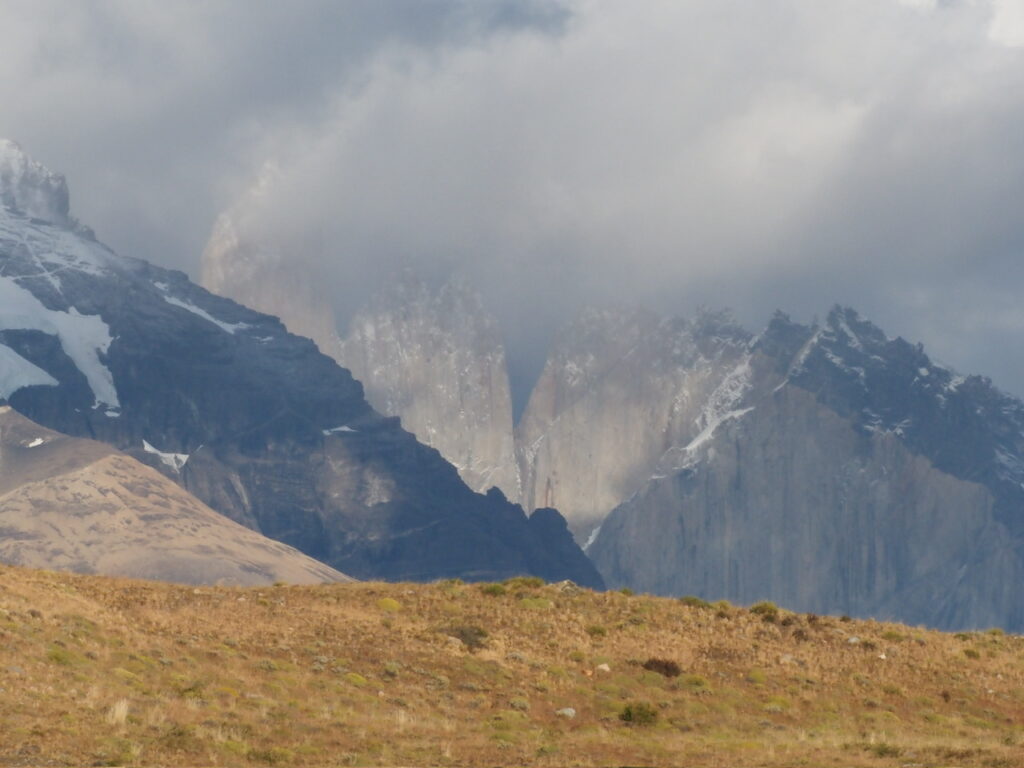
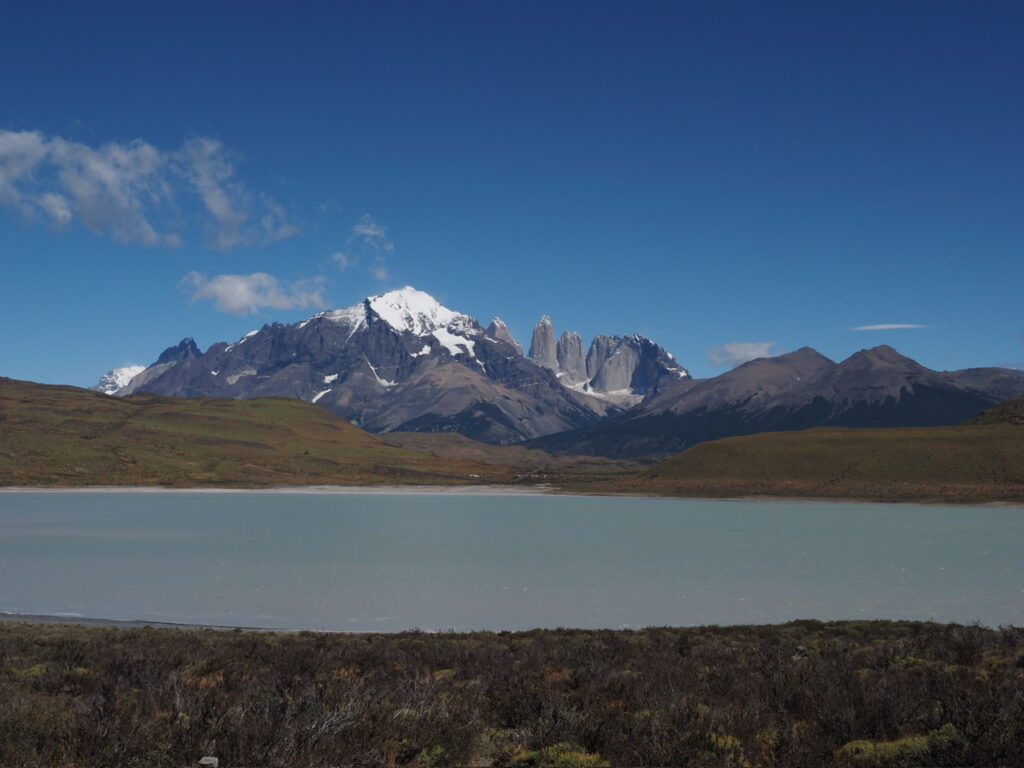
When we head back for lunch the cloud has completely lifted and we can see the towers and landscape in their full glory. We also see a few flamingos on the lake edges.

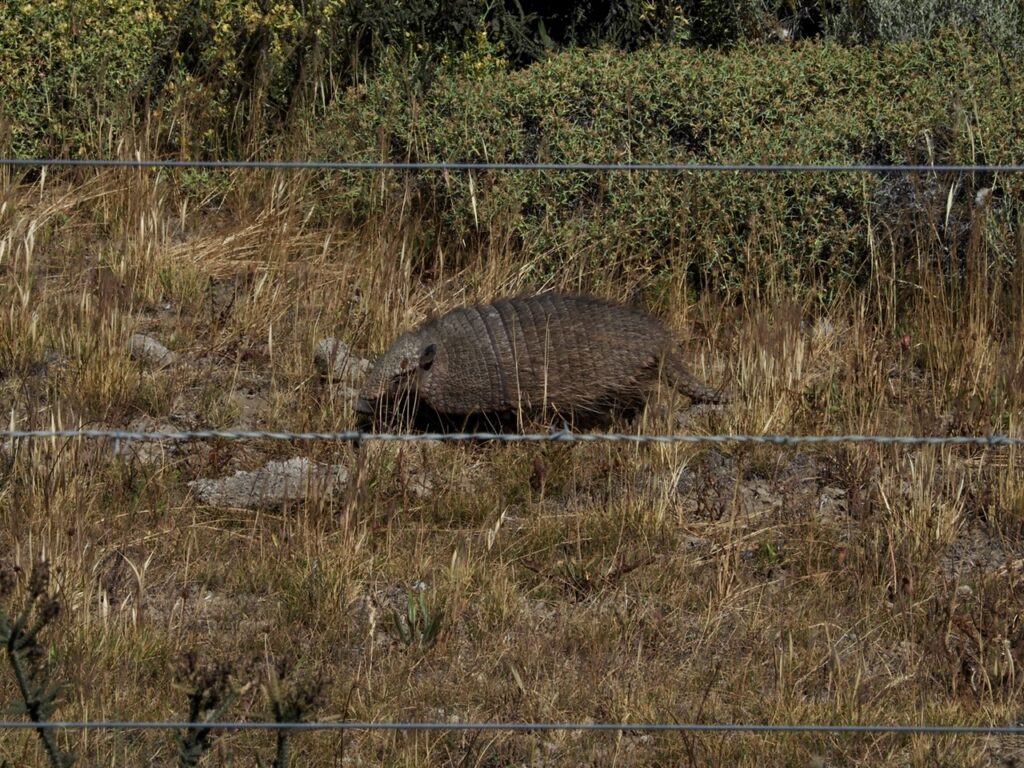
The afternoon’s drive turns out to be uneventful. All is very quiet apart from an armadillo crossing the road. They are surprisingly fast but we capture a little video and one decent shot though it is a shame about the barbed wire!

We have had a lovely day but our guide is sure that he can still find us a puma. It is 20.15 and the light is poor. He says “Yes – puma!” Well all I can say is he has awesome eyesight. We peer at a hill a mile away and he says look at the bush half way up. Now all I can see, even through binoculars, is a beige dot beneath the bush and a beige spot above it. Nana is standing on top of the hill and walks down to get a closer look. She reports that there is a male puma with a kill and there are also two females. Do we want to go? It will be a hard half hour climb uphill on slippery wet shale. It is late in the day and we decline. Who knows though? They might still be there in the morning…..

Closer Encounters

Again we rise at 4.45 for a 5.20 departure. The weather is miserable, dark clouds and heavy rain and 6C. Paul makes the comment that there is no such thing as bad weather – just inappropriate clothing. Fortunately we have the appropriate attire so all should be fine….

We enter the estancia and Victor scans the hillsides for guanacos.

The reasons for this are:-

  • They are a puma’s favourite food
  • They are easier to spot than pumas (though not that easy in the dawn half light)
  • If they look nervous a puma may well be the reason and could be in the direction that they are looking

Victor spots two guanacos who are several hundred yards apart but both looking in the same direction. He mentally triangulates the spot and calls Nana on the radio. She has gone ahead of us and he tells her where to look. Hey presto! There in front of her is a puma. It is in hunting mode with its eyes firmly fixed on a group of guanacos four hundred yards away.

We join her, park up, don rainproof clothing and slowly walk down the hillside until we are parallel with the puma and maybe 30 yards away. This is Coiran, sister of Dania that we saw yesterday. She is a beautiful cat in prime condition. Eventually she decides to move and stealthily creeps forward.

This now necessitates us re-positioning ourselves further down the hill. The guanacos seem unperturbed by this activity though remain vigilant.

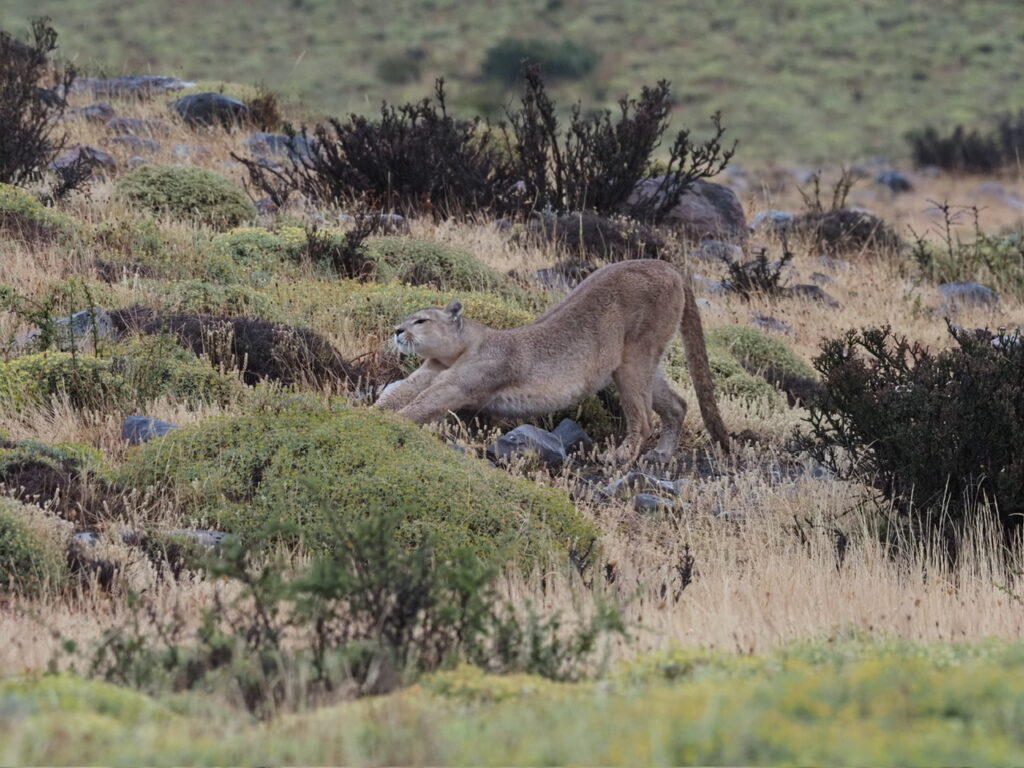
We settle down again and watch her periodically peer forward, stretch and yawn.

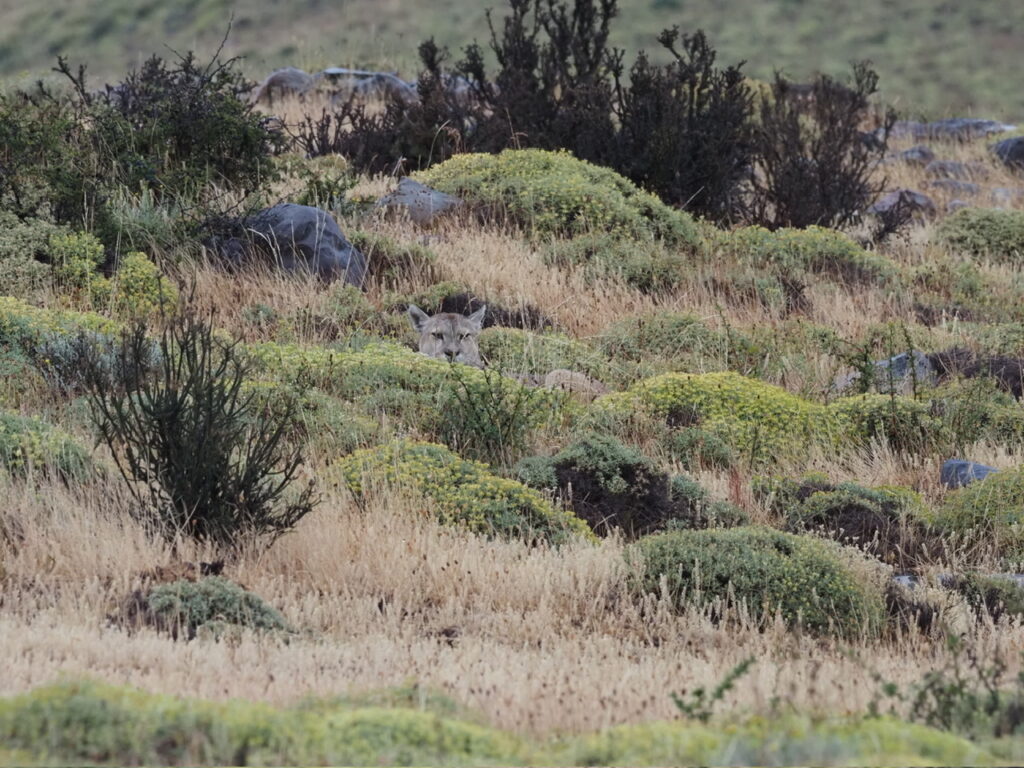
Victor thinks we should move much further down the hill so that if the puma starts to hunt the guanacos, then we shall be in prime position. From our new location Coiran is almost invisible and indeed it takes me a while to locate her.

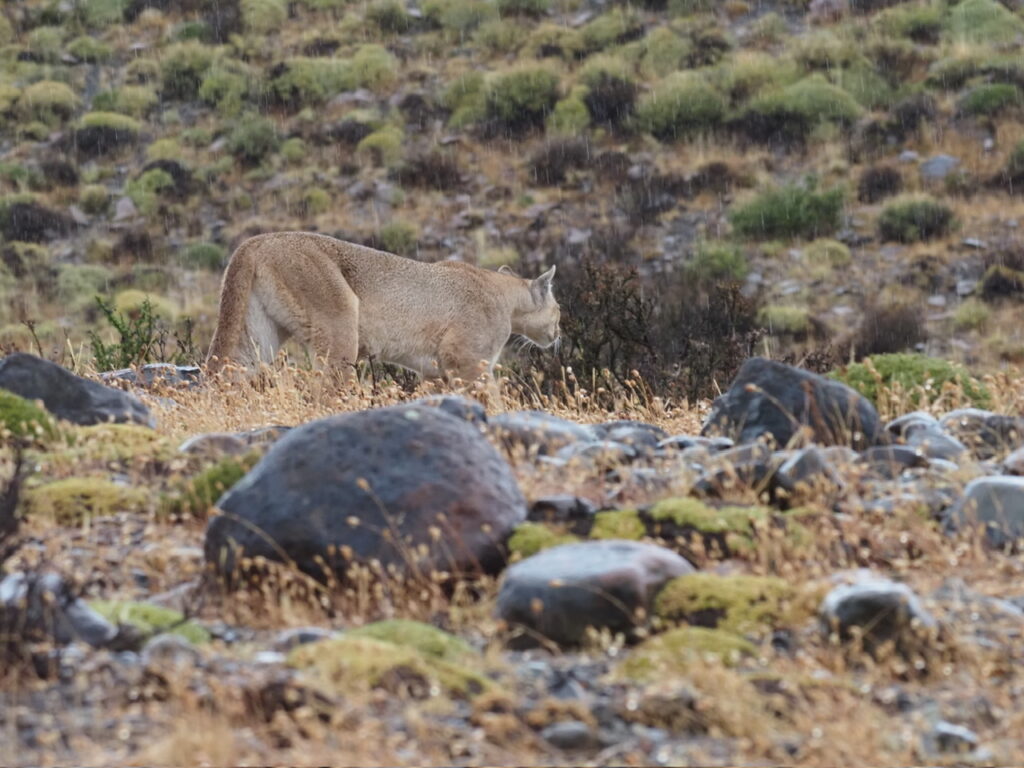
After much more patient waiting even Coiran has had enough of the cold and wet. She stands up and saunters up the hillside. We maintain a respectful distance of 20-30 yards but capture some pretty ace photos and video in the process. If you zoom in on the bottom two photos you can see the heavy rain which is still falling.

We return to camp early. We have had a fabulous morning but are wet and tired. The adrenalin rush and excitement of the pursuit takes its toll and a rest before lunch will be welcome. The afternoon brings a break in the weather and the rain thankfully ceases.

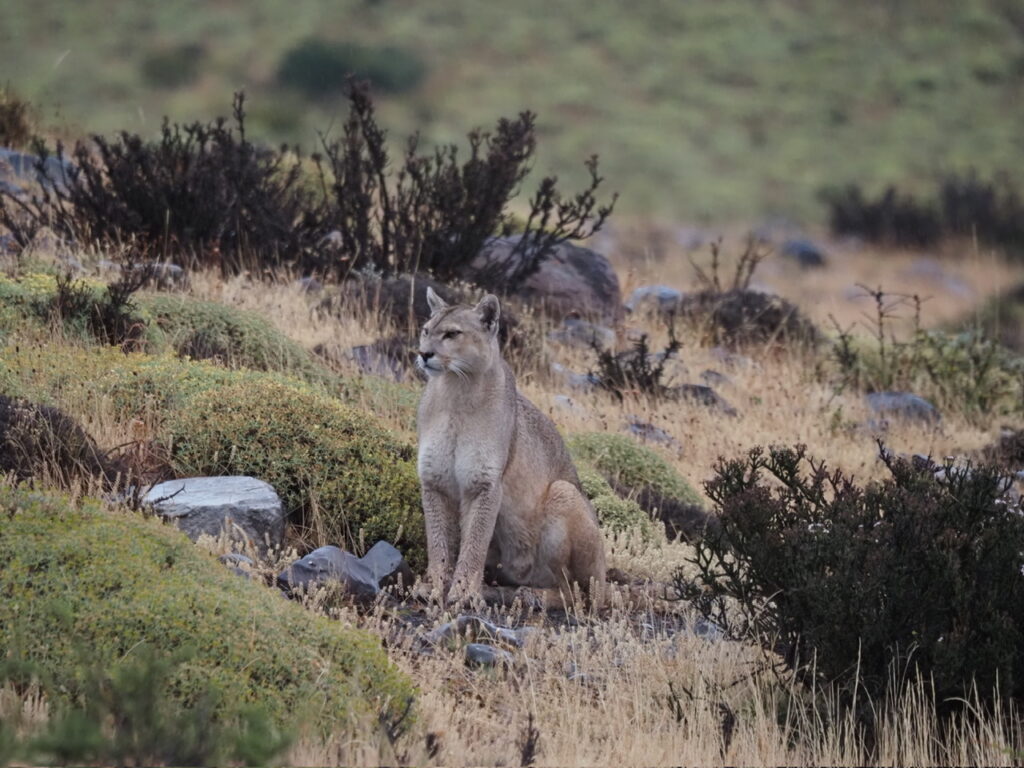
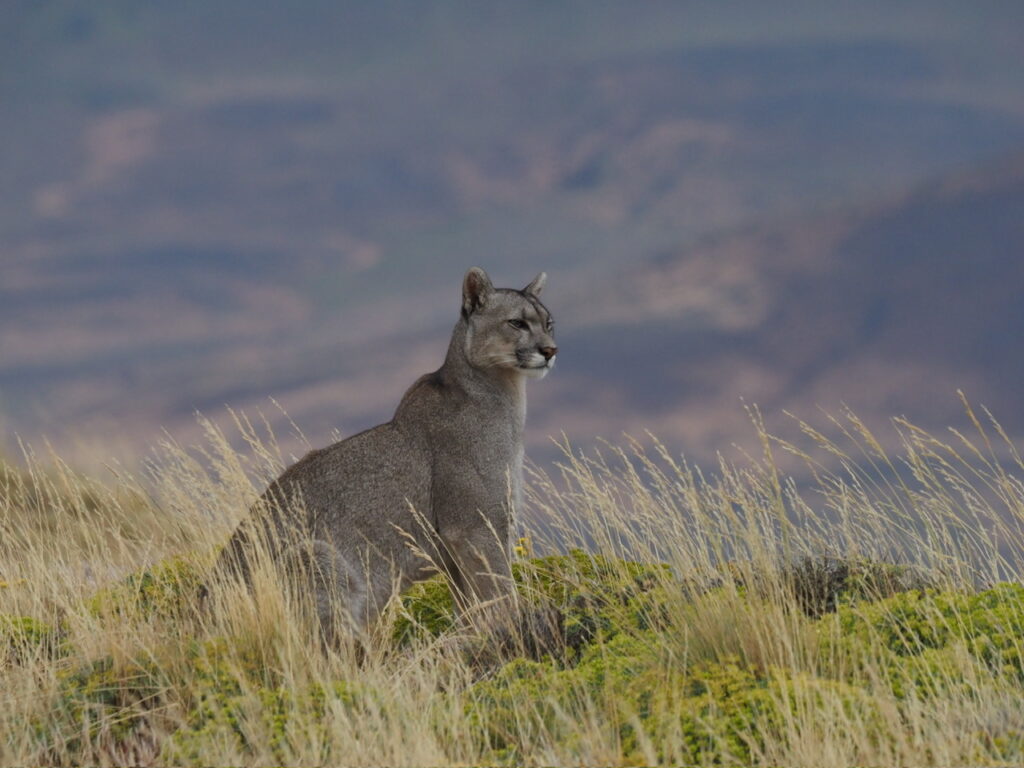
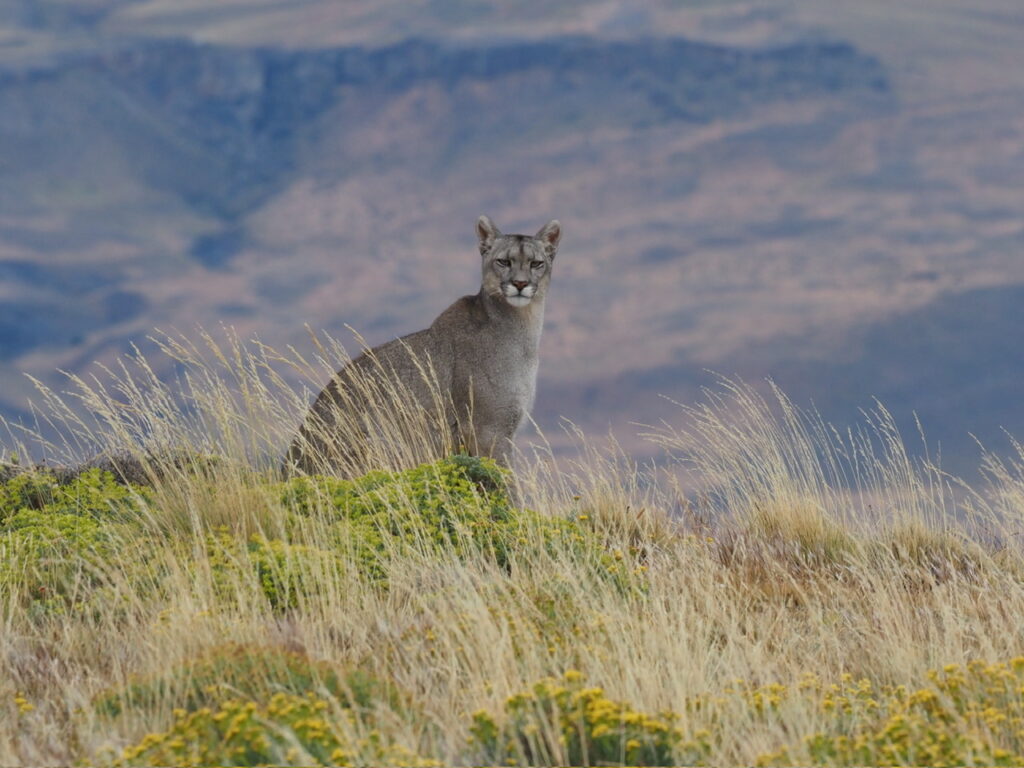
We head for the hills above Laguna Amarga and almost instantly encounter Amarga. She is a beautiful young puma with a dark, greyish coat. She is sitting on the hillside surveying the horizon. We approach on foot and I take a preliminary picture. It is always wise to get one in the bag!

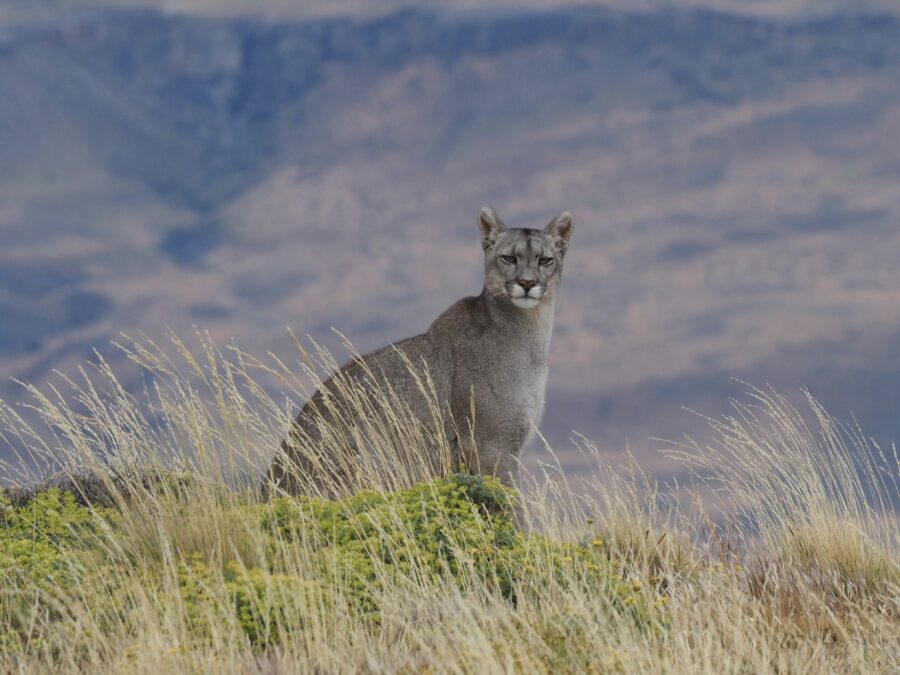
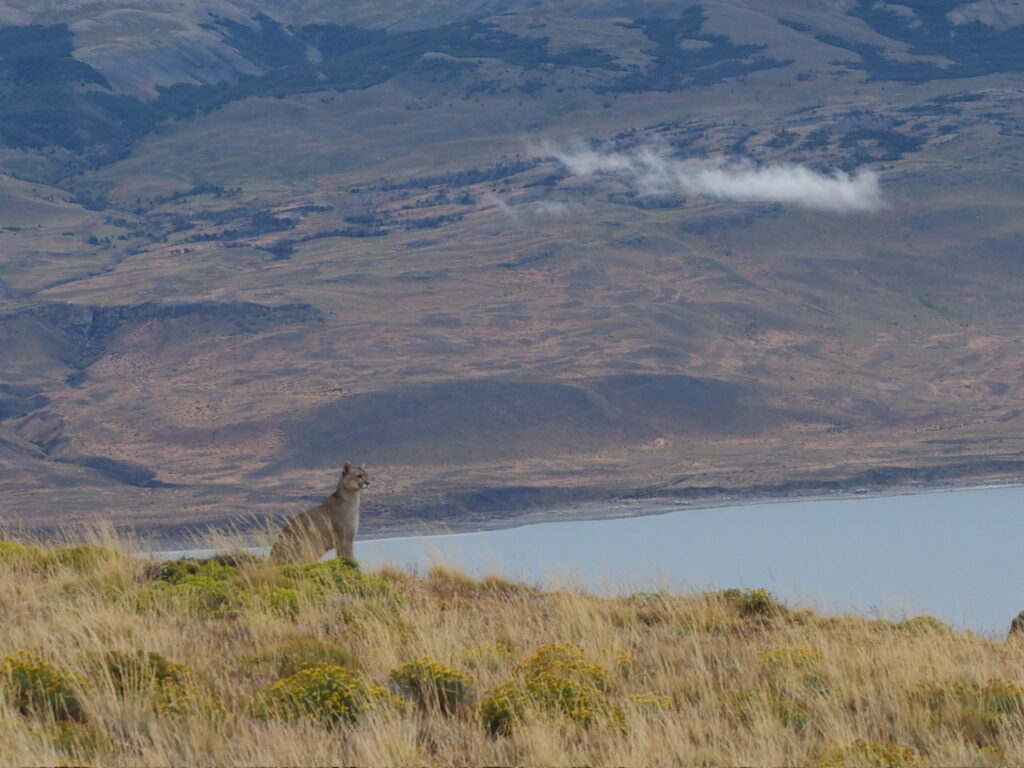
Victor beckons to me to follow him down the slope to a point where Amarga stands out against the hills and lake behind. The light is perfect and Amarga poses for us beautifully. The pictures I think speak for themselves.

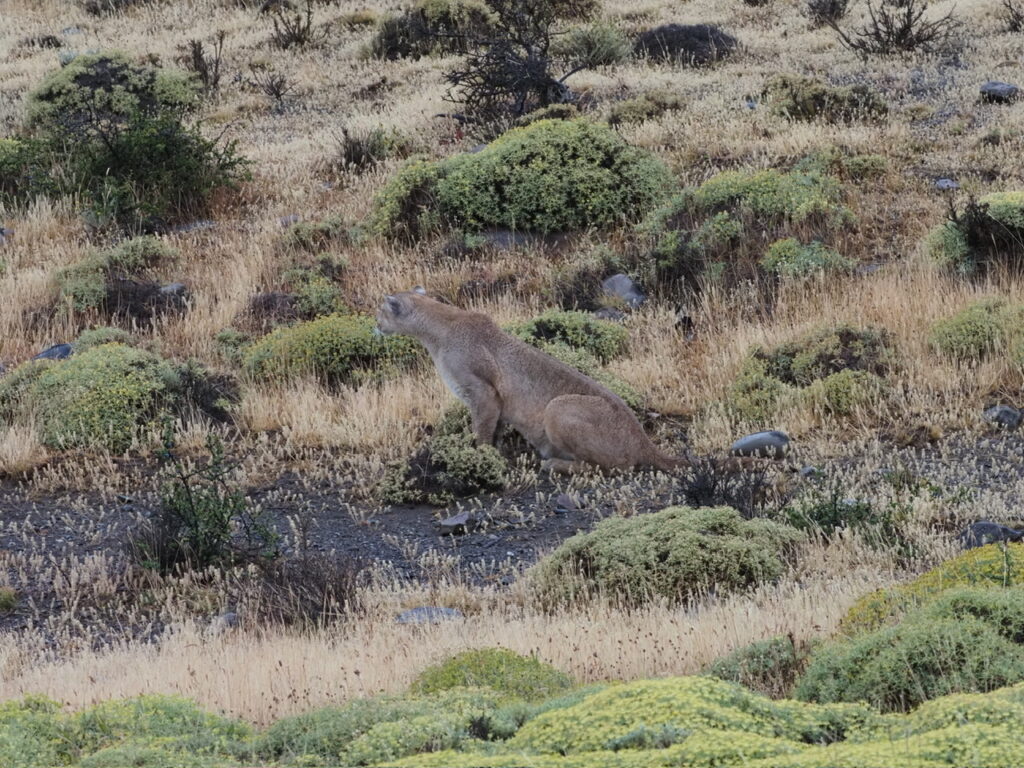
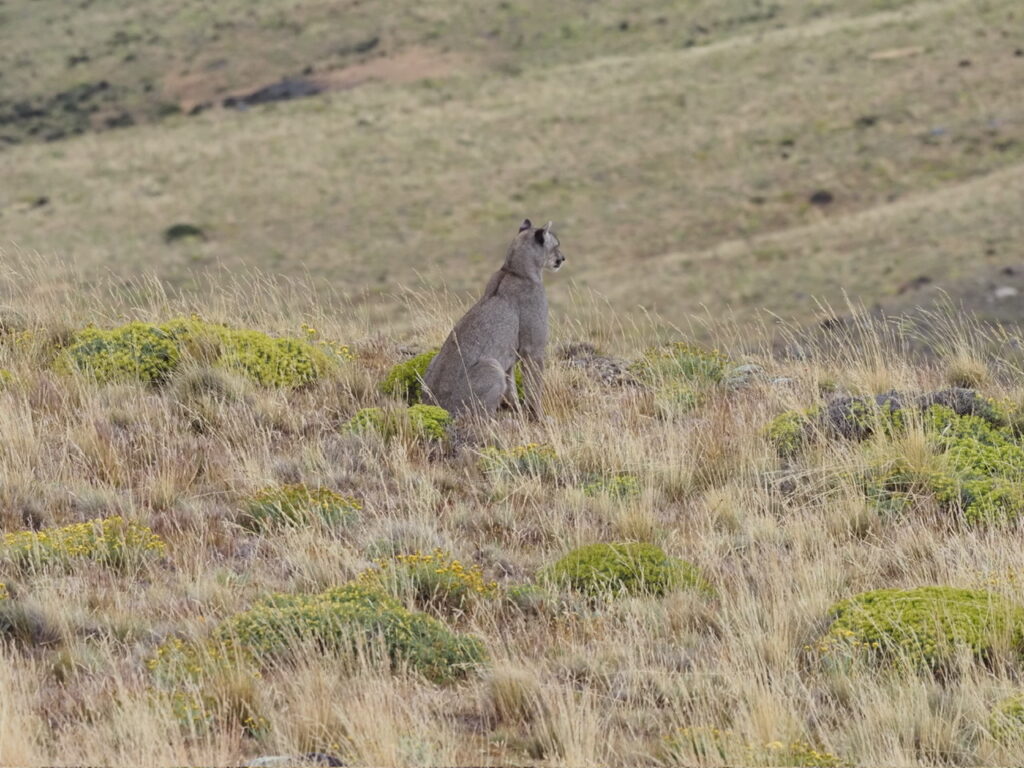
Eventually Amarga stands and saunters off. We drive to the bottom of the hill in the hope that we will be in a prime position if she starts hunting. In her new position however, and ¼ mile away she is almost invisible. She’s in the middle of the picture to the left of the rocks.

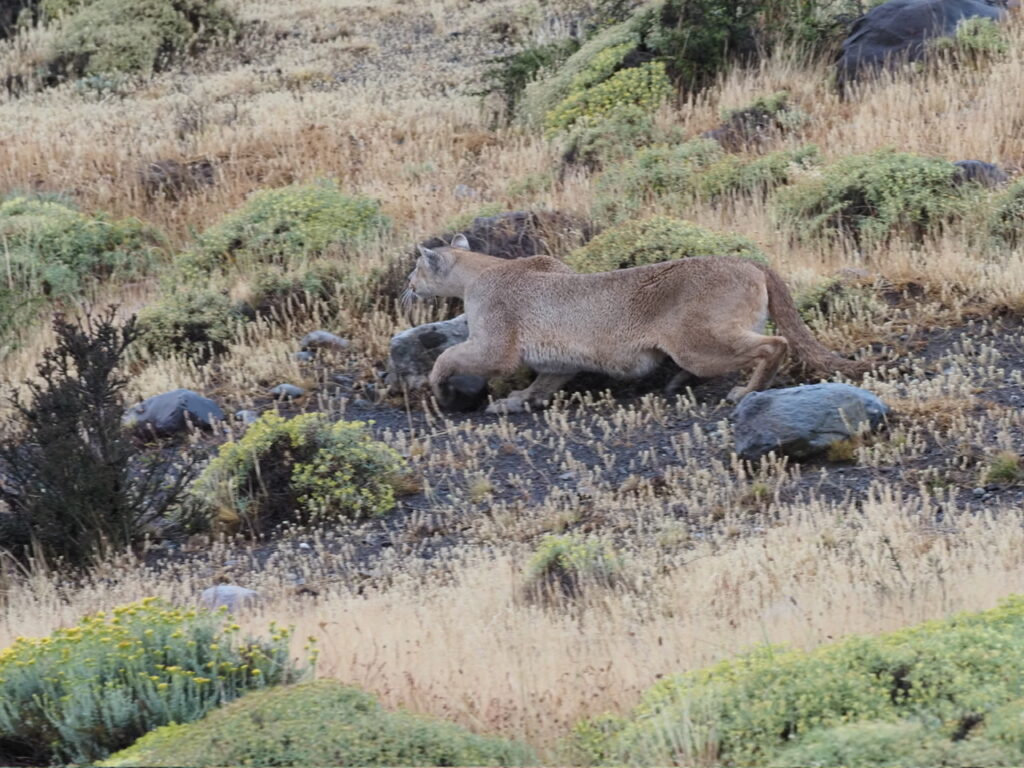
Amazingly whilst waiting for Amarga to move, we spot another puma and she’s coming our way. This is ginger. She is on the move, fast and in hunting mode. Victor and I follow her on foot with our cameras but it is hard work. Victor is young and fit. I am not and it is all uphill on rocky, scrubby ground. In the end, after a km or two we have to admit defeat. She starts running and we have no chance. The light is fading fast too, but we are close much of the time and do get some photos to at least record the episode.
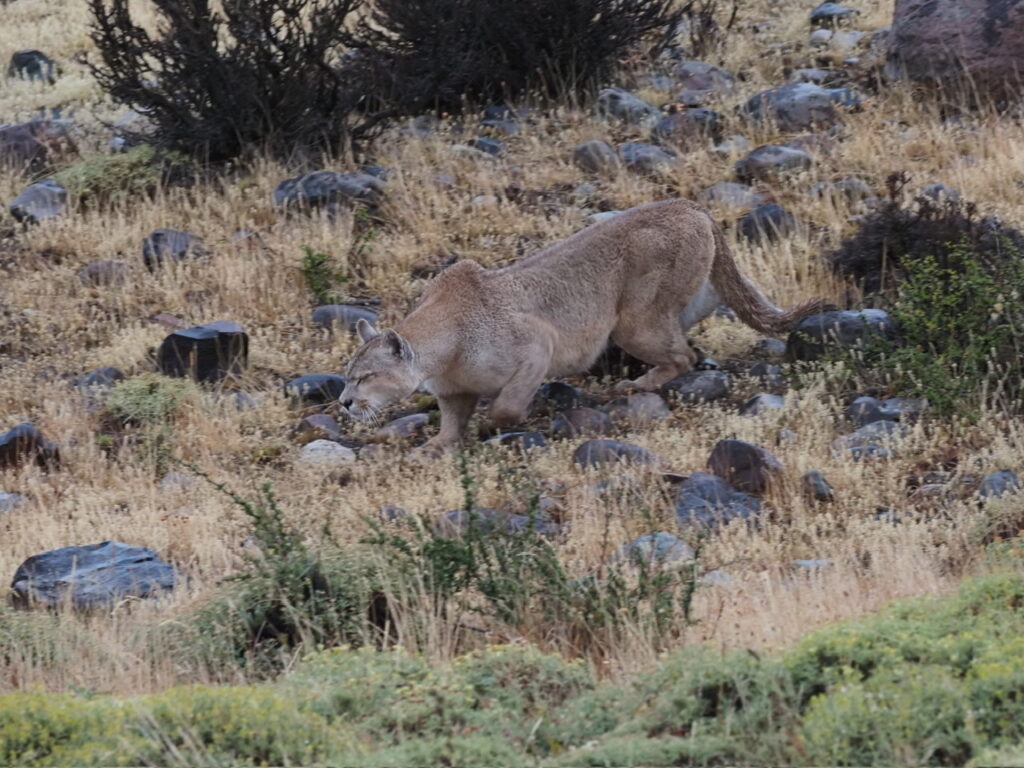
What an astonishing two days. We have seen six different pumas and had close encounters with five of them. Wow! Wow! Wow!

Torres del Paine

We disembark in Punta Arenas at 11:30 and collect our luggage. Our bags are scanned and we say our farewells to our fellow passengers. Drivers are waiting in the entrance hall but our guide Victor is not there. We sit and patiently wait for him to appear. After half an hour he still has not shown up and security guards ask us, in very fast Spanish, who we are waiting for. We work out their meaning, they make a call and gesticulate to us that he is waiting somewhere outside. He is standing by the gates to the entrance of the port about 100 yards away. Bit of a communication error I think….. Anyway, we are now united. We introduce ourselves. Victor is going to take us to a local sandwich bar which he says is extremely good and where all the locals eat. It is actually more of a cafe. The only problem with his plan is that we cannot find anywhere to park. We drive round and round the centre of Punta Arenas and eventually find a spot close to the restaurant. The sandwiches are indeed excellent. We order beef, avocado and tomato,which is served in a cross between ciabatta and a doughnut. The beef is flash fried steak – tender and juicy – exactly what is required after a very long morning.

The drive to our hotel in Cerro Castillo just outside Torres del Paine National Park takes about four hours. I sleep for much of it but do see a large family of rheas, with probably 20 young in a nearby field. On arrival we have an early dinner and are very glad for our heads to hit the pillow. The hotel is cosily and imaginatively furnished in local style. Old sewing machines line the hallway and sheepskins cover the dining chairs. Our room is comfortable and far better than we had anticipated.

Well it’s another early start. It’s a 45 minute drive into the park and we need to be there at dawn so we are up for coffee at 4:45. Yes – you heard it right – 4:45! We are feeling pretty bleary eyed to say the least. When we leave the hotel it is raining. Our guide Victor says “ Do not worry. They say in Patagonia, that if you do not like the weather, just wait five minutes!” This indeed proves to be the case for the rain soon gives way to drier weather, which then changes during the course of the morning into bright sunshine.

Our guide is accompanied by a tracker, who turns out to be his wife called Nana. She heads out before us and has very sharp eyes. Consequently, it is not long before she calls us up on the radio with a puma sighting. We see her standing on a hilltop in the distance. Victor parks our vehicle and tells us to get out and walk across the scrub some 200 yards or so to join her. She points to the puma but initially we cannot see it. The camouflage is superb. I cannot believe my eyes. What luck on our first morning and she is close! Victor leads us at a smart walking pace so that we are in position ahead of the puma. She walks towards us. Wow! She saunters casually past without a second glance. She is so relaxed. What an absolutely fabulous encounter and what a privilege! Paul films the encounter on his phone and the footage is excellent. I have nominated him official trip videographer.

We stand in awe and watch her walk up the nearby hill and stand on the crest. There are dark skies and a rainbow. She looks magnificent standing against the brooding sky. This is Dania who is featured in the David Attenborough series Dynasties and daughter of Rupestre.

The trackers are brilliant and follow her to a bush where she settles down. We follow and park close by for a picnic breakfast. The vegetation is dense but we catch occasional glimpses of her licking her paws and lazing, whilst we explore the delights of our packed breakfast. It’s OK, a sandwich, banana, egg, snack bar and juice. I’m really not that hungry after all the food on the cruise. I settle for the banana and 3 bites of the rather dry door-step sandwich. The thing is that the trip is not about the food. It is about pumas and boy is it delivering on every level.

Paul & I obscuring the bush 30 yards behind us where the puma is resting.

We spend the rest of the morning being shown around some of the parks landscape delights. The scenery is just stunning. We visit The Cascades below…

…and view Laguna Amarga.

Then it is back for lunch and a siesta, but not before seeing guanacos and condors.

In the afternoon the wind picks up and blows strongly. We hear it whistling and rattling our windows whilst we take our siesta. Clouds build once more, but thankfully the rain holds off. We set off at 16.30 for the 45 minute drive and have no sooner entered the private estancia, where we are tracking the pumas, than Nana calls us to say she has found another female – Sol. We park and walk to join her. She points at a bush 20 yards away. I see nothing. I look and look and eventually see a tiny bit of leg. Sol remained in this bush for the next 2 hours, only occasionally twitching an ear or raising her head slightly.

Whilst waiting Nana finds an old rhea egg. She explains that this is a sacrifice egg. The rheas lay extra eggs around the nest area as decoys for the real nest. This is in the hope predators will eat them instead and leave the main nest alone.

Sol then starts to move, stretch and yawn but promptly lays back down to tantalise us. We must be patient and hope she will eventually venture out properly.

Eventually she moves and we follow closely on foot. This is so exciting. Victor tells us to follow closely. He goes at quite a pace and the terrain is rocky and scrubby so we must watch our footing. Whenever we stop we lose sight of the puma, though Victor rarely does. But in case that should happen, Nana stays in position whilst we move. That way there is always a pair of eyes on the cat. If you zoom in on the first few shots below you will see how hard the puma is to see in the dense brush.

Finally we leave Sol to go about her business. She gives one final backward glance and is gone.

Cape Horn and Glaciers

Day 1

We board our boat ‘Ventus Australis’ at 18.00. It is comparatively small carrying 200 passengers and is dwarfed by the other two cruise ships that are berthed.  We are not really cruise people but it is the only way to access the Beagle Channel and glacier fields. Embarkation is very well organised and shortly we are escorted to our cabin. It looks very comfortable with a huge bed and stylish furniture. The really great thing is the huge window, which gives access to the spectacular scenery.

There is no time to change or luxuriate though. Welcome drinks are at 19.00 followed directly by dinner. We meet in the Darwin Lounge which is a wonderful space with floor to ceiling windows, which are perfect for viewing the spectacular scenery passing by.

We are allocated our table which we shall keep for the entire cruise. You never know who you will be seated with but we are lucky. We have a photo journalist from Germany and a Swiss couple form Zurich. They are interesting and good company. The cruise is on an all-inclusive basis with every need catered for. The meal and accompanying wines are quite excellent as is the service.

Day 2

There is a queue at breakfast for the buffet which is less than ideal. We are still pretty full from last night so just grab some fruit, juice and pastries.

Our first excursion is to Wulaia Bay. There are three walks of varying intensity. I opt for the medium which has some very steep sections but will afford great views of the bay. We learn about the native people who lived here called the Yamahas or Yaghans.

They were the world’s southernmost people. They wore virtually no clothes and withstood the cold temperatures by covering their bodies in sea lion grease. They were hunter gatherers and lived in simple huts made from sticks and covered in skins and lichens.

The walk turns out to be quite tough. Underfoot it is fine but there are quite steep sections. In hindsight using a walking pole would have been wise. Anyway I make it and arrive at the first lookout…and what a view.

We continue upwards and rest for a while at the second lookout. We admire the extensive views over the lake and to the snowy peaks behind. The experience is all the better for some really unexpected warm and sunny weather.

The descent is much easier. En route we encounter damage created by beavers which were brought here by settlers for their pelts. However the climate was not right to produce good quality skins and they were released into the wild. They do a fair bit of damage with no natural predators.

The boat is immediately under way for Cape Horn which is about a 6 hour passage from Wulaia Bay. The crossing is remarkably smooth. It is very rarely this benign at Cape Horn, so we are incredibly lucky. Our landing is made in a sheltered bay on the leeward side of the island.

The sea is dead flat here with just a small swell. Despite this it still requires two men to stand in the freezing water holding the zodiacs in place whilst we dis-embark. This is certainly a day for exercise as there is a steep climb up steps to the top of the island.

Paths then lead us to the lighthouse and small chapel.

In the opposite direction stands the Cape Horn Monument. This was inaugurated on 5 December 1992 in memory of seamen from every nation who perished in the seas around Cape Horn. It was created by Chilean Sculptor José Balcells Eyquem and is made of two separate pieces; each comprising 5 steel plates to represent an albatross. The specification required the monument to be able to withstand winds of 200km/hr.

There are two marble slabs on the way to the monument, one has a dedication and the other has a poem by Sara Vial…

which translates as:-

“I am the albatross that awaits you at the end of the earth.

I am the forgotten soul of the dead sailors,

who sailed around Cape Horn from all the seas of the world.

But they did not die in the furious waves.

Today they fly on my wings, towards eternity

In the last crevice of the Antarctic winds”

Our course to Cape Horn

Day 3

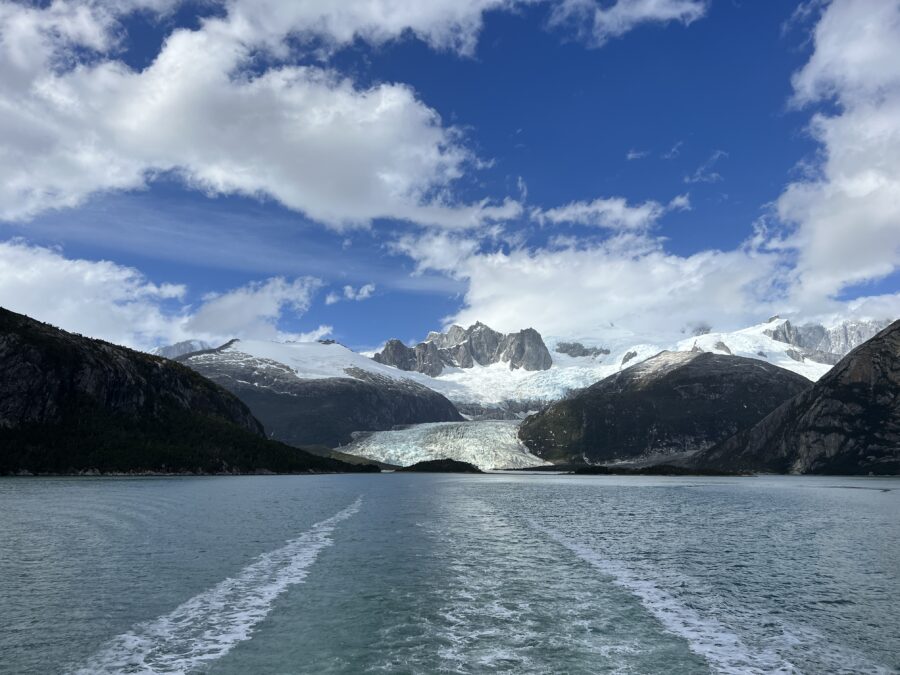
This morning we land at Pia Glacier. It is raining lightly and the rocks are wet but we are assured not slippery. This is true, but as we make our way over rocks for a better view of the glacier, we do need to tread carefully. Where moss has taken a hold it is slippery. Indeed one lady does fall and needs to go back to the boat on a stretcher. Fortunately we heard later that she was OK.

Every so often the glacier groans and we hear what sounds like thunder as lumps of ice calve off and drop into the water. It is really quite something to experience. The ice formations and colours are incredible and photos do not do it justice.

There is some wonderful forest growing by the side of the glacier. It has a very Japanese garden feel, with some trees looking very much like overgrown bonsai.

As we head back to the boat the rain stops and the clouds begin to lift. By the time we leave for the afternoon’s excursion the sun is shining. We are visiting Porter Glacier which we shall view from the zodiac. When it first comes into view the only word that escapes our lips is “Wow!’ It is really something. The photos speak for themselves.

Back onboard it is pleasant on deck and the weather affords us some wonderful views. It would be usual to experience very strong winds here, which would make the cruise pretty uncomfortable to say the least. But so far, so good. Long may it last!

The evenings are long here and over dinner we are lucky enough to spot a whale spouting with a young calf alongside. There is also a rather wonderful sunset.

Day 4

Today we are visiting Aguila Glacier, which is receding. We go ashore where we walk along the beach and are told about the sea-life and plants. Light rain is falling and it is 8C . There is no wind and I am wrapped up well with fully waterproof clothing so it is moderately comfortable. It is also rather pleasant to be walking on land that is flat. The light is poor and the view misty so landscapes are not that photogenic. Instead I concentrate on the small things. Pebbles on the beach and plants and flowers.

It a very enjoyable excursion. We make a short detour into the woods by the shore. This is sub-arctic rainforest, where lichens and mosses abound.

We then see the glacier, which is very different from the two that we saw yesterday. It no longer touches the sea. Water pours out beneath the ice, which has no contact with the warmer rock below, and cuts channels through the moraine deposits as it makes its way out to sea.

We set out immediately after lunch to see Condor Glacier, which will be viewed from the zodiac with no disembarkation. It is raining pretty heavily as we step into the zodiacs and many of the guests have opted out of this trip. In hindsight we should have done the same. It was cold and wet and the glacier was not particularly spectacular. There were some birds on the cliffs and I did try taking photos. However, I quickly became frustrated as I was at the back of the boat, had too many people blocking my view and by this time was quite cold and just wanted to be back on the boat.

The best thing at the end of each excursion is being handed a cup of hot chocolate with a generous slug of whiskey in it.

Tonight is our final night aboard. There will be the Captain’s Dinner and farewells to the staff who have looked after us royally.

Day 5

We are up at the crack of dawn for a 06.15 landing on Magdalena Island to see Magellan penguins. There is a very large colony here of about 150,000 birds. They come here to breed every year between October and March. We have to keep to the path but penguins are everywhere so it is easy to get close. Gulls and skuas abound too and do not seem in the least fazed by human presence. We see nest building with males burrowing in the mud and churning out soil. There are also chicks in various growth phases. One chick is especially fat!

All to soon it is time to return to the boat, breakfast and pack cases as we depart for the short crossing to Punta Arenas – our final destination before we head north to Torres del Paine for puma tracking.

Page 8 of 36

Powered by WordPress & Theme by Anders Norén