Photography and Travel Blog

Author: Maggie Page 21 of 36

Sep 29 Brunch by the River

This morning we do manage to drive along the Great Ruaha River. It is sobering as there is virtually no water in it. This is a very hard time for the wildlife and the rain is desperately needed. Anderson tells us that when the rains come the whole area is inaccessible and he points to the water marks on trees to demonstrate high high the water level rises. It is at least 3-4 metres above us. This whole area will be totally transformed. Only researchers will be able to come here as game drives will be largely impossible. This is very hard to envisage at the current time.
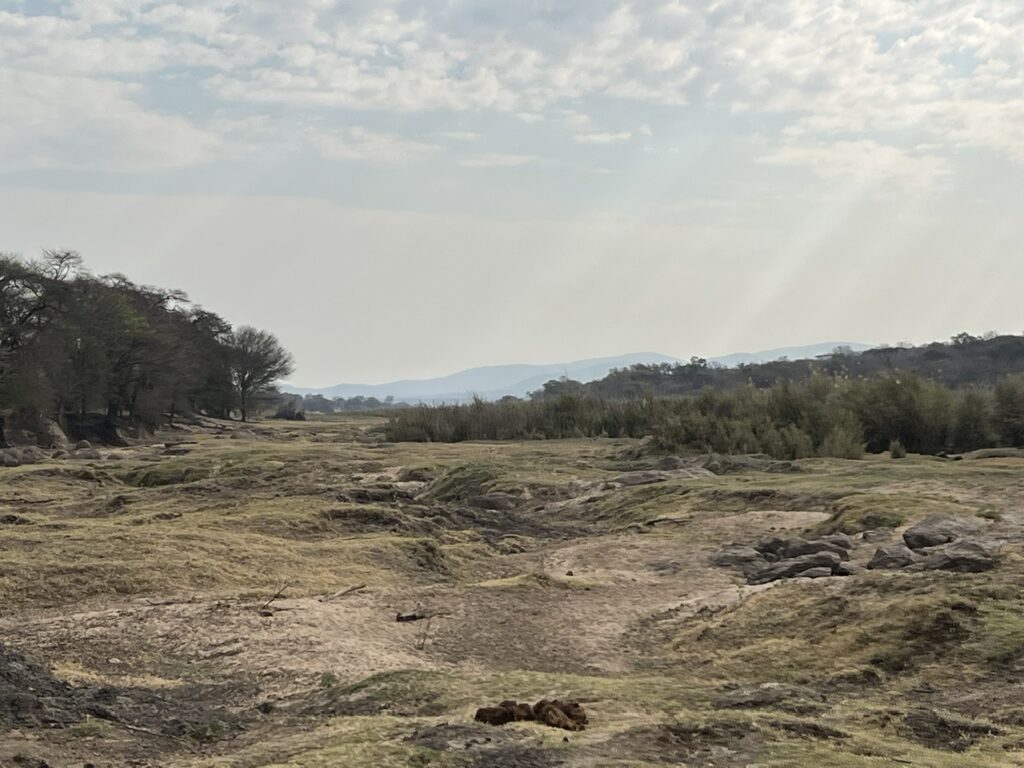
We drive east along the river which makes taking any meaningful photographs tricky to say the least. The problem is further compounded by the huge numbers of tsetse flies. Whenever we stop the vehicle we are inundated. It is unpleasant to say the least and painful when they get you – which they do even through your clothing. There are little pockets in the river where there is water and wildlife congregates there.

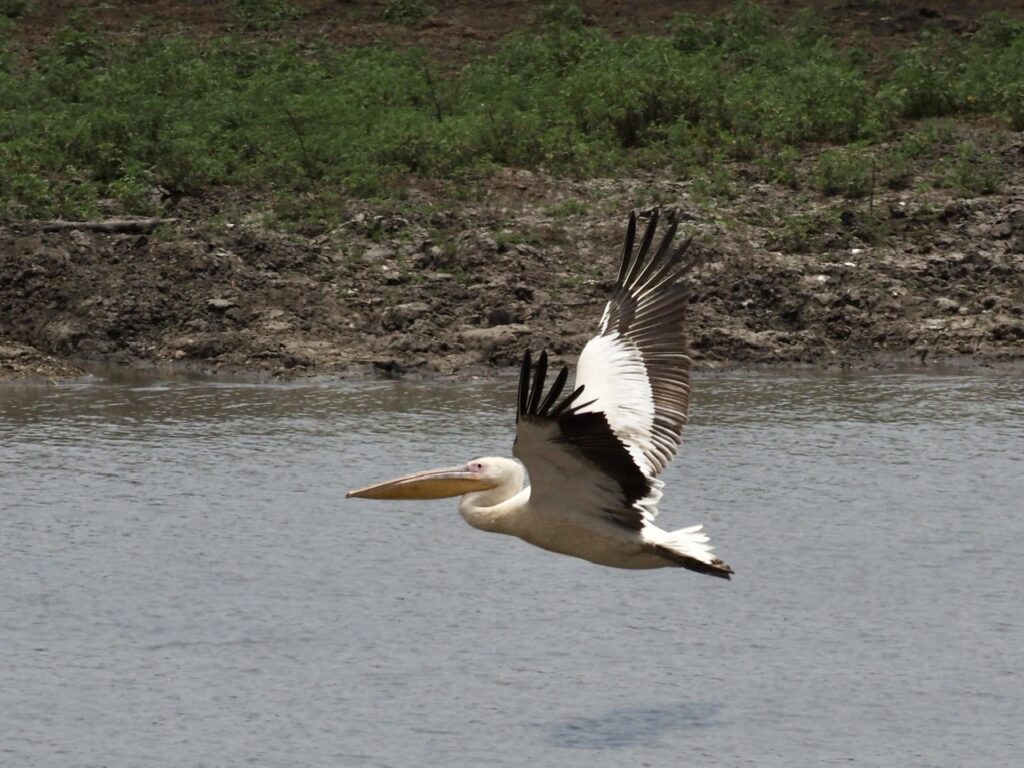
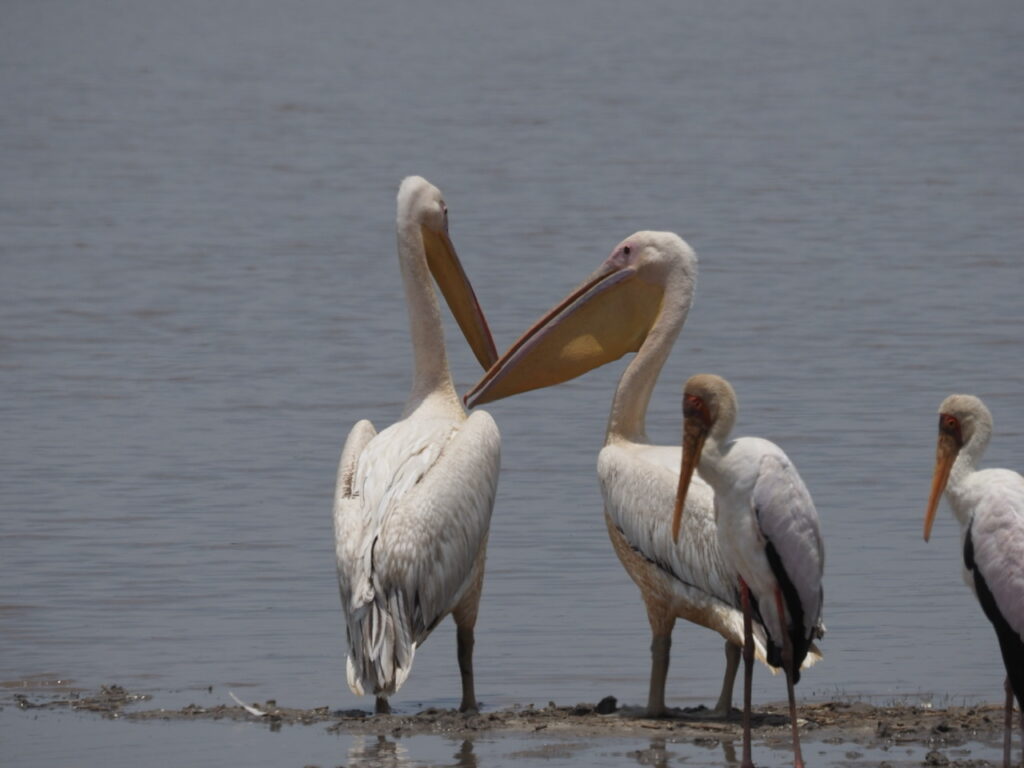
Pelicans and marabou storks circle and soar on the building thermals. We spend some time trying to capture some good action shots but Anderson is really not great at positioning the vehicle.

We see elephants in the distance, herons and crocodiles basking on rocks in the few pools that exist.
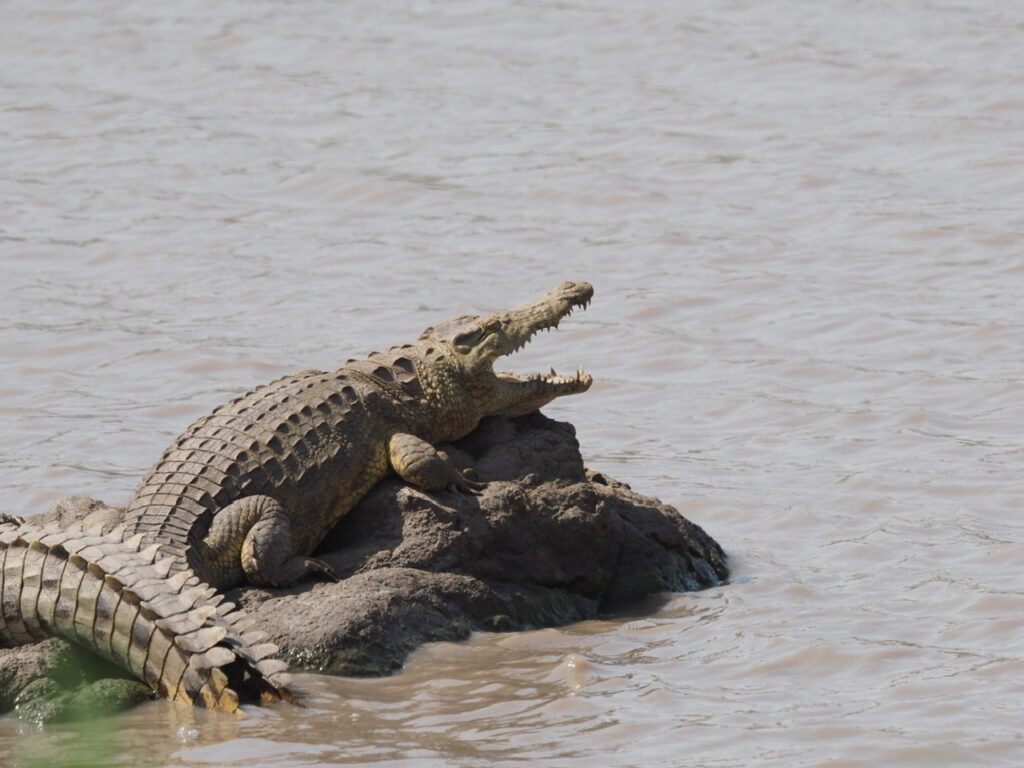
After a couple of hours we turn back. The sun is now behind us so photos should be better. We bump into another Asilia vehicle. It is Ally the chef with helper Dickson. He is going to cook us brunch in the bush. We are slightly apprehensive about this because of the tsetse flies, but it turns out that they do not bother us once we are out of the vehicle.
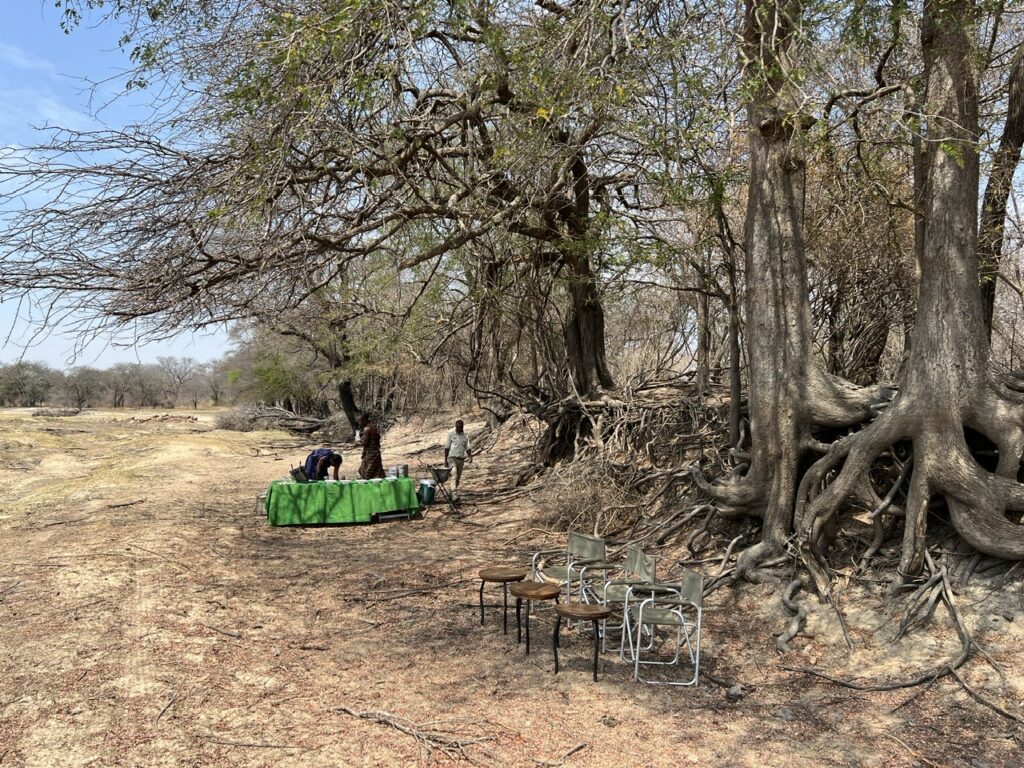
Brunch is laid out and the water level will reach 5-6 ft above the top of the bank

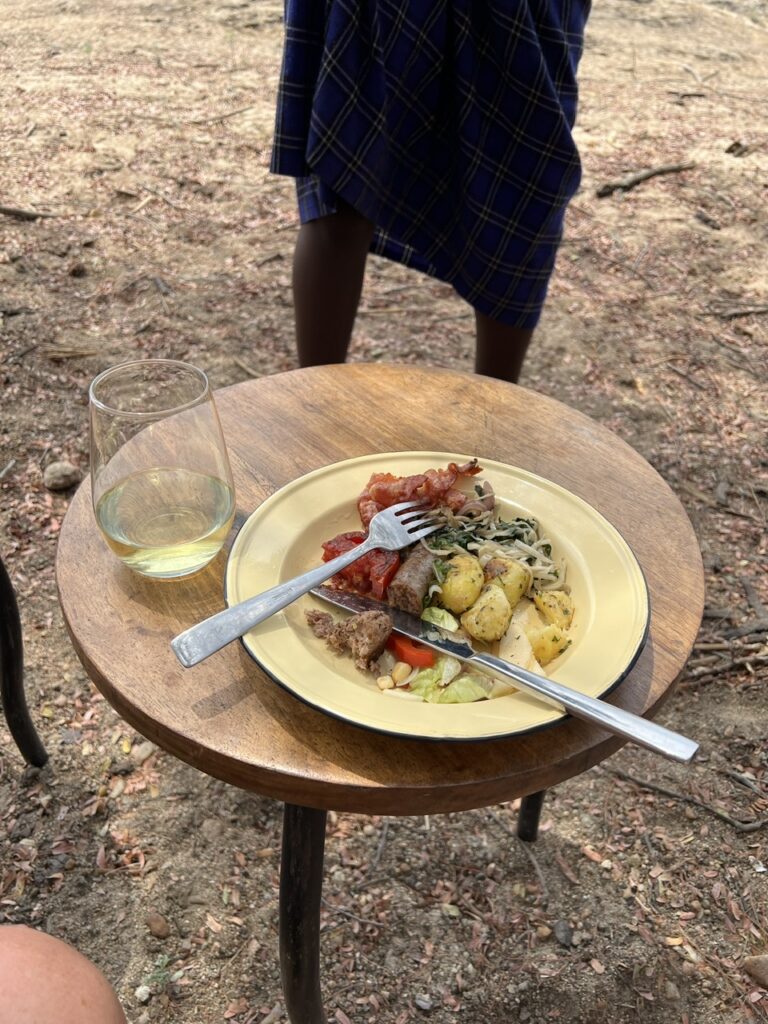
Brunch is delicious sausage, crispy bacon, saute potatoes, tomato, fried spinach and onion, salad and fried eggs, all freshly cooked over a gas ring and washed down with a nice glass of chenin blanc. What’s not to like?
We now make our way to the hippo pool. En route we see a lilac-breasted roller and I manage some in flight shots. Not brilliant but better than anything I have captured in the past.

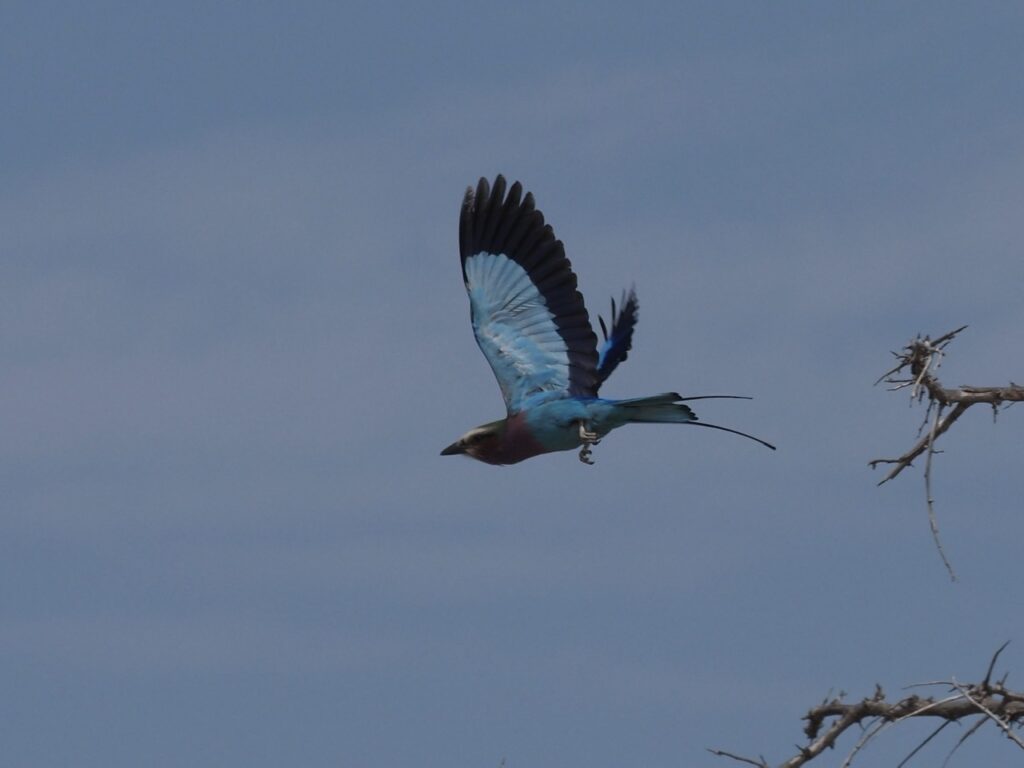
Lilac-breasted roller

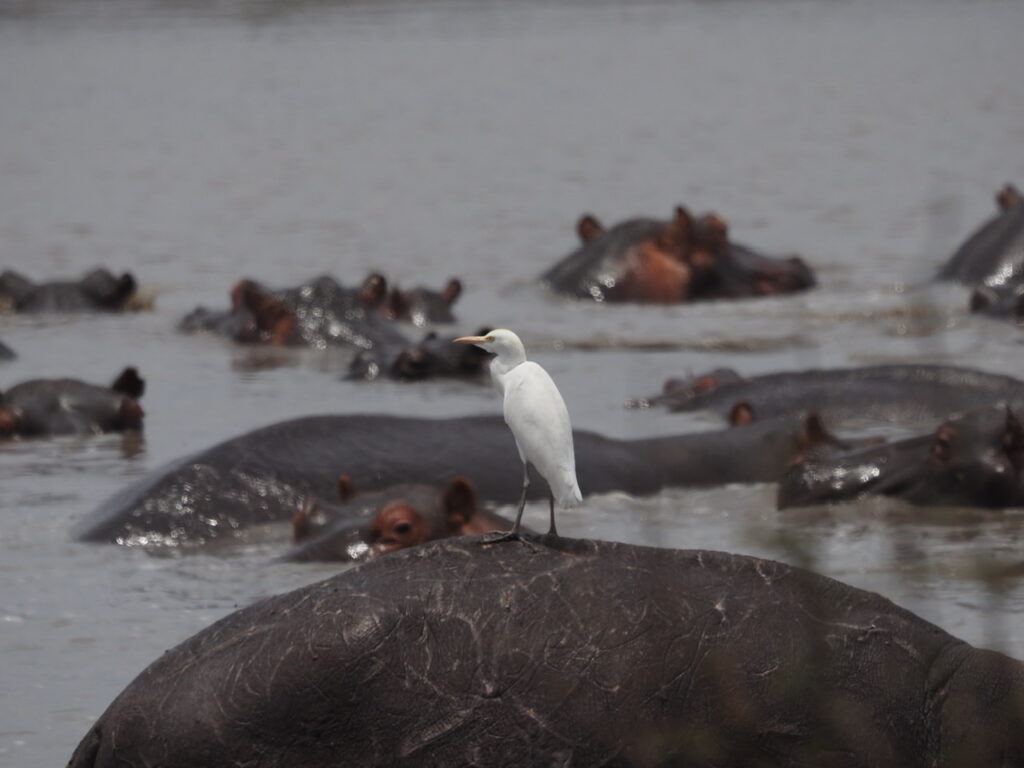
There is lots of bird activity at the pool and hippos wallowing and grunting. We spend an hour or so observing and photographing though the sun is still not really in the right place for perfect shots. We’ll just have to work with what we’ve got.
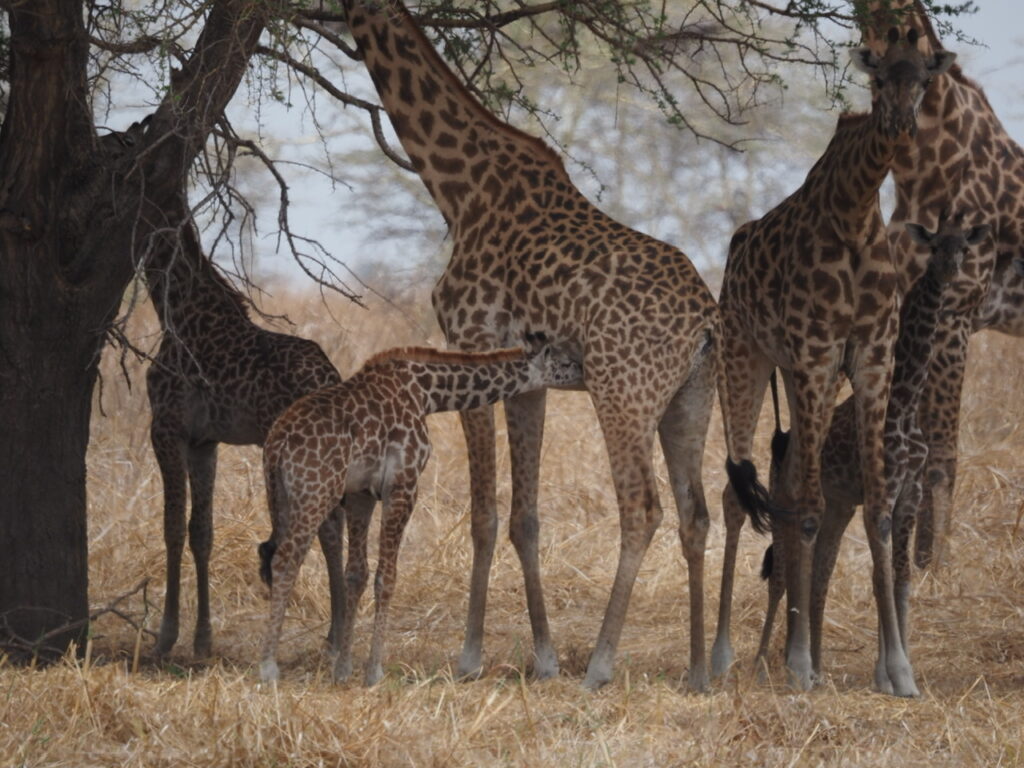
We head back to camp and spot giraffes resting under the shade of an acacia tree. They are some distance away – probably 100 yds or so. We can see there are babies but really struggle to count them. In the end we decide there are twelve giraffes in total with a couple of males standing away from the group.

10 giraffes in this group
Great camouflage

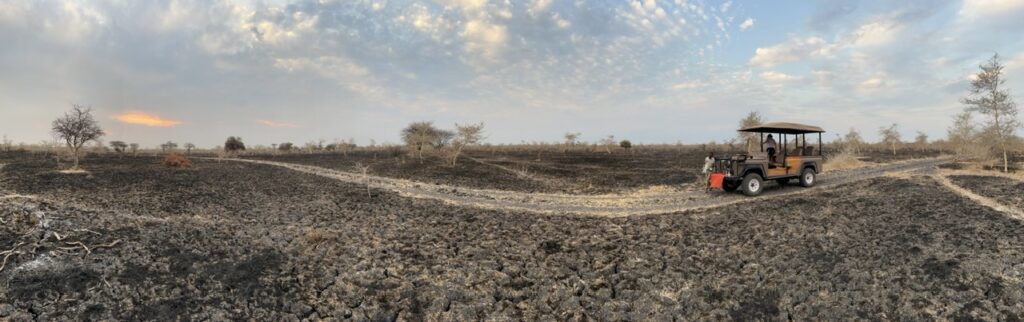
We freshen up and have a cup of tea before heading out again for sundowners. The area has been ravaged by fire. One particular fire was meant to be controlled but it was set too late in the season with the grass too high. The wind changed direction. It was completely out of control and burnt out 100 sq km and very nearly destroyed the camp a couple of weeks ago. The staff were out beating the flames and managed to halt them by the camp fire where we have our breakfast and dinner. We have our sundowners in the midst of this seemingly ruinous destruction. The thing is, if the rains come soon, green shoots will once again appear – and surprisingly quickly at that. It was quite emotional to stand amidst such total devestation and see the animals trying to survive amongst the blackened earth.
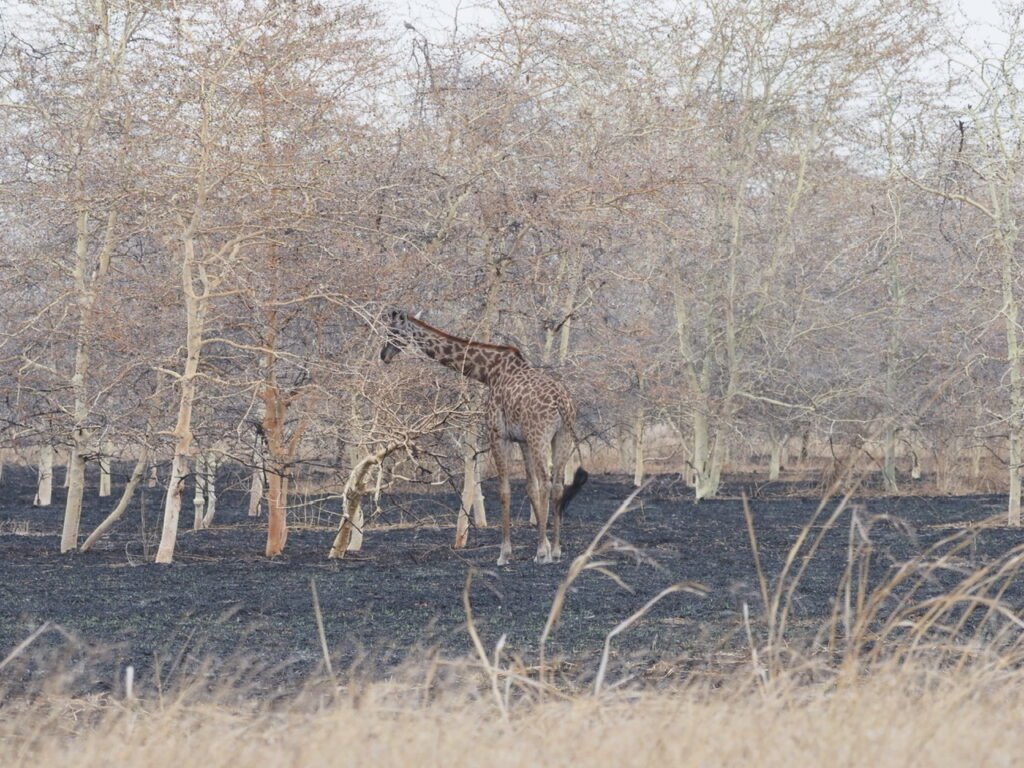
Giraffe eating the thorns. Hard to see

We then had a really serious problem. One of the glasses was broken. Only one glass between two for sundowners. Shock and horror! What to do? I love Jane’s inventiveness. Clearly drinking straight from the bottle was the solution.

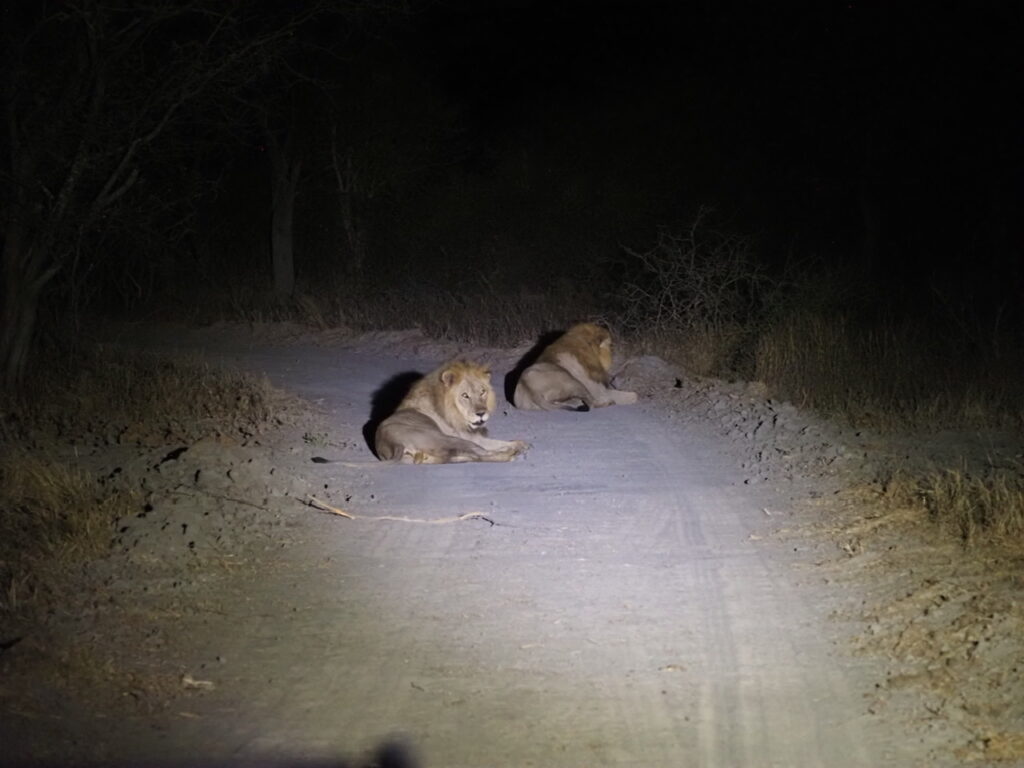
The sun sets and we head back to camp using a spotter light to see any creatures that may be around. We are so lucky. We see two porcupines and manage to capture some decent video. We are then heading up the track to camp and encounter two male lions lying on the road in front of us. How lucky are we? They lie quietly for a while, then lazily stand up, saunter along the road and eventually disappear into the bush.
Sep28 Distant Sightings

As we were late to bed last night we are allowed an extra half an hour in bed. This allows me to see daybreak from my bed and very beautiful it is too. The camp fire is lit and fruit is beautifully arranged on a platter. We enjoy the bird song and calls and are amused by the flapperty lark that literally flaps its wings and makes a very distinct sound.

This morning’s plan is to head off along the river. However, we see lion, leopard and serval tracks on the road so turn in the opposite direction from the river to see if we can locate them. This turns out to be an abortive mission but we do actually see a lot of game. However, it is, on the whole, fairly distant and likes to run away from us. We do spot a serval but it is too quick for us to capture a shot.

Giraffes pose for us briefly and then run away.

We locate a herd of buffalo in the distance. They look like they are heading towards a small muddy pool for a mud bath. We decide to stake it out while we drink our morning coffee. They are not in co-operative mood and turn around and disappear into the bushes.

So far this is turning into a slightly frustrating morning though nonetheless enjoyable. This is the thing about safari. There are no guarantees. Some days you need to work hard for the sightings and they are all the more special when located.

Impala leap through the open spaces
Male sable – much darker in colour than the females

The birds this morning are a little more helpful. We spot a black-chested snake eagle and manage to get fairly close. He is preening and fluffing up his plumage. A male ostrich trots by in the distance with red neck and pink legs. He is in mating mode.

In the afternoon the plan is to go to the hippo pool for sundowners. This does not happen as there is a dead hippo there that the Park Team are removing. Probably not what you want to look at whilst drinking your G&T. I get quite excited when I spot a swallow-tailed bee-eater. They are migratory and are now just arriving into Usangu. It is distant and fast but I do get a shot and he is really beautiful.

This afternoon the game is definitely in camouflage mode. Can you spot the vervet monkey in the tree or baby giraffe?

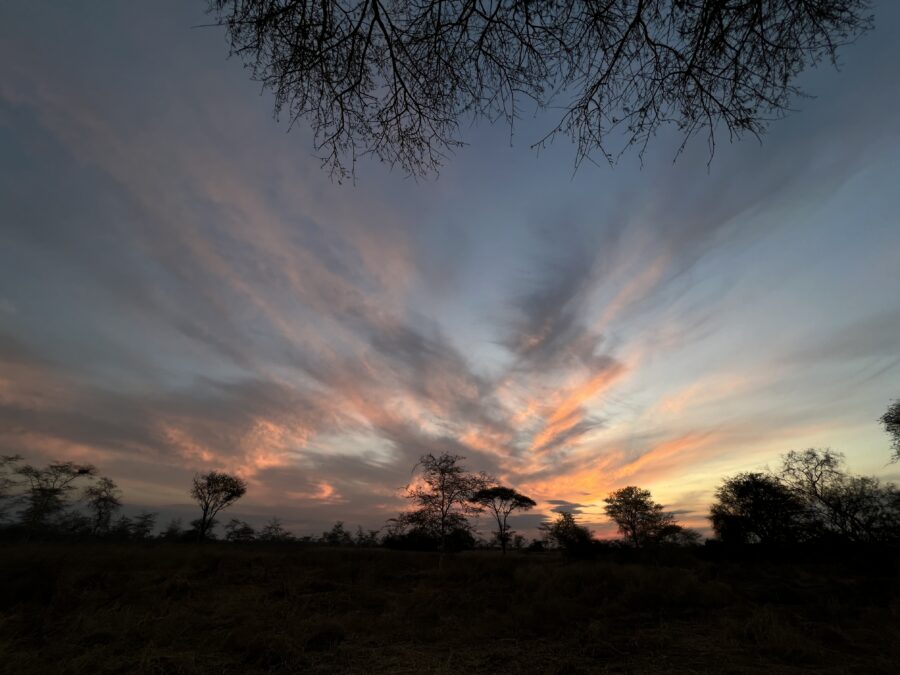
The sun is setting fast. It always does here. We head off to a sundowner spot where chairs have been set out for us and our chosen drinks poured. We sit and watch the sun go down and have a competition as to who can capture the best shot. The sky is wonderful with streaks of feathery clouds and the colours are continually changing. Yes – there is definitely something very special and magical about African sunsets.

Sep 27 Stuck in the Mud

This morning I awake with a start. I hear a loud roaring type noise outside but it does not sound quite like a lion. What the hell is it? I am wide awake. Then I hear a drum beat. I remember now. The camp manager Manambo said that they like to give guests an unusual wake-up call. Yes – they certainly do and it has worked. I am wide awake.

Breakfast is set out by a blazing fire. Porridge is heating and toast is cooking over the charcoal. There is fresh fruit, yoghurt and granola, eggs, toast and homemade jams . Plenty of calories to sustain us while we sit in a vehicle for a few hours. That being said Jane’s Apple watch is telling us every day that we have achieved our exercise goal. There is certainly a lot of bumping around.

We set off at o6 .30 and are heading up to the swamp plains in the hope of finding sable and large herds of topi. All the game here is very skittish and comes as a result of much of the area being inhabited, until taken back by the Tanzanian National Parks in 2006, along with serious poaching issues. We do get reasonably close to some kudu and a black-bellied bustard.

We set up some camera traps by various water-holes and then make our way to the plains. We have to drive slowly and carefully. In the rainy season this whole area is flooded and the ground is very bumpy and difficult to traverse. There are numerous deep channels filled with sticky cotton mud, which lies in wait to engulf unwary vehicles.

We spot a huge herd of topi on the horizon as well as a smaller herd of sable. We decide to approach the sable first. It is incredibly difficult to get close to them and the sun is in the wrong position. We tell our driver Anderson to exercise patience. Let’s park up and see if they will come closer. This is a good tactic and they do finally settle down and start to ignore us. They never come particularly close and the sun is still not in the best position, but they are wonderful to watch. The herd male is continually trying to stop the females heading over to another male. I’ve never seen sable before and did not realise there were herds here. I am exceptionally pleased to have seen them. This is a rare treat and I am more than happy even if the photos are nothing special.

We leave the sable and make our way towards the huge herd of topi. It stretches across the horizon. Tiny dots turn out to be individual animals. There are literally hundreds of them – I have never seen more than 4 or 5 together before. We are finding it hard to make our way to the topi as a water channel is blocking our way.

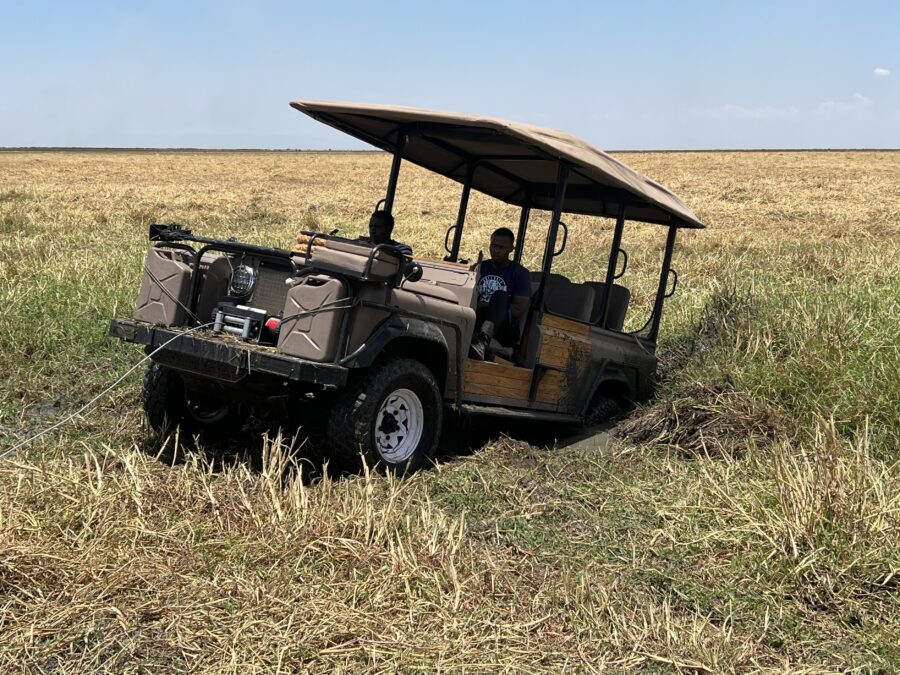
Anderson keeps driving , stopping occasionally and walking across the channel to test for firmness. He finally finds a good crossing point. He says “Hold on tight” and launches the vehicle at the channel. We make good progress until we ram at full speed into a huge tussock of grass. The vehicle stops dead. I, being the more experienced safari person, had put my foot on the ledge running across the back of the front seat and was firmly wedged. However, Jane had not had such foresight. She lurched forward and nearly went head first onto Anderson’s lap. We were in hysterics. No injuries and it could have been so much worse. We then looked at our new predicament. The left front wheel was half submerged in mud and the bonnet was firmly wedged into a two metre wide mound of grass. Anderson radioed for help. But it did not work, please. Nothing for it but to to get out his machete and commence hacking away at it. It looked absolutely lethal.

He tries the radio again and this time we make contact. Help is on its way. While we wait an hour or so for help to arrive, we use the time as a photo opportunity. This is a scorchingly hot day 40C and dust devils whirl across the open plains.

The whole horizon is a mirage and taking any sharp photos is hard but there are some good effects to be had. Twelve giraffes were crossing the horizon and I tried taking some shots to demonstrate the heat and drama of the scenery.

Help finally appears in the shape of another converted Land Rover. These vehicles look like a 1930’s knock back and we expect Dick Dastardly and Muttley to emerge at any moment.

A winch is attached to the new vehicle and only results in the new vehicle being dragged towards us. Back to Plan A which is to hack away the grass. It now gets even more dangerous as Nyati pulls back the tuft with his hands as Anderson hacks with his machete. We don’t really like to watch but there is a grim fascination to it and his machete skills are impressive. A third guy stands by with an AK47 rifle and we’re not quite sure what his role was.

Eventually the grass is removed and we can try winching again. It doesn’t quite go according to plan. We definitely move but now are at a 45 degree angle with the left rear wheel stuck in the hole. We are asked to get out. I think it is considered too dangerous for us to remain where we are and we are only too happy to go and sit in the rescue vehicle.

A combination of winching and acceleration finally frees our vehicle. We climb back in and set off back to camp. The drive is very slow and bumpy – an hour and a half over truly horrible cracked earth terrain. We arrive back in camp after three and are very hungry. Dinner is early at 18.30 as we are going out on a night drive.

As we are leaving camp we spot a chameleon in a nearby shrub.

We also catch glimpses of a nightjar, civet, Verroux’s eagle owl, genet, 2 honey badgers, a wild cat, a bat-eared fox, a porcupine that scurried behind the vehicle, a white-tailed mongoose, impala, lapwings and chick and a spotted thick-knee that got caught in a thorny acacia bush. It was so upsetting. It was entangled in the branches and kept falling and getting caught more and more on the lethally spiky branches. Our guides rescued it and pulled off all the spiky twigs. They released it and miraculously it seemed to have survived its ordeal unscathed.

We both slept exceptionally well. It was a long day!

Sep 26 Serengeti to Ruaha

Today will be a very long one. We got up at 05.15 and left camp at 06.00 for a final game drive and transfer to Kogatende airstrip for the 08.45 flight to Jongomero in Ruaha. It is another beautiful morning and hot air balloons are rising majestically into the skies above the plains.

We drive through the rocky area in the hope of seeing a leopard but it is not to be this morning. However we are not disappointed for as we drive along the bank of the Mara River we spot a lioness.

She starts calling and we see her sister approaching in the distance. They greet each other playfully on a termite mound and then walk off across the plains side by side.

We continue our relaxed drive to the airport. We watch some hyenas and then find the cutest family of rock hyrax basking on the rocks. Although they look like rodents, their closest living relatives are elephants and manatees.

We leave the hyrax and shortly arrive at the airstrip.We have been given packed breakfasts which we eat in the vehicle whilst waiting for our plane to arrive. There is way too much food but I select the toasted egg sandwich with bacon and sausage which goes down well with a cup of coffee. We say goodbye to our wonderful guide Qamara. He has been such great company, knowledgeable, instinctive, unassuming and a great photographer. One of the very best guides I have ever had.

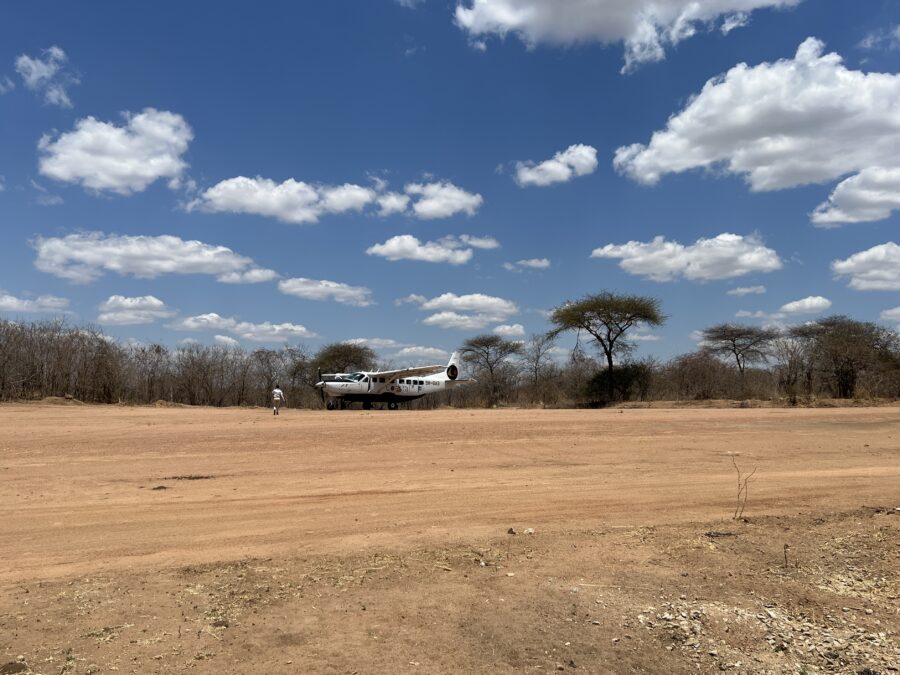
We walk across to our plane and say goodbye to the green grass of the Serengeti.

Ruaha is far south, hot and dry, and about as remote as you can get. It is a two and a half hour flight down there and then a 63km road transfer to the camp. Thermals have built up and the plane is buffeted around in the thermals and winds. We land and the heat blasts at us as we exit the plane.

There is the usual unnecessary African paperwork to complete and we then climb into the vehicle which will transfer us to Usangu Expedition Camp. The vehicle is a converted Land Rover that has had mesh and removable side panels added. I think this is strange and our guide Anderson tells us that it is because we go through an area with a lot of tsetse flies. They do not carry disease here but they are pesky and their bite really hurts. I am grateful for the protection.

After an hour or so we stop at Maji Moto Springs for lunch. These are hot thermal springs and we put our hands in the water. It is very hot and you can only dip your fingers in very briefly.

A picnic area has been set up by the springs of rather unattractive concrete seats and tables. However, they are practical, animal proof and in fact very cool to sit at.

We continue on and arrive in camp at about 15.00. We were welcomed by all the camp staff, who enthusiastically sang a welcome song to us,. Manambo the camp manager gave us a brief orientation briefing and then showed us to our tents. There are only four rooms here and we are the only guests. We thought we would be sharing but we have come up trumps again and the camp have allocated us separate rooms. They are not really rooms or tents. Mesh sided with a canvas awning, wood interiors and brand spanking new. The camp only opened in June. I have tent one – located under a huge baobab tree.

We then have a briefing at the research centre and head off on our first game drive here at 16.30. It has all been a bit hectic but hey, we can sleep when we get home!

We set off down the very dusty track and through scorched bush. The landscape is scarred by recent fires, one of which was out of control and very nearly impacted the new camp a couple of weeks ago. We do not have to drive far before we find a pair of lions.

We also should not have been surprised to find them mating. It clearly is that time of year. We are now very knowledgeable about lion courtship. It lasts 3-4 days and the guides can work out which day of courting it is by the interval between mating sessions. Day Two is 12 minutes and Day Three is 20 minutes and very unenthusiastic. Apparently, the mating sessions lead up to making the female ovulate on Day 3.

We continue on our drive, spot some elephant in the scrub and park a short distance away for sundowners, hoping that the elephants may walk past us. They are shy and remain in the bushes. In fact all the game is very skittish here and that results from much of the area being inhabited before it was taken back by the Tanzanian National Parks.

We return to camp and have drinks around the camp fire followed by stir-fry cooked over the charcoal from the fire. Magical.

Sep 25 Lions, lions and lions!

We set out early again before the sun was up. There is no doubt that the early bird catches the worm. There is yet again a beautiful sunrise.

This morning we are heading east to the plains in the hope of finding lions and seeing crocodiles and hippos in the river. We are not disappointed and shortly encounter a pride of 8 lions – three lionesses and 5 one year old cubs. No-one else is here. They have made a kill and have polished off most of it – just leaving some scraps for the cubs to play tug of war with.

We sit and watch for an hour or so. They are very entertaining.

Finally the lions head off into the long grass and lie down and are unlikely to move further today so we leave them to their sleep.

As we traverse the high plains we see a lone male lion walking towards us. He is very battle scarred, appears to have some mouth injuries and looks very weary. Qamara does a great job of continually positioning our vehicle ahead of him to enable the best photo opportunities.

He eventually finds a solitary tree and settles down in the shade and starts grooming himself.

We head off down to the river and find some vultures squabbling over a carcass. Their behaviour is interesting to watch, though slightly gruesome. They hiss and peck at each other to gain prime position.

We then head down to the Mara River where we shall stop for breakfast. The view of the river is truly beautiful. The sky is cloudless and the air is warming up. The scent of wild sage fills the air, doves call and the river continually rushes and gurgles over the rocks.

We stop by a sandy bank where we have an excellent view of the river and hippos wallowing in the shallows.

Jane could not be happier. This is her dream – to eat breakfast while watching hippos which are her favourite animal.

We soak up the scene while eating quiche, sausage, bacon, eggs anfd fruit. Eventually we need to pack up and head off. We have only drive a few yards when we see the biggest, fattest crocodile lazing on the rocks. Clearly he has been gorging on wildebeest.

We lazily drive back to camp enjoying the general game viewing on offer interspersed with occasional distant lion sightings.

This afternoon we set off in pursuit of black rhino. We scan the grass and ditches below the camp where a rhino and calf have recently been seen. On this occasion we were not lucky but meet a vehicle coming in the opposite direction. It stops. The American in the back holds up 6 fingers and says they’ve just seen seven lions. We’re really not sure what that means as his ability to count is clearly questionable! We drive on and find the lions. A lioness and 6 cubs. That makes seven by my reckoning. They are amazing to watch. Clearly the cubs are not used to vehicles and one in particular is worryingly interested in us. Fortunately, although he curiously approaches the vehicle, he does eventually stop 10 feet away. I have so many great shots from this sighting. Way to many to share on here but here is a small selection.

The sun is starting to go down so we head back to camp. Qamara asks if we still want to see the rhino. We say of course. We pull round the rocks and there our butler Omary has laid out sundowners for us. We now nickname him rhino! Annoyingly it starts to rain so we have our drinks in the vehicle and have a good chat with lots of banter with Qamara and Omary. What a super last day here.

Page 21 of 36

Powered by WordPress & Theme by Anders Norén