
The scenery on the flight from São Paulo to Cuiaba is impressive, but it has been a long journey and we are happy to finally touch down and meet up with our travel companions. There are 9 in our group, plus our guide Bruno. Everyone is British, very friendly and of a not too dis-similar age. I think we are going to have lots of fun.
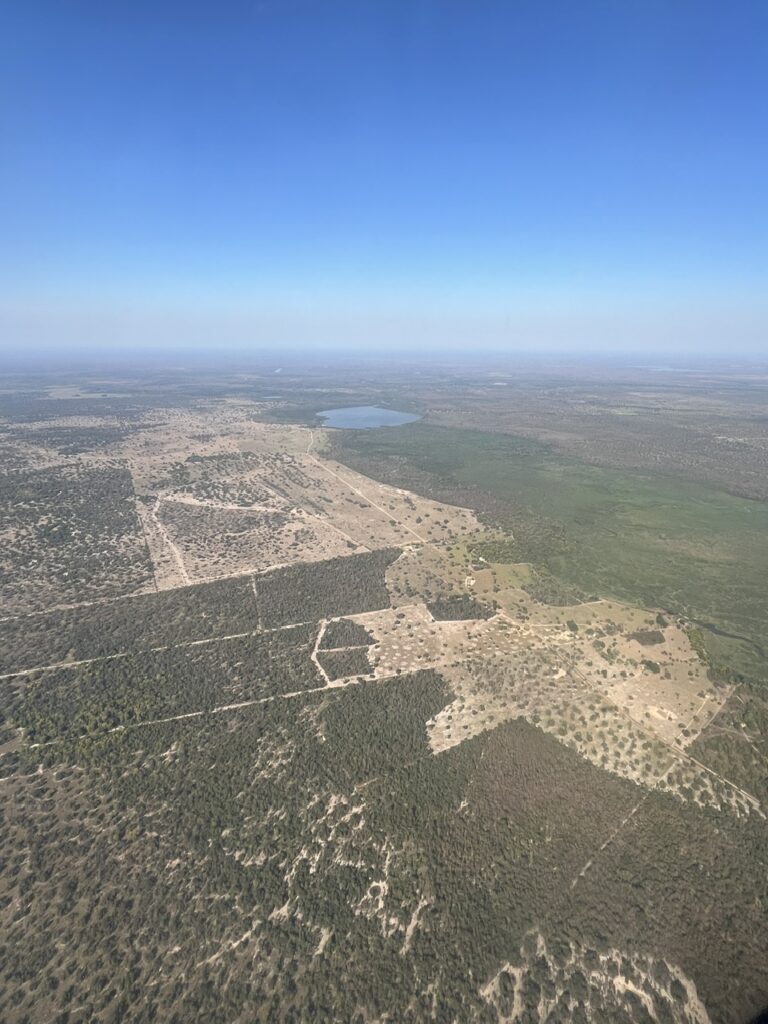
After 24 hours of travel we stop in the small town of Pocone for lunch. There is a good selection of food. I choose a plate of various salads and meats. Not too much as I have already had breakfast on two different planes. I did not realise that, this being Brazil, we would then be brought an endless supply of meat on skewers carved in front of us. It was very tasty and we probably consumed more than was sensible. Fully sated we drove a short distance to the entrance to the Transpantaneira. The 140km dirt road which is the only route into the Pantanal.
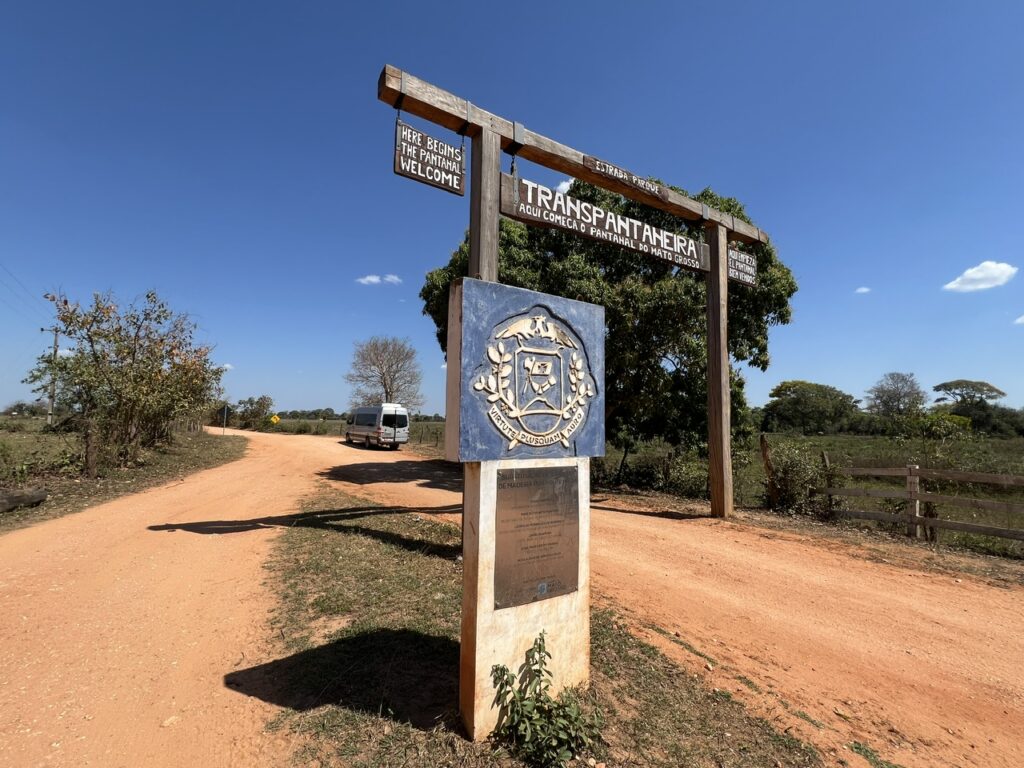
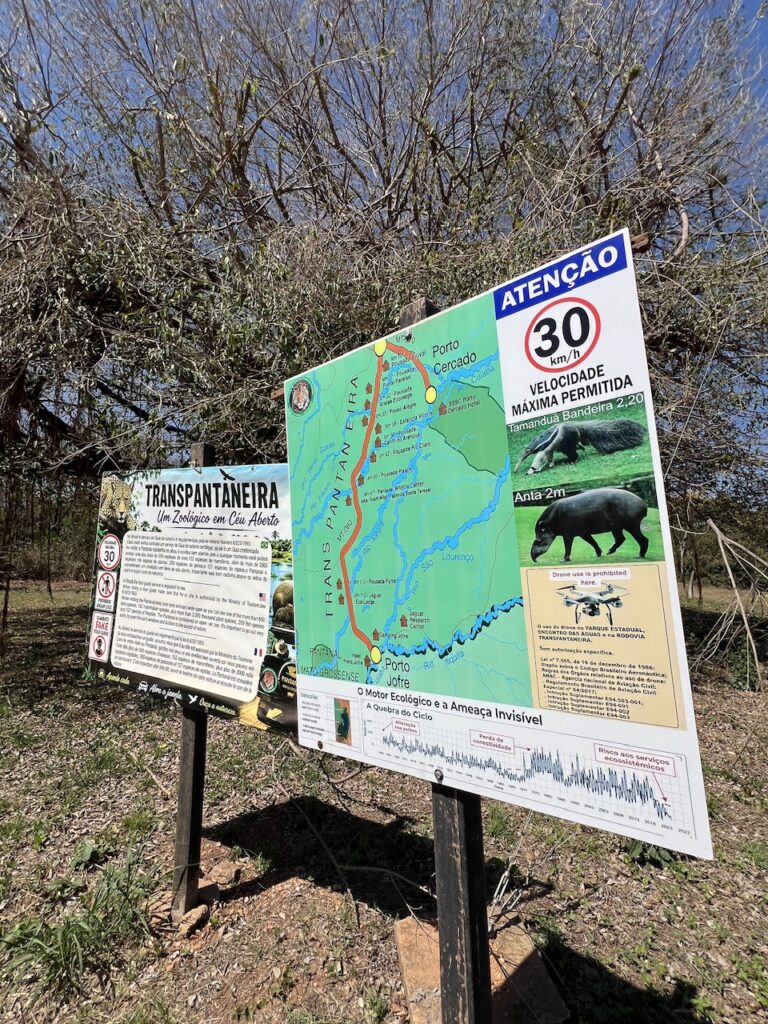
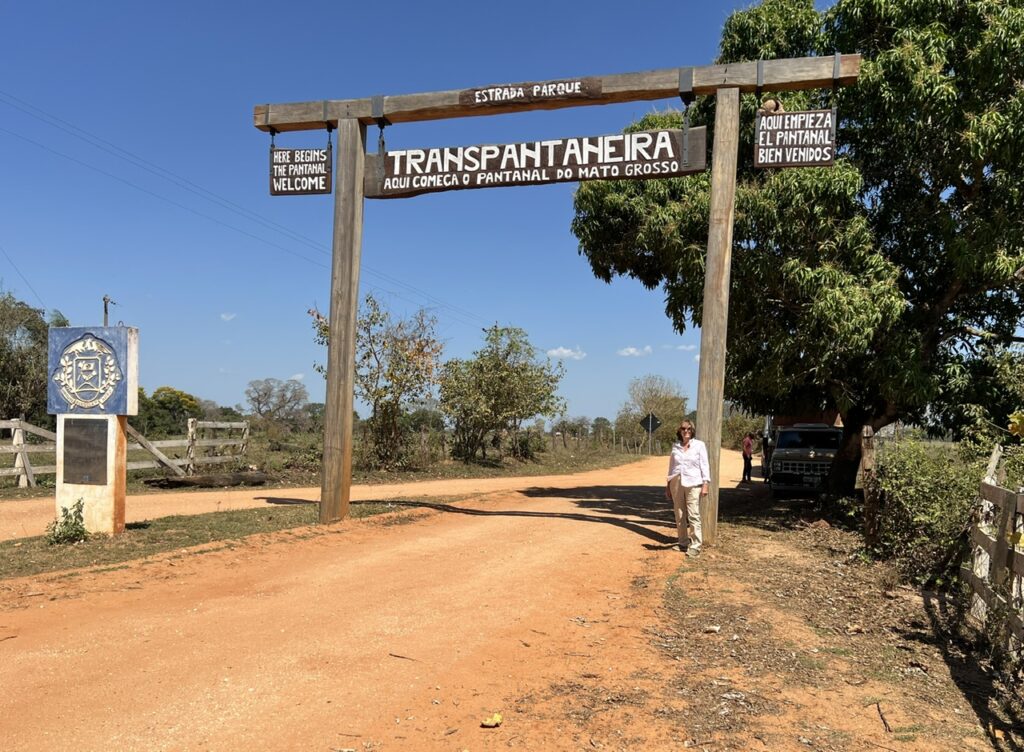
Here we left the comfort of our air-conditioned van for an open truck with full exposure to the dust thrown up by passing vehicles, but also a great view of the landscape and wildlife which was plentiful to say the least.
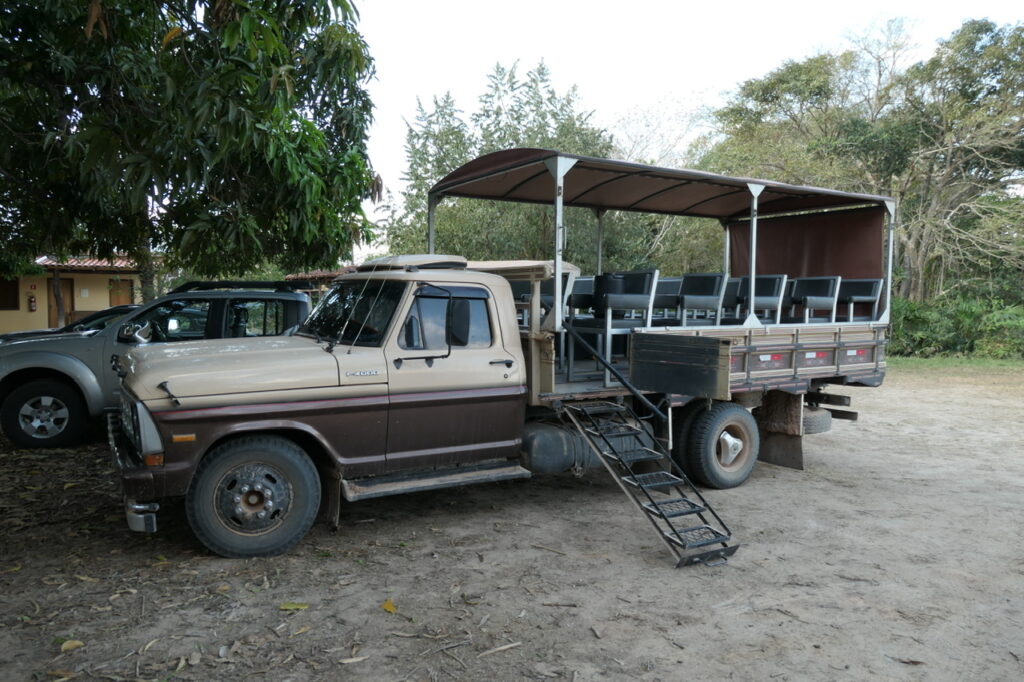
The journey to our first lodge at Pouso Alegre is about 40 km, but takes the best part of 3 hours because we make frequent stops to photograph the plethora of birdlife.
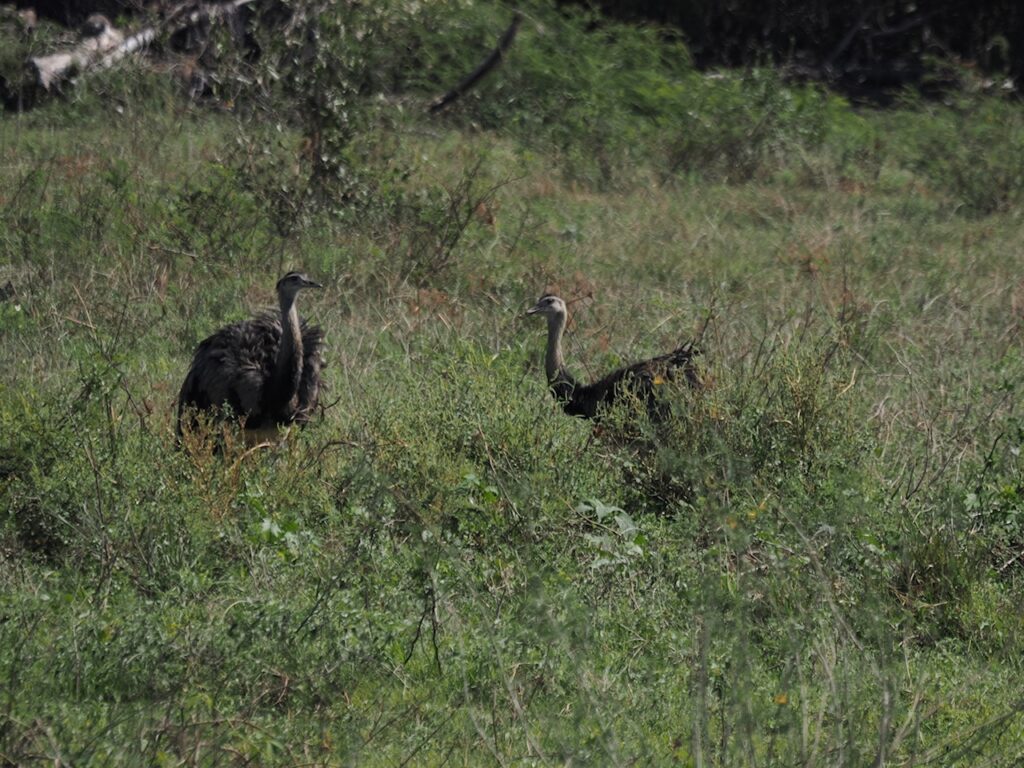
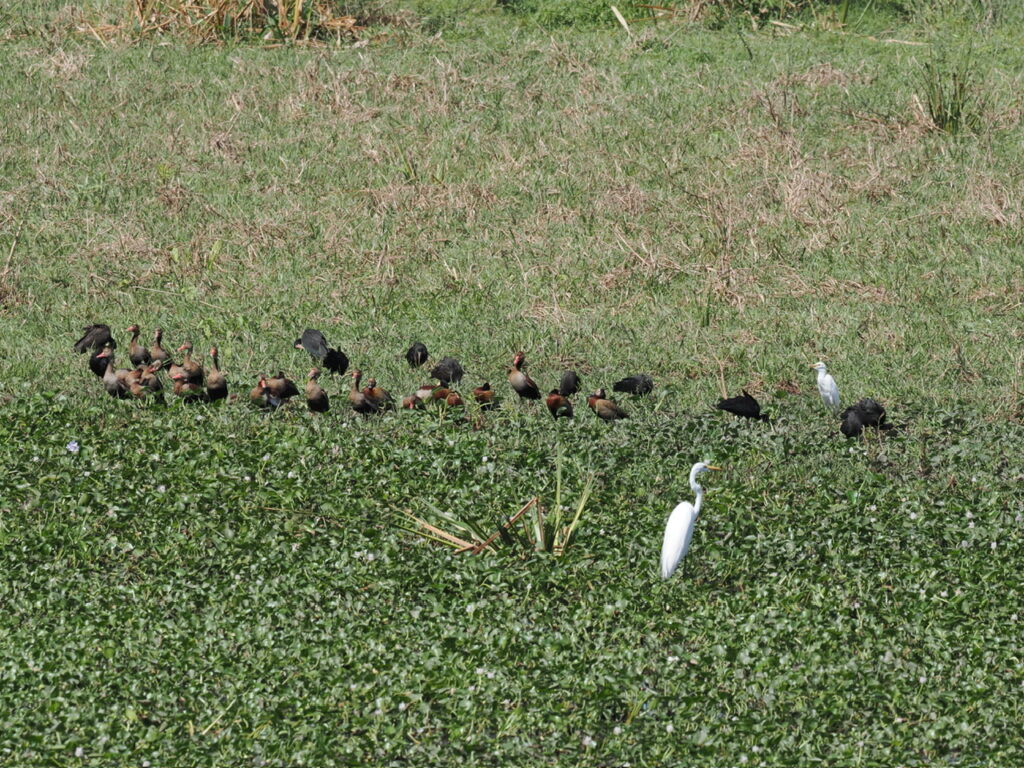
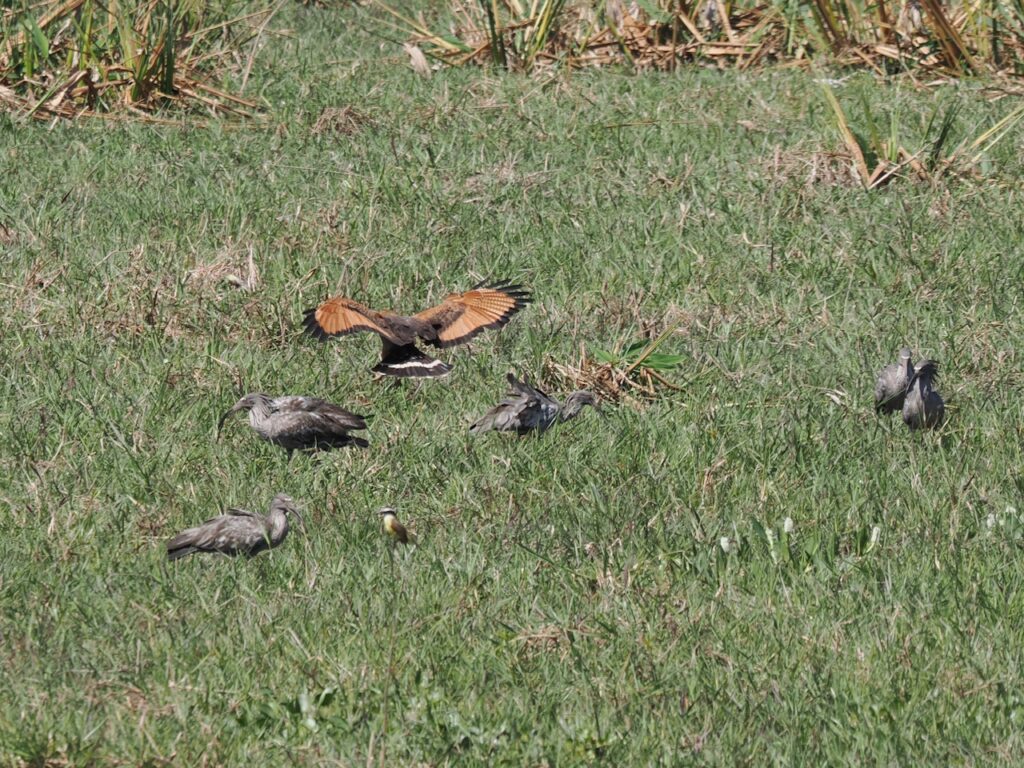
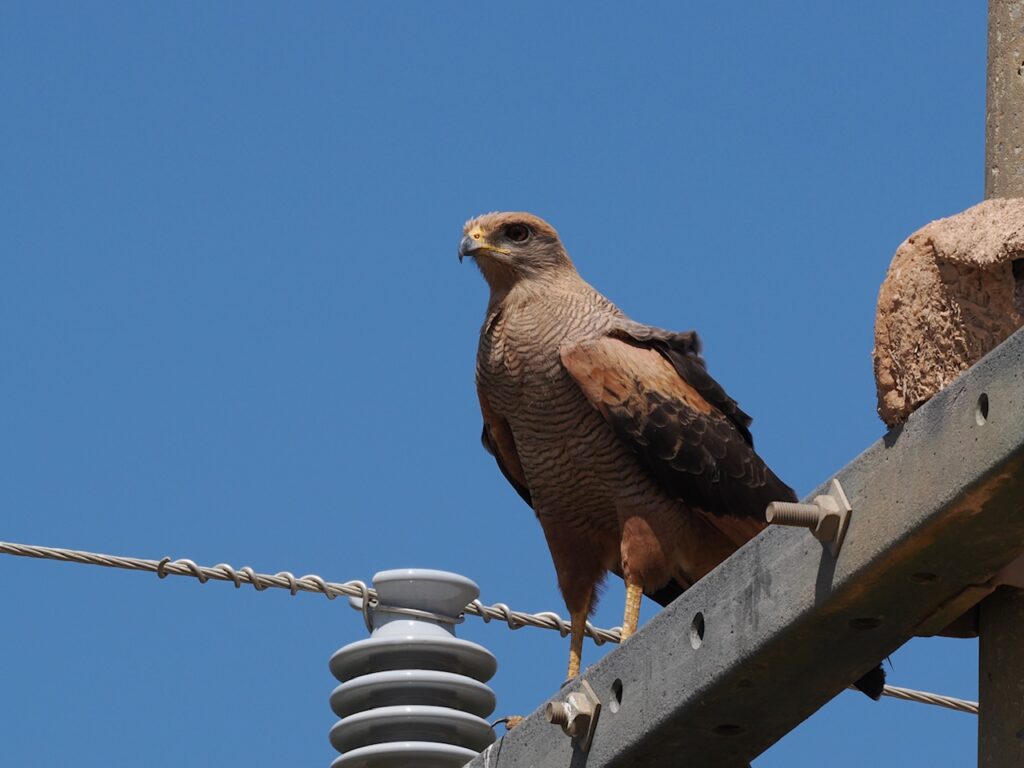
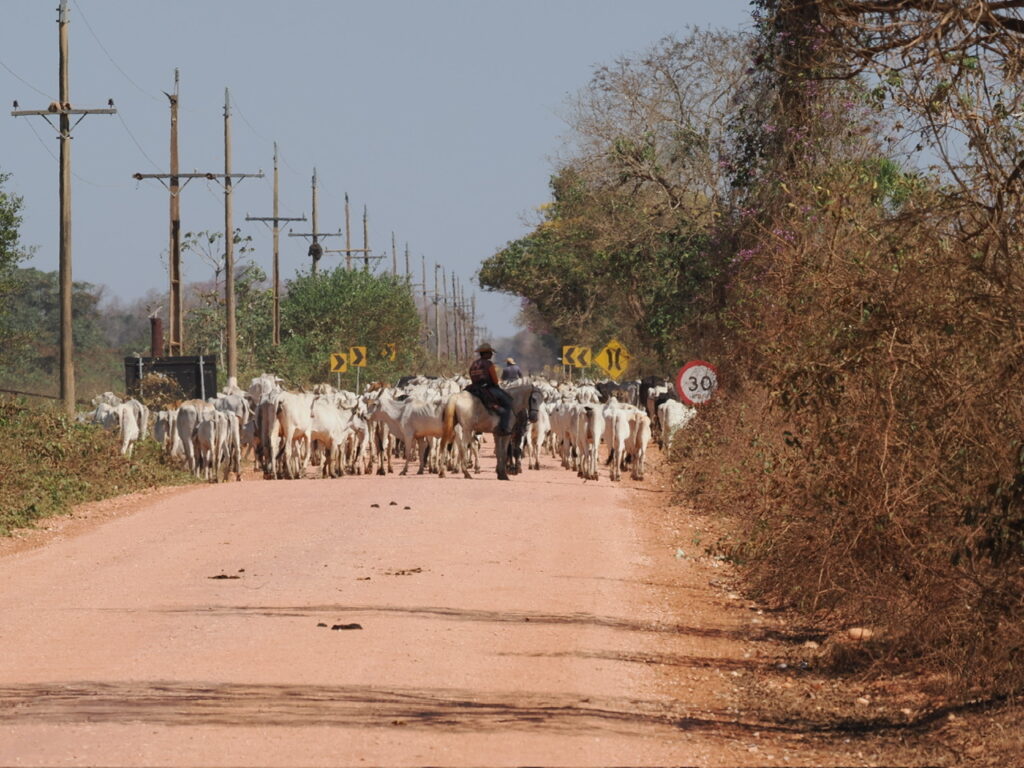
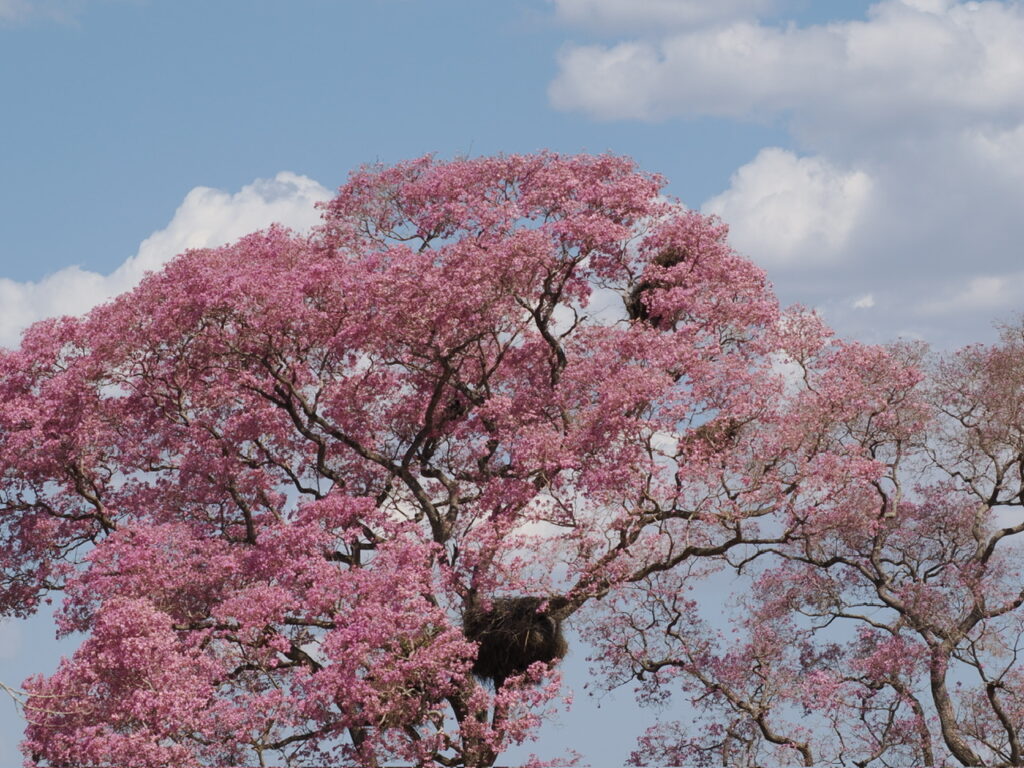
The local ranchers still herd cattle on the road and there are beautiful Piuva trees with astonishing pink blossom.
…and the photo opportunities just kept coming with a sayaca tanager, tiger heron, great black hawk, monk parakeet, sunbittern and jacana. We were lucky enough to see some rare hyacinth macaws but too distant for any decent photographs. Hopefully we shall be lucky later.


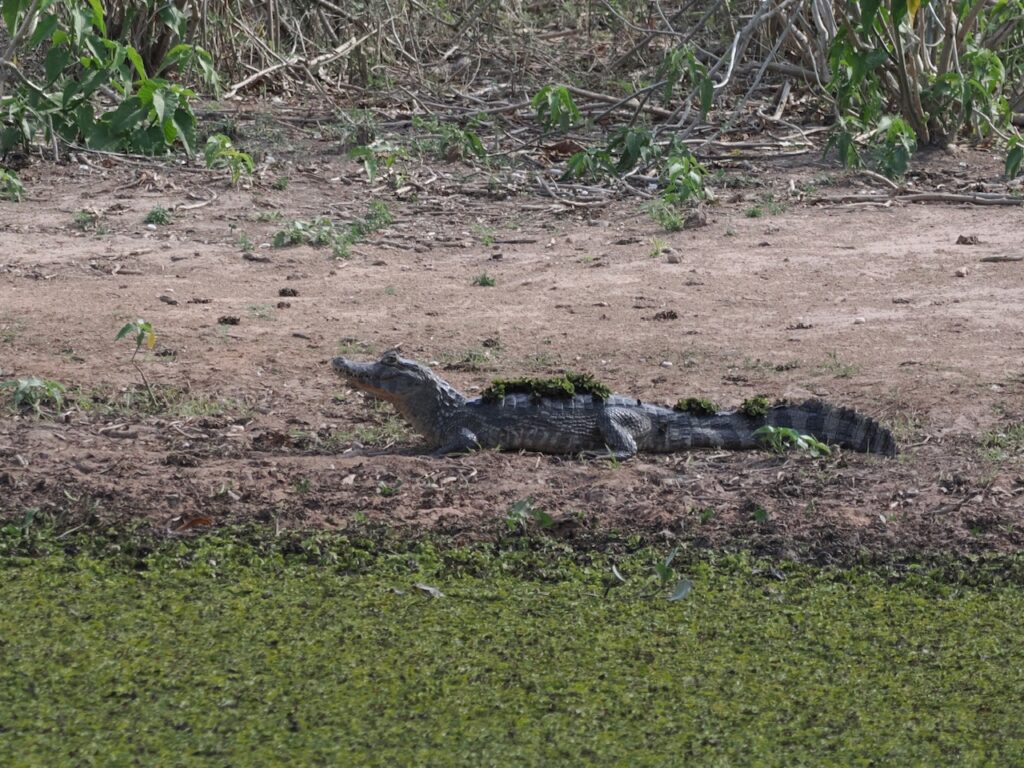
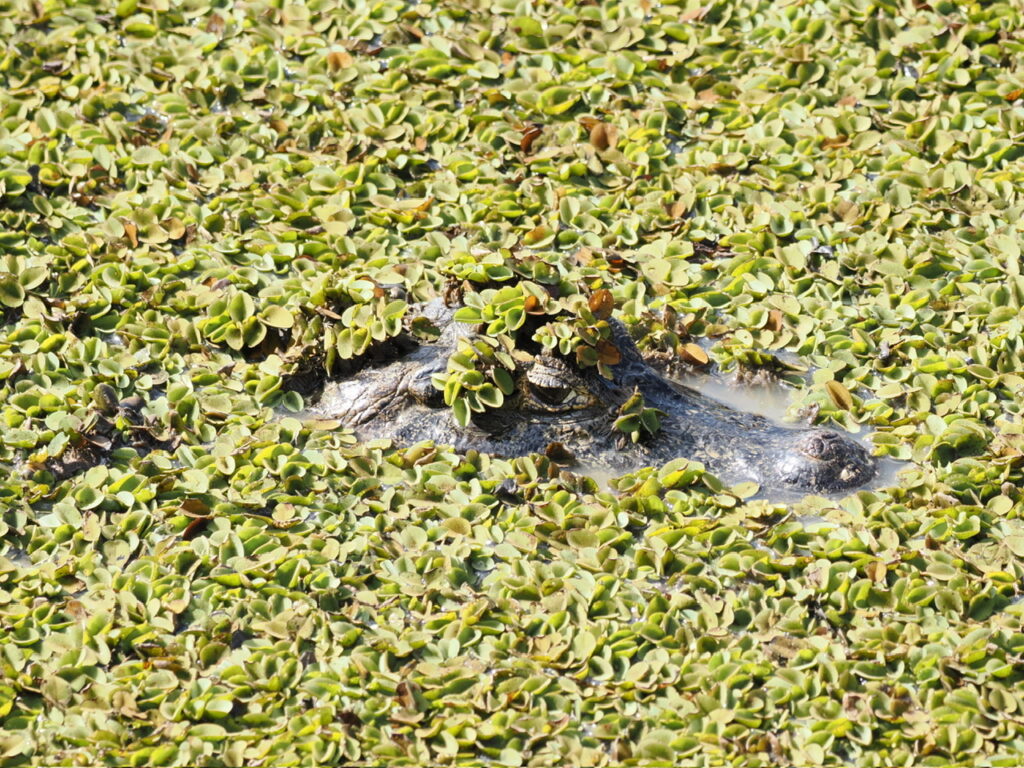
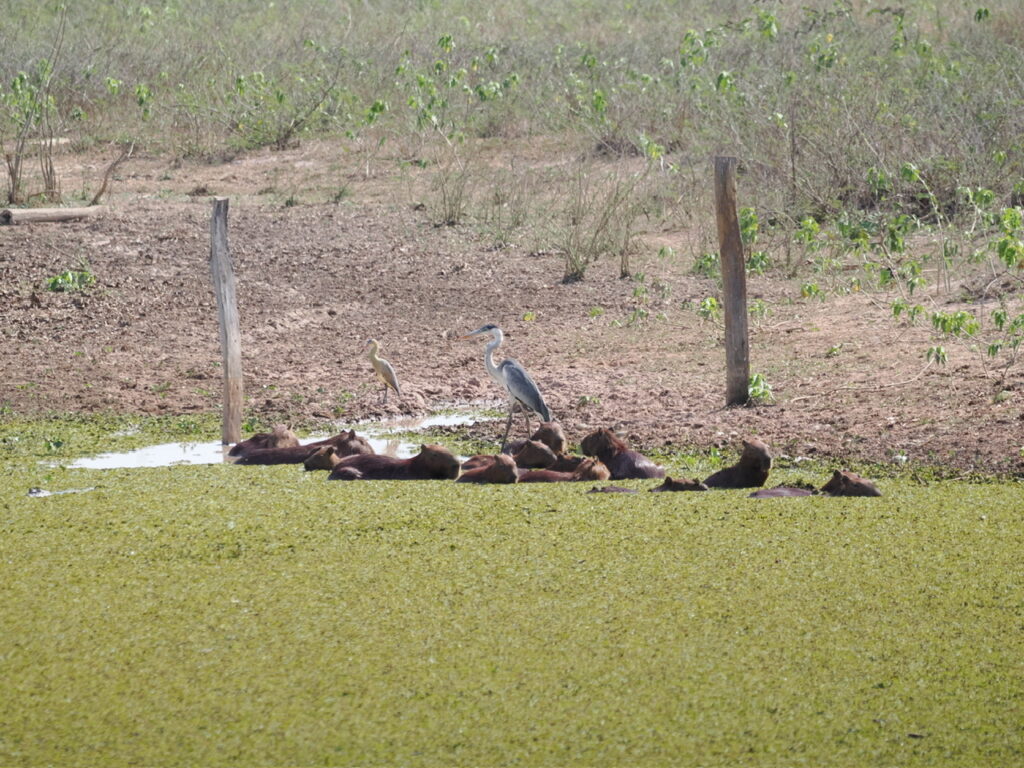
There are well-disguised yacare caiman and distant capybaras. This is just incredible and so different to Guyana where we really struggled to see any wildlife on the savannahs.
We finally arrive at our lodge after 27 hours of travel. It is 38C, we are tired and in need of refreshing showers. That does not happen anytime soon, because the selfish guests before us did not vacate their rooms at 12.00, but only 5 minutes before we arrived. The only upside was that the lodge grounds teem with wildlife, which we can watch while we wait.
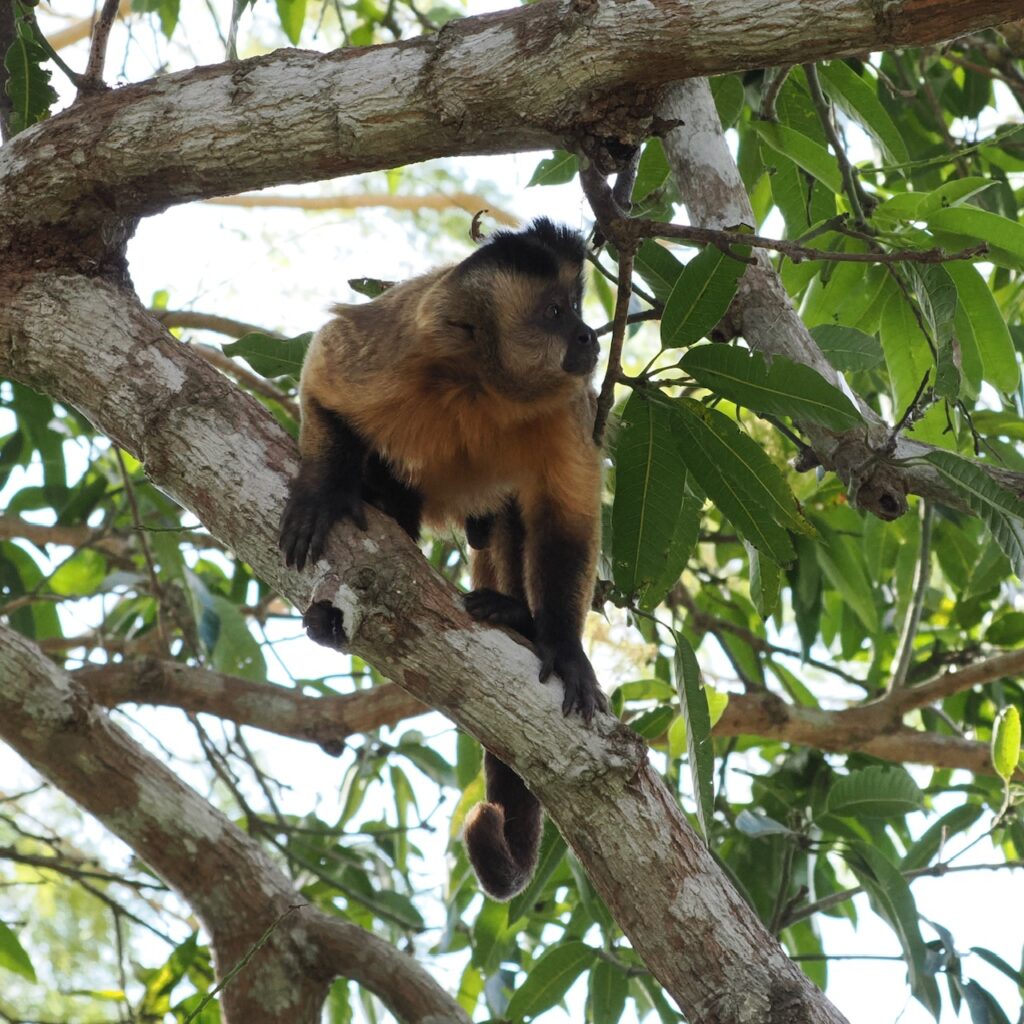
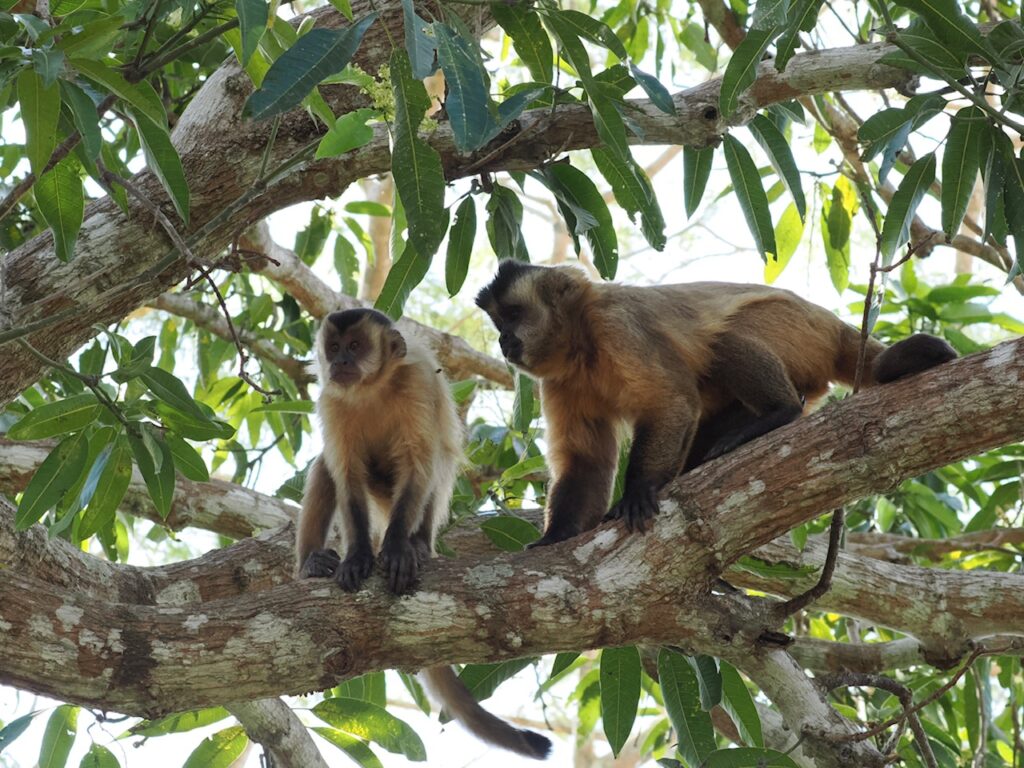
Coati scuttle around the buildings hunting for grubs and hooded capuchins play in the trees.
We depart at 16.30 for our afternoon safari – an hour later than scheduled as we did not gain access to our room until 16.00. A quick shower and out we go. The delayed departure works in our favour as 4 hyacinth macaws have landed in the lodge grounds. The light is great. They pose in the trees then fly down to the nearby waterhole to drink. I could not be happier.


There are so many birds here. A caracara keeps photo-bombing my shots until the macaws eventually fly away.


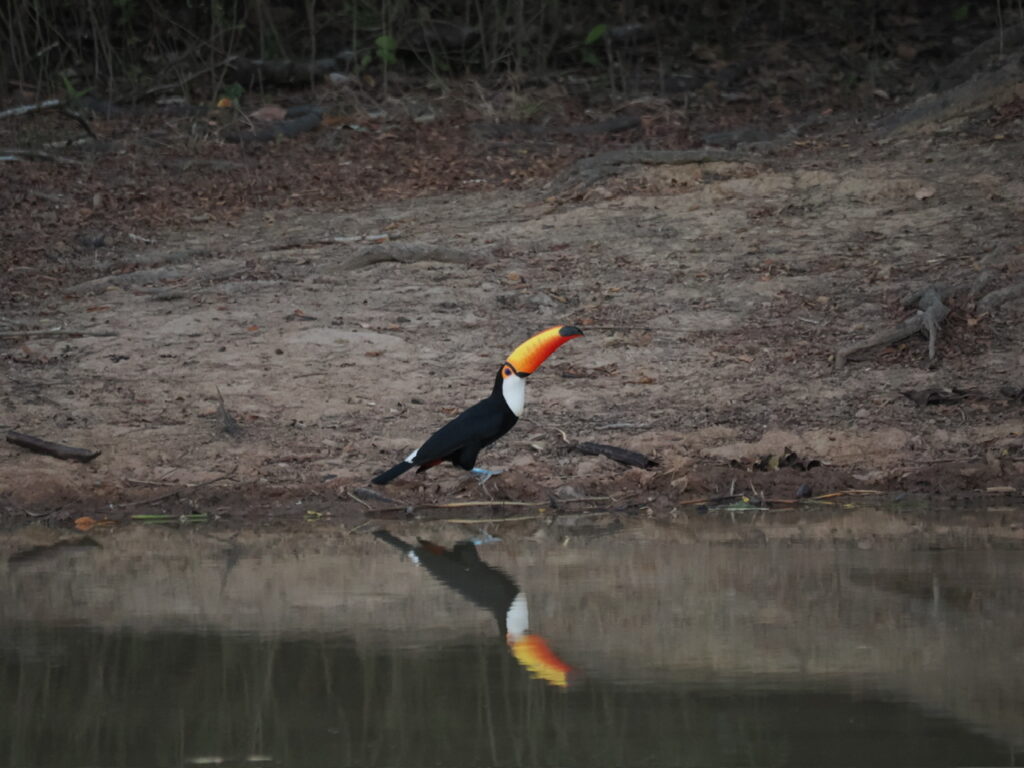
We then drive to a nearby waterhole-hole in the hope of seeing a giant anteater or tapir. Had we been there earlier we would indeed have seen them but then we would have missed the macaws. We’ll try again tomorrow. The light is fading fast but an array of birds are still coming to drink. As the last of the light appears a toco toucan graces us with its presence. Distant and grainy shots but a real privilege to see one in the open like this.
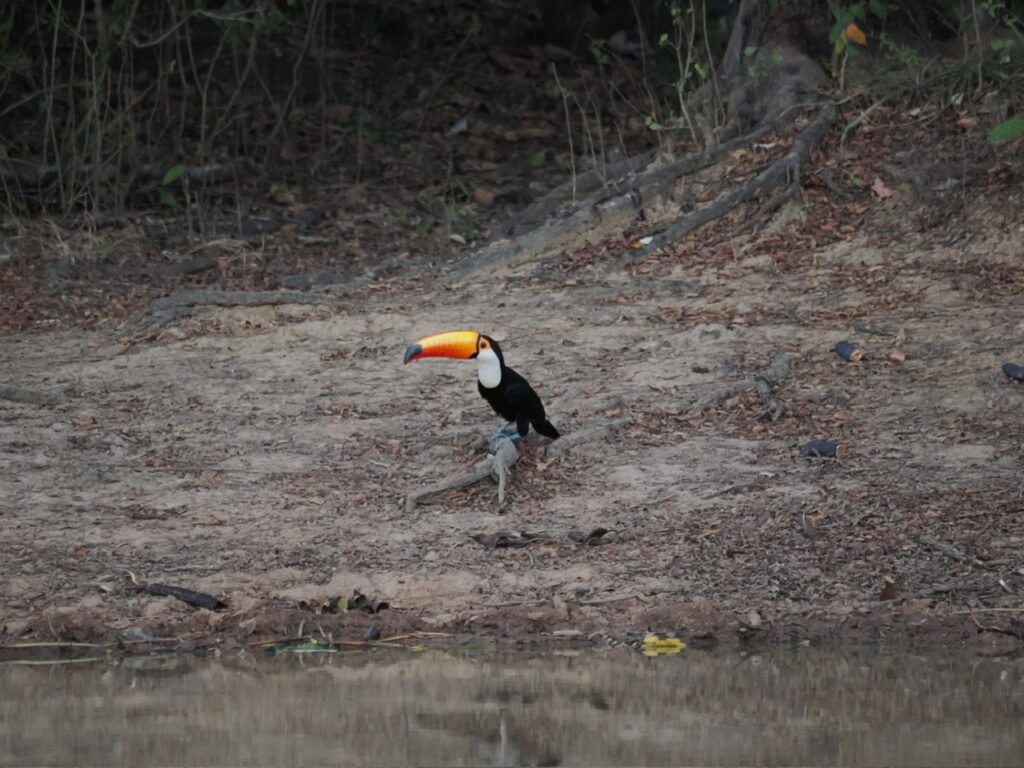
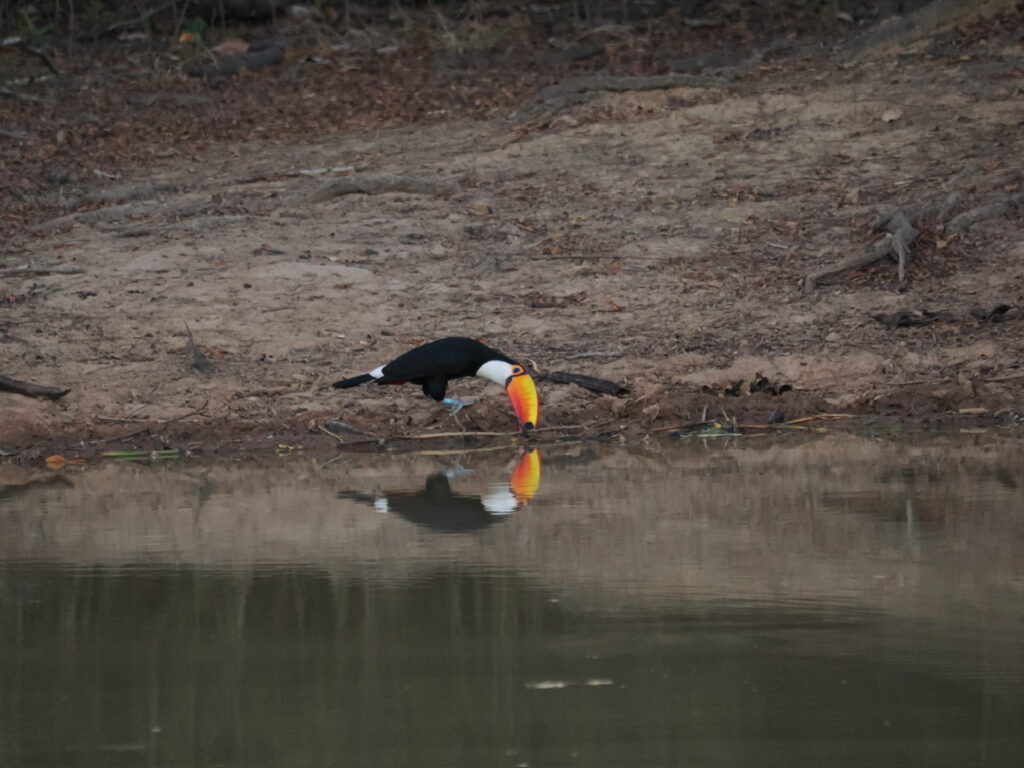
A new day and it turns out to be even more exceptional than yesterday. This really is a very special place. We set out before breakfast at 6.00 and drive through the giant anteater’s territory in the hope of a sighting. No luck this morning but we do see a horned owl and youngster and there are plenty of other birds about, including a rare rufous tree creeper.


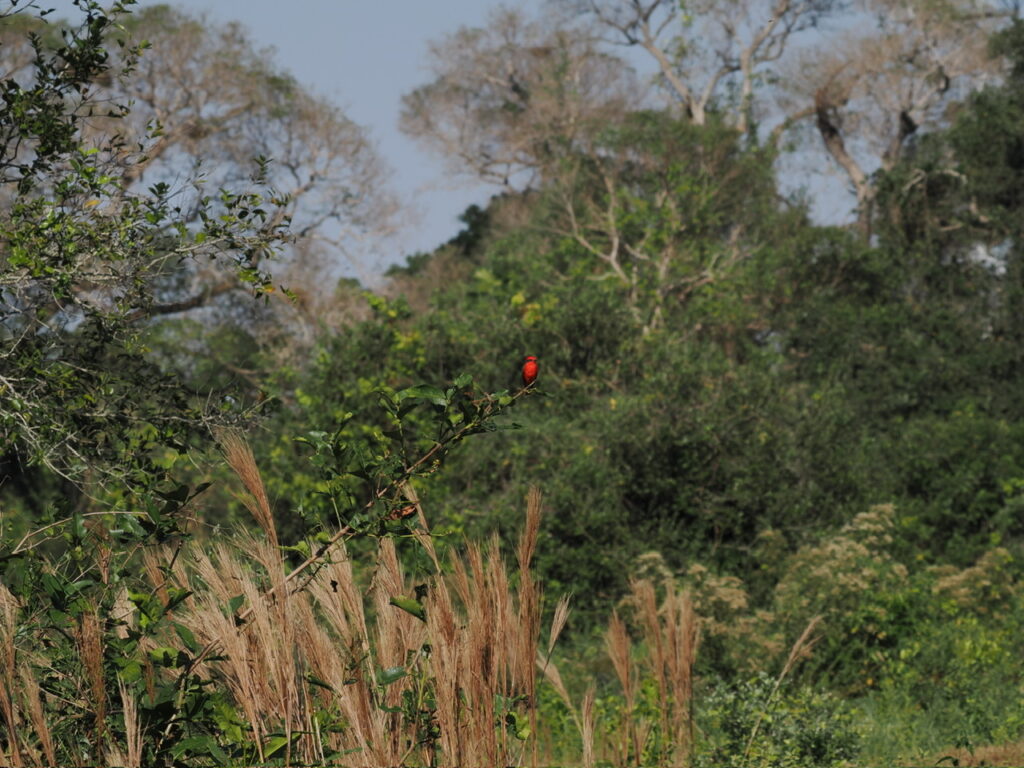
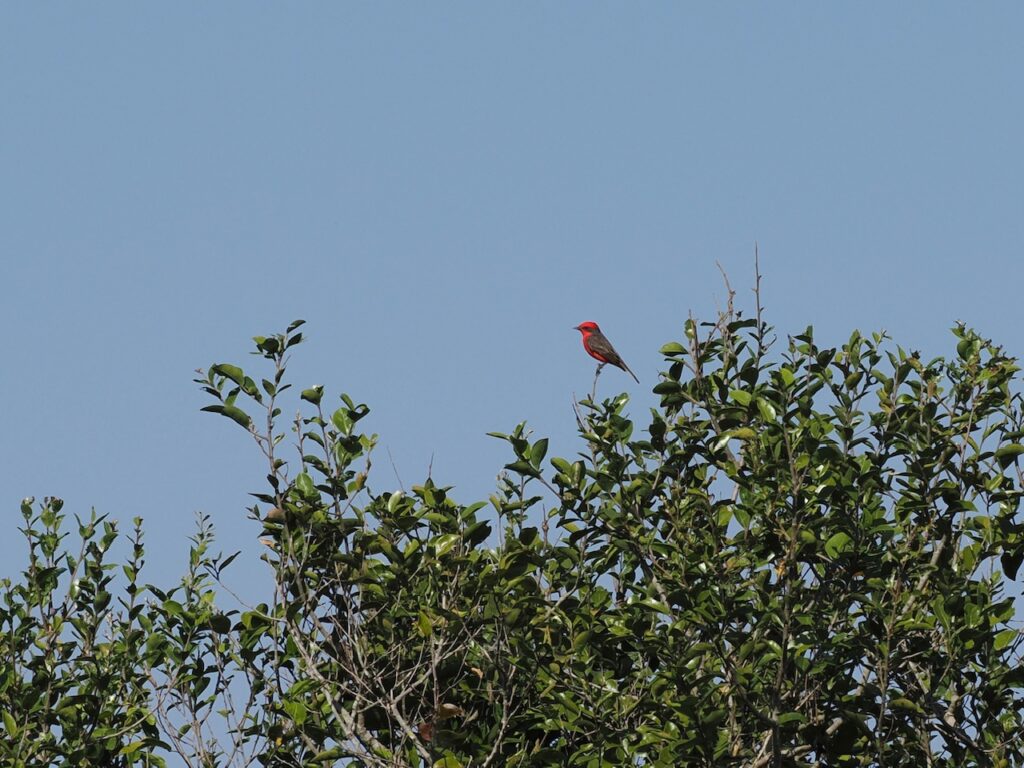
We return for breakfast, which is uninspired but adequate and then set out on foot to visit a viewing platform. It’s about a kilometre walk and, despite it only being 08.30, it is very hot and the sun strong, so the distance seems much further. On our way there we see the most beautiful carmine flycatcher. It stands out like a glistening jewel against the dark foliage.
We climb the 120 or so steps to the top of the tower. It is worth the effort as the views are wonderful.
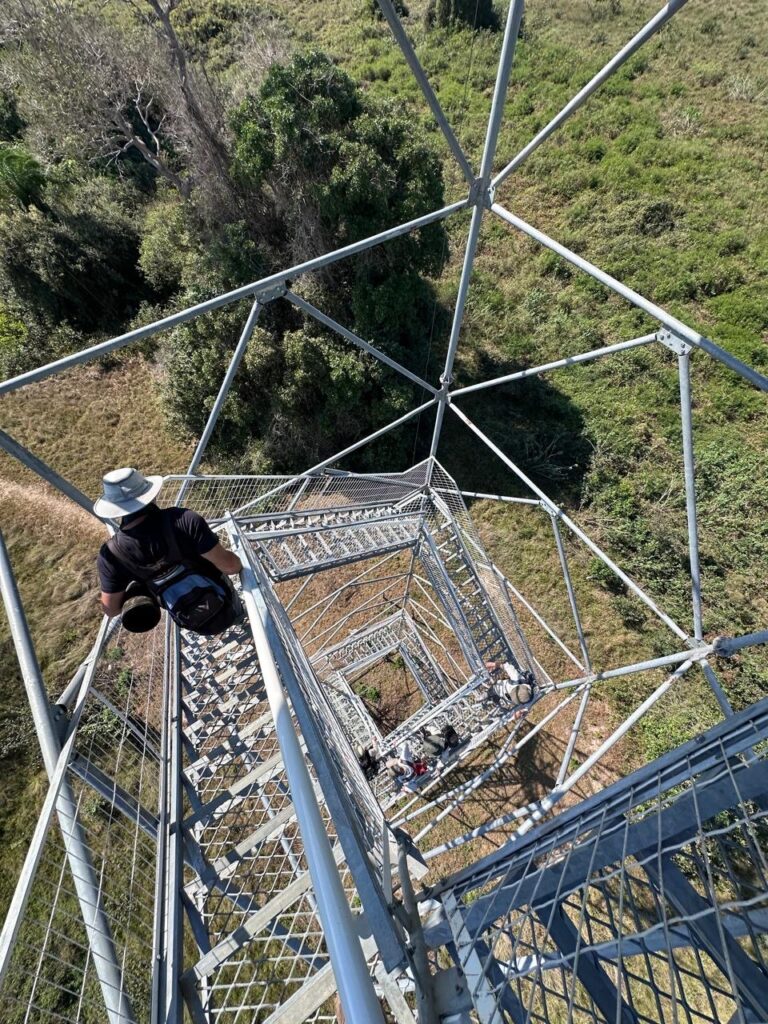
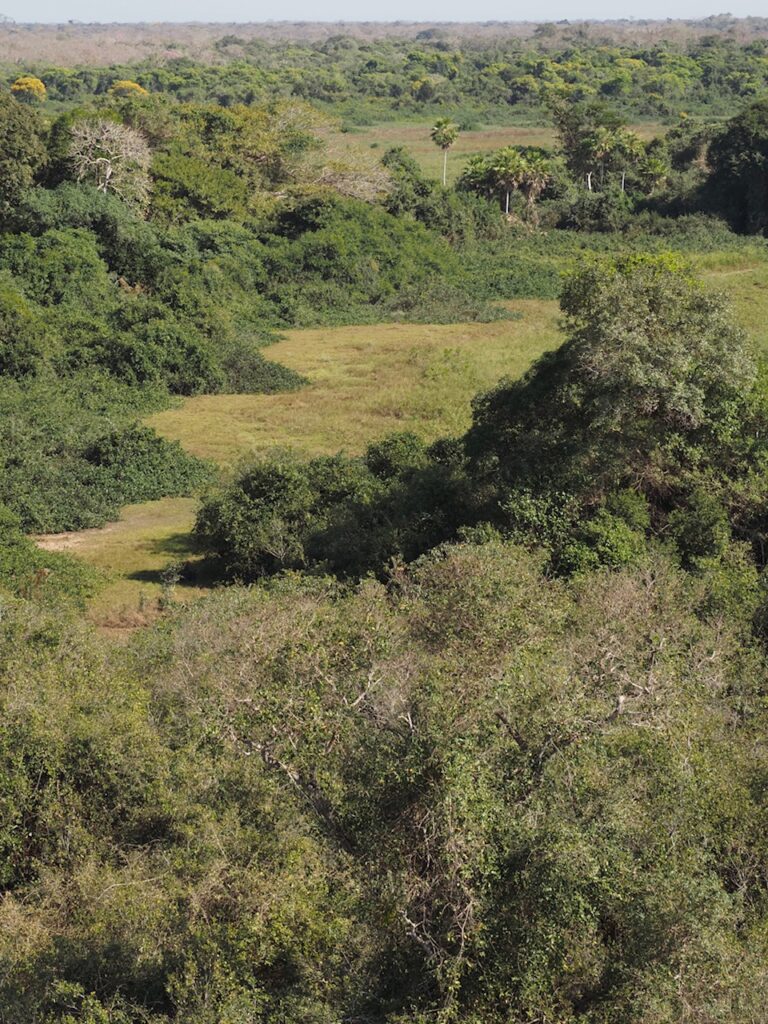
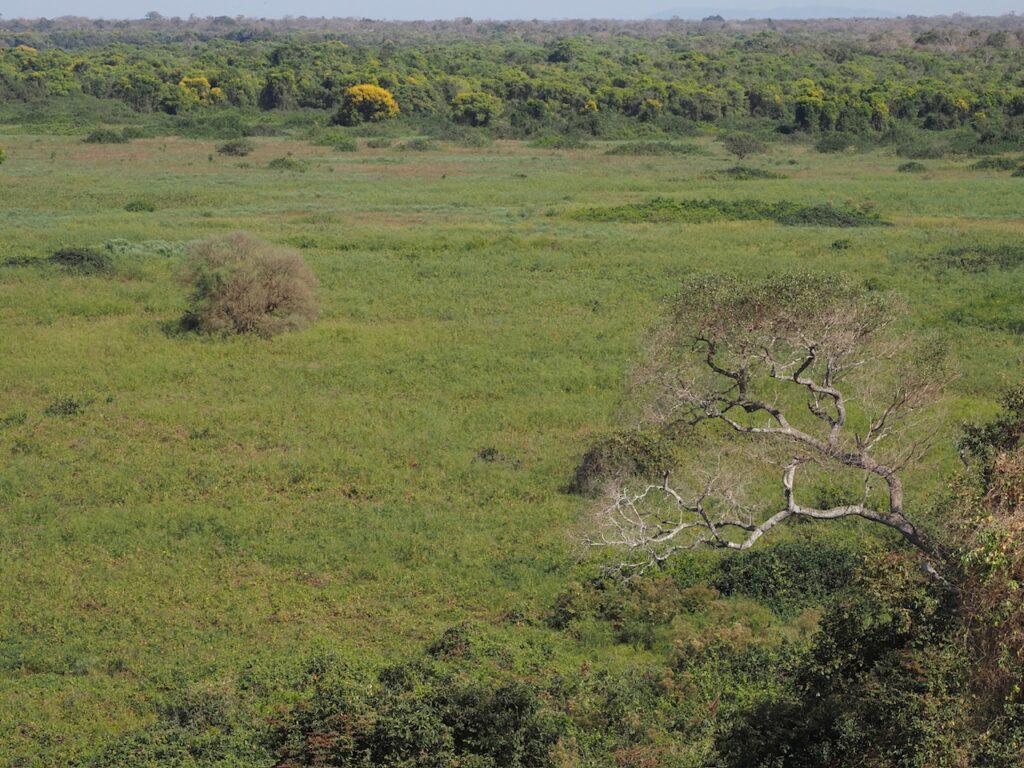
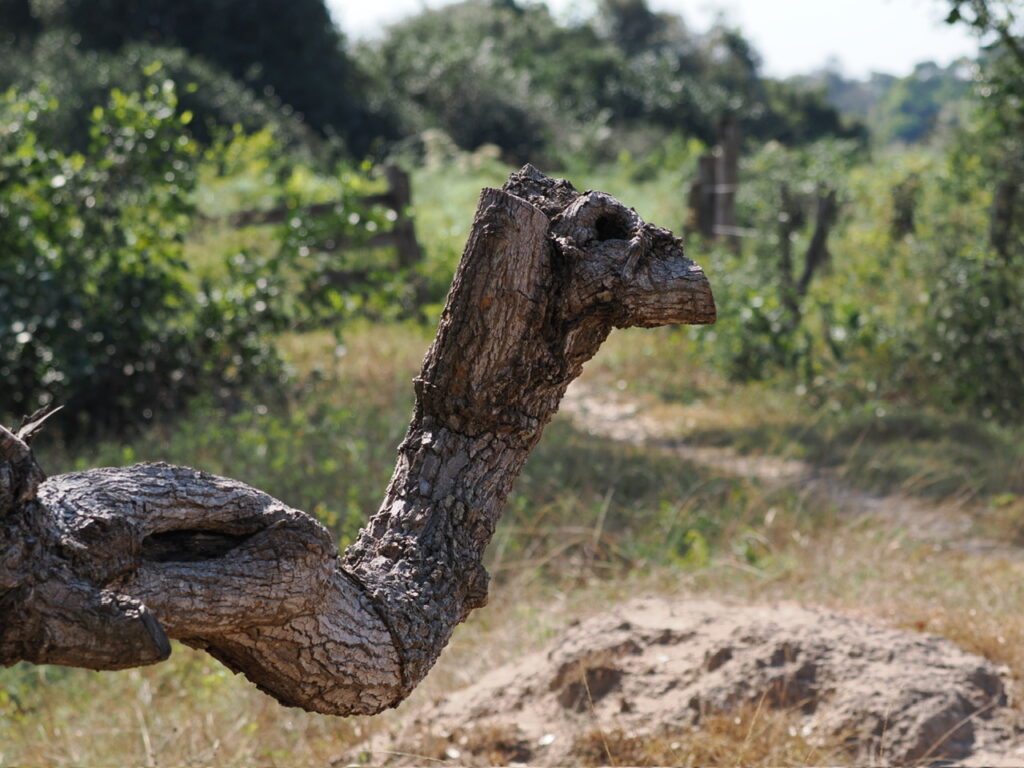
We hoped we might be able to spot a giant eater but they are not co-operating. On the way back we do see a tree pretending to be a camel🤣
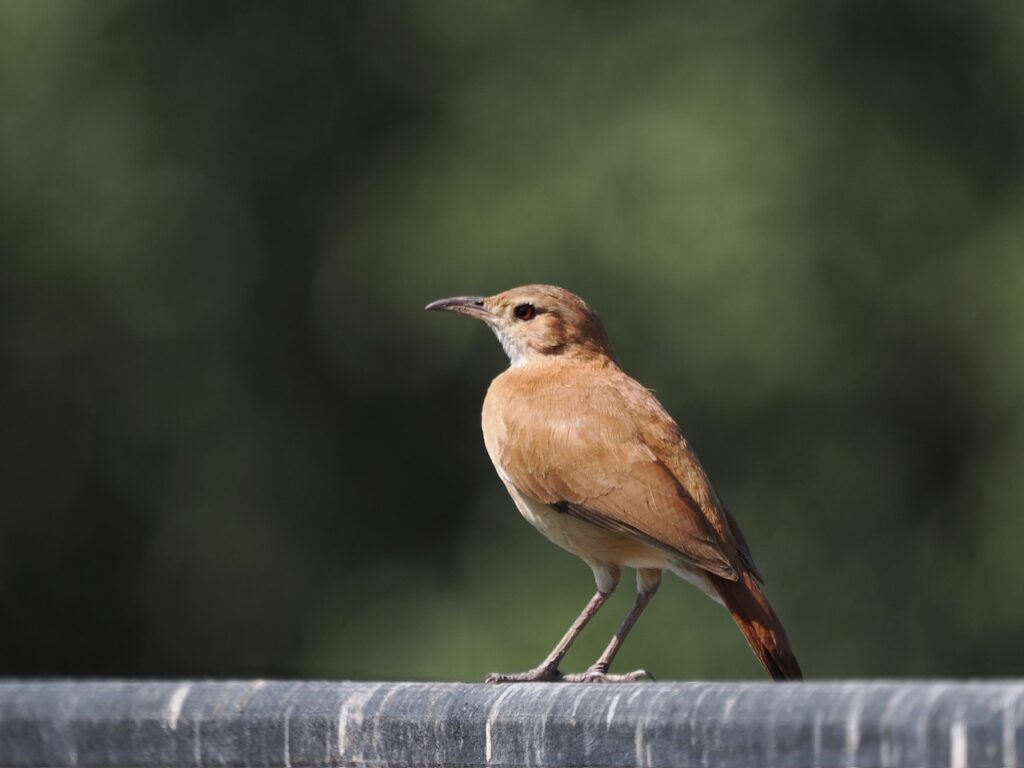
…and a rufous hornero that makes an impressive dome-shaped nest, with an inner chamber, made out of mud.
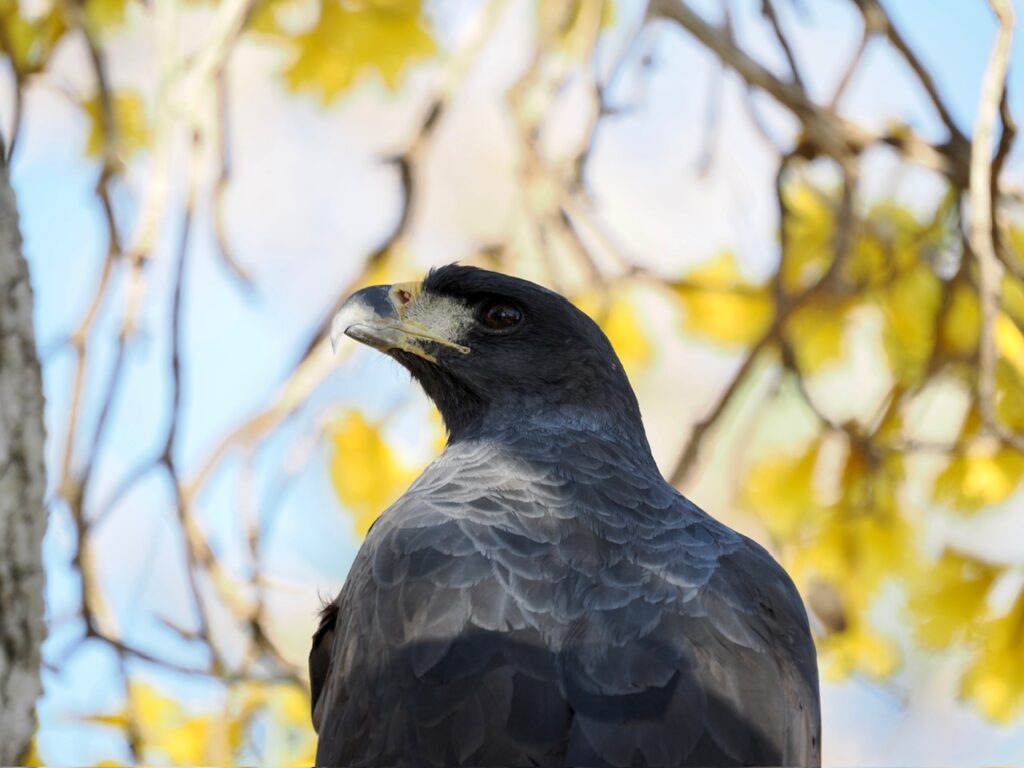
In the afternoon we again search for anteaters but instead find a black eagle…
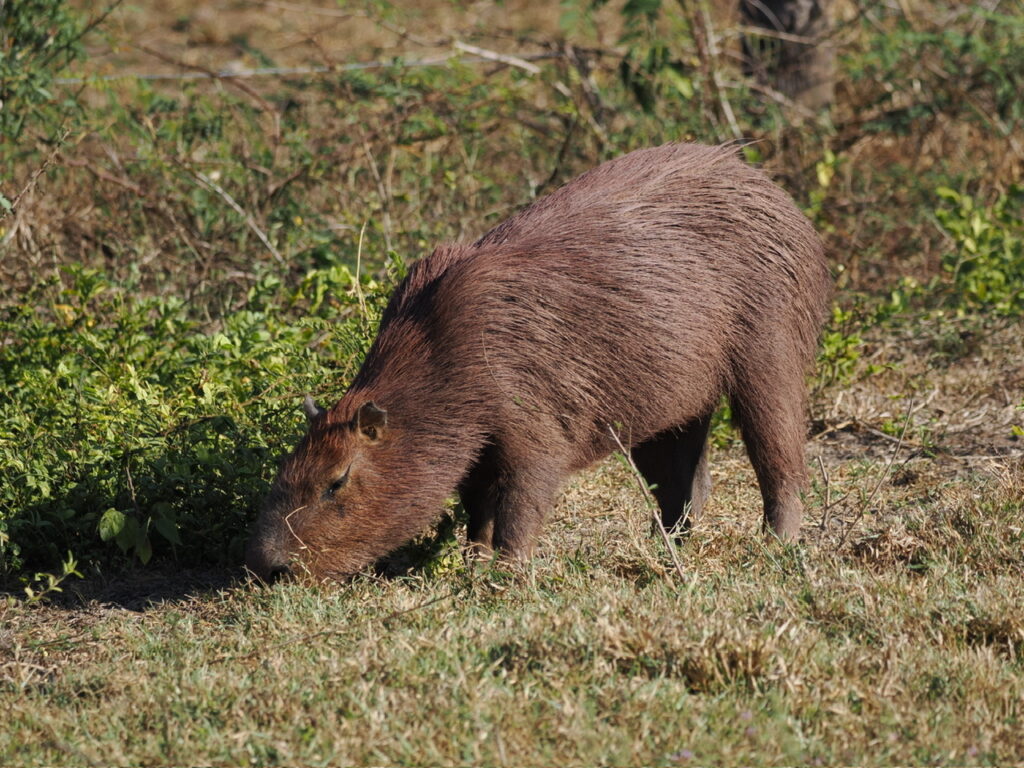
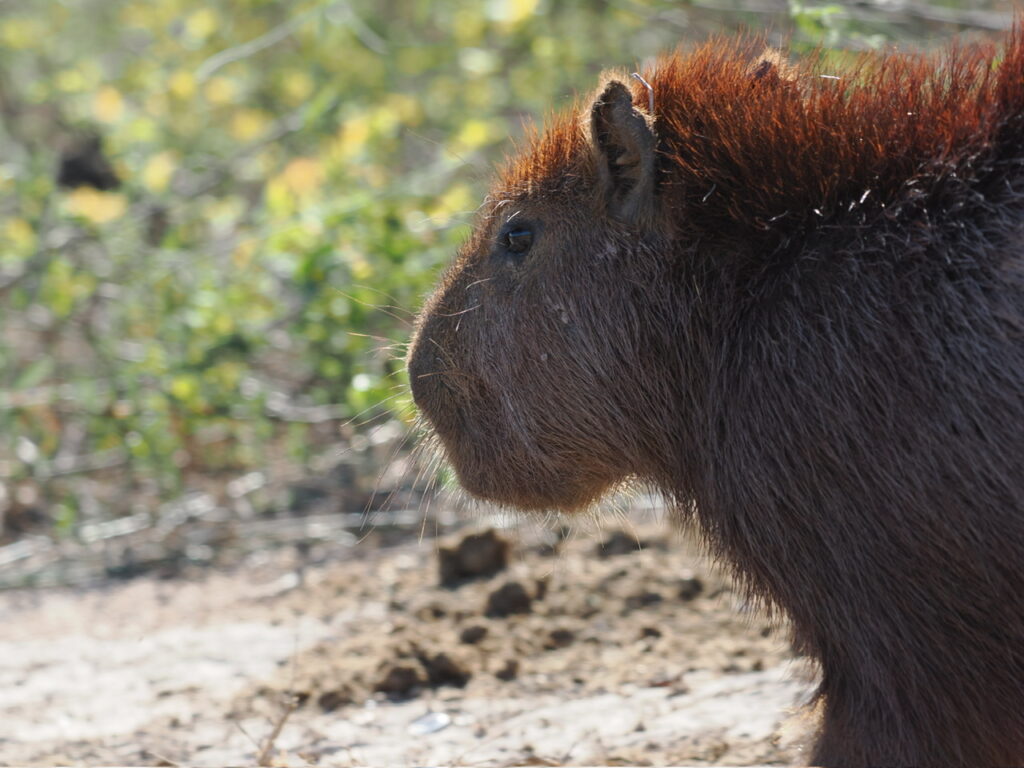
… and a herd of capybaras that allow us to get very close. They are the largest rodent, related to guinea pigs and make similar squeaky noises.
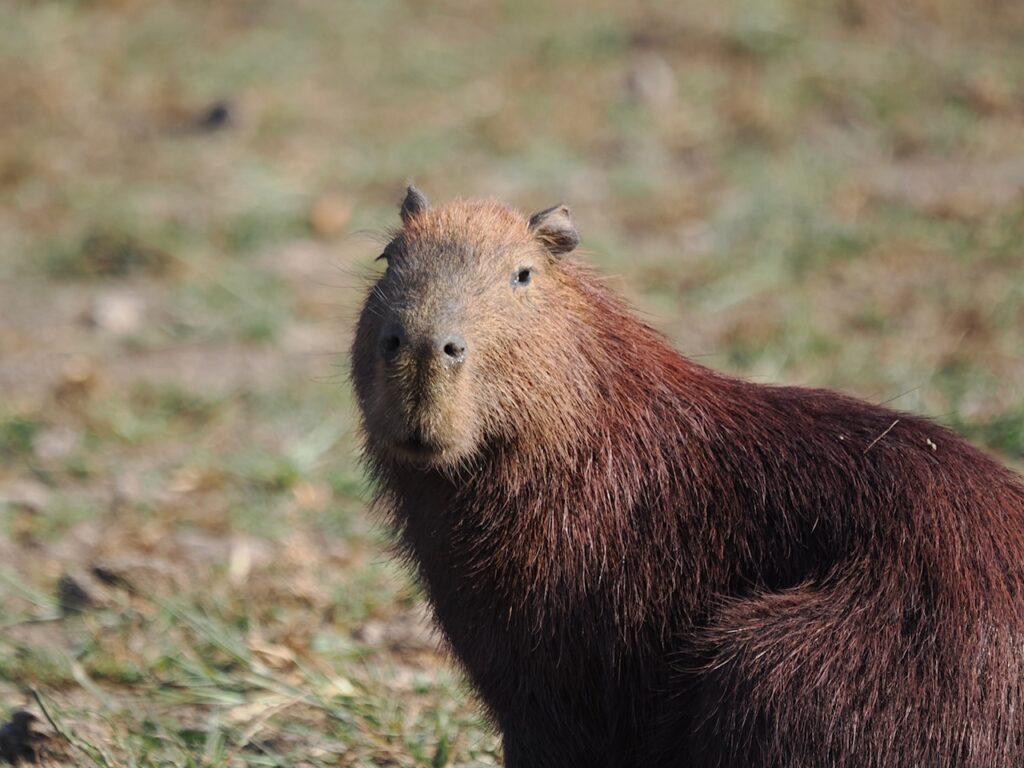
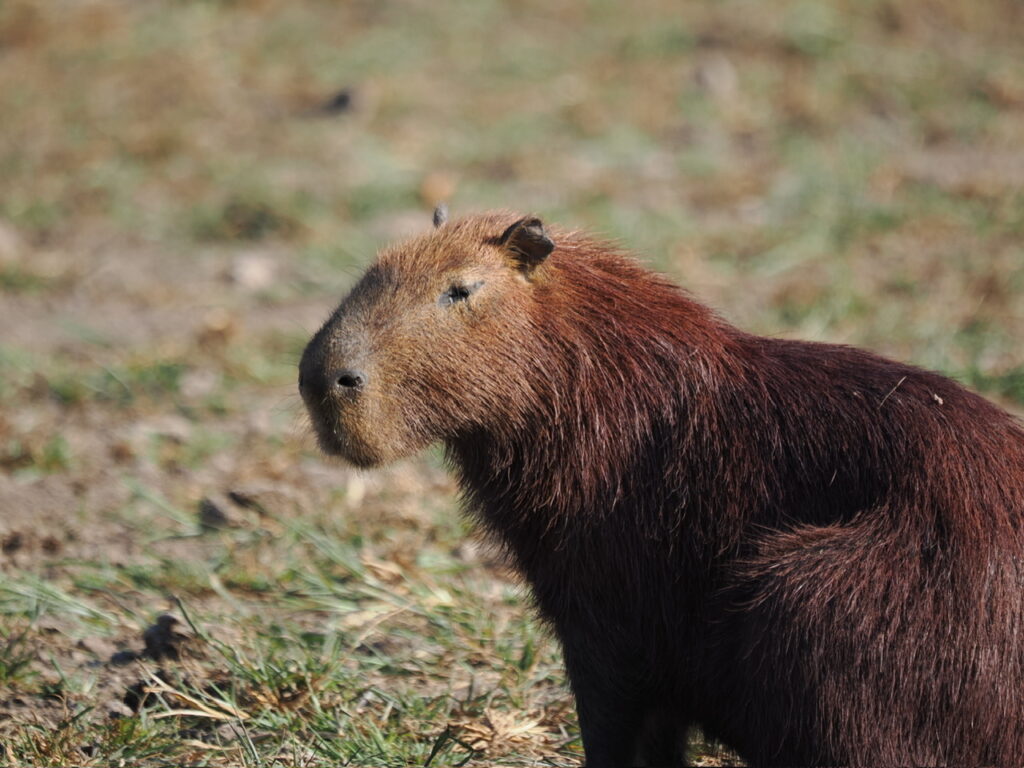
We drove on to the pool we visited last night but there were already two vehicles there. Bruno decided to take us to a different one which was further away but proved to be a brilliant decision. The evening started slowly with an assortment of birds coming down to drink. There was an aracari, joined by one and then two buddies ….
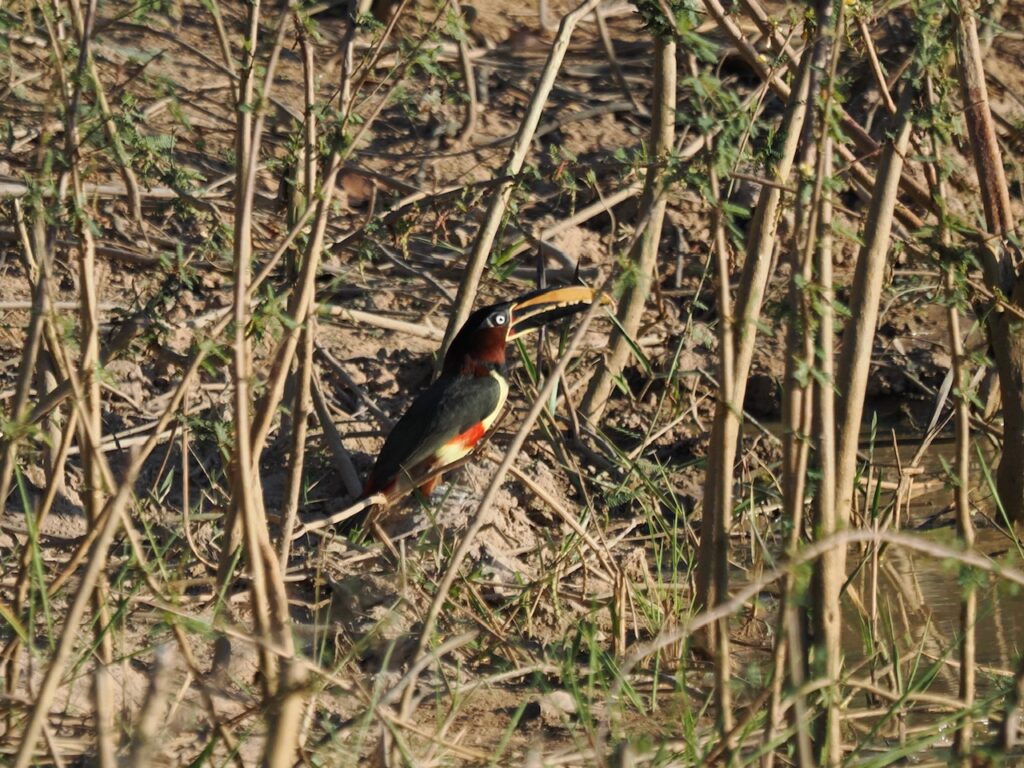
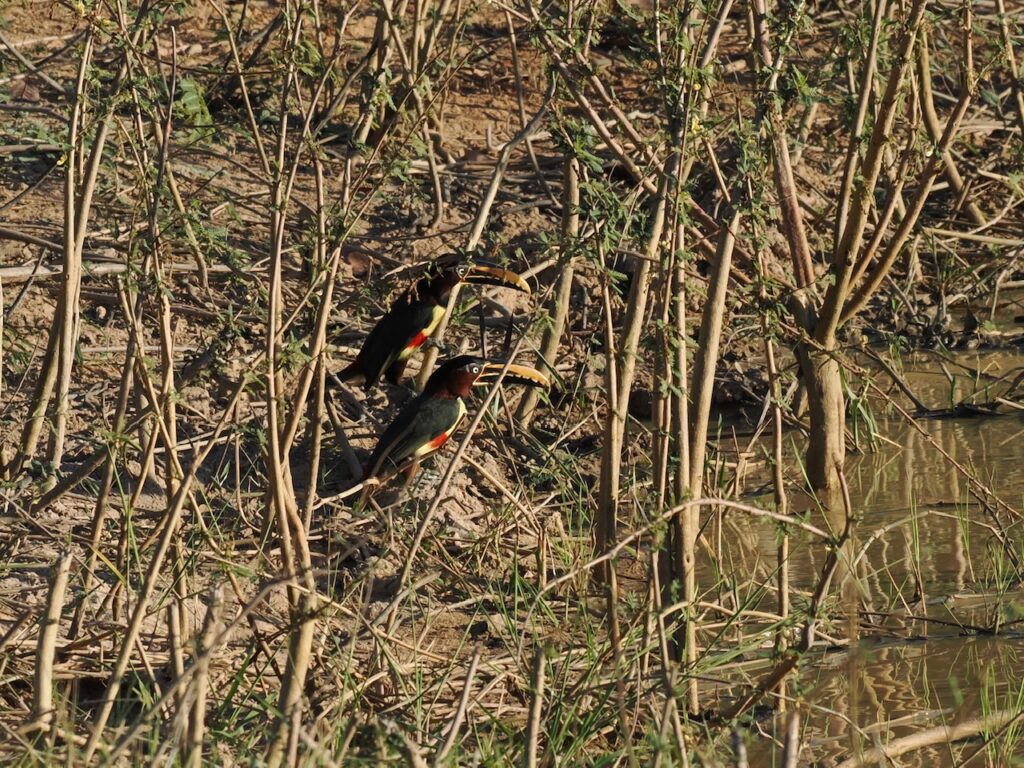
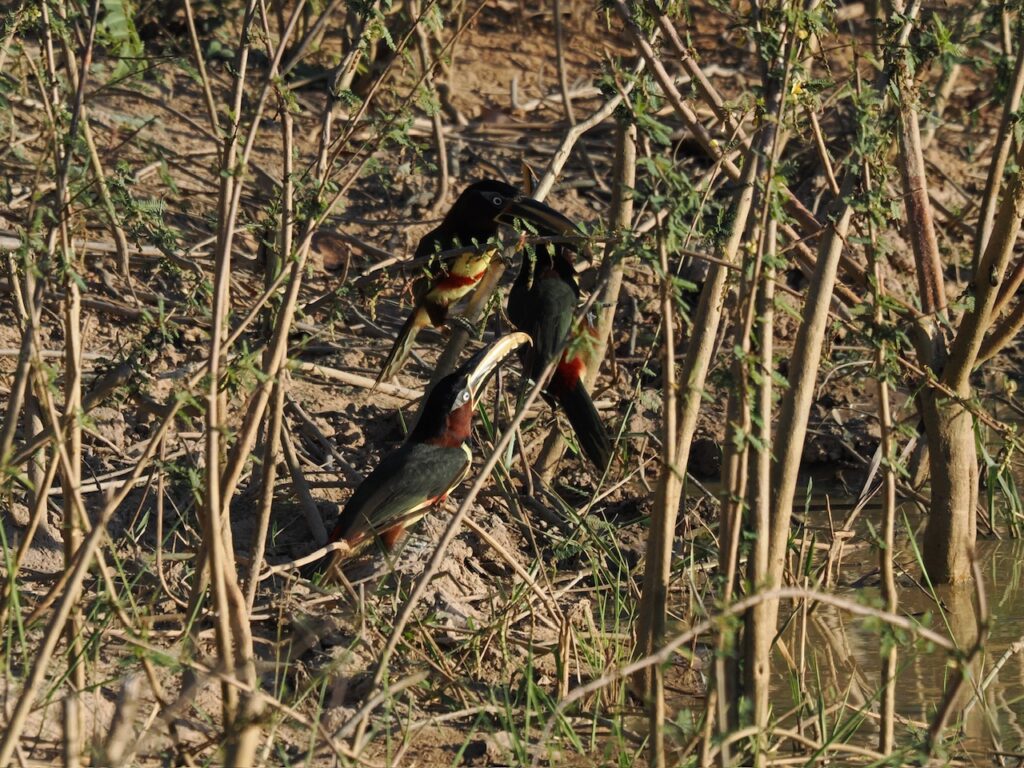
…parakeets, curassow, guan, doves and then a bold toco toucan.


Then the mammals began to appear. An agouti was first, closely followed by a family of coati
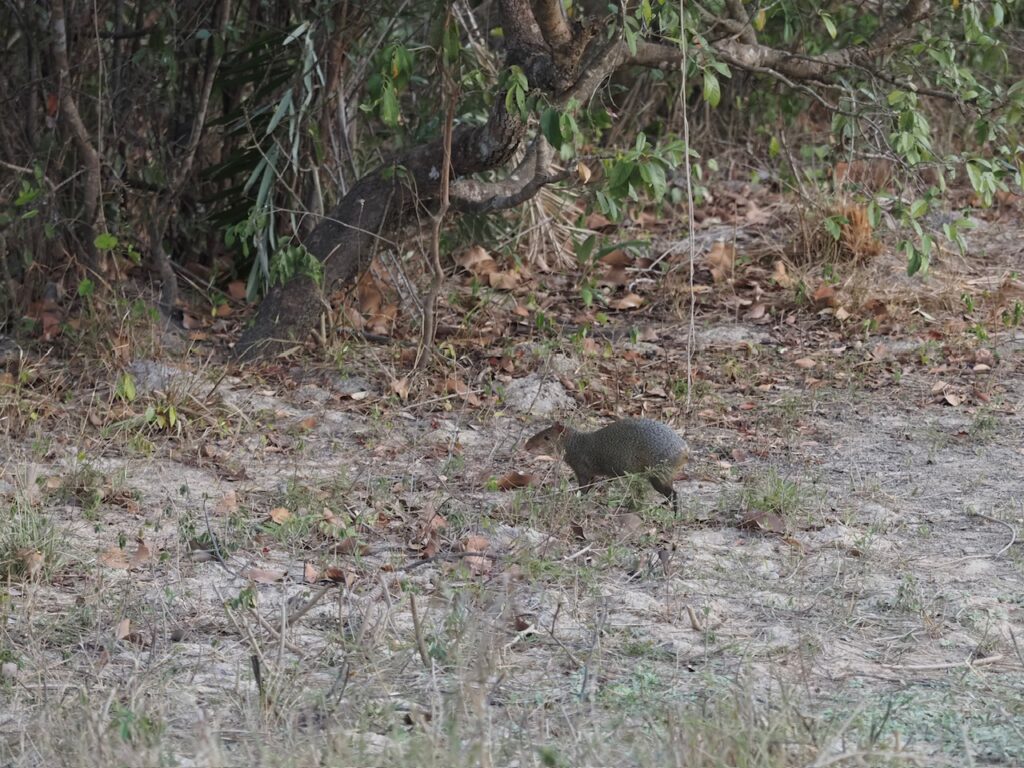
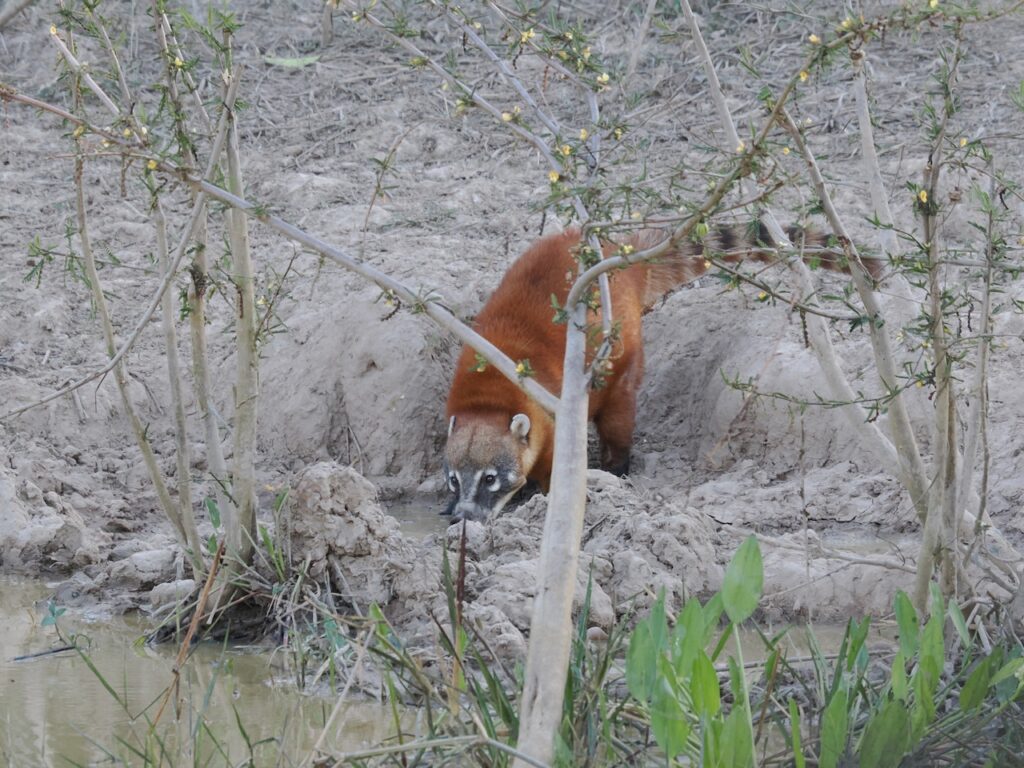
The light was fading fast and photography becoming challenging. I was filming the coati when a tapir appeared in the bushes beside us. I could just see the white tips of its ears.
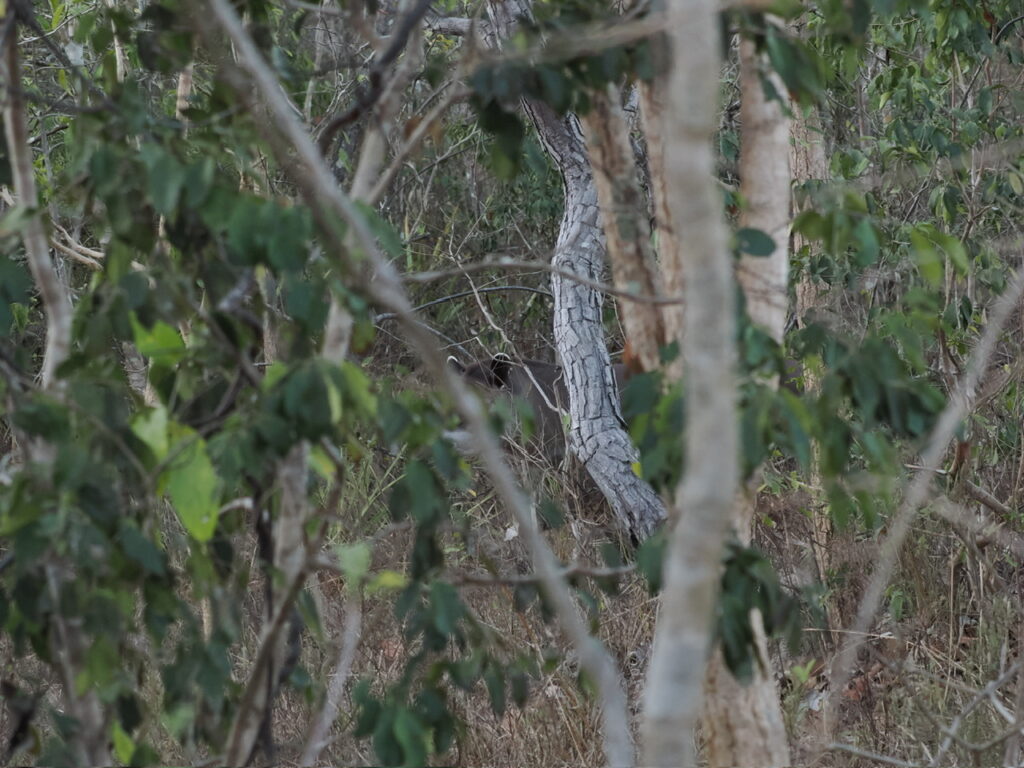
We couldn’t believe our luck. Such a rare creature to see and so shy. We needed to be very quiet indeed. It approached the water cautiously but eventually started to drink.
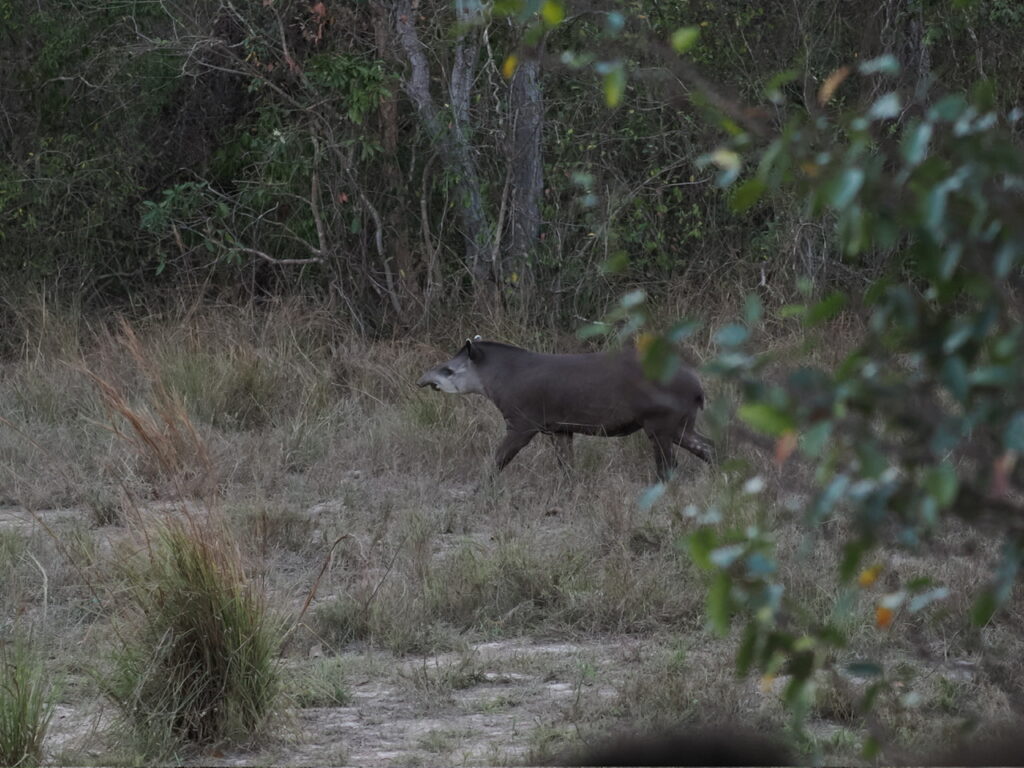
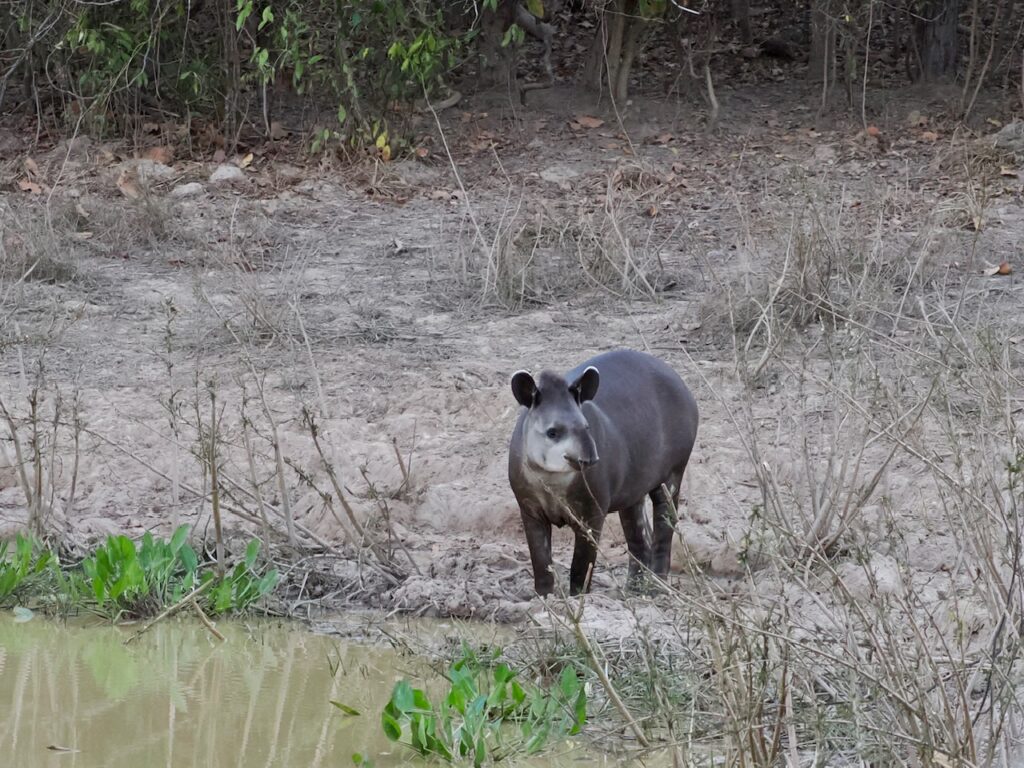
After a few minutes a second tapir appeared, but was spooked by someone in the vehicle moving around. Sadly, it bolted but the first tapir remained and went for a swim. As the light was so poor I switched from photography to video which has come out unbelievably well.
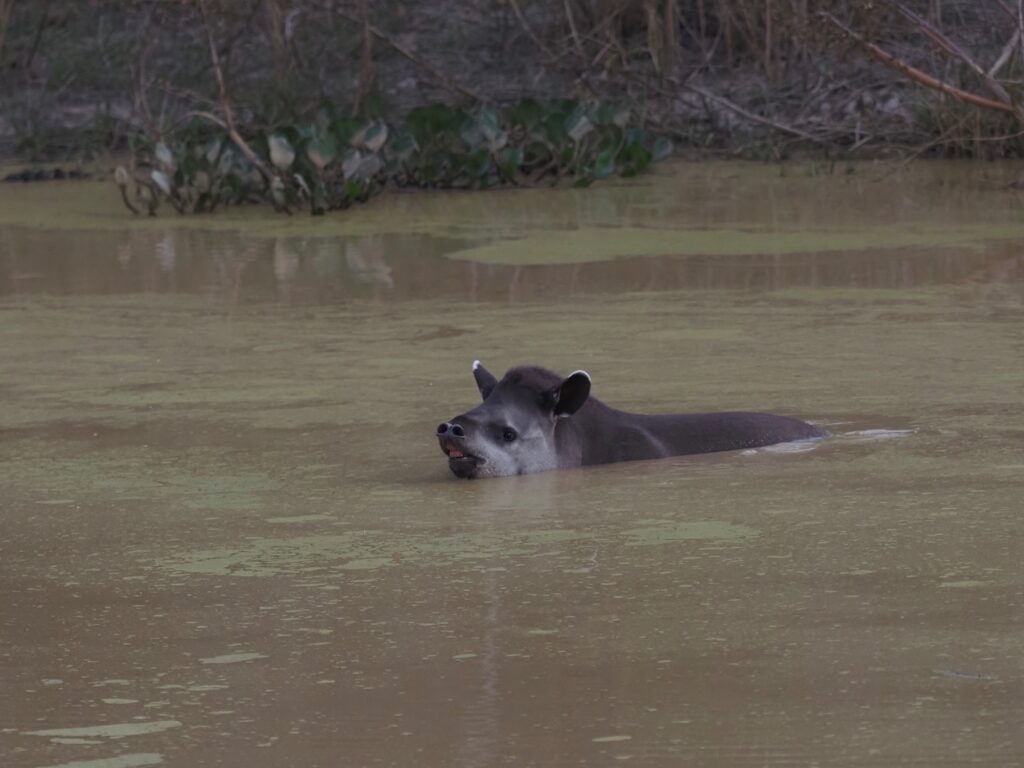
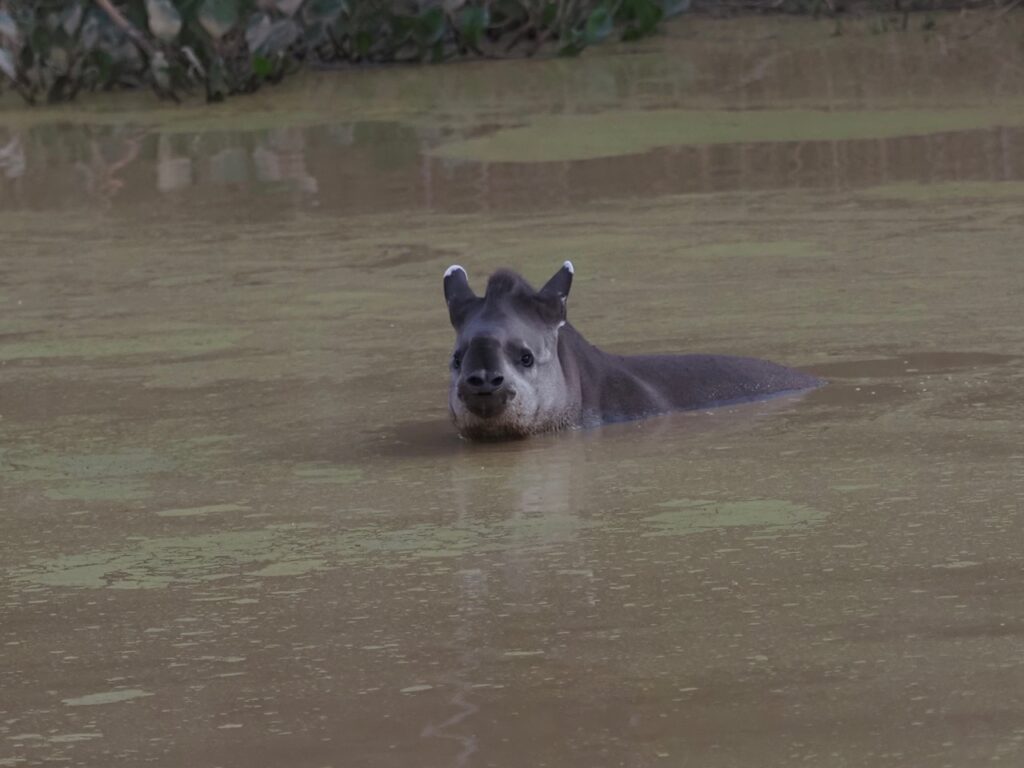
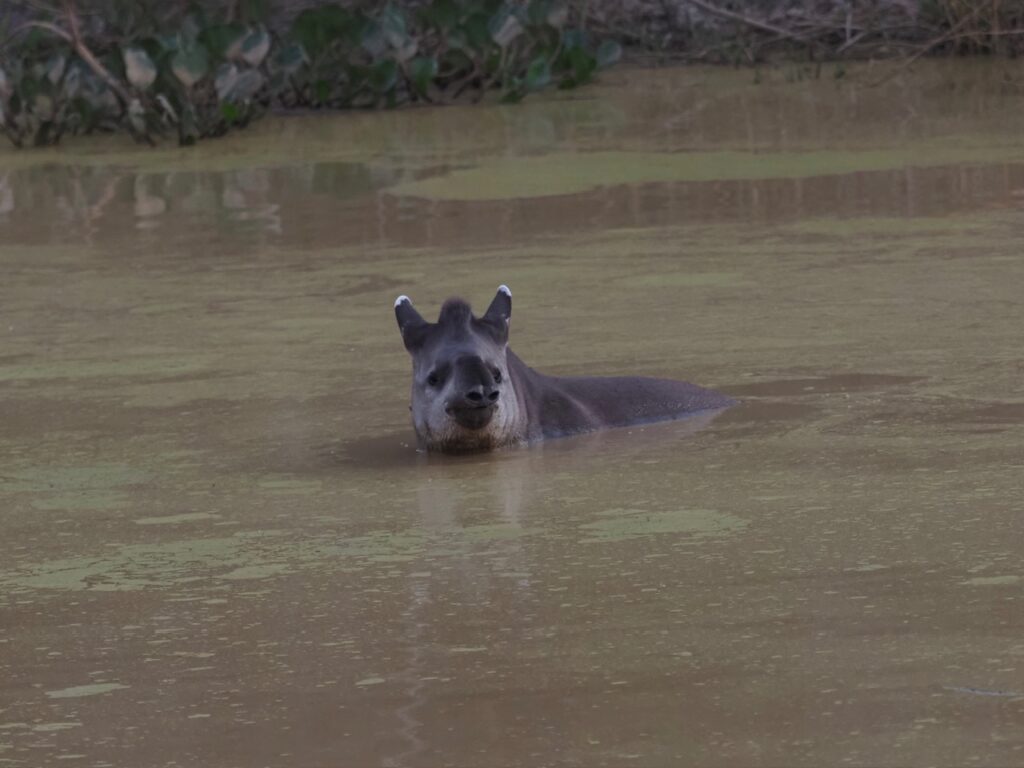
We then noticed the second tapir had re-appeared and he also went for a swim, but the light had almost gone. I tried a few photos and then resorted to video, which was much more successful.
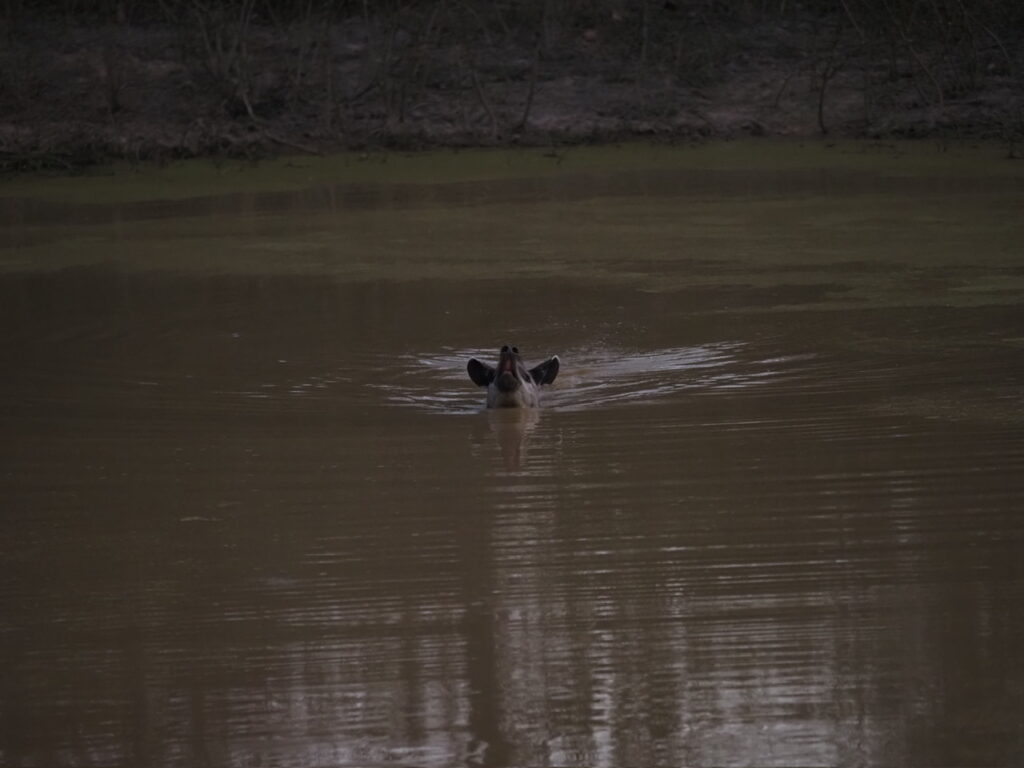
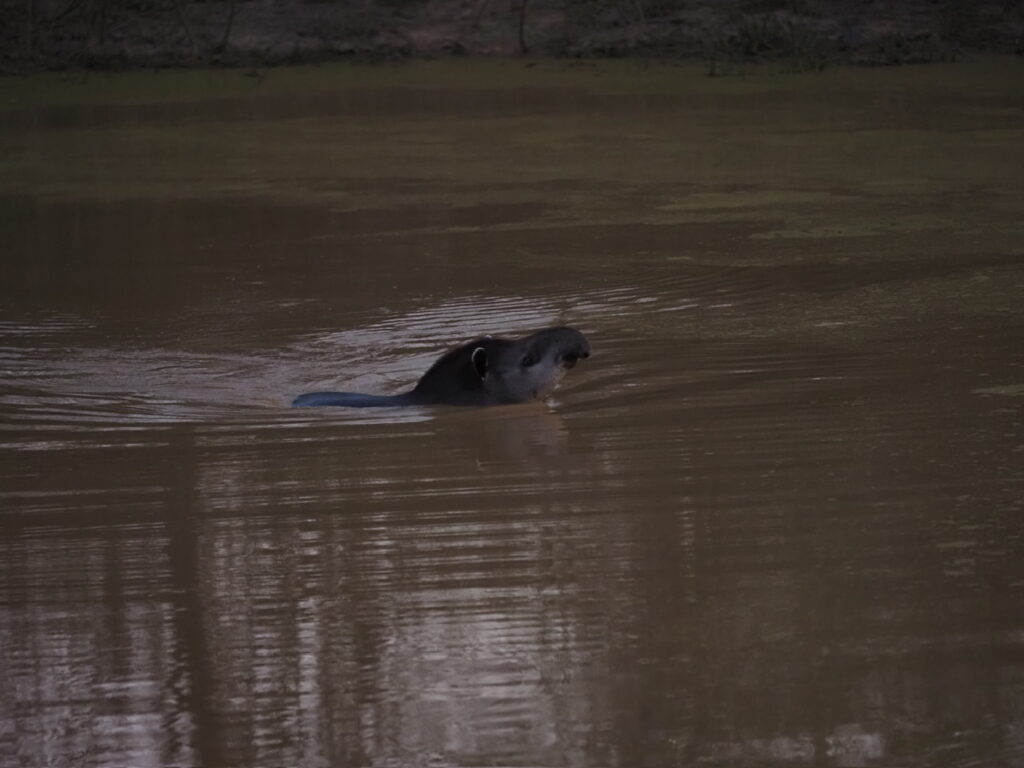
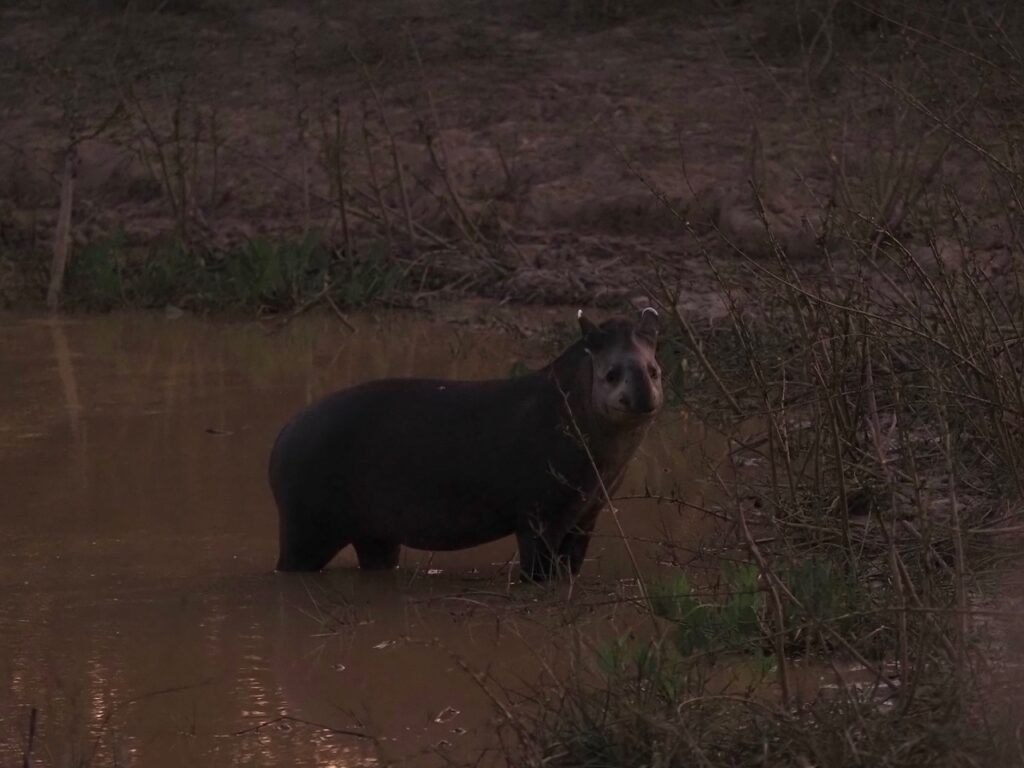
We were all mesmerised. My fingers ached from holding the camera but I had to carry on filming. Oh – and then a marsh deer joined in the action and the coatis returned. Unbelievable! What a special privilege.
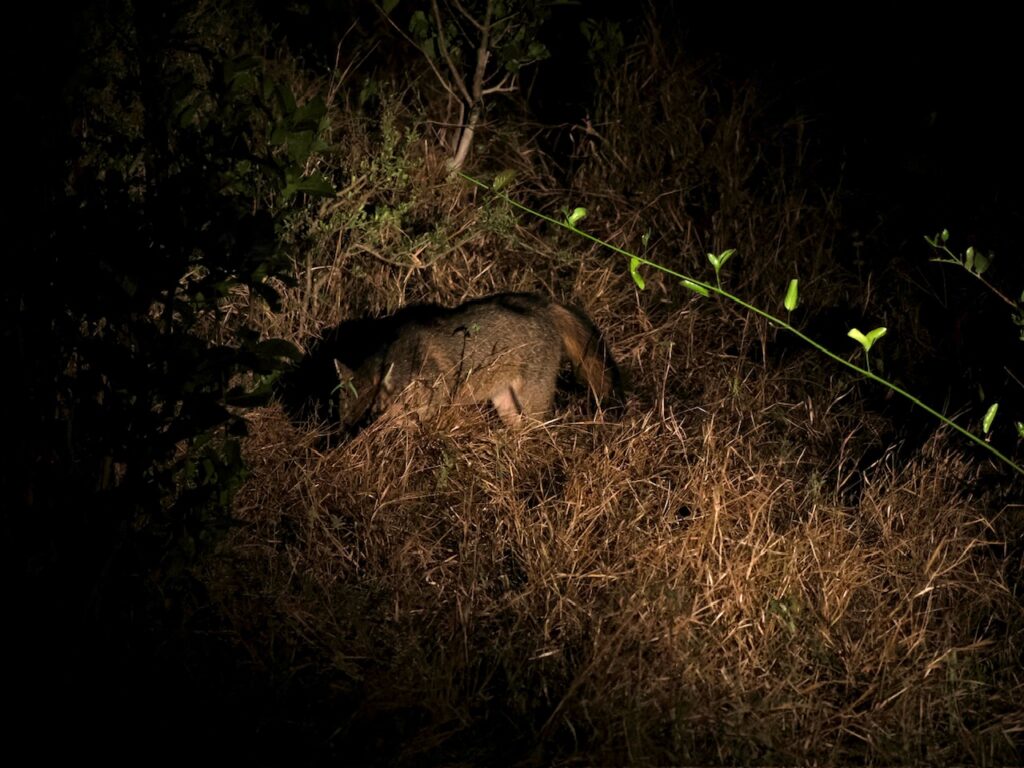
We were all feeling elated and exhausted on our way back to the lodge, especially so when a crab-eating fox crossed the road in front of us.
Tomorrow we shall leave and make the 5 hour long road trip to the end of the Transpanteneira in Porto Jofre. We go for a final walk before breakfast, which should have been a drive had our truck not developed a puncture. However, this was a good thing as we could stretch our legs a little before being cramped up in the open truck all morning.


Lynne
WOW!! You have done and seem so much already. You have become a twitcher 🦅😂
Yet another camera required for night vision. xx
Maggie
That’s a great idea!! Xx