Photography and Travel Blog

Category: Pantanal

Porto Jofre – Fishing (& More Jaguars!!)

We say our goodbyes and head off at 10.00 to go back to Porto Jofre along The Transpanteneira. We are getting to know it quite well! However, this time we have the comfort of an air-conditioned vehicle and the journey takes half the time. We arrive at 11.30 just in time for lunch.

Meals here are early:-

  • Breakfast 05.30 – 07.00
  • Lunch 11.30 – 13.00
  • Dinner 18.30 – 20.00

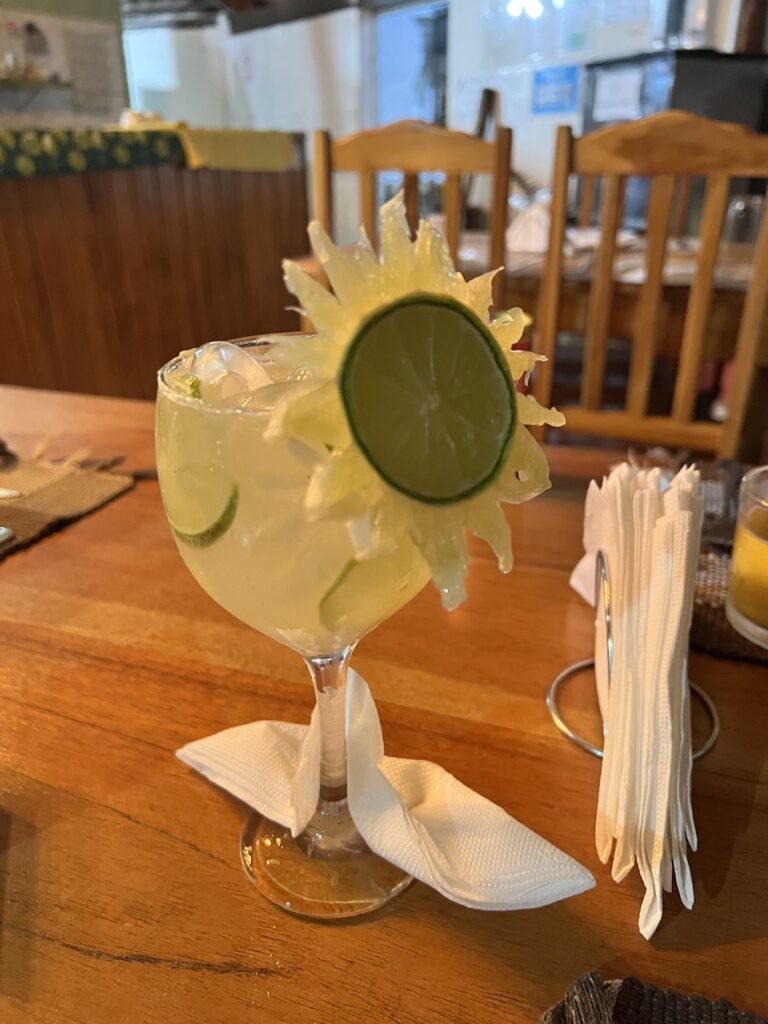
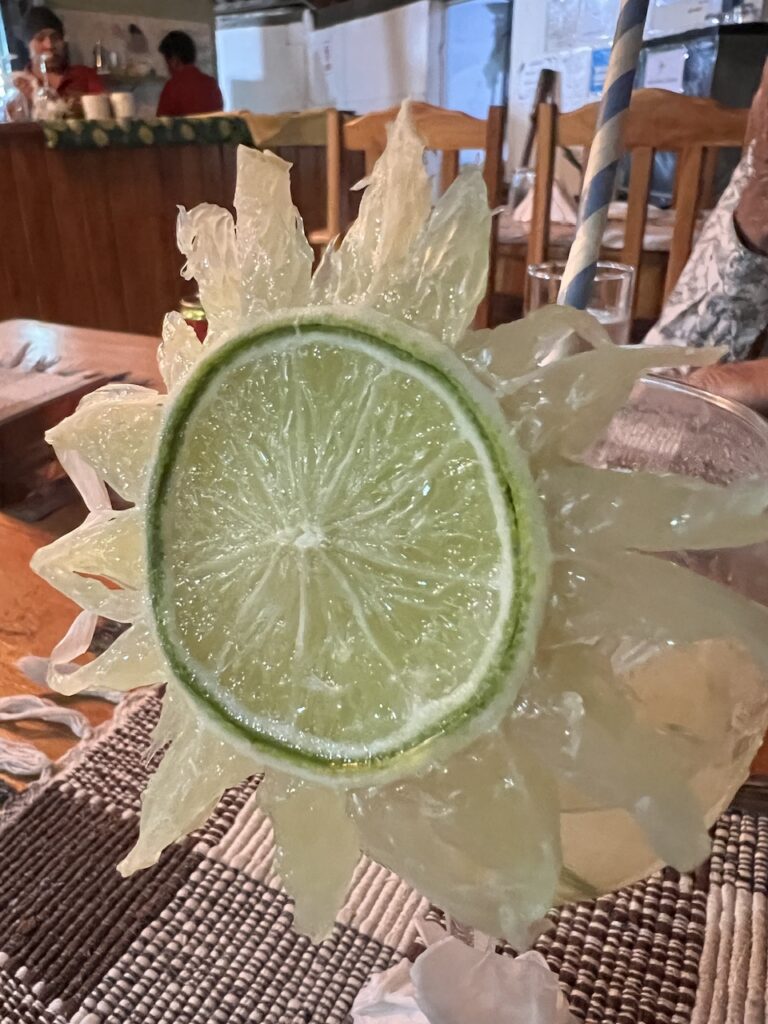
This is a pretty unassuming place but it turns out to be built for purpose. The room is basic but clean, with a/c and a sensible screened porch with chairs, which provides a barrier to prevent a thousand bugs entering your room when you open the door. The food is good and more varied than elsewhere, the caipirinhas are quite excellent. It took me a while to work out how you make the lime sunshine. Simple – take a slice, turn it inside out and slide back over lime.
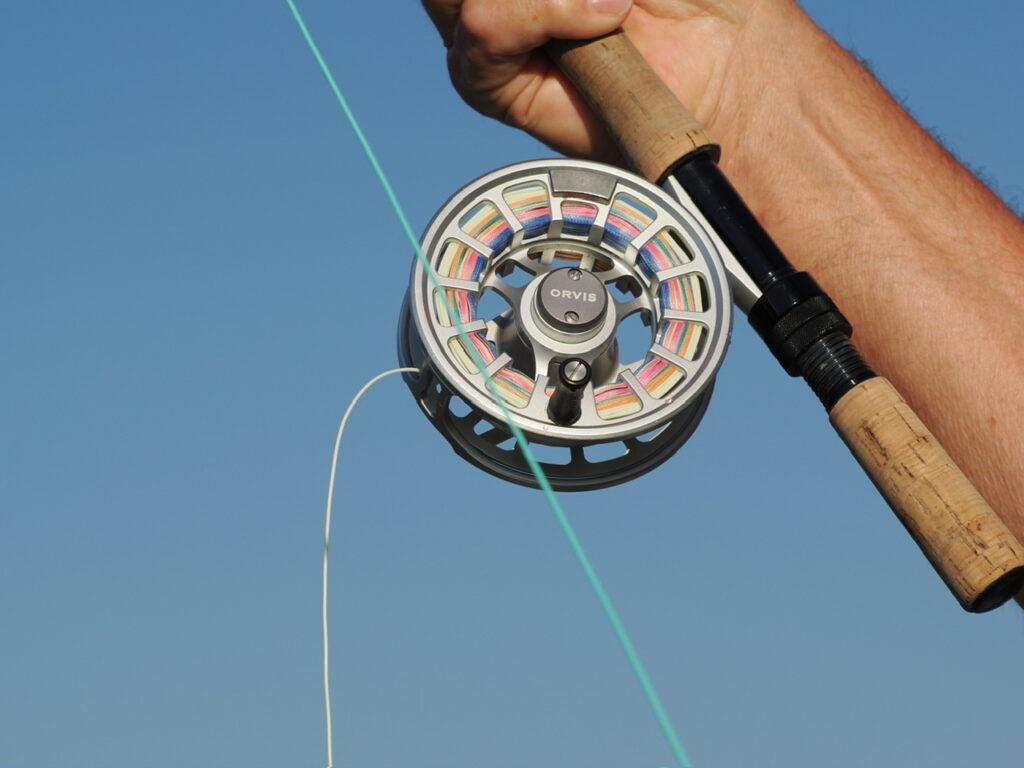
We do not have much down time. We are out on a boat by 14.30. Fortunately Bruno has joined us for our extension. I honestly do not know how we would have coped without him. No-one speaks English and our Portuguese is non- existent, so checking in and explaining that we had booked a fishing guide would have been challenging. Likewise communicating in any way with the guide would have been impossible. If you ever come here, please make sure you ask for an English speaking guide when you book.
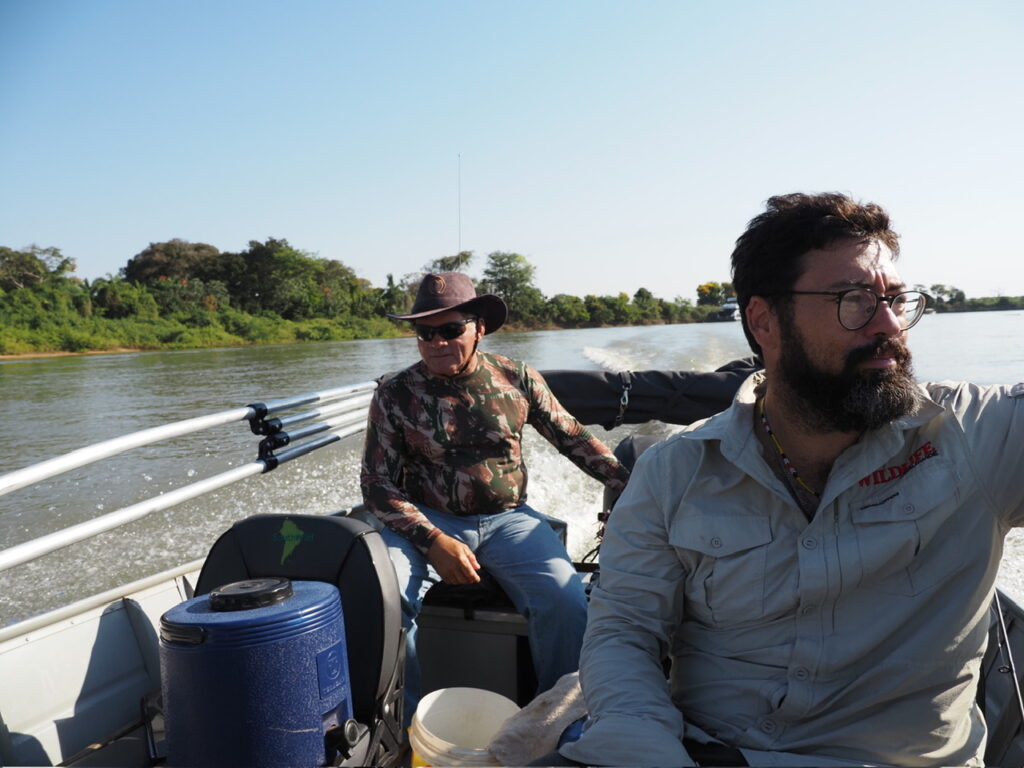
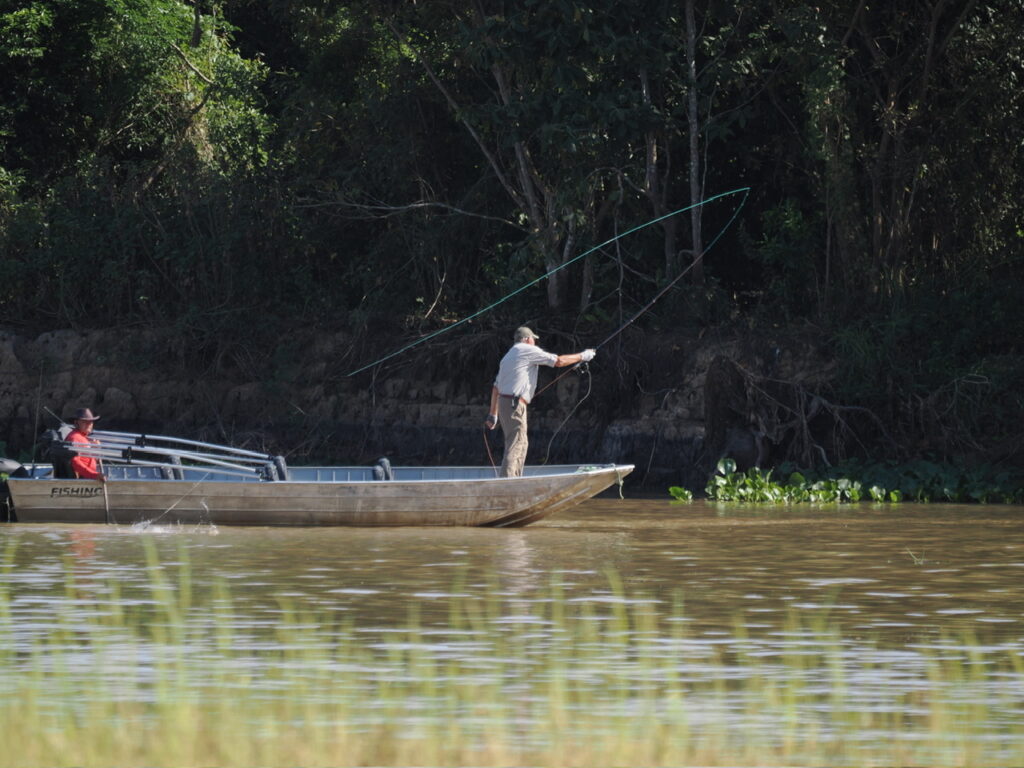
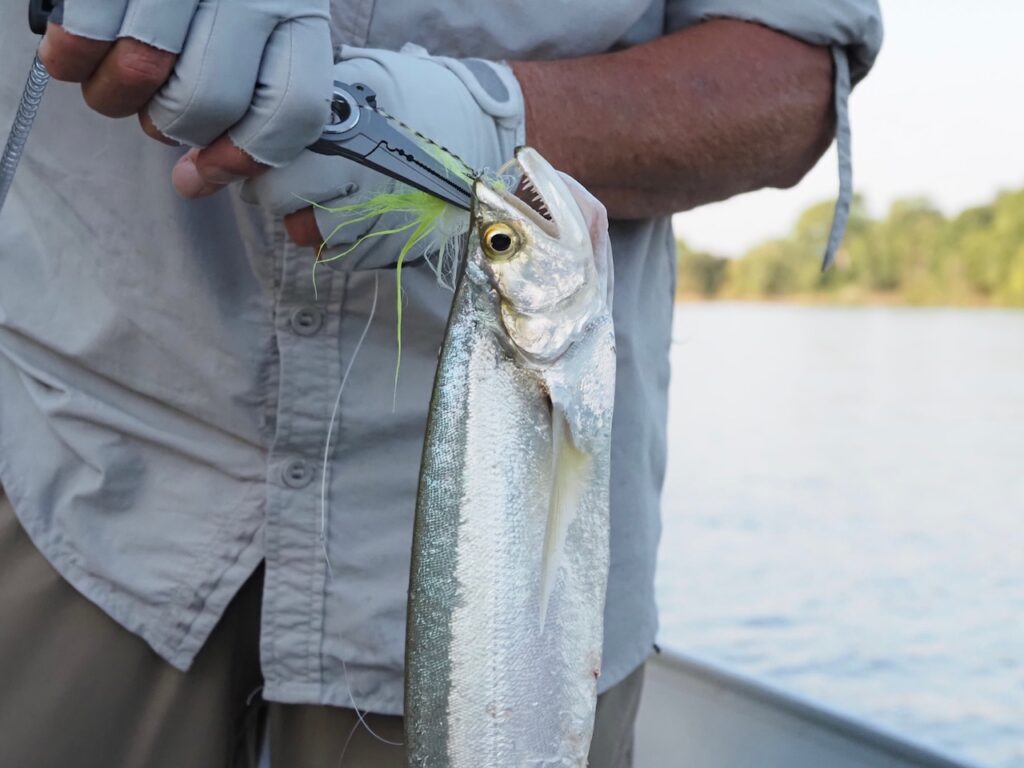
Our boatman and fishing expert was Manuel. He had never seen fly-fishing before and was intrigued. The afternoon was pretty successful with Paul catching a small piraputanga…
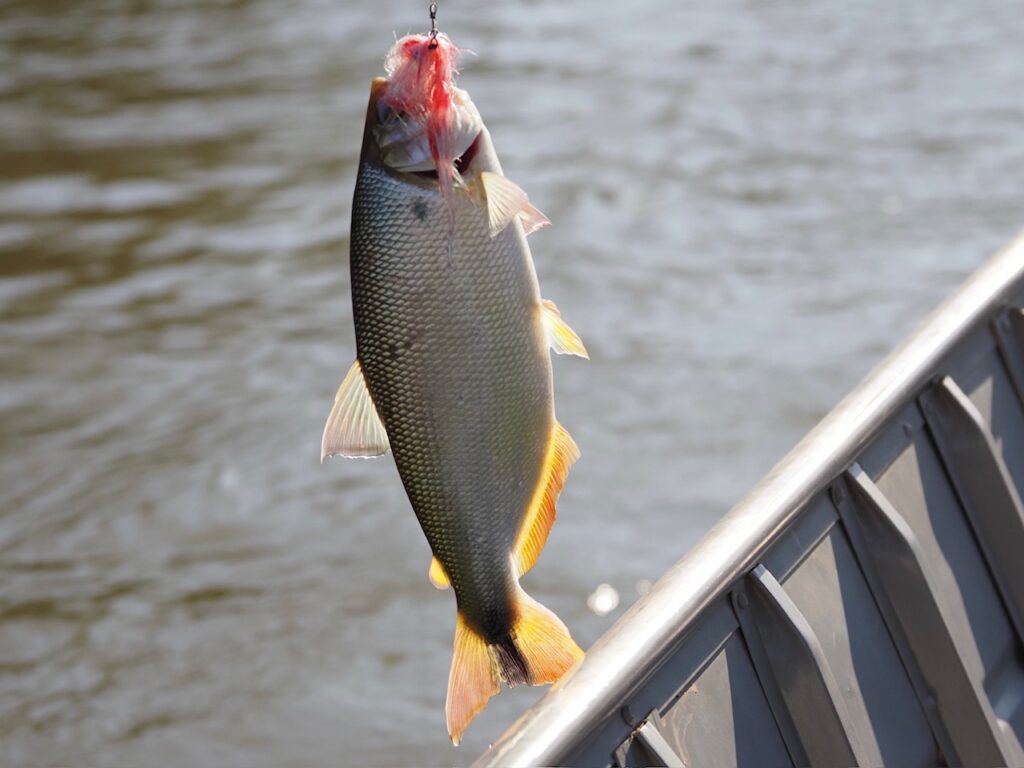
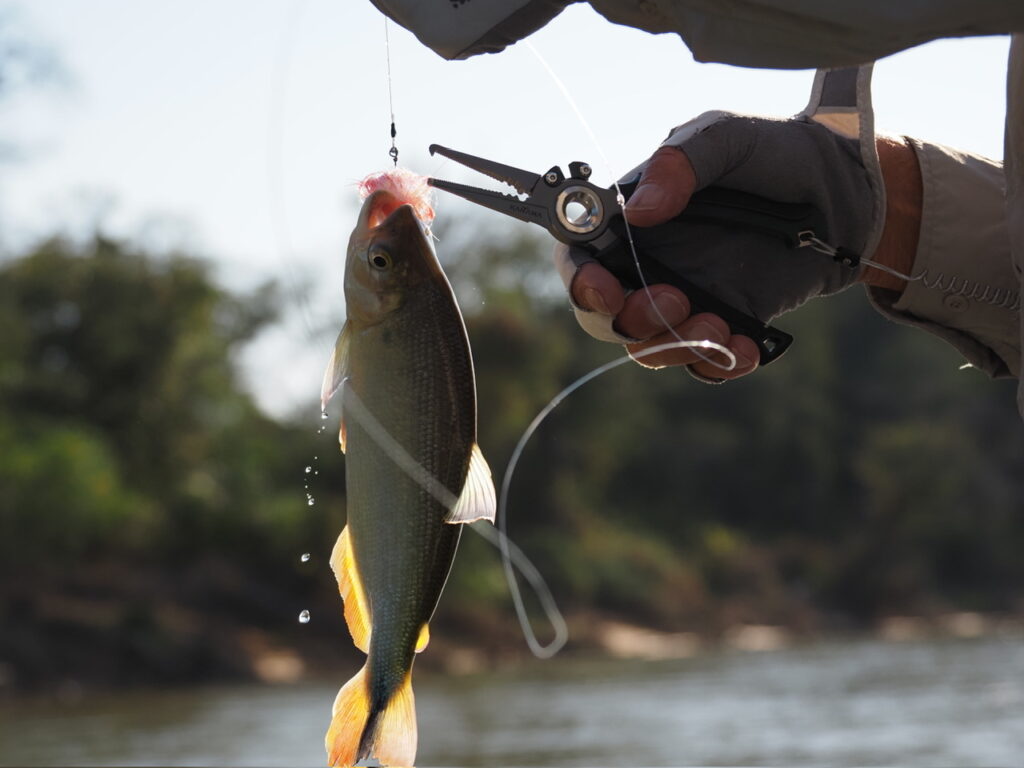
…and a vampire fish. It’s two large bottom teeth go through holes in its top jaw. Keep fingers away!!
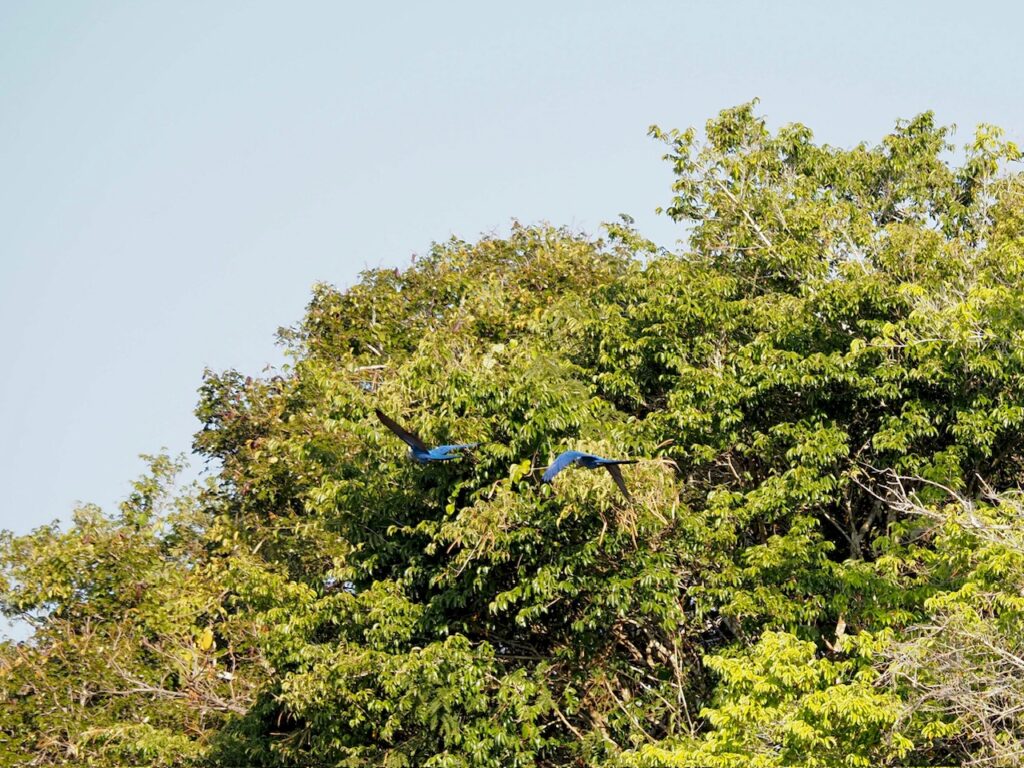
We had a fly past by a couple of hyacinth macaws…
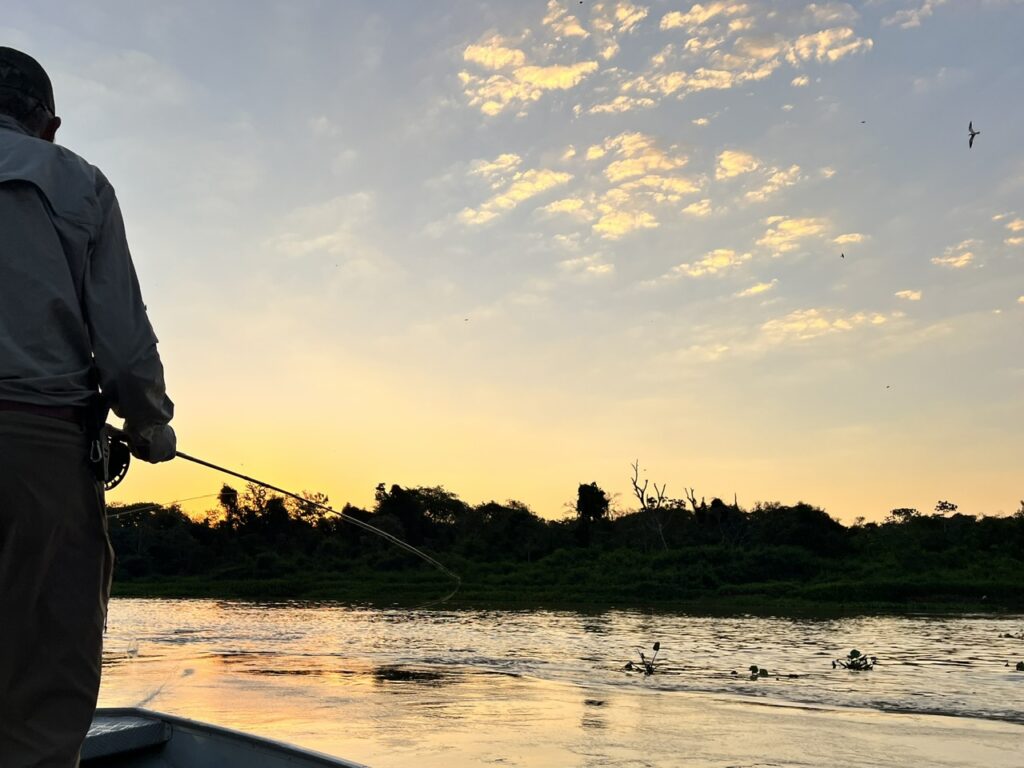
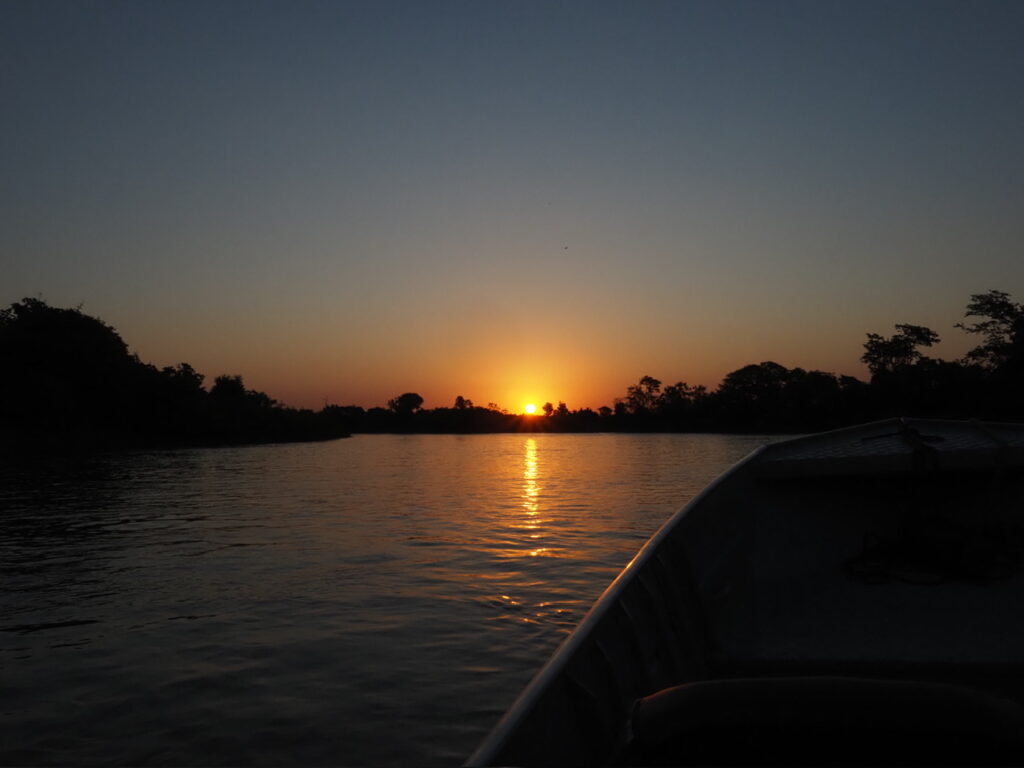
… and a beautiful sunset.
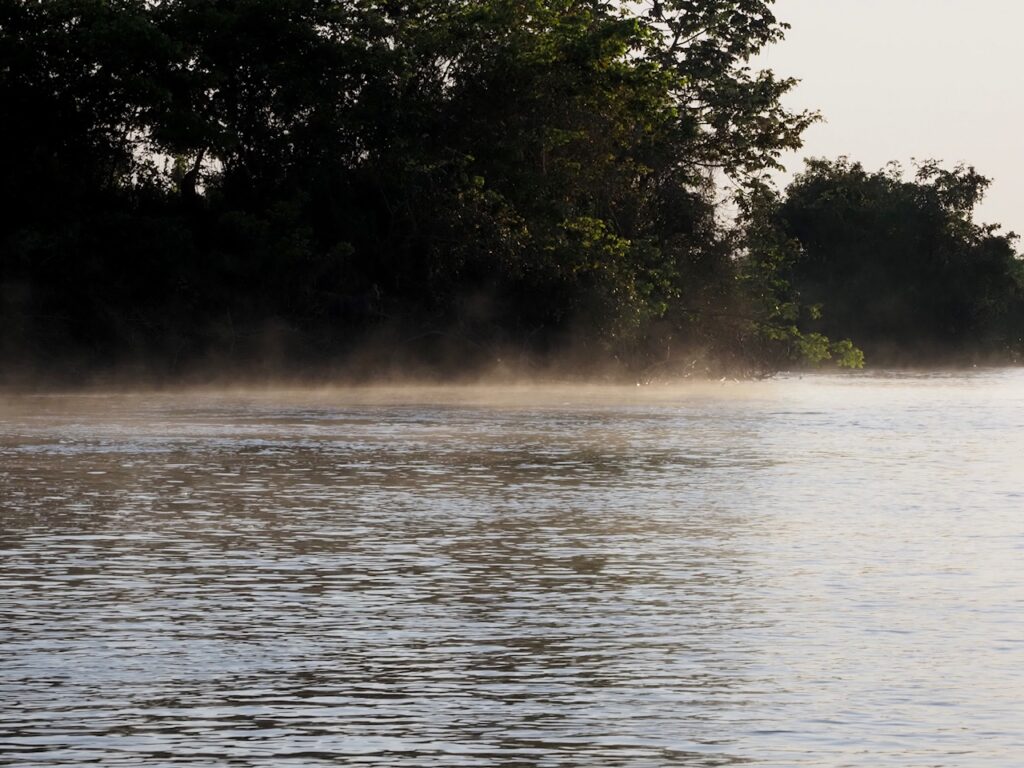
If you like a lie in, then this is not the holiday for you. Breakfast at 05.50 and on the boat by 06.30. Mist hangs over the water and the air is pleasantly cool. That will not last!
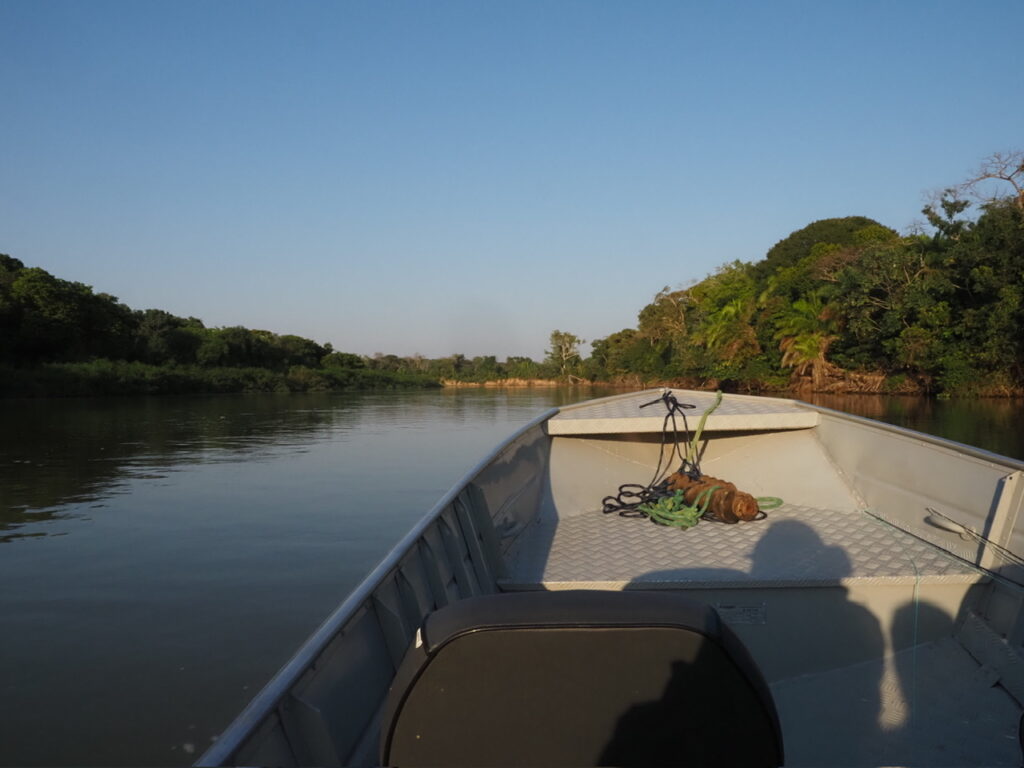
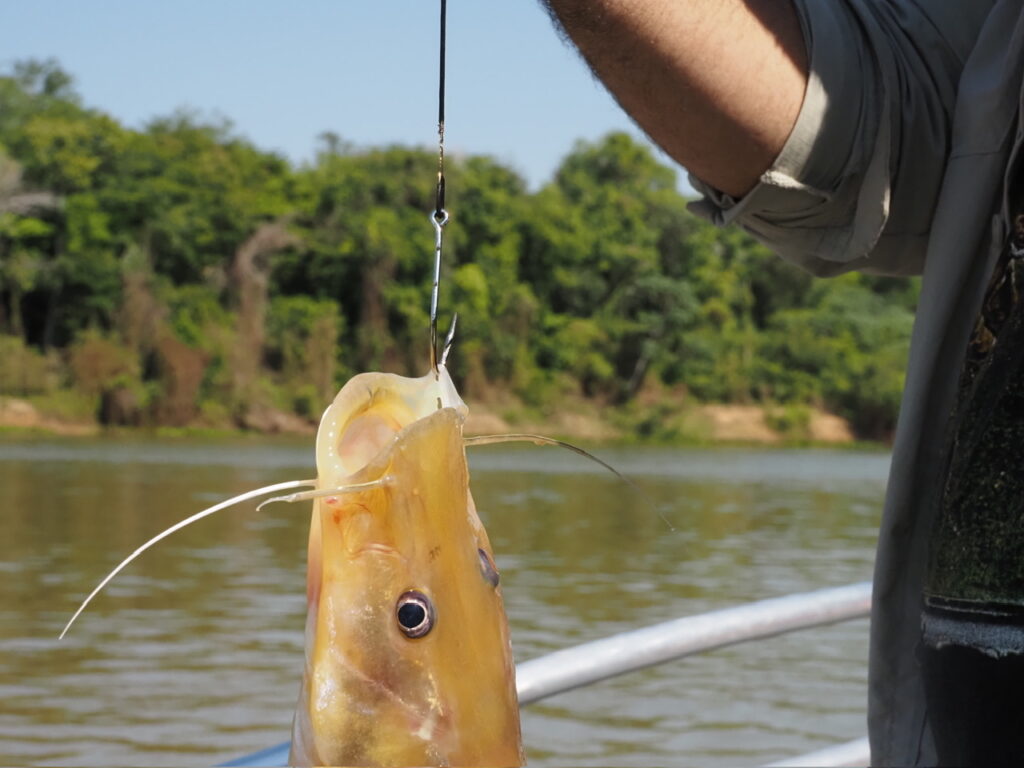
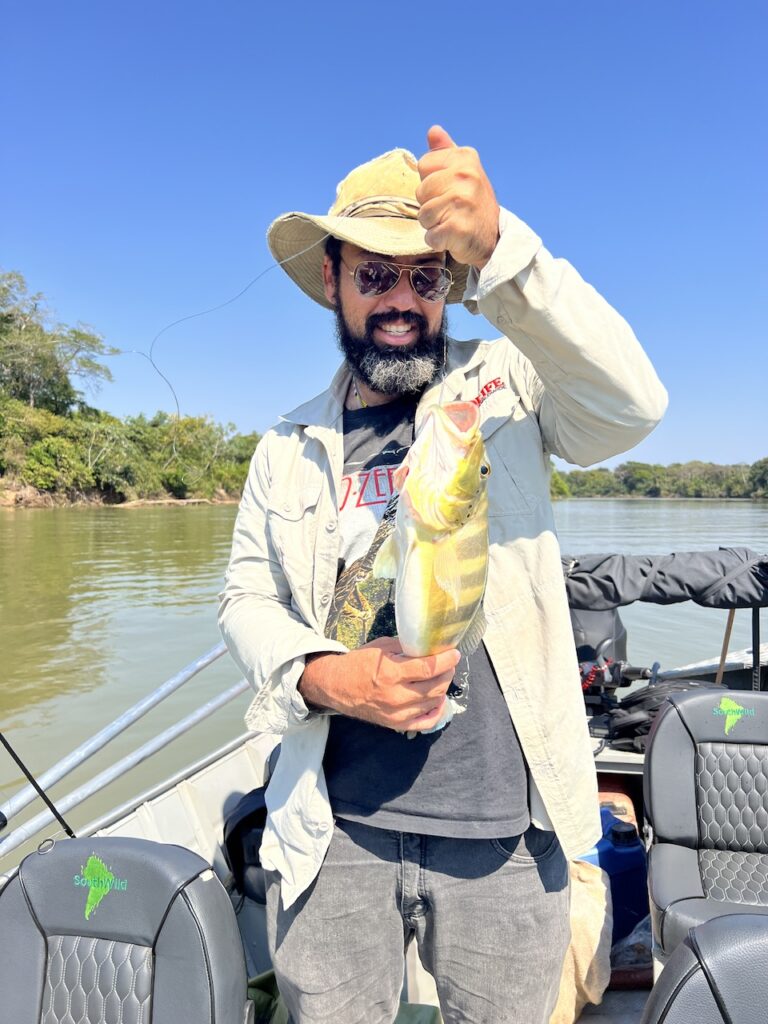
We head for the Piquiri River where our boatman thinks there is a good chance of finding golden dorado. There are certainly lots of fish here. A piranha bites clean through one of Paul’s flies and Bruno catches a catfish and type of peacock bass by using bits of sausage.
I am still far more interested in the wildlife than the fishing and capture photos whenever an opportunity presents itself.

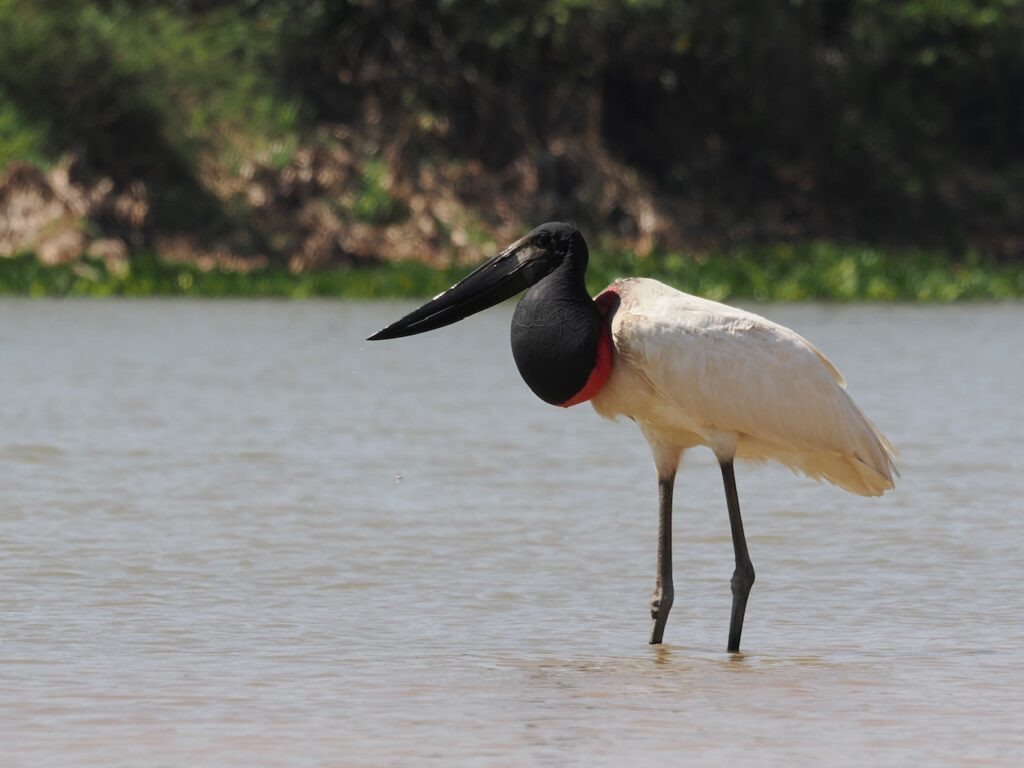
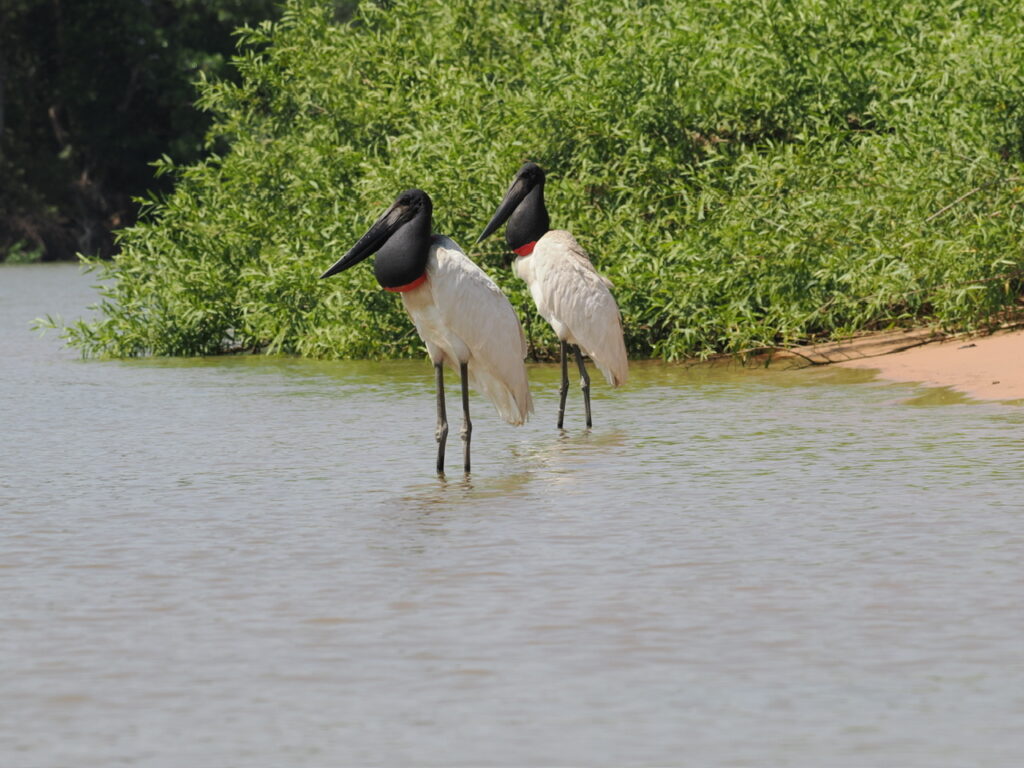
As we head back, two jabiru storks are hanging out on their favourite sandbank.
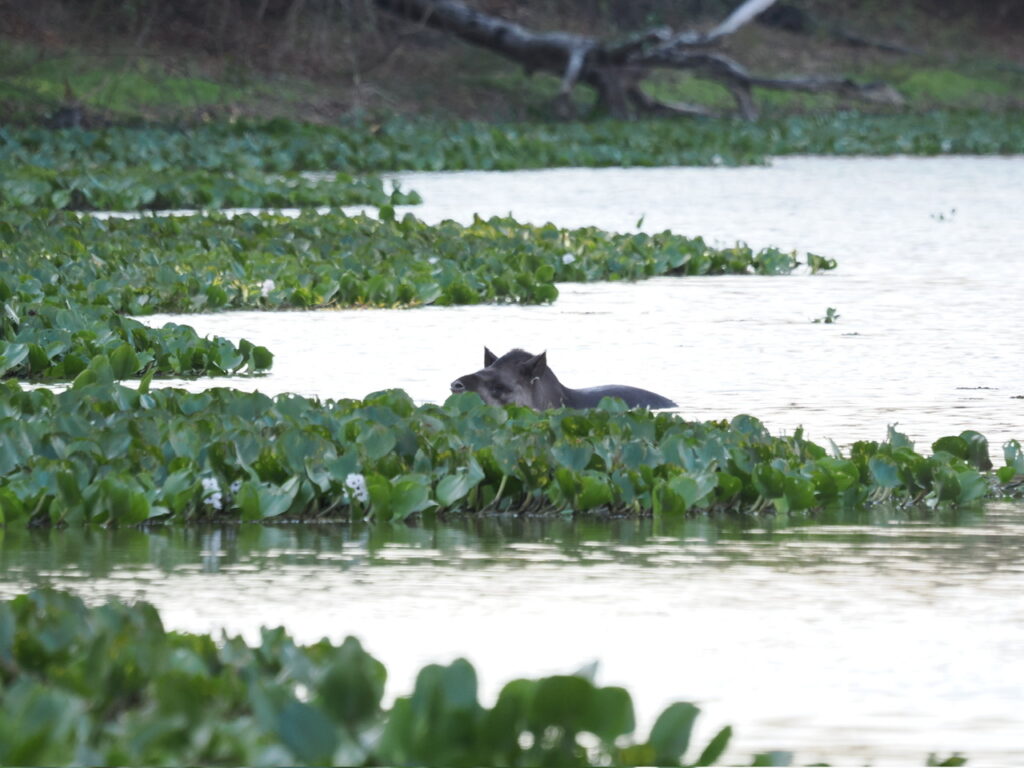
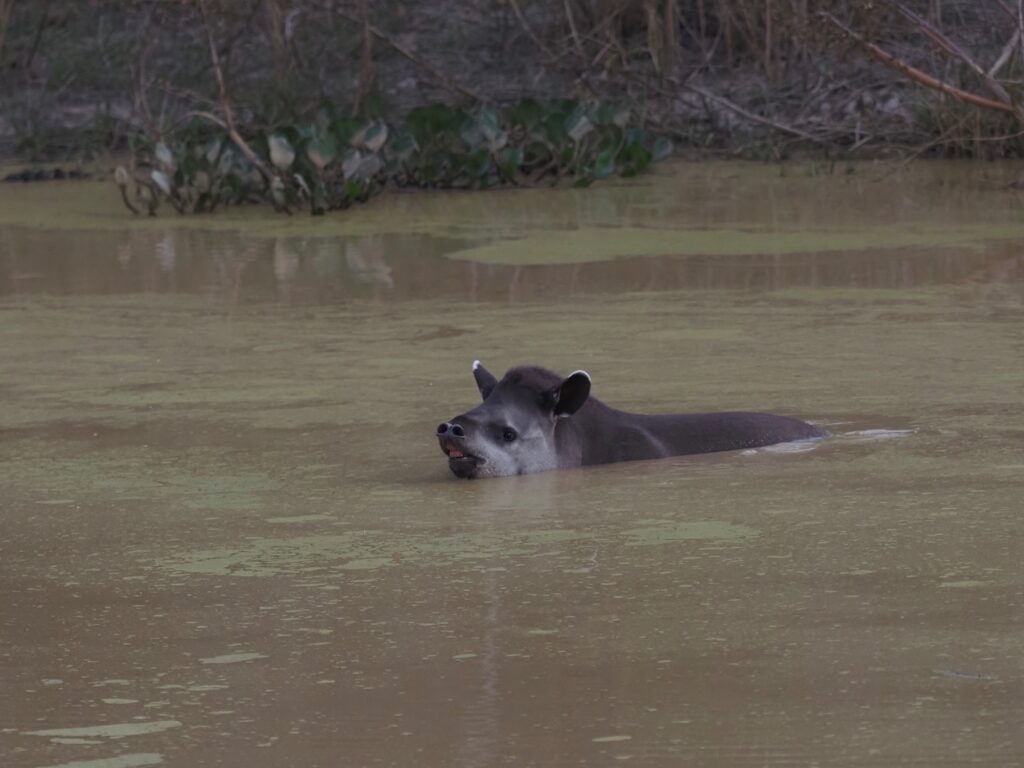
We have been out for 5 hours. It is exceedingly hot. Paul is soaked in sweat from all the casting in full sun and the rest of us are pretty damp too! As we approach the lodge we notice something swimming in the river. Oh my goodness! It’s a tapir! What a lucky spot. I did not know they were out and about in the daylight.
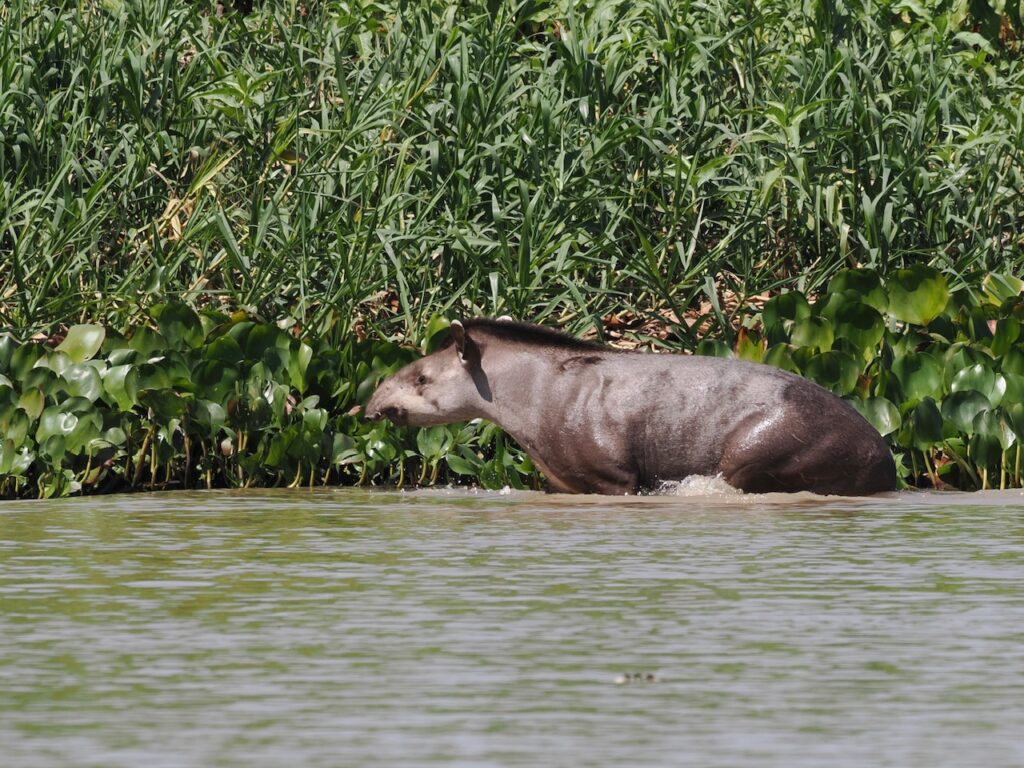
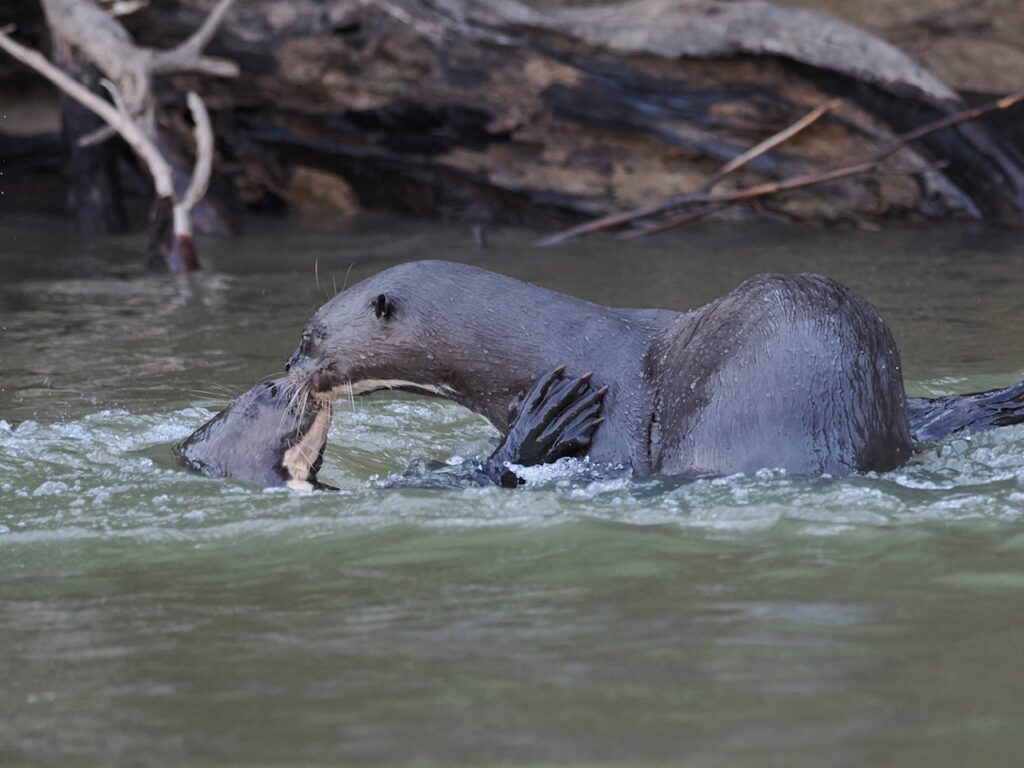
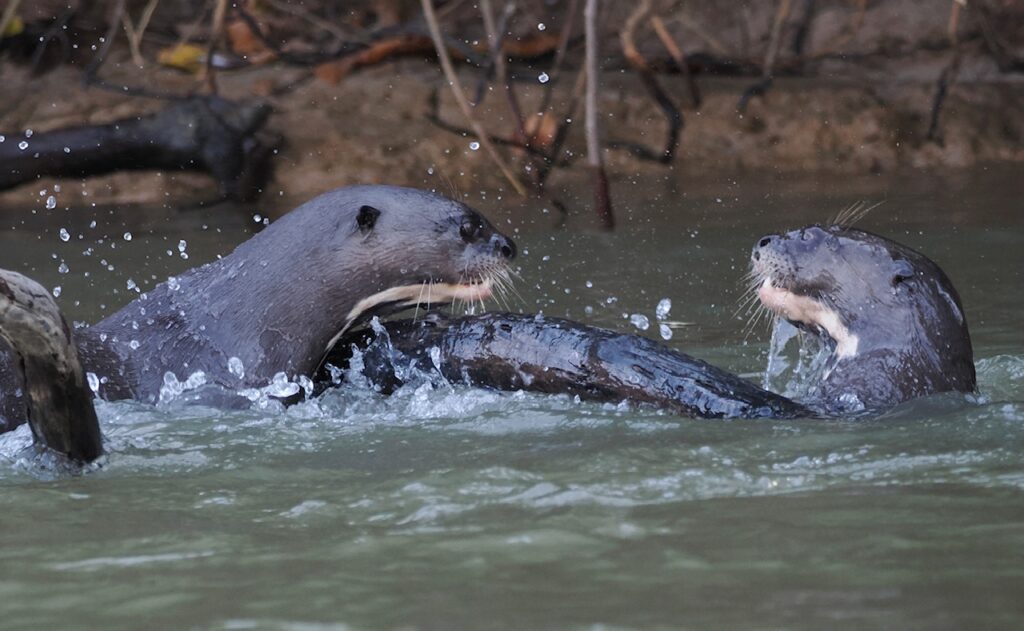
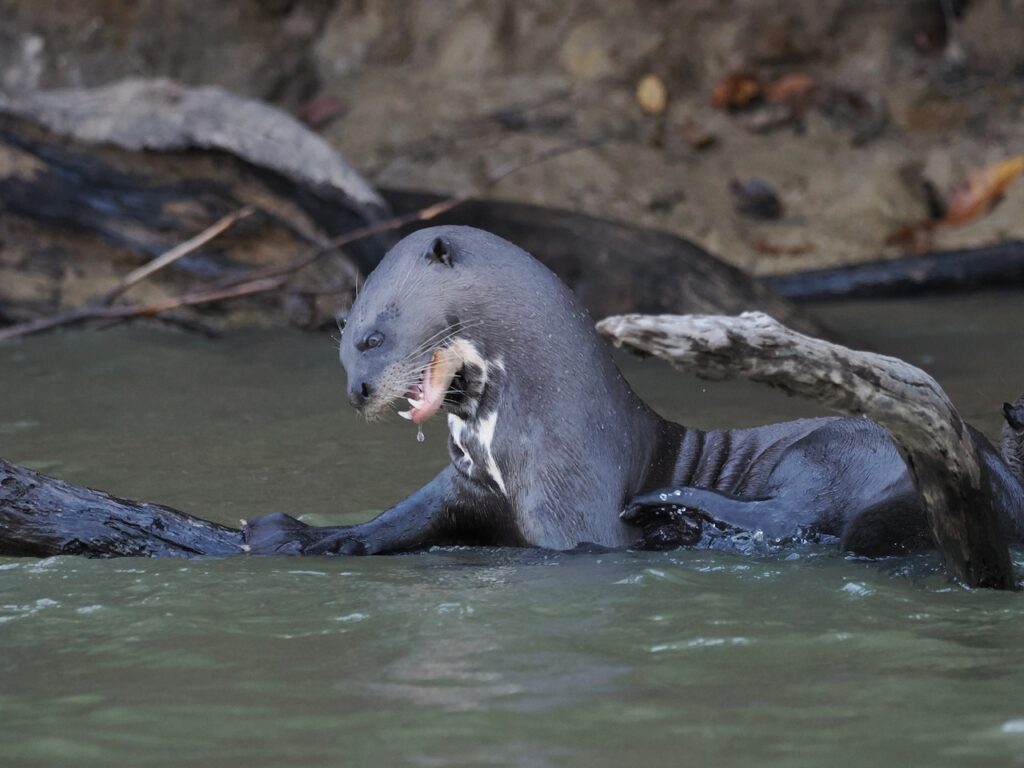
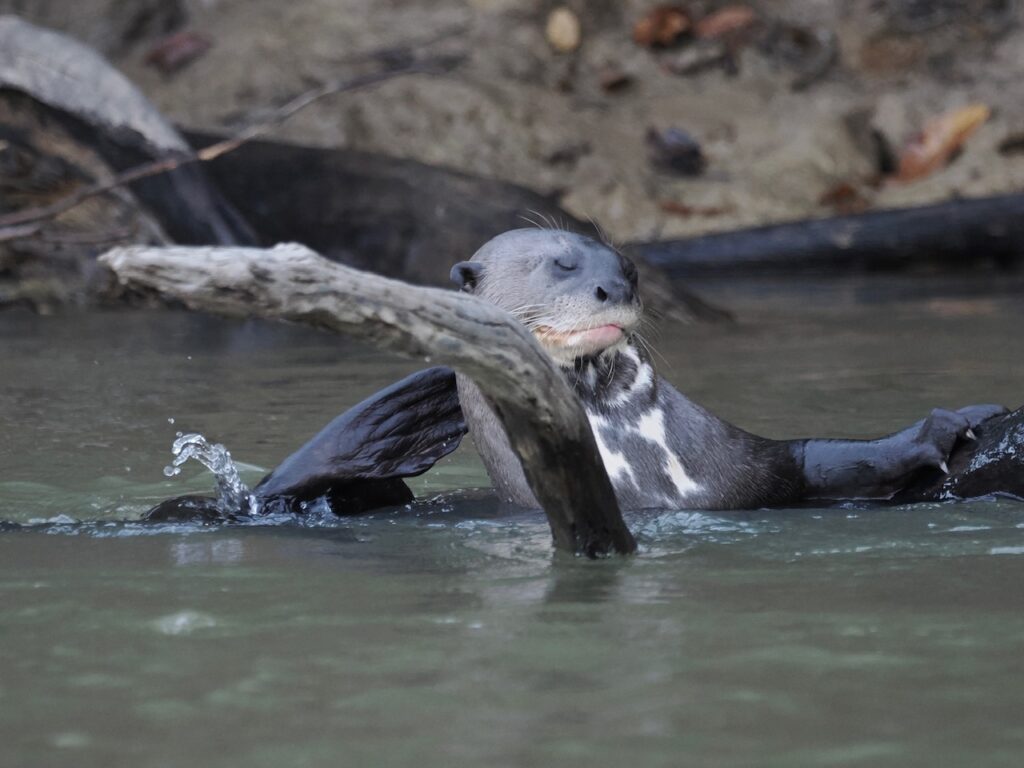
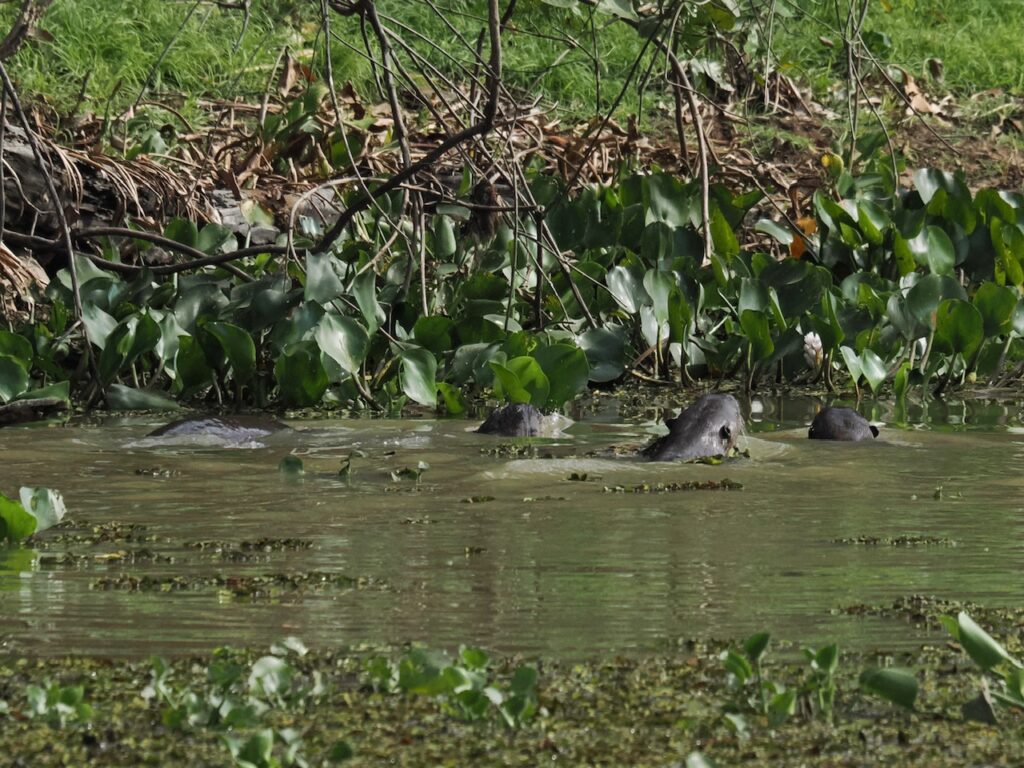
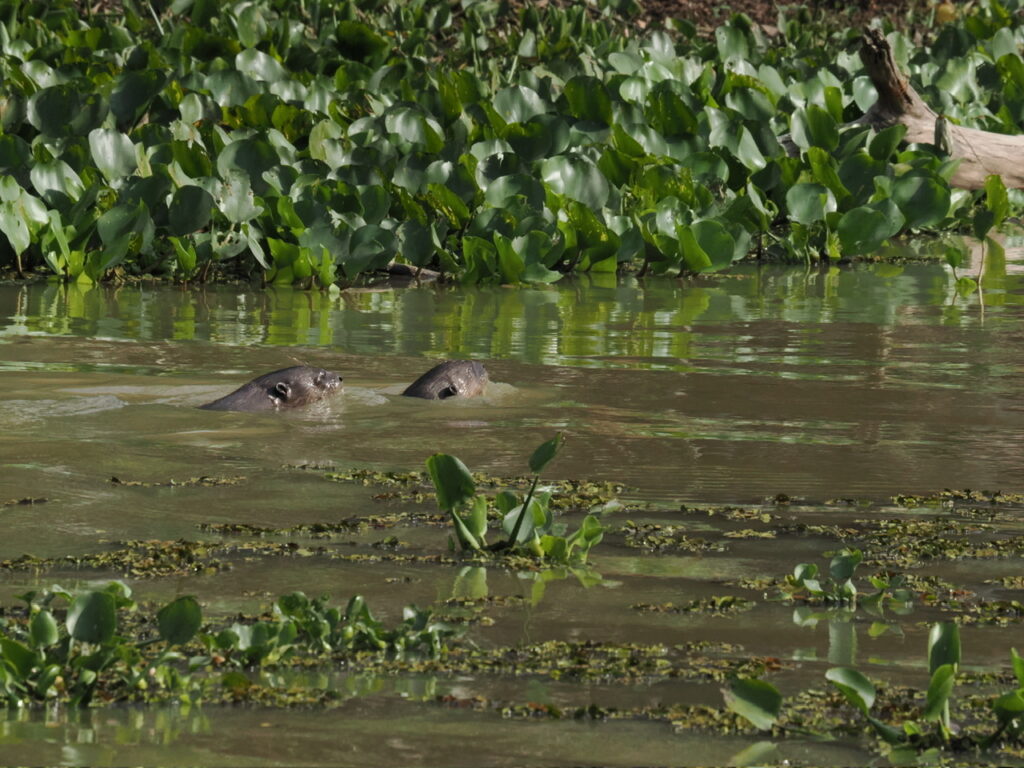
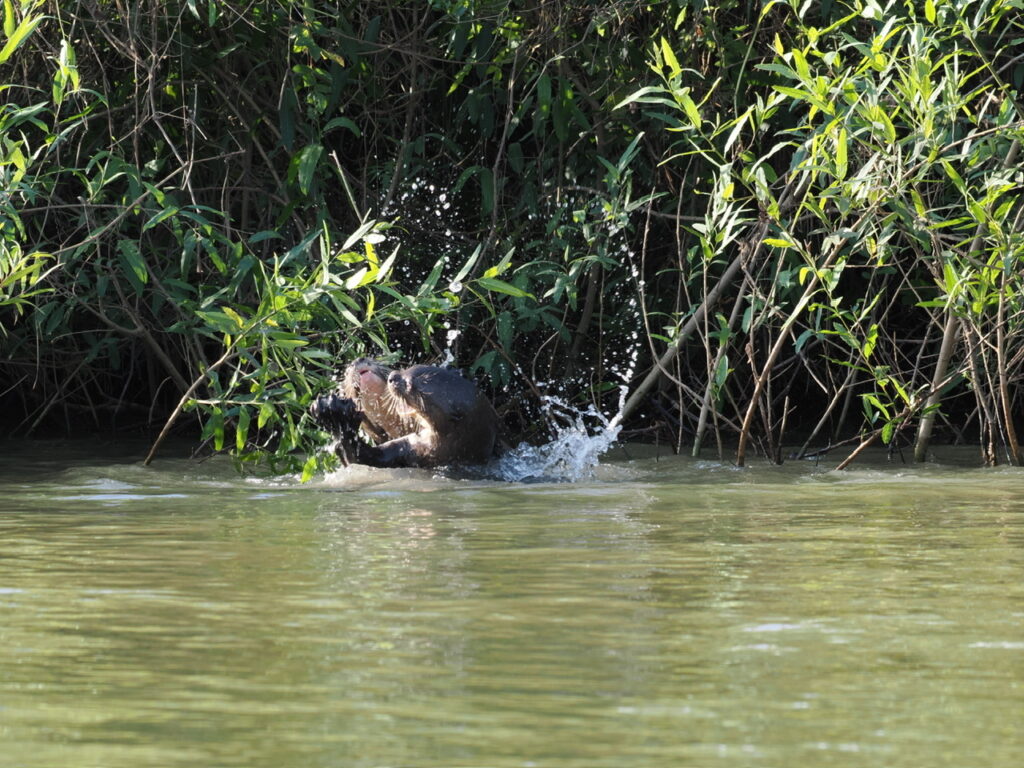
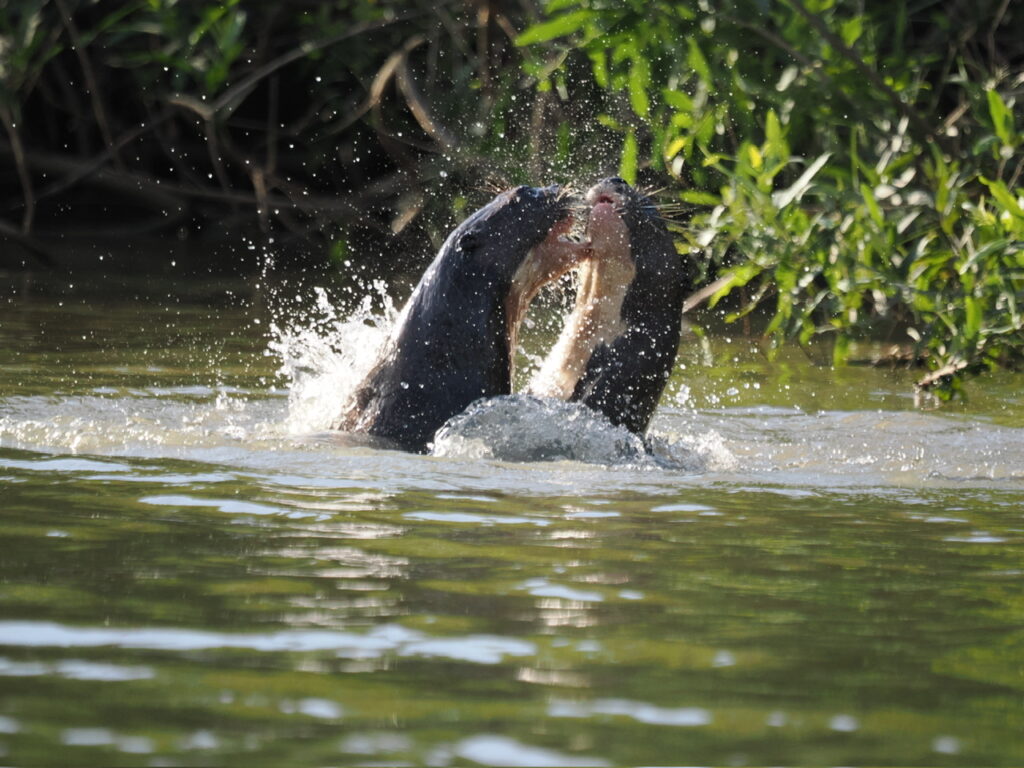
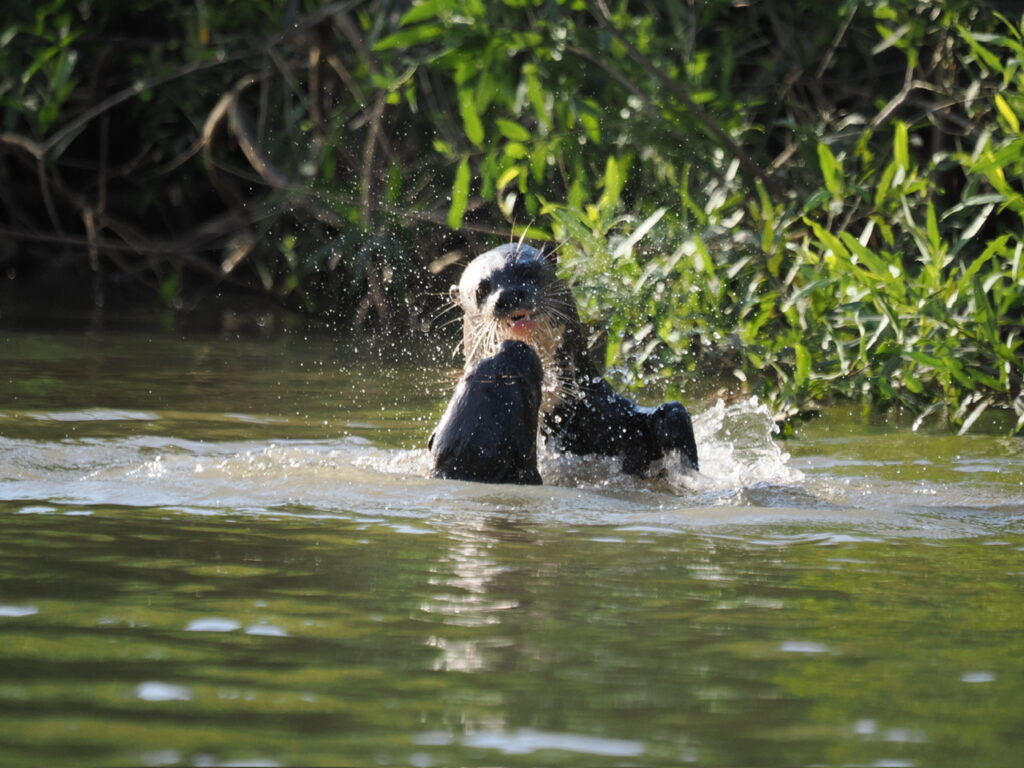
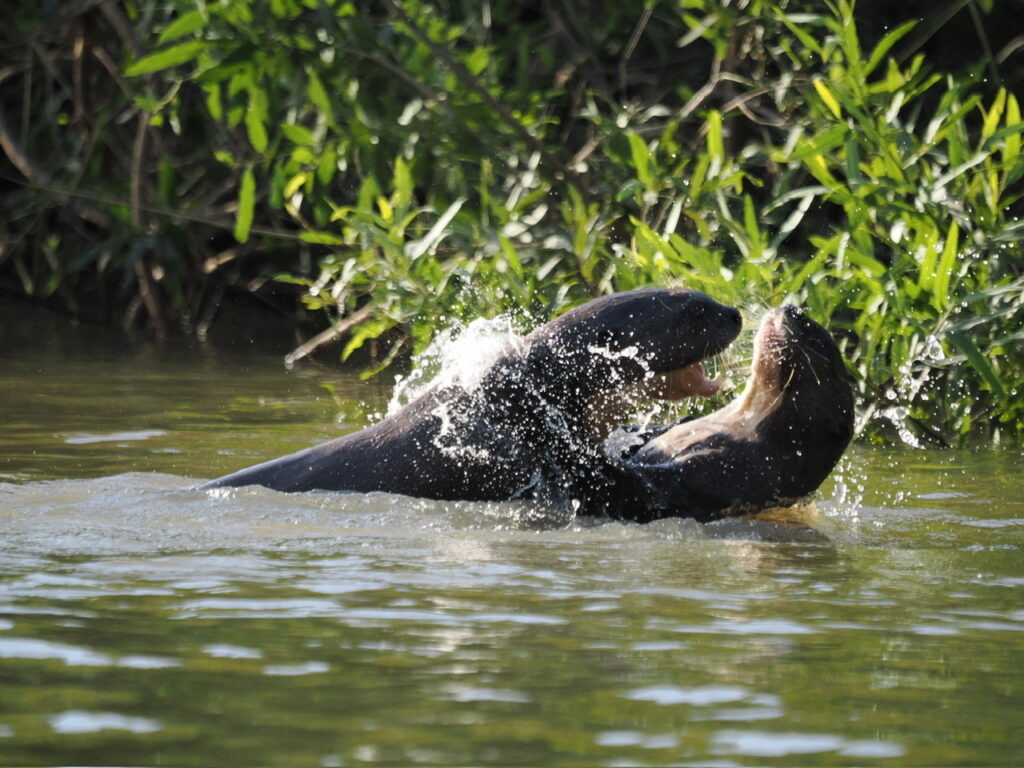
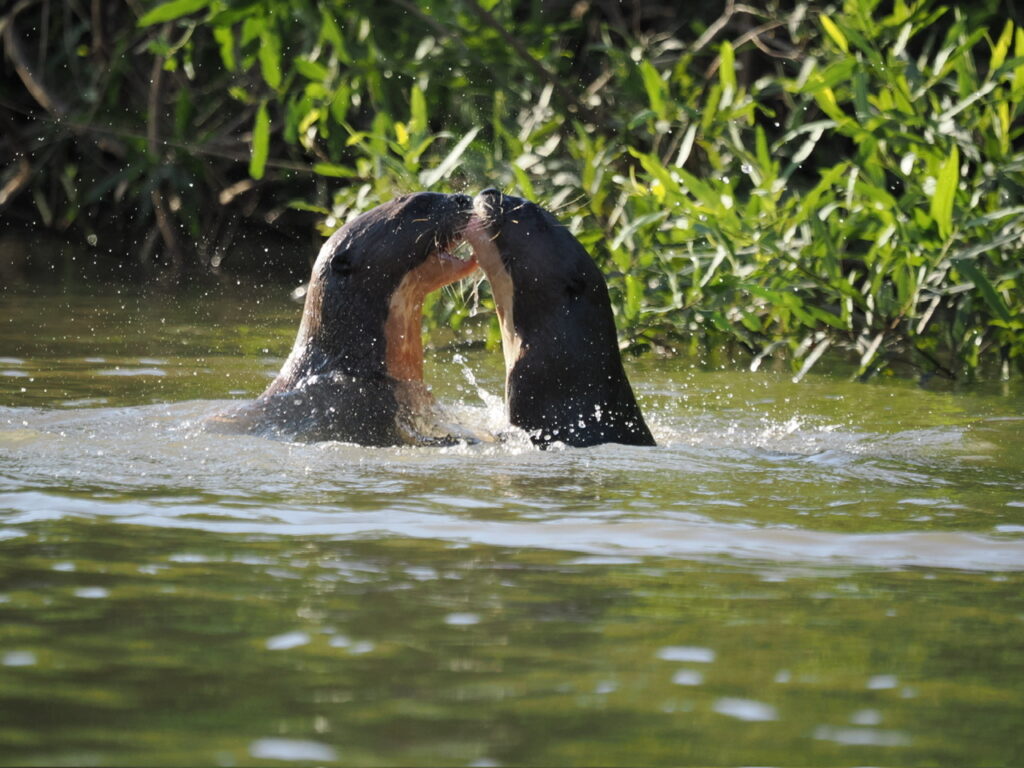
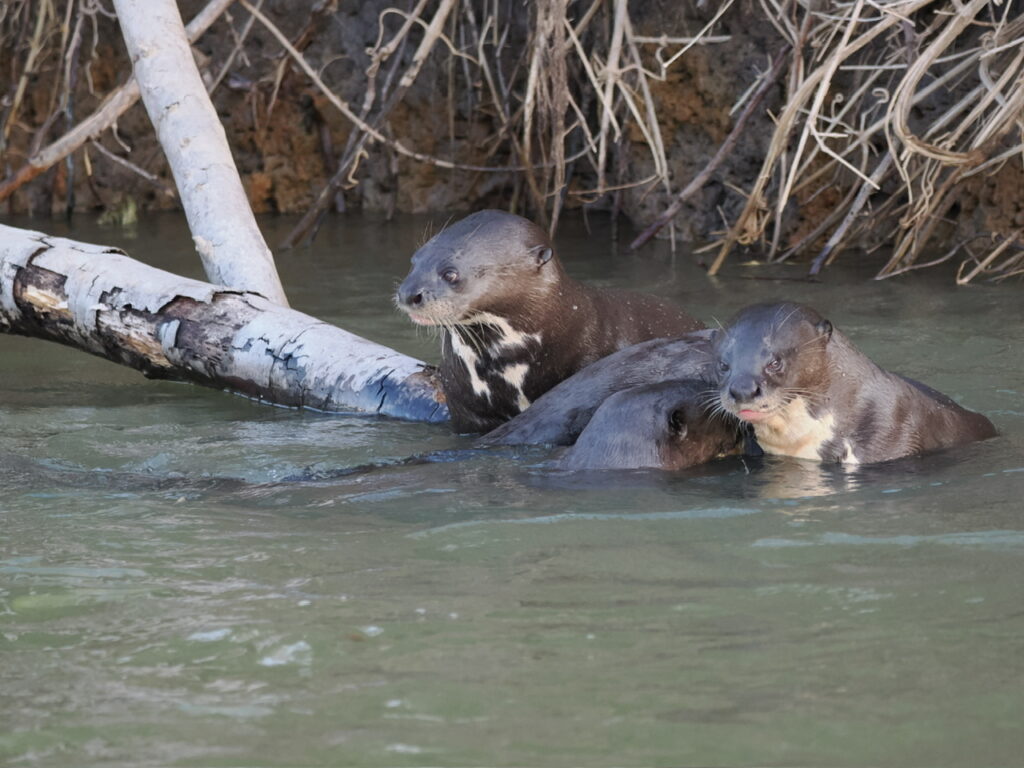
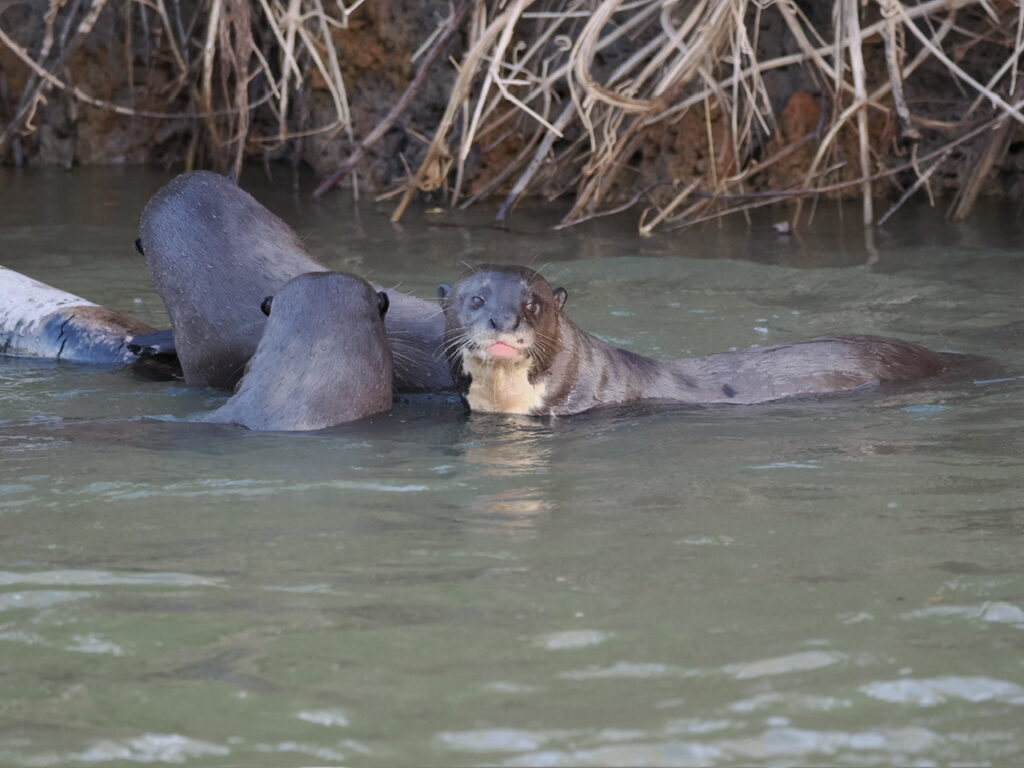
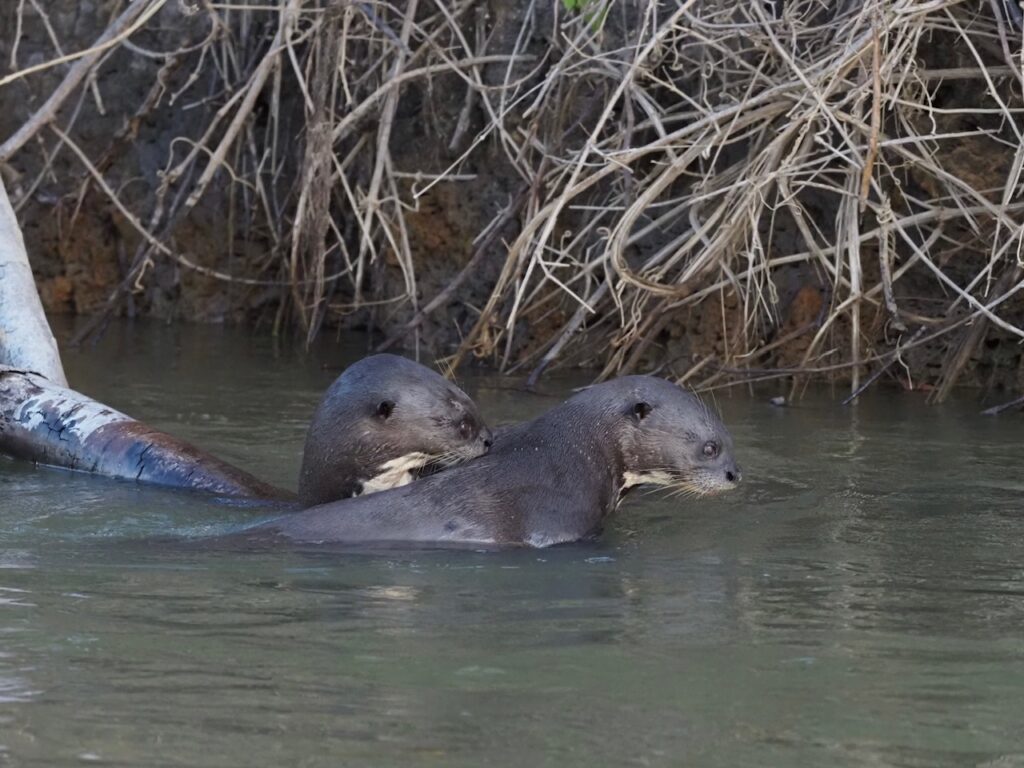
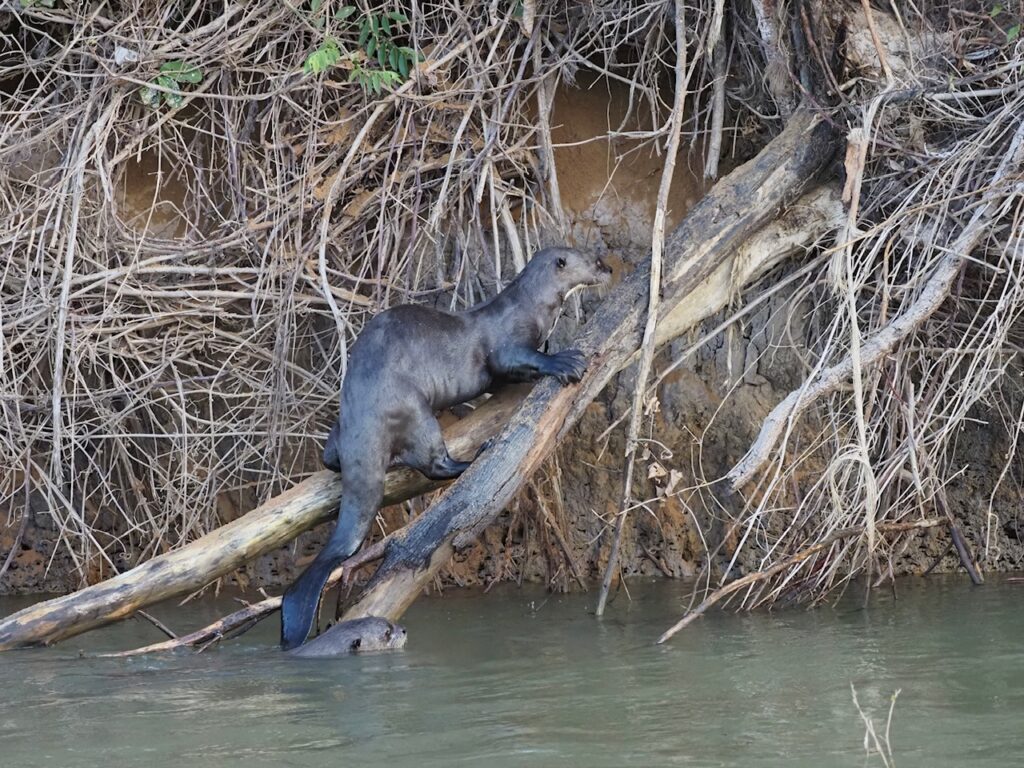
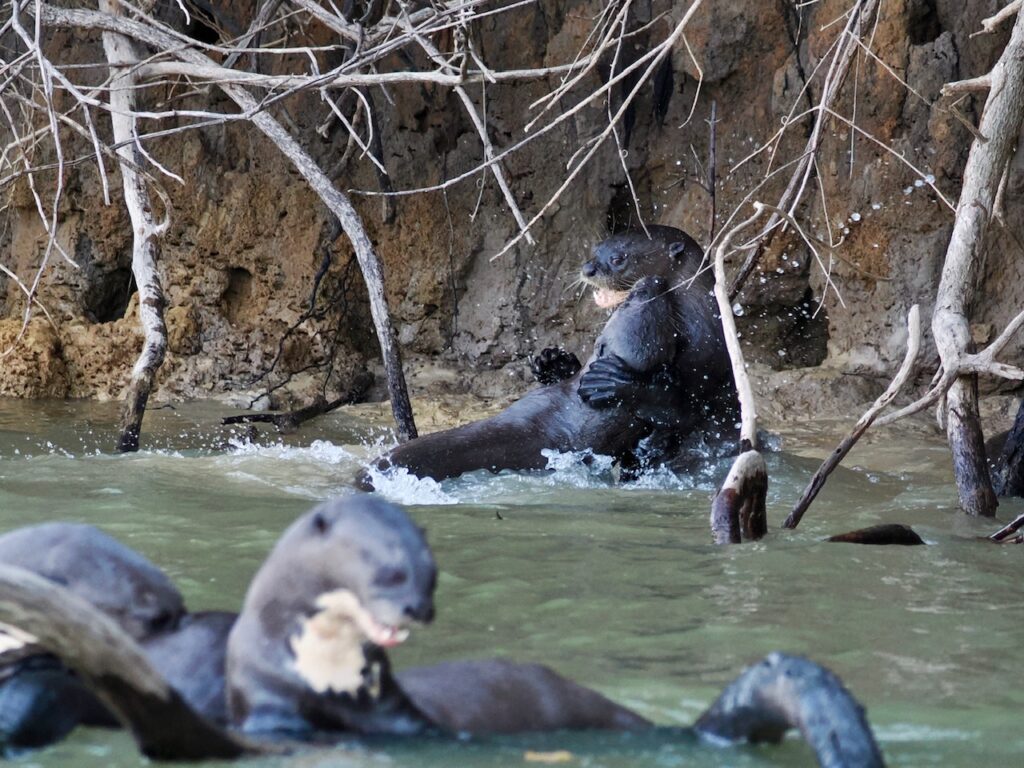
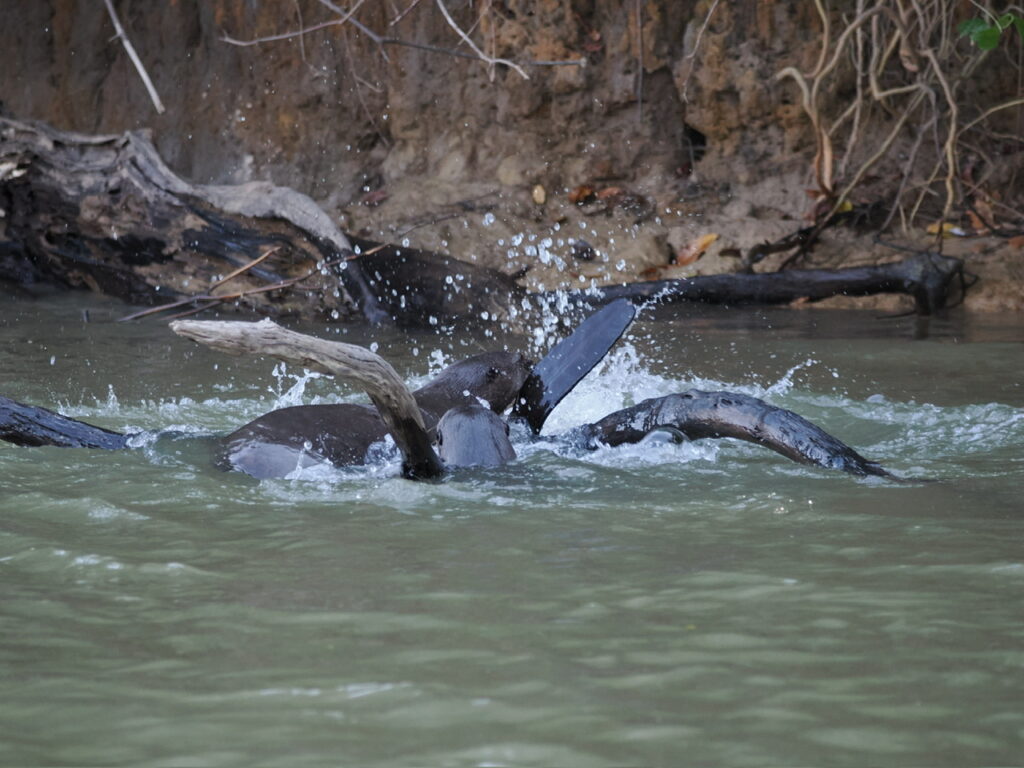
Manuel wants to depart at 14.00. We think that is a bit keen as it was so hot yesterday. We opt for 15.00. It will still be pretty steamy but at least the sun will be a bit lower in the sky. The plan is to head further up the Piquiri River to get beyond the boat traffic. This we do and are mega lucky for there, swimming along the river, is a family of giant river otters. They are the same family that we saw last week, but they have moved to a different den. They have several dens and move up and down the river so as to not deplete the fish stock too much in any one area. Some are grooming each other and the two in the background are playing tag and move incredibly quickly. Photography is a challenge. Low light and fast moving grey objects….
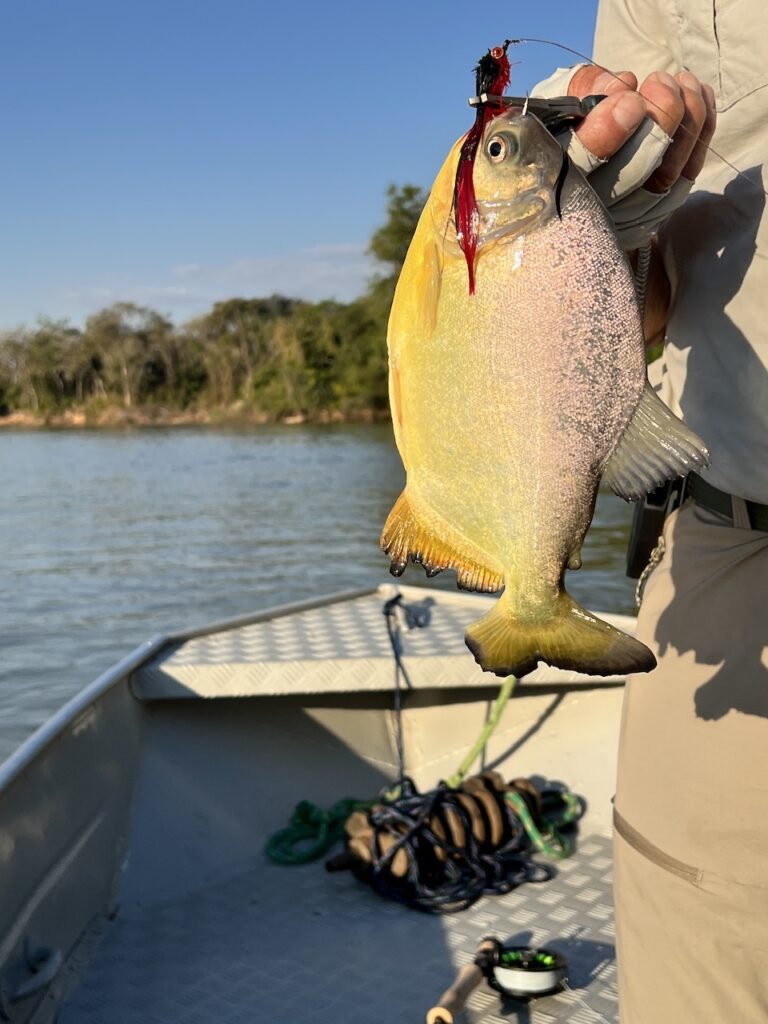
The afternoon is drawing on so we set off in pursuit of fish. It is not long before Paul has a nice specimen on the end of his line – a small pacu, which is a fish that has been served several times for dinner here and very good it is too.
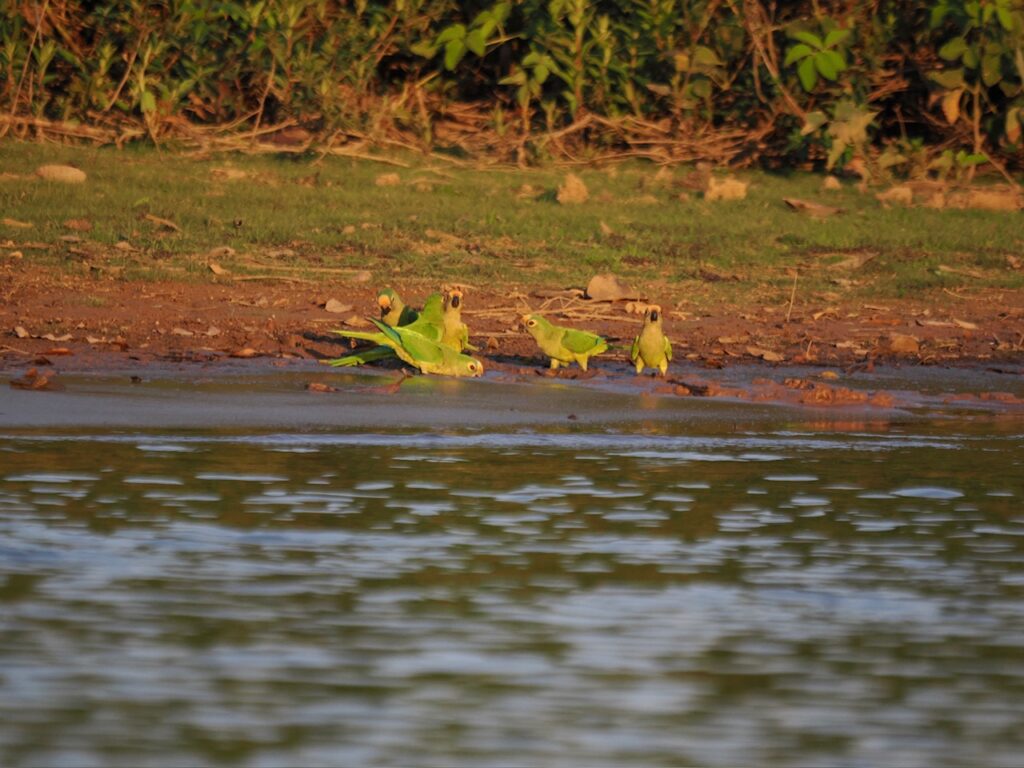
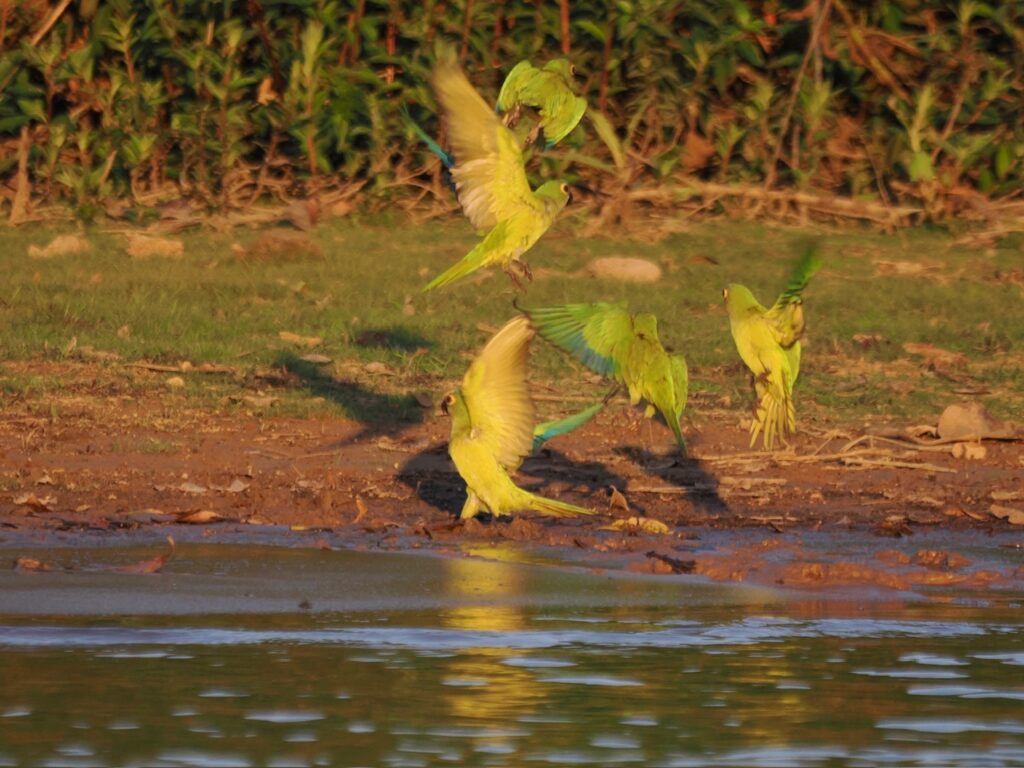
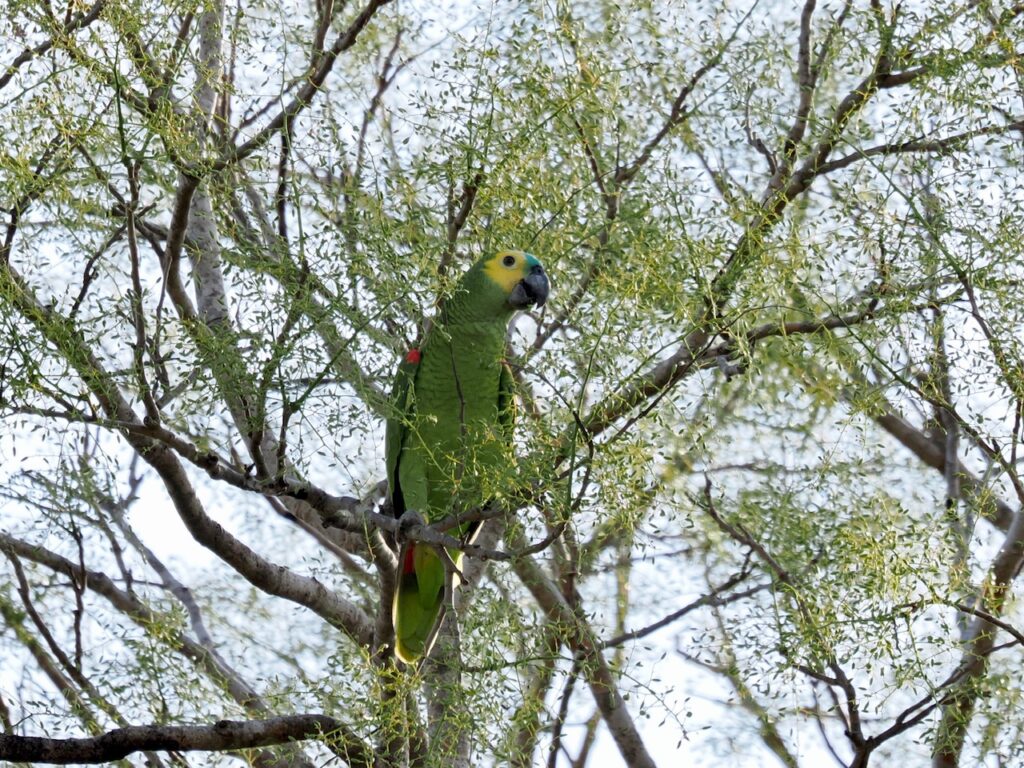
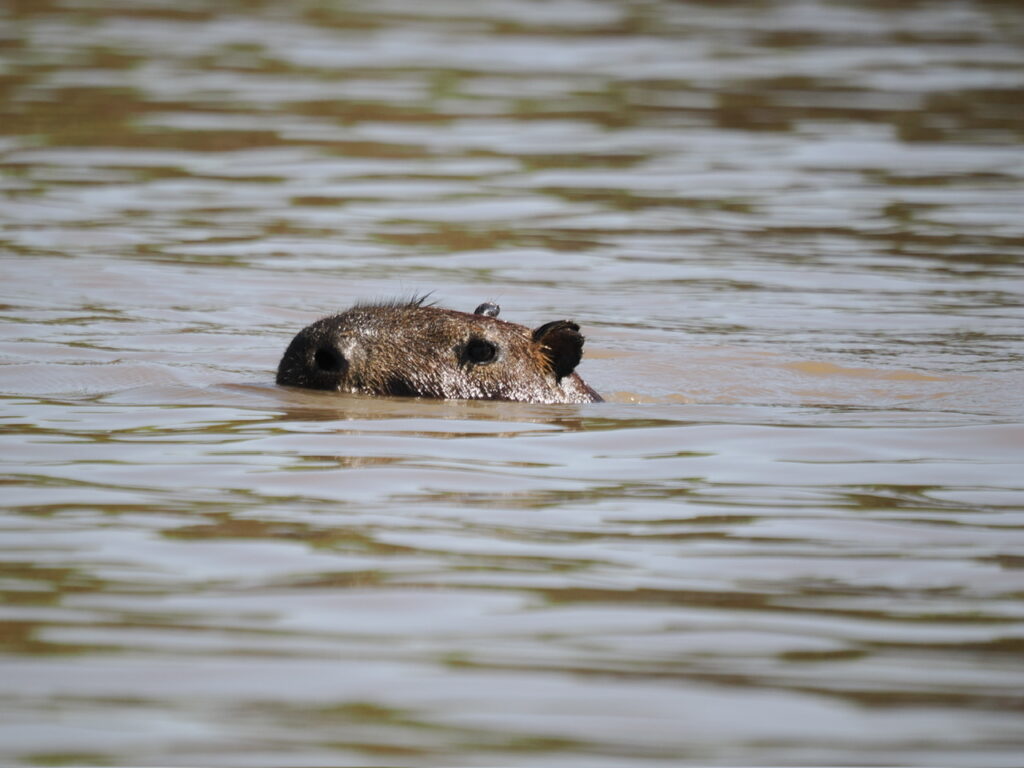
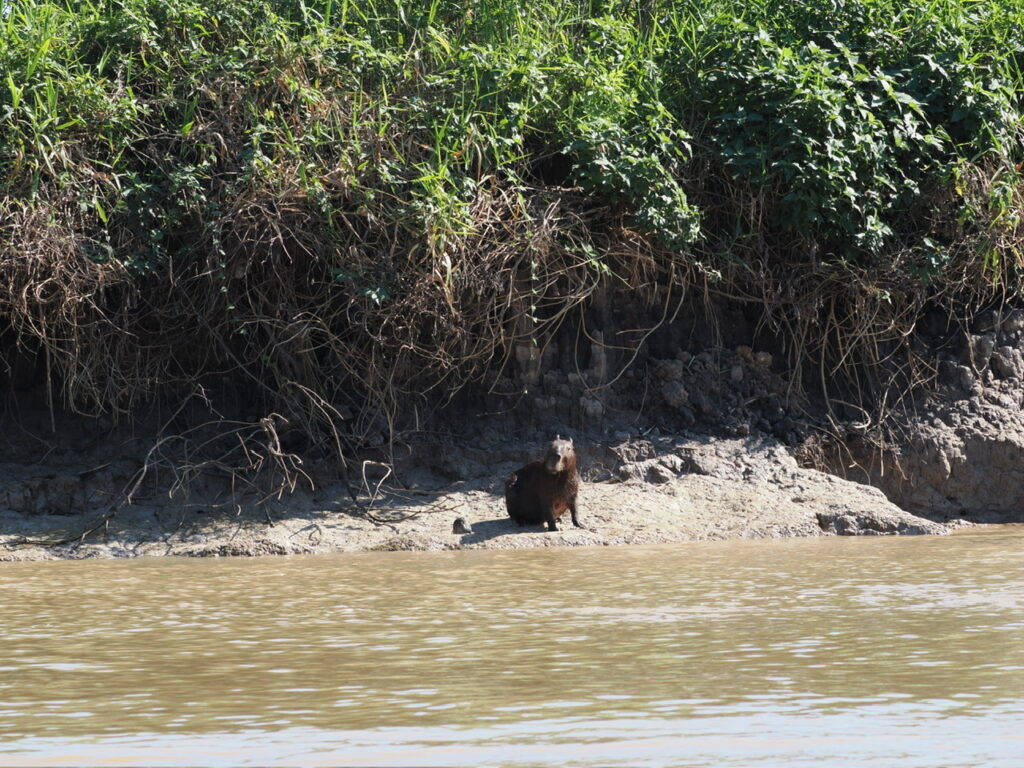
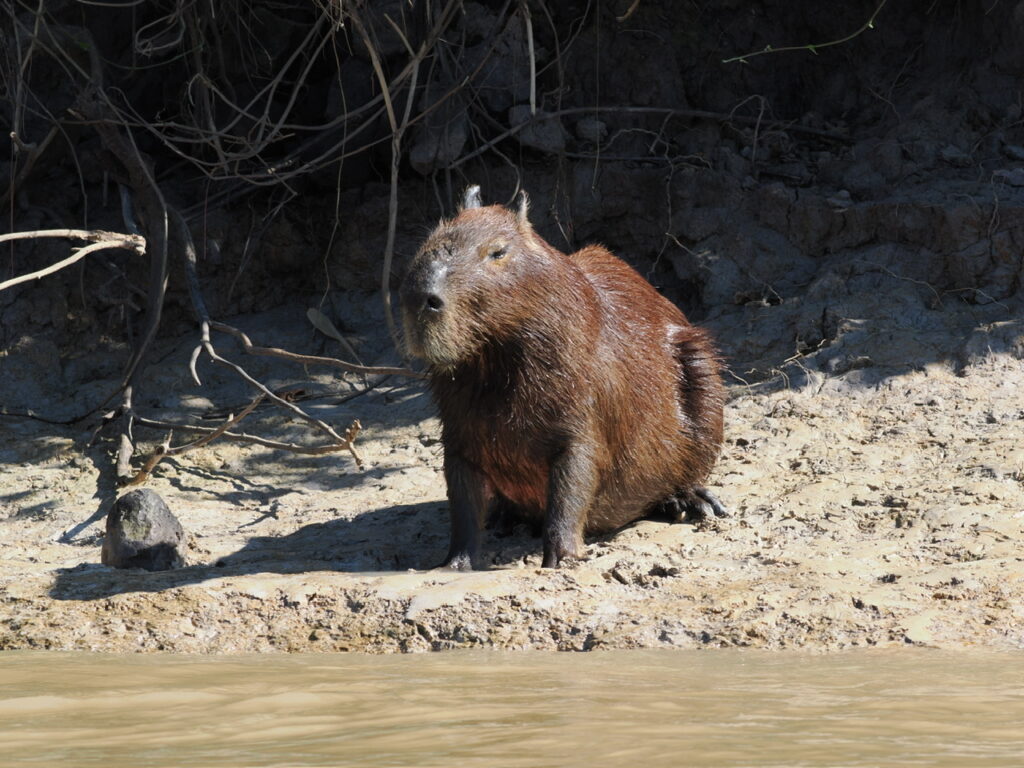
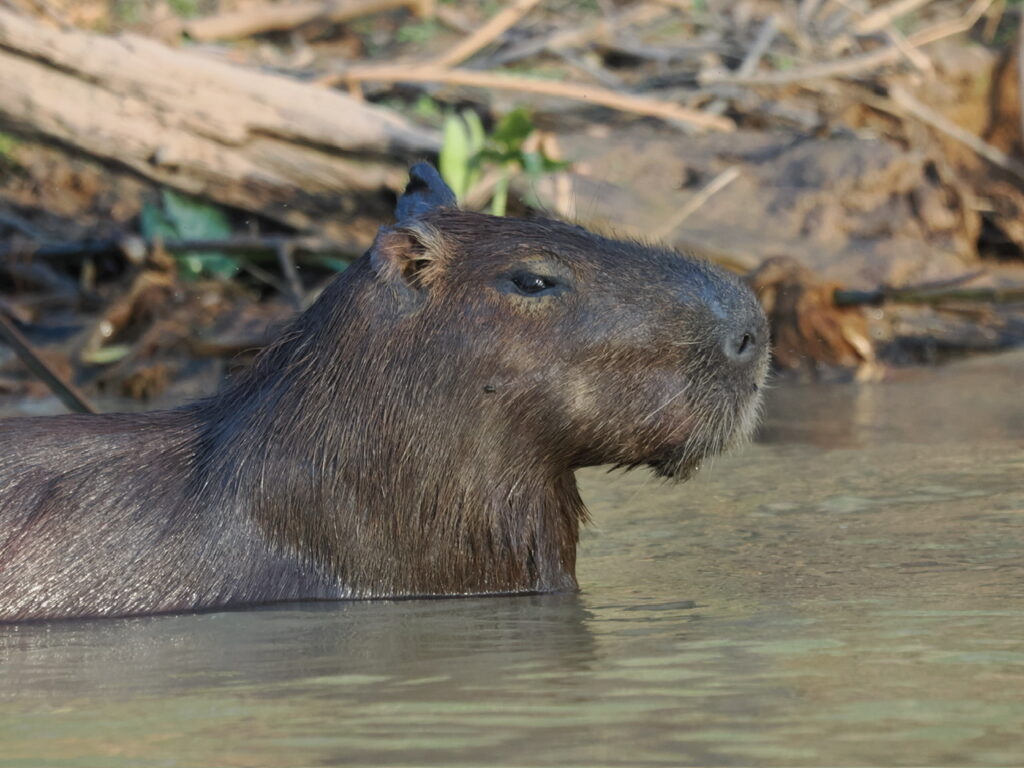
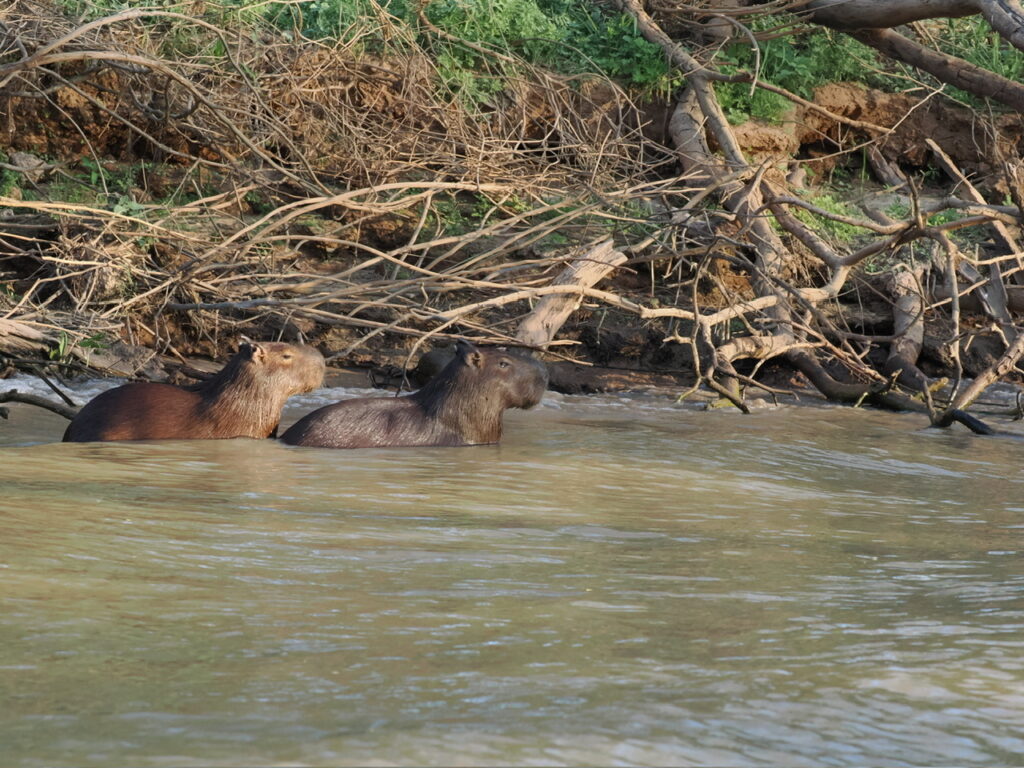
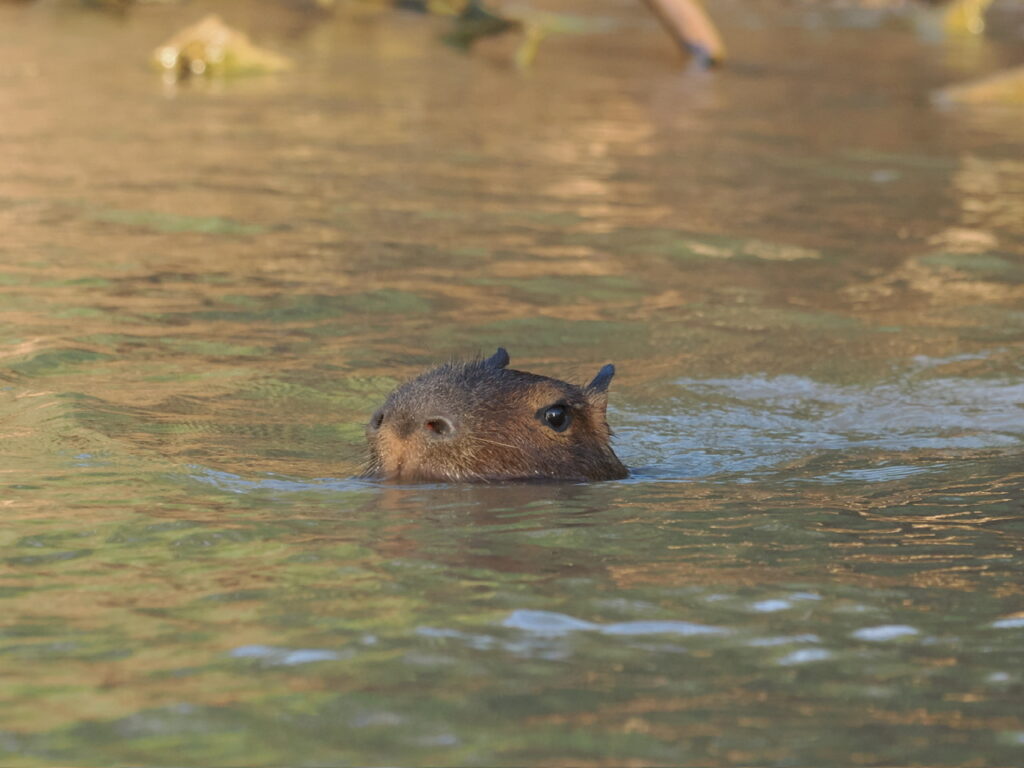
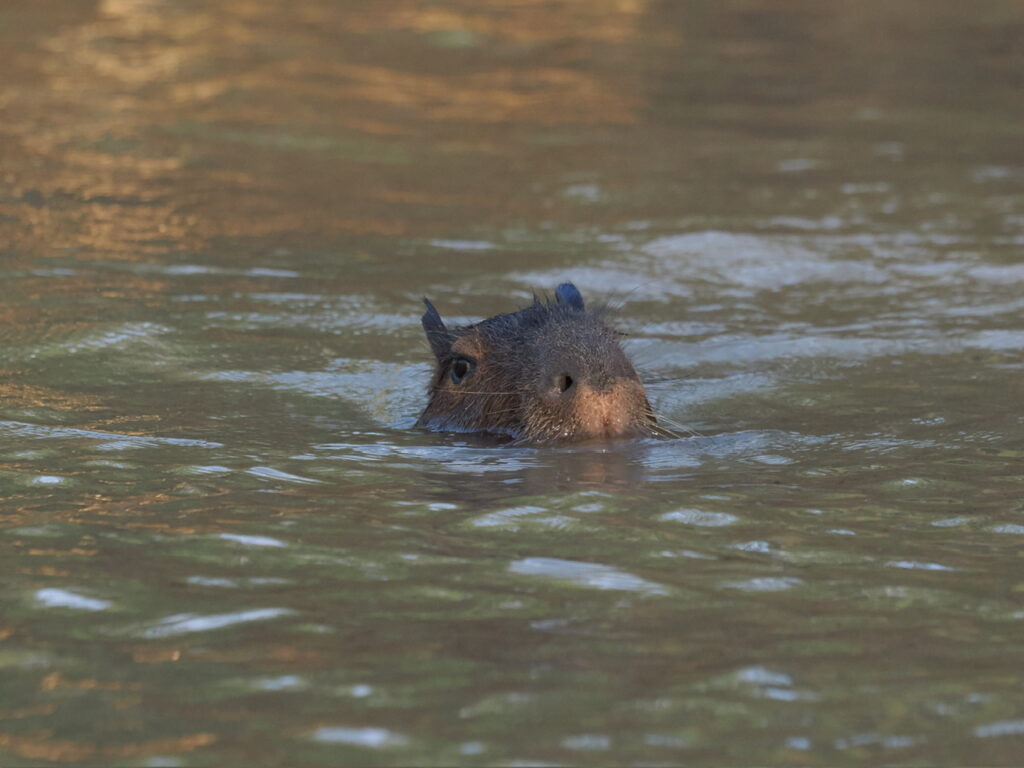
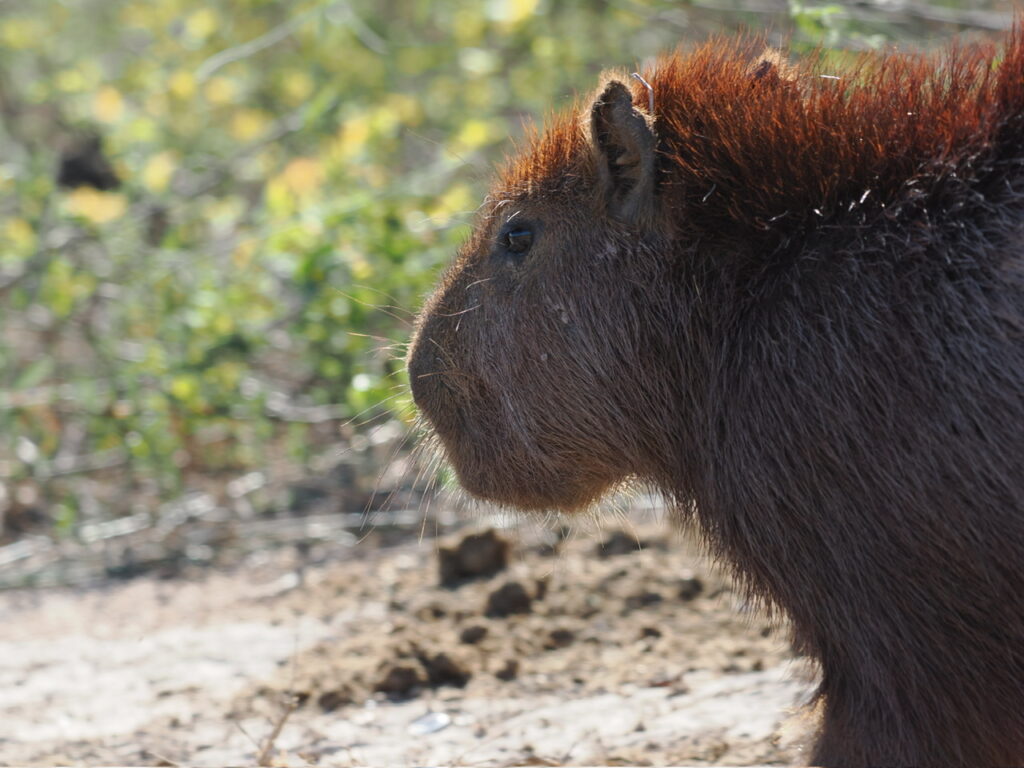
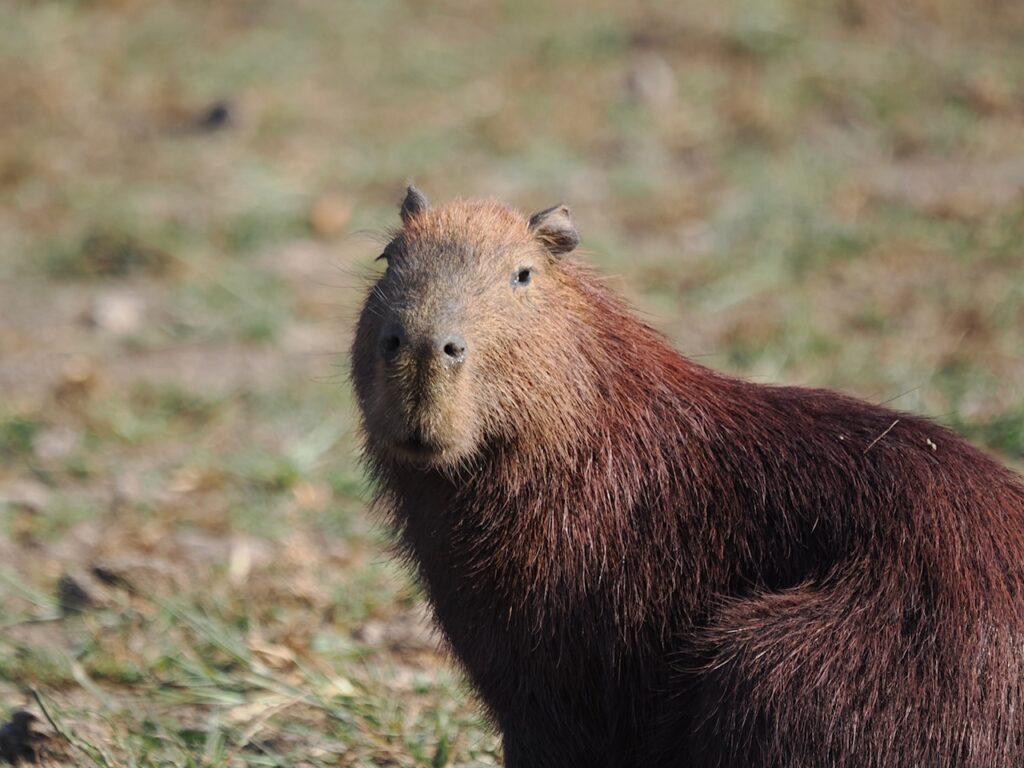
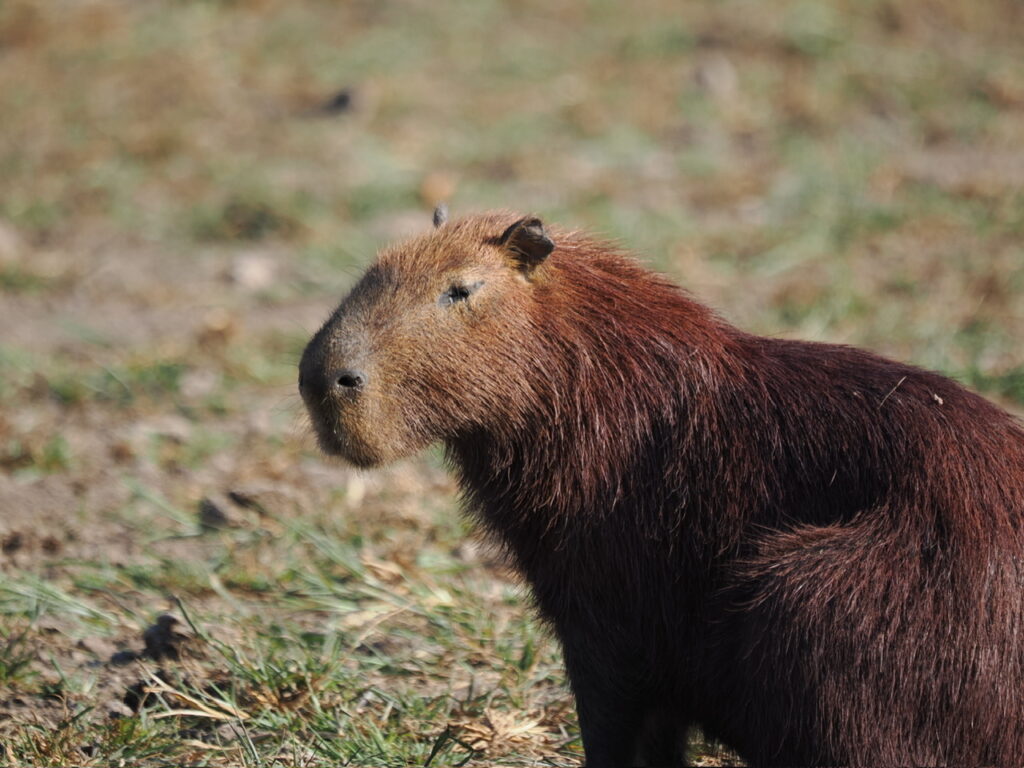
This is a nice place to hang out. Capybara swim in the river and parakeets have come down to drink on the shoreline.
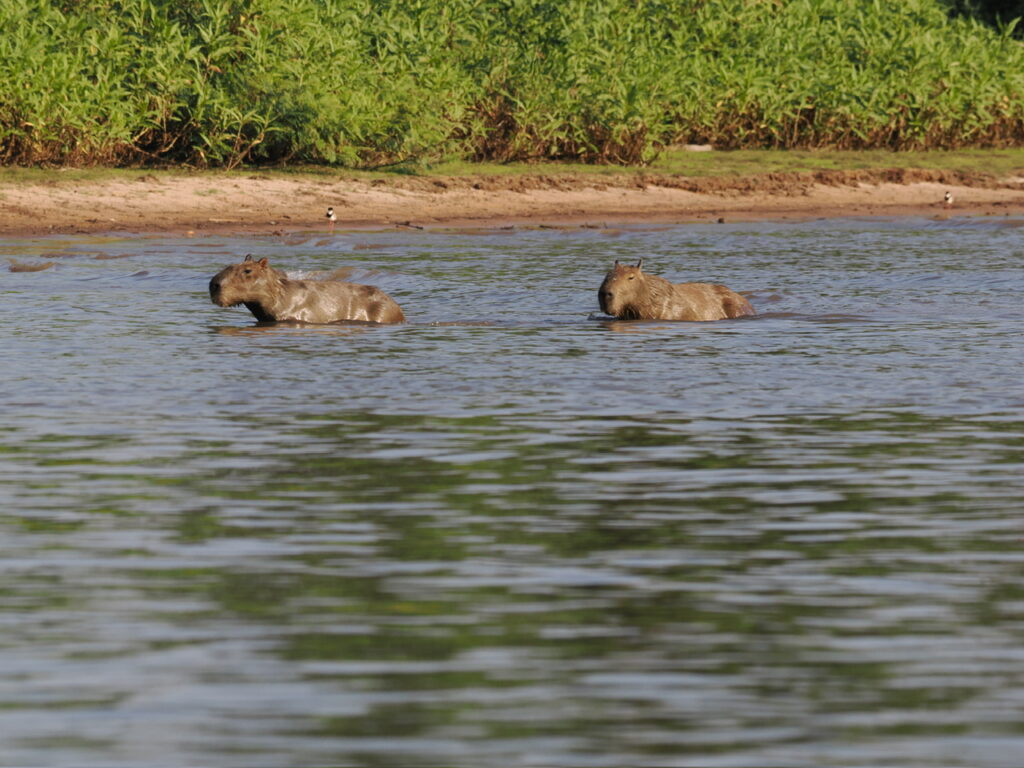
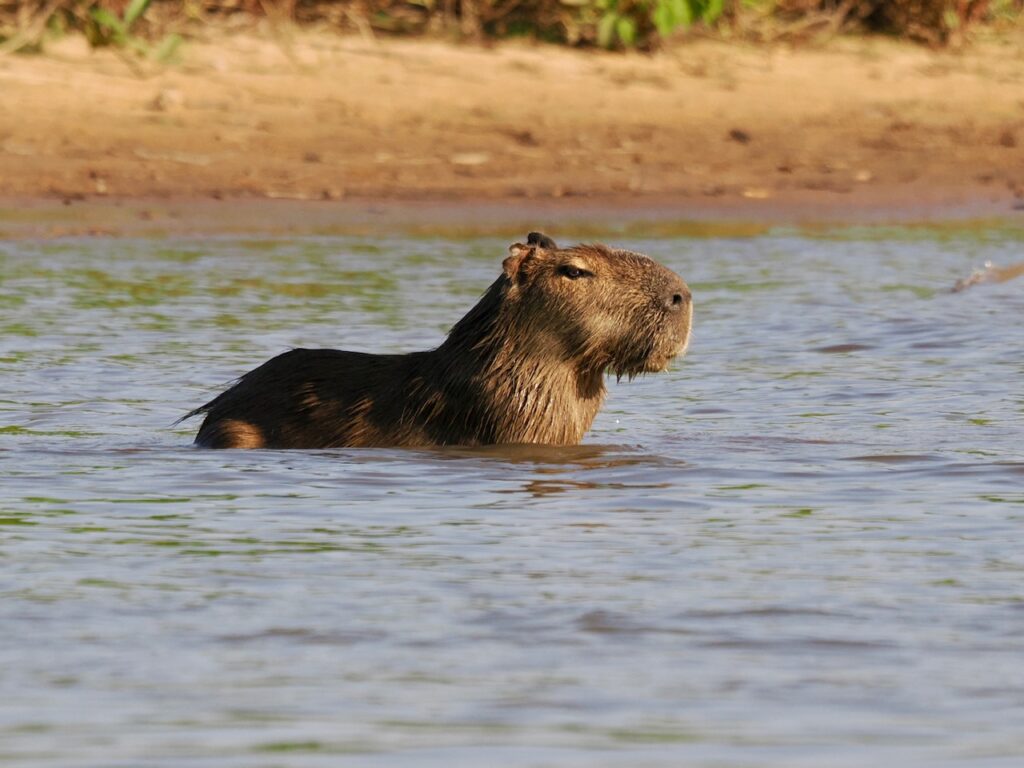
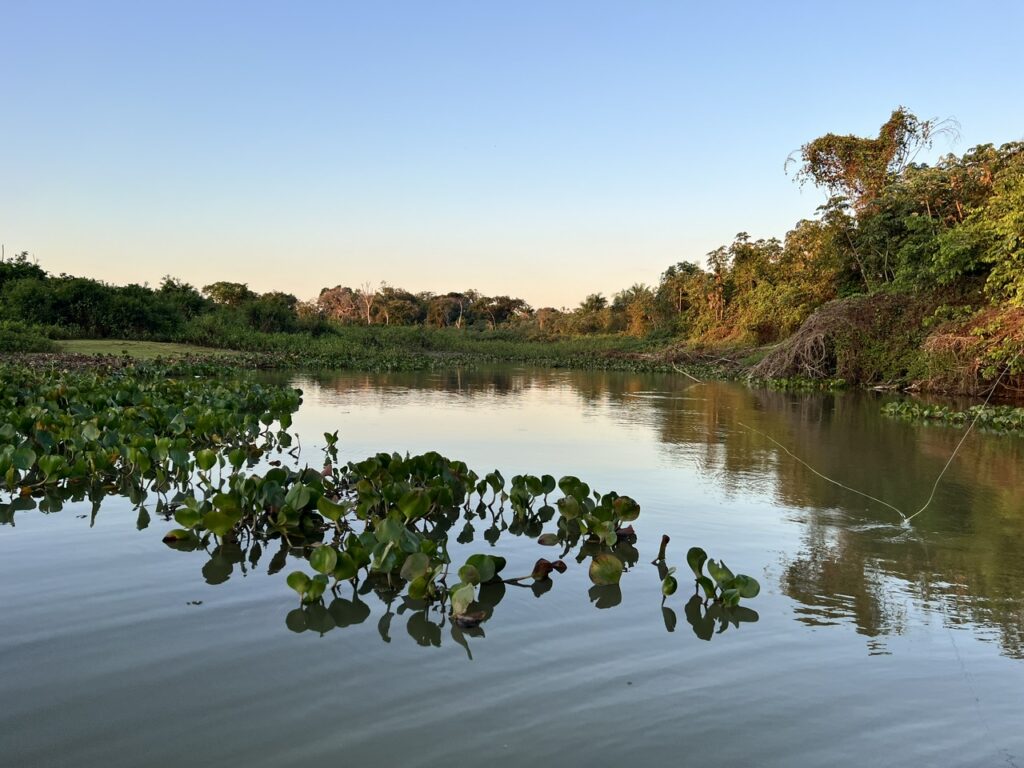
We find a quiet backwater for the day’s final fishing attempts. A lovely spot with kingfishers and hawks eying up the activity.
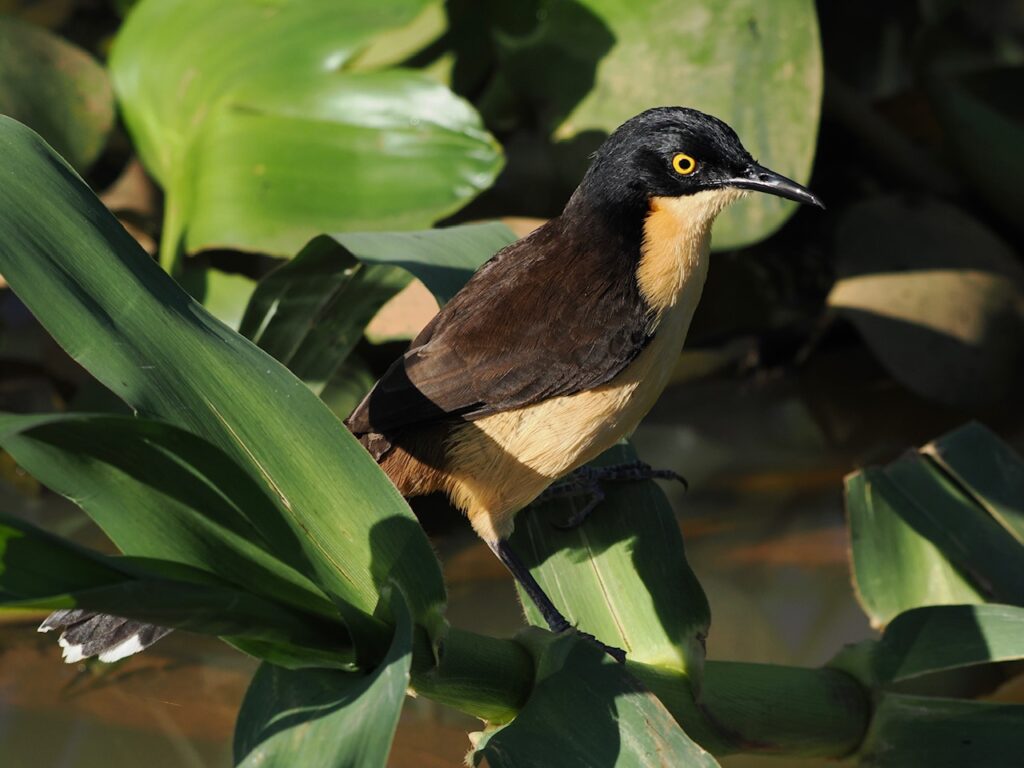
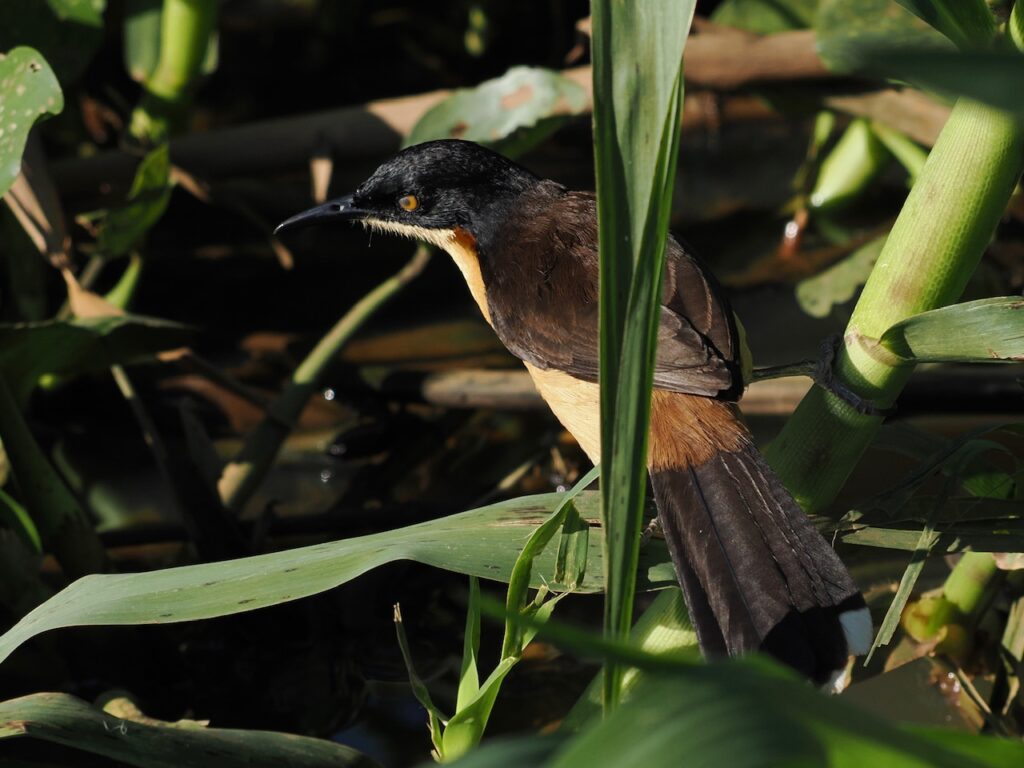
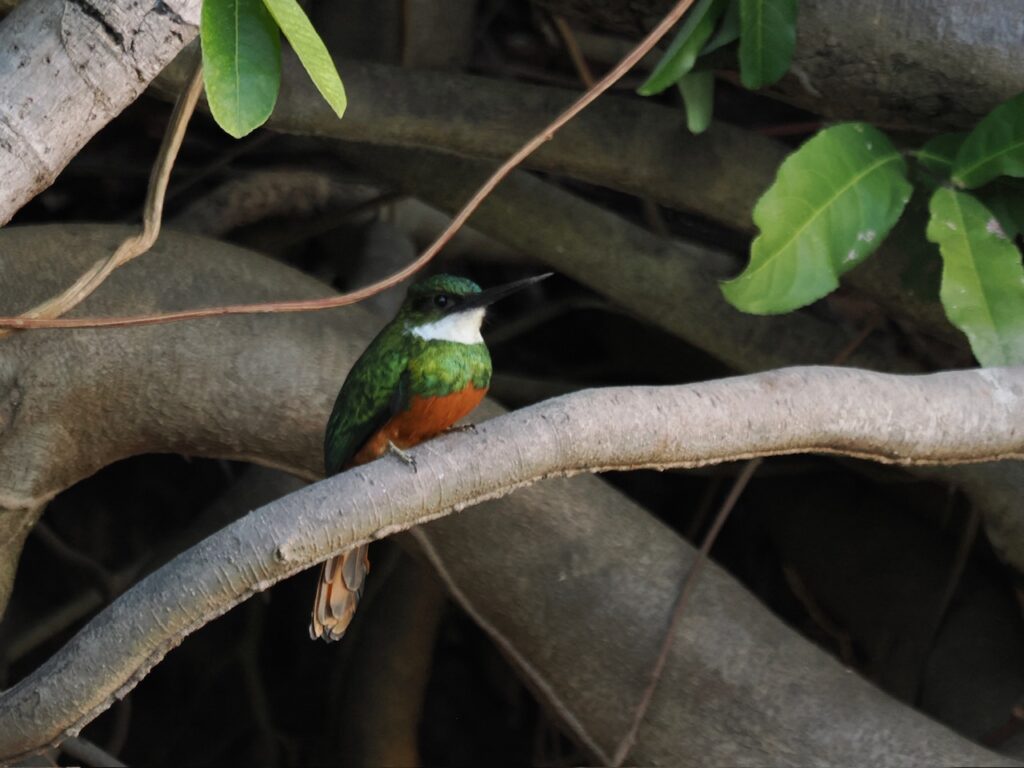
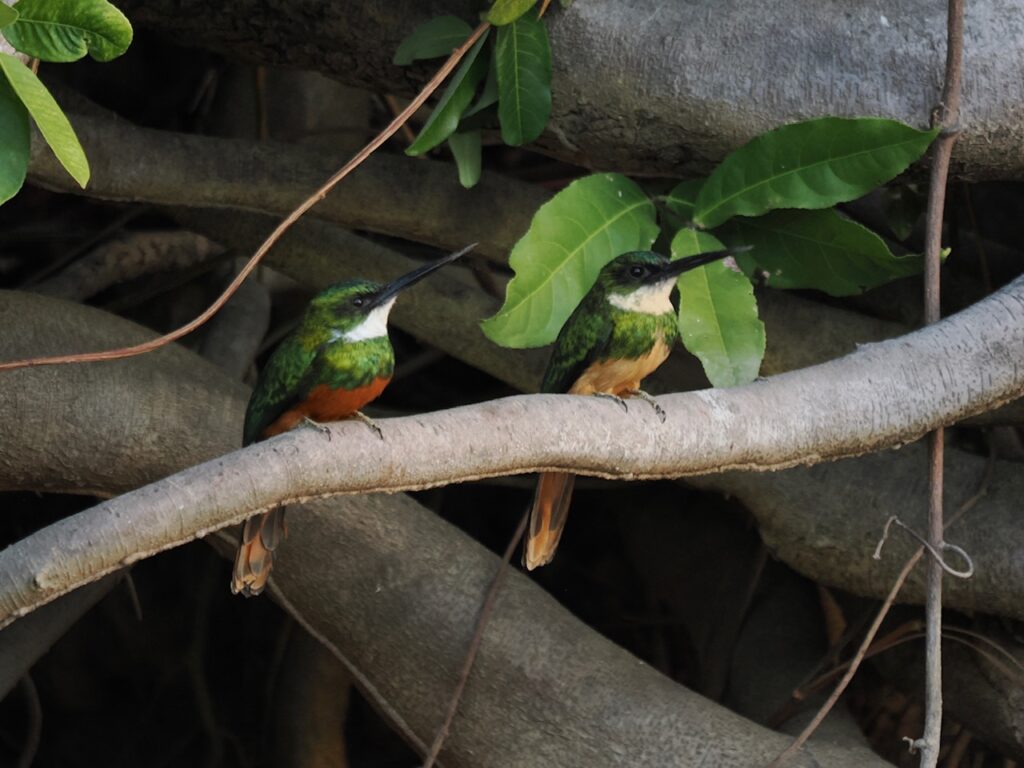
As we depart I notice a tiny rufous-tailed jacamar darting around in the bushes. To my delight he is shortly joined by his mate and they pose prettily side by side.
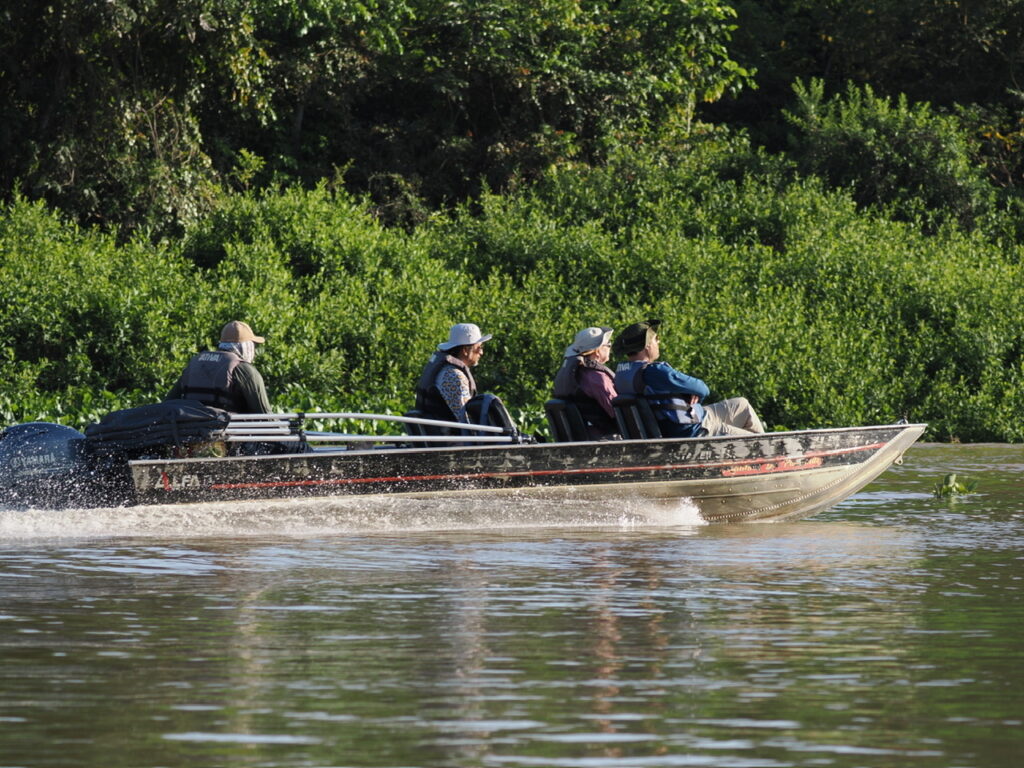
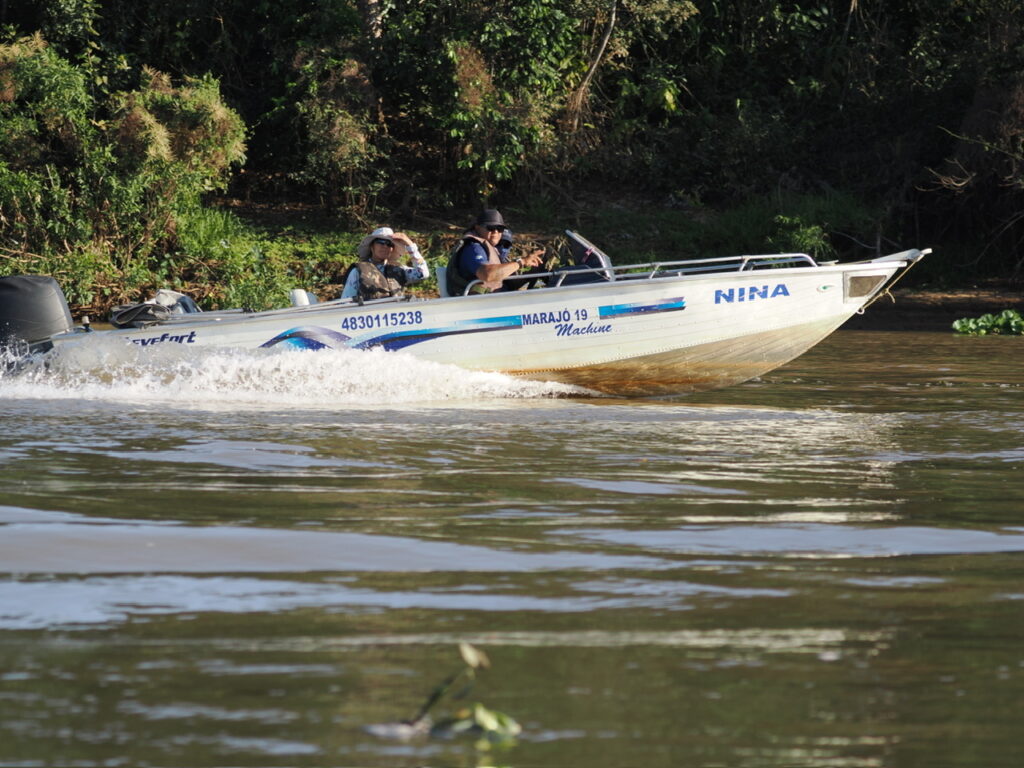
That was a rather successful day and hard to see that a new day can be any better. How wrong can you be? The next morning our plan is to head up the Cuiaba River and travel a fair distance to escape the boat traffic and find calmer water. Well that was the plan and we did start with some fishing, though quite a few boats zoomed past.
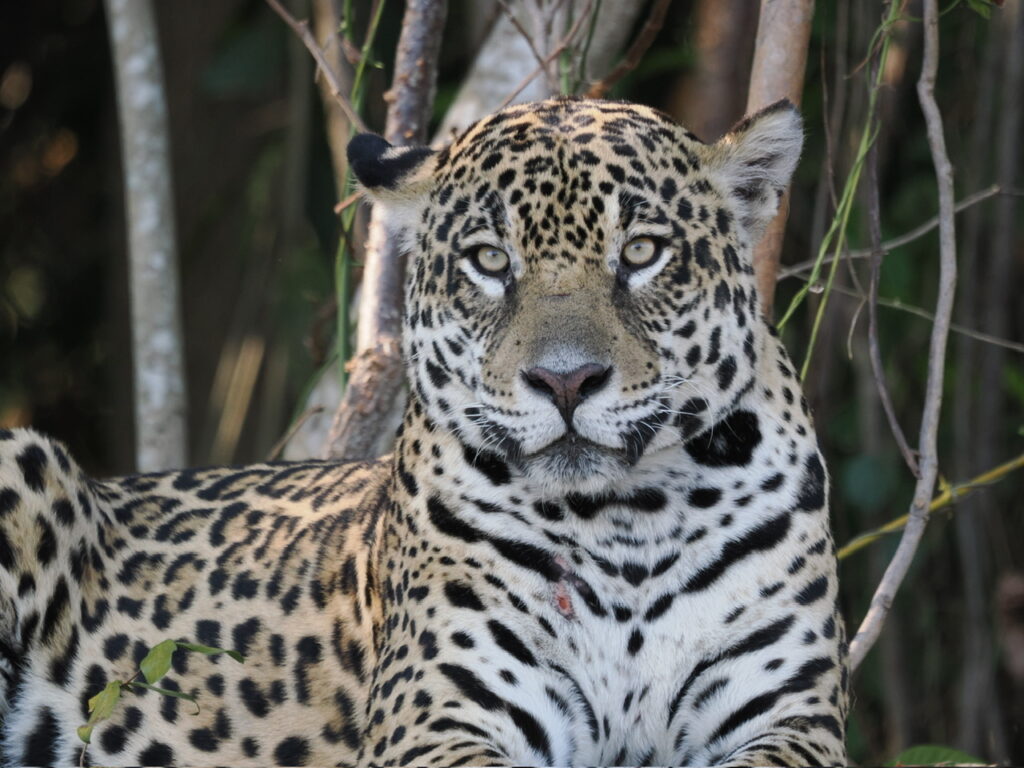
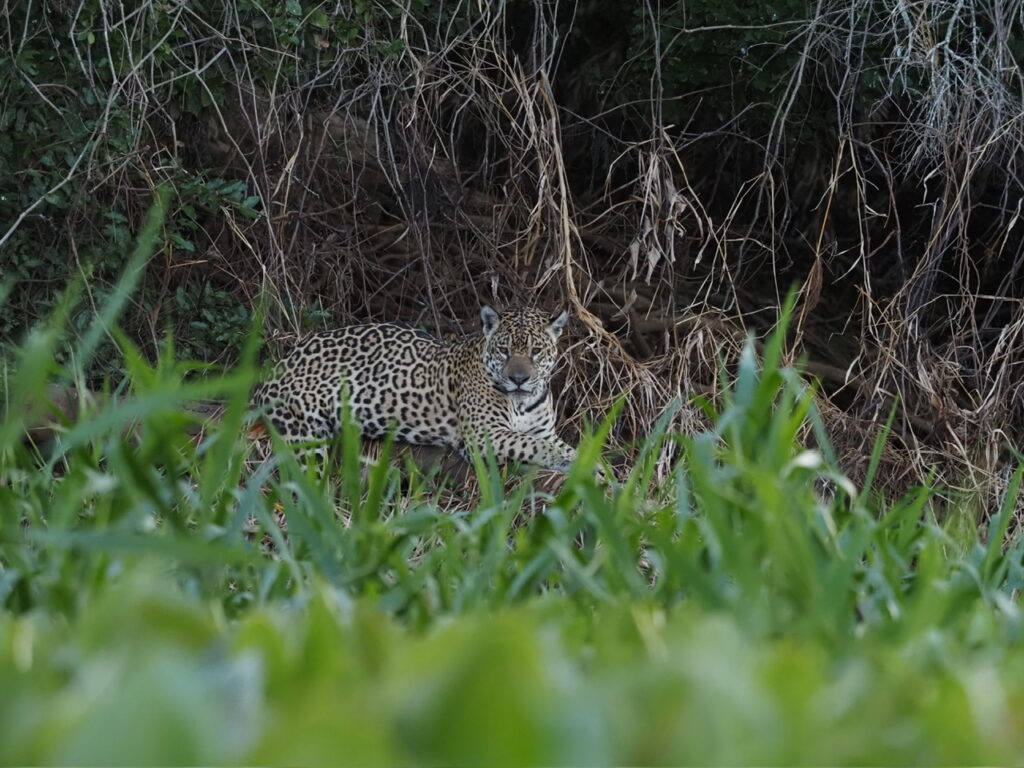
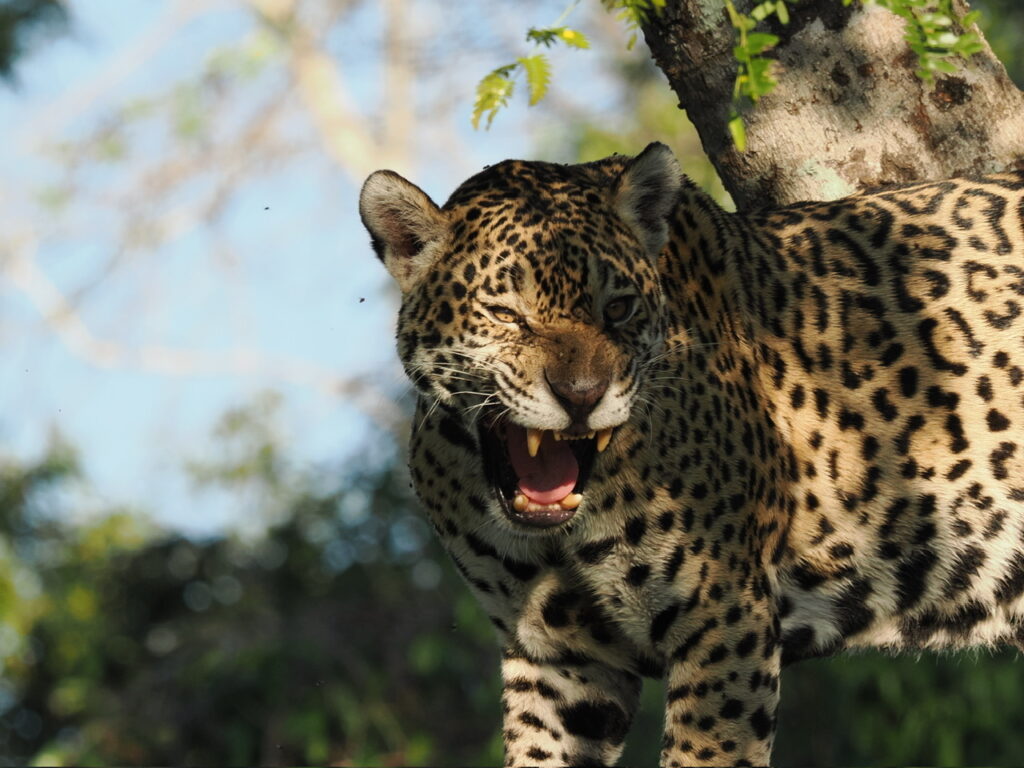
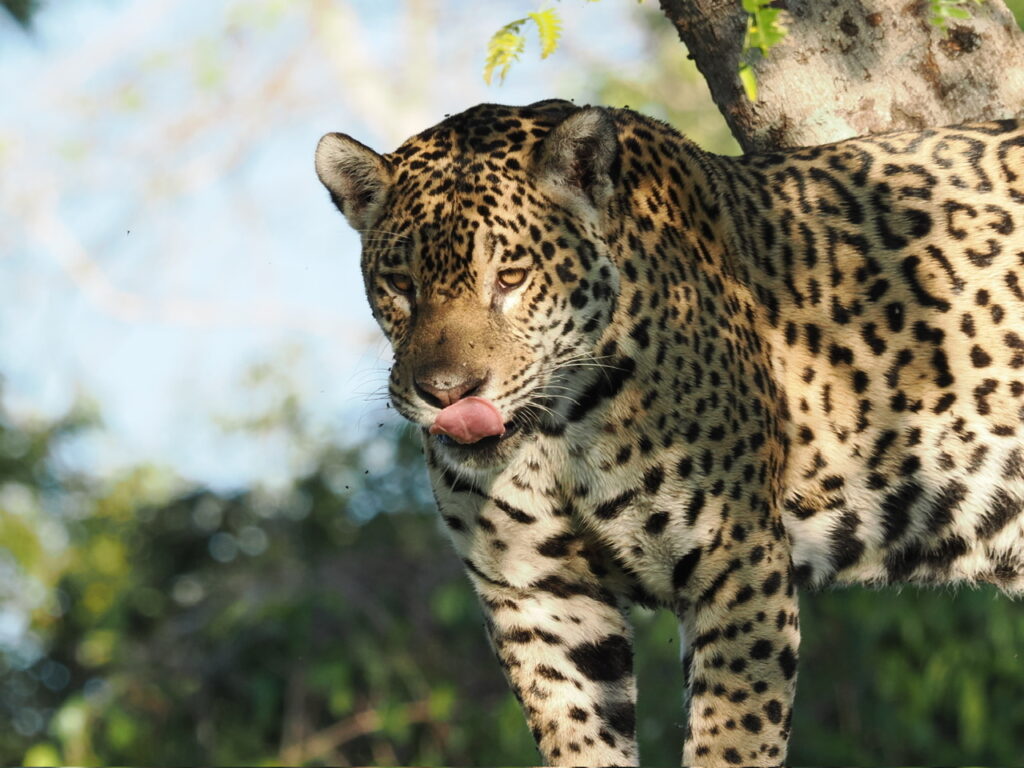
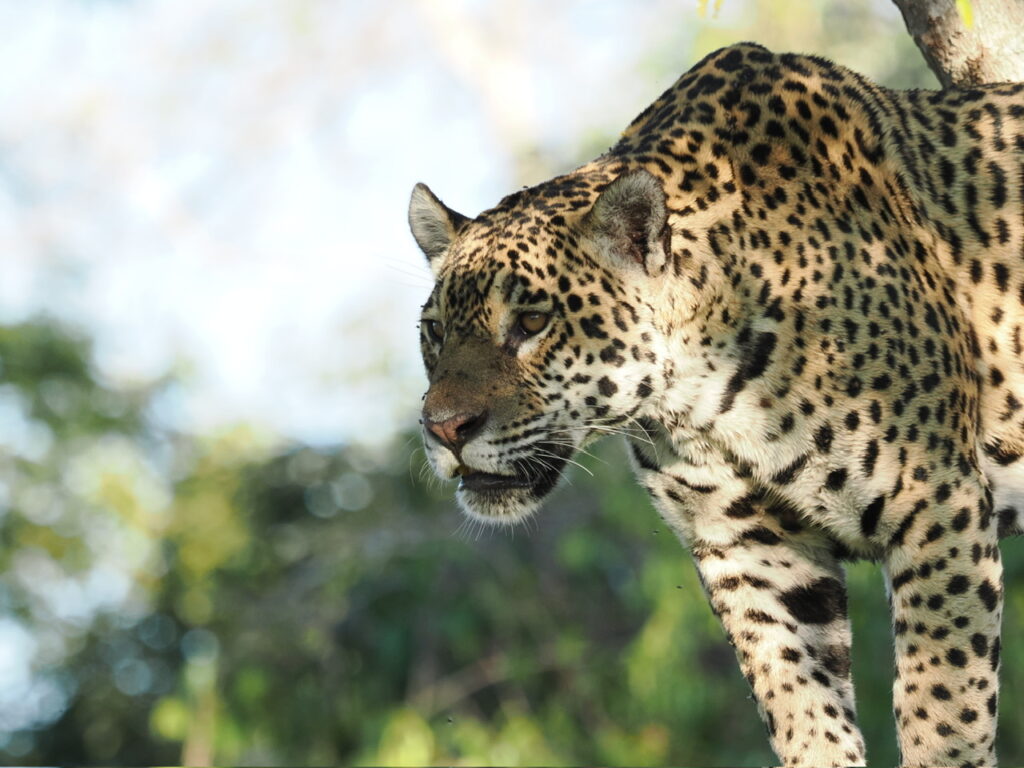
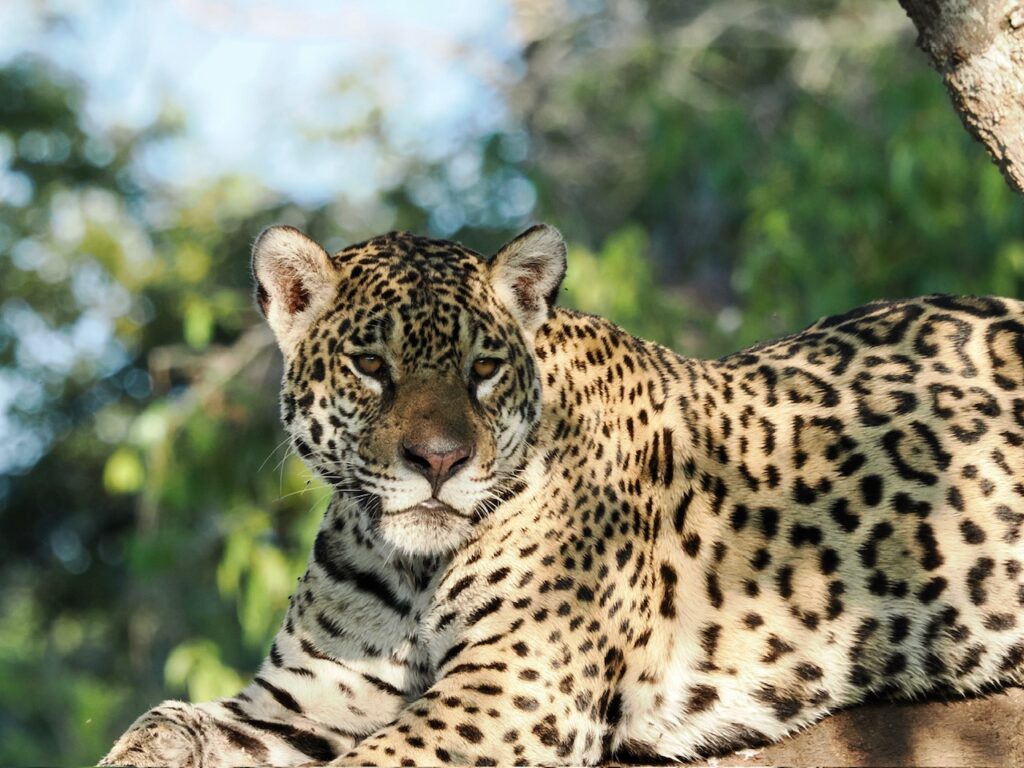
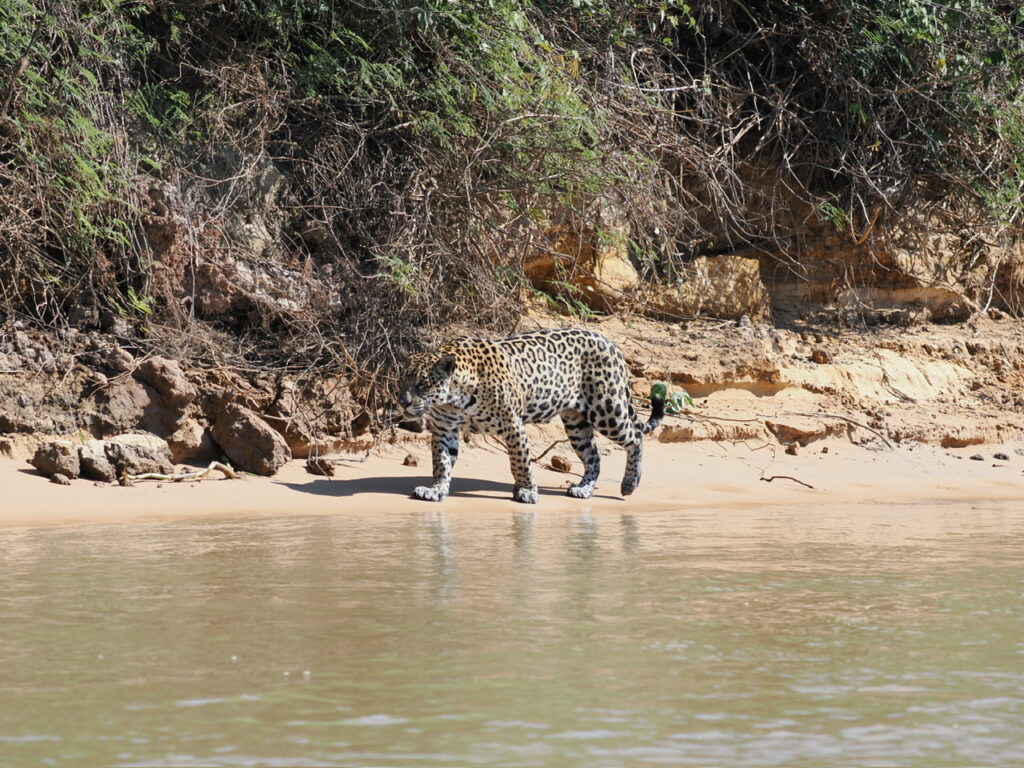
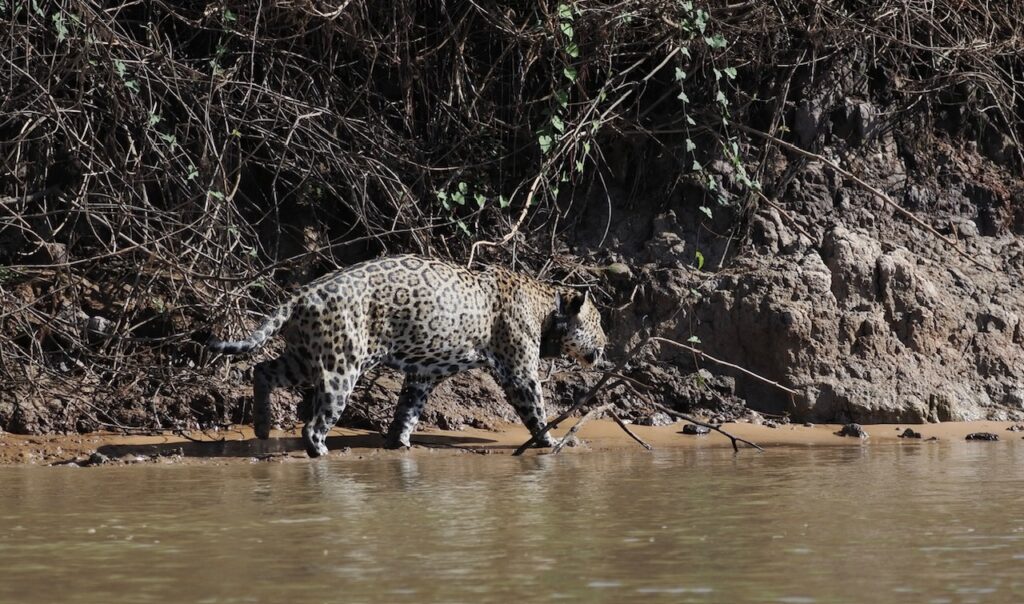
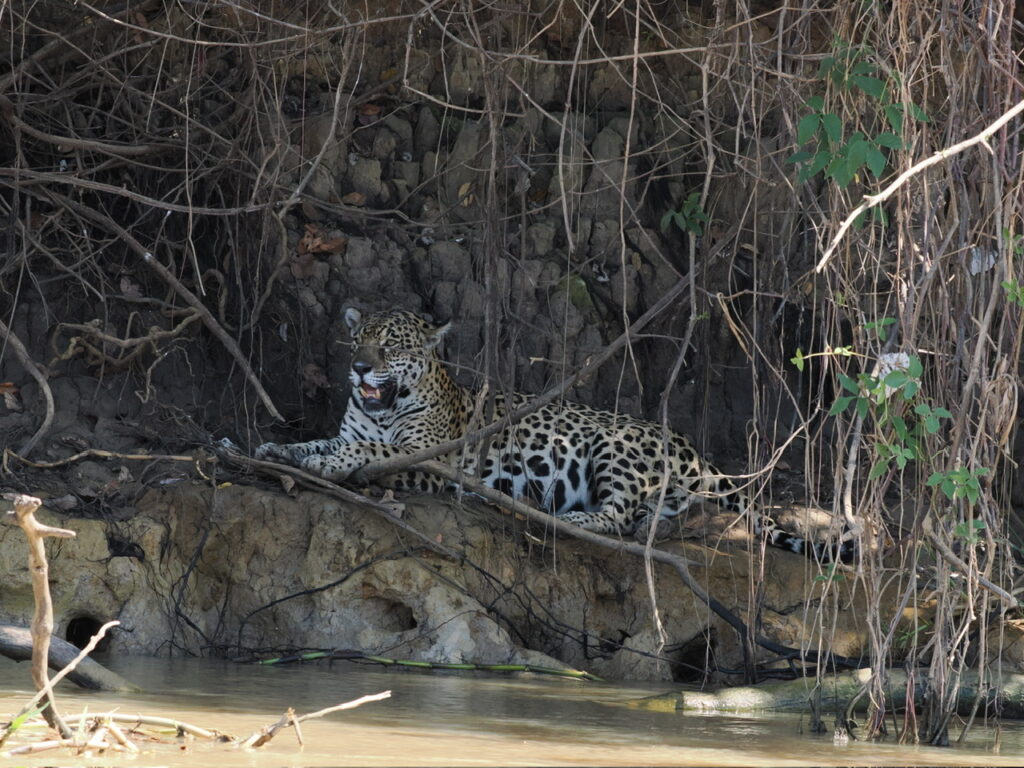
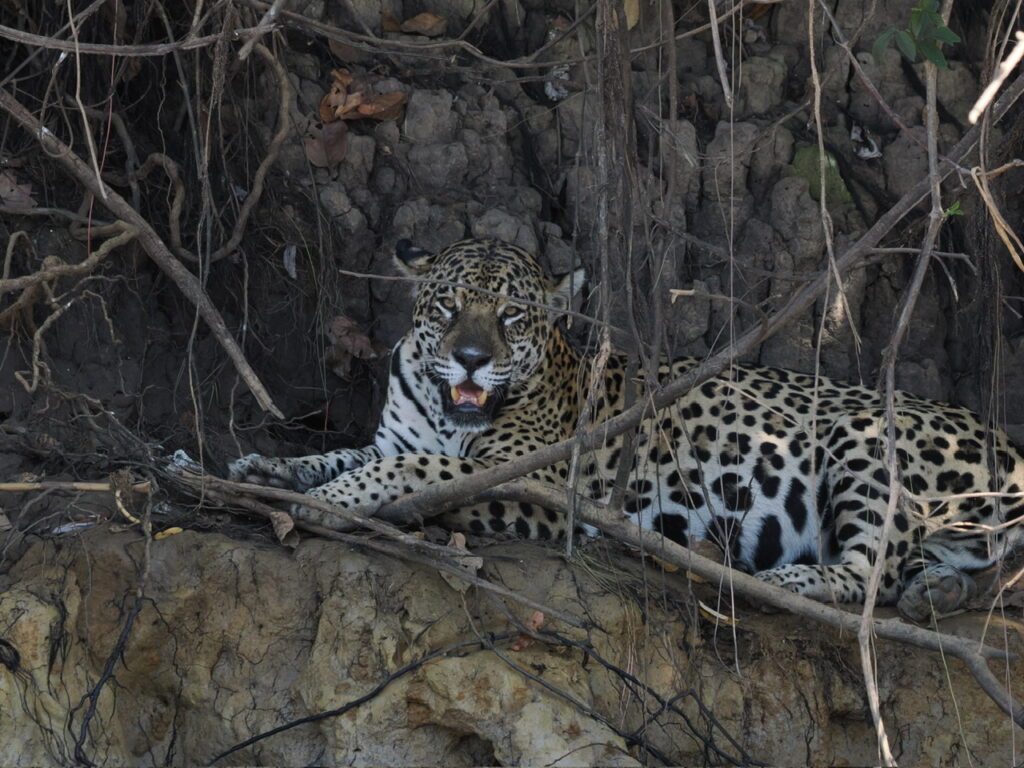
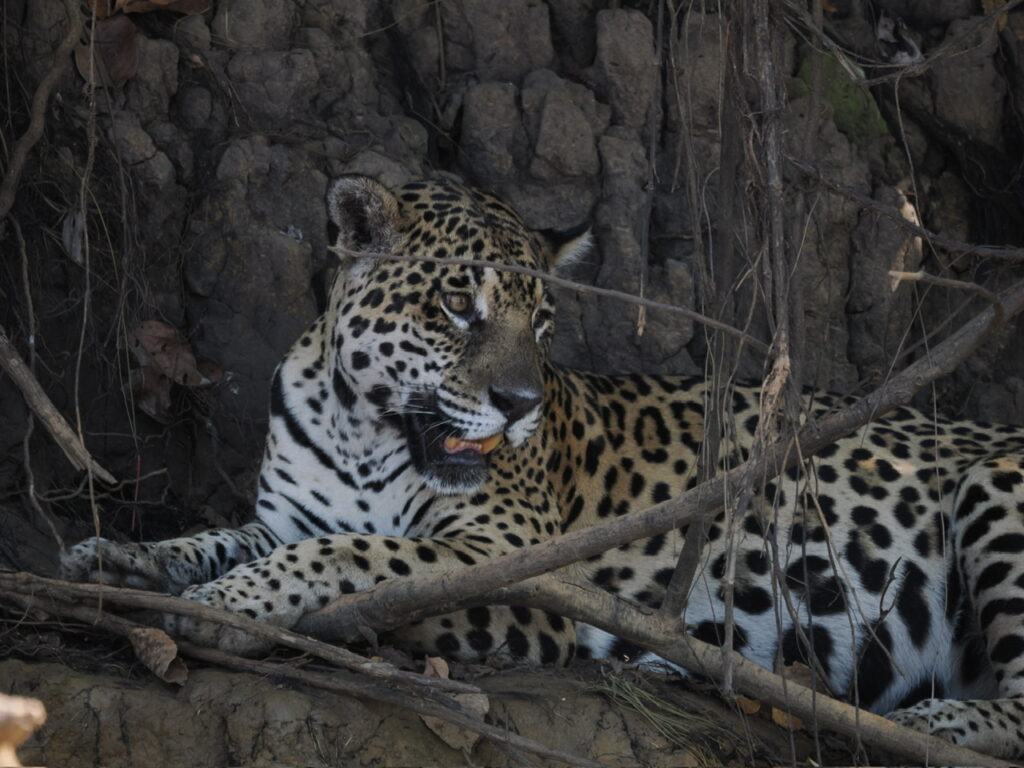
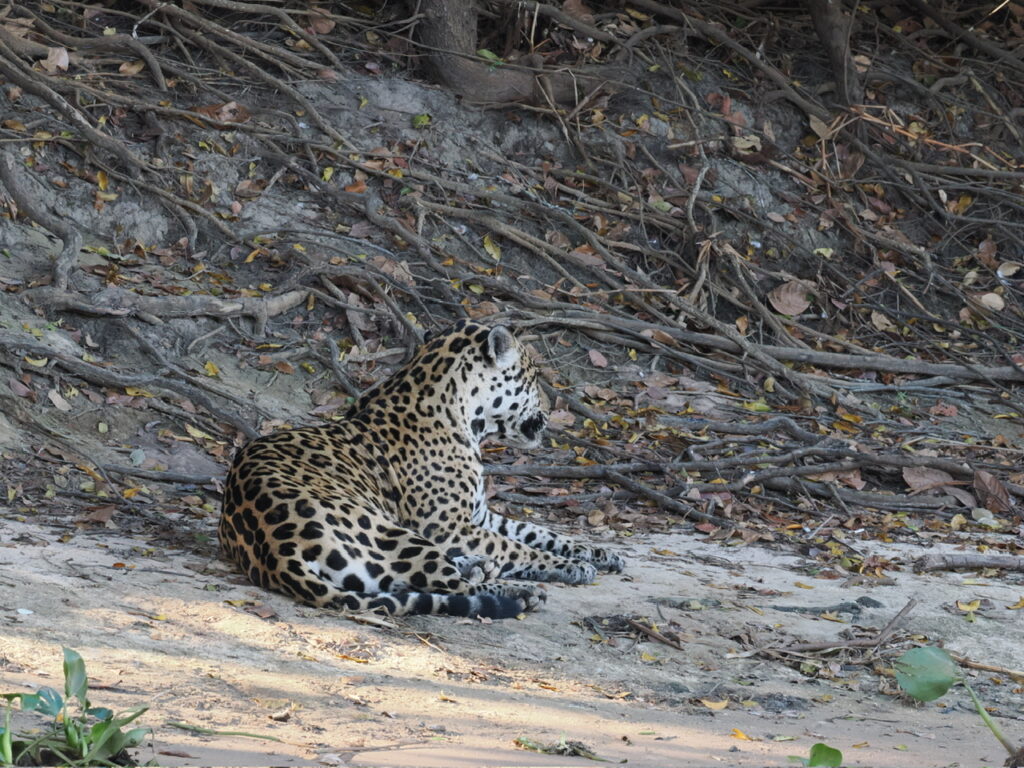
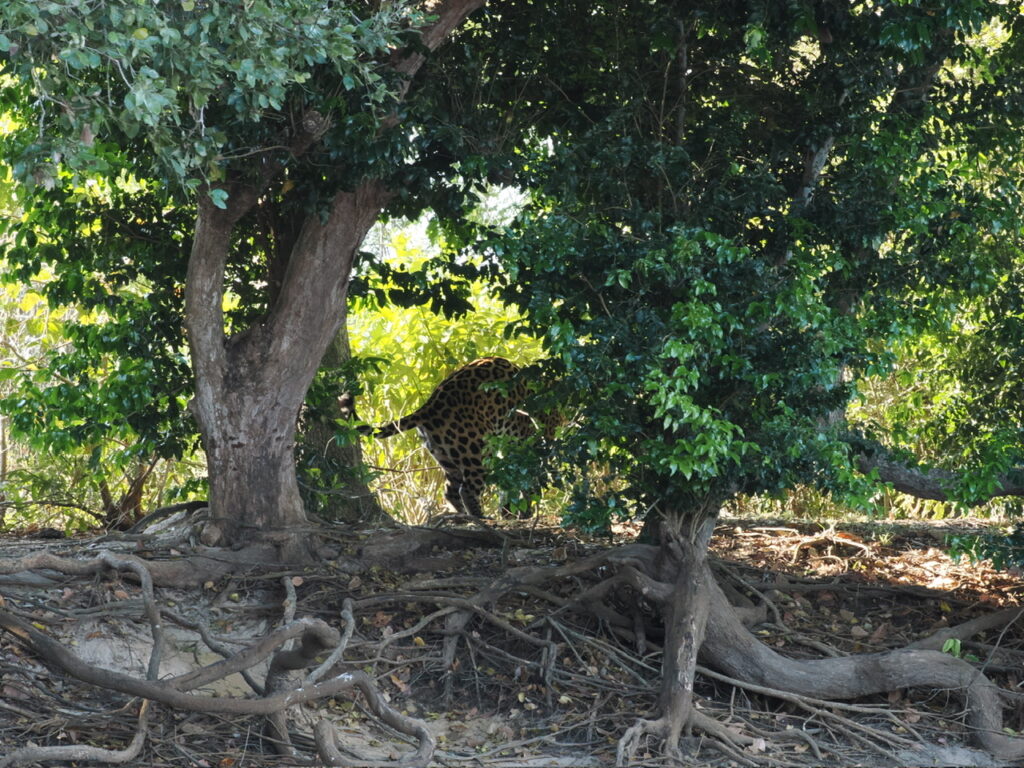
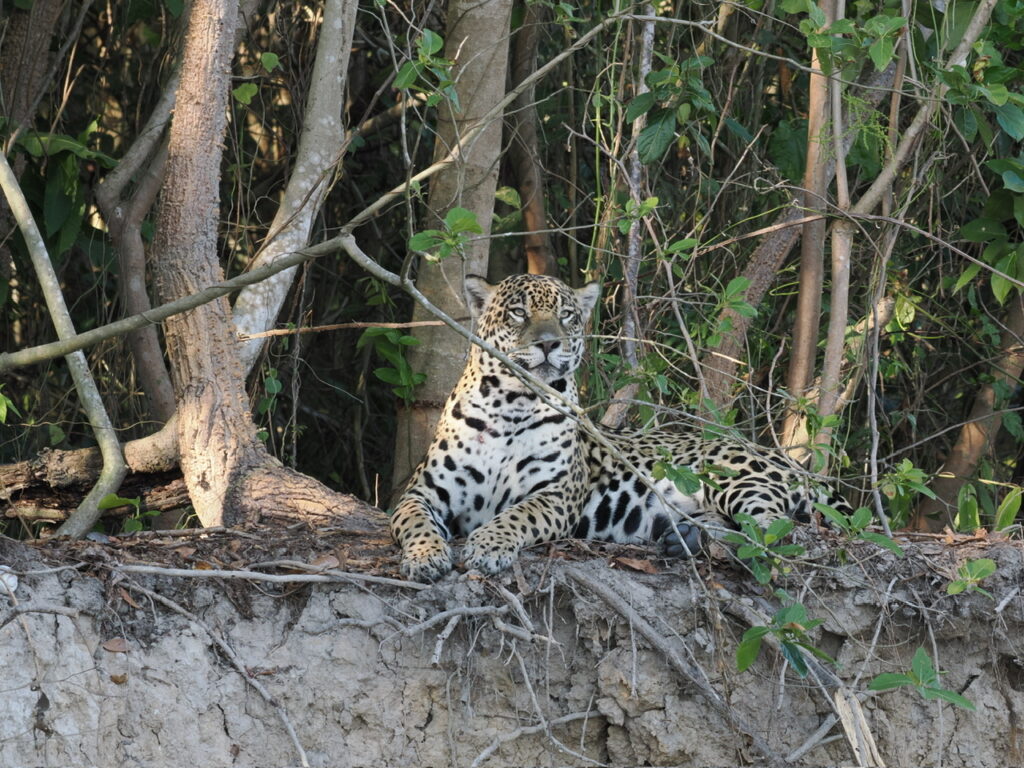
We changed location and noticed two boats had stopped. We went over to have a look. A beautiful young jaguar is lazing on the bank. This is Juliet, 3 year old daughter of Ryan. She looks like she has sustained a small injury under her neck.
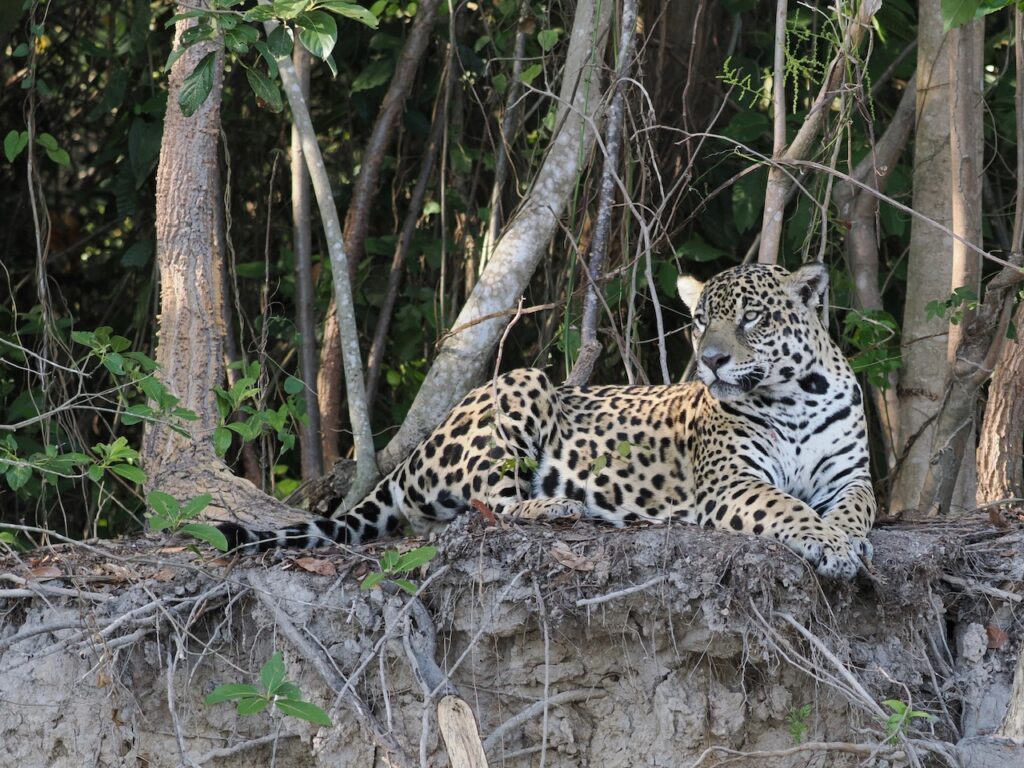
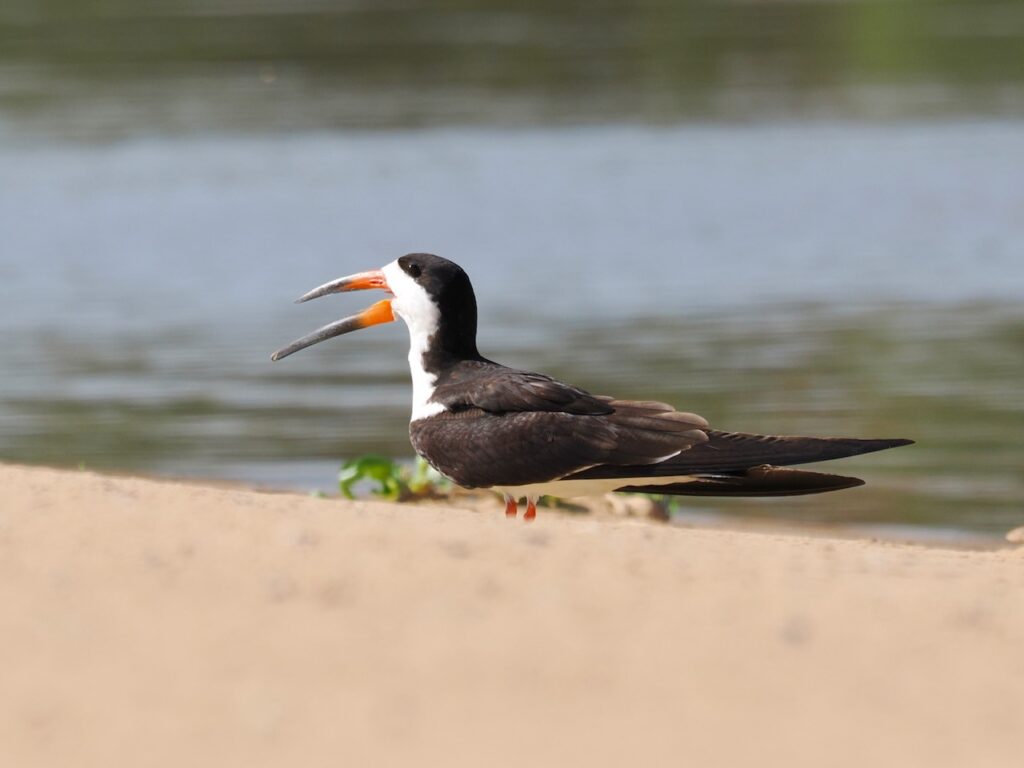
We do not stay too long as this is meant to be Paul’s fishing fix. We find a perfect spot close to the sandbank where the skimmers nest. This is the most lovely spot. The water is calm and there are no other boats to disturb the tranquility.
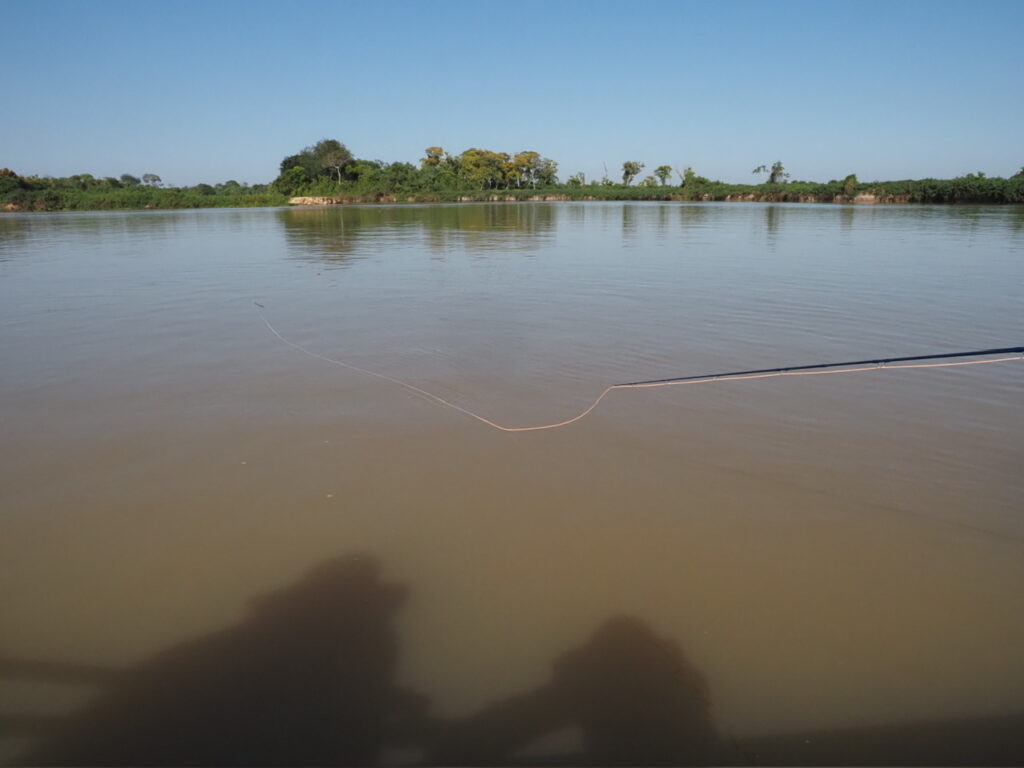
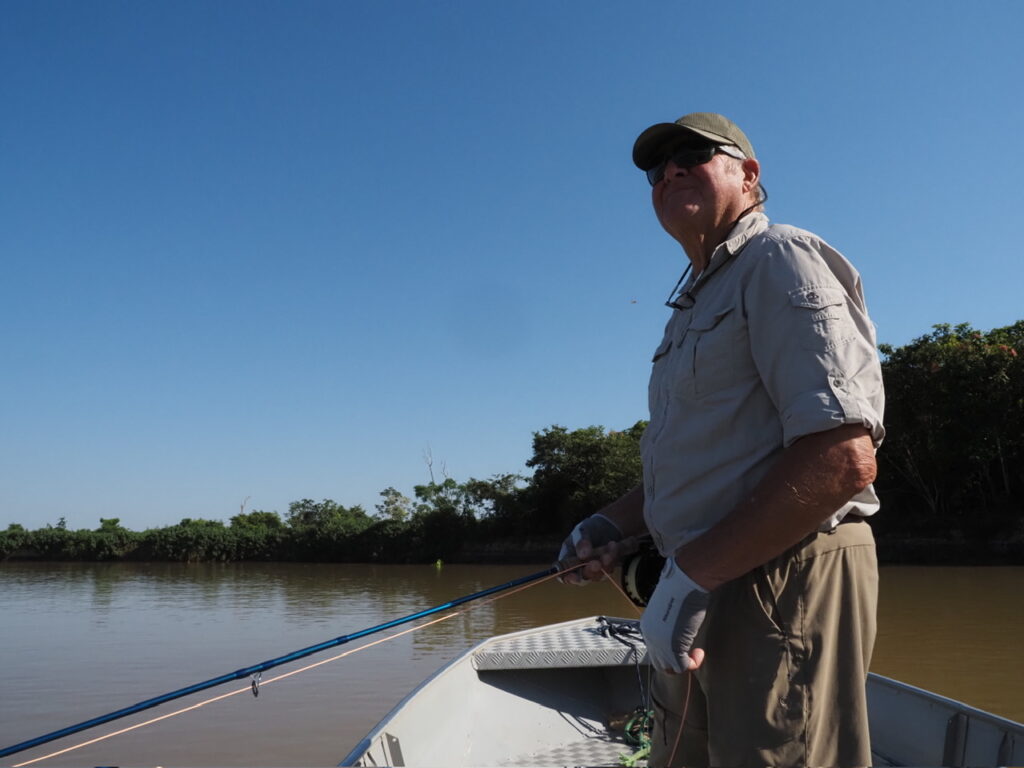
Well maybe just the one!
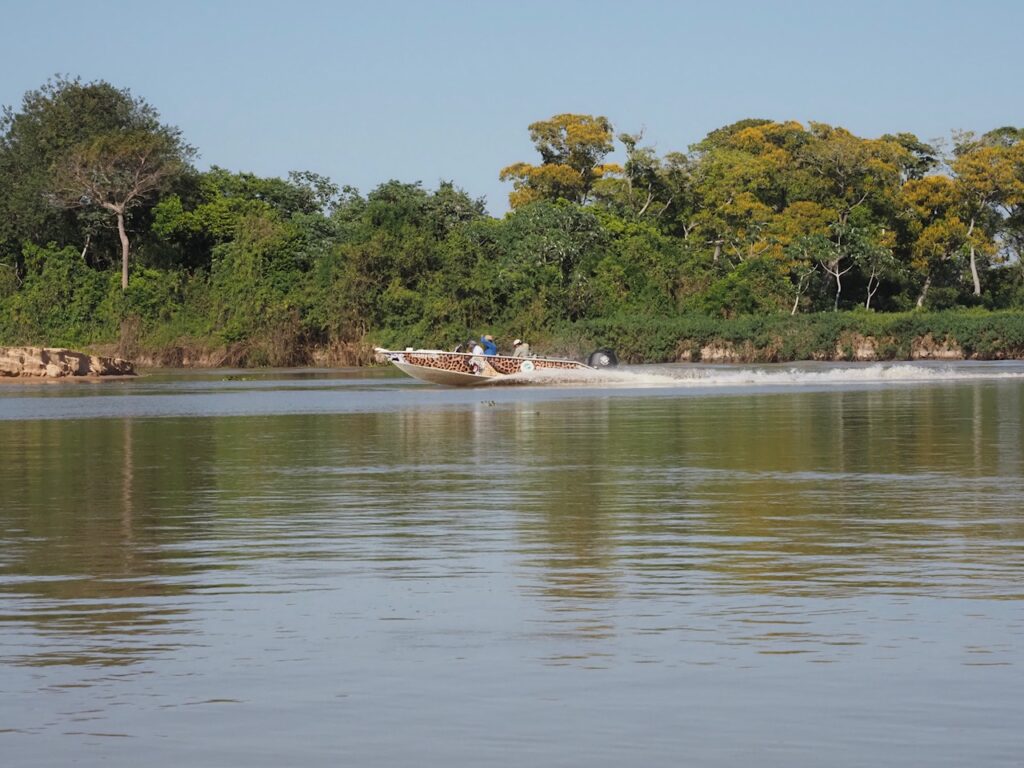
I look at the beach and say “Wouldn’t it be amazing if Juliet left her resting place and strolled onto the beach?” Keep that thought….

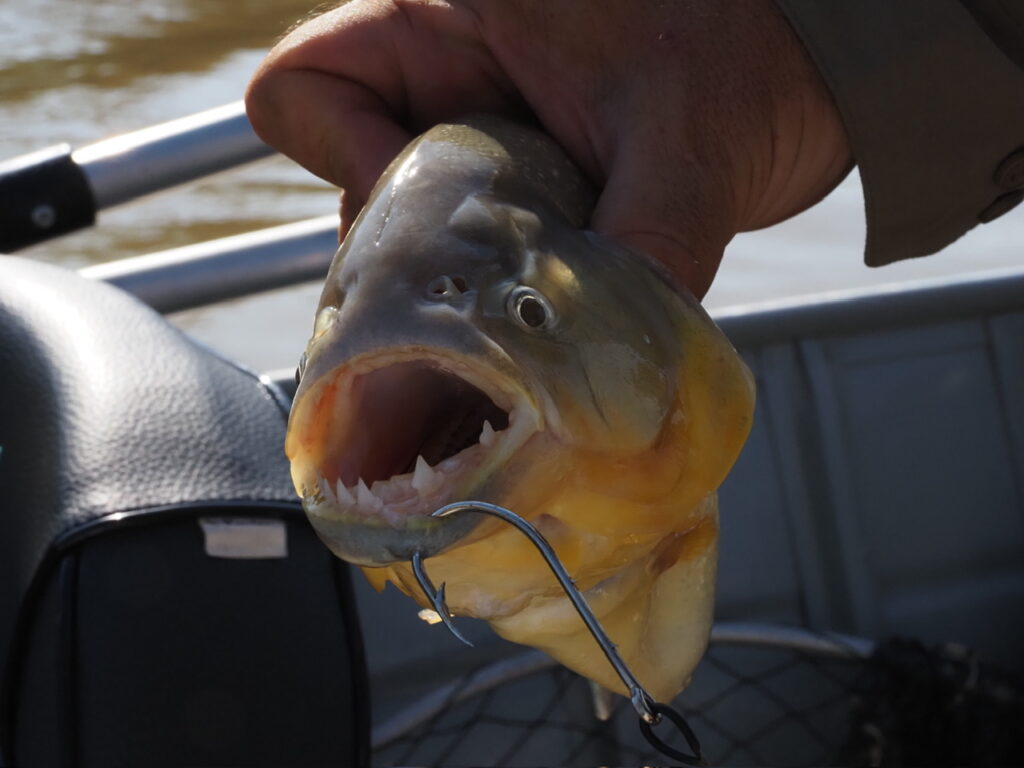
Fishing commences and Bruno catches a piranha. Those teeth look sharp. He has a certain amount of difficulty removing the hook without losing a finger.
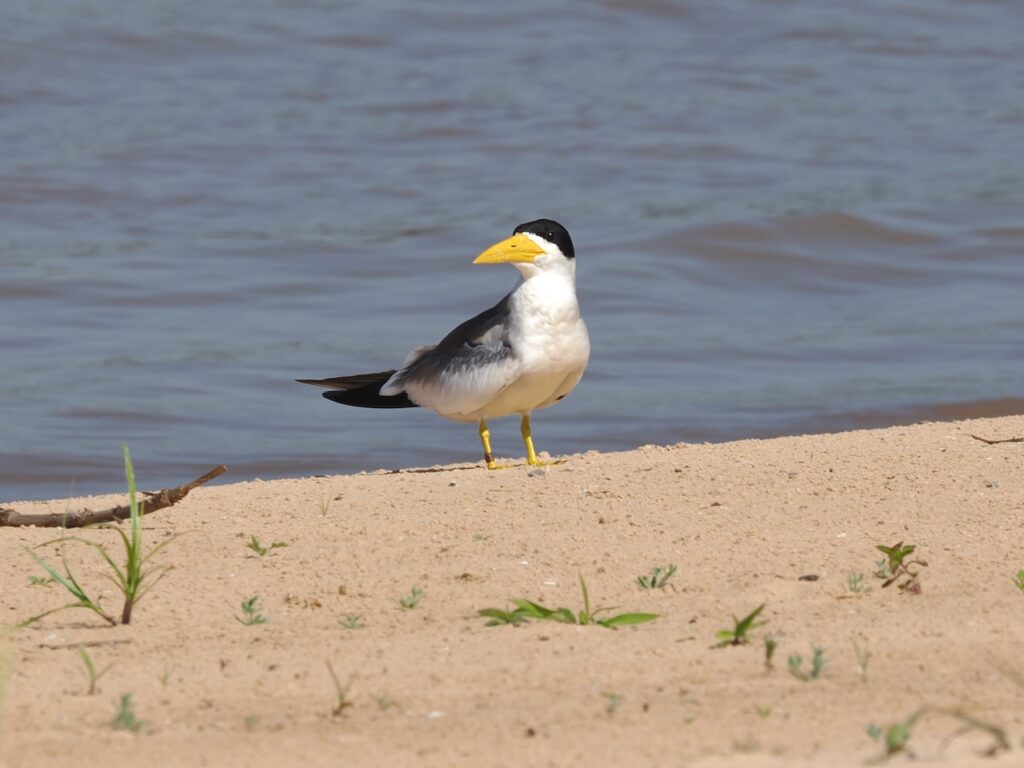
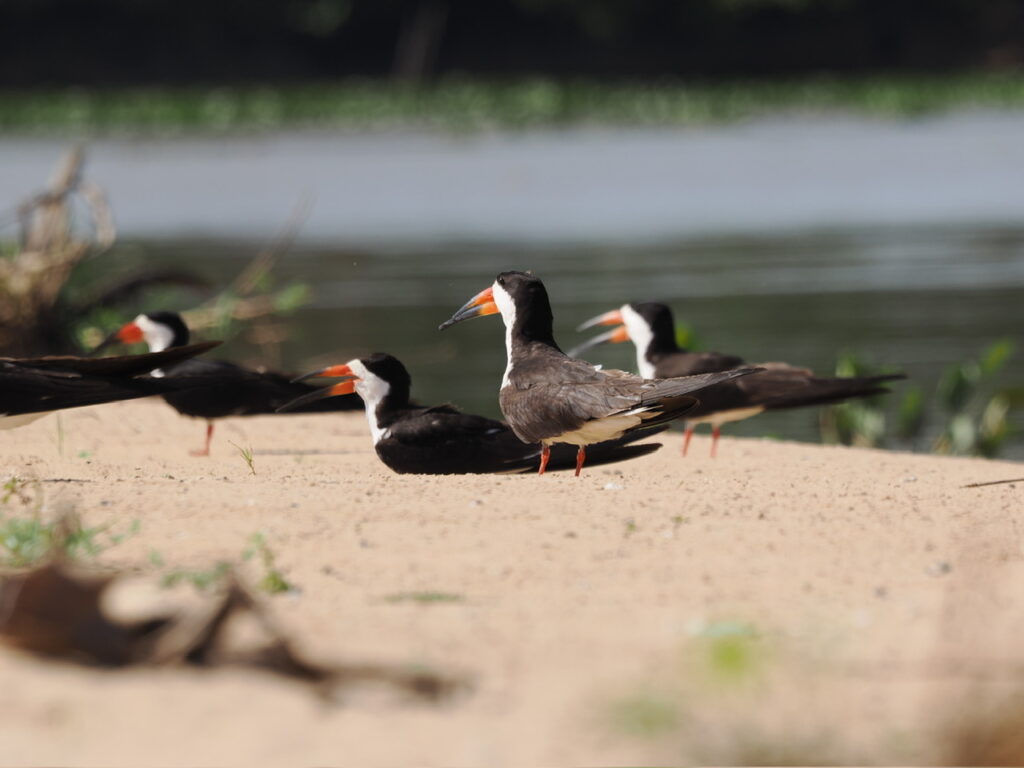
While Paul continues to fish, Bruno asks me if I would like to go ashore. I do not hesitate for a second. He shows me where the skimmers are nesting and we are very careful to stay clear of the nests (which are no more than holes in the sand) and not disturb them. I lie on my stomach on the sand to try and capture an eye level view. There are large-billed terns and plovers, as well as the skimmers. We must not stay long as they need to be left in peace.
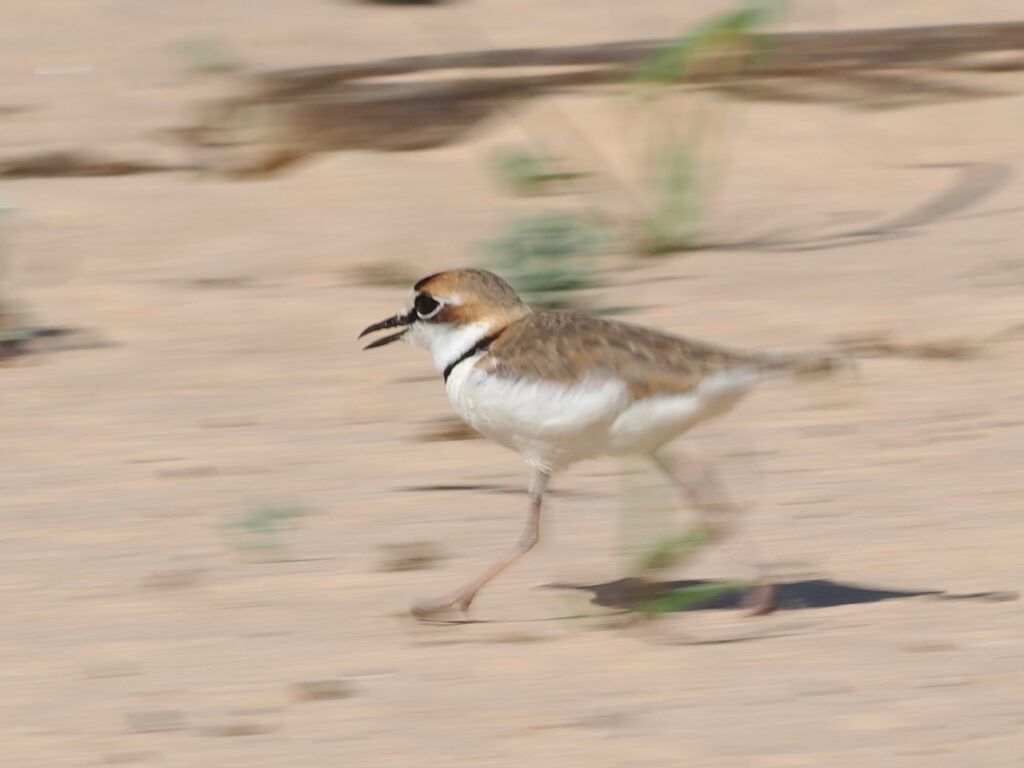
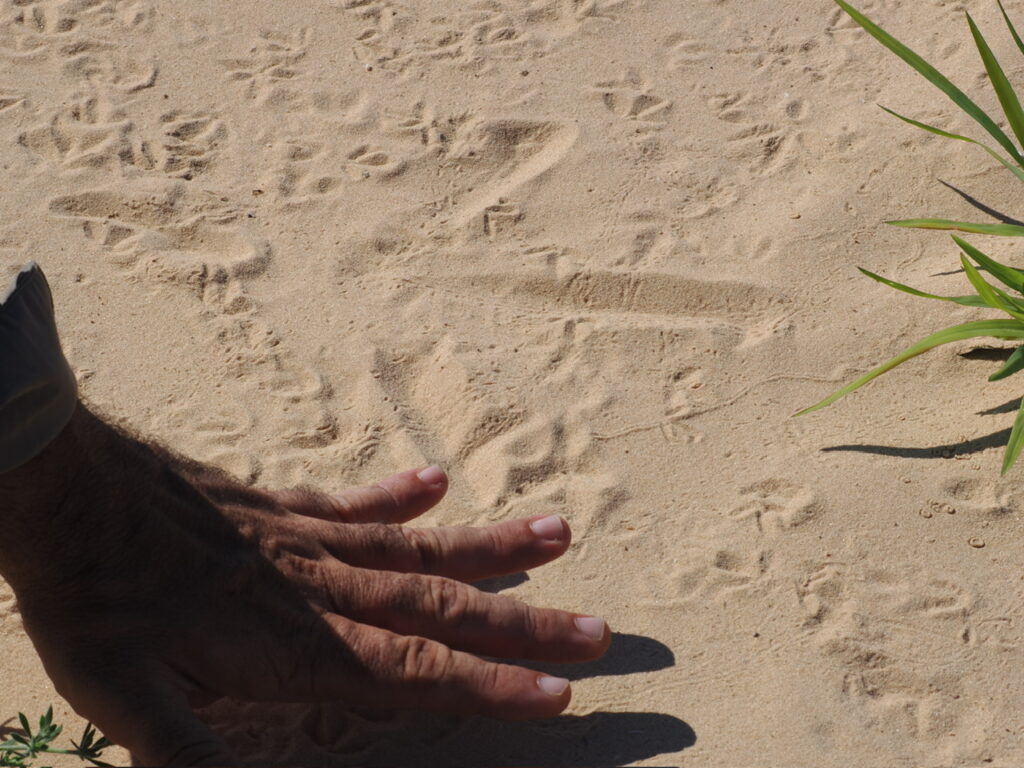
I have a very unsuccessful attempt at trying to capture velocity photos of the plover by setting the shutter speed very slow and tracking it. I need a lot more practice and we did not have the time, but you can sort of see the effect I was aiming for. We also see a jabiru footprint. They are really big! Meantime Paul continues to fish.
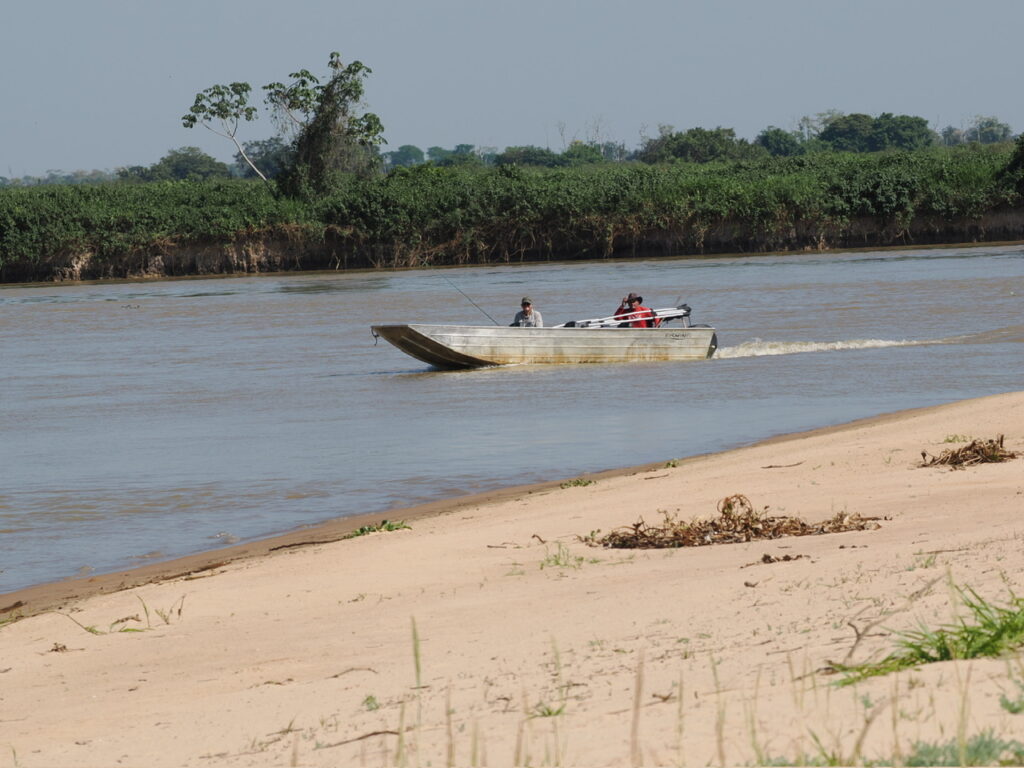
We beckon to Manuel to come and pick us up and notice a number of boats appearing. Jaguar activity must be afoot.
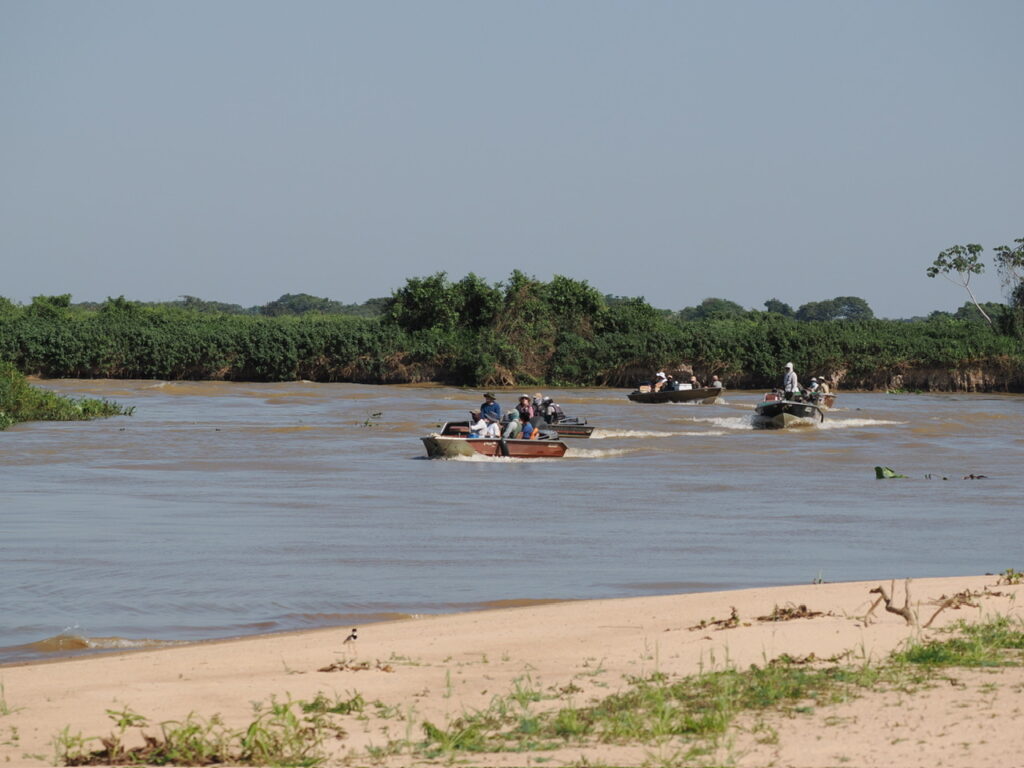
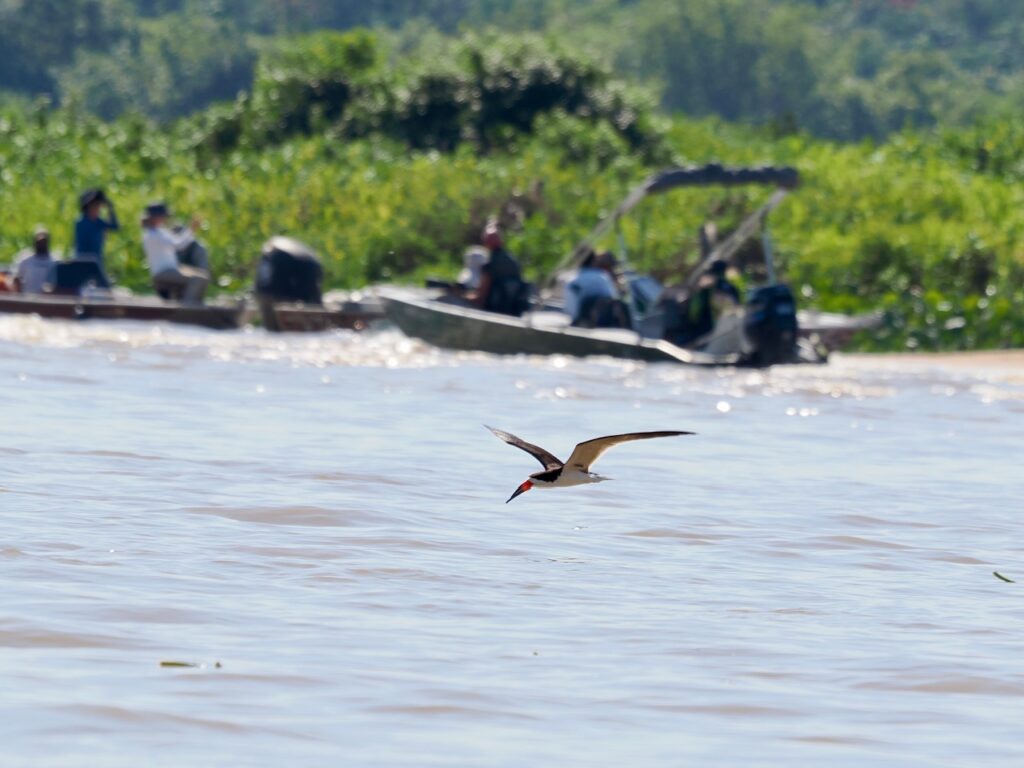
I love the shot below. The boats in the background are out of focus and waiting for something they cannot see, whilst life is happening all around them.
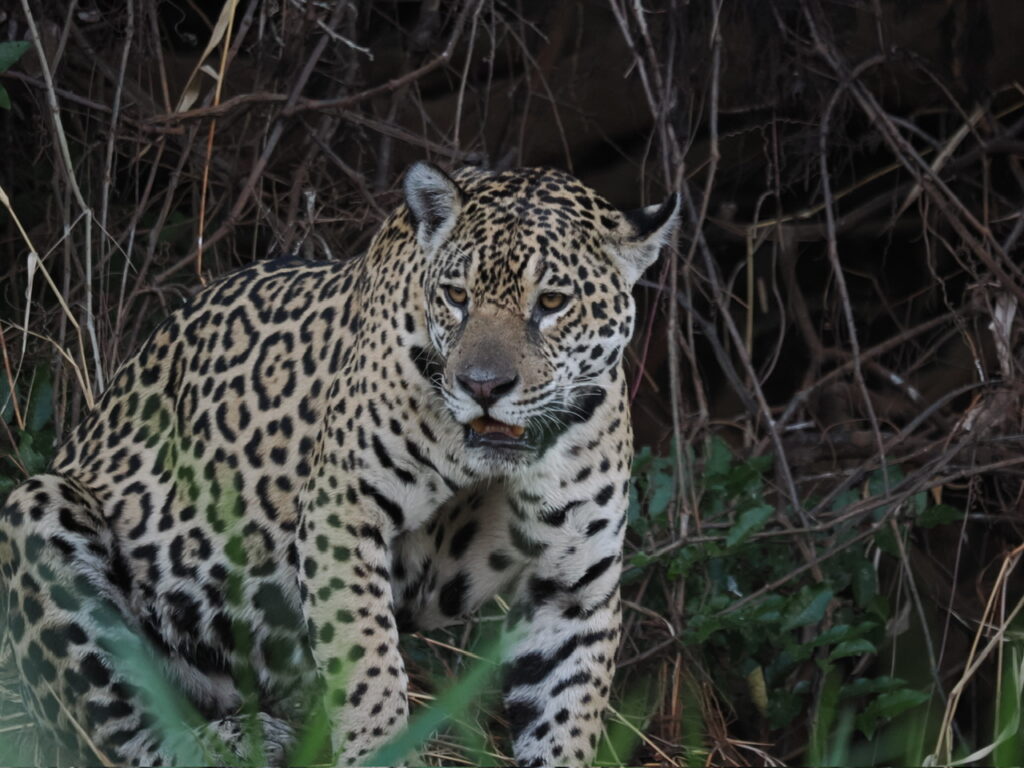
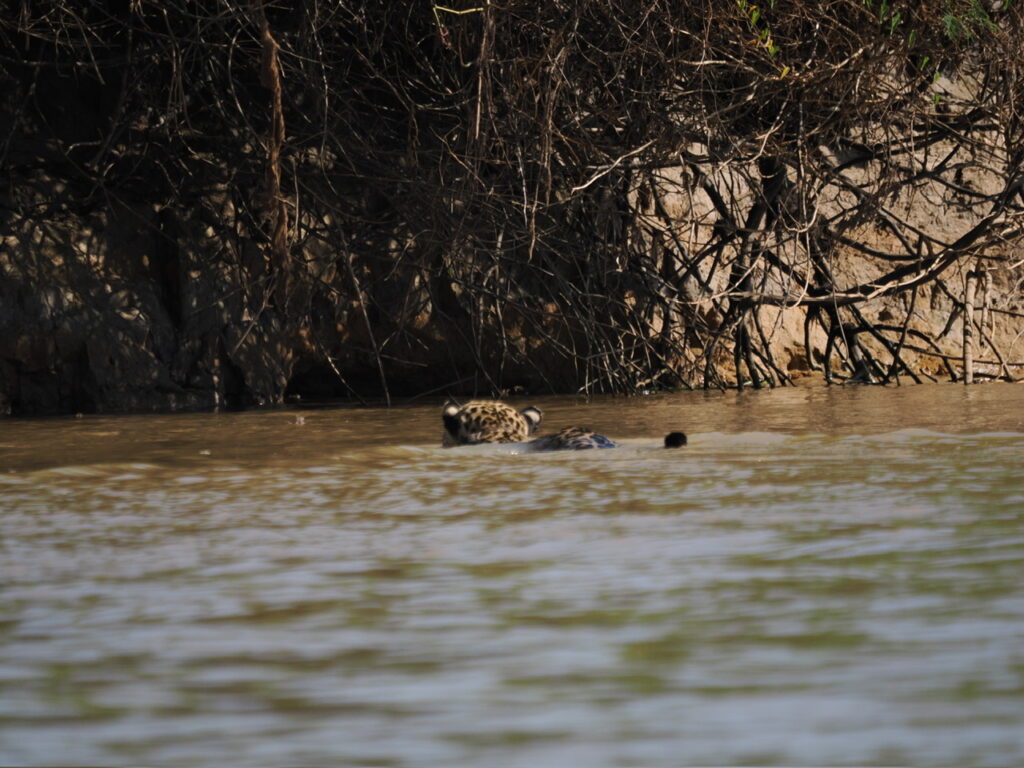
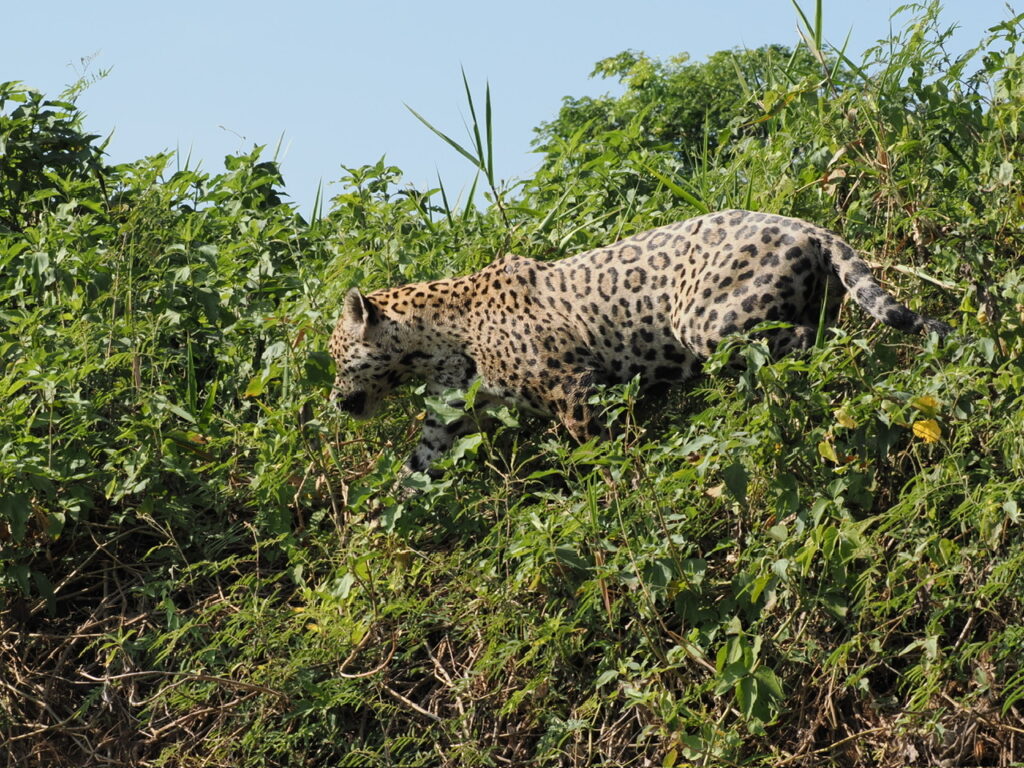
We think a jaguar is about to cross the river – probably Juliet and then we see her. But it is not Juliet. It is her mother Ryan.

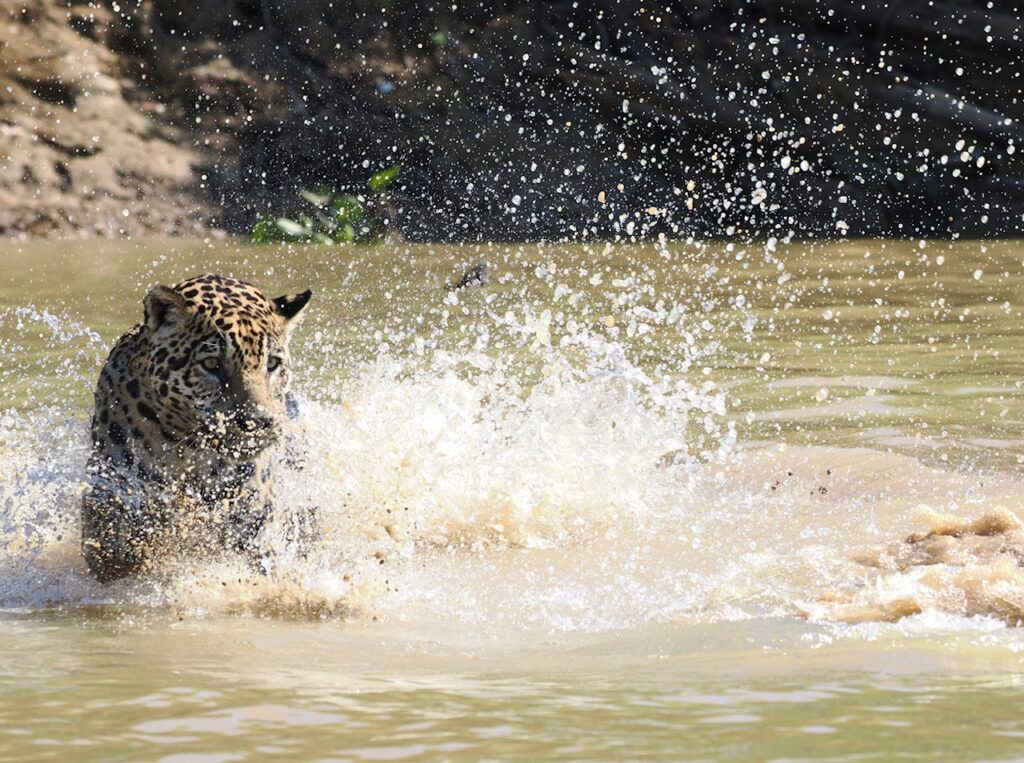
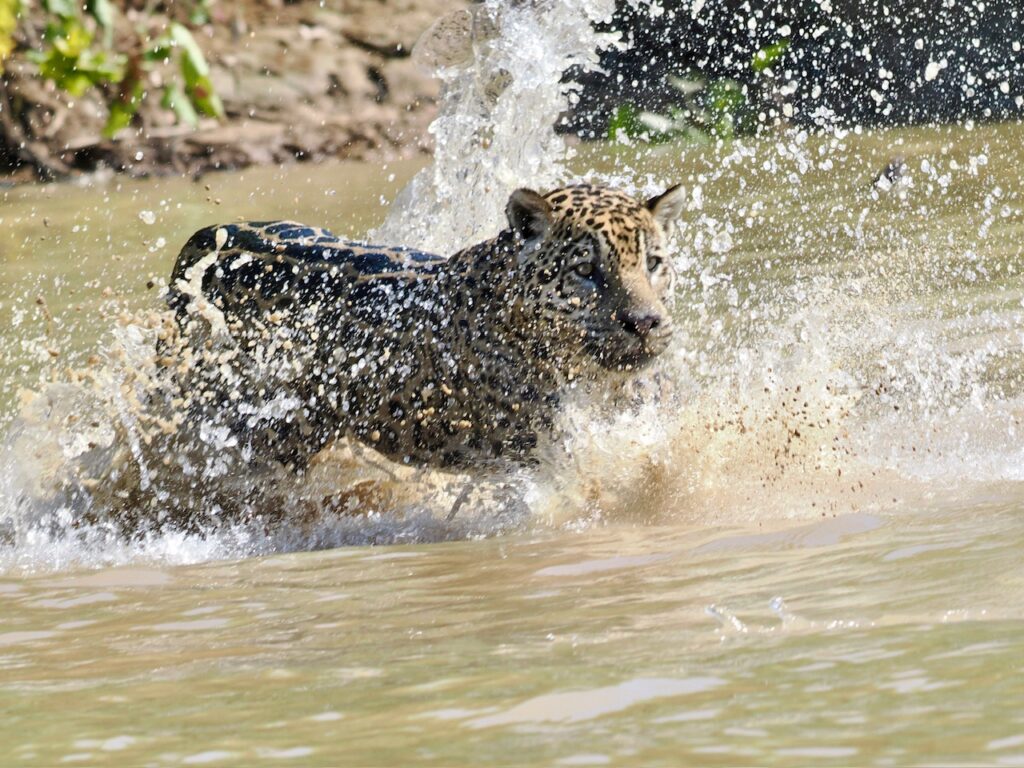
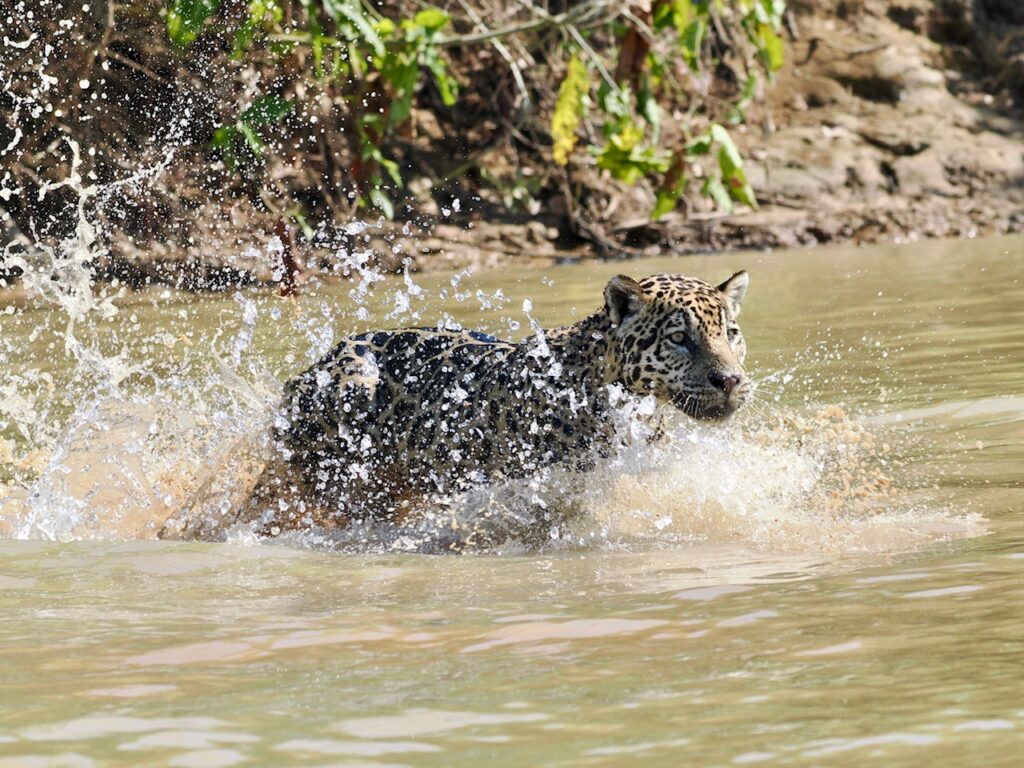
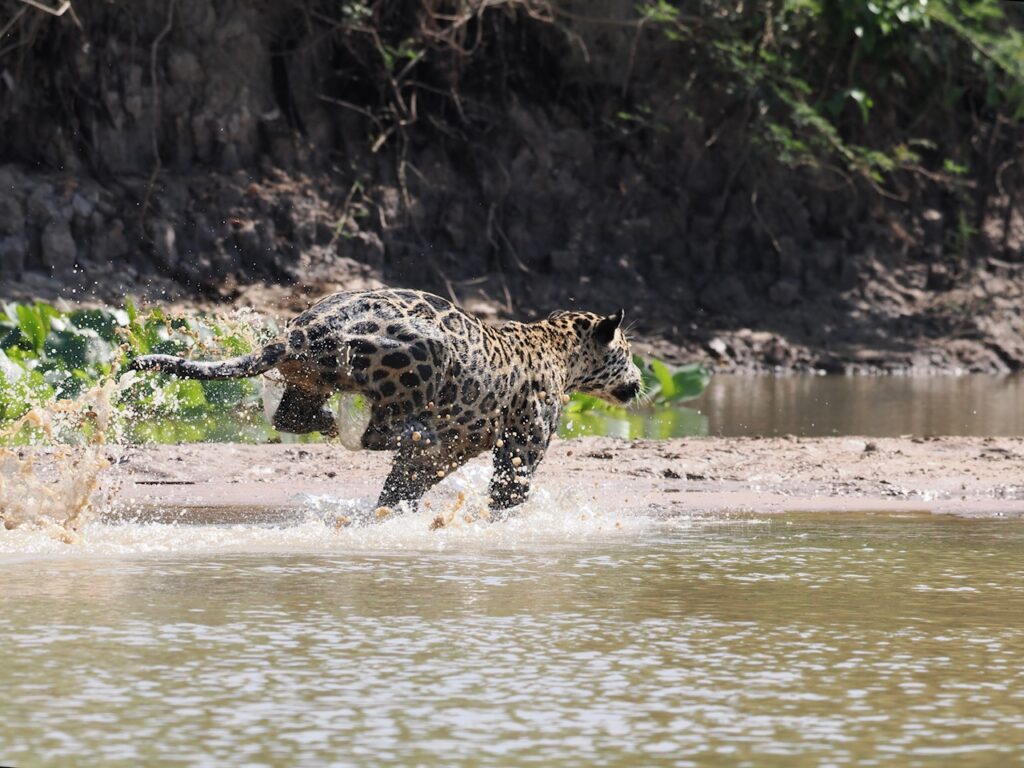
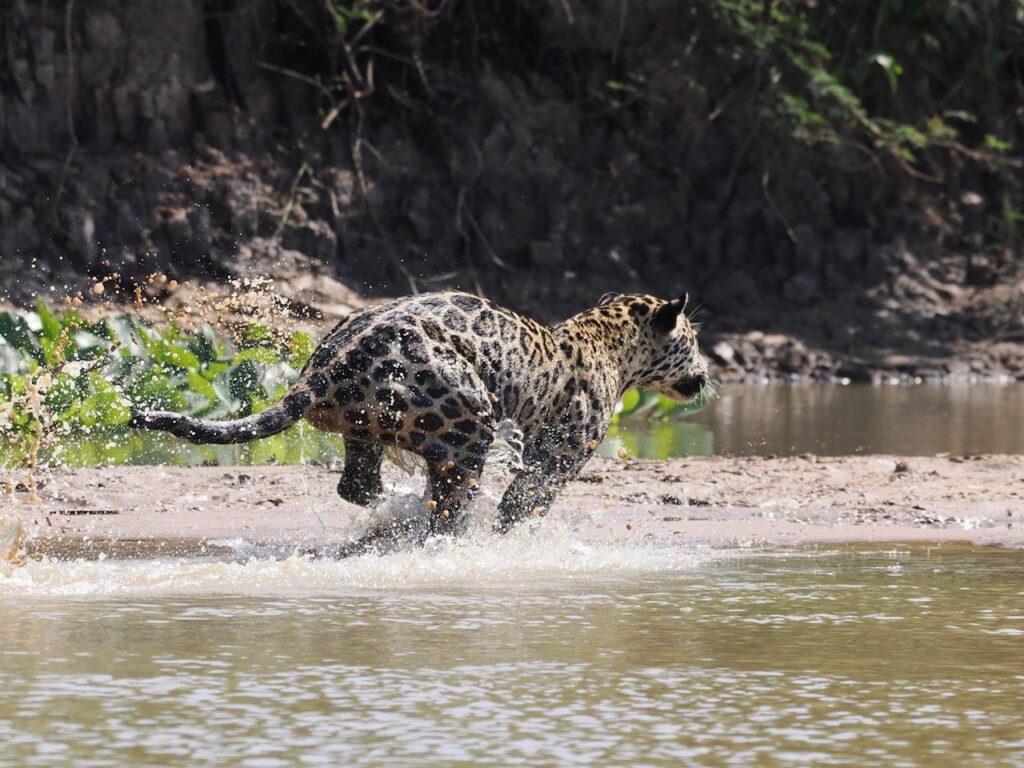
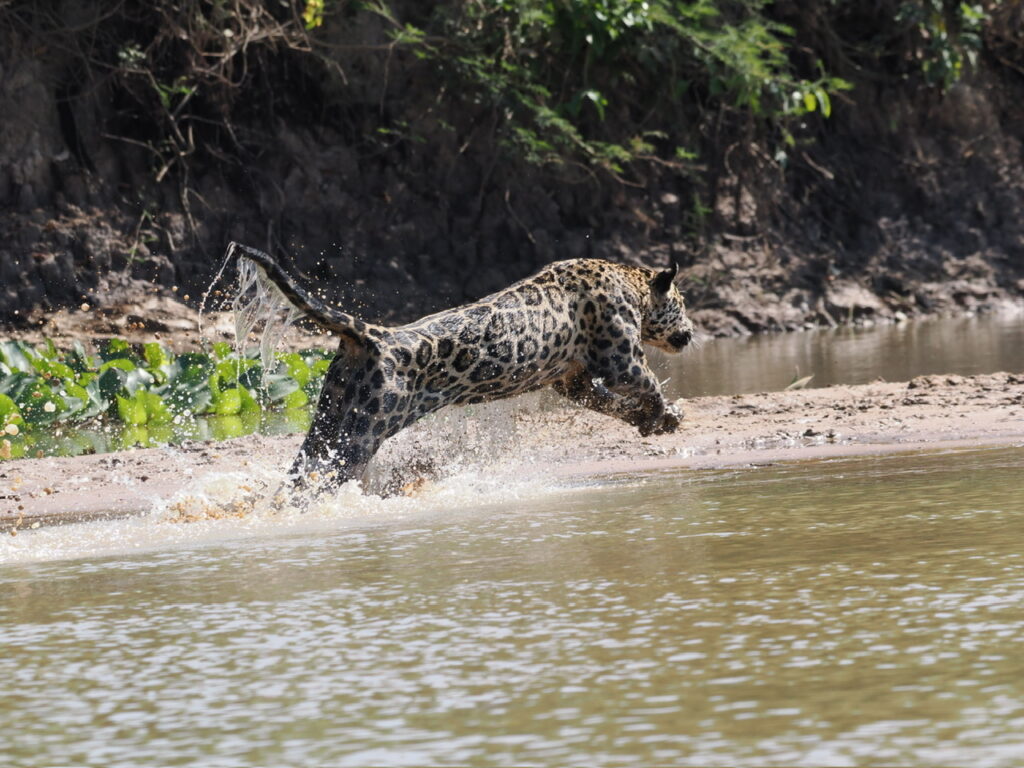
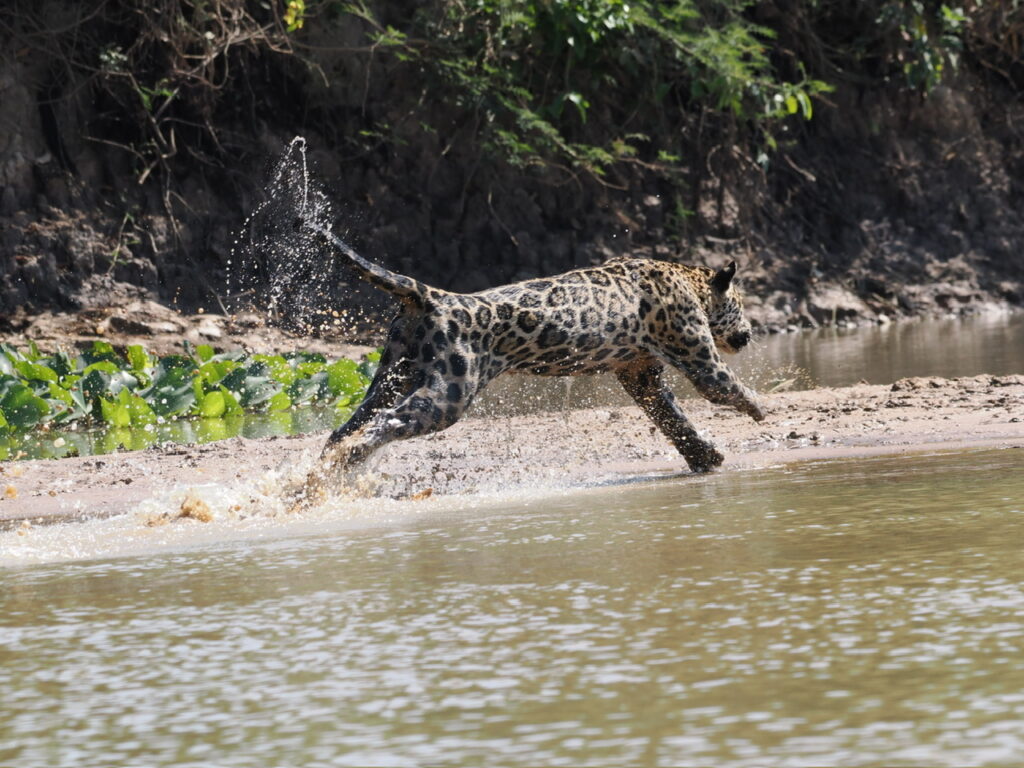
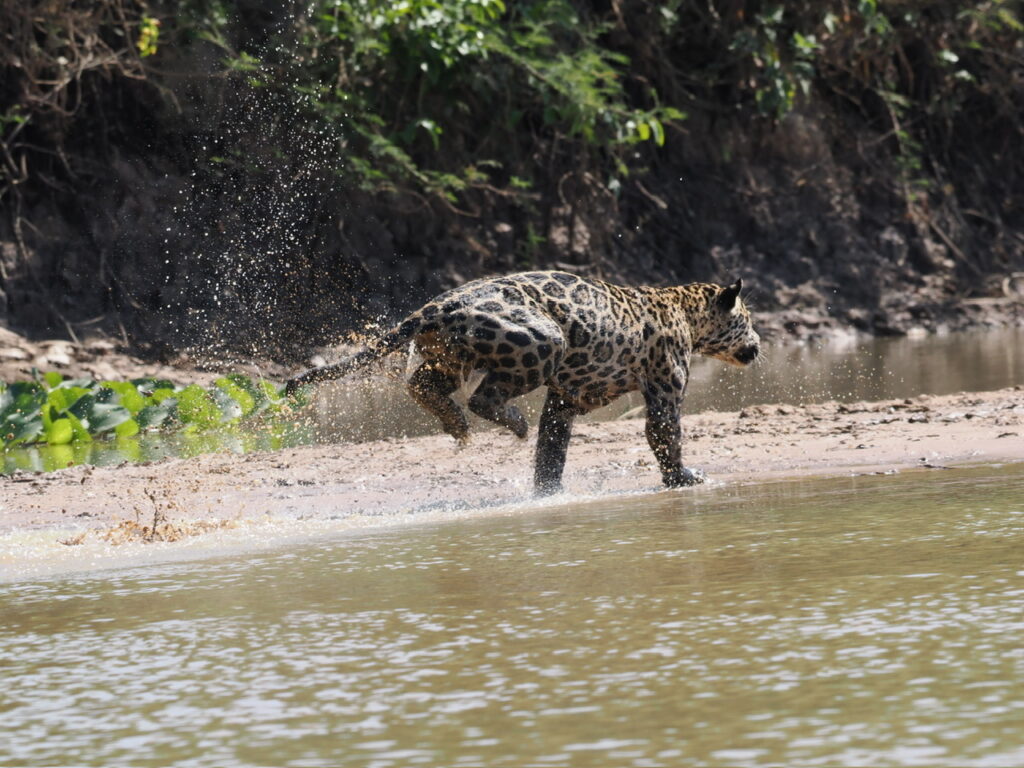
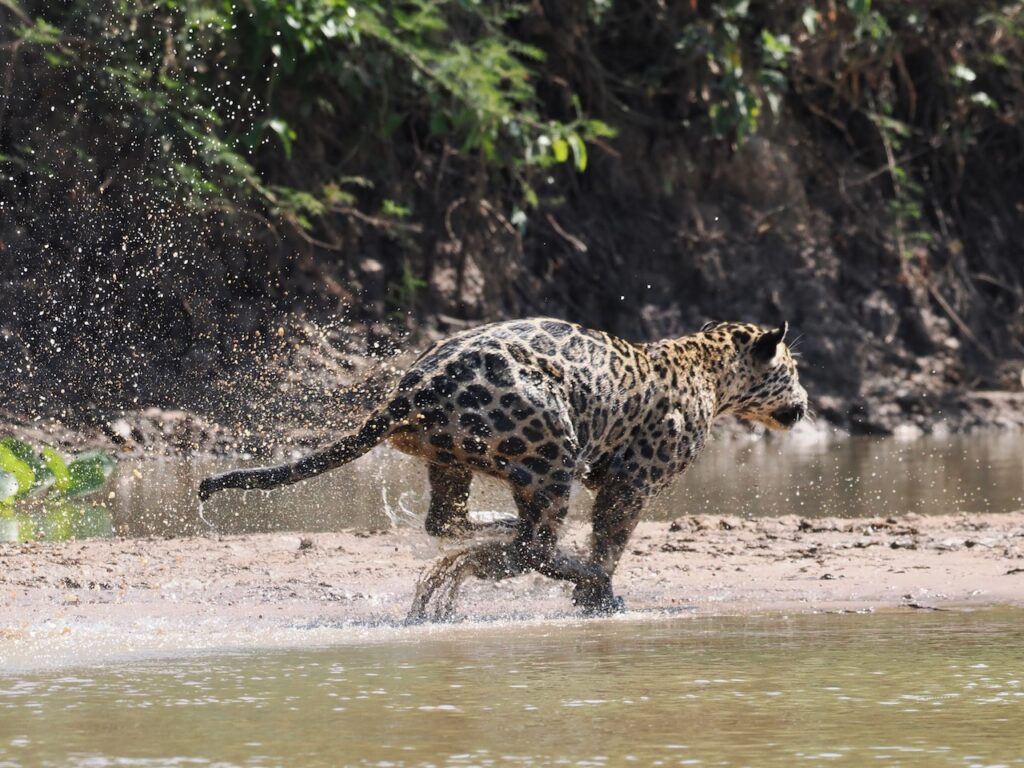
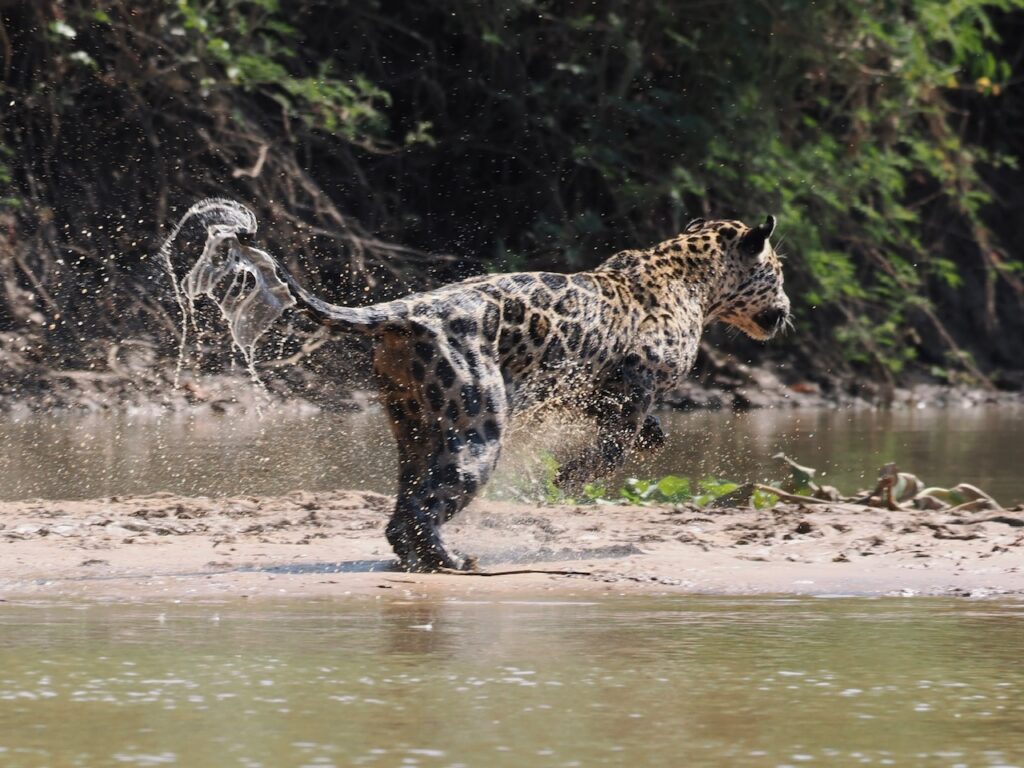
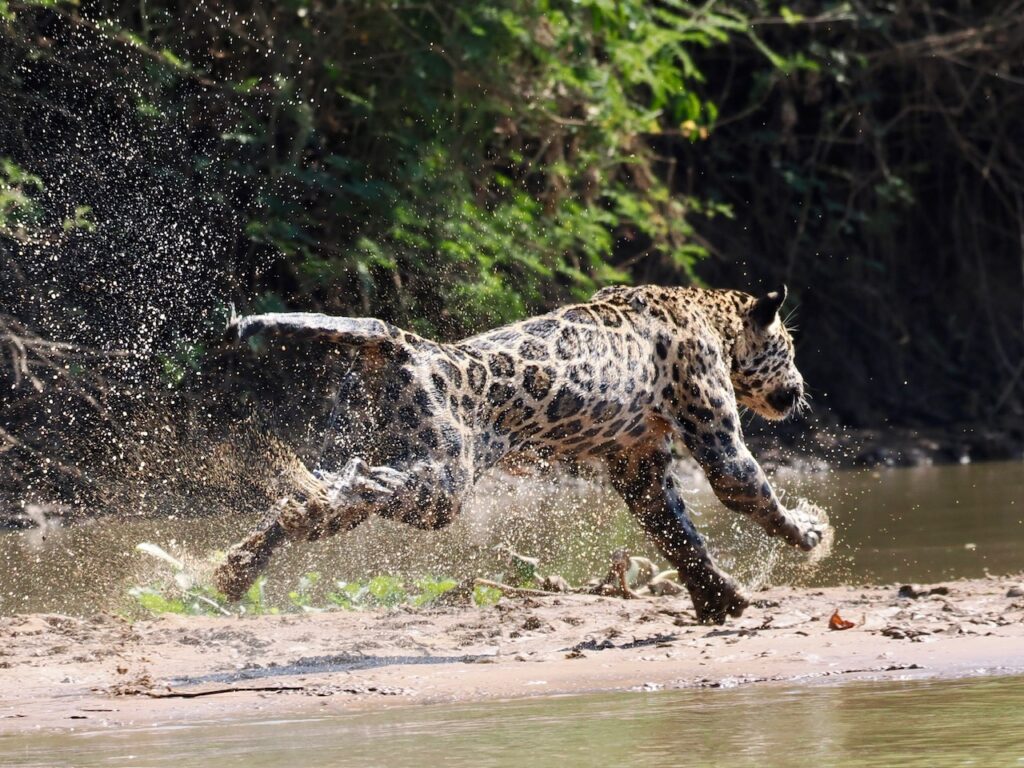
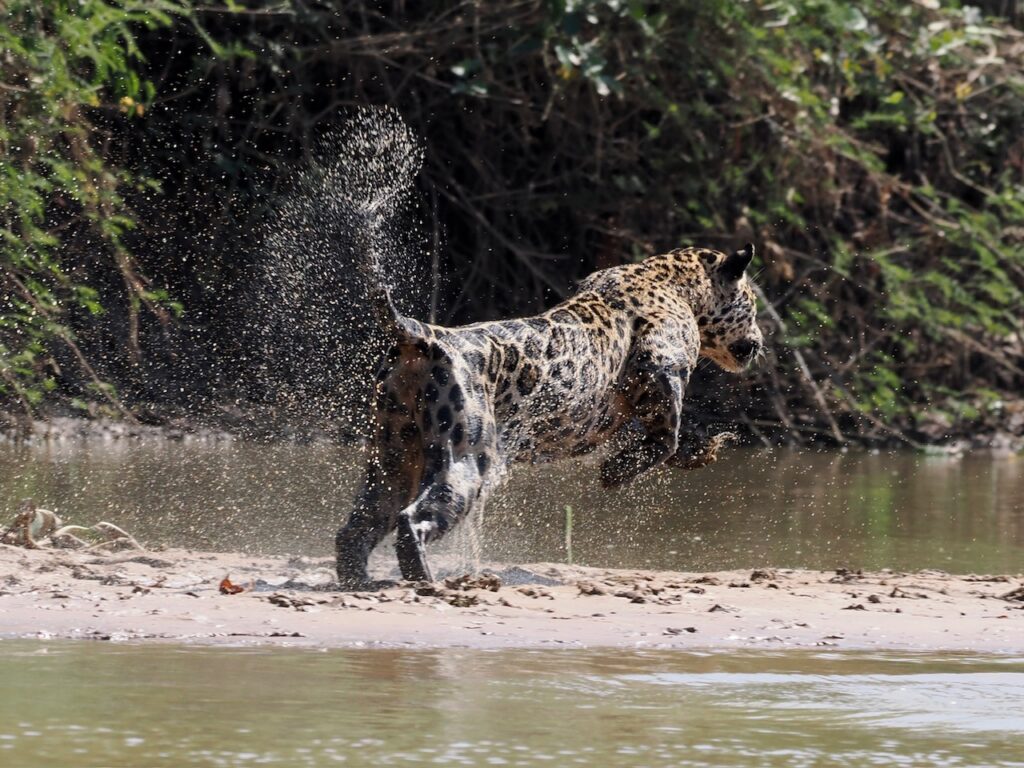
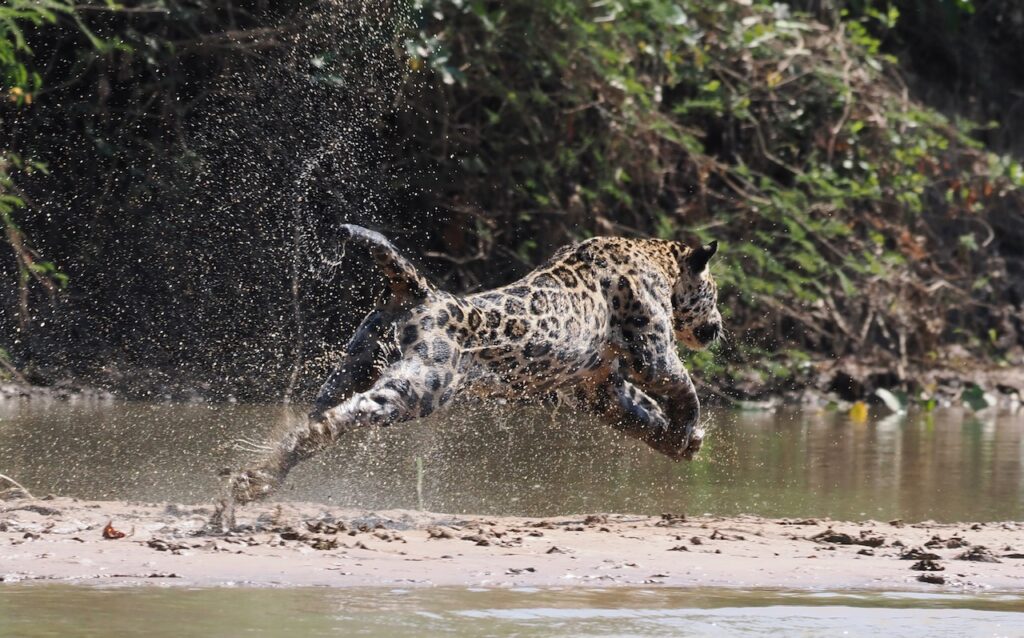
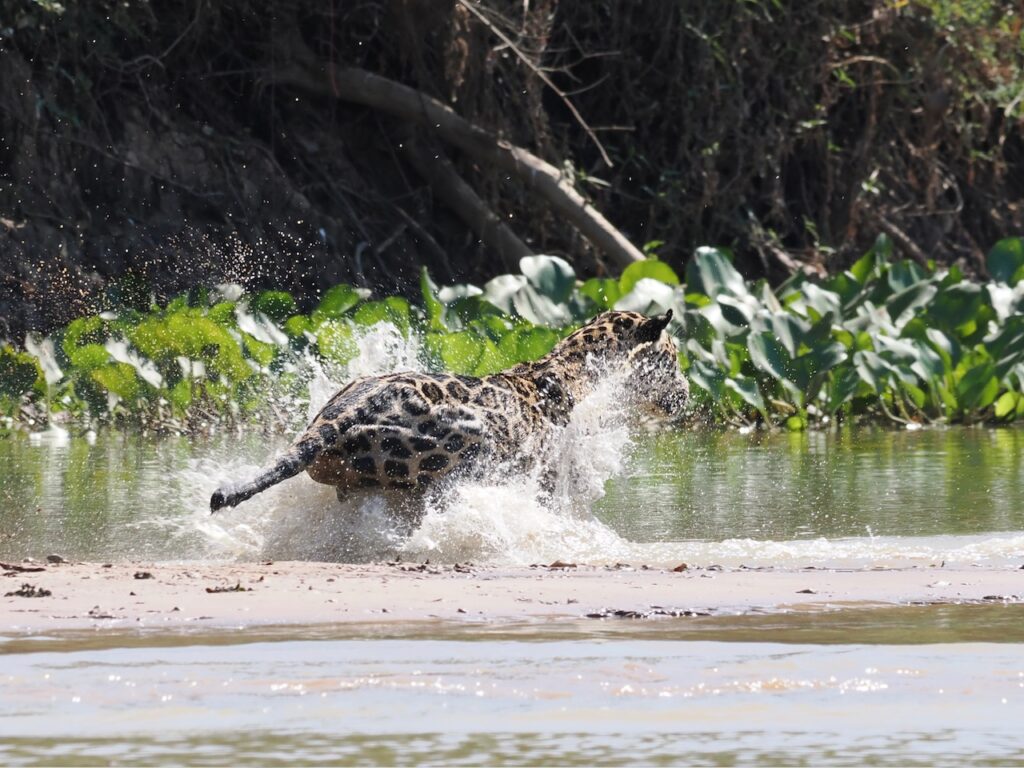
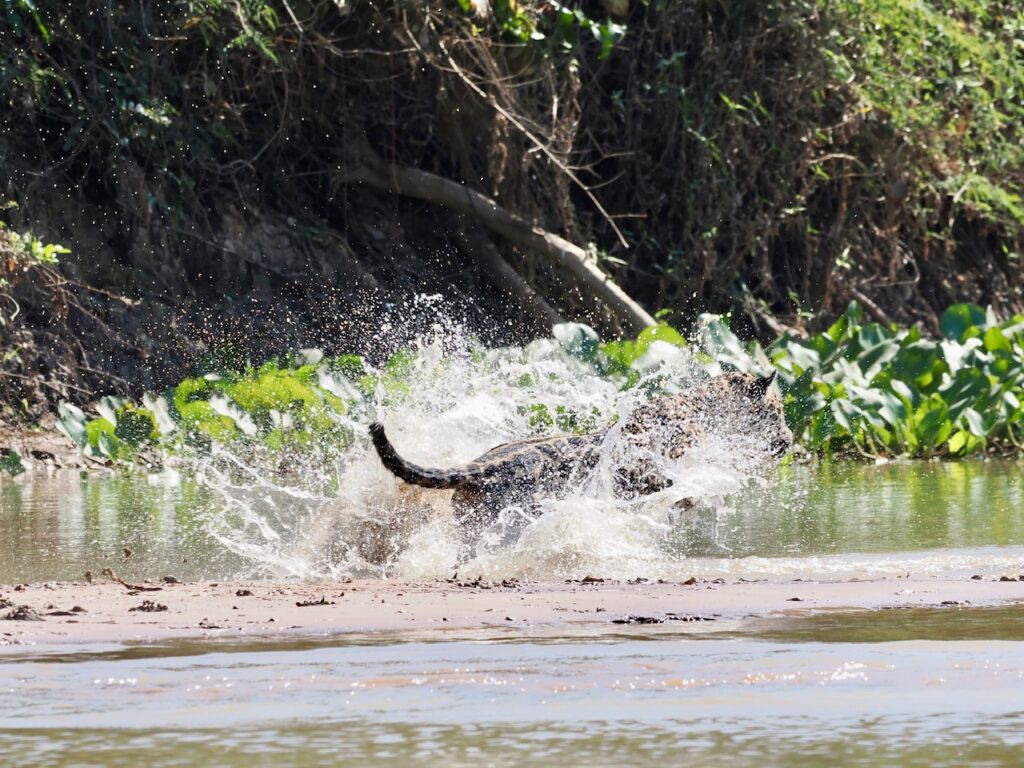
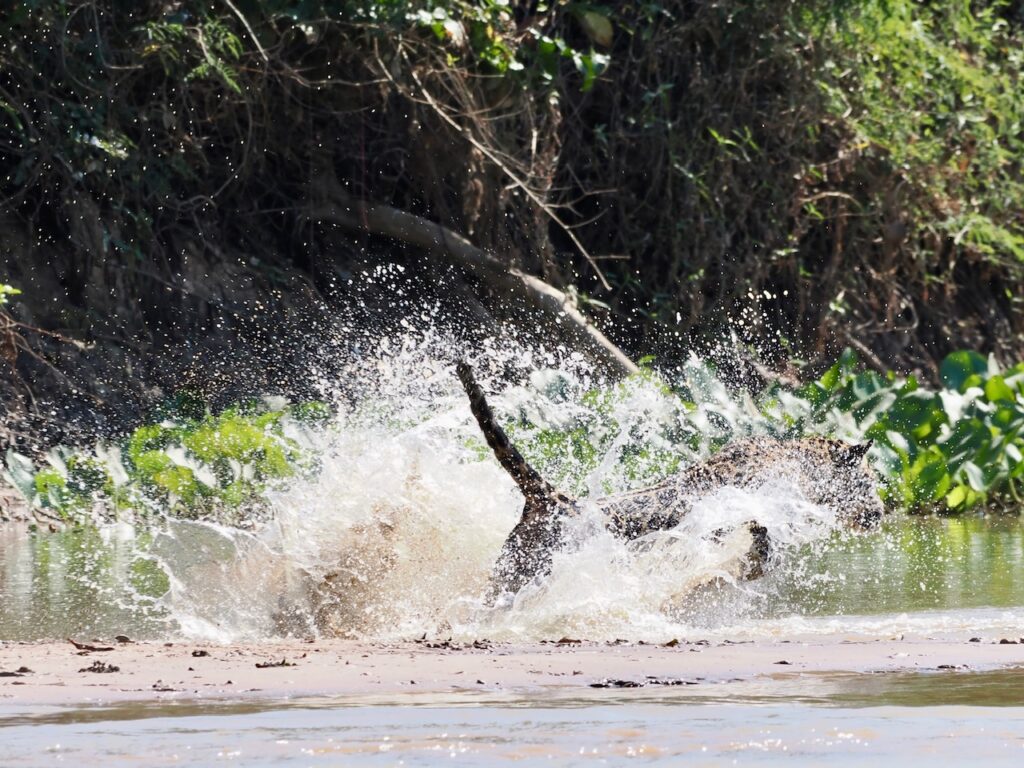
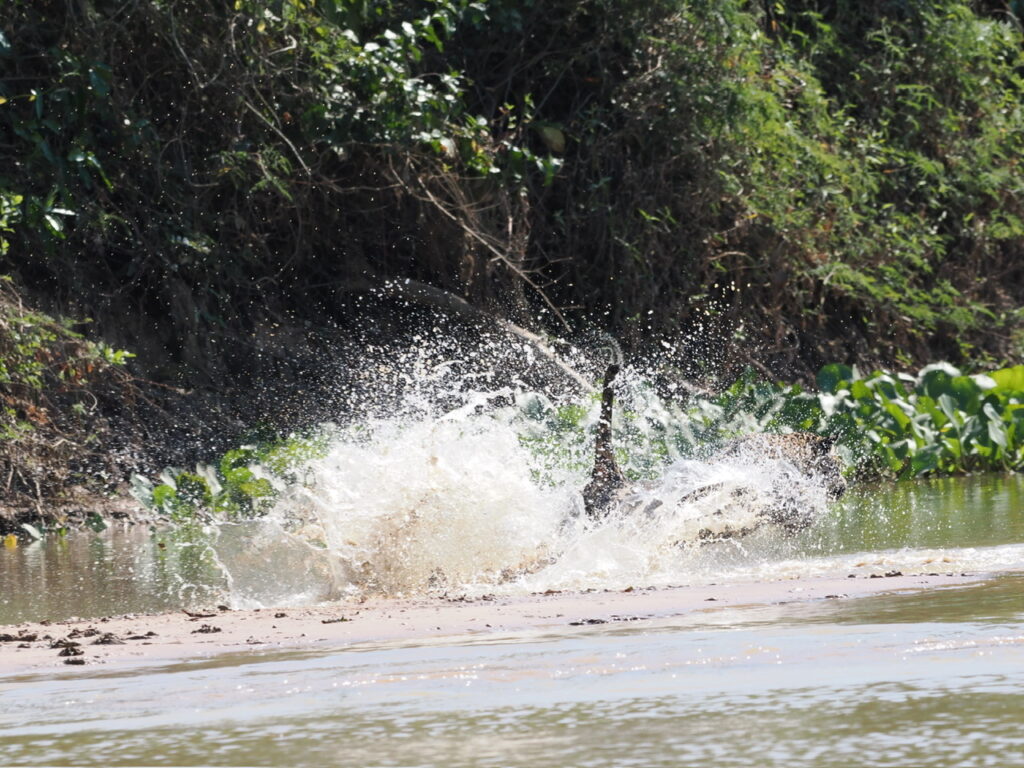
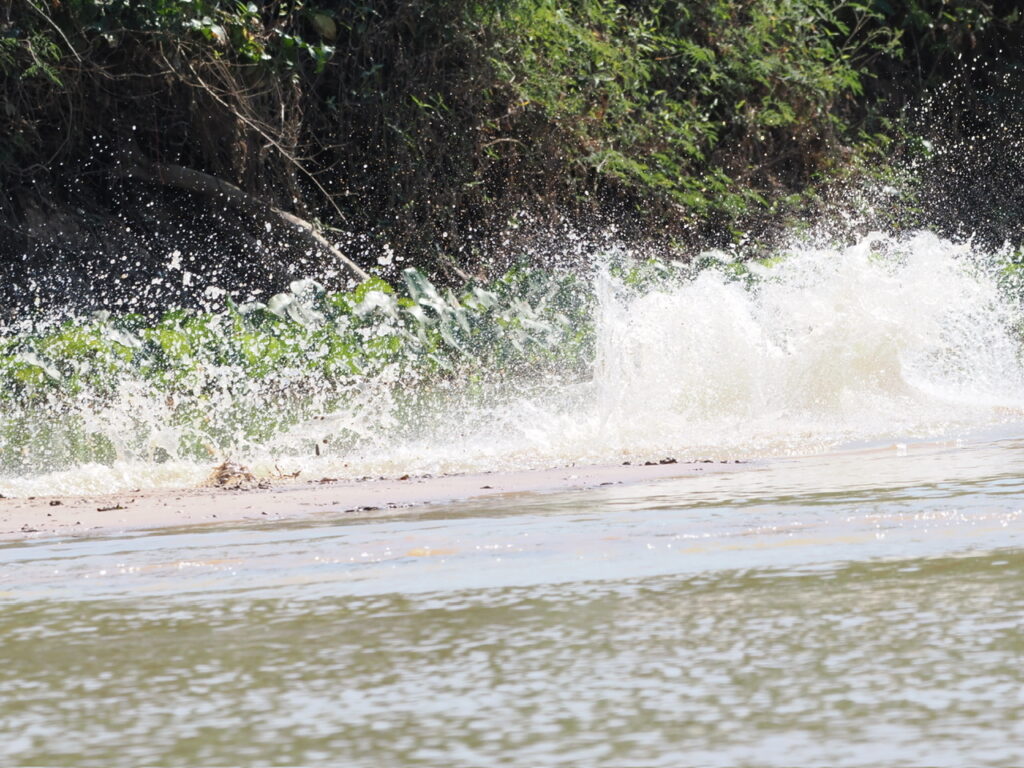
She walks down the bank and swims to the far side. She is very focussed on a distant caiman. The speed of the attack is unbelievable. I had Paul ready to video on his phone, whilst I photographed. It was so intense and fast. I can take 20fps and I was on 1/1000s but only caught glimpses of the action and Paul… well he was so in the moment he forgot to record it🤣
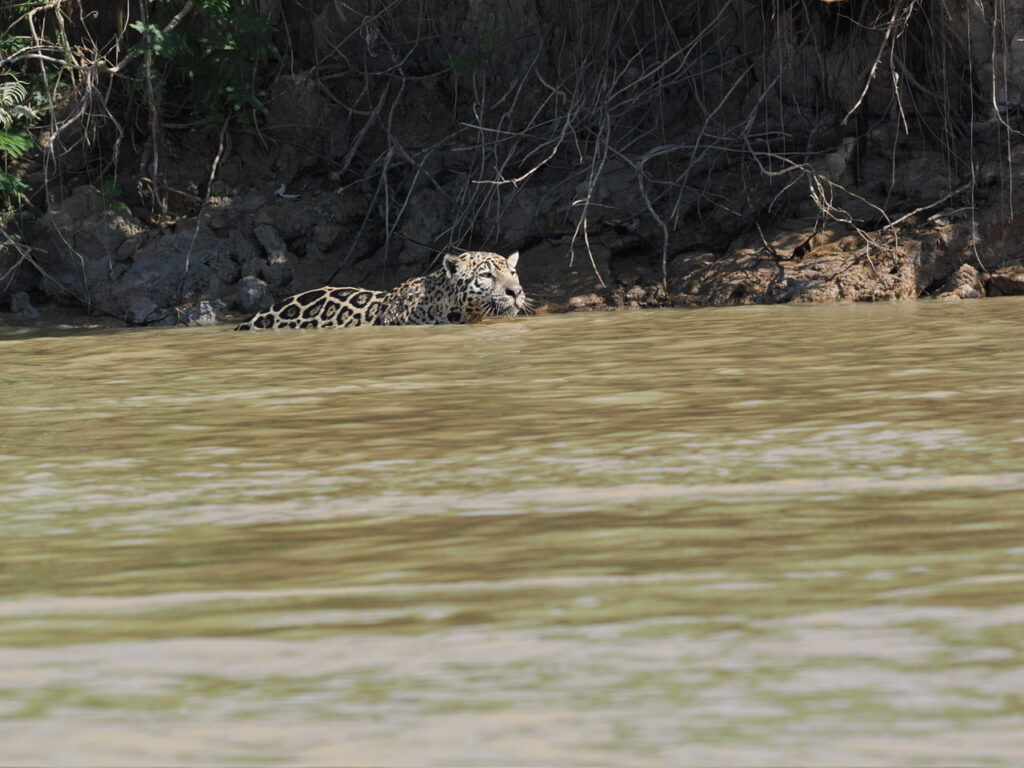
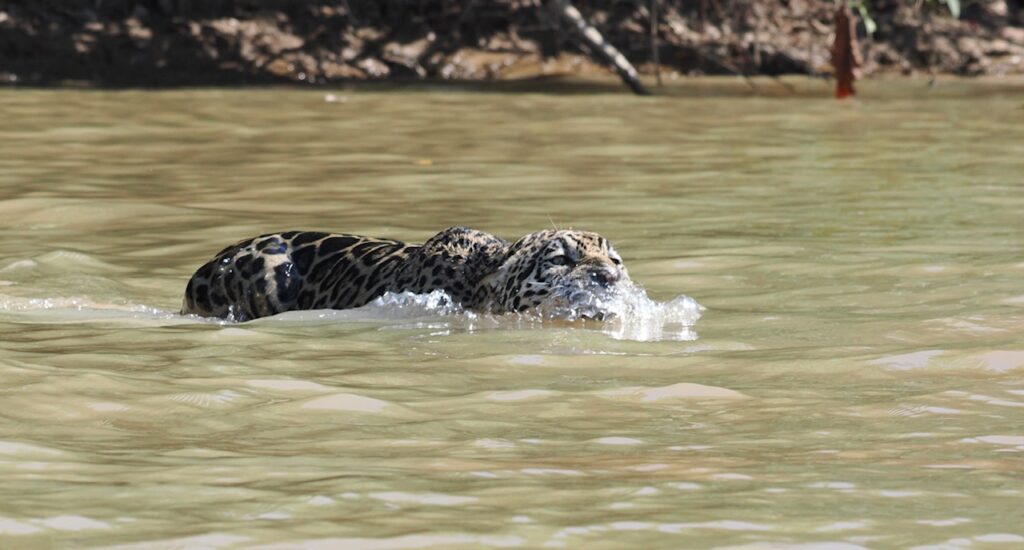
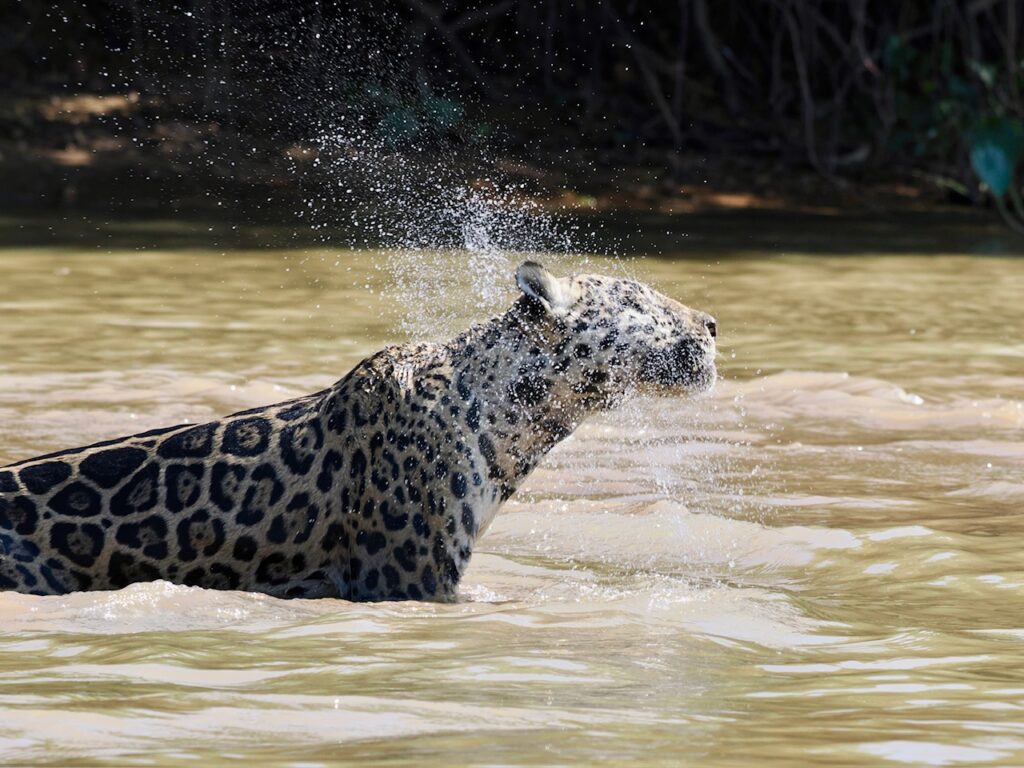
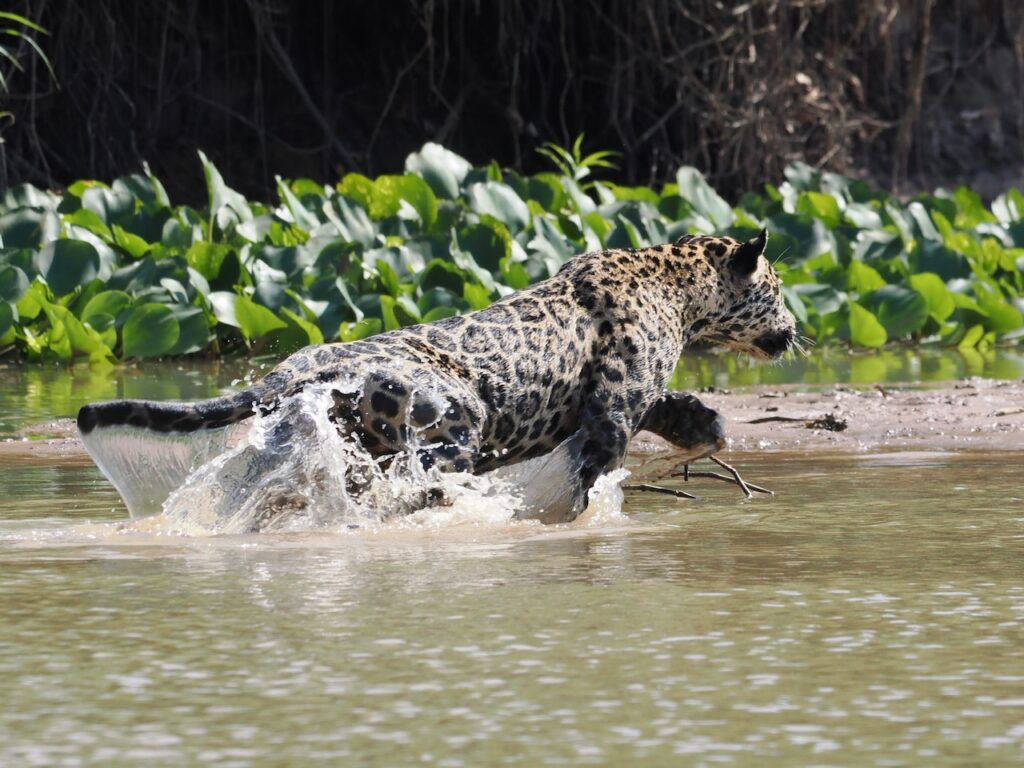
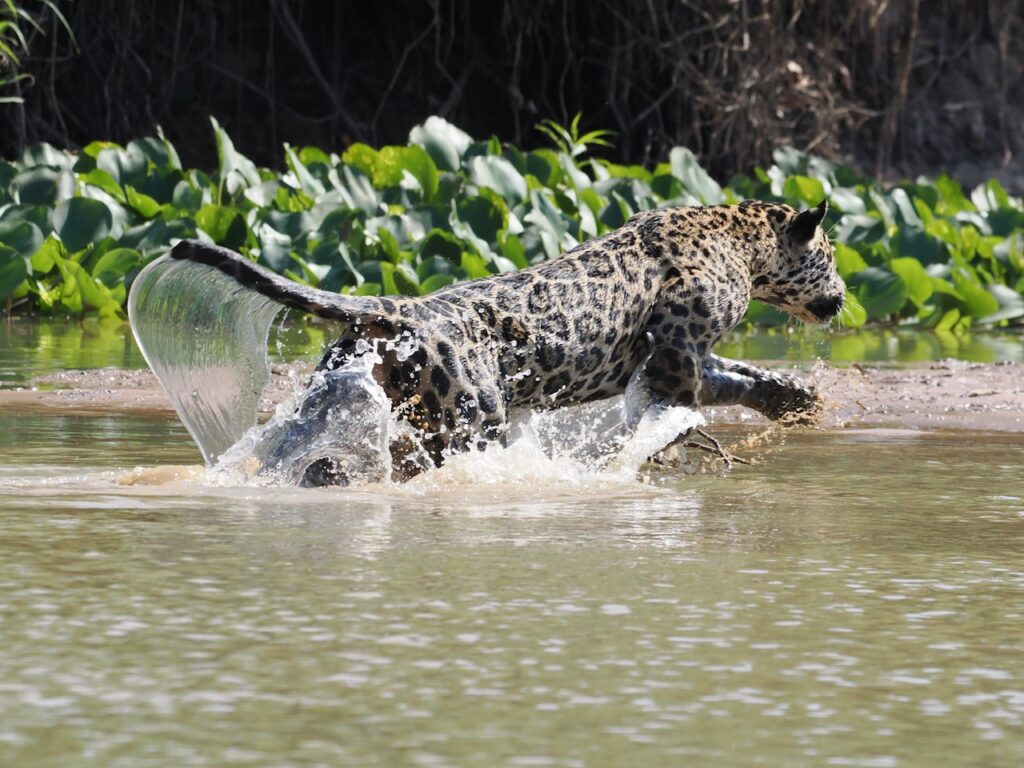
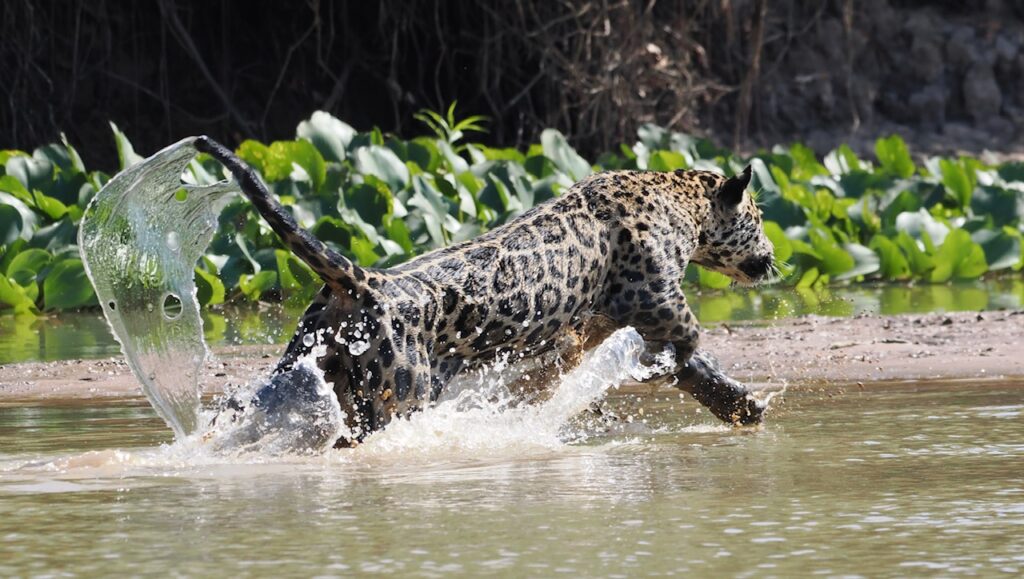
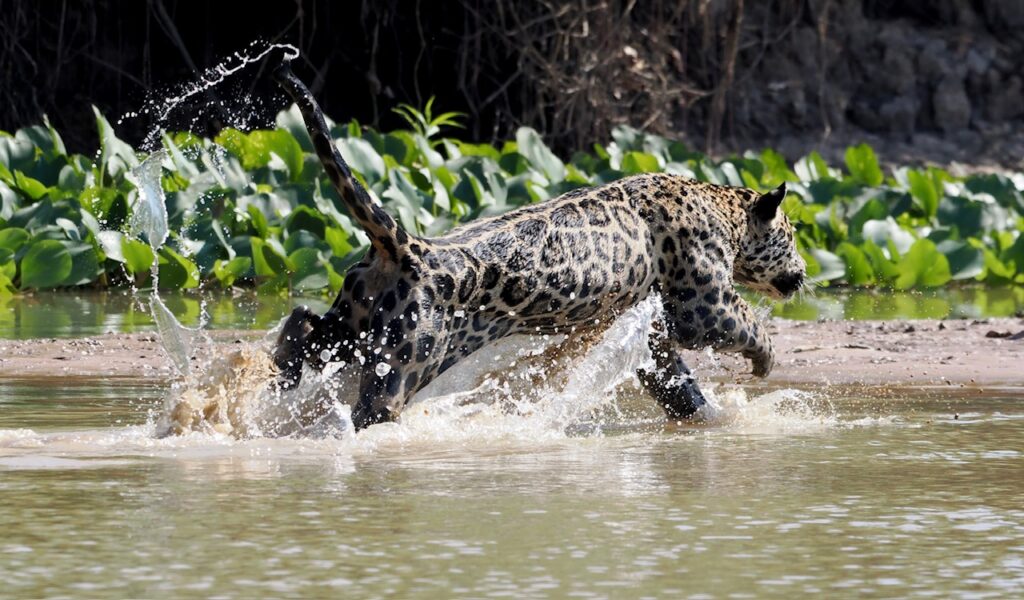
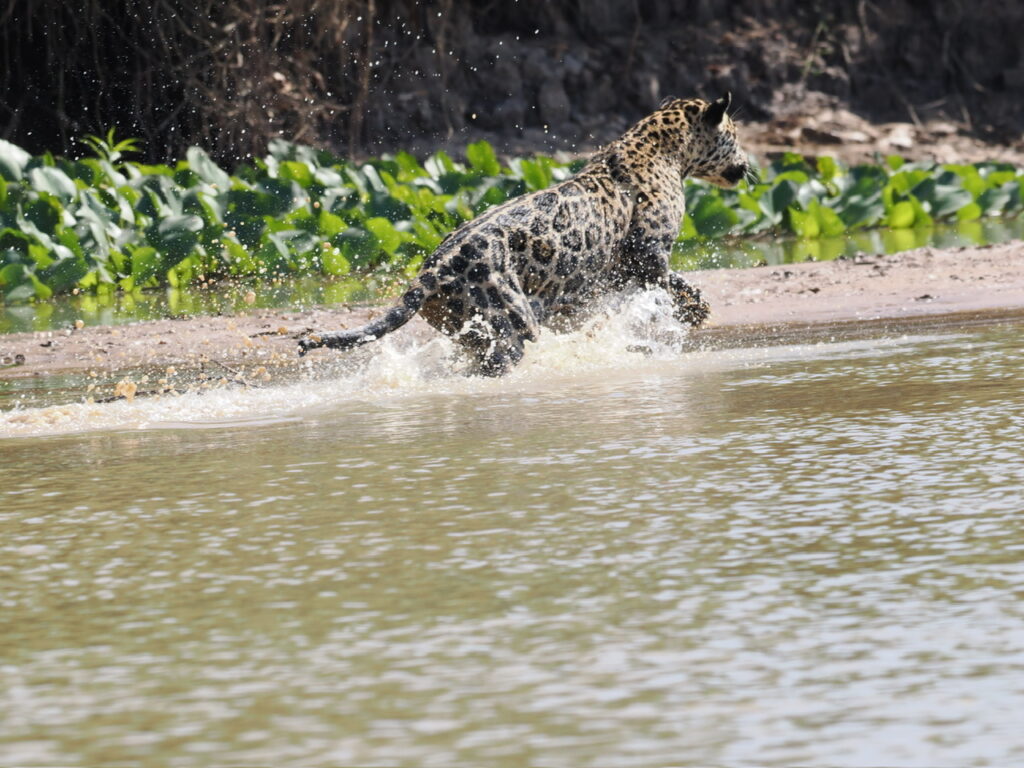
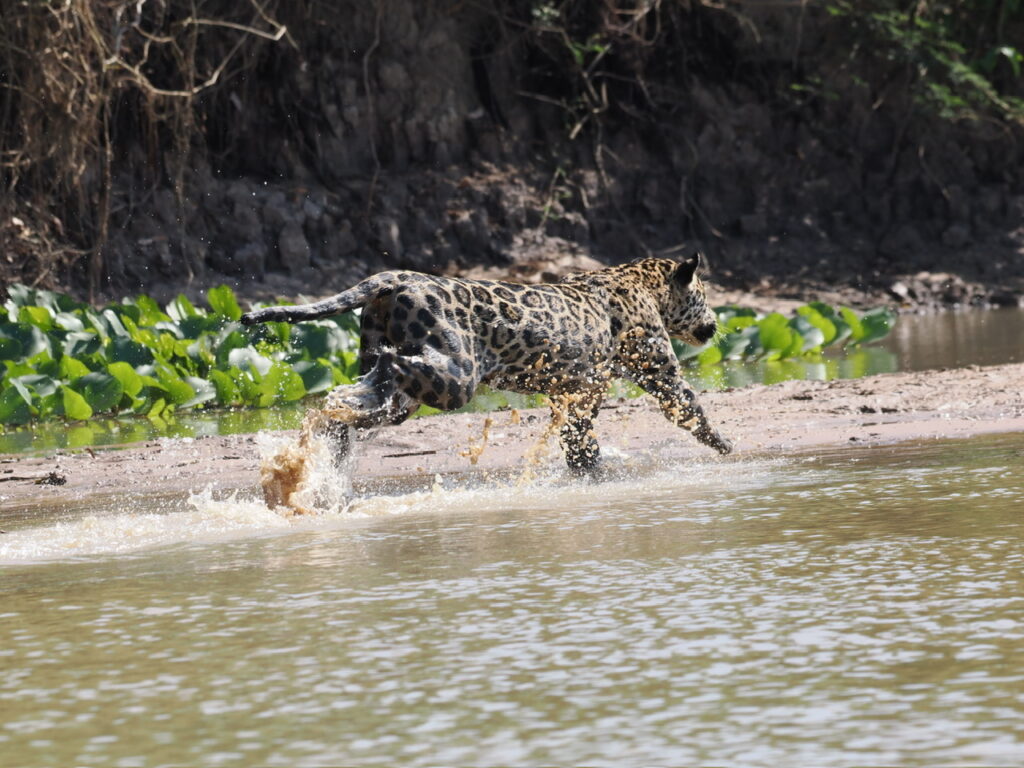
Still Ryan is not a jaguar to give up so easily and immediately hones in on another caiman. She moves imperceptibly slowly. Inch by inch she advances. There is not a ripple in the water. At the snail’s pace she is moving this may take a while, and indeed it does. After 15 minutes she is close. I can see her thigh muscles tensing and haunches being drawn forward ready to pounce. Then it happens. It is as though she has been catapulted out of the water. The speed is just incredible. She pounds forward and then there is an explosion of water. It is impossible to know what is happening until her head appears a few yards away. All that effort and no result. Poor Ryan and lucky caiman. Sorry, there are a lot of photos, but I want you to experience a little of that magical encounter.
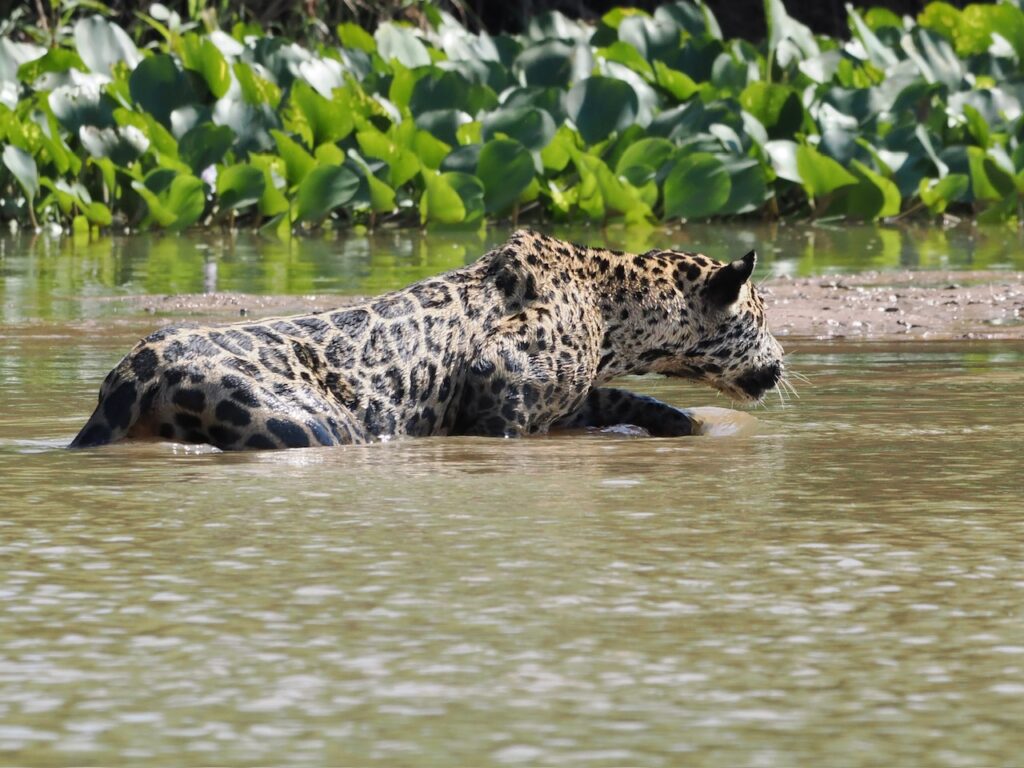
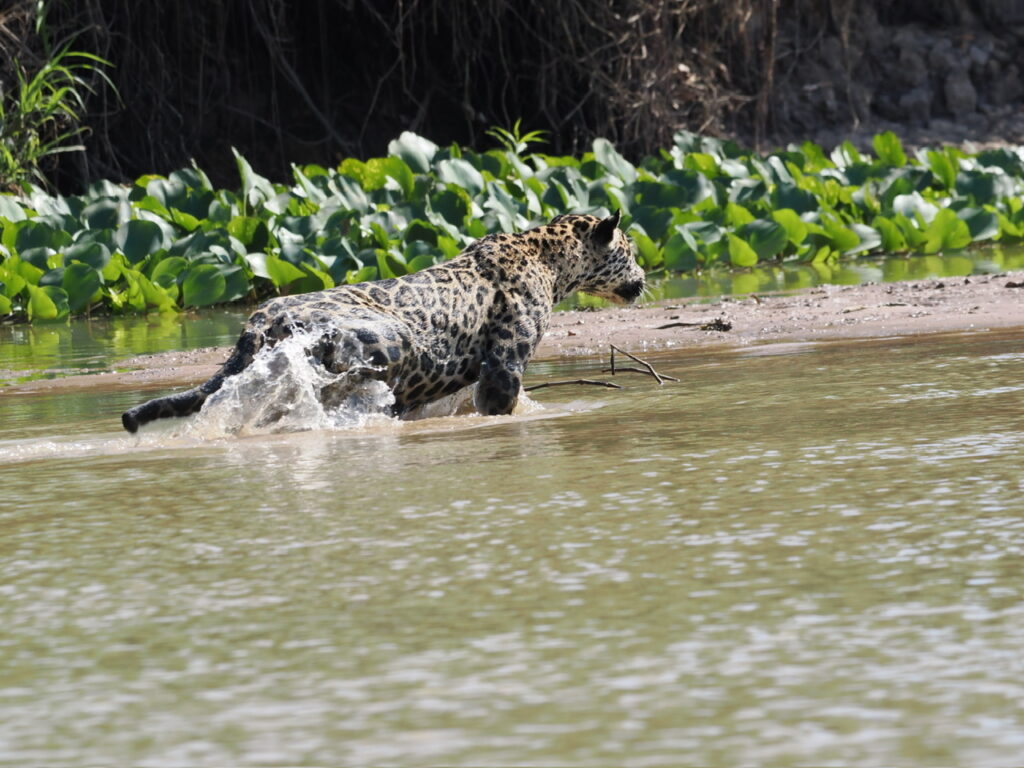
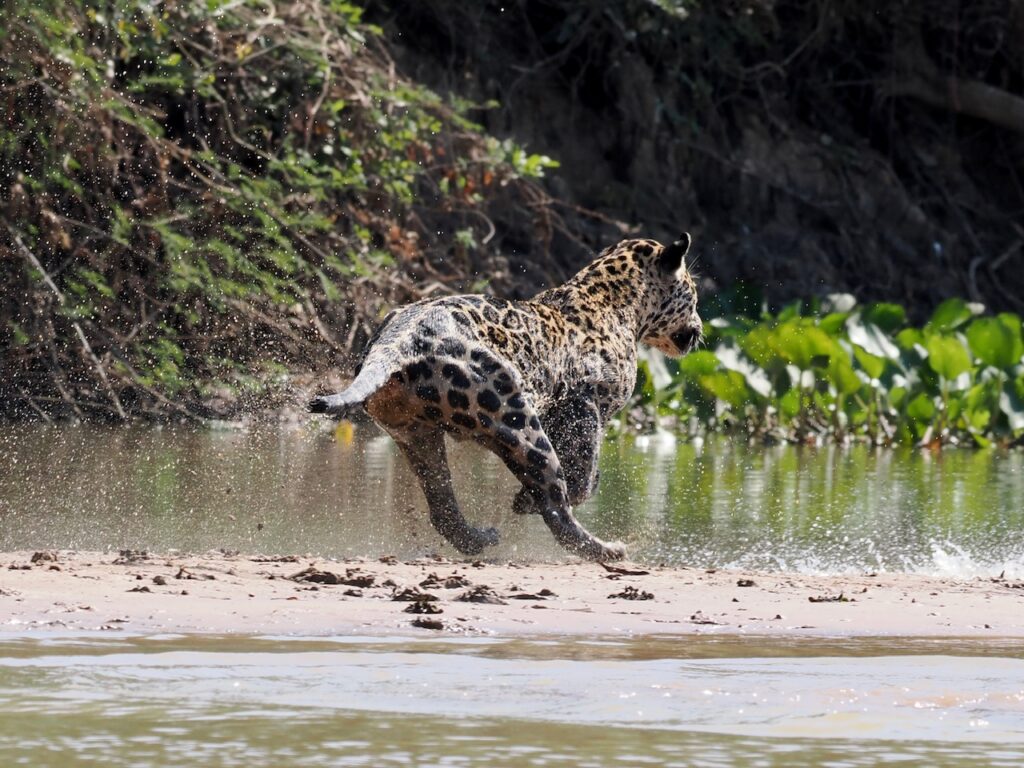
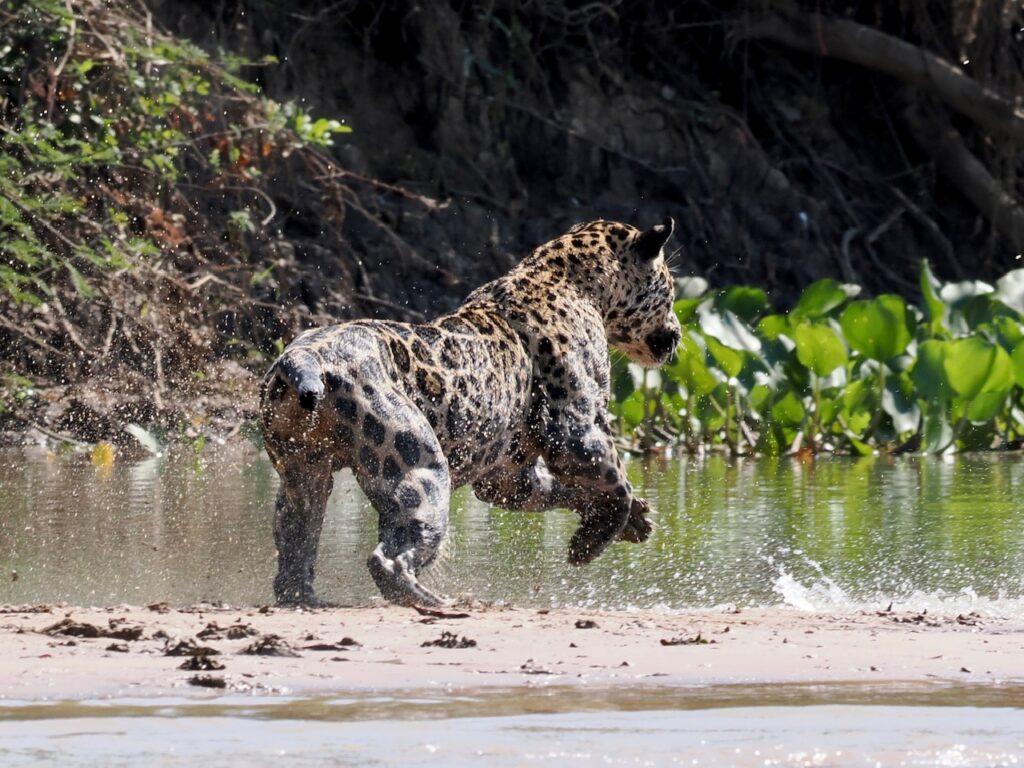
Well that was amazing and Ryan is really putting on a show. She swims in the direction of the sandbank where the skimmers are nesting and where I was walking an hour earlier. We reposition and wait. There are now a lot of boats and everyone is jostling for position. There is a certain amount of bumping. Definitely keep your fingers off the side. Ryan appears and runs along the beach, disturbing the skimmers as she goes.
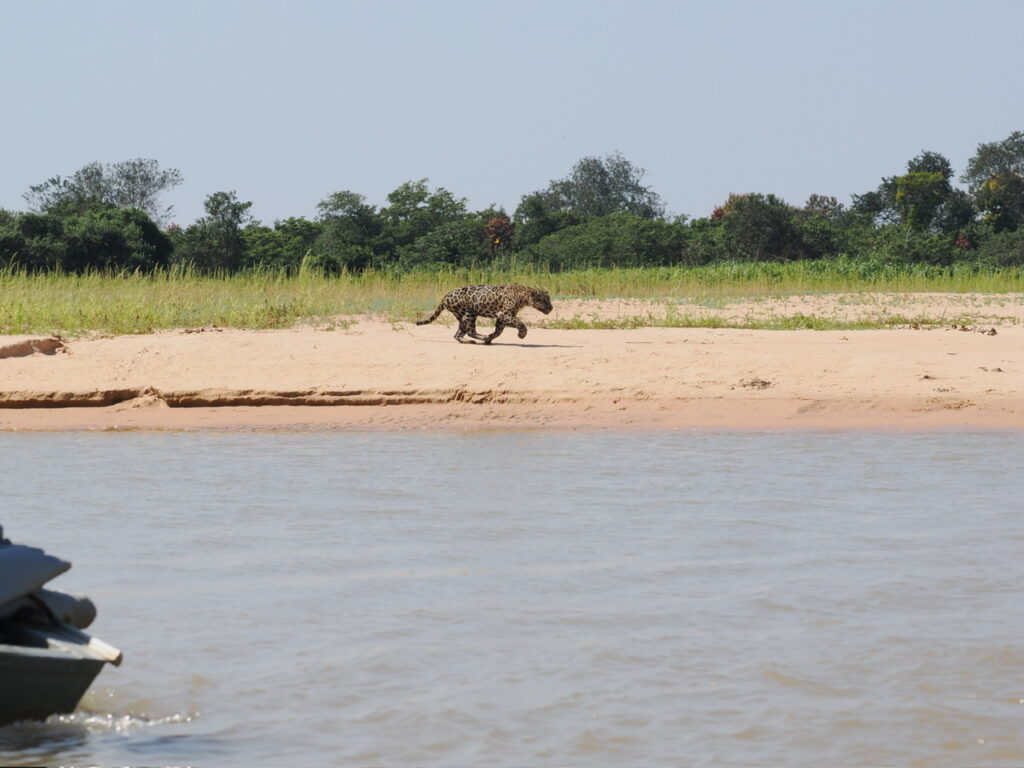
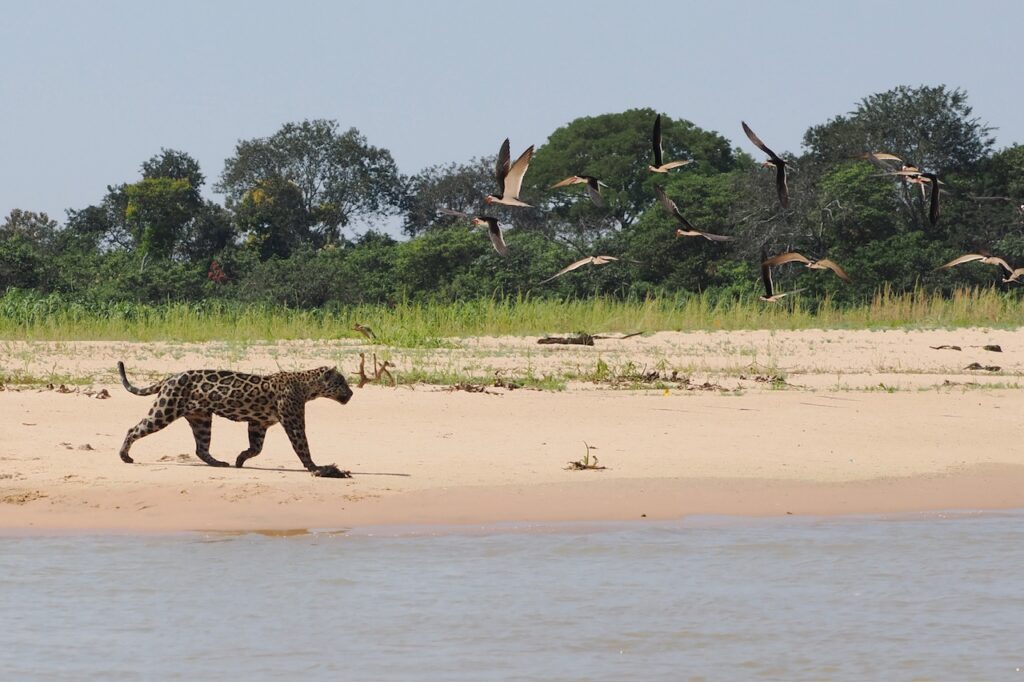
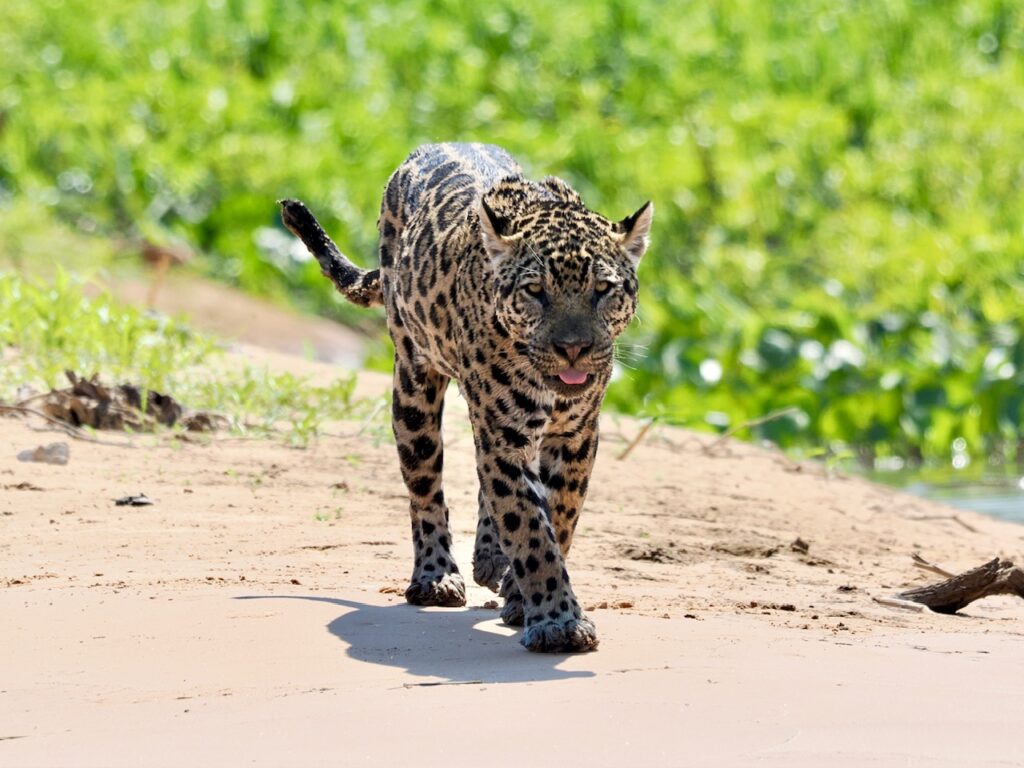
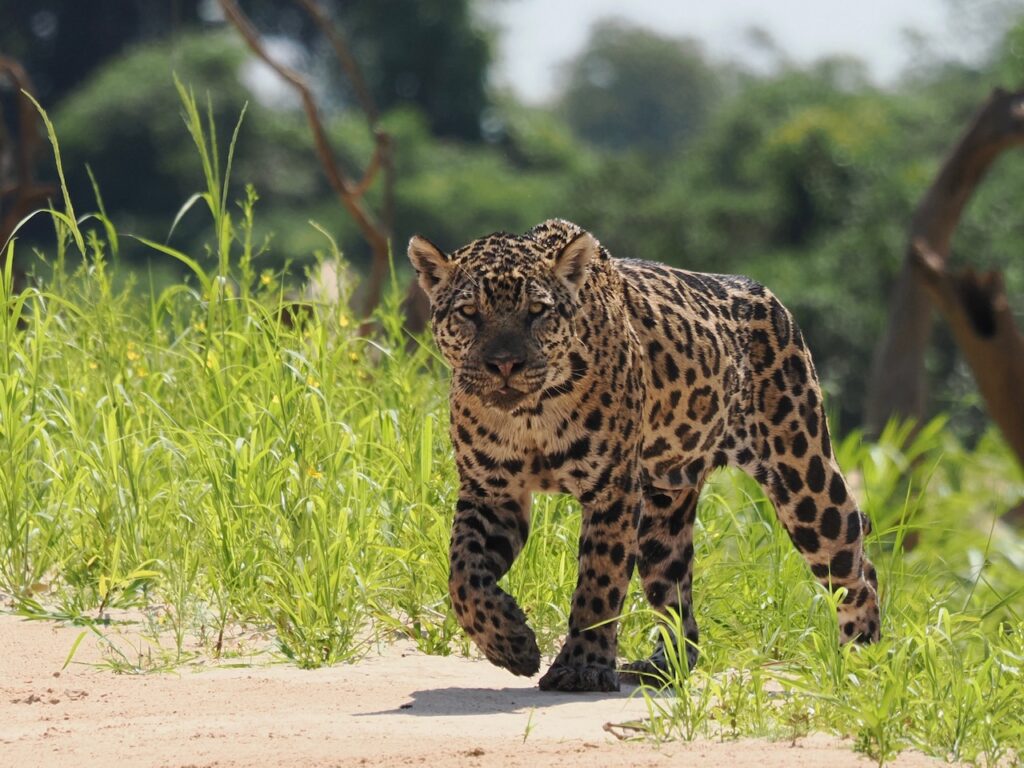
She walks down to the water and starts to swim. I think she is going to cross, but am wrong. Bruno is brilliant at anticipating her every move. We leave the other boats and set up position at the far end of the sandbank. Bruno is sure she will appear here. She does. We are in prime position. I cannot believe what I am seeing. Ryan emerges from the grass and walks straight towards us. She is filling my camera lens. I zoom out. What a powerful and over-whelming experience. My heart is pounding. I have tears in my eyes. I cannot believe what is happening. One of those very, very rare moments with nature.
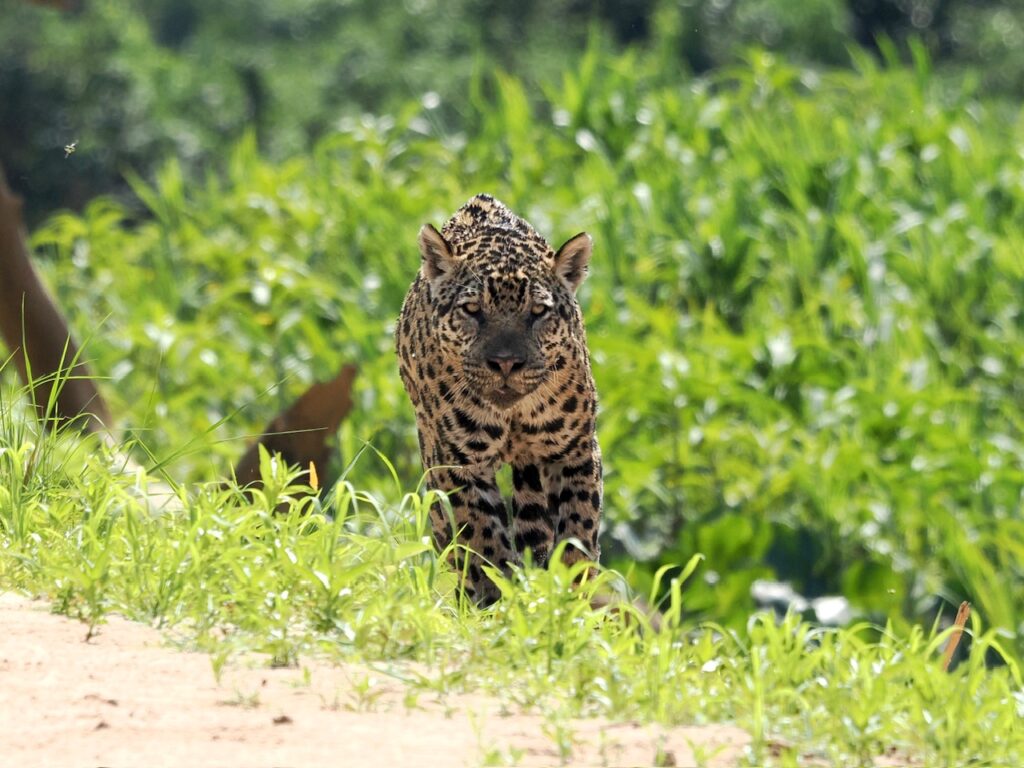
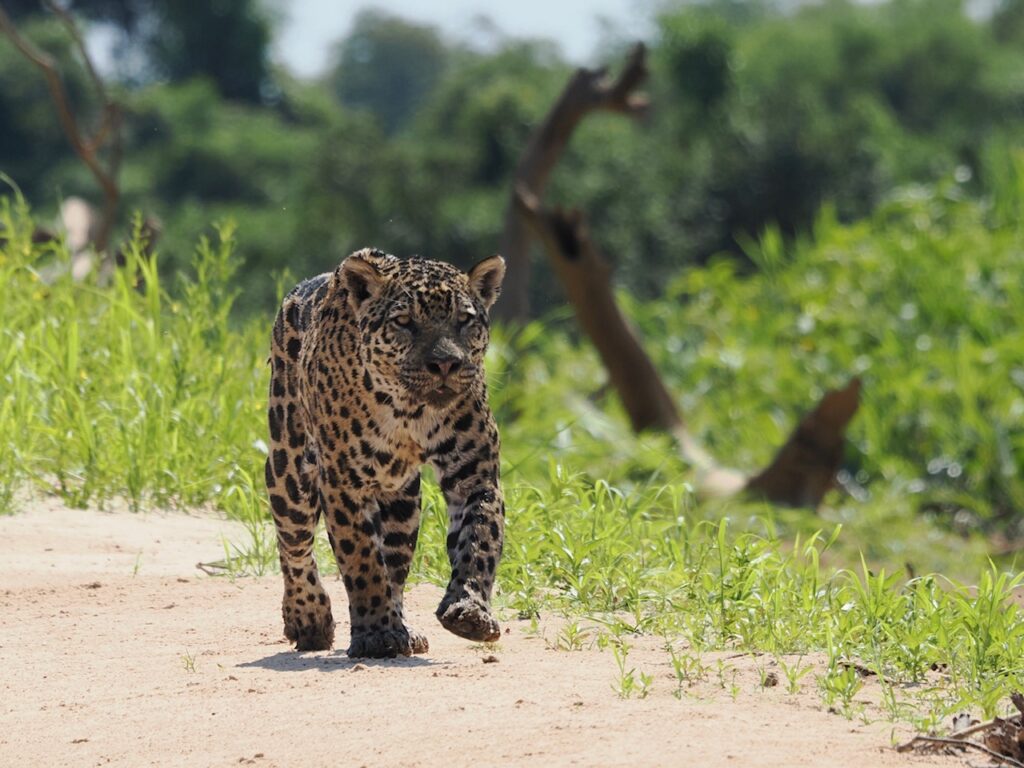
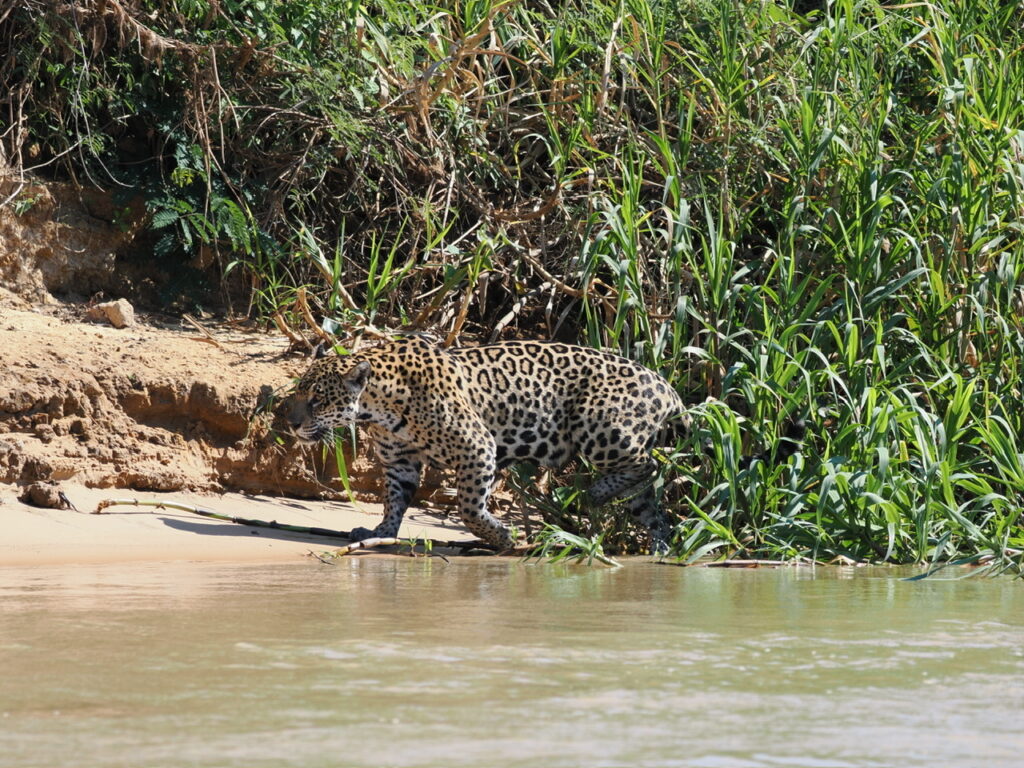
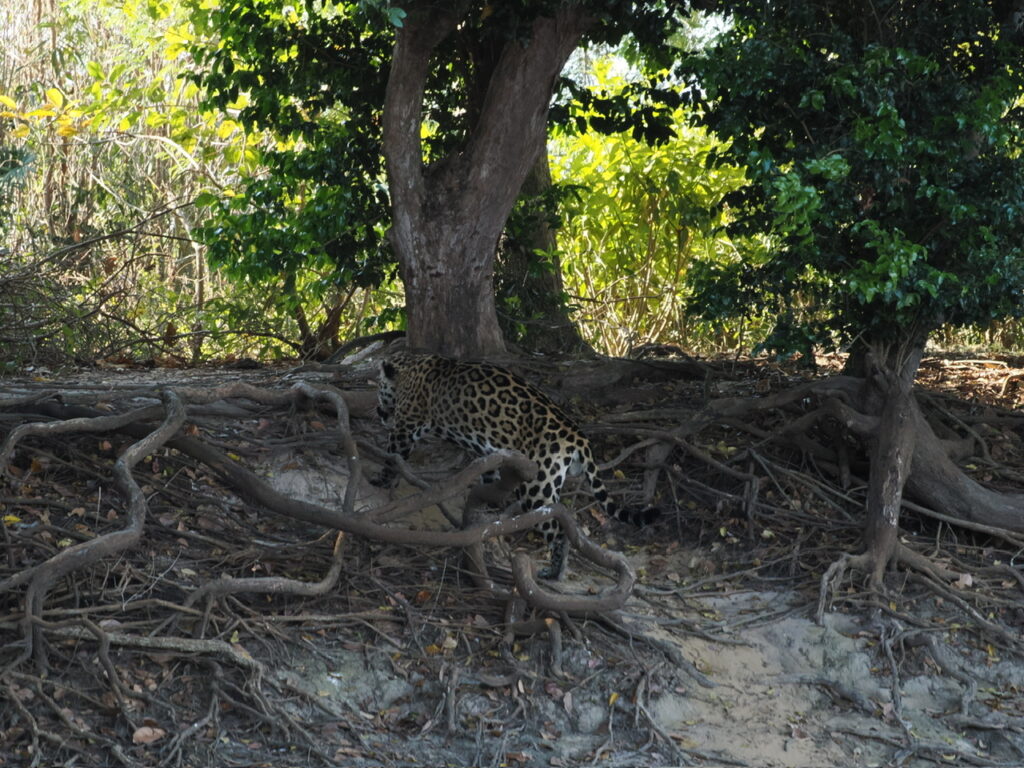
Ryan ignores us completely, re-enters the water and proceeds to swim along the river bank. She looks for a place to exit and eventually chooses the exact spot where we saw Juliet earlier. I have looked at the times that I took photos. It turns out that we spent 1.5 hours with Ryan. What an absolute privilege.

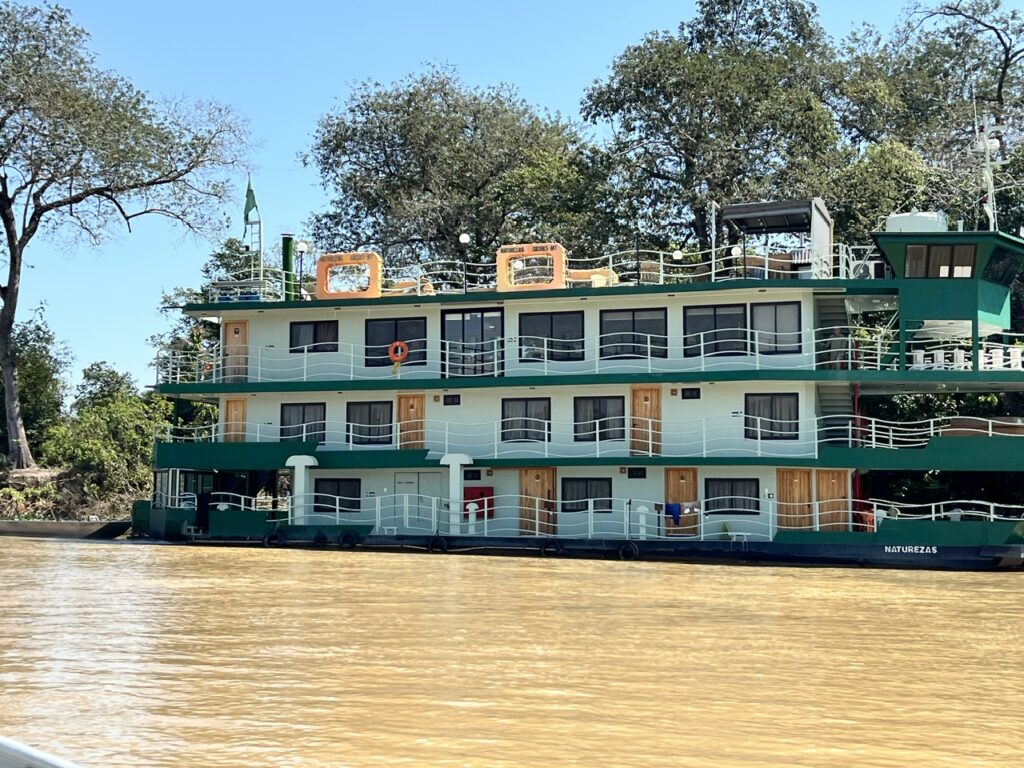
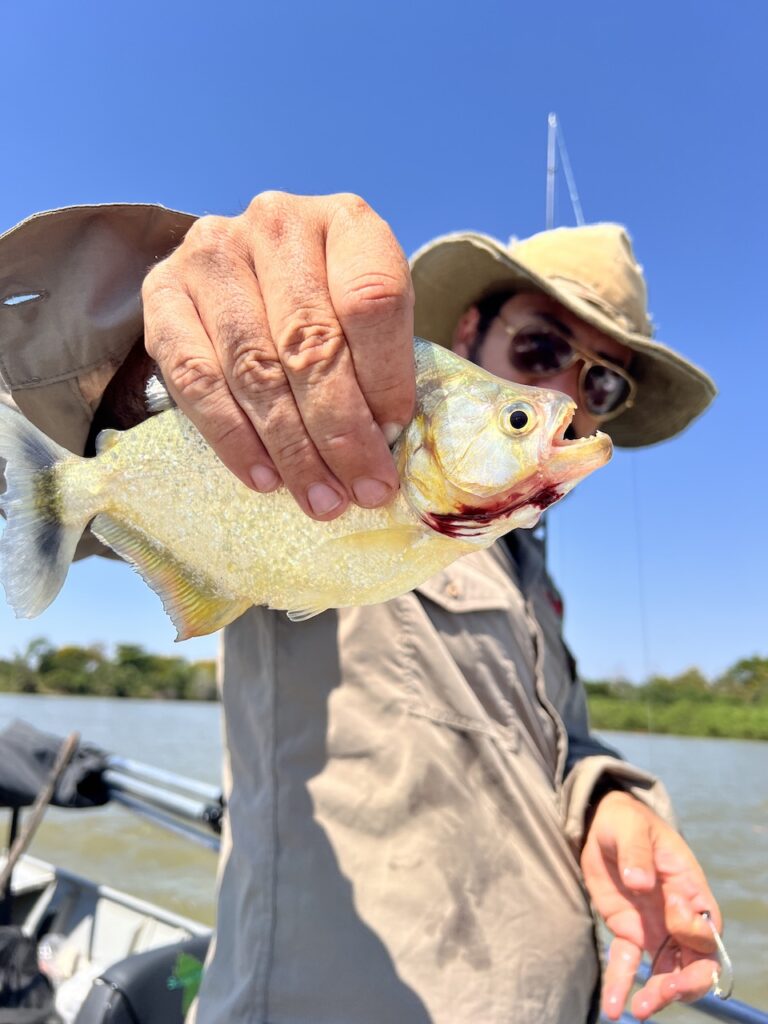
Time to head back for lunch. We pass Naturezas, where we stayed last week. I am obviously still logged on to the WiFi and my phone pings with messages as we pass by. We stop at the confluence of the Cuiaba and Piquiri Rivers, where Bruno has seen dorado in the past. There is a clear line in the water between the muddy Cuiaba River and clearer Piquiri. We don’t catch a dorado but Bruno catches a piranha and Paul has another fly bitten in half by one.
It is only fair that after such an exciting morning, we concentrate on the fishing. Having got back at 11.45 there is just time for lunch and a freshen up before heading out again at 14.00. We go back to the river confluence. Moor in the shade of some trees and Paul fishes, but the fish are not co-operating.

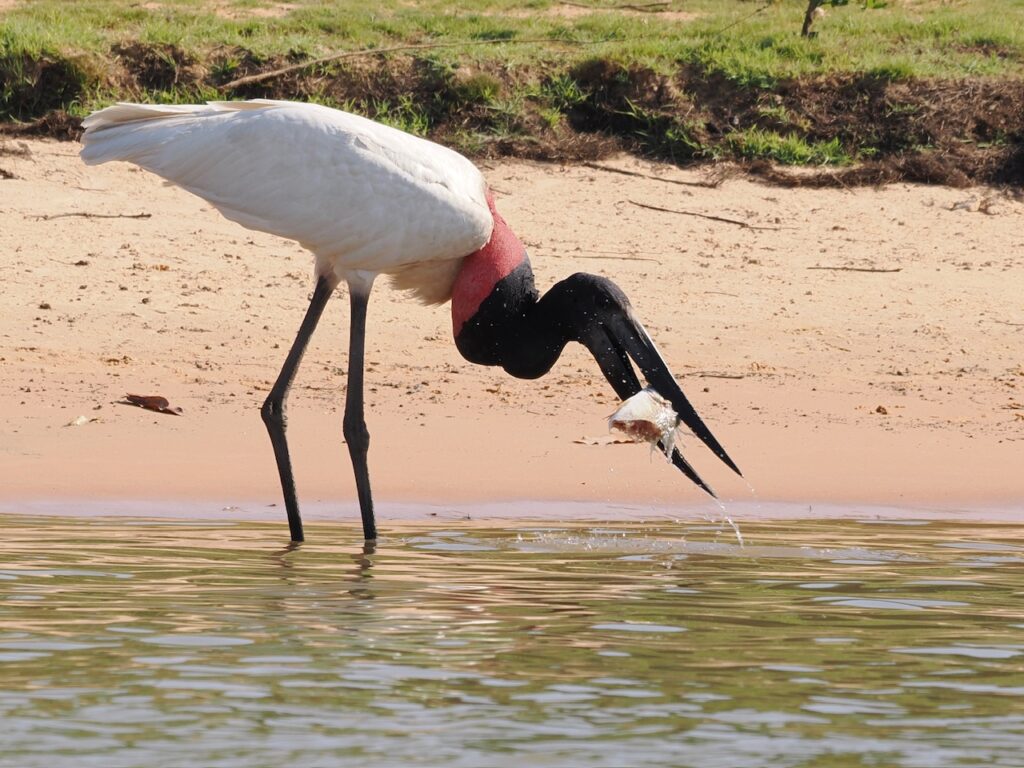
I watch the jabiru storks on the bank opposite. One of them has the head of a fish. It is easy to see that the other half has been bitten clean off by piranhas. This is not a river to sloosh your hands in! It is too big for him and he spends at least 10 minutes trying to work out how to swallow it. He does eventually succeed.
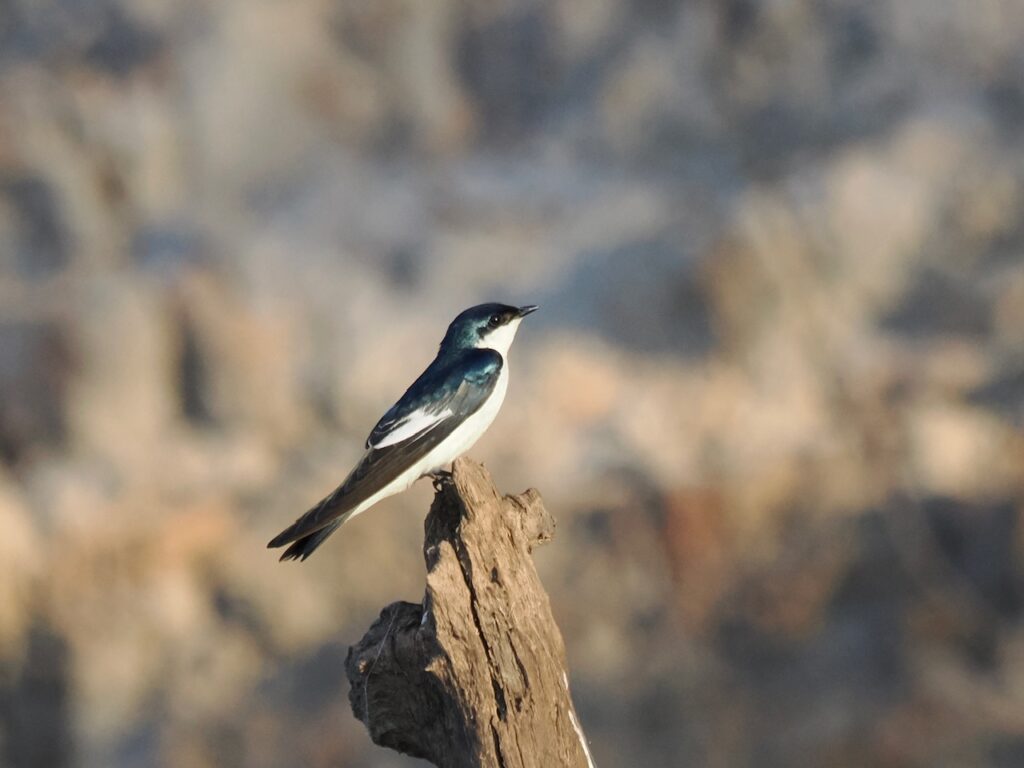
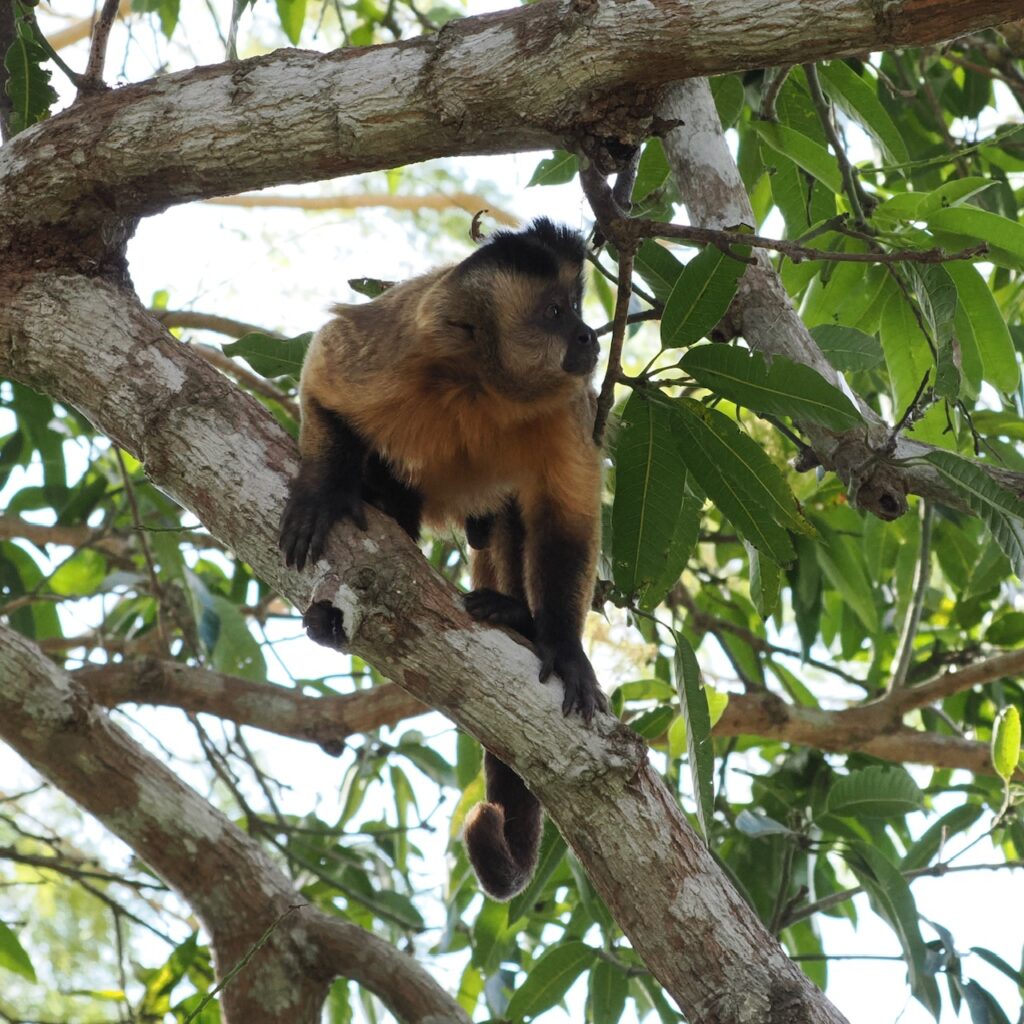
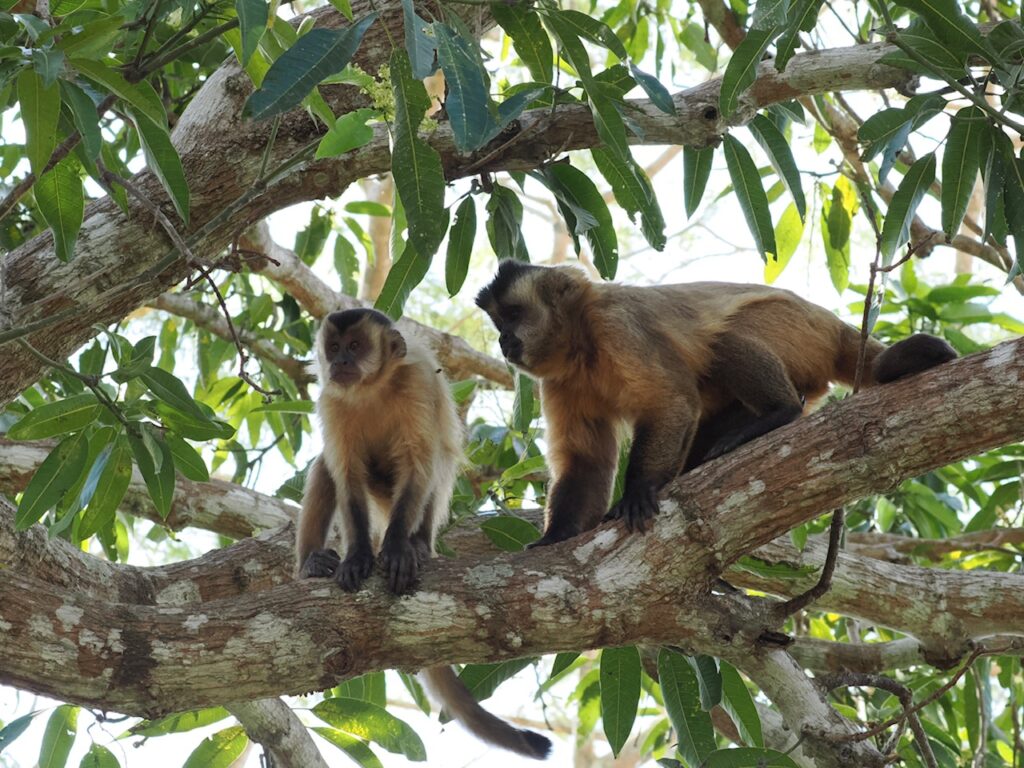
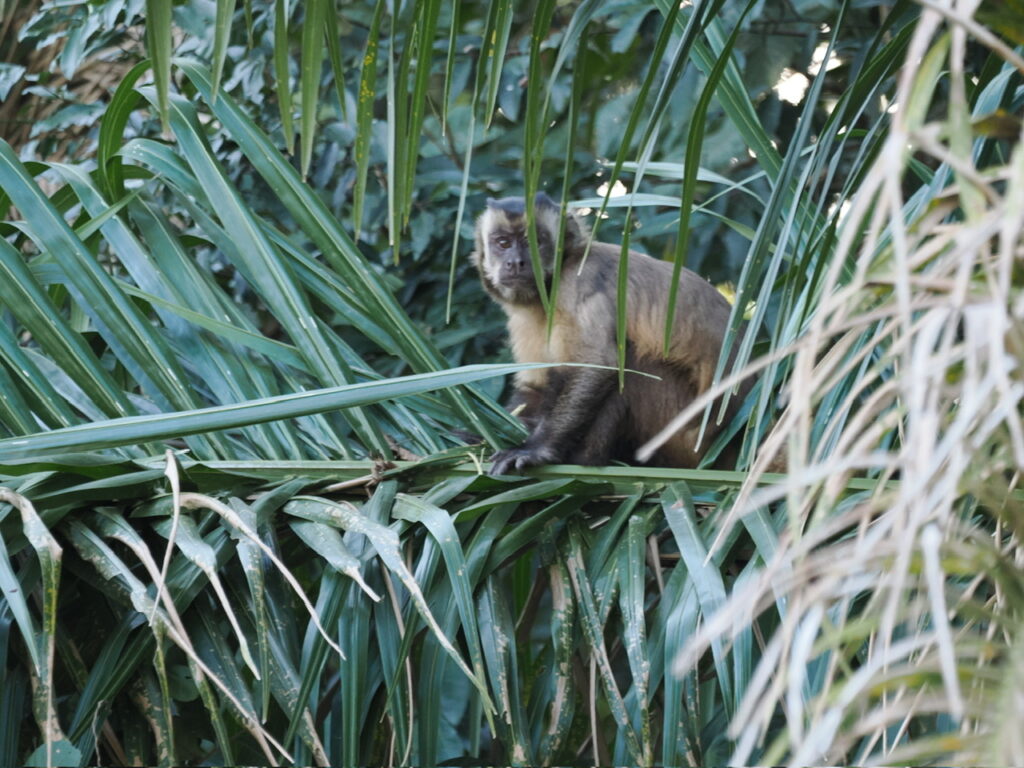
We work our way slowly along the river bank. The nice thing about fishing is that you move at a more leisurely pace , giving time to observe the wildlife. Capuchins forage in the trees and swallows flit across the water.
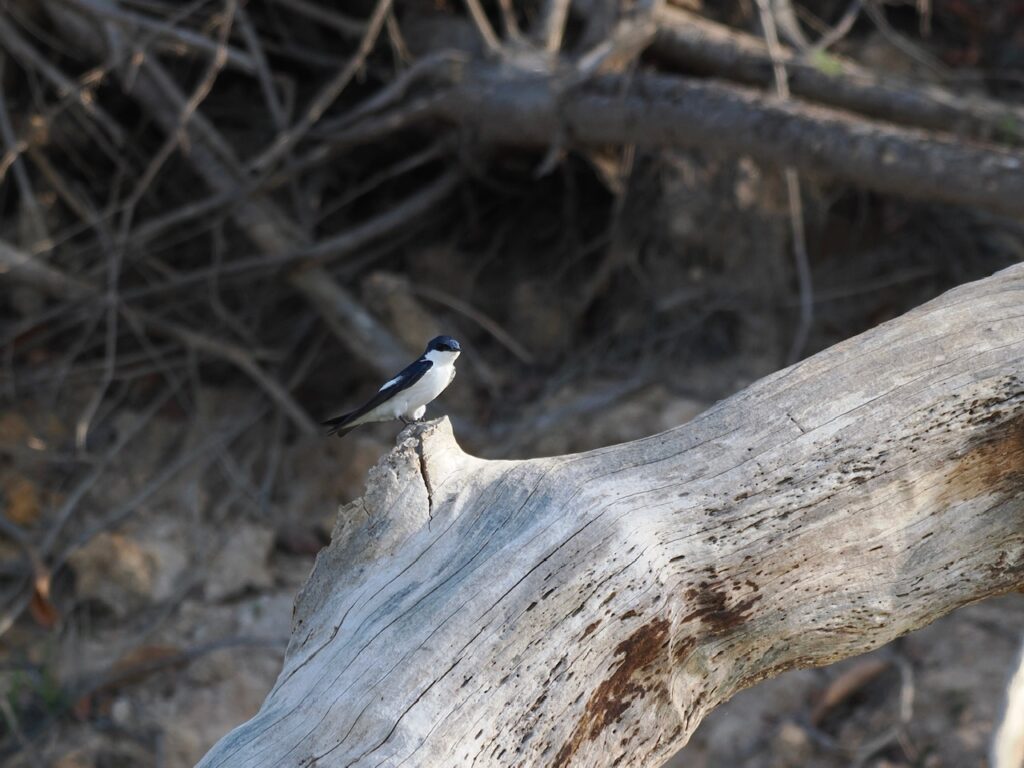
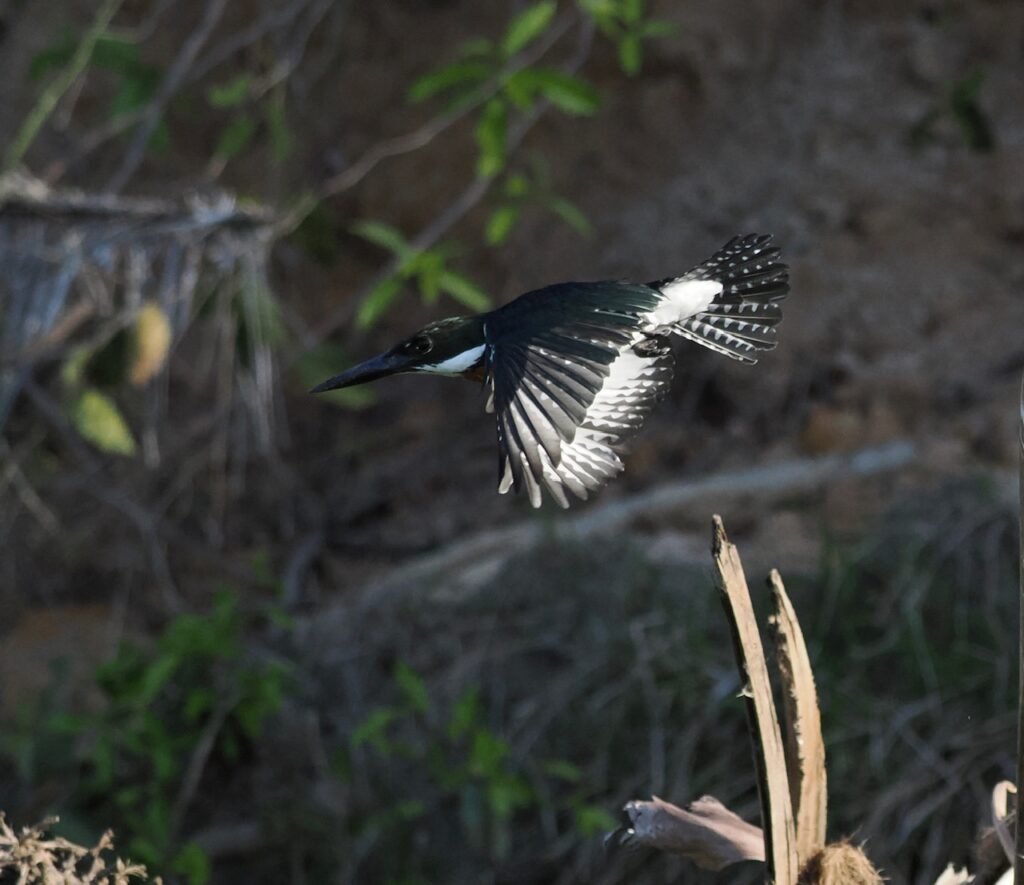
A green kingfisher poses and then takes flight.
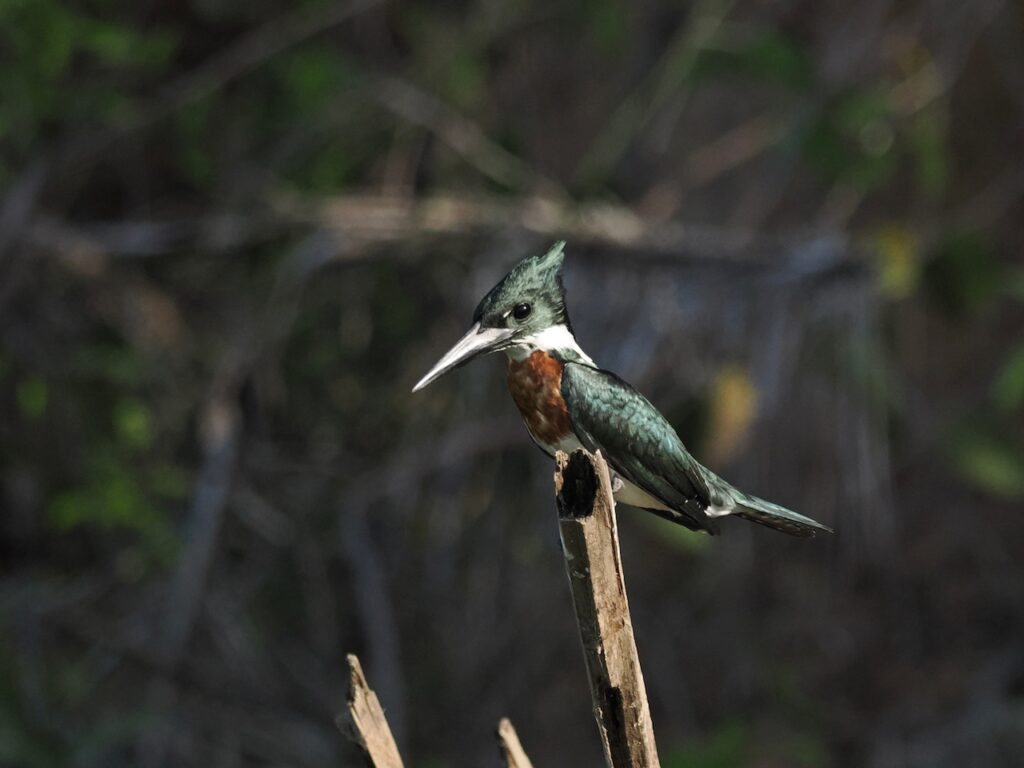
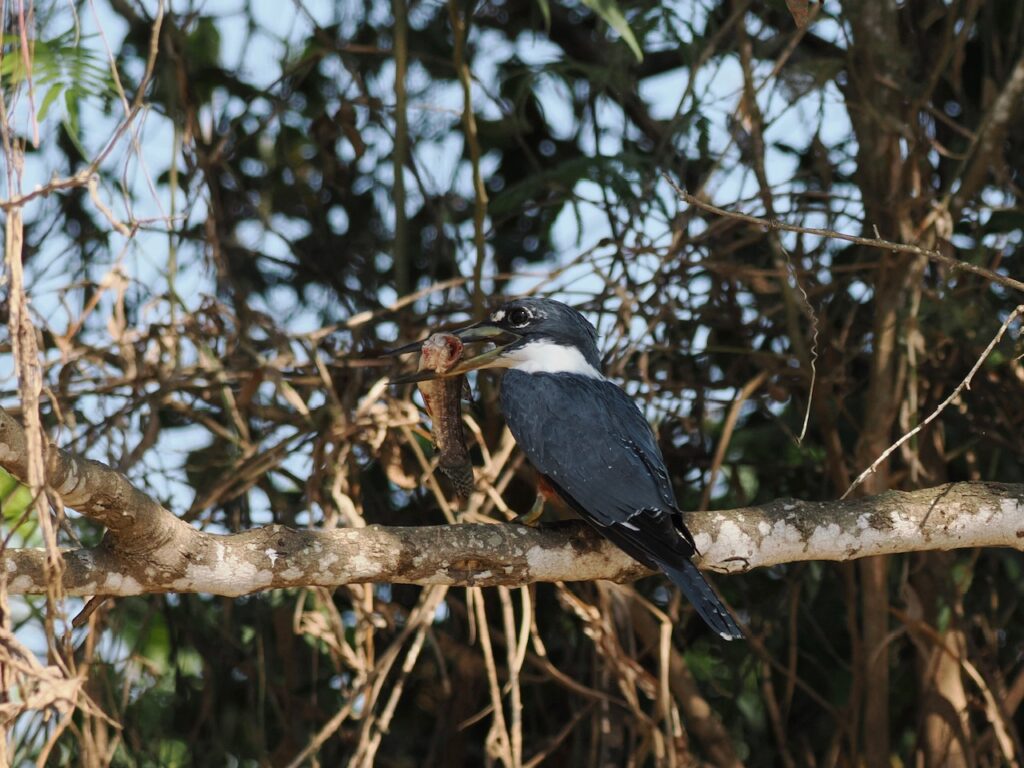
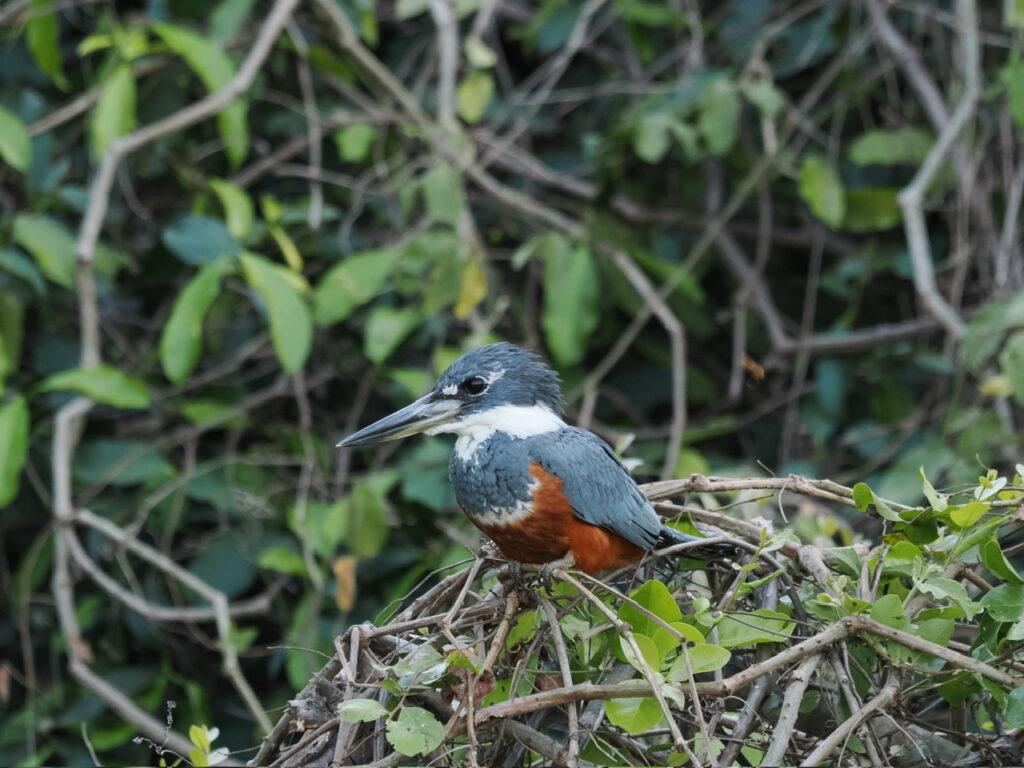
A ringed kingfisher has focussed on Paul’s fly. Every time Paul casts, the kingfisher takes his fly. Bruno and I think it is hilarious and Paul may have called the kingfisher one or two names. After the third strike the kingfisher realised that black and silver fluff and a hook is not a fish!
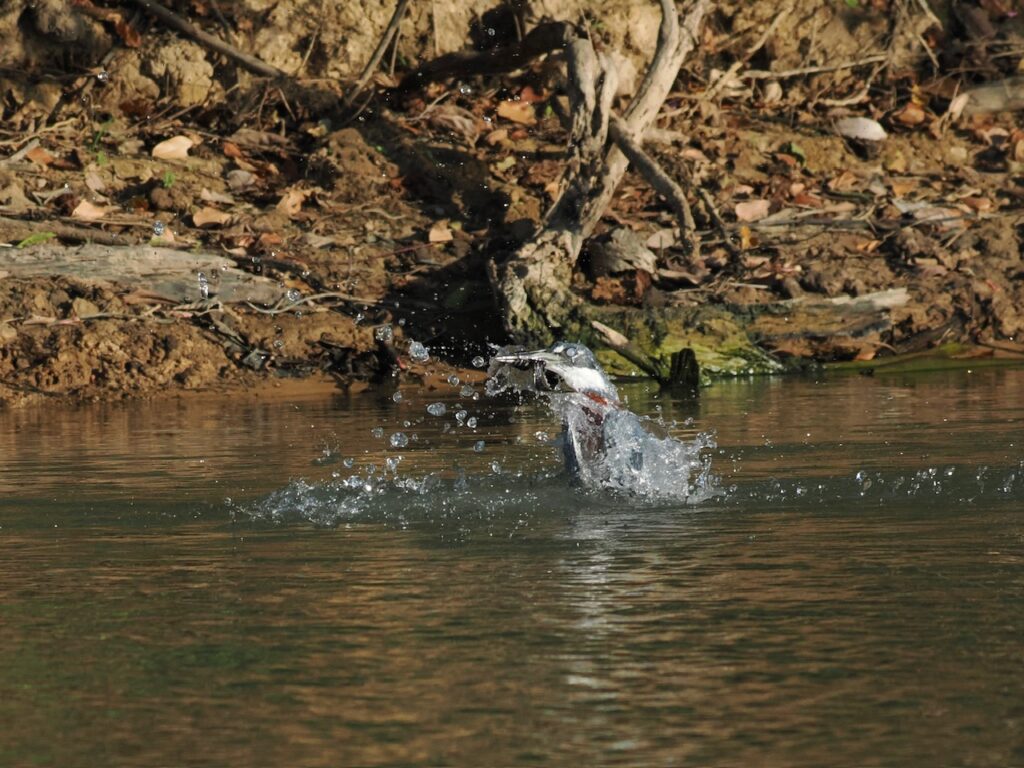
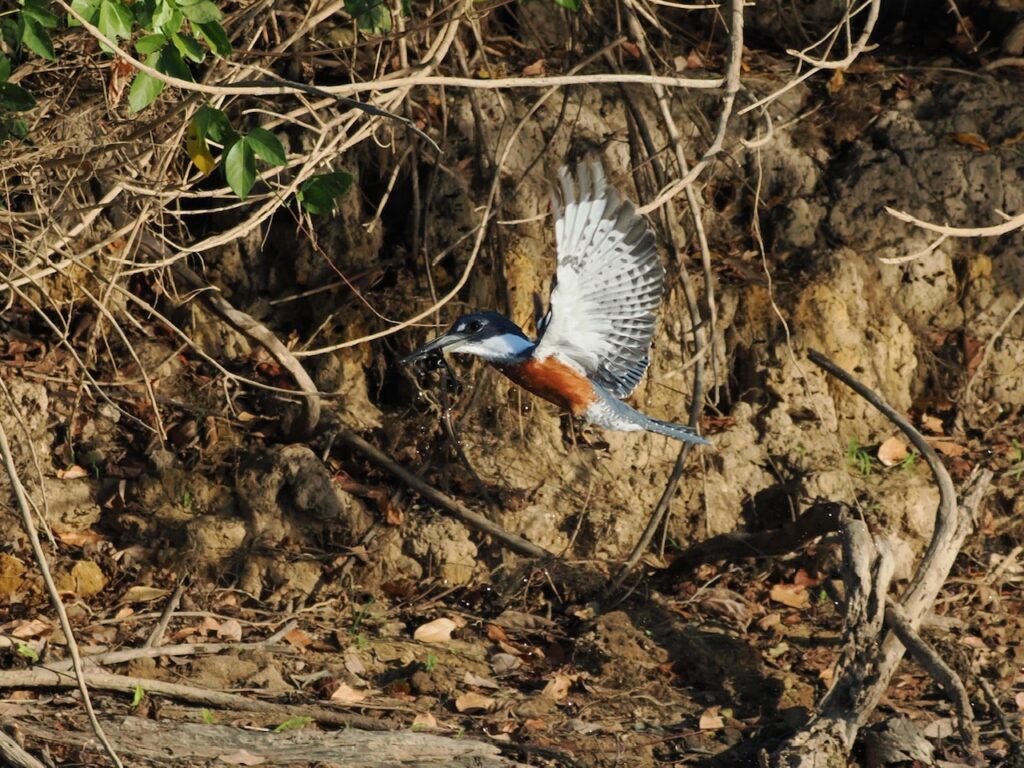
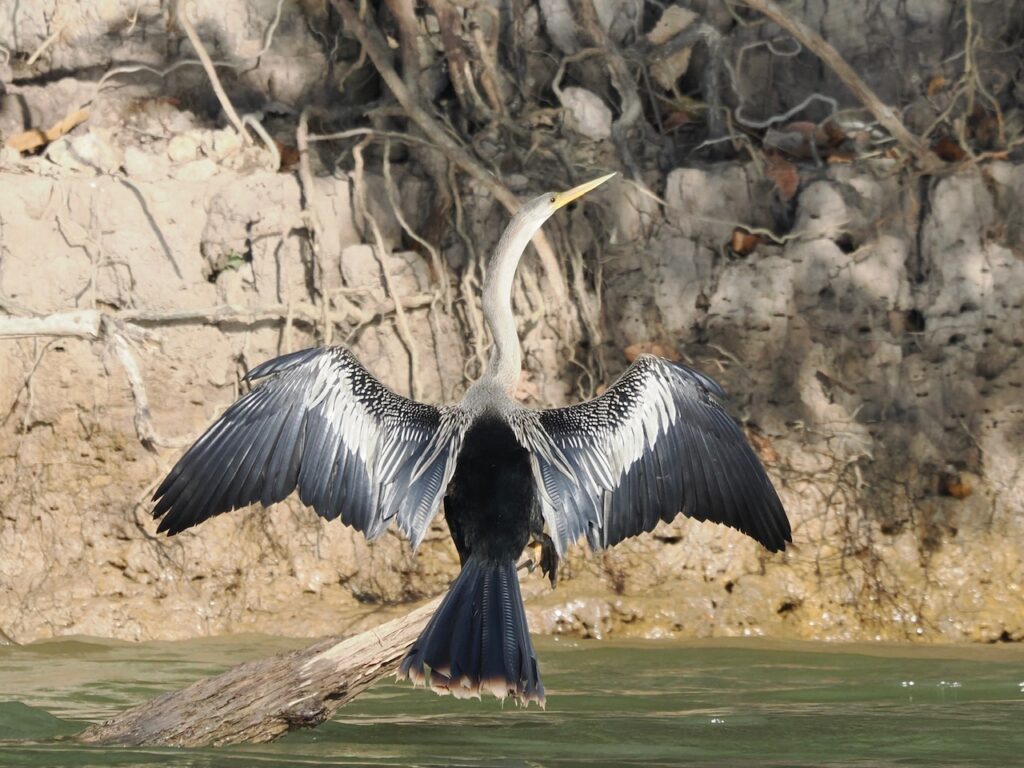
The light is fading so time to say goodbye to this beautiful river. The parakeets are drinking and an anhinga dries his wings before also retiring for the night. One final cast….
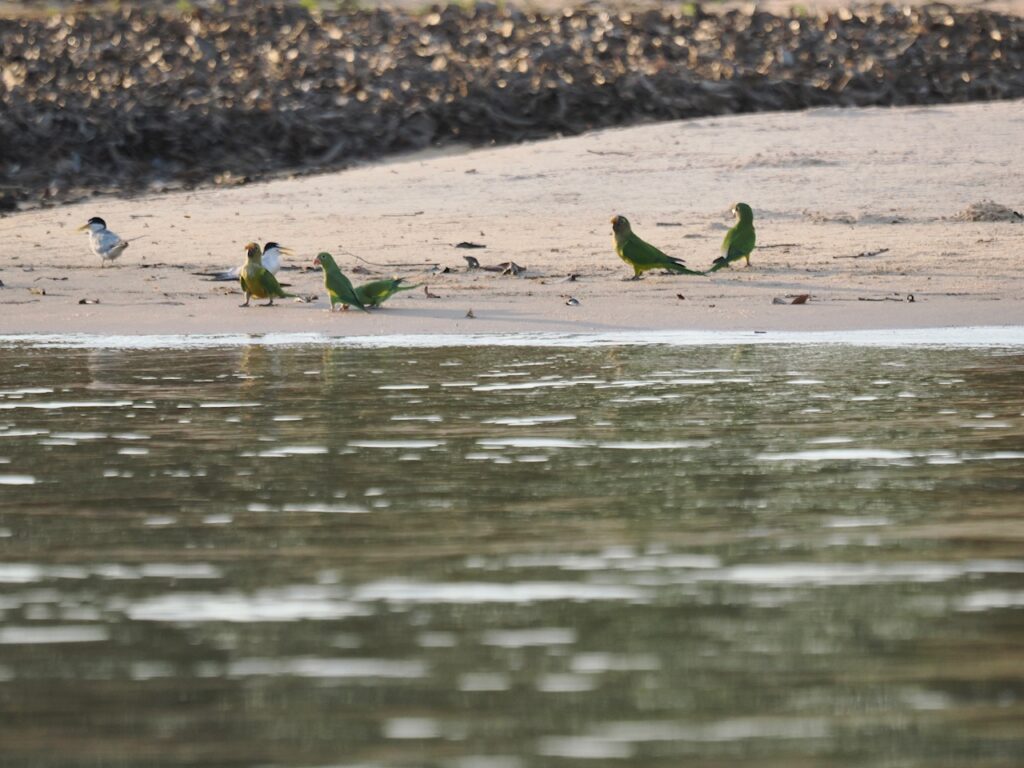
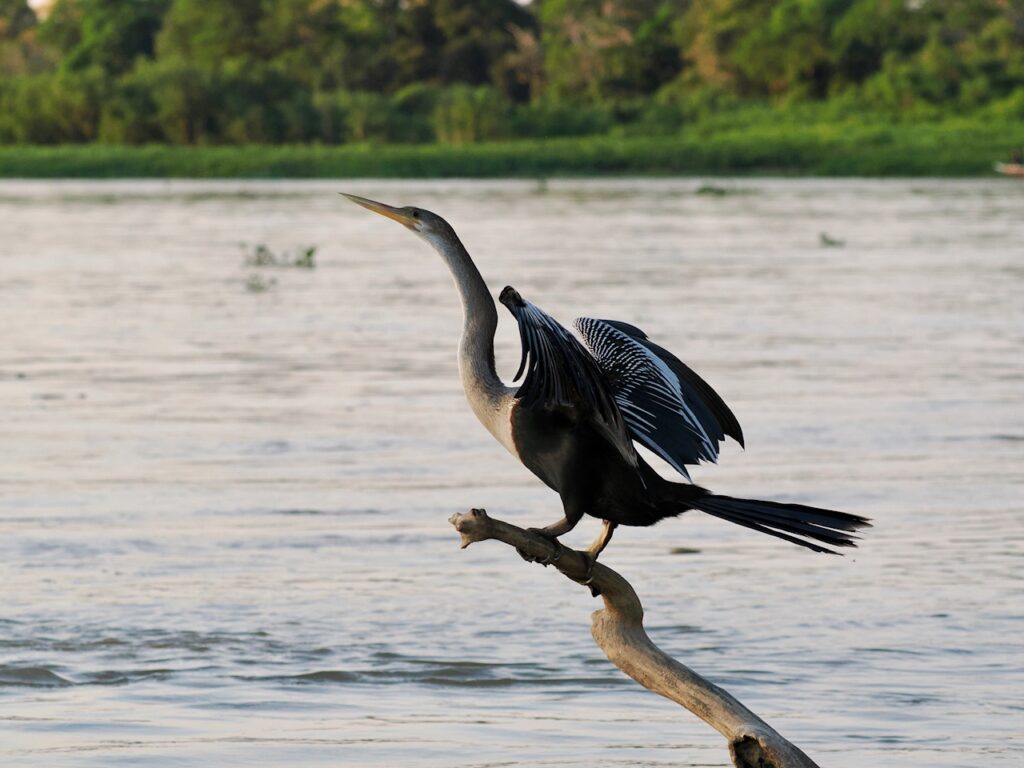
This has been a truly wonderful trip. Thank you to our travel companions – Rosa, Claire, Gill, Wayne, Kay, Alan & Karen. You were good company and made it a fun experience. Huge thanks to the best guide ever – Bruno. Your knowledge and wildlife expertise were invaluable and I love that we always managed to capture almost identical shots! Also thanks to Wildlife Worldwide who organised the trip for us.
South Wild Pantanal

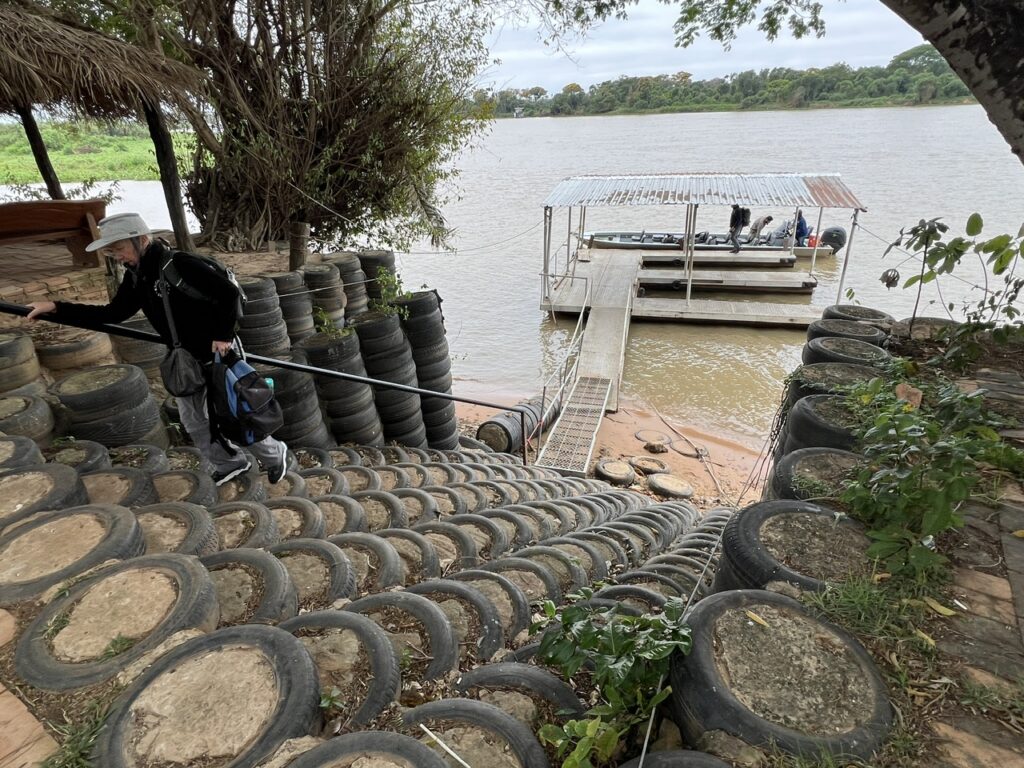
On arrival at Porto Jofre we disembark. Old tyres have been utilised to construct the steps ascending from the Cuiaba River.

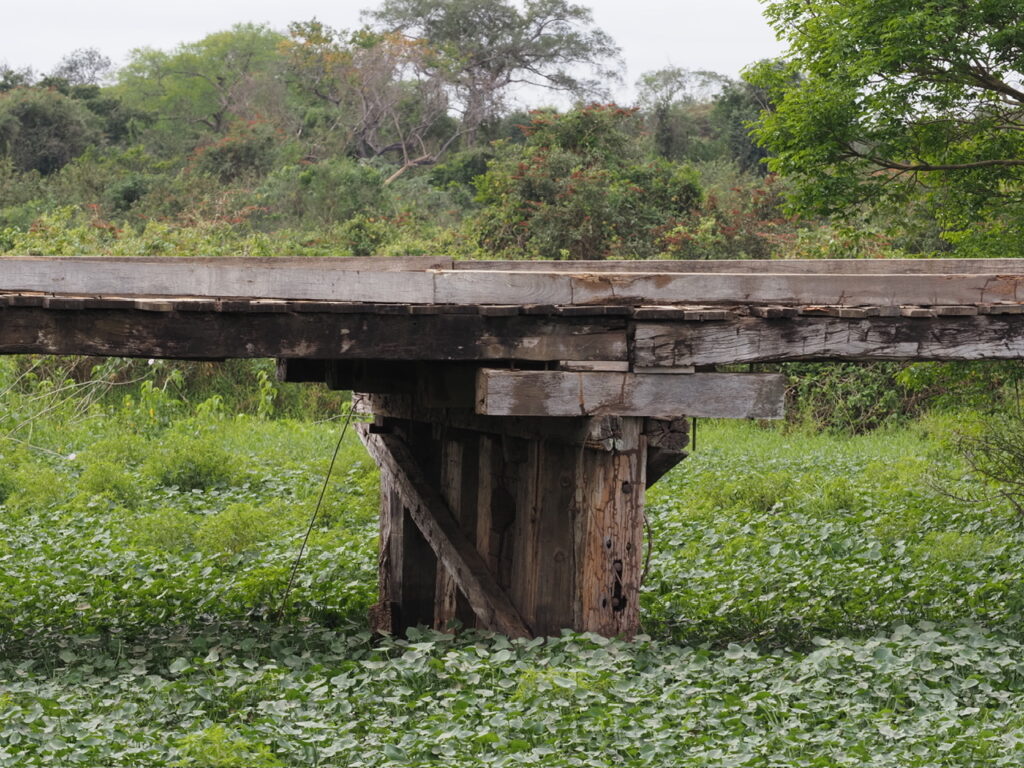
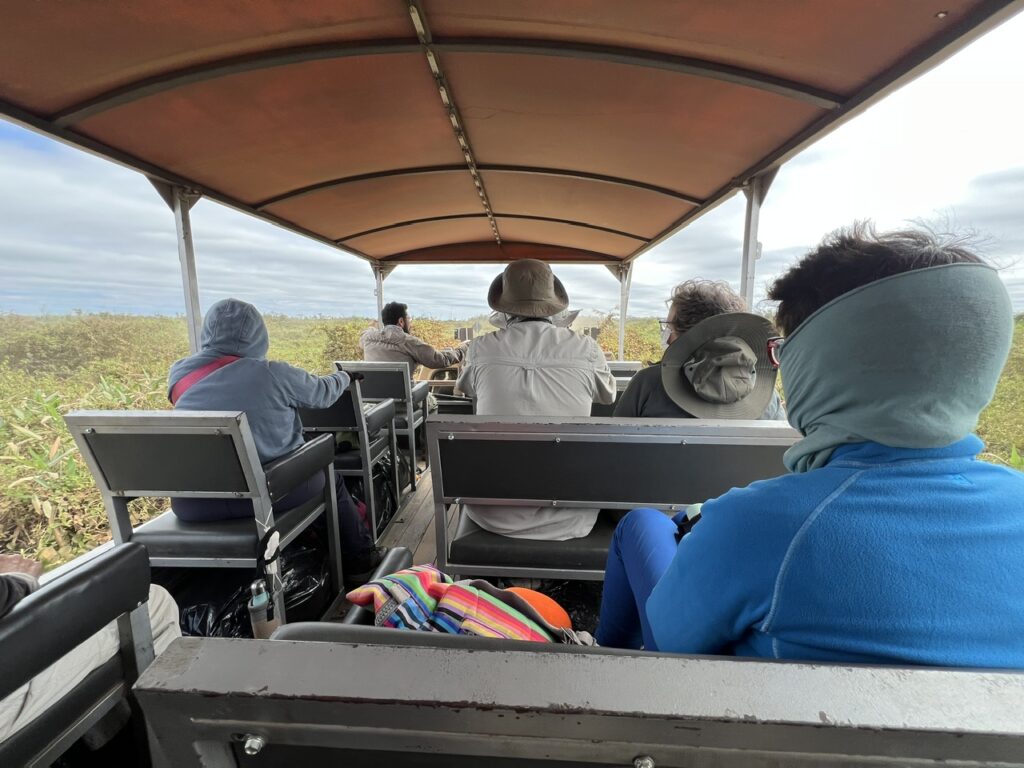
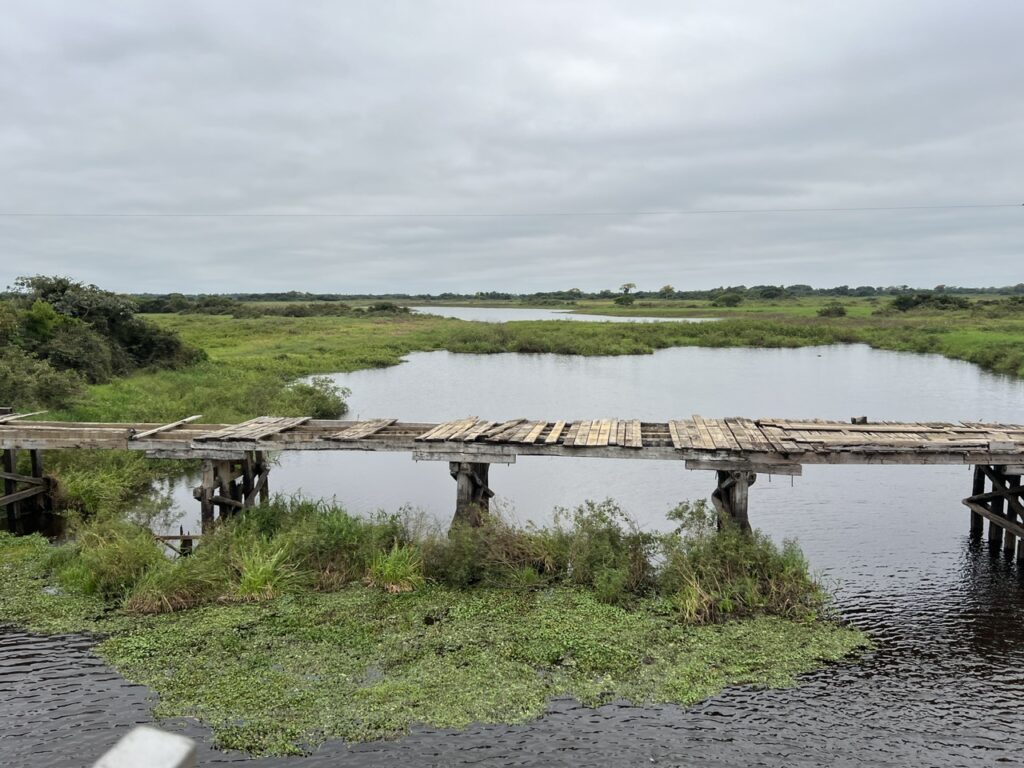
Our bags are stowed on the open truck and we head back up the Transpanteneira. I should like to point out that many of the wooden bridges that we traverse do not seem that sturdy. They are continually being replaced but some very iffy ones remain. This is one not in use…

…and scarily this is one that we crossed!

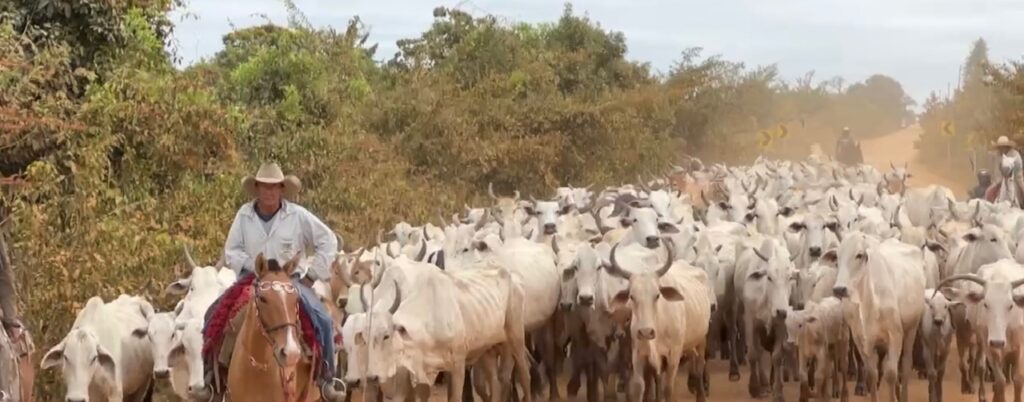
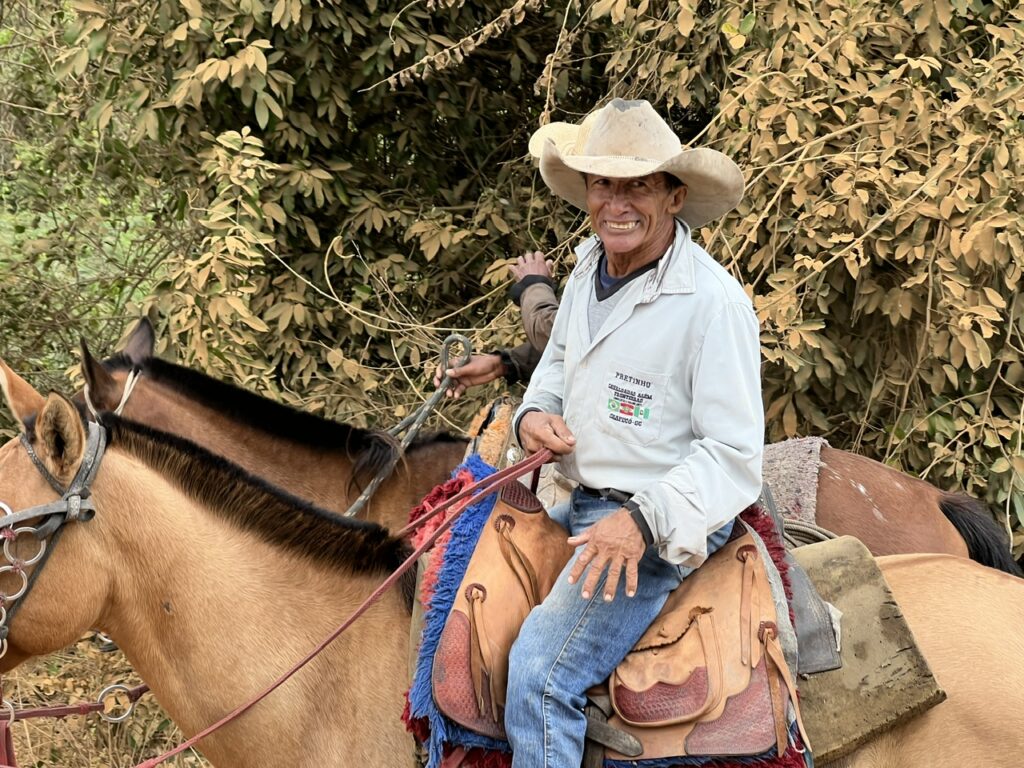
We stop to allow a large herd of cattle to pass by. They moo noisily, indignant at having to walk round us. The vaqueros smile and have very comfortable ornate saddles.

Slowly the air is warming and we can remove some layers although face protection is essential to guard against the dust.

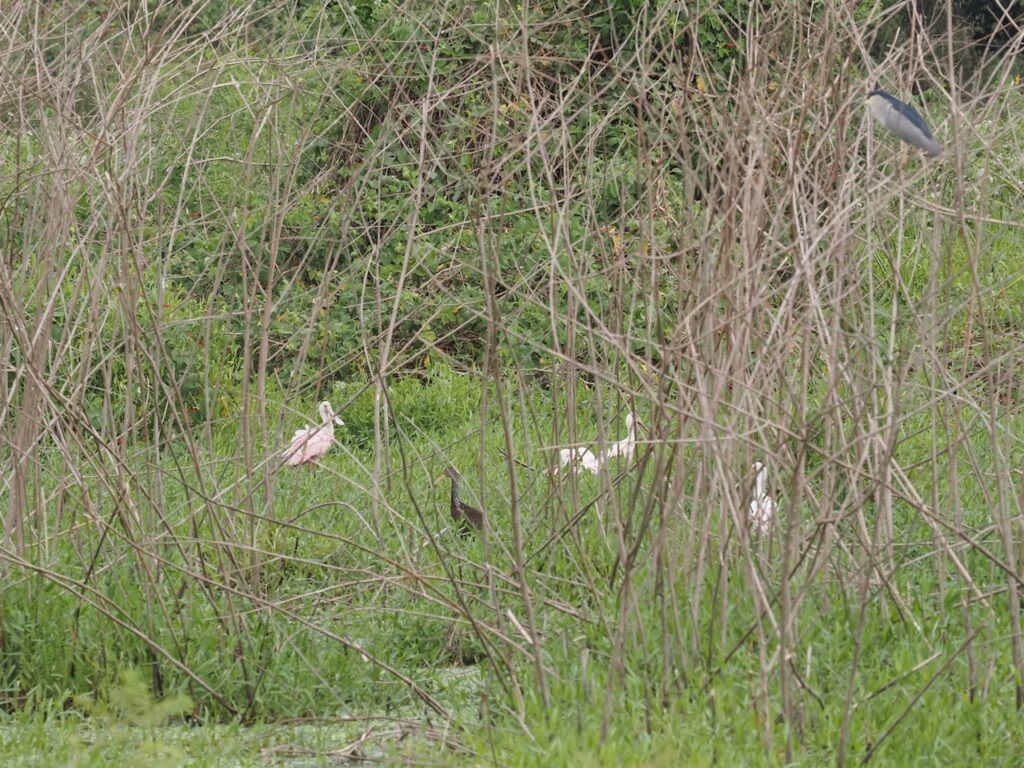
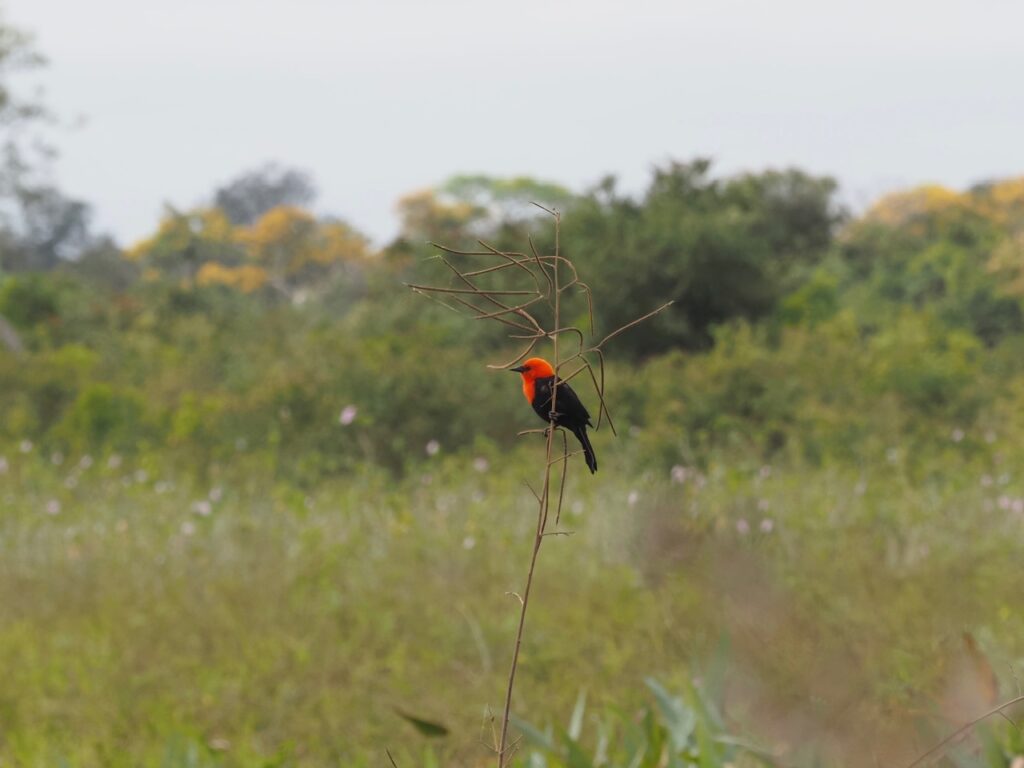
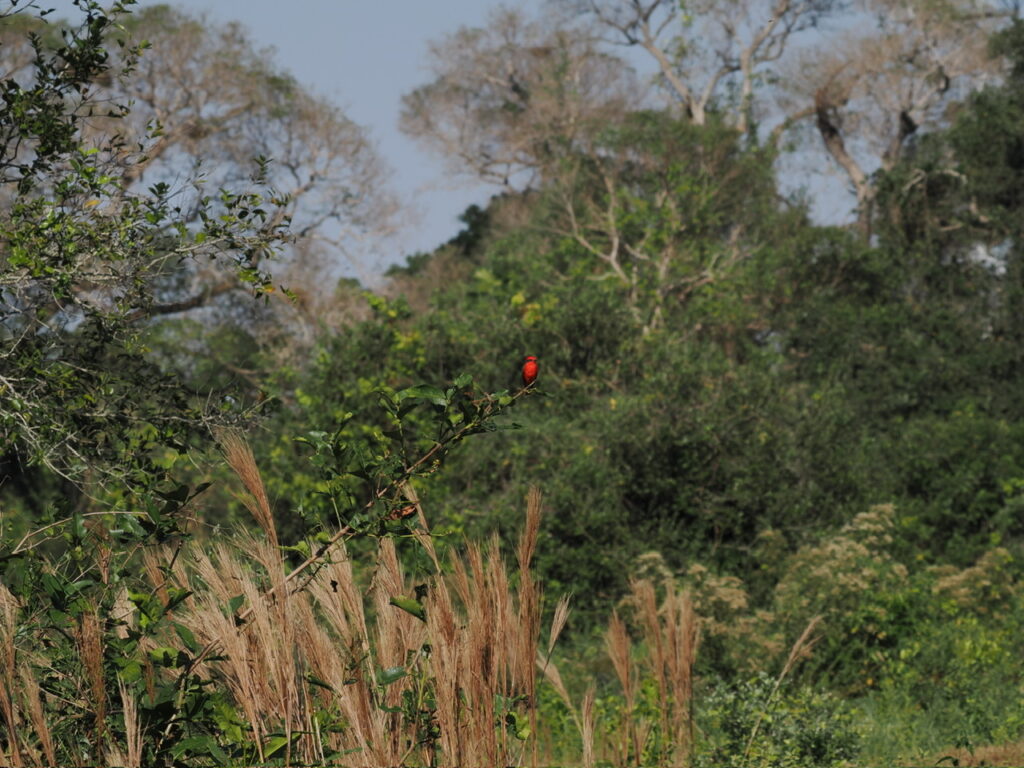
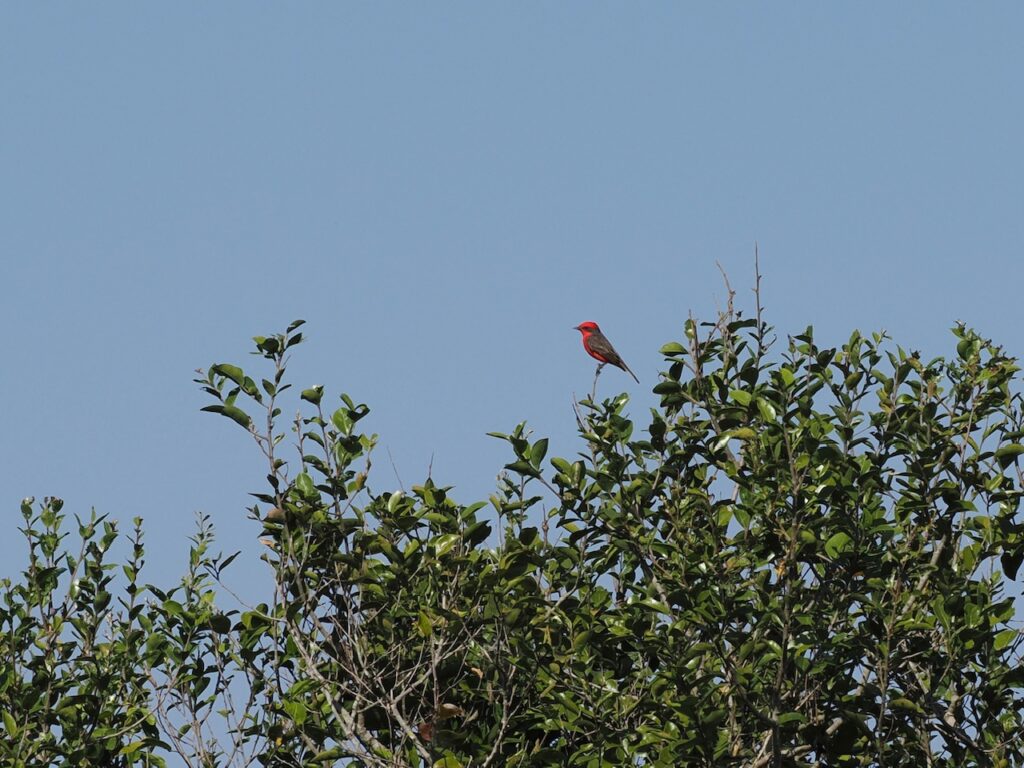
As ever the bird life en route is prolific. We see some distant roseate spoonbills. I do not have my long lens handy and in any case they never allow you to get closer than 100 yards. I do better with a lovely scarlet-headed blackbird.

The sun comes out as we arrive in time for lunch. The lodge South Wild Pantanal is well-run and maintained. There is a swing seat over-looking the river, which has run dry as there is a severe drought, where we sit with a pre-lunch beer.

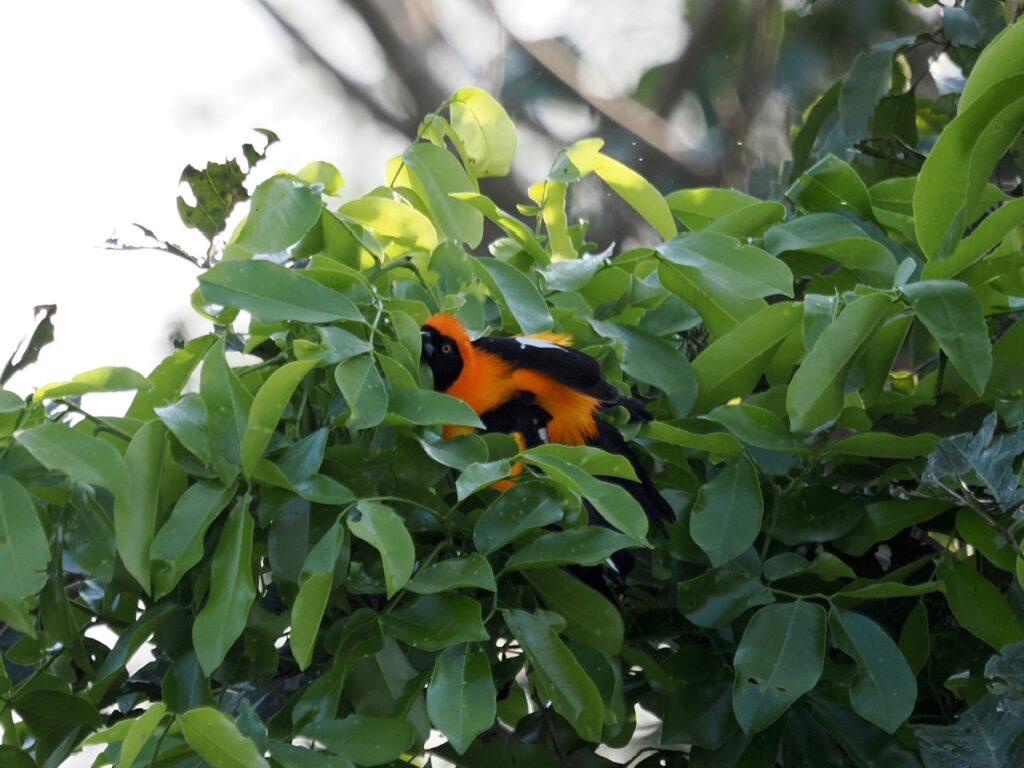
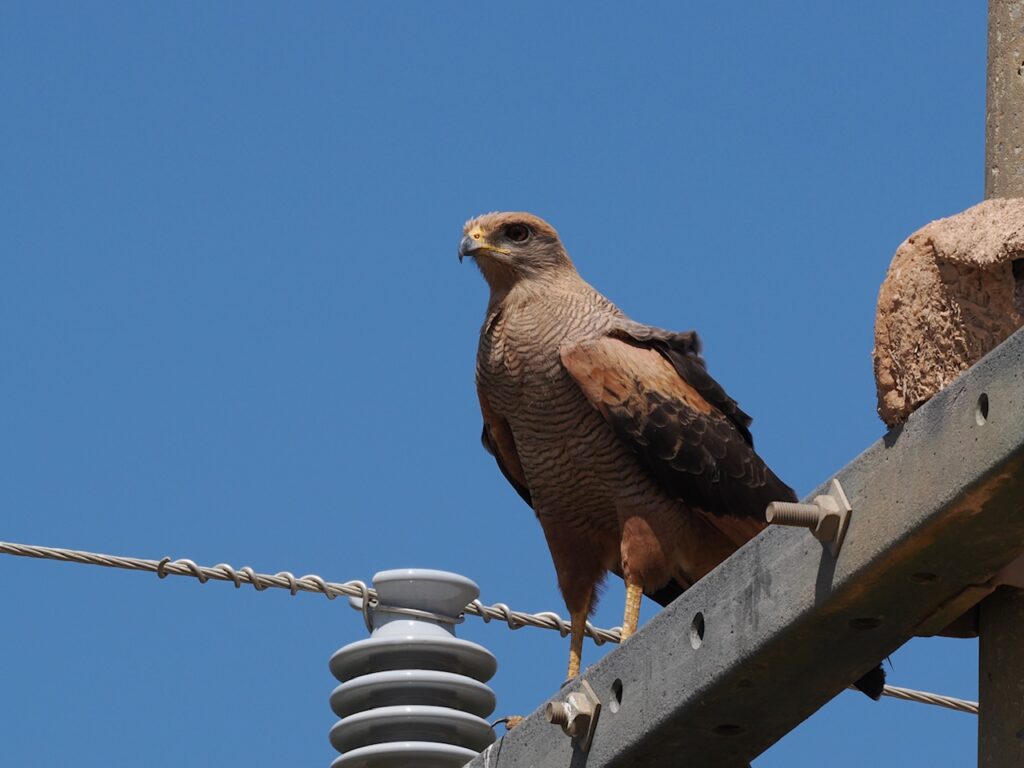
The afternoon is spent chilling as well as wandering around the grounds with Bruno. There are lots of birds. A savannah hawk poses and orange-backed troupials, yellow-rumped caciques and purplish jays fight over pieces of fruit.

There is a jabiru stork’s nest in the grounds with a viewing platform built next to it. I was lucky and did not need to climb up all the steps to capture these wonderful mating shots.

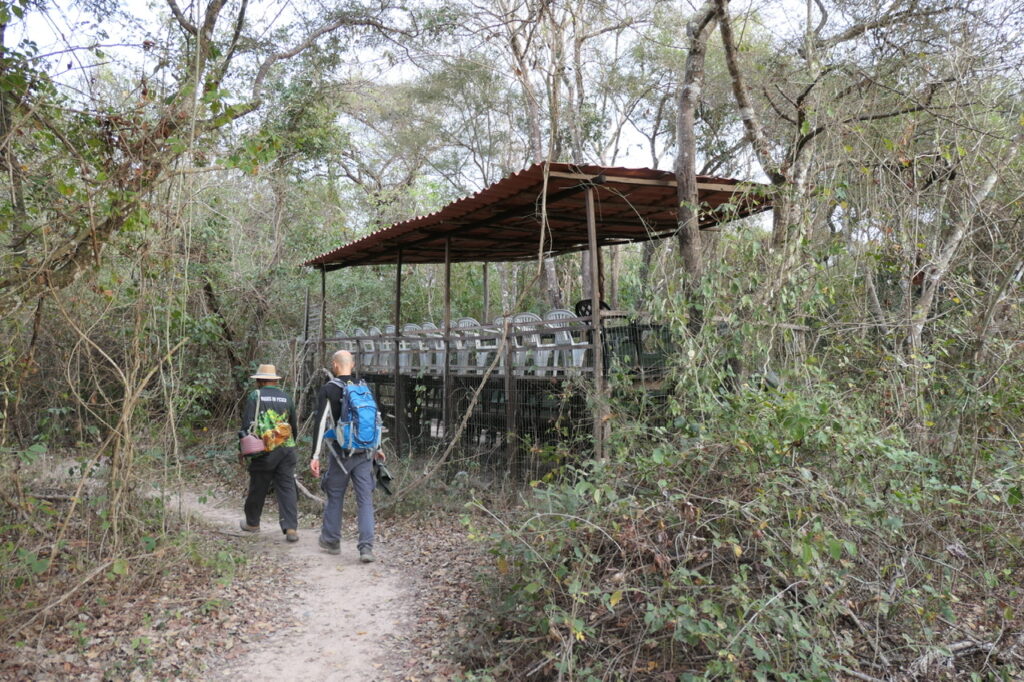
At 16.30 we head out in the hope of seeing an ocelot. There are no guarantees, but it did not show up yesterday so the odds are in our favour. The lodge has built a hide a short walk from the lodge.

They put out small amounts of food to entice the ocelot. I am not totally comfortable with this practice, but the reality is that you will never see an ocelot in the wild without a little incentive. The amount of food offered is small so should not interfere too much with the ocelot’s natural behaviour. Did we see the ocelot. Oh yes! It appeared before it was too dark so the light was pretty good.

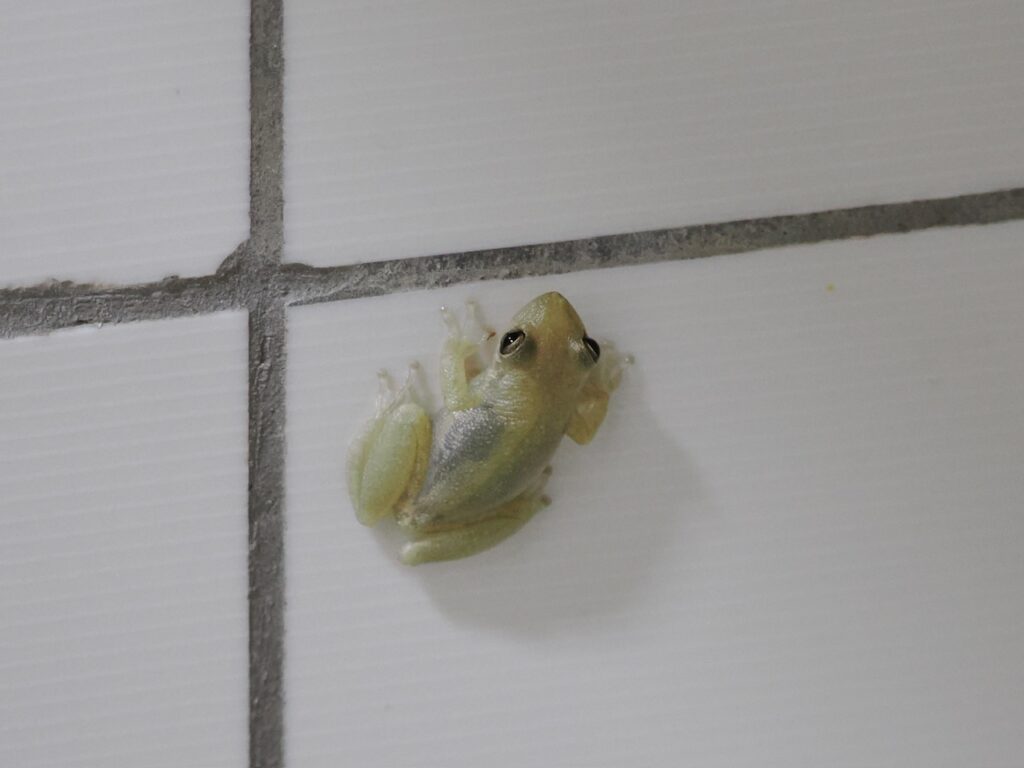
Next day starts straightaway with wildlife. A tiny frog is sitting in the bathroom. Fine by me. He can eat the mosquitos.

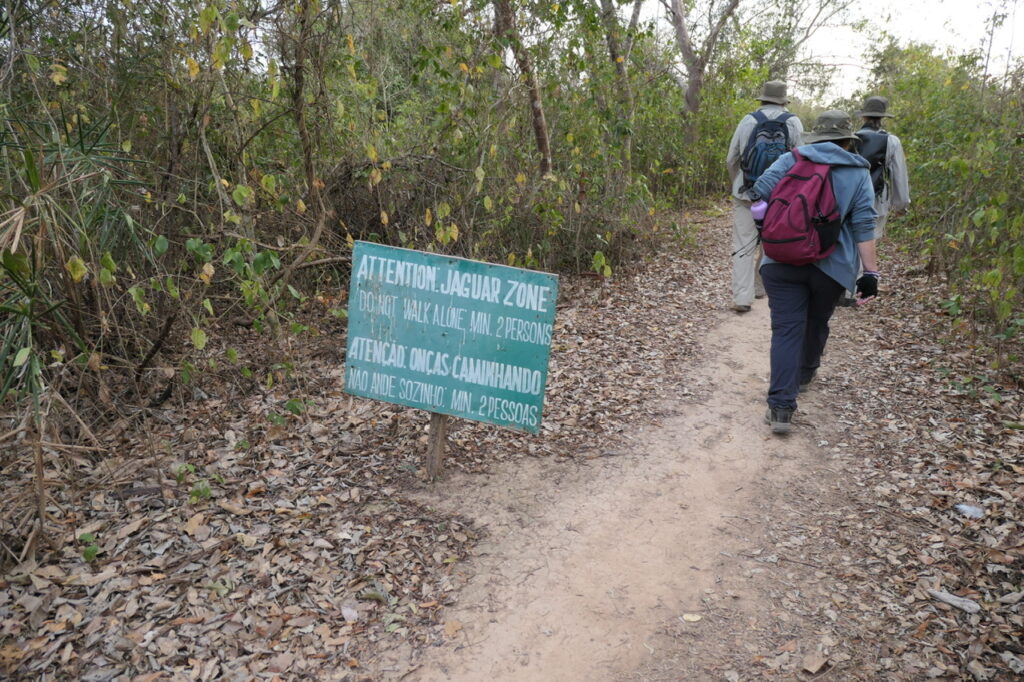
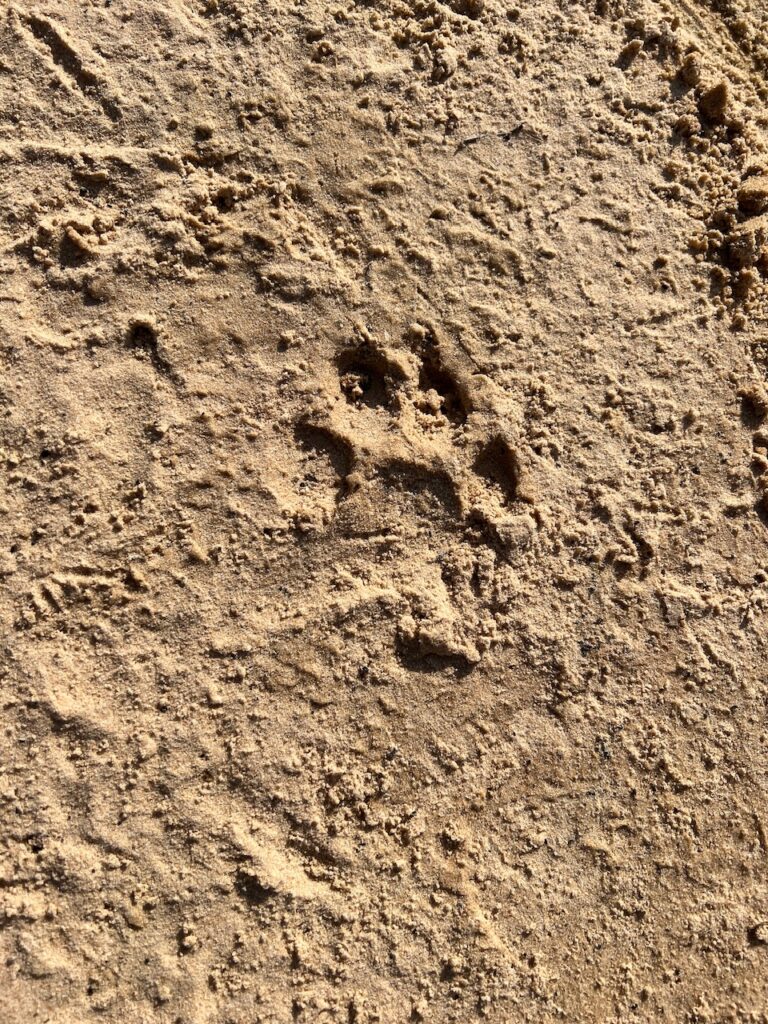
This morning we have a forest walk. We have been told to never walk alone as there are jaguars here and the sign makes it very clear, as did the paw print that we saw on the track leading to the lodge.

Frankly I am not expecting to see anything remarkable in the dry, scrubby forest but Bruno always delivers. We come to an observation platform and are surrounded by Azaras’s capuchins. Food has been put out for them so this is slightly artificial, but I do not mind as there is so much activity. Honestly I could stay here all day.

We start to leave and then someone notices black-and-gold howler monkeys approaching. They are very different from the howlers that I saw in Costa Rica and Ecuador. They are much smaller and much quieter. The males are black but the females and young are golden. They turn out to be incredibly difficult to photograph as they are quite shy and move rapidly through the branches. I love the way that the baby twirls its tail around the base of its mother’s tail

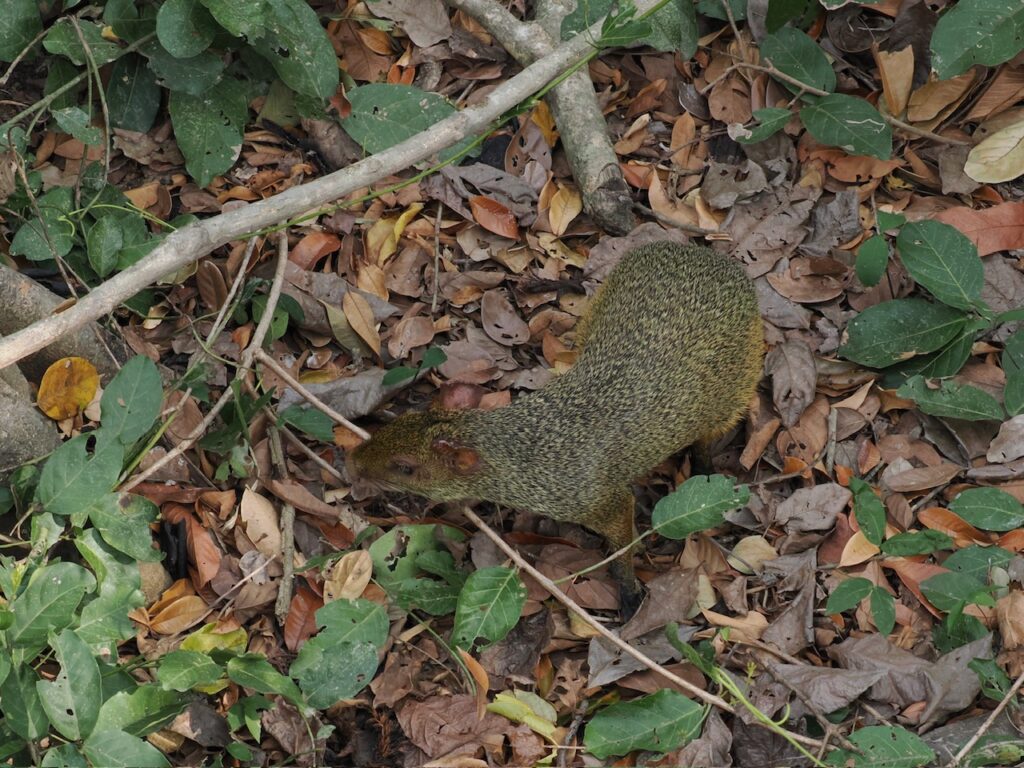
As I leave the platform I notice an agouti below me. Not an angle you usually see and it is interesting to see the varied colours of its fur.

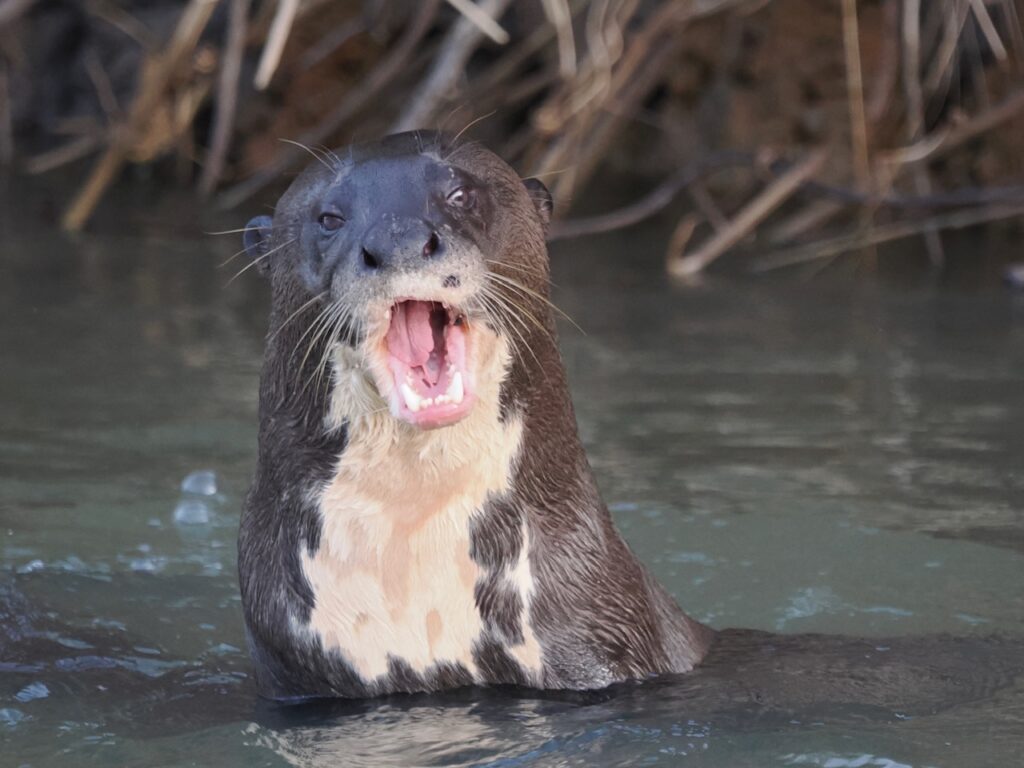
We make our way to the river, which has largely dried up, but not so much that giant river otters cannot use it. And there they are. Right in front of us. Making lots of alarm calls as we disturb their tranquility. How lucky are we?

We also see a sun bittern in flight – such a beautiful bird, a distant roseate spoonbill – you never get close, two black vultures, a rufescent tiger heron and a woodpecker amongst many others.

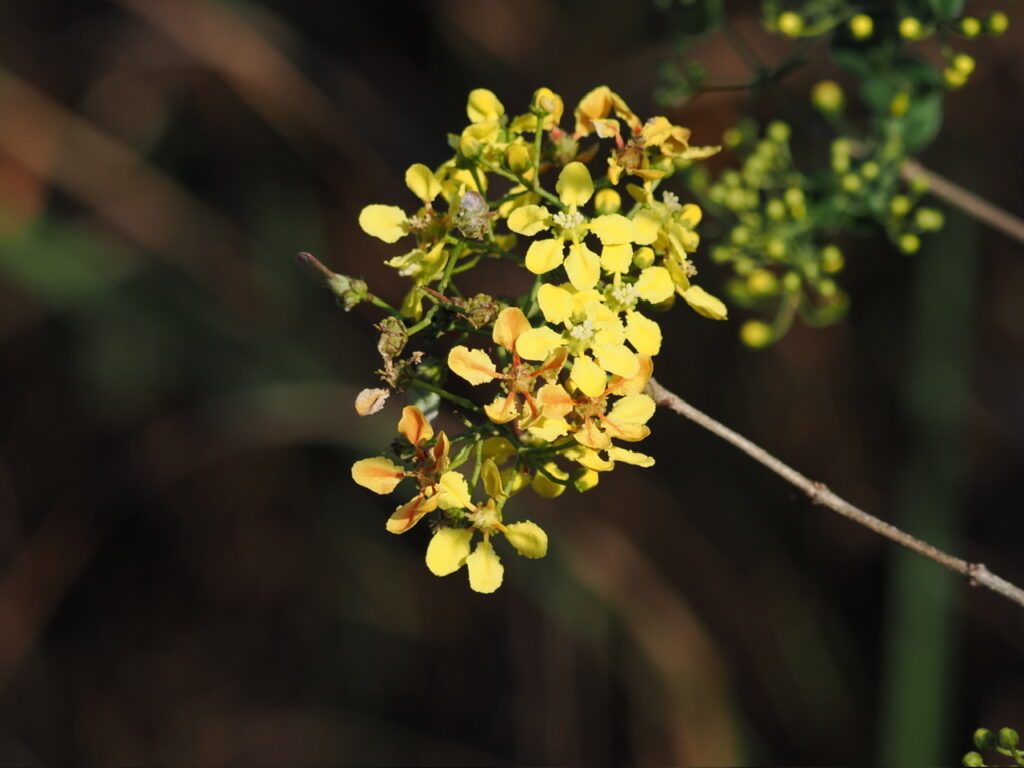
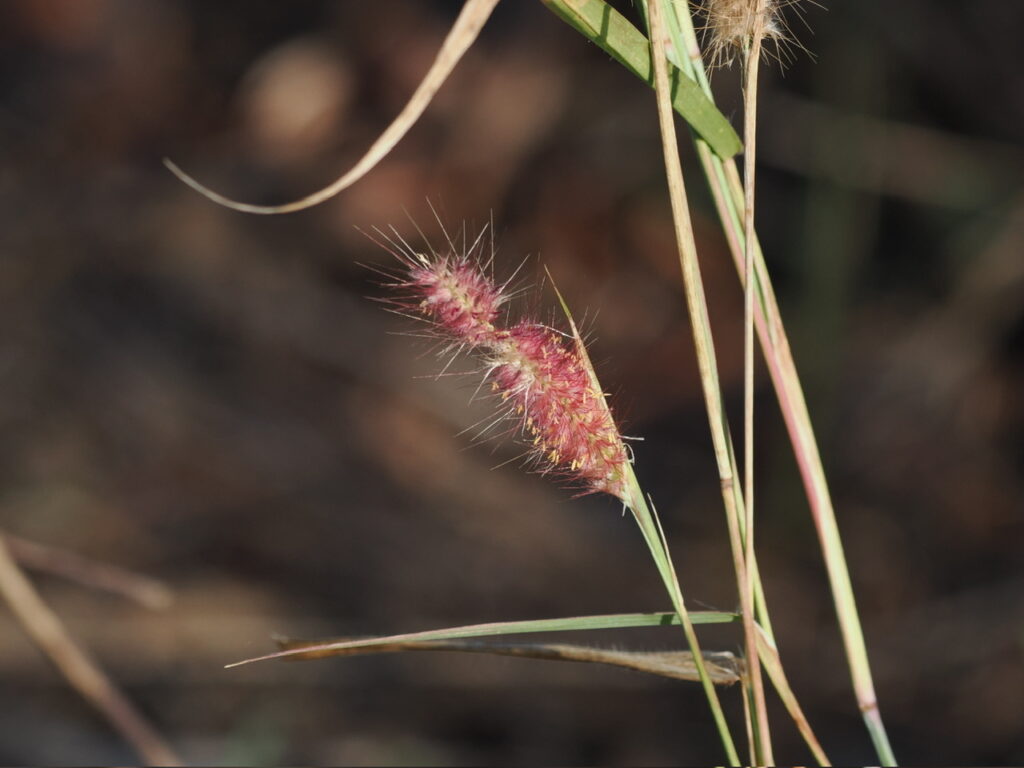
For a change I thought I would capture a little of the flora. It is so easy to walk along the river and concentrate on the creatures and not take in the beauty of the plant life.

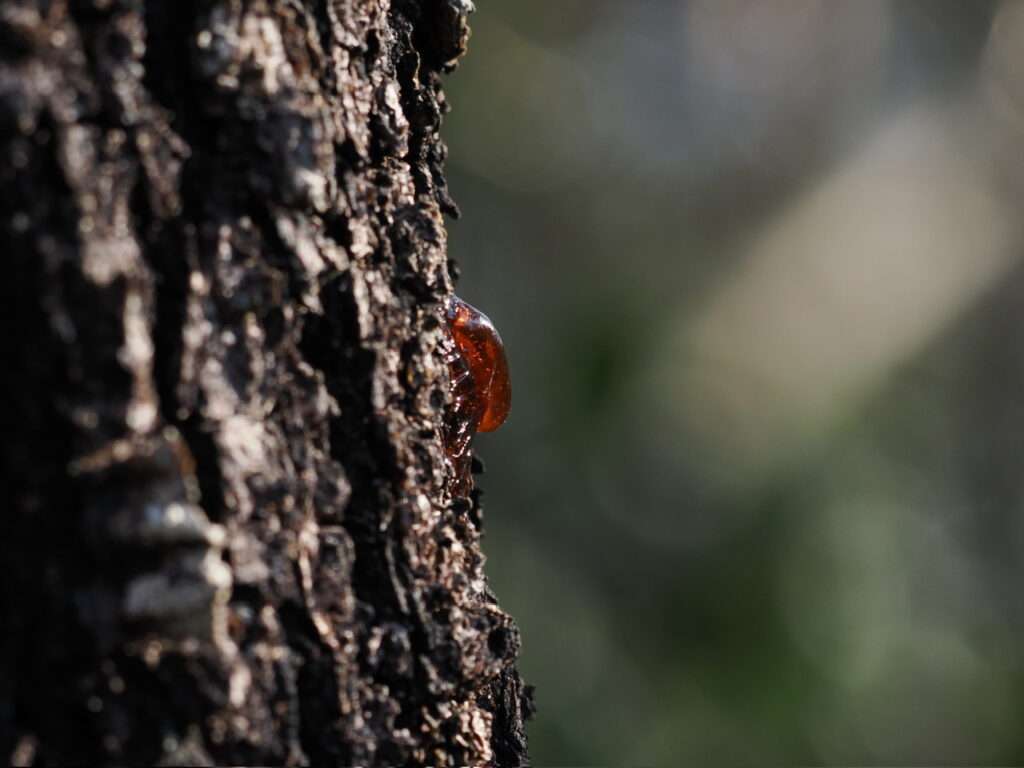
In the afternoon just three of us go for a walk with Bruno, two of the group are resting and the others want to see the ocelot again. I think they missed a treat with some interesting encounters. Bruno is very knowledgeable, points out different plants and trees and tells us about their medicinal uses. We see glass ants collecting sap from a tree and see the sap congealing into what could become amber given enough time.

In the trees above us we firstly hear and then see capuchins. It is lovely to see them in their natural environment. They are much calmer than when we saw them this morning and are quietly foraging in the branches. We make our way to the river and notice that the capuchins have made their way there too. Bruno thinks they want to drink so we watch and wait. Very cautiously, and only one or two at a time, they dart to the river, take a few sips whilst nervously looking around and scamper back to the safety of a tree. It is wonderful to observe and Bruno says he has never seen them do this before.

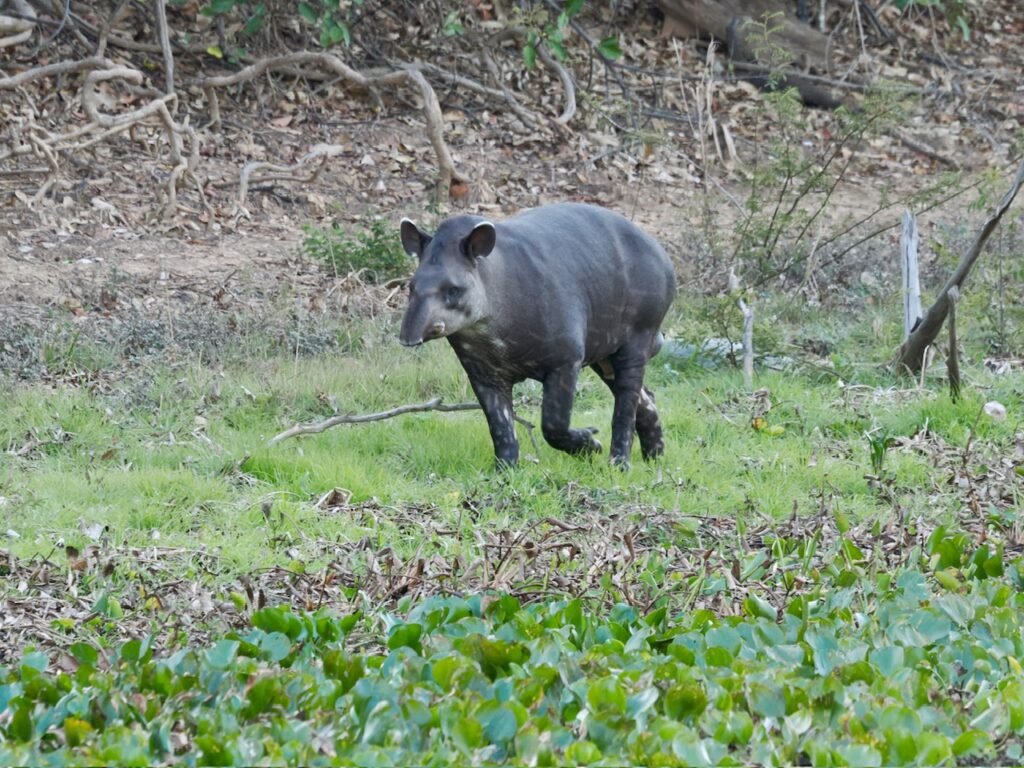
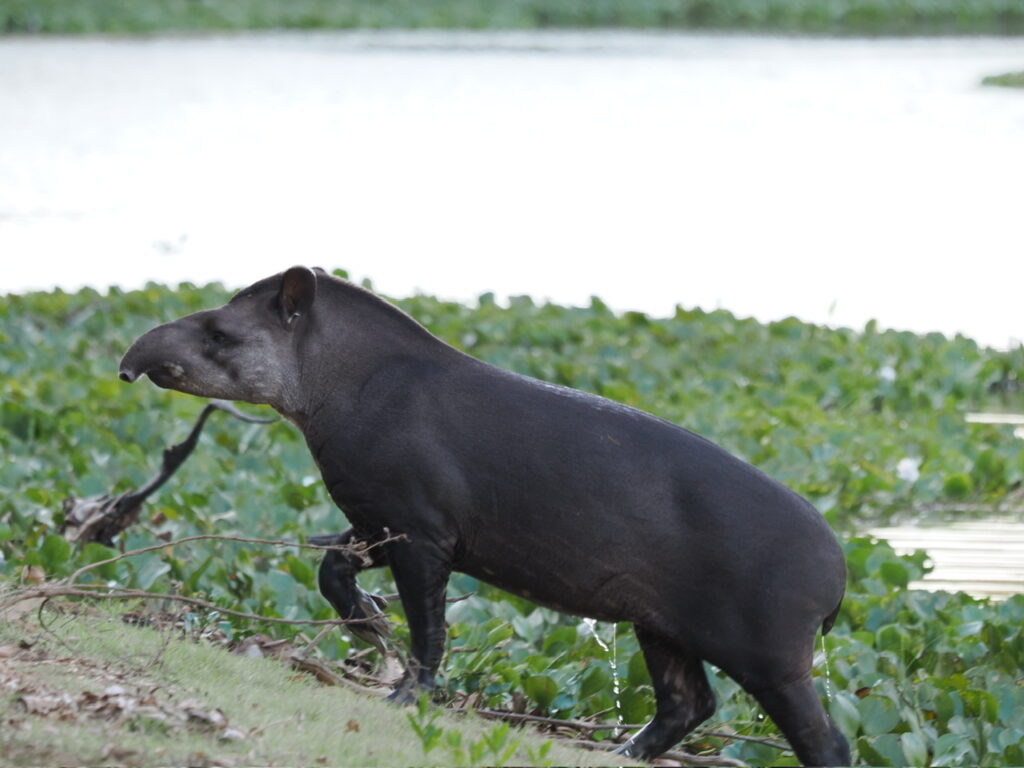
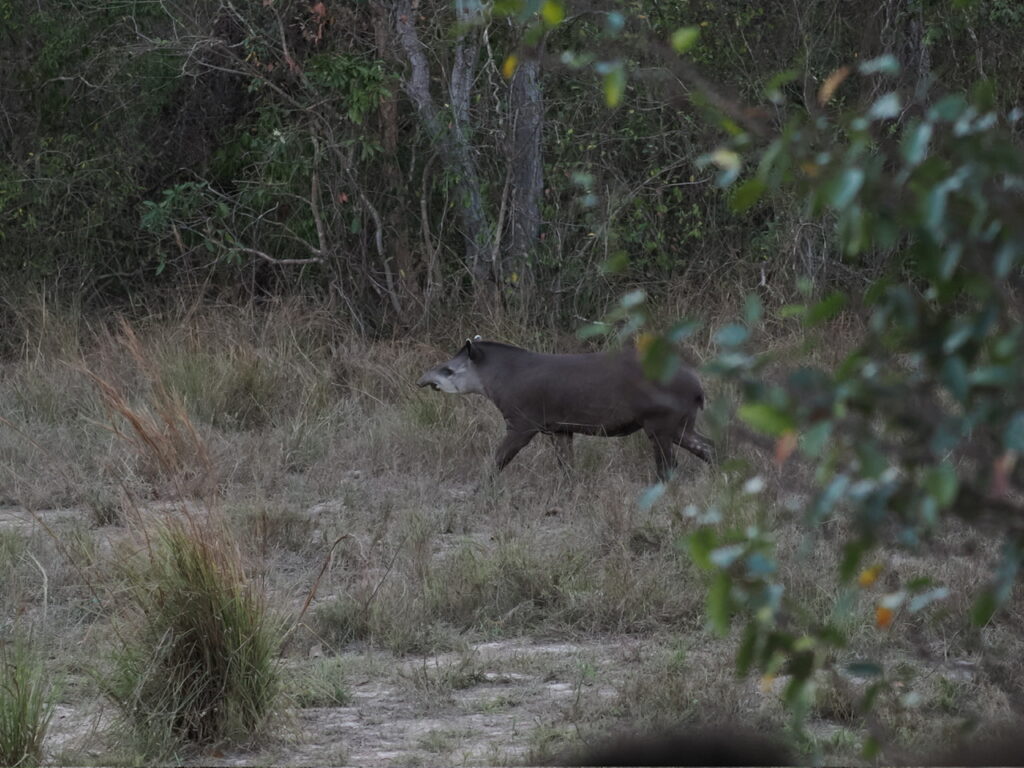
We continue our walk, look back along the river and on the far side we spot a tapir. It is a fair distance away but it is walking in our direction and unaware of our presence, as the wind is blowing towards us and carrying our scent away from him. He gets closer, then goes for a swim.

The river has dried up where we are so we cross and try to get closer. We try to walk quietly on the grass but there are a lot of dead leaves, which make loud crunching noises. We are sussed! The tapir quickly exits the water and disappears.

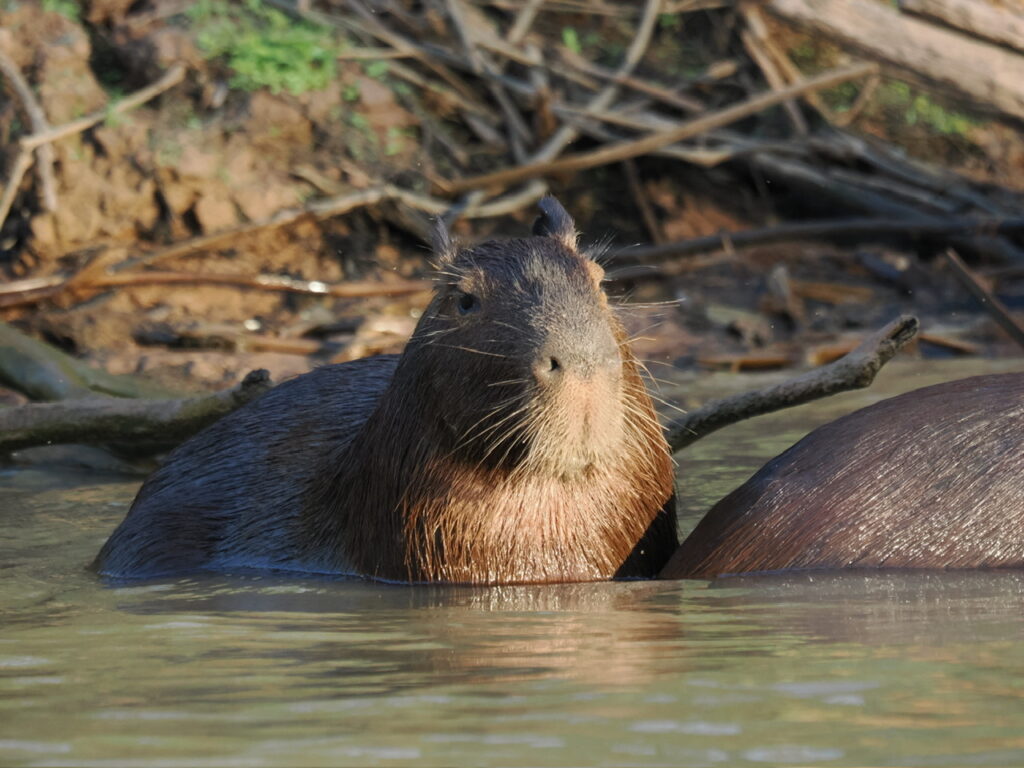
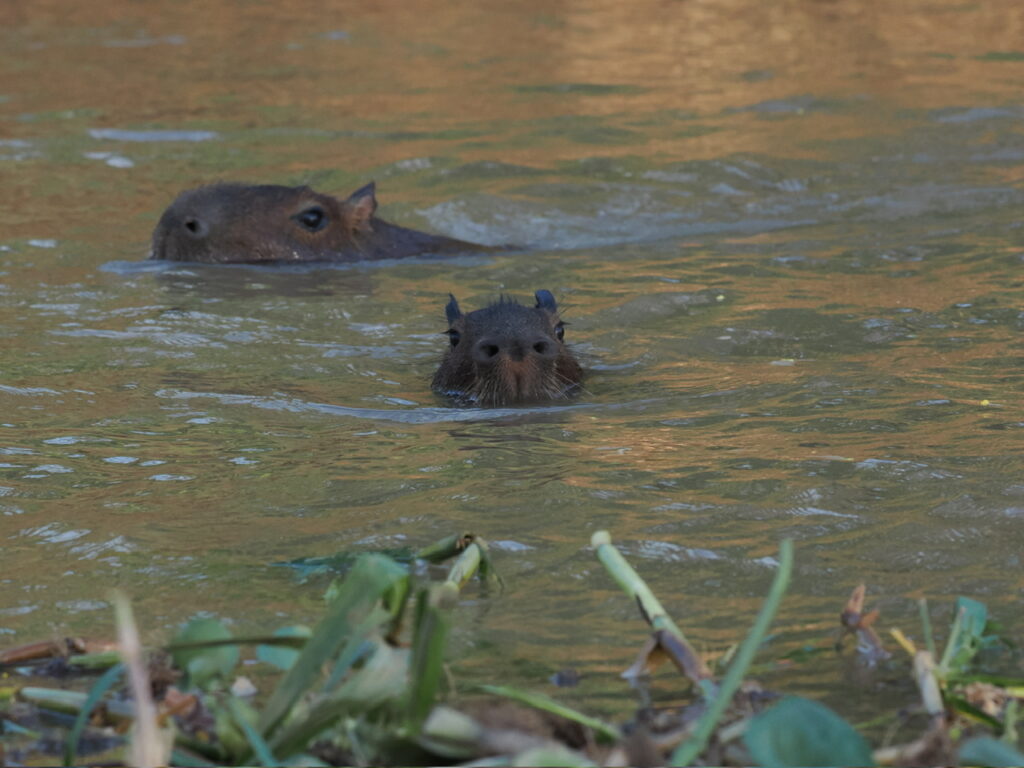
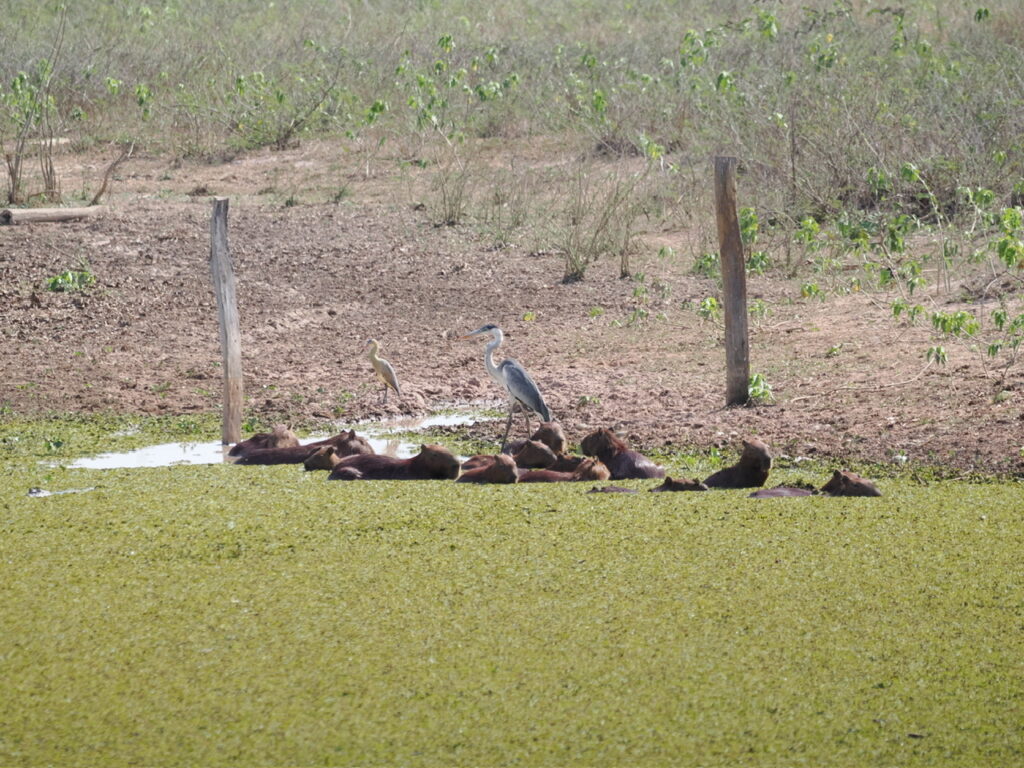
As we approach the lodge we see a family of capybara in the water. There is some unusual behaviour from them too. They see a large caiman approaching their young. They make alarm calls and aggressively chase it away. What an incredible afternoon.

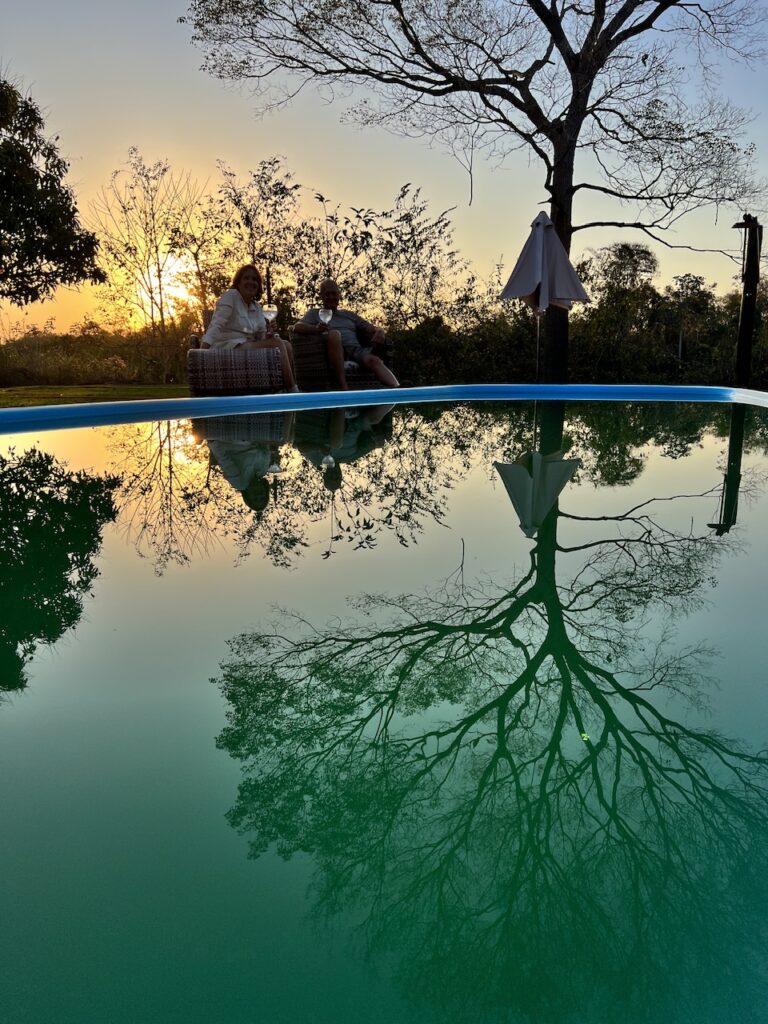
So much exertion in the heat deserves a reward. Sundowners by the pool are called for. A gin & tonic never tasted so good!

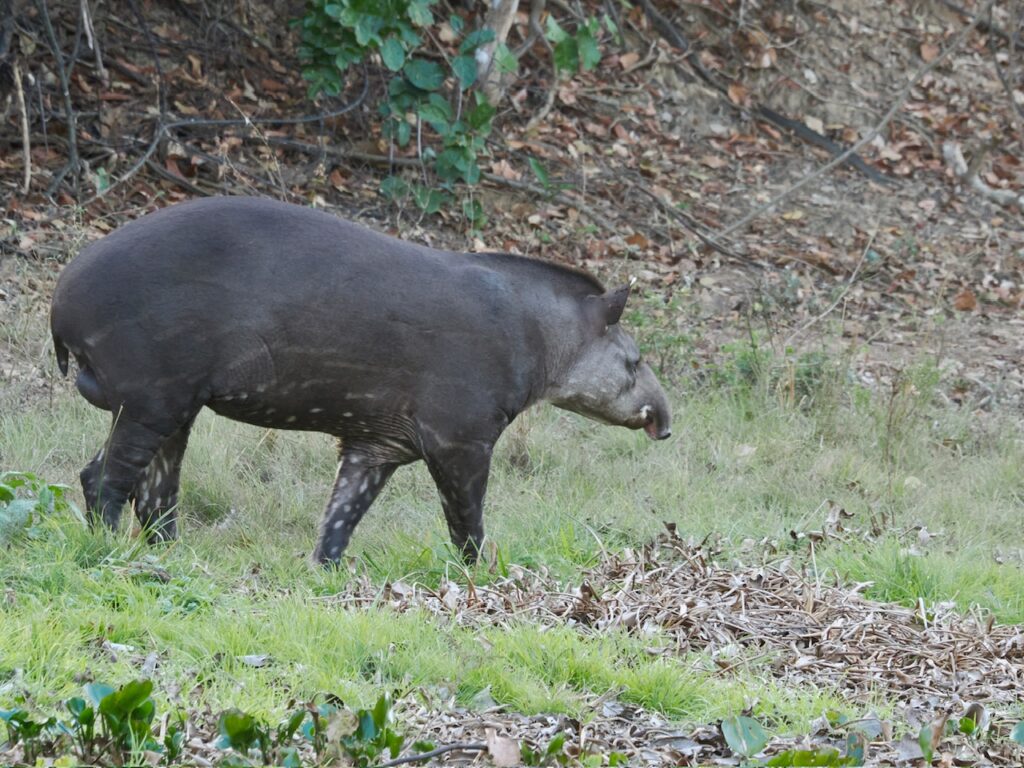
After dinner some of us went on a short night drive. There really was very little to see, just a potoo and a couple of deer. The highlight of the evening was actually seeing a tapir crossing the lawn 10 yards in front of the restaurant.

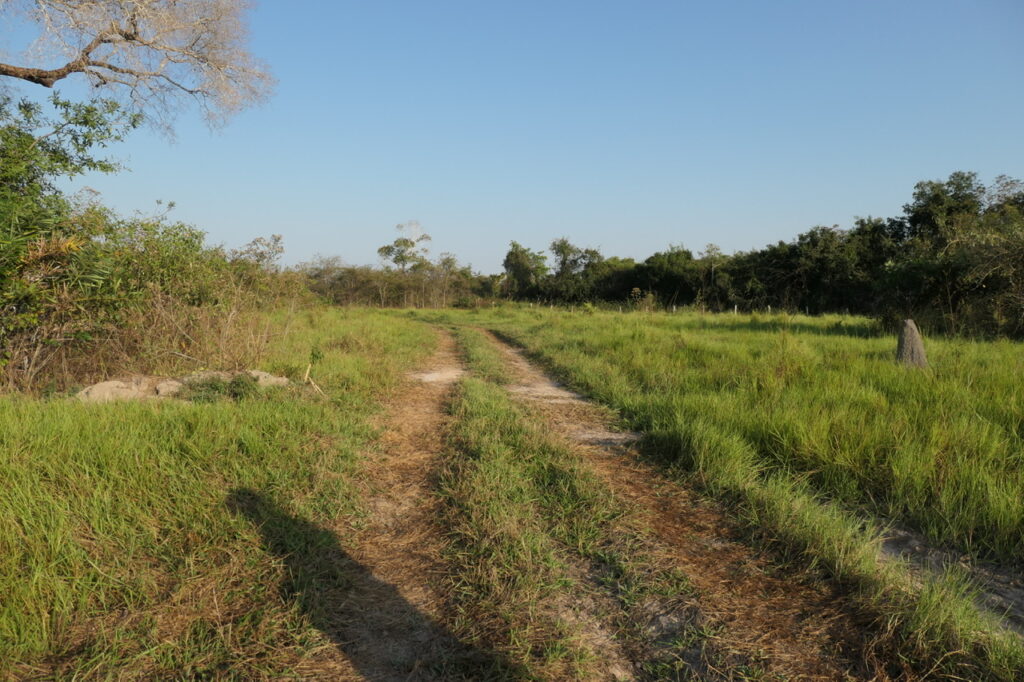
Next morning we set out on foot to explore the surrounding savannah. It is a lovely morning and still cool. There is dew on the bushes and I am surprised to see an orange-backed troupial bathing in the dew on the leaves.

This is a low key activity with time to observe the little things.

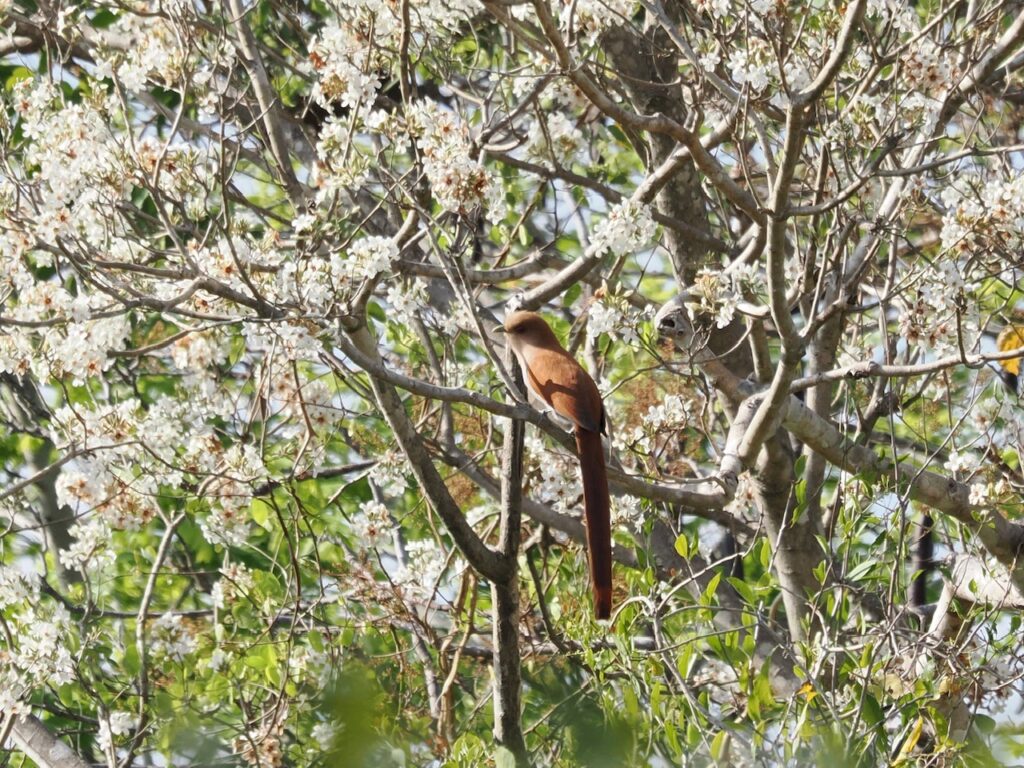
Although we also see some different birds including a red-shouldered macaw and squirrel cuckoo.

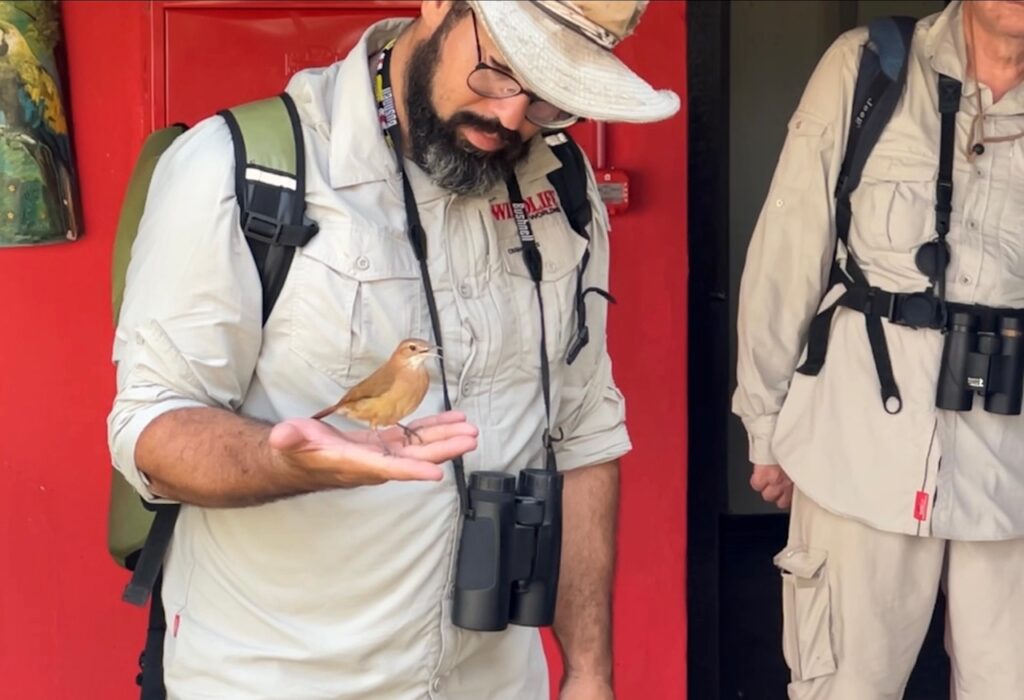
We have no sooner returned from the walk, when there is a knock on our door. Someone has come to tell us that Bruno has rescued a hornero that was trapped in the dining room. It is very calm and seems very reluctant to fly away. It sits on his hand for several minutes.

We then have time to relax before our afternoon walk. It is nice to be able to just laze around as this has been a very active holiday with early starts every day and for me it is an opportunity to catch up on writing the blog. I enjoy telling you about my adventures, but it is a somewhat time-consuming enterprise.

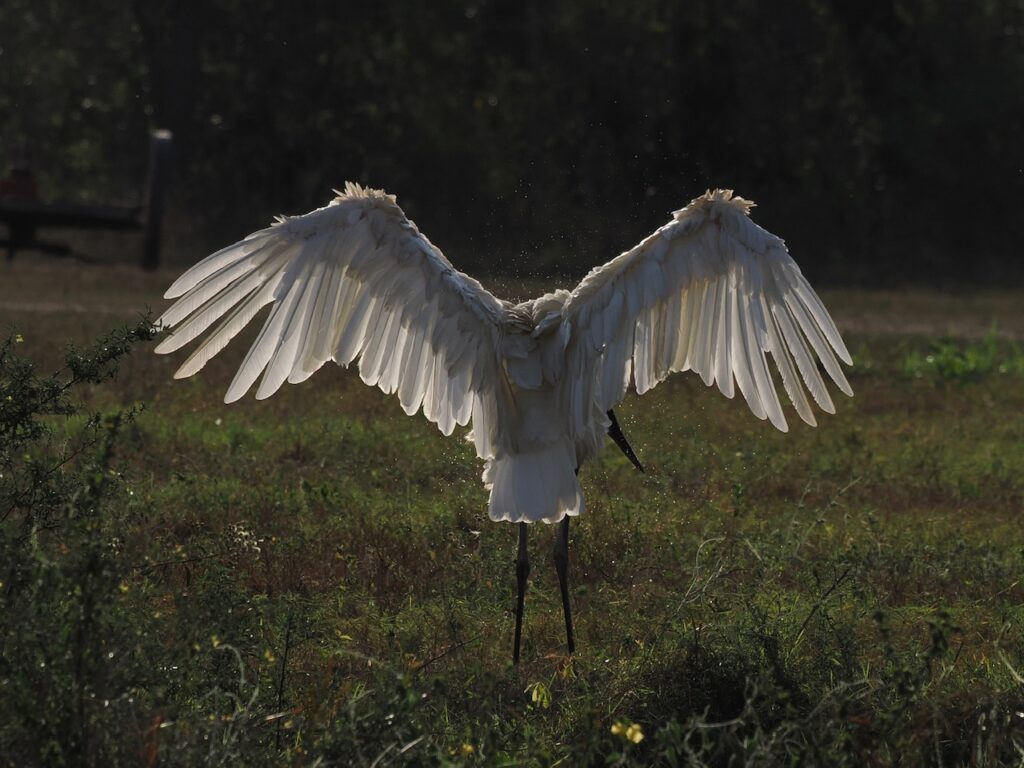
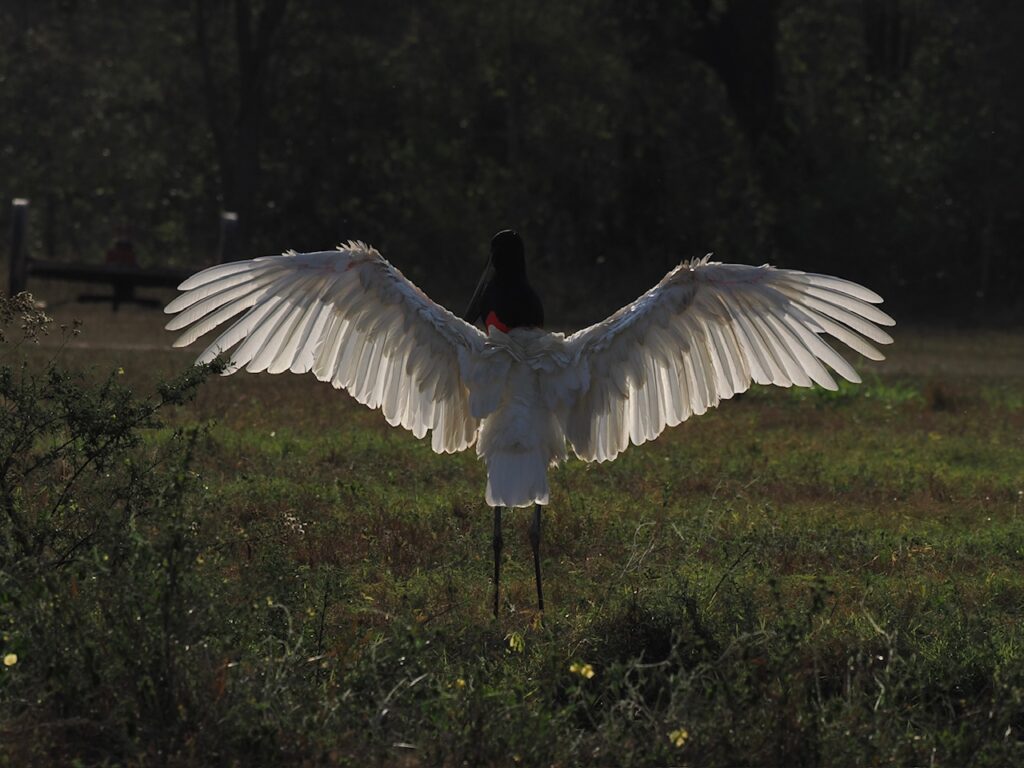
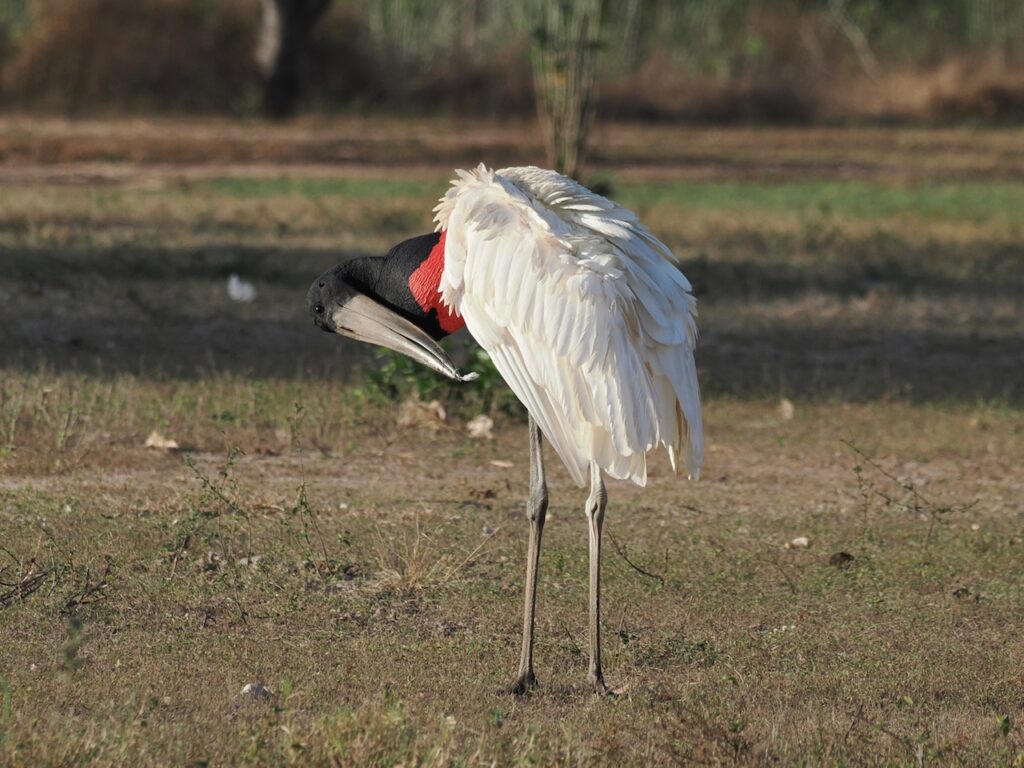
The afternoon excursion turns out to be a very short walk. Firstly we watch one of the resident jabiru storks bathing and grooming by a water-hole. They are massive birds and impressive at close quarters. He is beautifully backlit by the sun.

Then we make our way to a tiny pool at the back of the lodge and sit and wait. Pool is a bit of an exaggeration, it is no more than a puddle really, but it is a haven for all manner of birds. In the space of an hour we must have observed nigh on twenty different species, both large and small. I’ll just show you loads of photos to demonstrate how amazing it was!

This was our last day at South Wild Pantanal and everyone will be going their separate ways tomorrow. Some people will fly home and others have booked extensions. We shall be heading back to Porto Jofre for three nights for Paul to do some fishing and see whether he can catch a golden dorado.

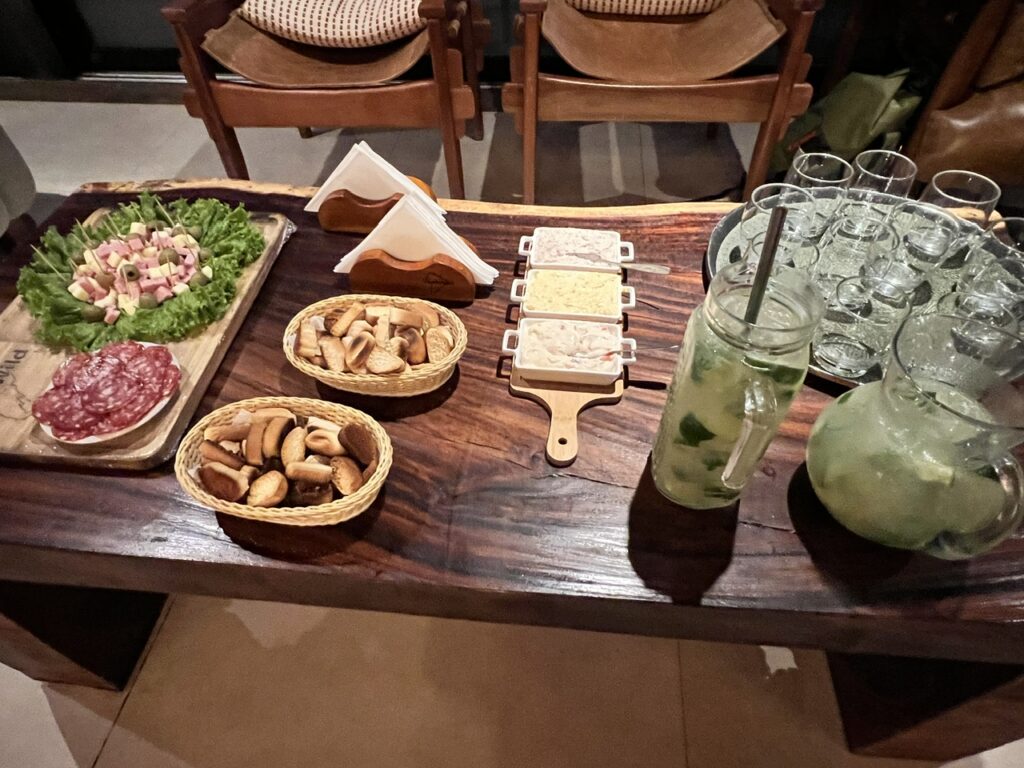
There are farewell sundowners before dinner. Caipirinhas and nibbles. Delicious.

Naturezas, Porto Jofre

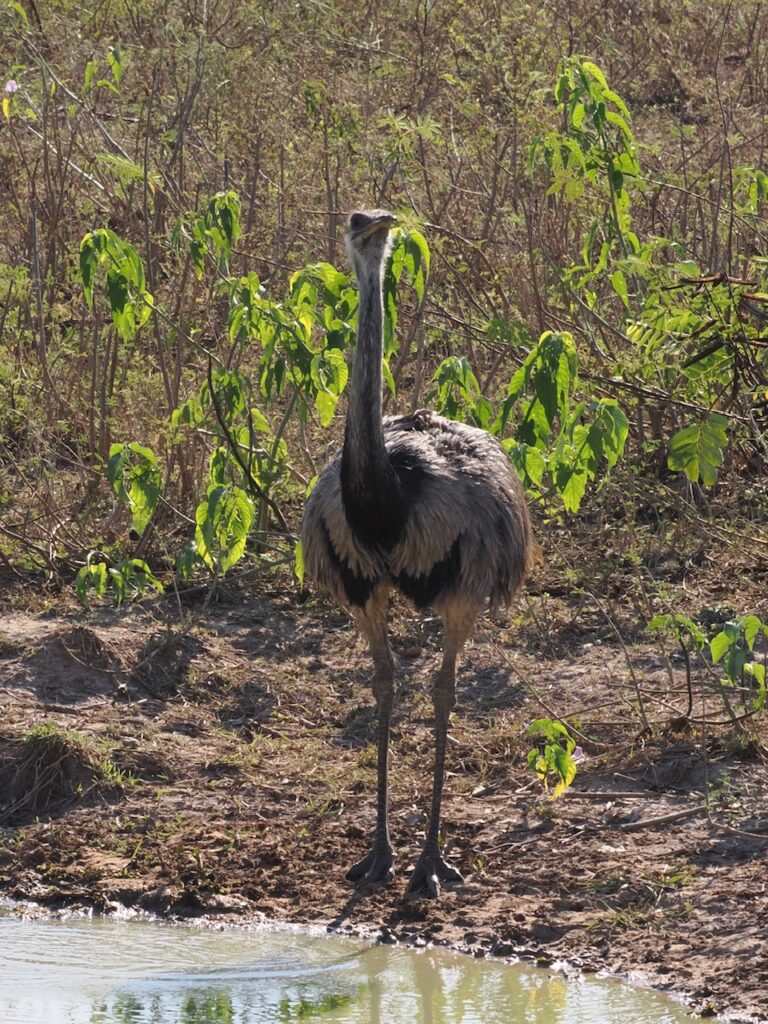
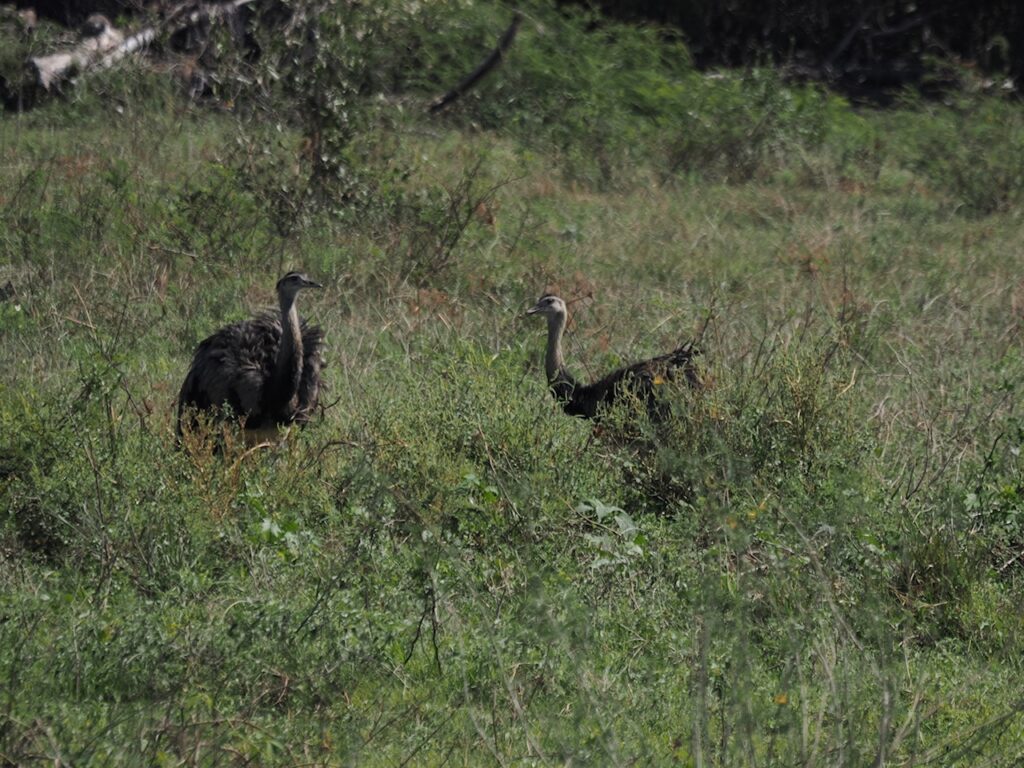
Although hot and dusty, we are pleased to be travelling in the open truck rather than in an enclosed air-conditioned vehicle. It enables us to feel part of the environment and take photos along the way. There is such an abundance of bird life here. I do not think I have ever seen such a density of raptors, so there clearly is plenty to eat. A rhea takes a drink at a pool. They are not such a common sight so we stop for photos.

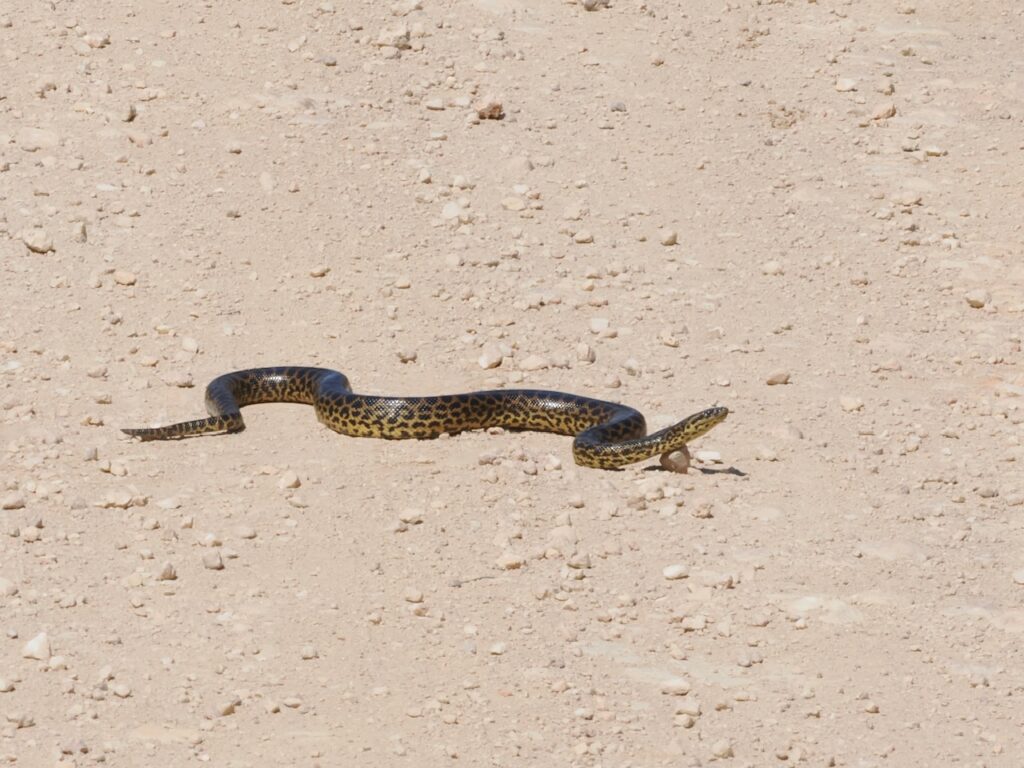
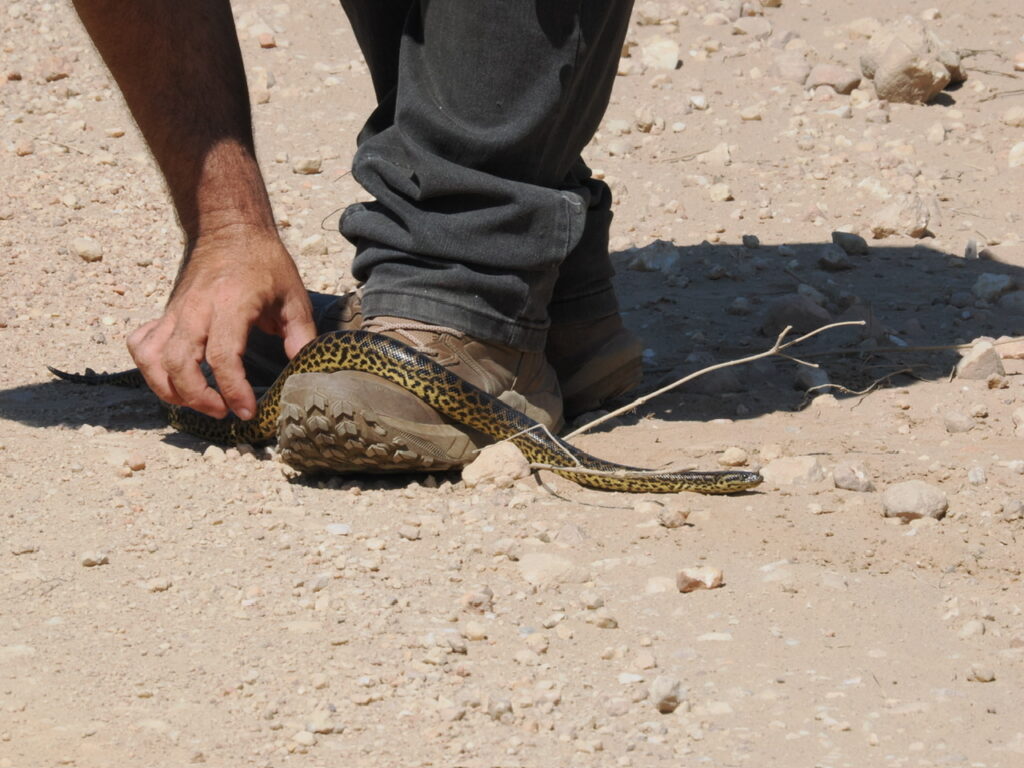
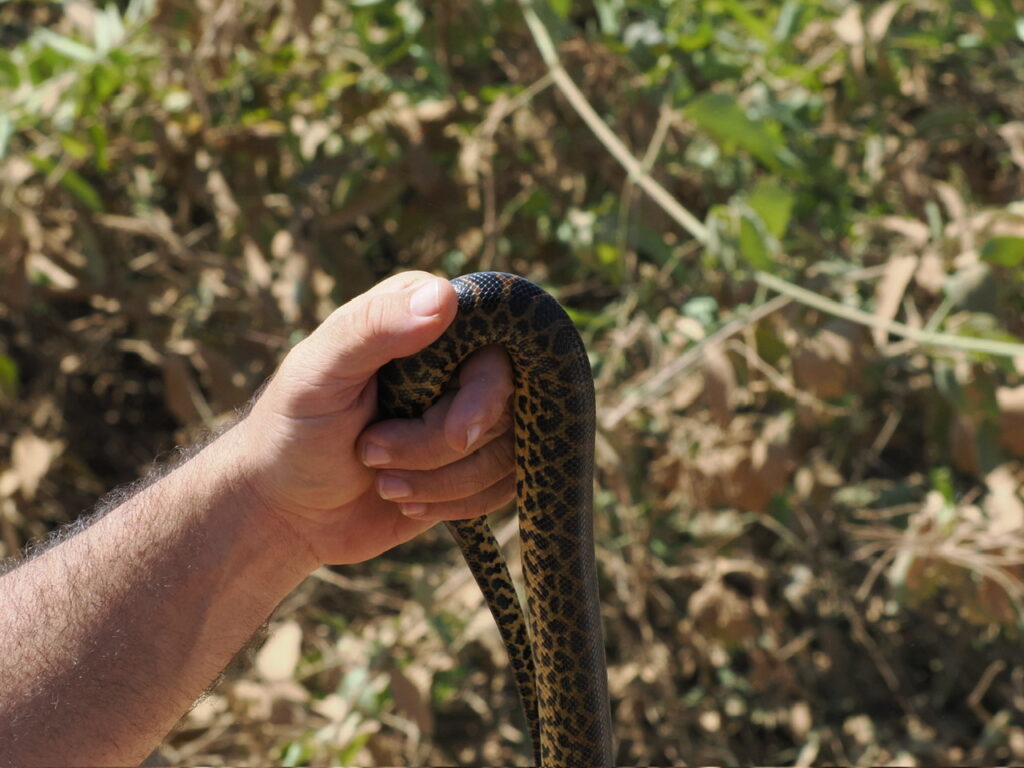
The aim is to make as few stops as possible as it will take 5 hours to reach Porto Jofre but we have to stop for a baby anaconda which is crossing the road. Bruno then proceeded to pick it up to give us a better view. I think some of us felt this was a bit bold and hoped he had identified it correctly!

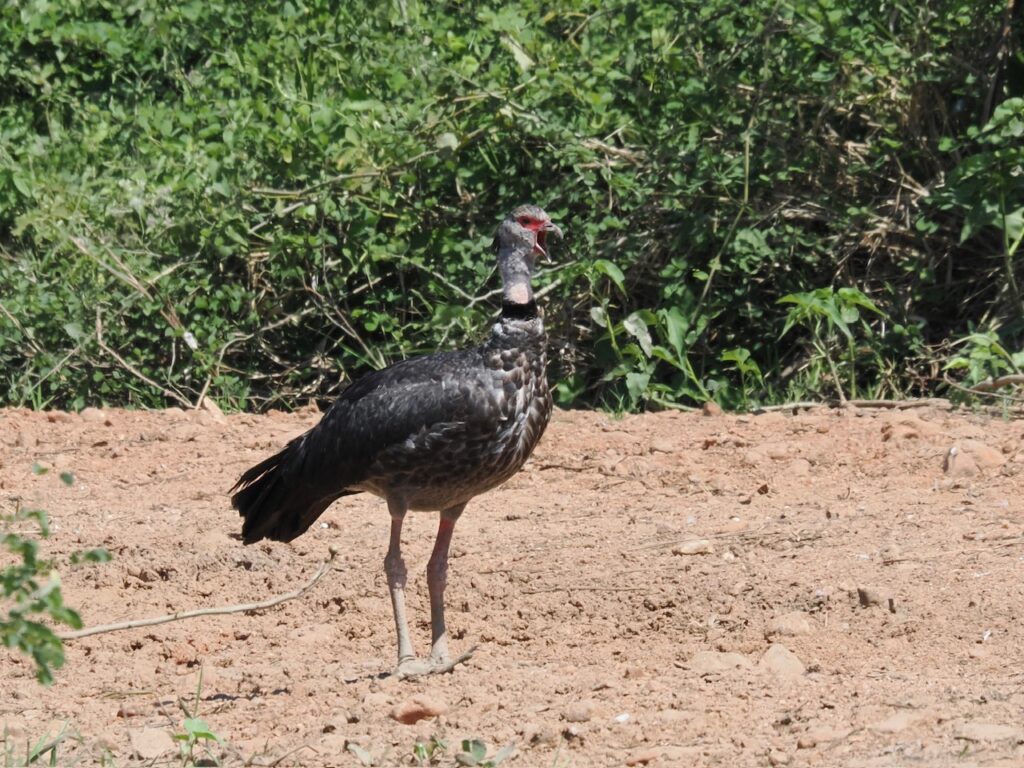
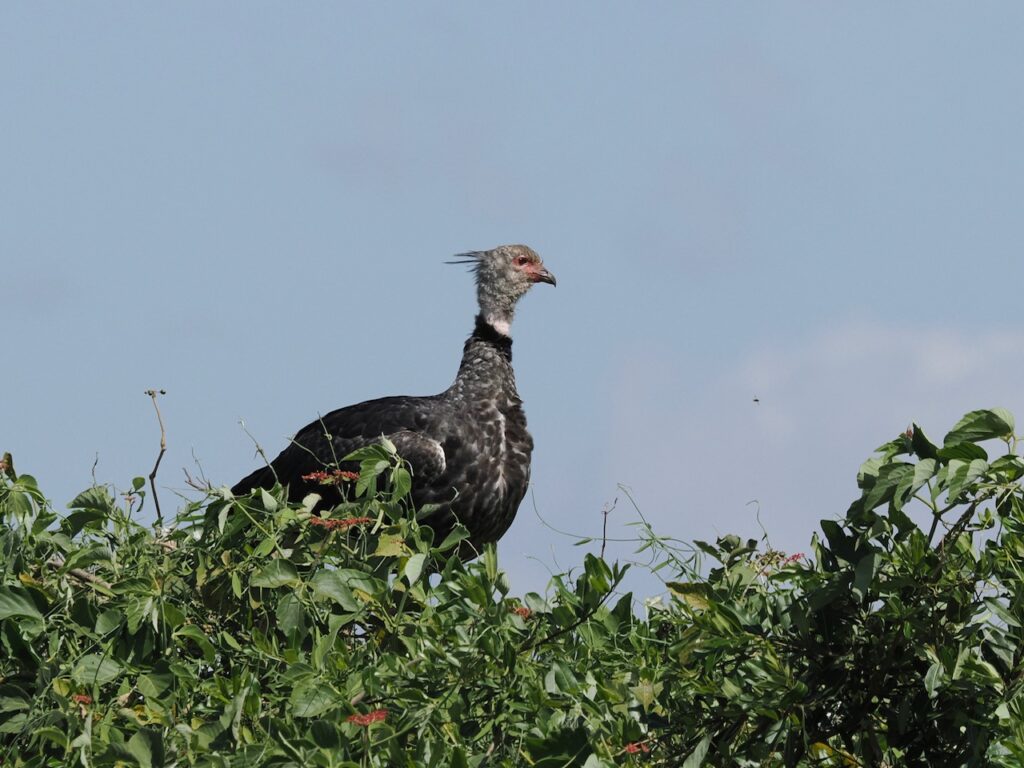
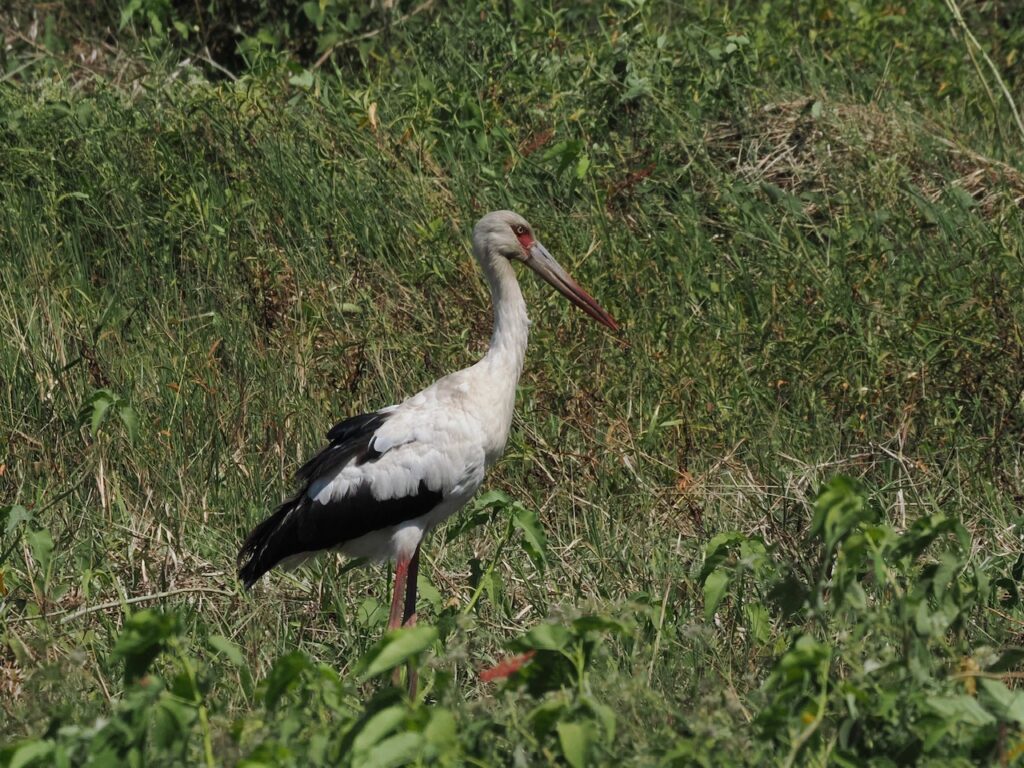
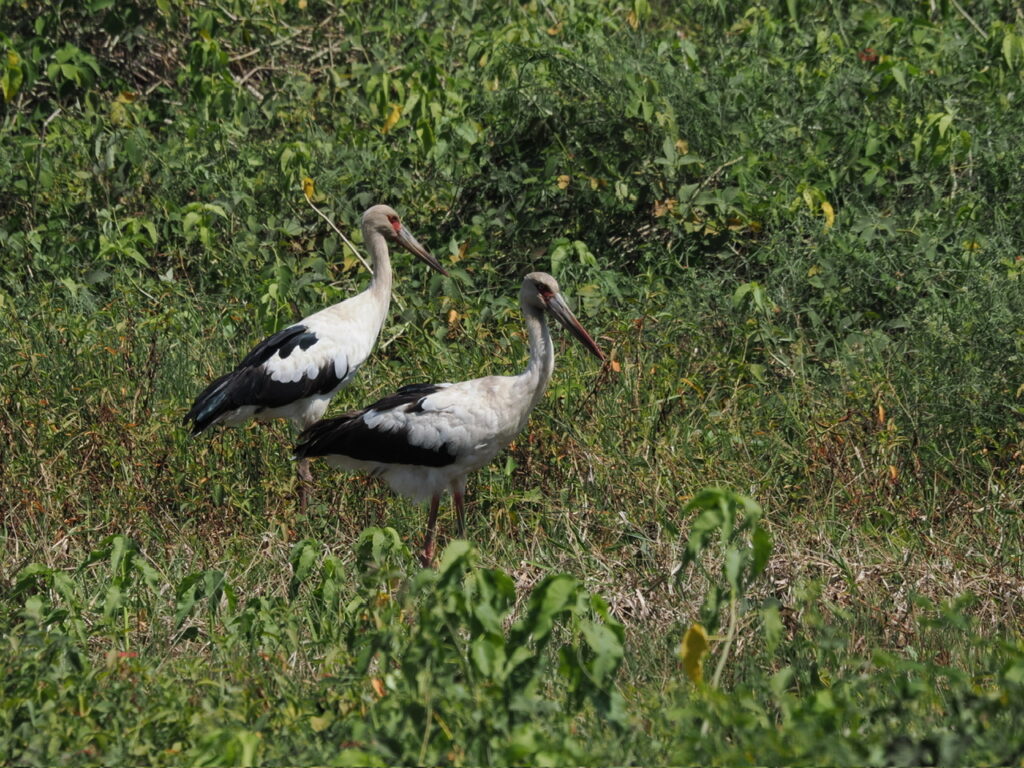
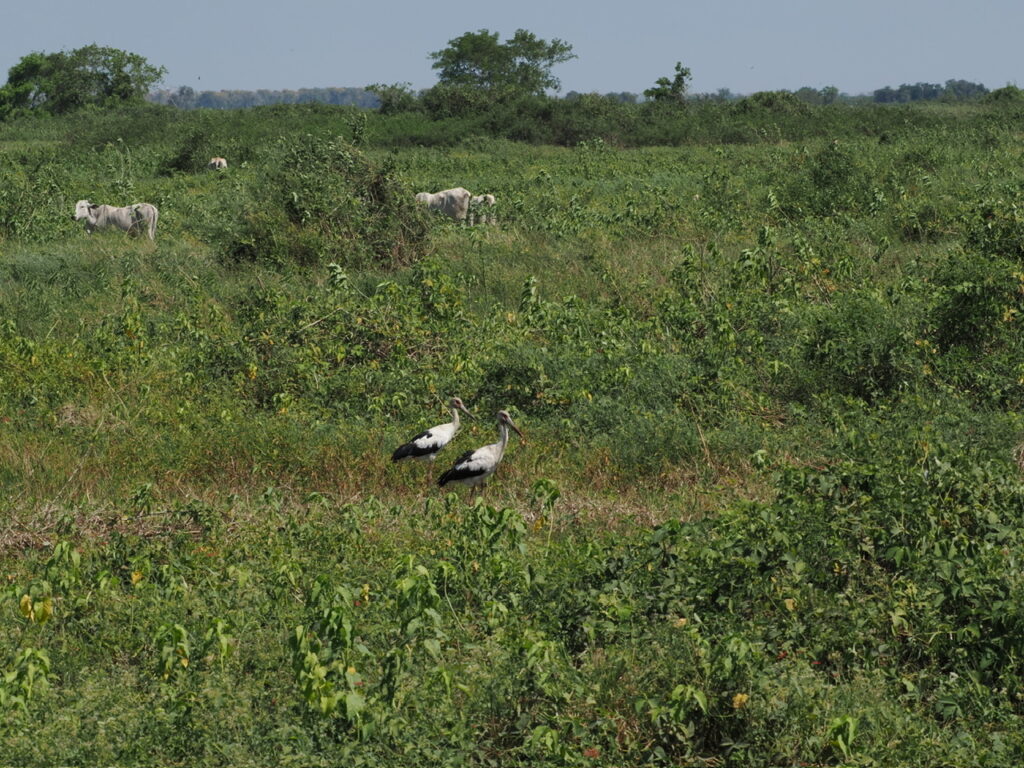
We also stopped for a southern screamer and two maguari storks which are rare sightings here.

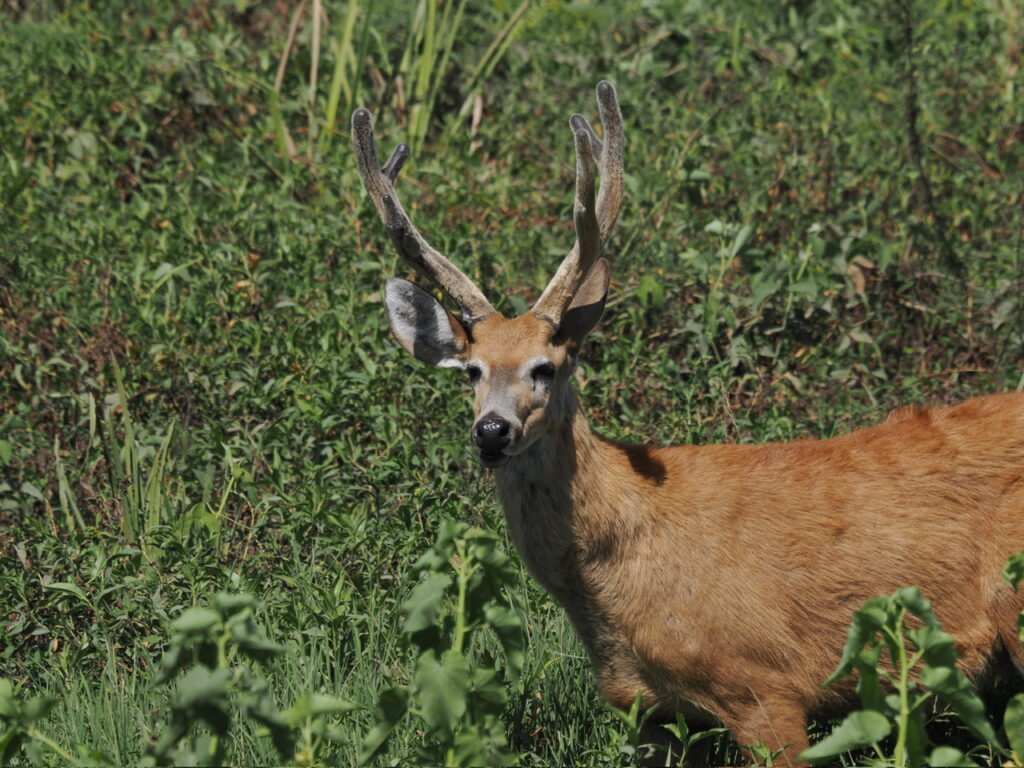
The only mammals we saw were cattle and a lone marsh deer.

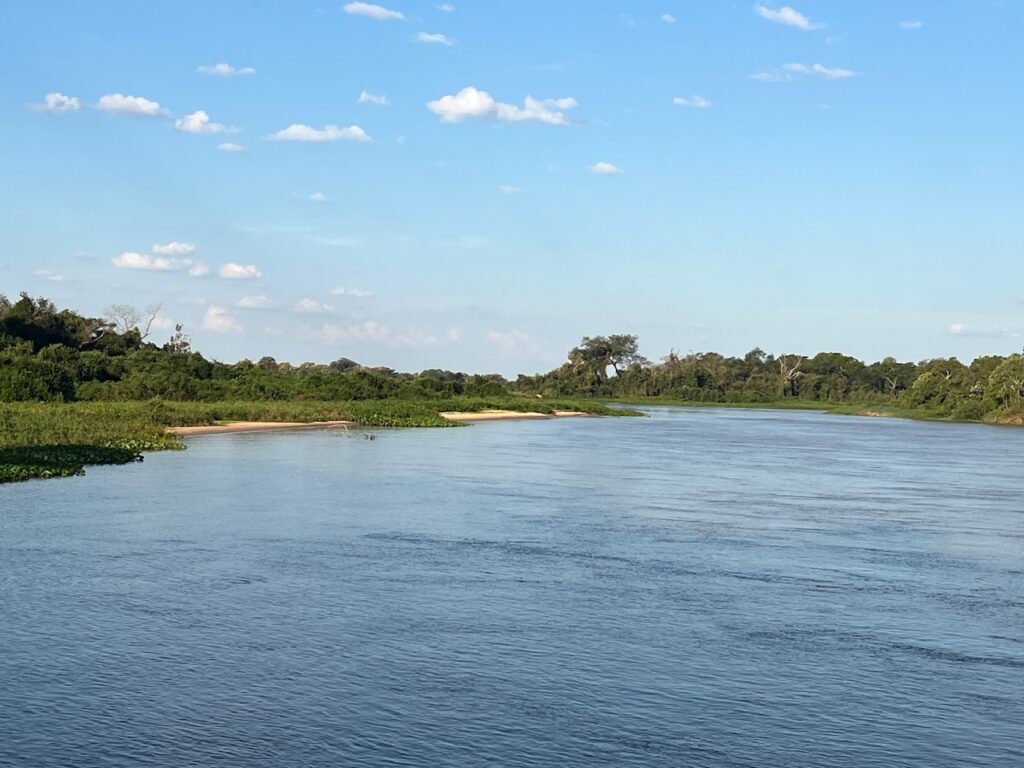
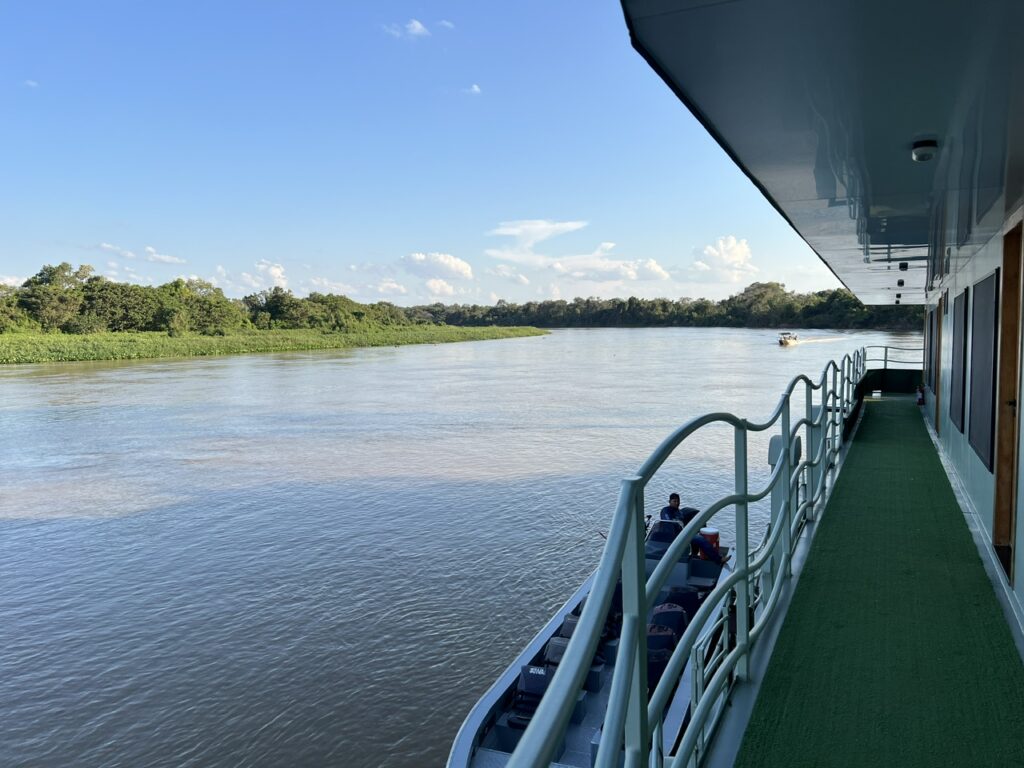
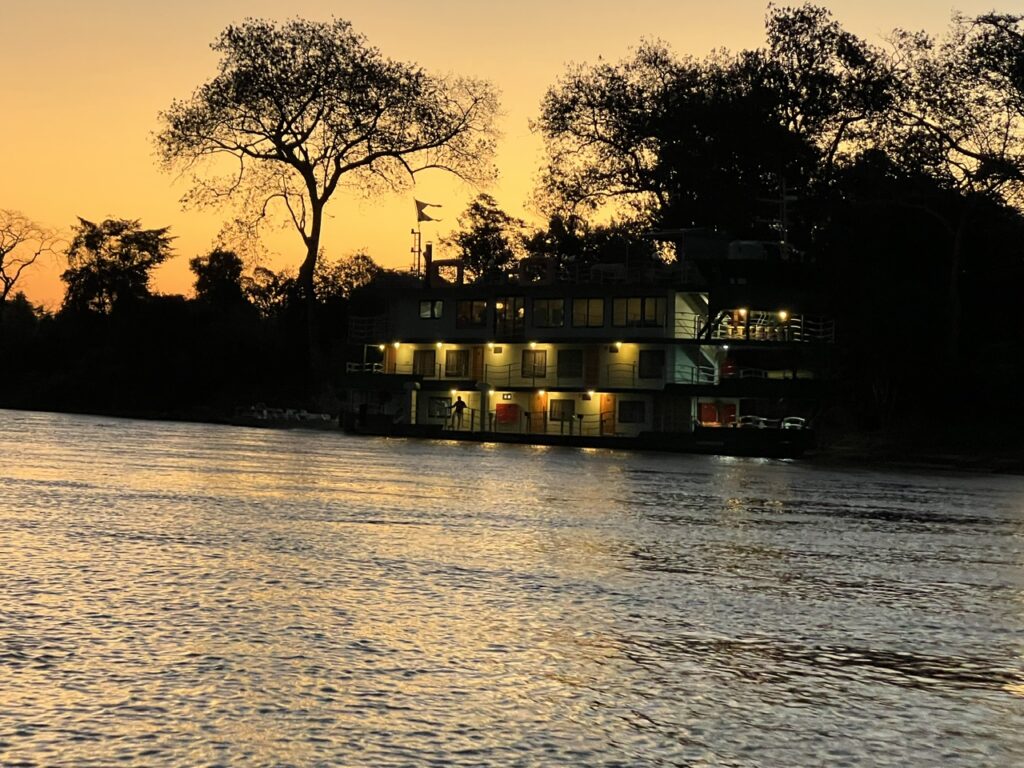
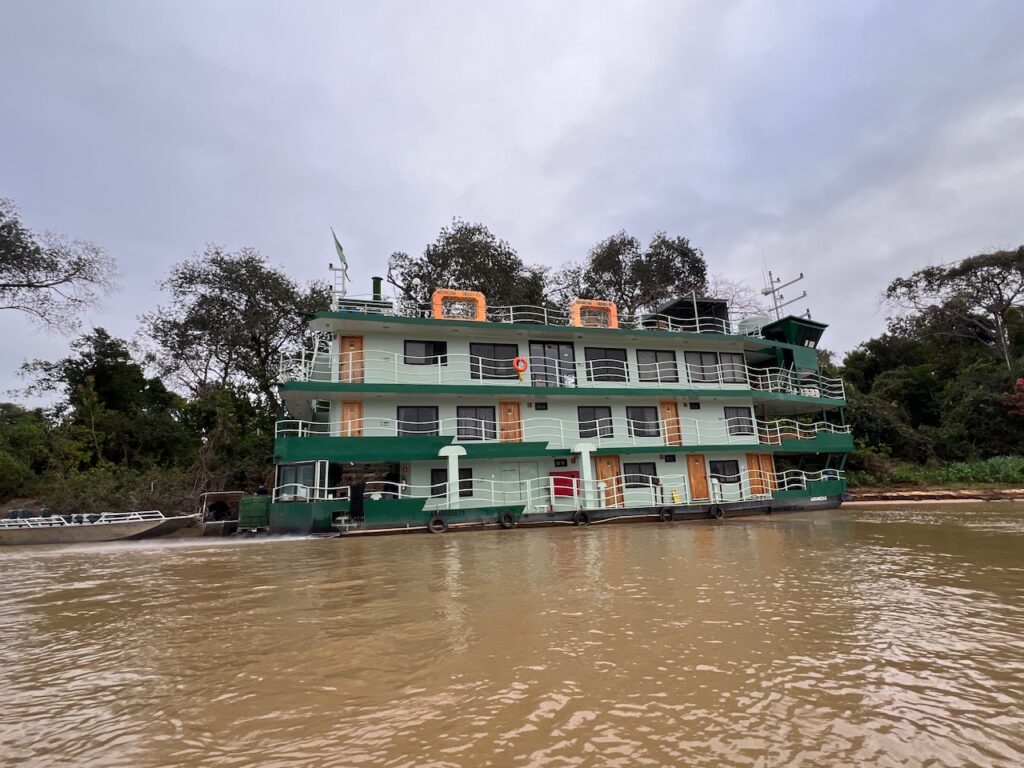
We finally arrive in Porto Joffre at 13.15, have a quick toilet break and then board a boat to take us the twenty minute journey north on the Cuiaba River to our accommodation for the next four nights – South Wild’s Naturezas houseboat. It only has 7 rooms so we have exclusive use. It is very comfortable and moored in a stunning location on the river.

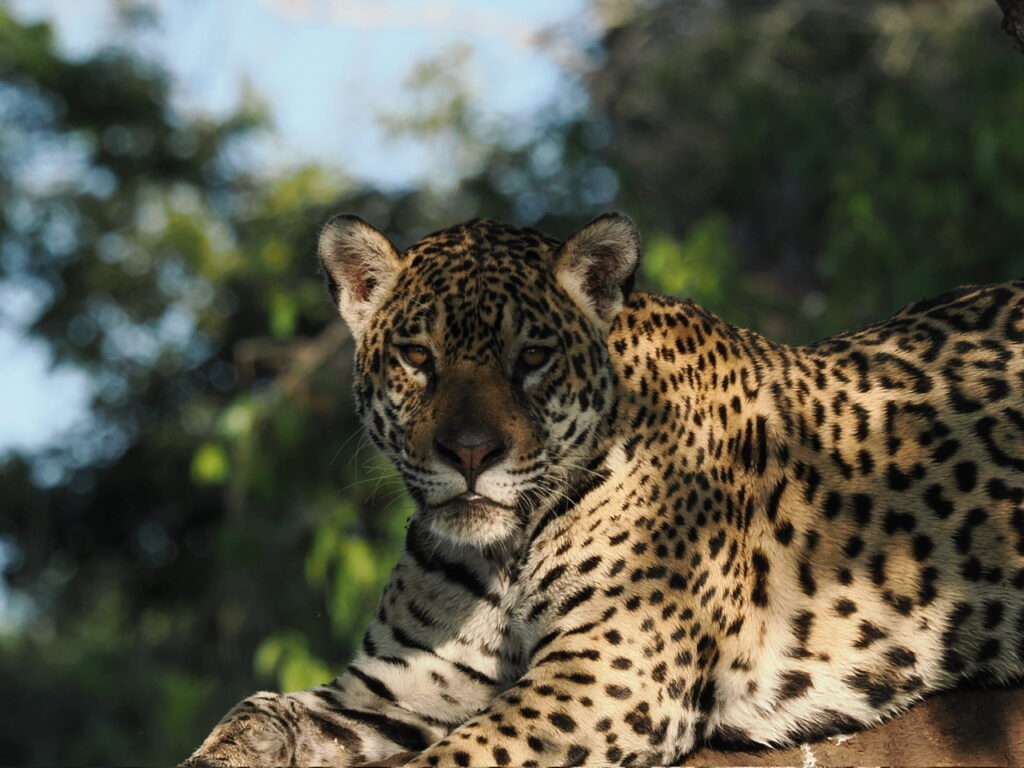
We have lunch, settle into our rooms and freshen up with a blissful shower before heading out in search of jaguars. We do not need to go far. A mass of boats indicates that a jaguar has been sighted and we nose our way into the water hyacinths lining the banks. Amber is lying on the bank no more than 15 yards away. She is the daughter of Patricia and born in 2016. The light is fading but photos are still possible.

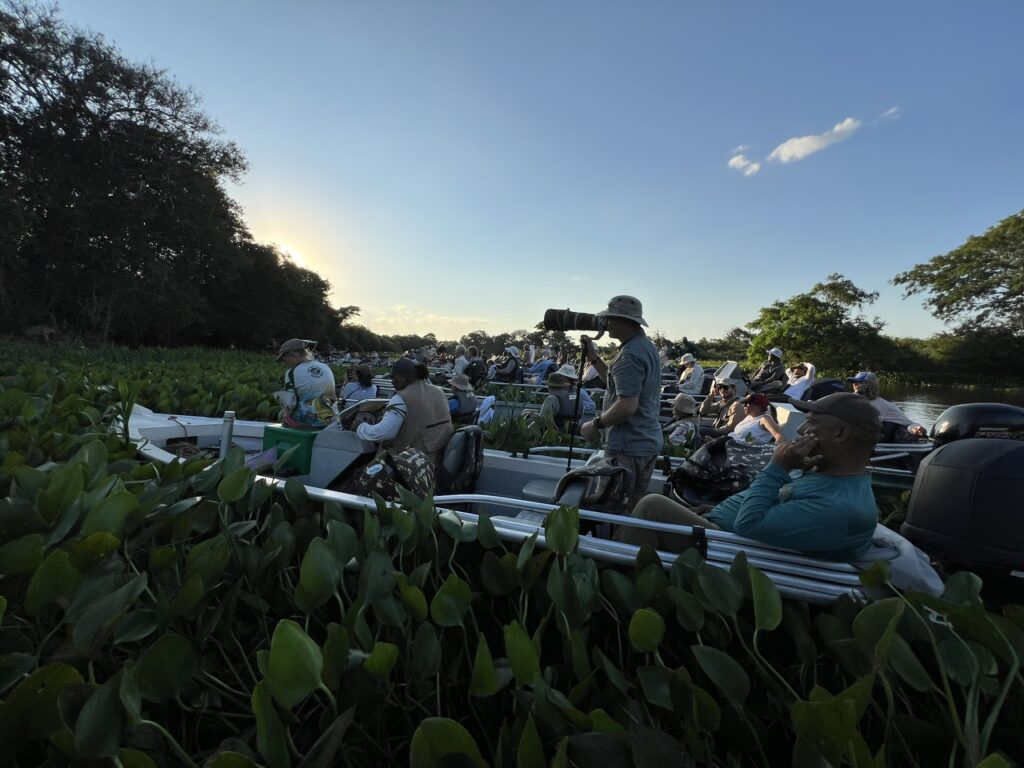
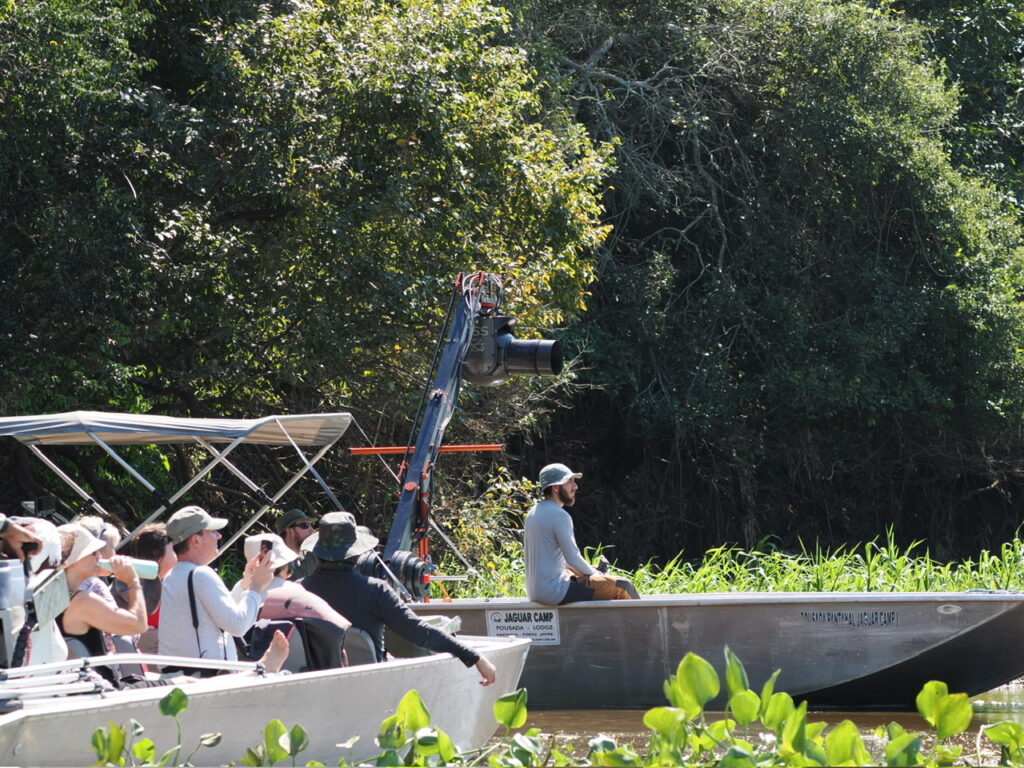
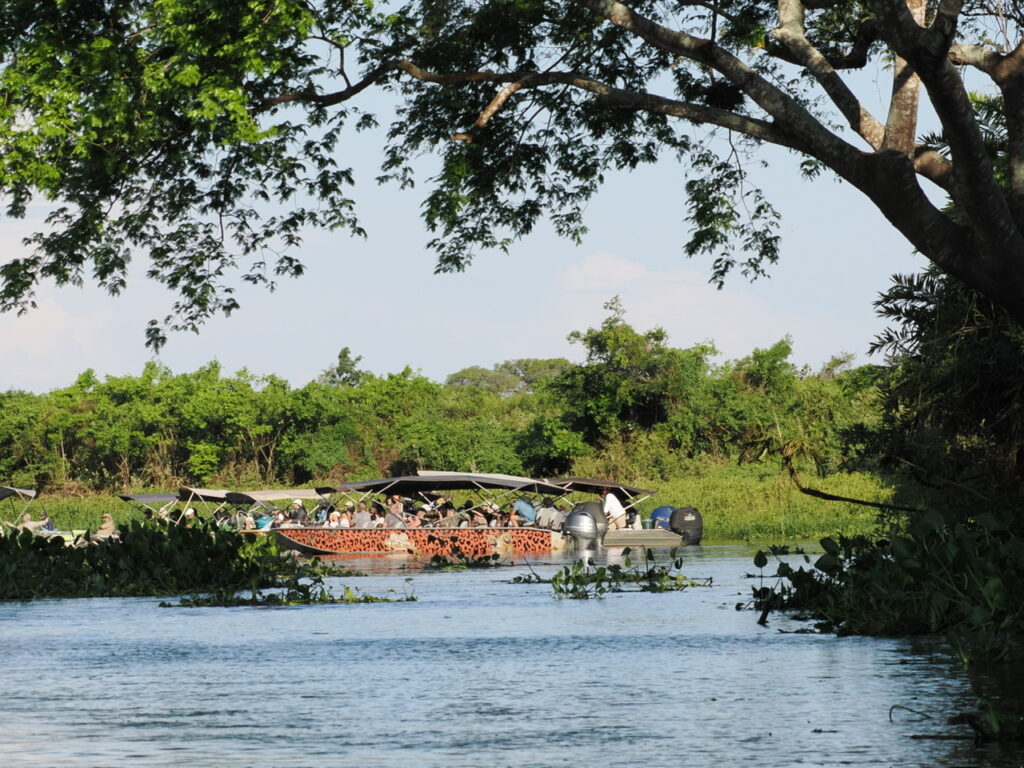
I knew from You Tube videos that the boat crowding around a jaguar sighting can be bad but I am not sure that any of us were prepared for the reality. Quite horrific and the boats include a BBC crew with a huge camera on a gantry.

We return to our boat feeling elated at seeing a jaguar but disturbed by the number of boats and really hope that not every viewing is going to be like this.

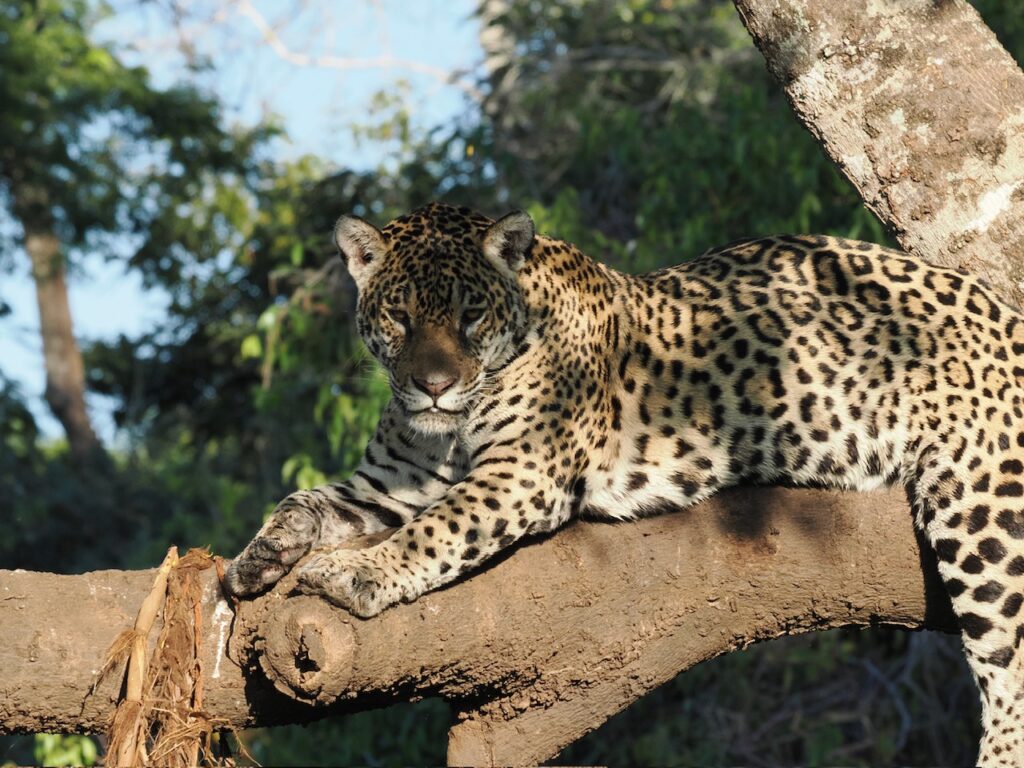
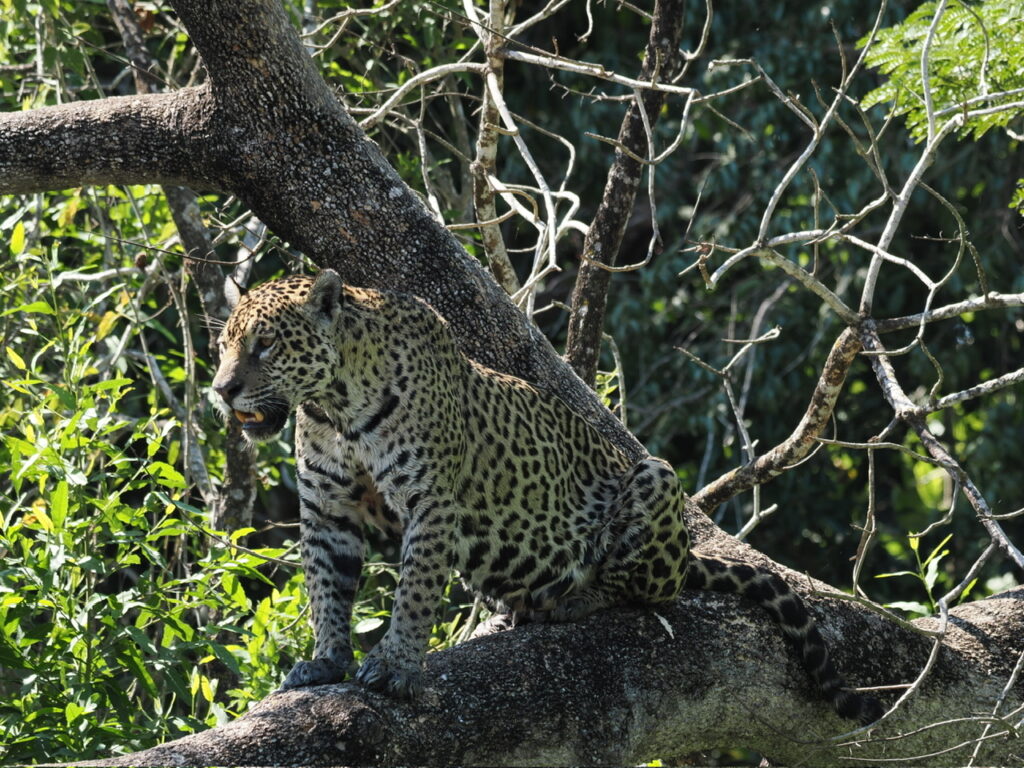
An early start sees us back on the river and very quickly we find Amber posing beautifully on a branch. There are a lot less boats but the BBC crew are already there.

The light is perfect and I am delighted with my photos.

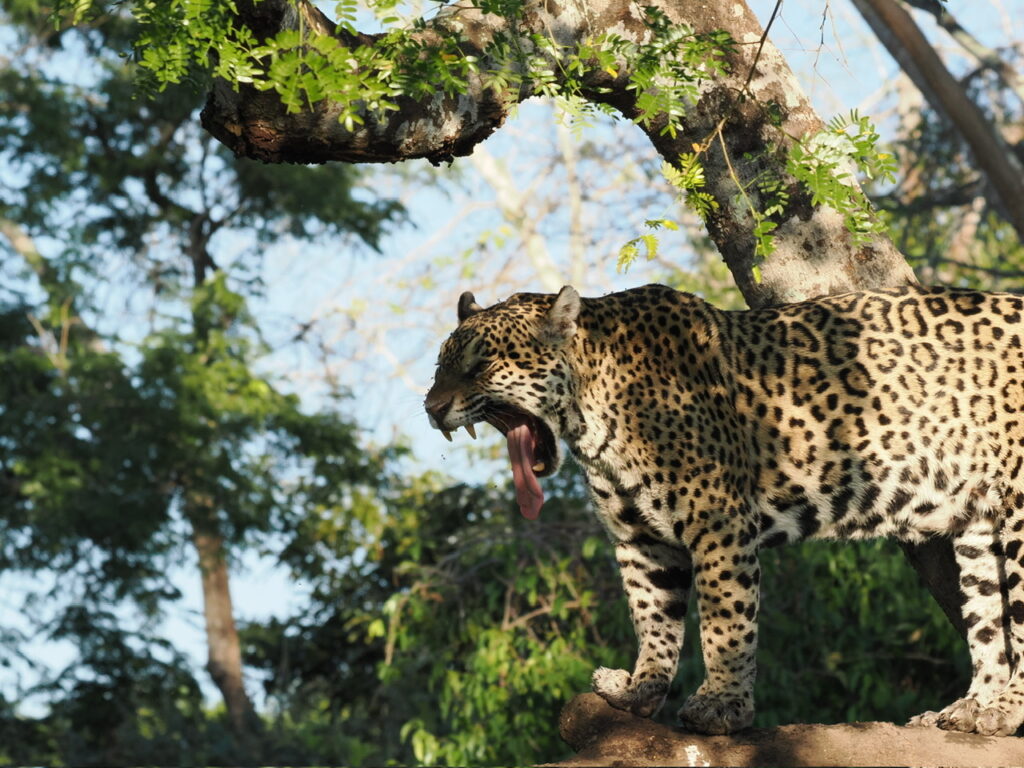
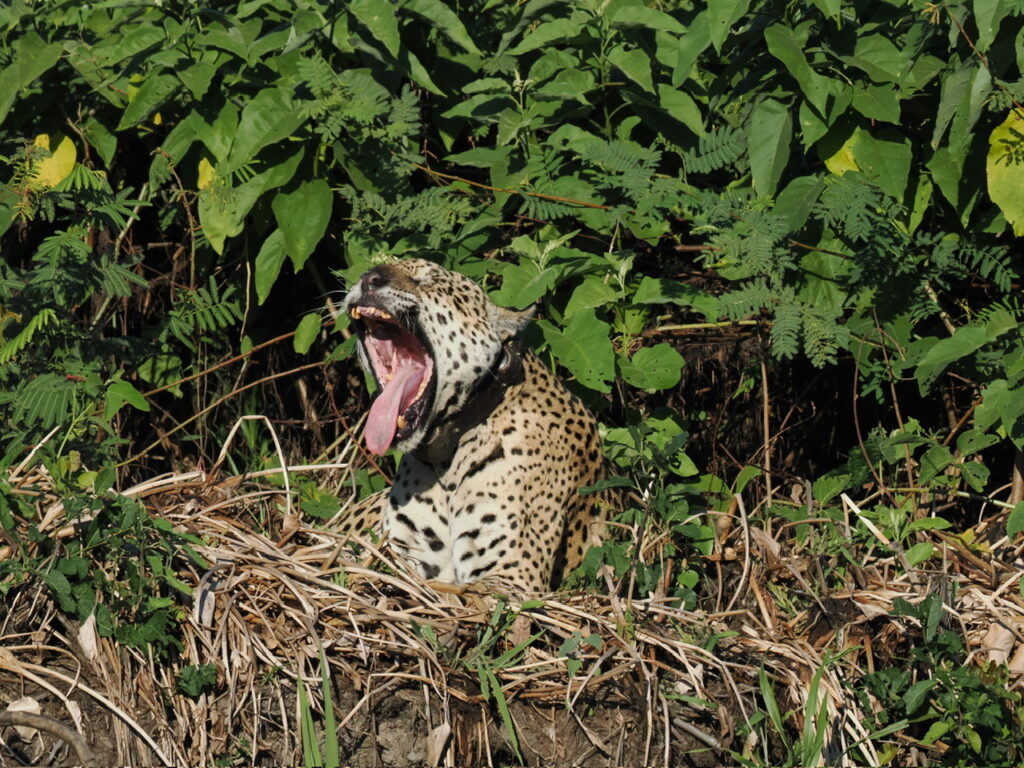
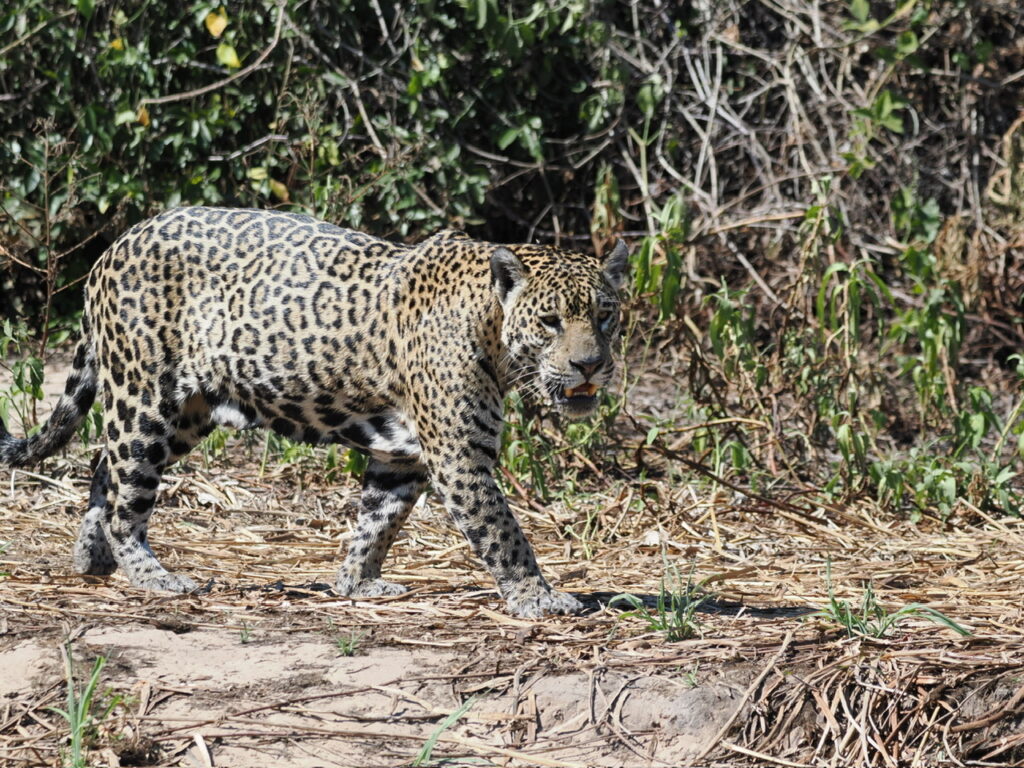
Amber finally tires of being photographed and sidles off into the bush. After only 5 minutes we spot another jaguar on the river bank. It is Ousado who wears a radio collar because his paws were badly burned in fires in 2020. The collar was put on him to check he was alright but was meant to drop off after 3 months. It has remained stubbornly attached but makes him easy to identify. He is thought to be 11 years old. We only see him for a couple of minutes but he treats us to a nice big yawn.

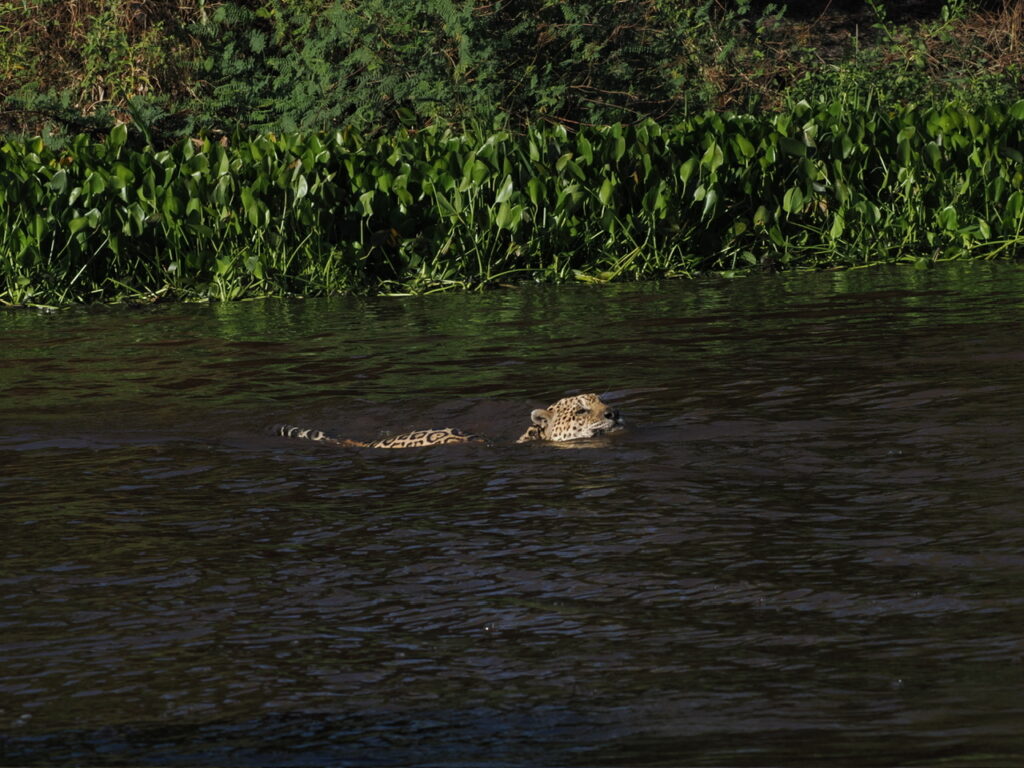
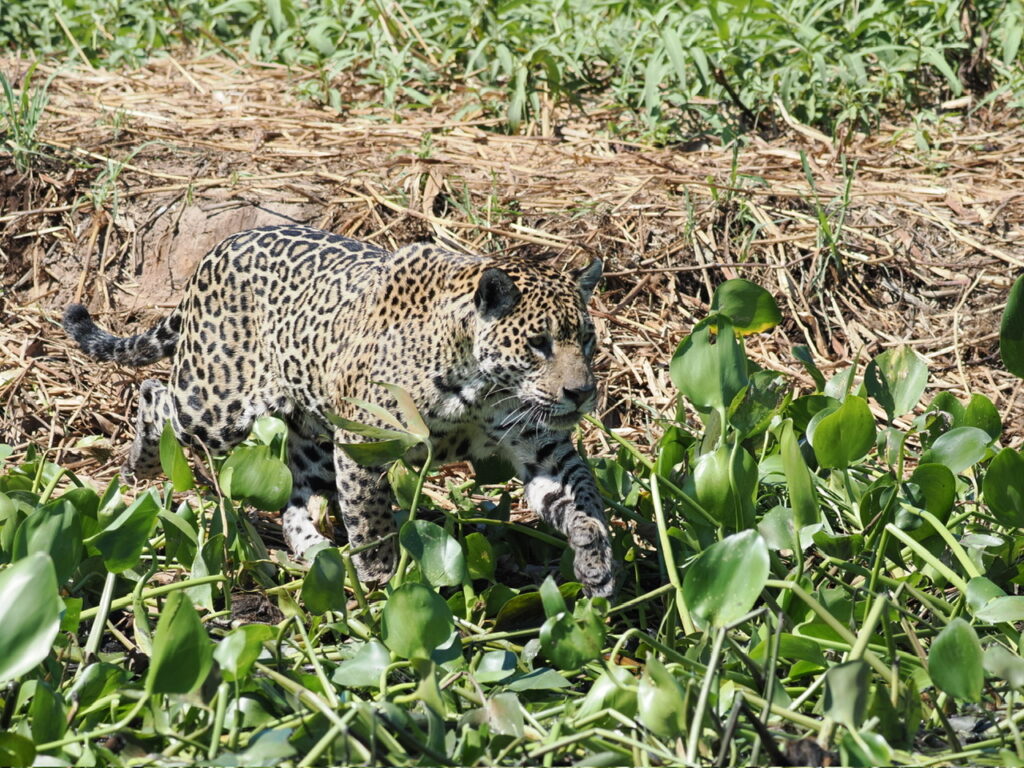
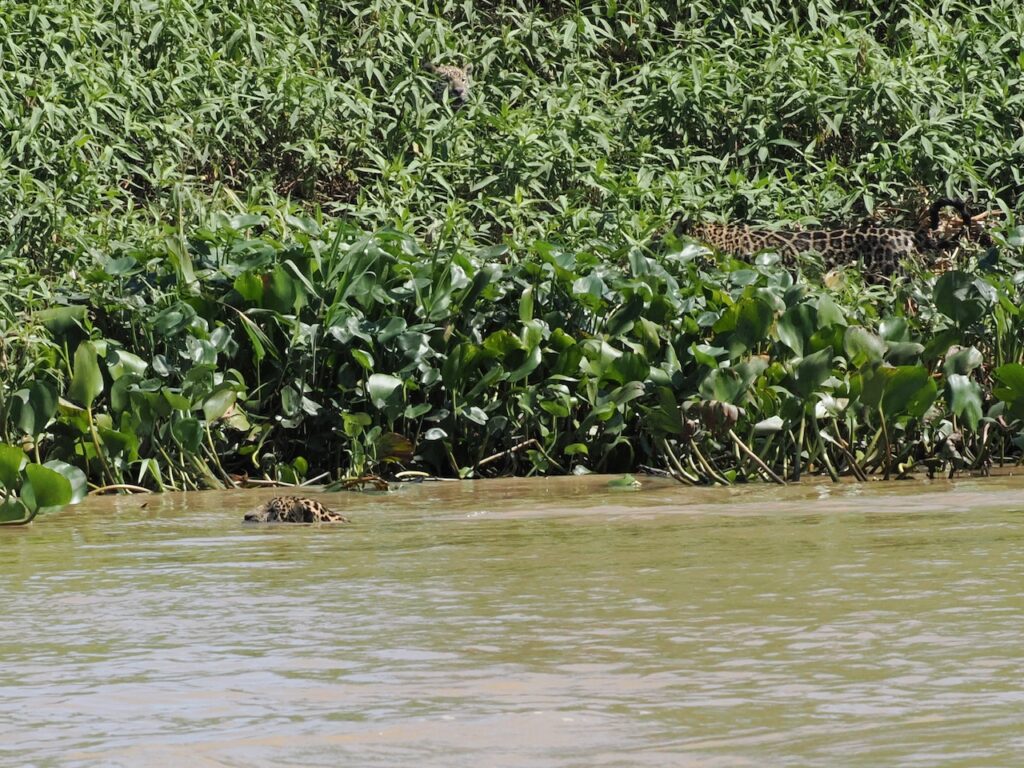
Minutes later we see yet another jaguar swimming across the channel and then proceeding to hunt. This is Browser who is the son of Amber. He shows us a full range of behaviour, including hunting when he pounces into the water plants just feet from us. He does not actually make a kill but it was exciting to watch. We also see Ginger, sister of Amber, swimming across the river. Four jaguars in the space of an hour. Quite remarkable!

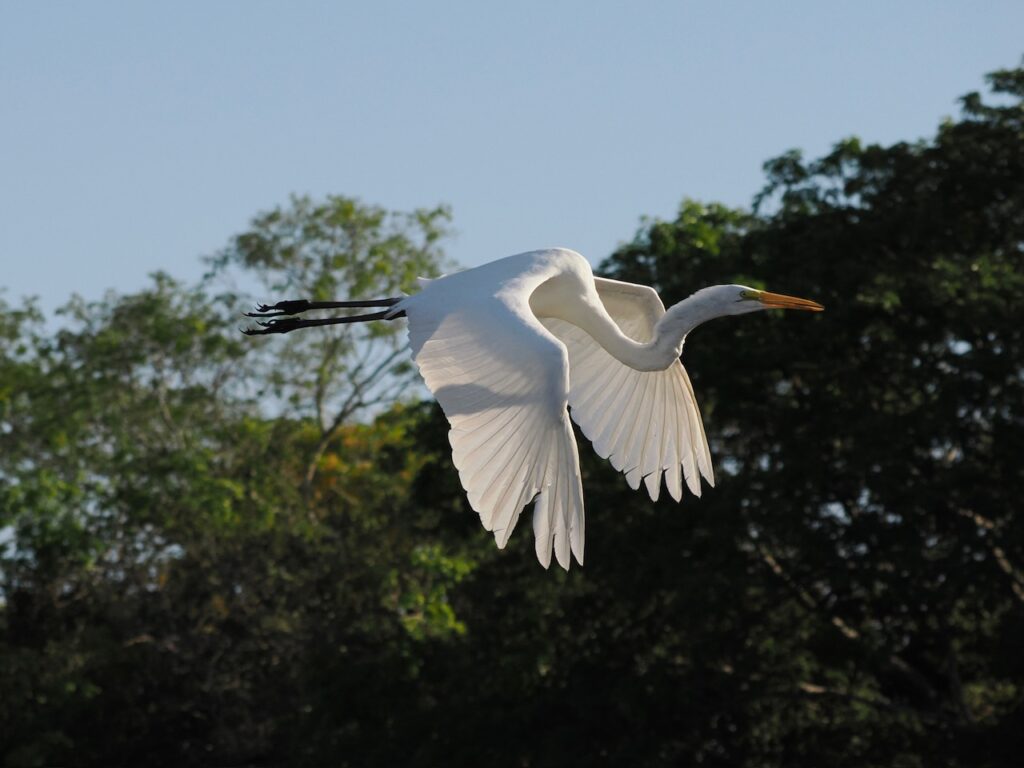
Our morning treats are not over though. We see egrets flying elegantly and one obligingly caught a frog just as I pressed the shutter. Jabiru storks are catching fish, capybara sunning themselves, the scenery is just breath-taking and very unusually a howler monkey is down on the ground.

As if that were not sufficient, we once again encounter Amber on our way back for lunch.

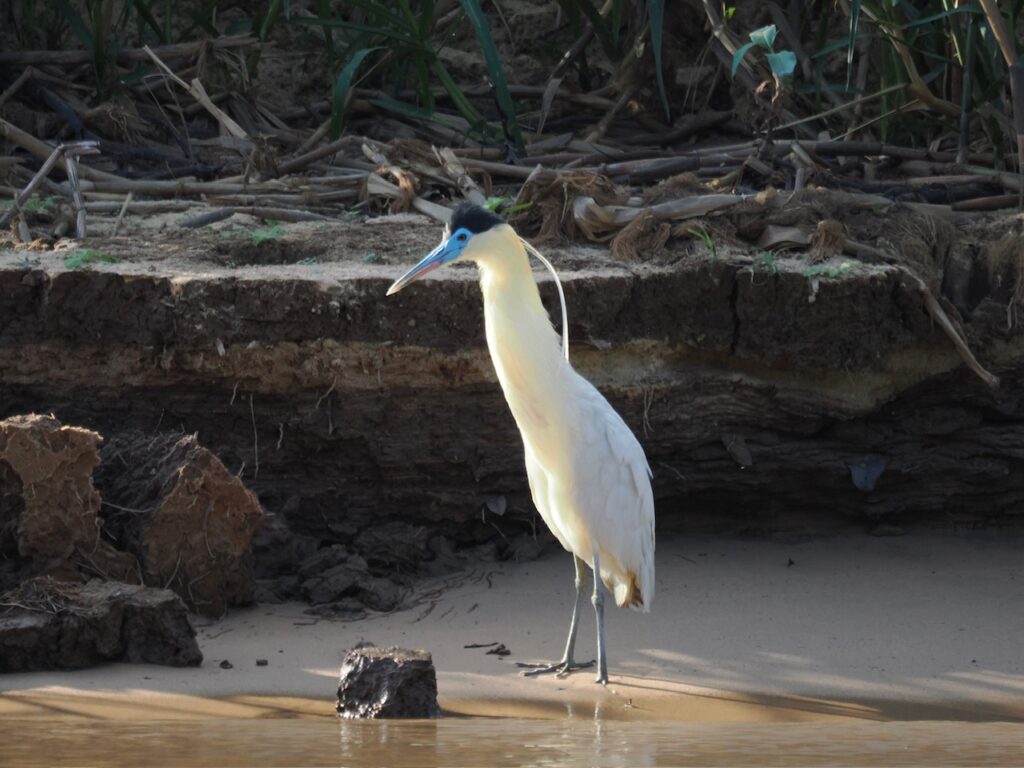
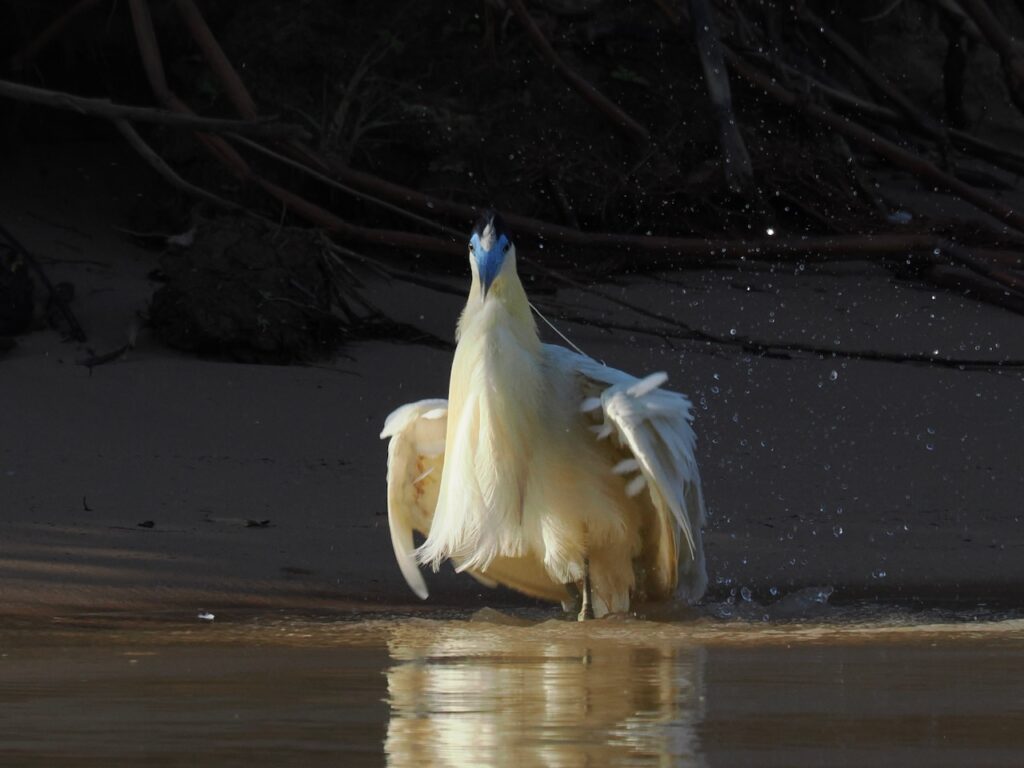
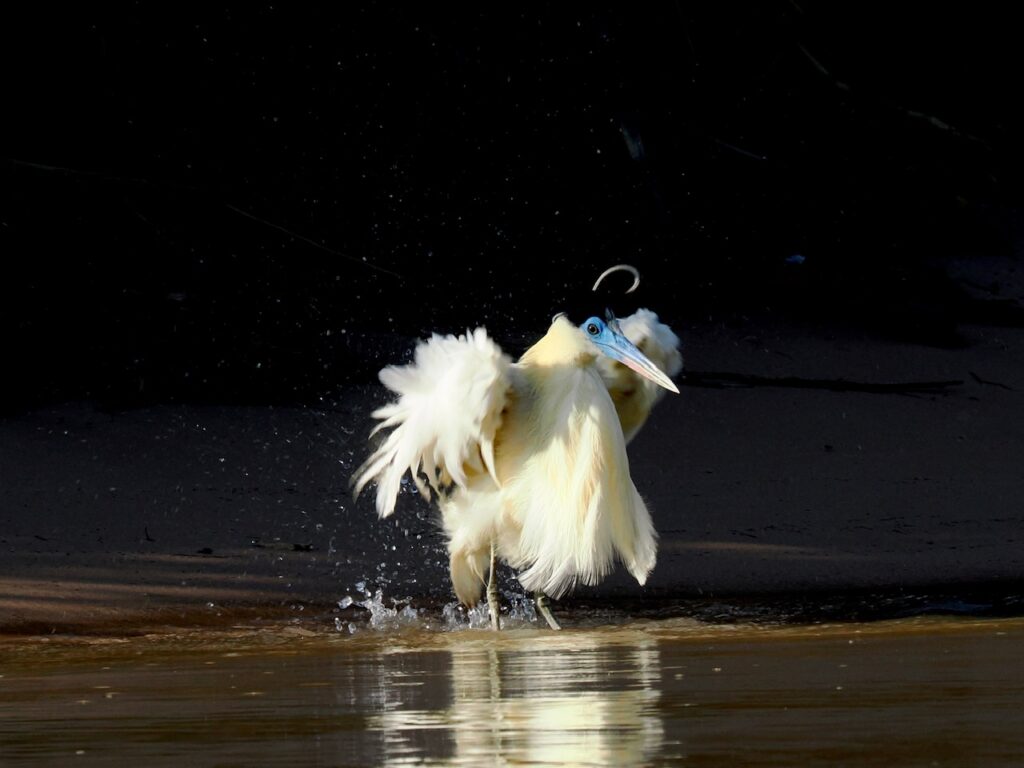
No jaguars presented themselves on our afternoon excursion but it was nonetheless enjoyable for that. We started by seeing a black-capped heron. Probably one of the most lovely birds I have ever seen. We were not particularly close so it was challenging to capture, but we all spent a while trying.

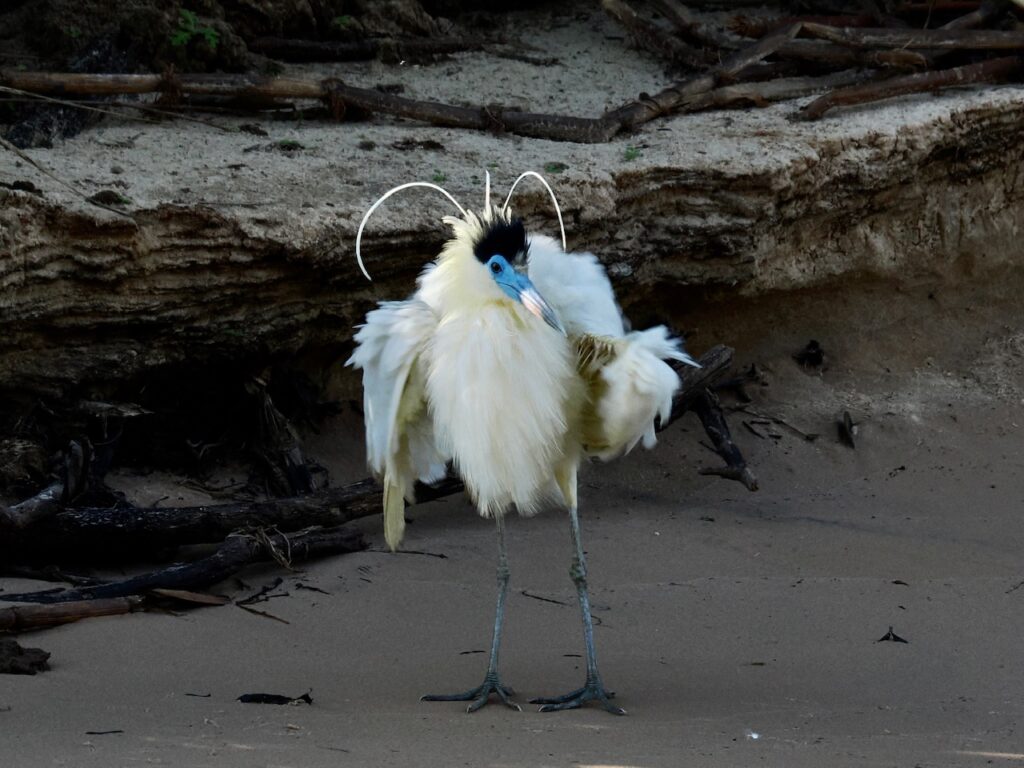
The final result, of all the bathing, results in a glamorous bird ready to party, but just missing the handbag. It reminds me of Big Bird in Sesame Street😂

We pootle about the backwaters admiring the bird life and tranquility. Yes – I said tranquility. It is only when jaguars appear that boats swarm in, seemingly out of nowhere, like wasps honing in on a honey pot.

Every day on the river brings new experiences. It is indeed wonderful to encounter a jaguar, and it was the main purpose of my trip…

so named by the native people Yag-uar meaning ‘One Bite” as it kills by a single bite through the skull. Jaguars in The Pantanal are slightly different in that they mainly hunt caiman and actually aim their bite behind the skull, which is too thick to puncture

… but there is so much more to see, as our next afternoon on the Pixiam River illustrated. But I get ahead of myself. We are up bright and early and the usual fauna presents itself. However, this being The Pantanal, there is always something new to observe.

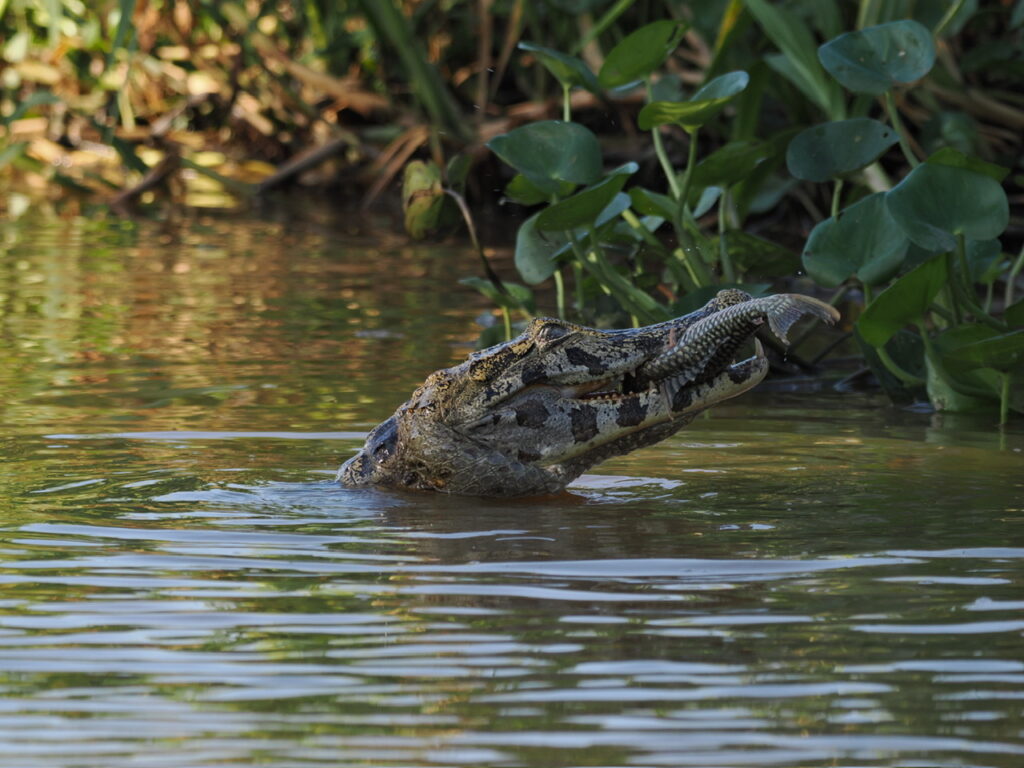
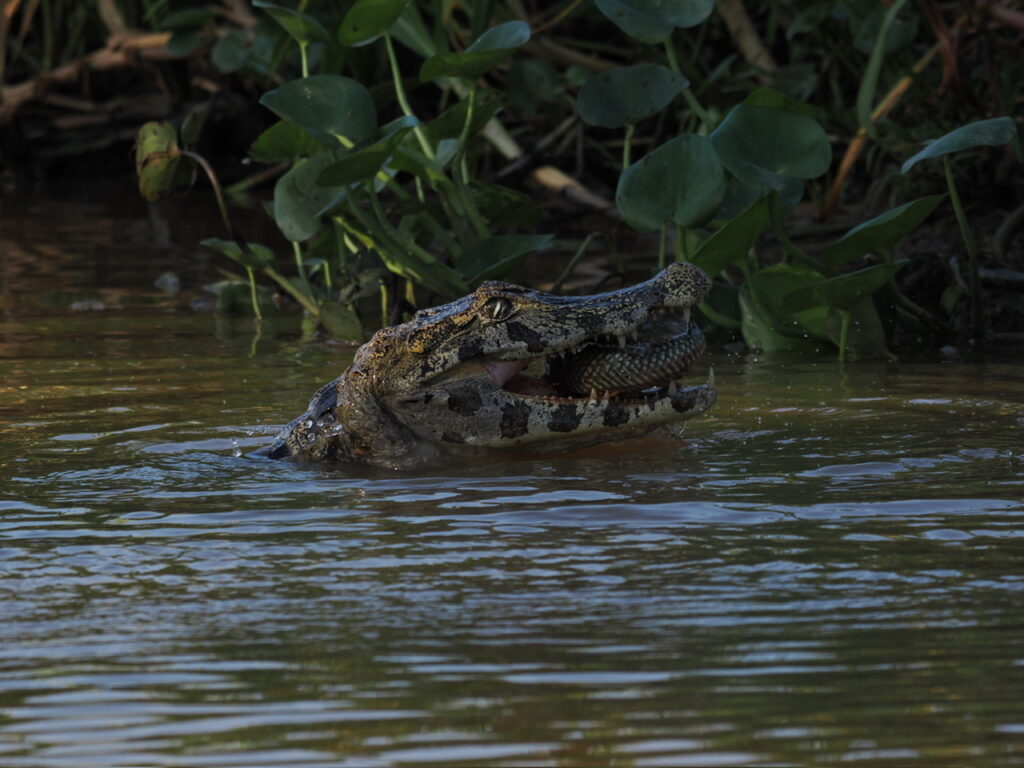
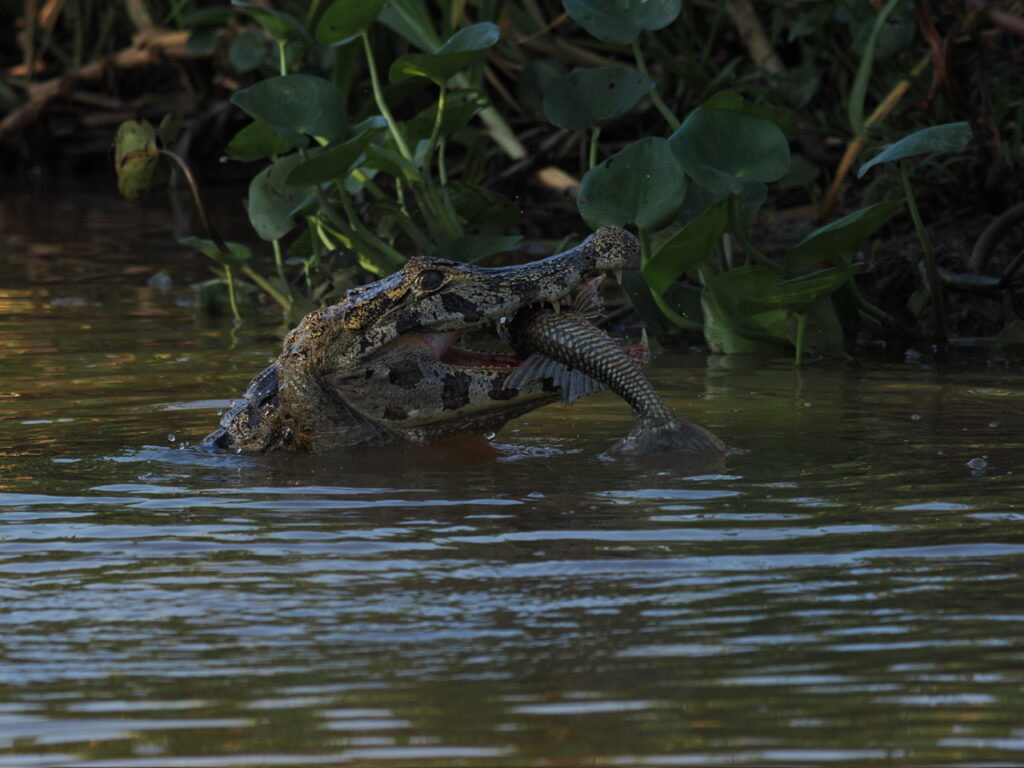
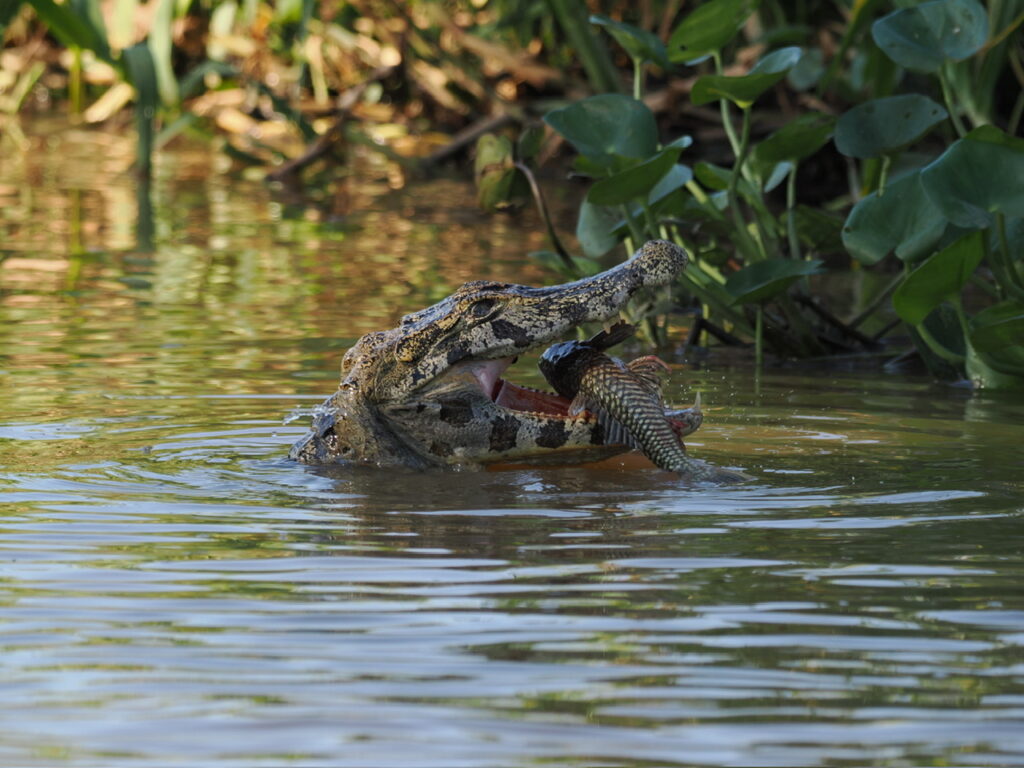
I am particularly delighted to capture this sequence of photos of a caiman catching a catfish.

A black-capped donacobius is hunting for insects. It is close but moves very quickly through the water plants. Fortunately, we have all the time in the world and eventually nail some great shots.

We leave the narrow channel and head back for lunch. However, this place always offers more. We hear capybara alarm calls. A capybara is in the water looking very scared.

A jaguar is swimming towards it

The capybara makes landfall and so does the jaguar (it is Ousado).There is a bit of a Mexican stand-off. The element of surprise has gone. We watch the interaction until Ousado eventually abandons the hunt, climbs the bank and disappears into the vegetation.

We head out early at 15.00 with the intention of trying to find giant river otters. Bruno has seriously under-played our expectations by saying we are unlikely to see them so we are unprepared for the magic to come. First we see a jaguar resting in the shade. This is Marley. He does not look likely to move any time soon so we carry on with our journey upriver.

An anhinga dries its wings in the sun

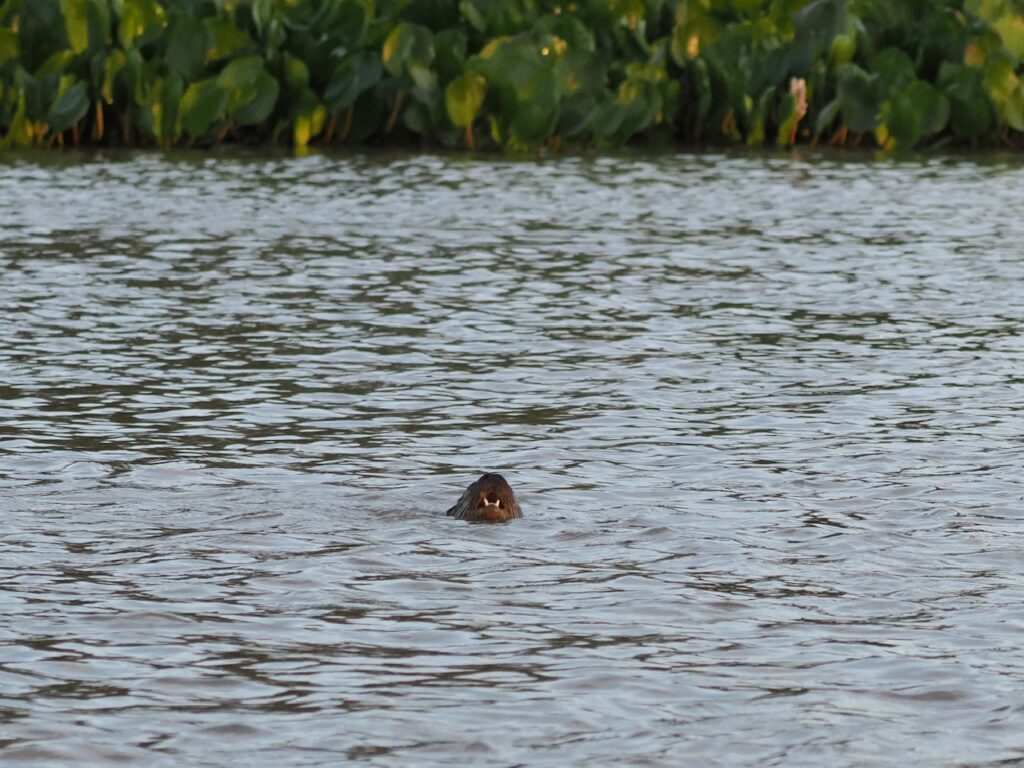
Then we see the giant otters ahead. Wow! They are playing in the waterside plants – difficult to film but every so often they make a brief appearance.

Then they cross the river to their den, where they continue to play and groom each other, before retiring for the night.

Our last day on the river still presents us with some new sightings. We set out after an early breakfast and immediately see a neotropical otter. They are much smaller than the giant river otters and much more elusive. This is a very rare sighting.

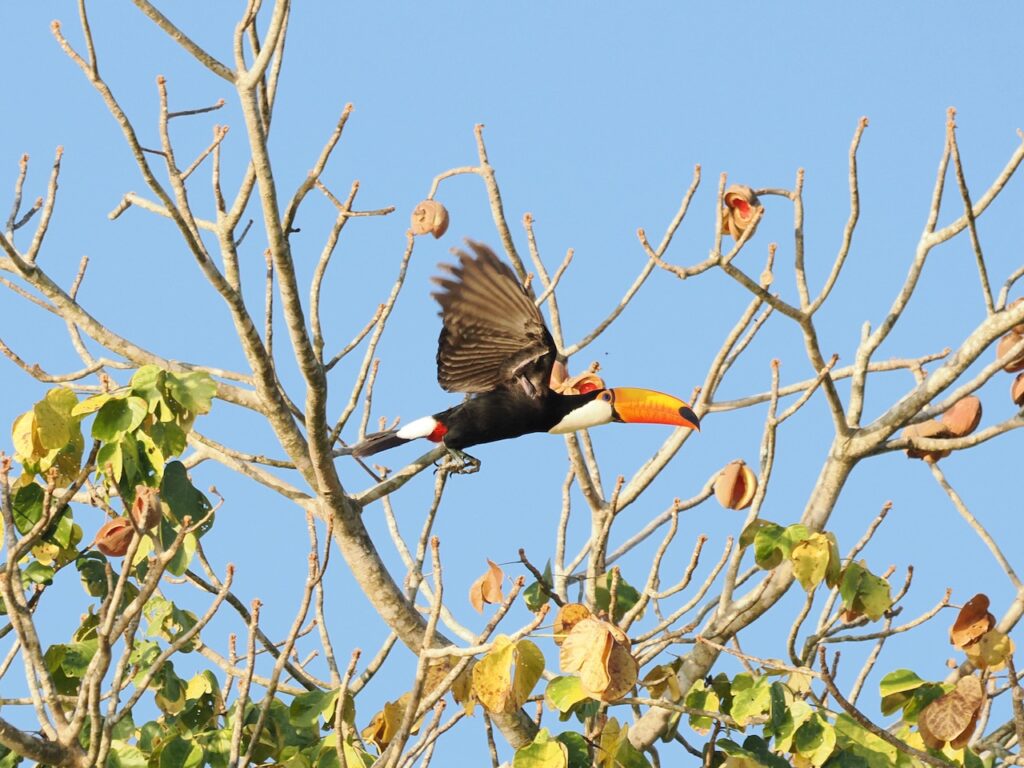
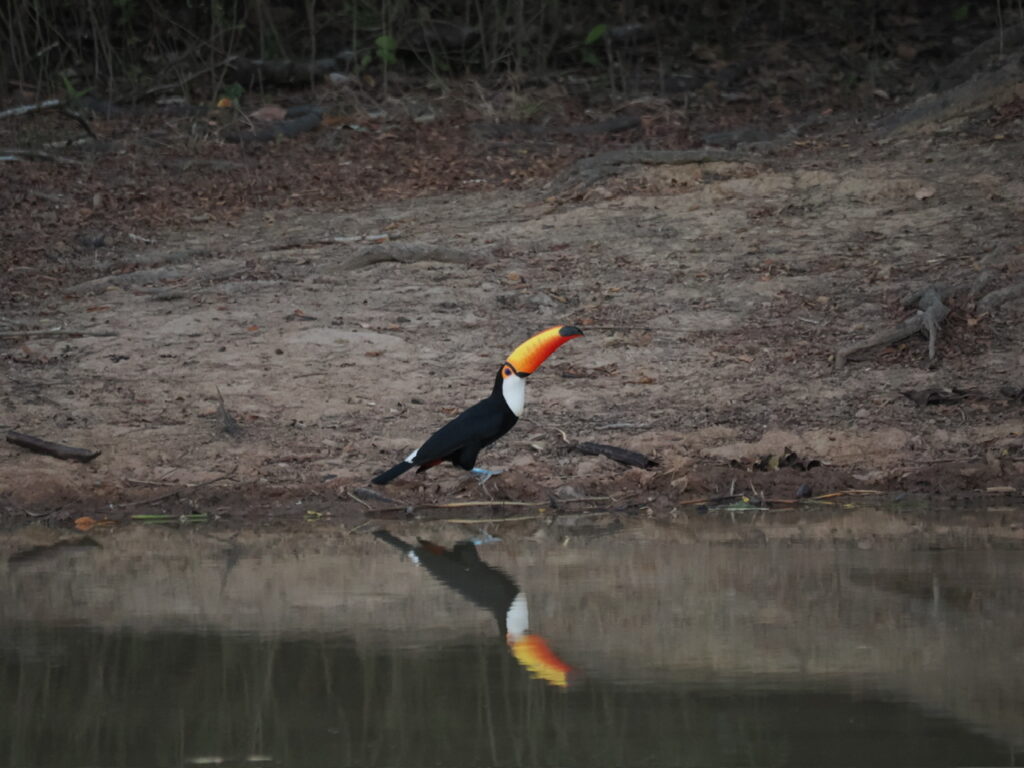
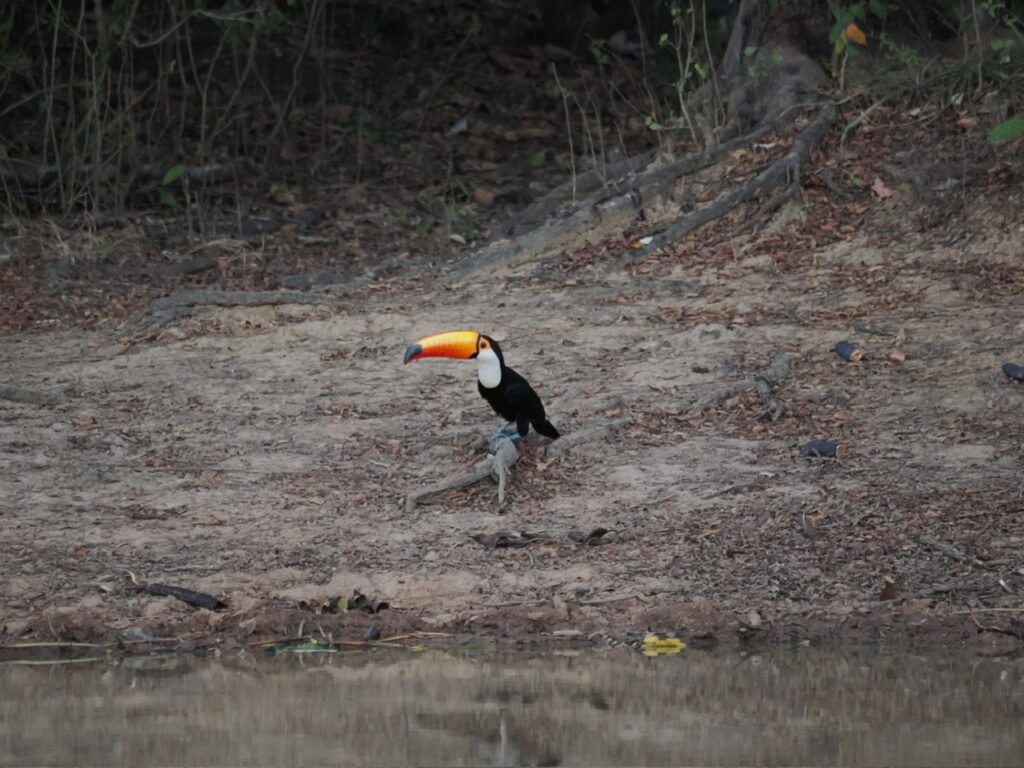
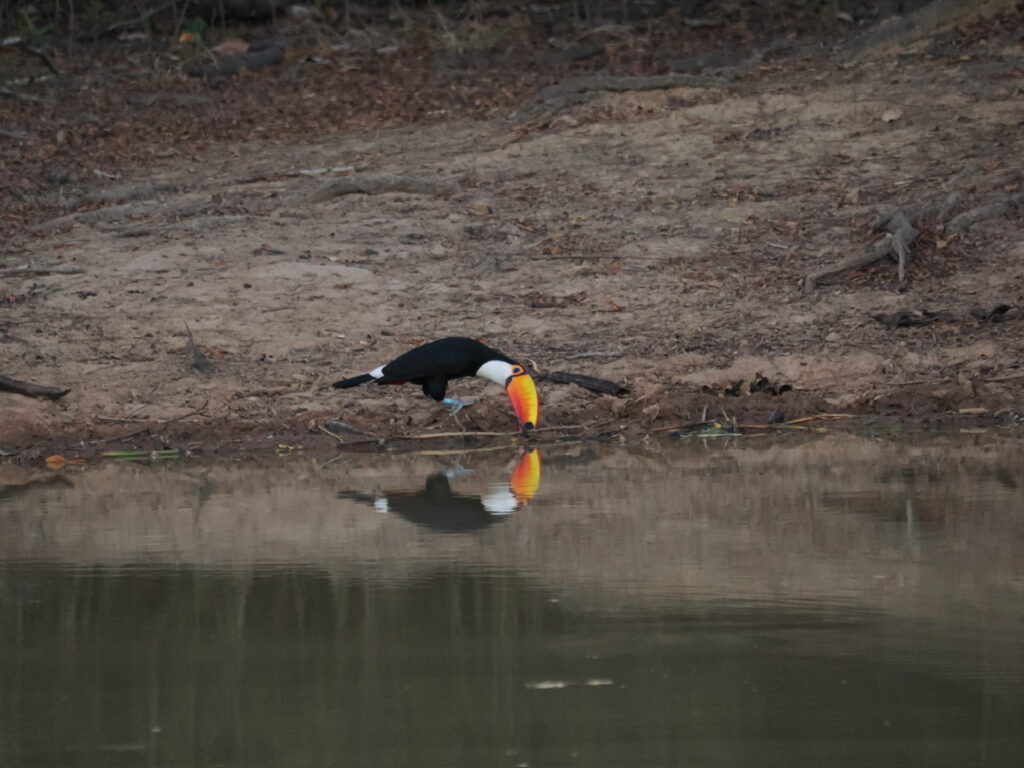
A toco toucan takes flight

We find a colony of skimmers and spend some time trying to capture them in flight with very mixed results. However, perseverance does eventually pay off.

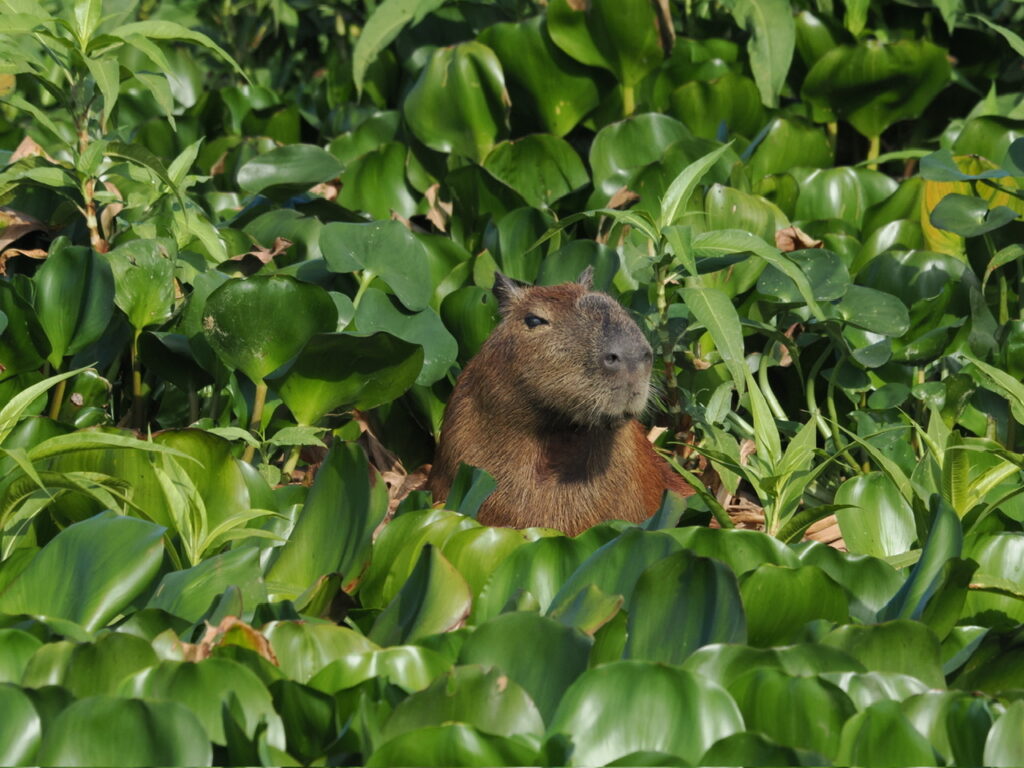
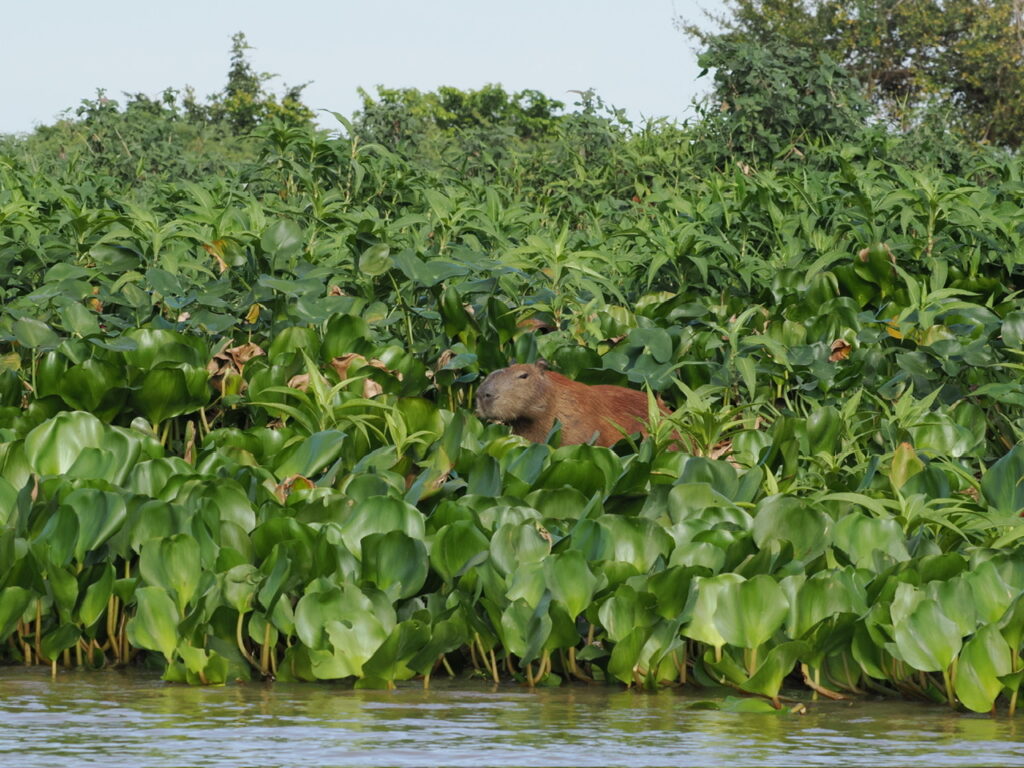
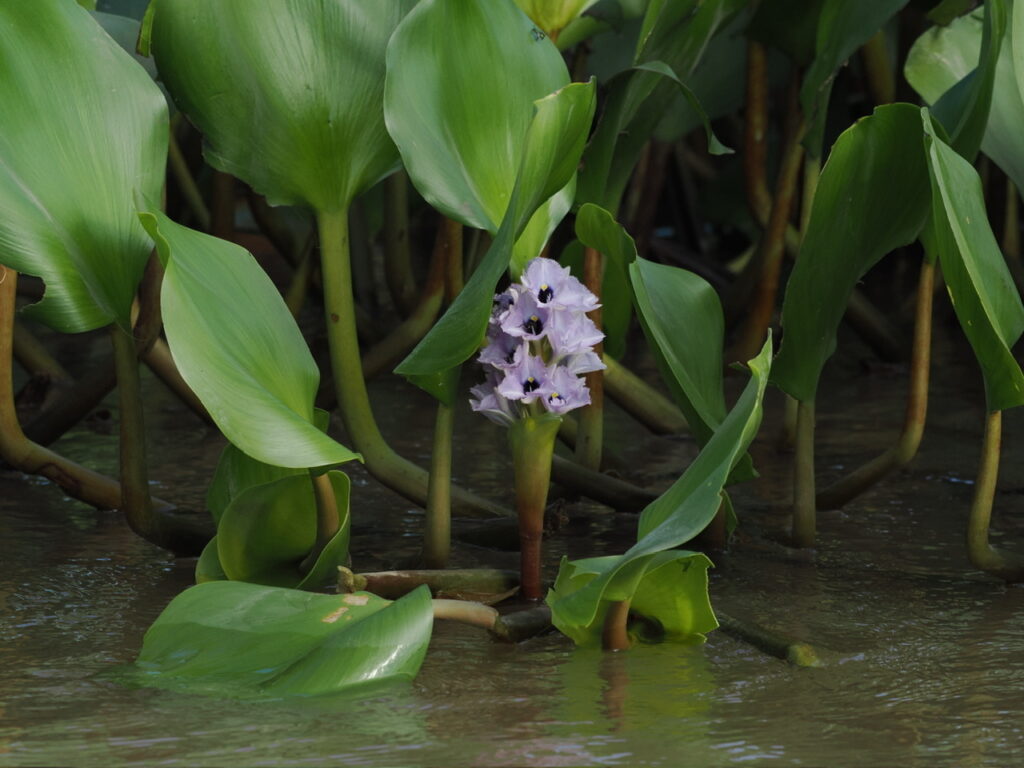
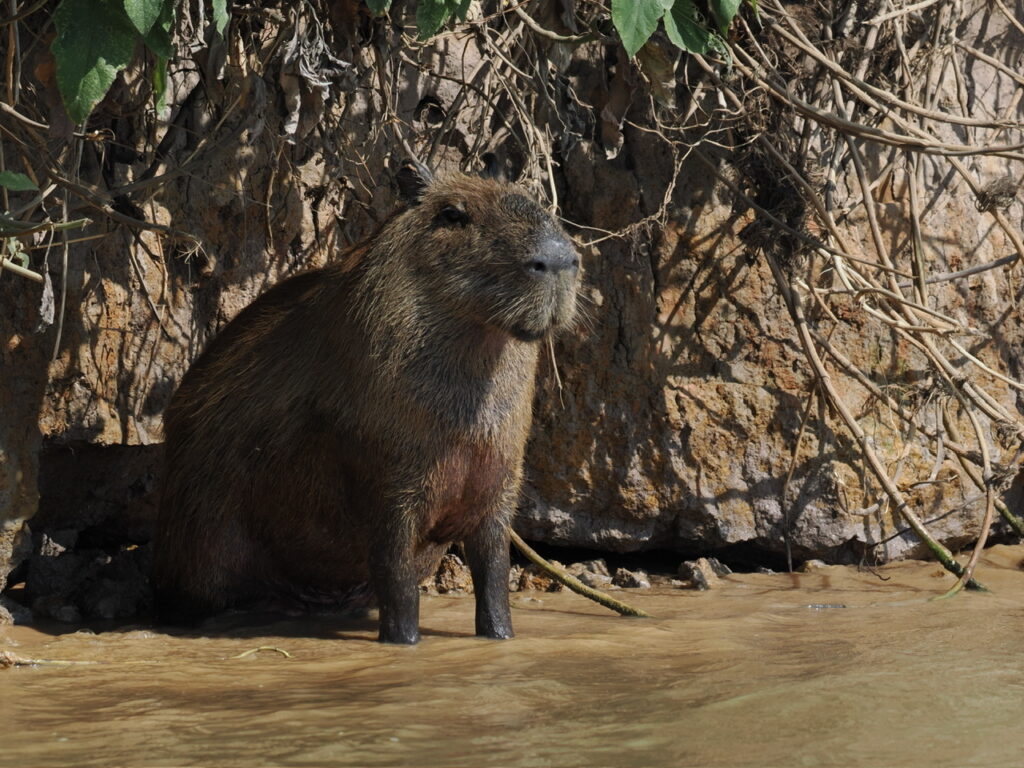
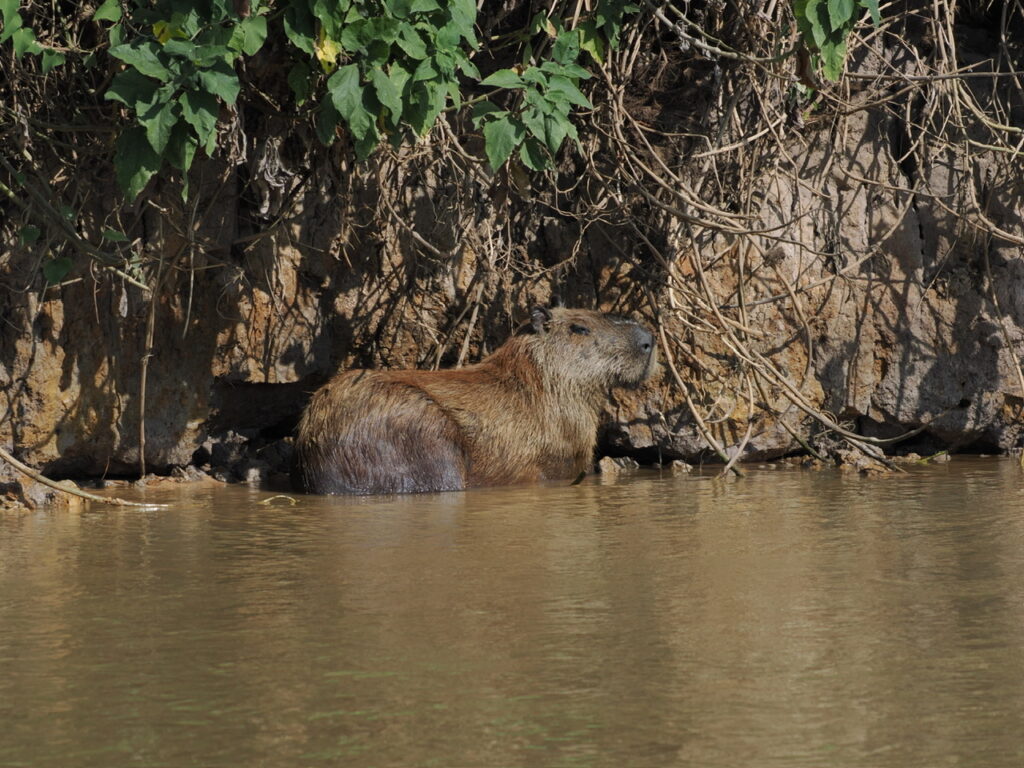
A capybara grazes nonchalantly amongst the water hyacinths. They are beautiful plants but grow very rapidly and constantly block the channels, which need to be frequently cleared.

A jabiru stork sits on his nest and then obligingly flies for us.

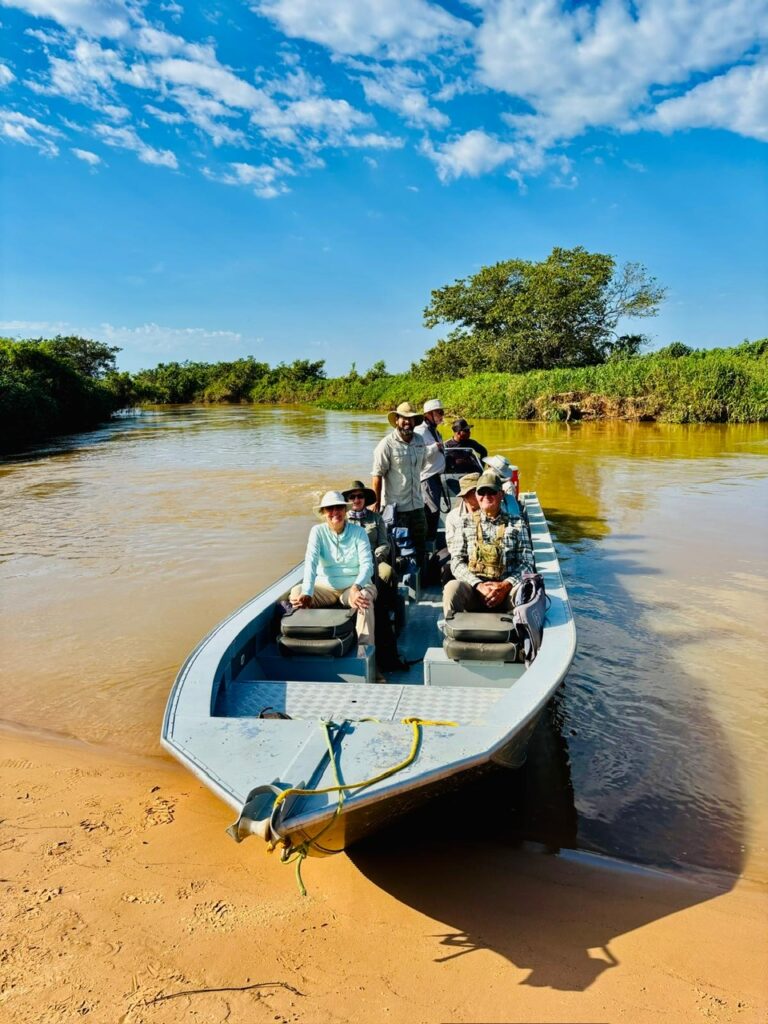
The boat docks on a sandbank for some of us to take a comfort break. We see a fresh jaguar paw print so are on full alert! Rosa Botterill takes a team photo. Thank you Rosa😀.

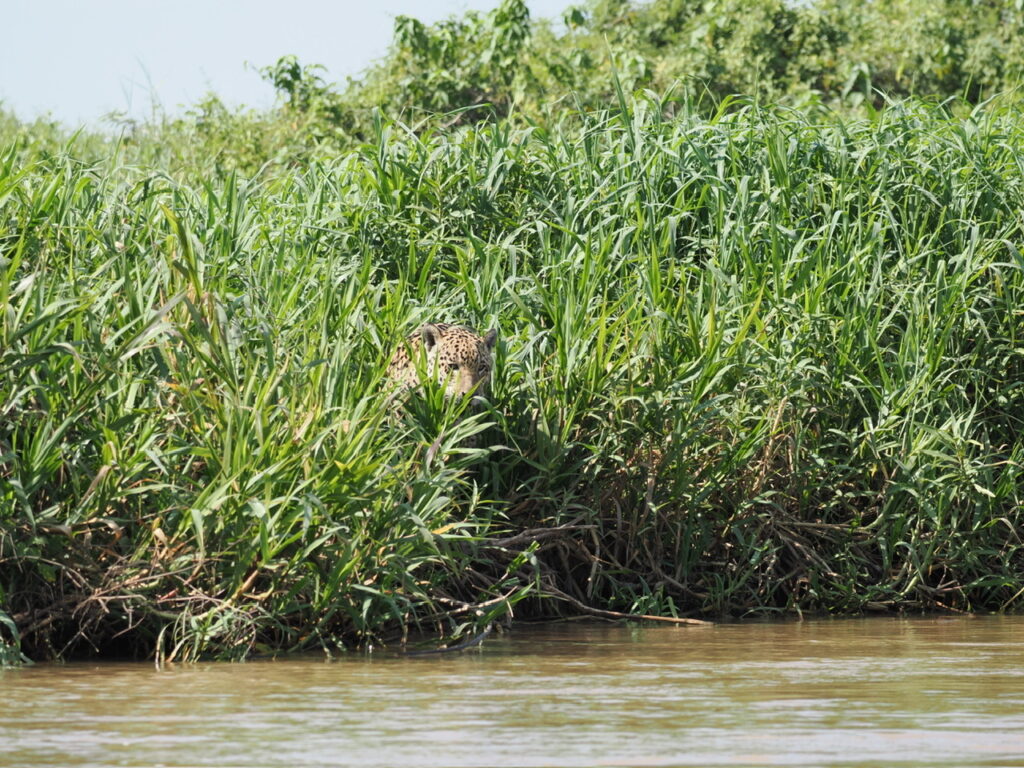
Two more capybaras sit on the far bank looking somewhat apprehensive. The reason becomes obvious when we spot Harry, skulking through the undergrowth. He was identified this year so not much is known about him.

When we first see Harry there are only a couple of boats but quickly they appear. Harry clearly does not appreciate the audience and retreats from view. There really needs to be some from of regulation to limit the boats at any sighting. It is hard to see that all the activitiy is not affecting the jaguars’ behaviour.

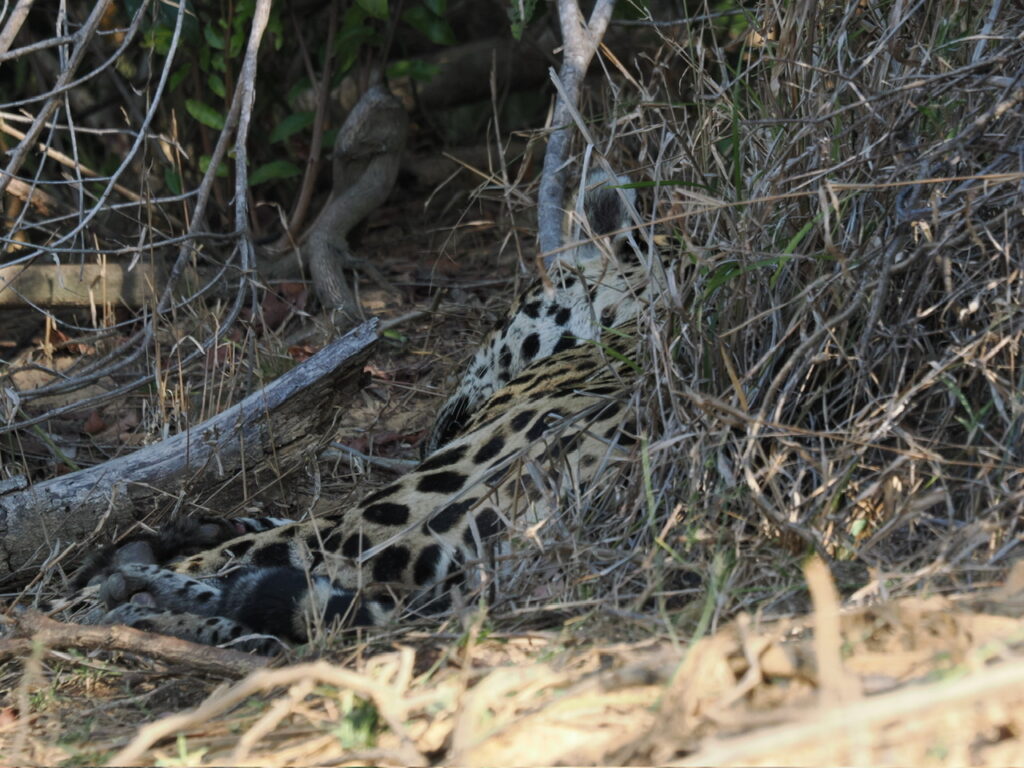
On the way back for lunch, Ginger is relaxing behind some vines.

A kingfisher catches a small catfish…

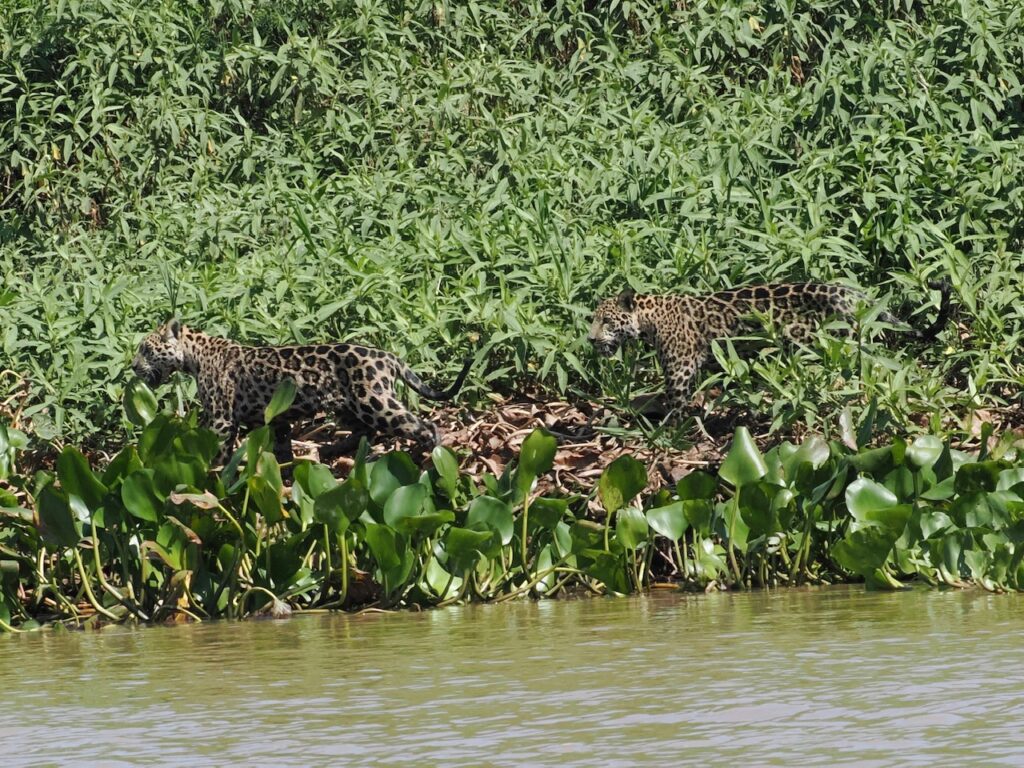
….and Amber swims with her two cubs following her along the bank.

I would describe that as a pretty action packed morning!

Cambara Tree

The afternoon commences with a sighting of Marley in The Black Channel. The first thing that we see is a hoard of boats. I count 15 including the TV crew. Marley is sitting in the shade but soon gets fed up with the disturbance, walks away, pooping as he leaves. It says it all. We decide to leave him in peace and find a quieter pursuit but many of the boats stay. It’s grim.

My mood lightens when I see this beautiful great egret take flight.

There are two capybaras in the water and they are making loud alarm calls. They are clearly distressed and swim towards our boat for safety. In fact one of them actually swims under the boat. There must be a jaguar around but we cannot see it.

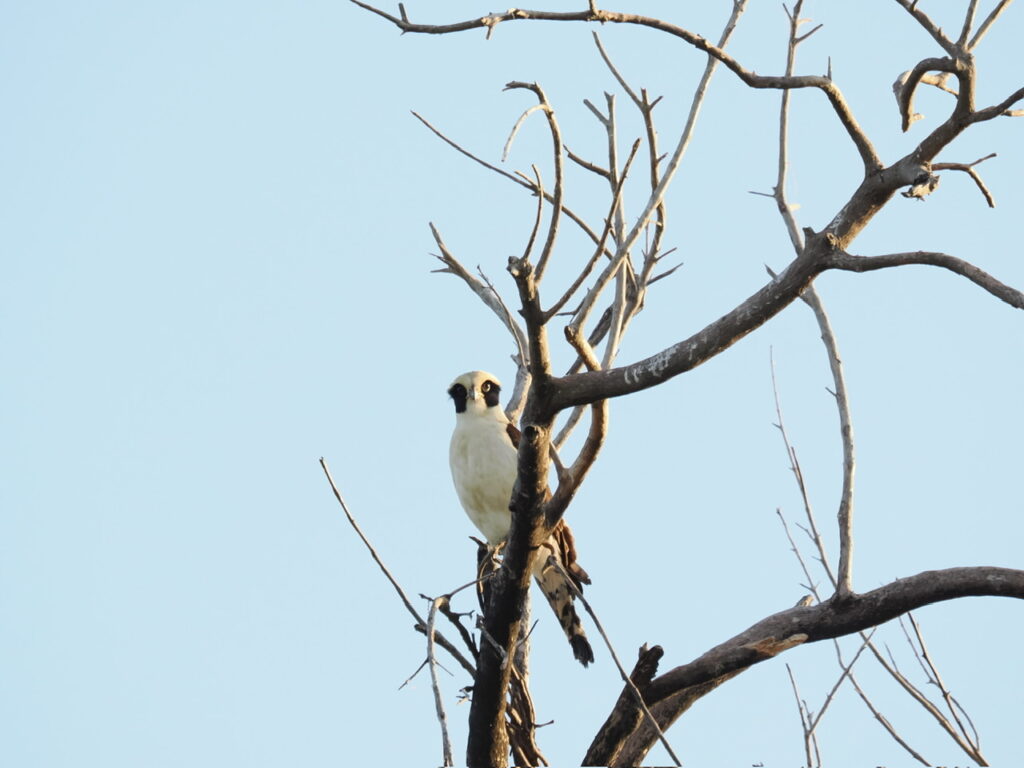
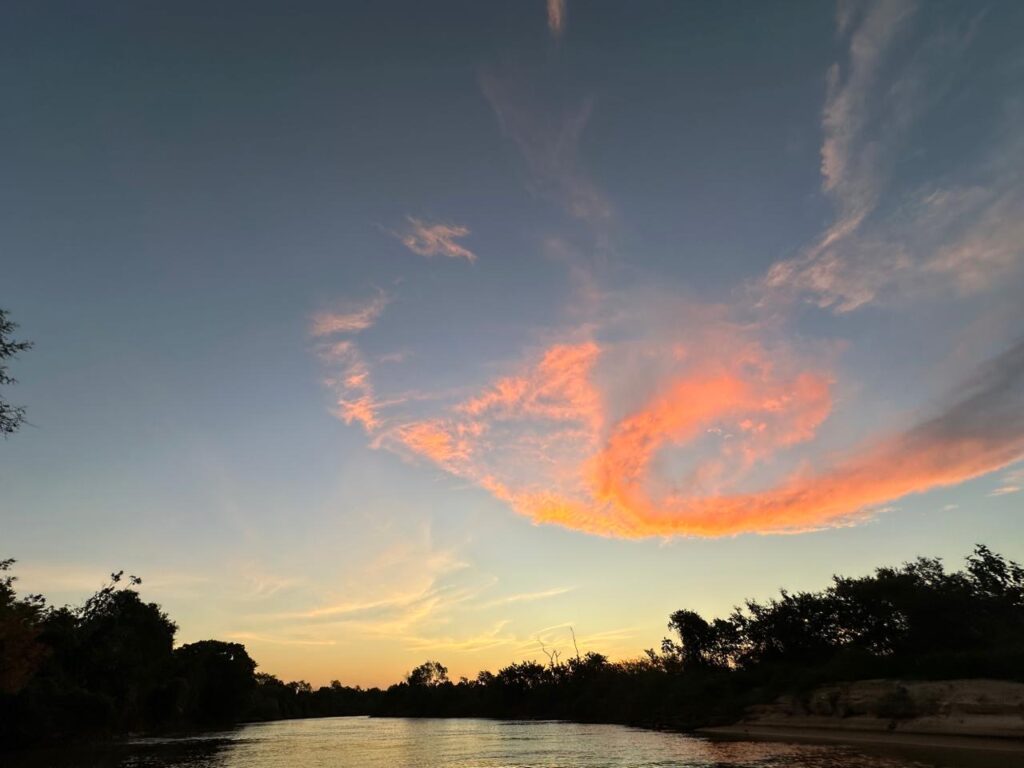
Our final excursion ends with the sighting of a laughing falcon, swallows darting over the water, the obligatory ringed kingfisher and a spectacular sunset. Sunset shot is courtesy of our guide Bruno.

We say goodbye to our home for the past four nights. The weather has changed. It is cool with a fresh breeze and it is a chilly boat ride back to Porto Joffre.

Pouso Alegre

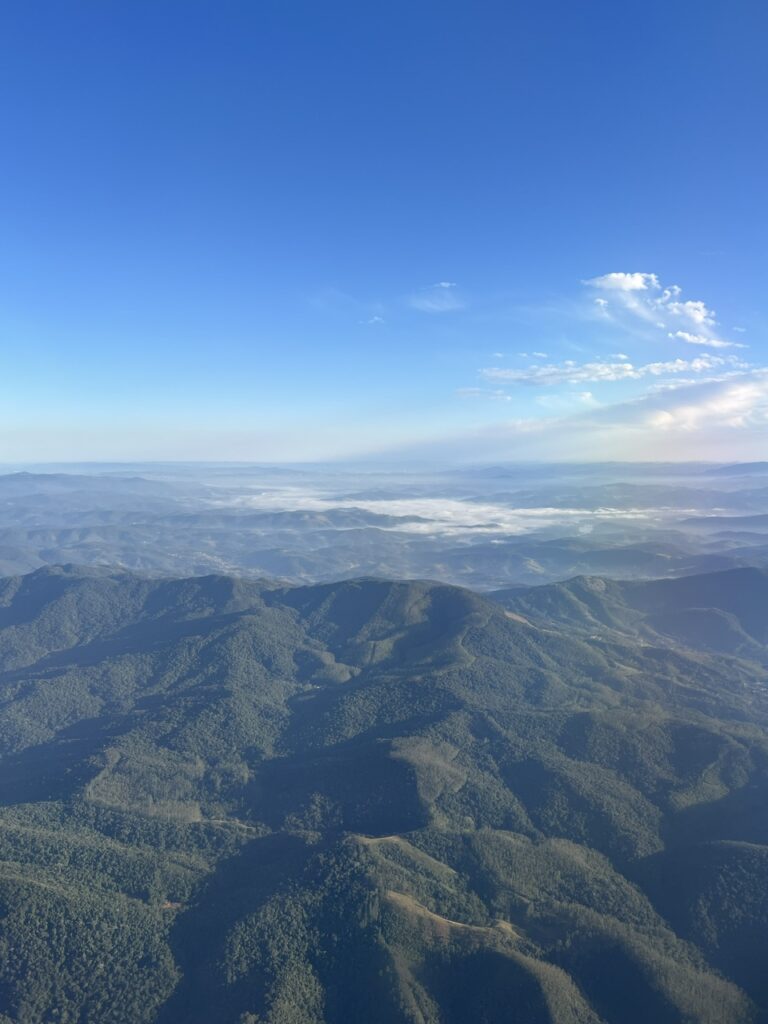
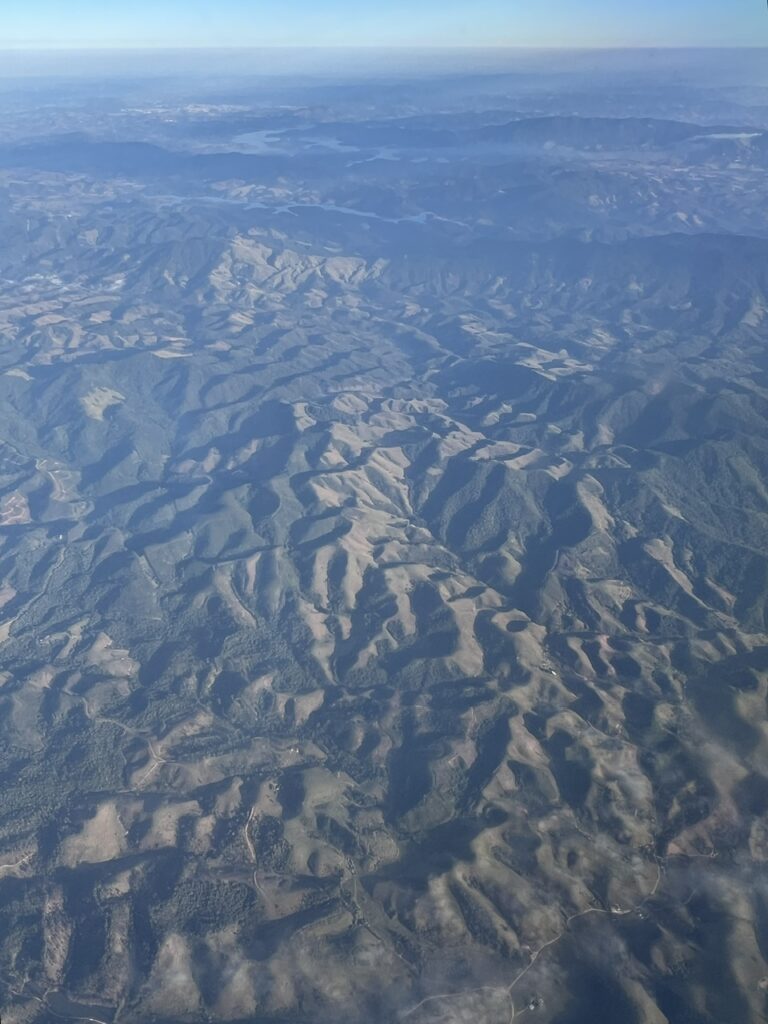
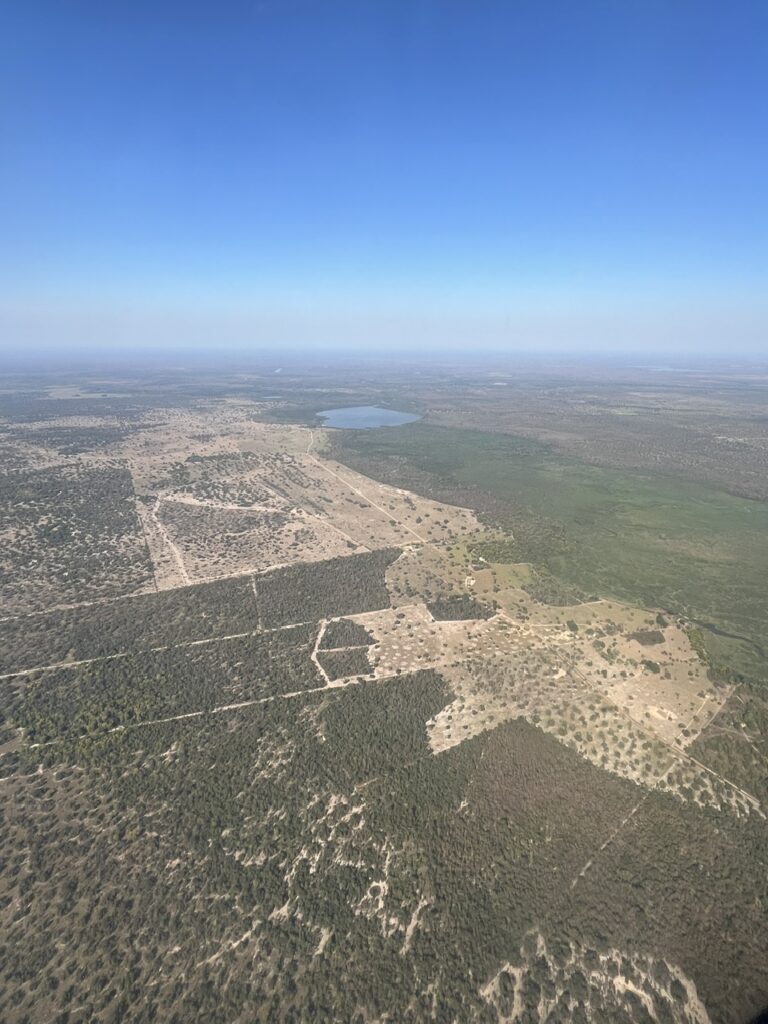
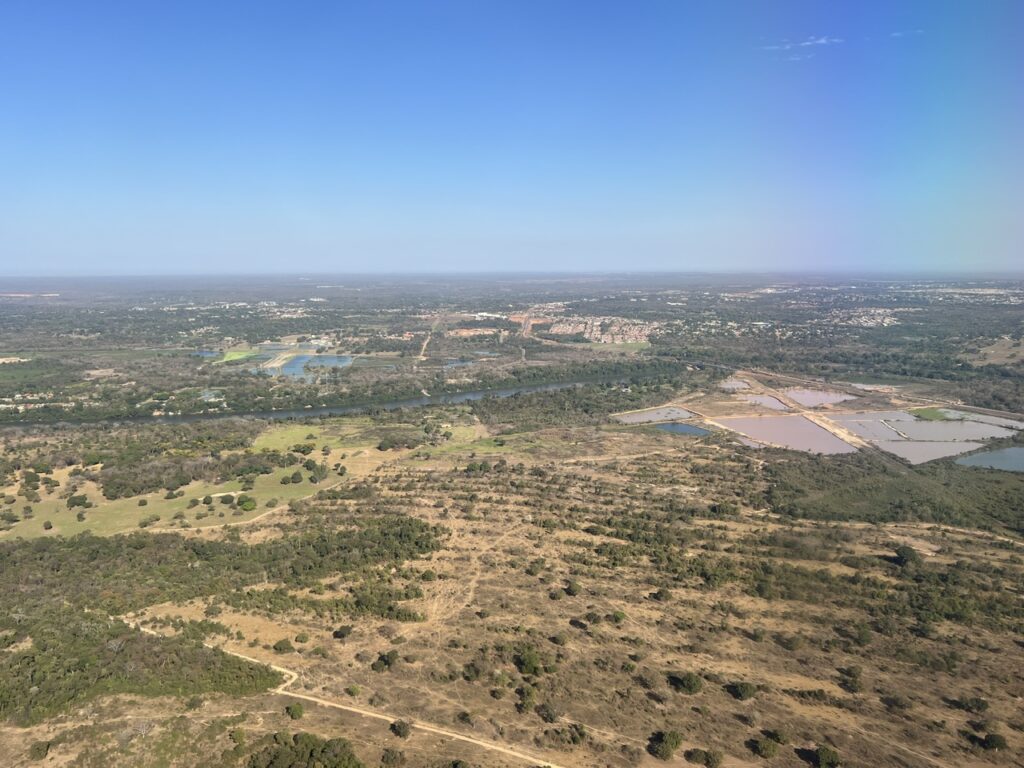
The scenery on the flight from São Paulo to Cuiaba is impressive, but it has been a long journey and we are happy to finally touch down and meet up with our travel companions. There are 9 in our group, plus our guide Bruno. Everyone is British, very friendly and of a not too dis-similar age. I think we are going to have lots of fun.

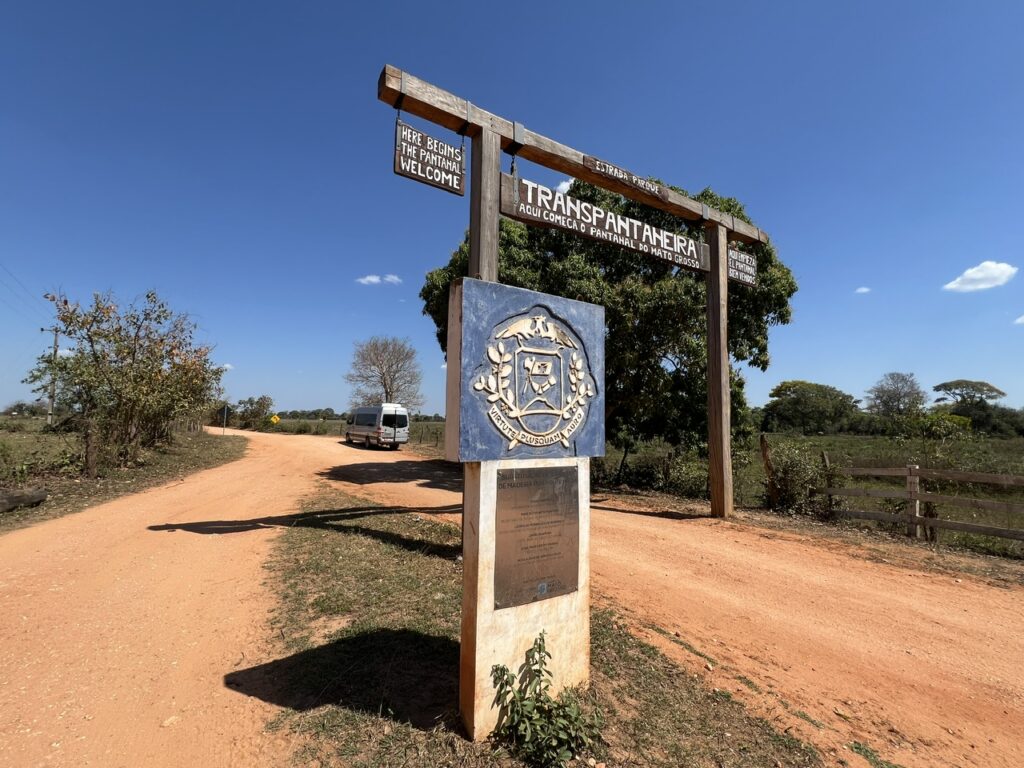
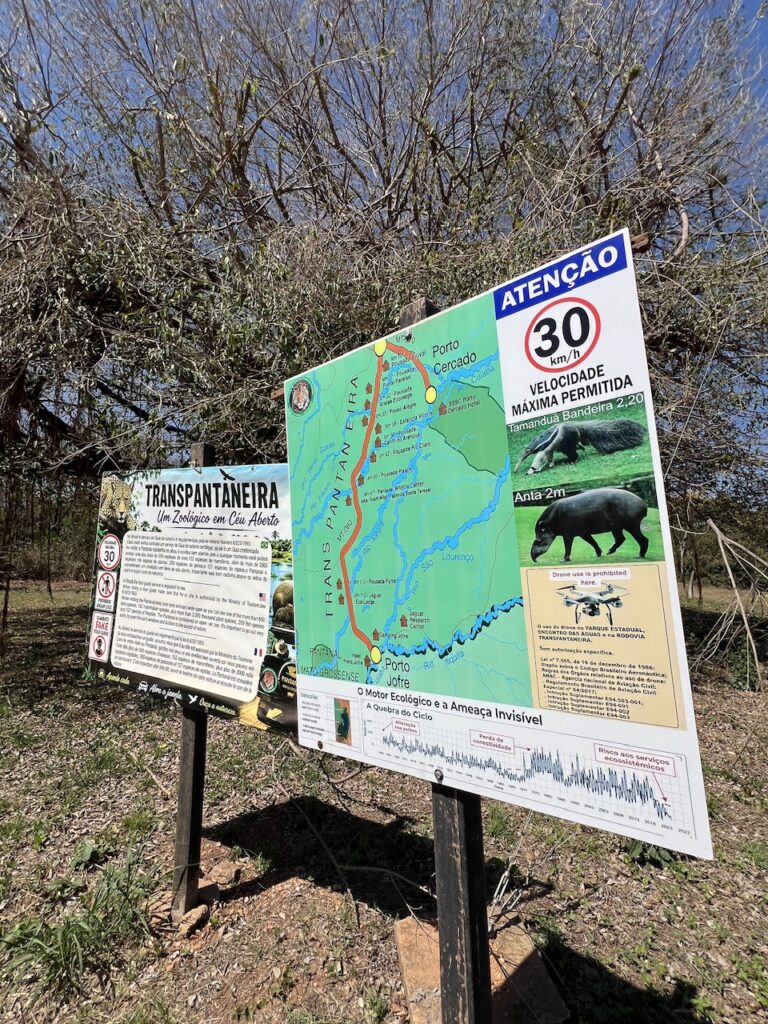
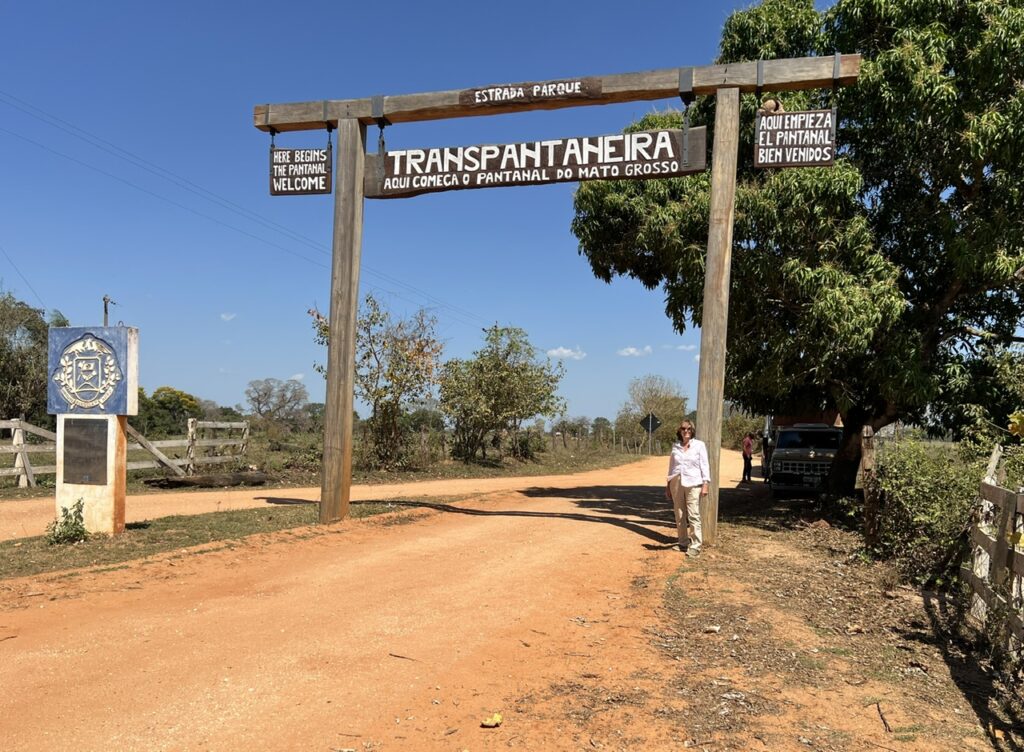
After 24 hours of travel we stop in the small town of Pocone for lunch. There is a good selection of food. I choose a plate of various salads and meats. Not too much as I have already had breakfast on two different planes. I did not realise that, this being Brazil, we would then be brought an endless supply of meat on skewers carved in front of us. It was very tasty and we probably consumed more than was sensible. Fully sated we drove a short distance to the entrance to the Transpantaneira. The 140km dirt road which is the only route into the Pantanal.

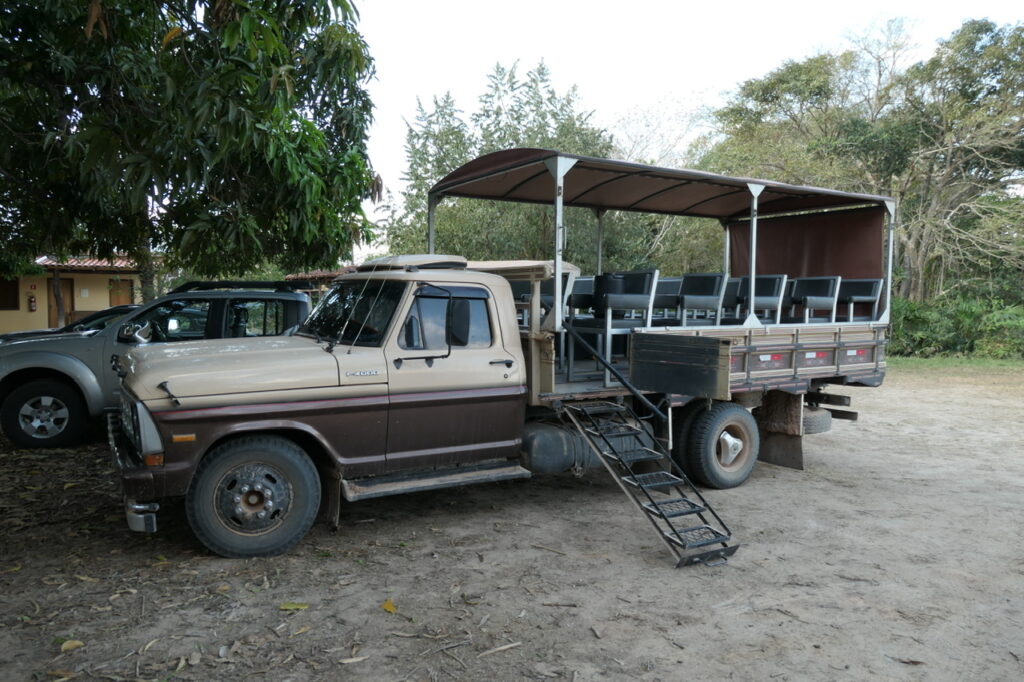
Here we left the comfort of our air-conditioned van for an open truck with full exposure to the dust thrown up by passing vehicles, but also a great view of the landscape and wildlife which was plentiful to say the least.

The journey to our first lodge at Pouso Alegre is about 40 km, but takes the best part of 3 hours because we make frequent stops to photograph the plethora of birdlife.

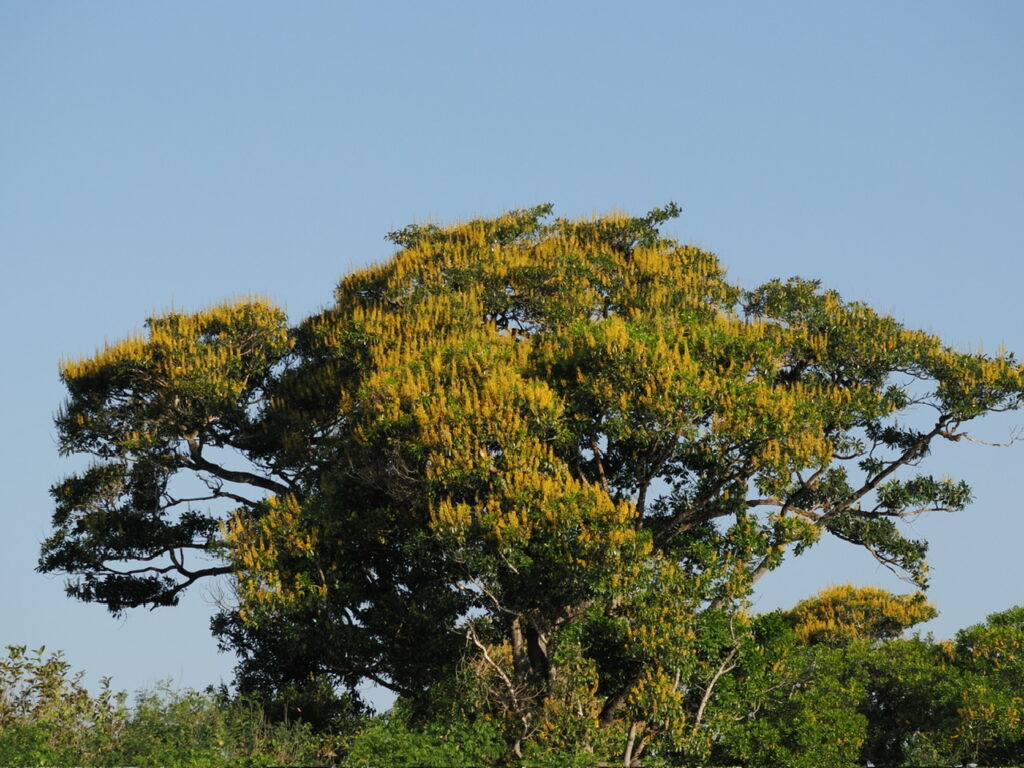
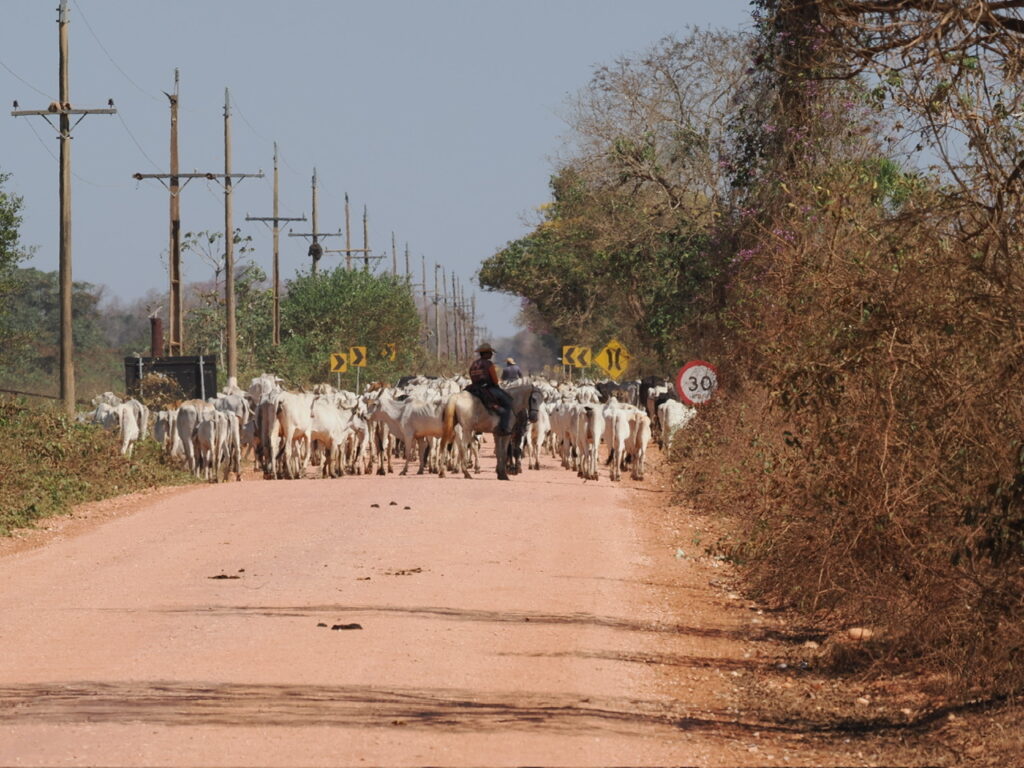
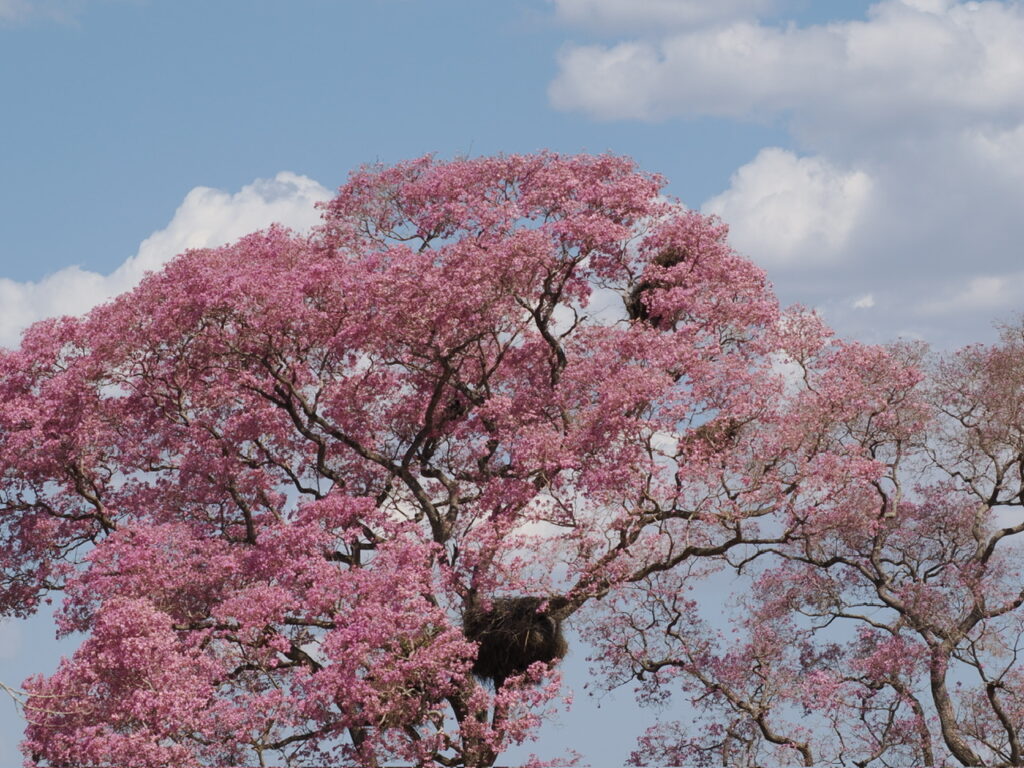
The local ranchers still herd cattle on the road and there are beautiful Piuva trees with astonishing pink blossom.

…and the photo opportunities just kept coming with a sayaca tanager, tiger heron, great black hawk, monk parakeet, sunbittern and jacana. We were lucky enough to see some rare hyacinth macaws but too distant for any decent photographs. Hopefully we shall be lucky later.

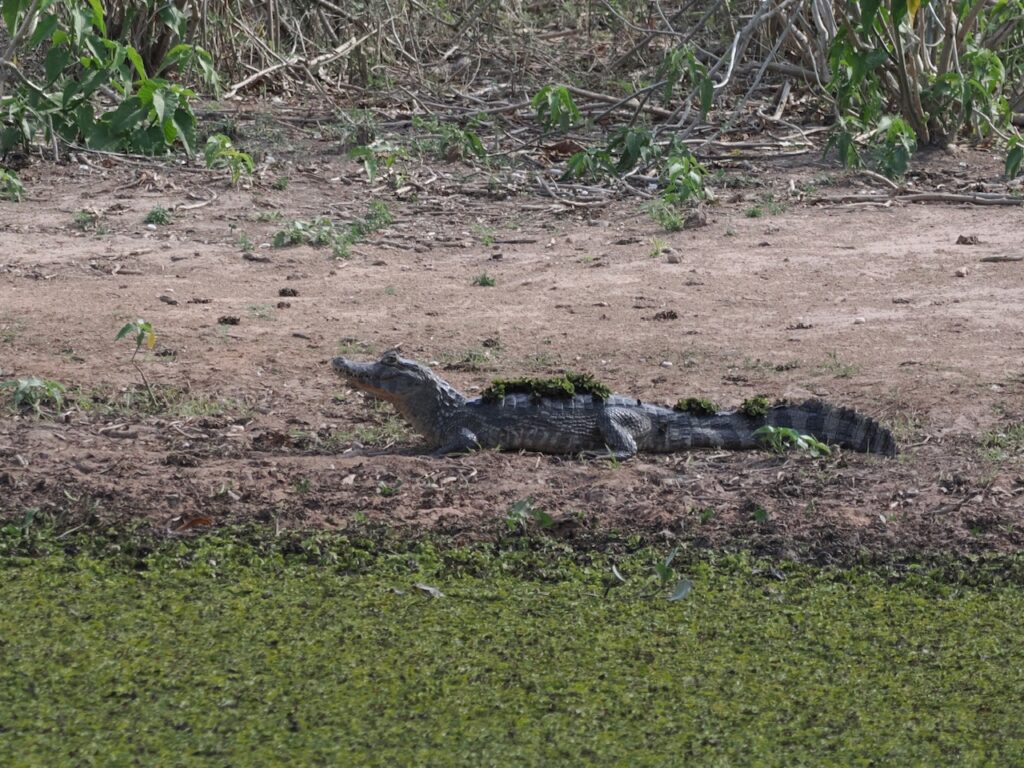
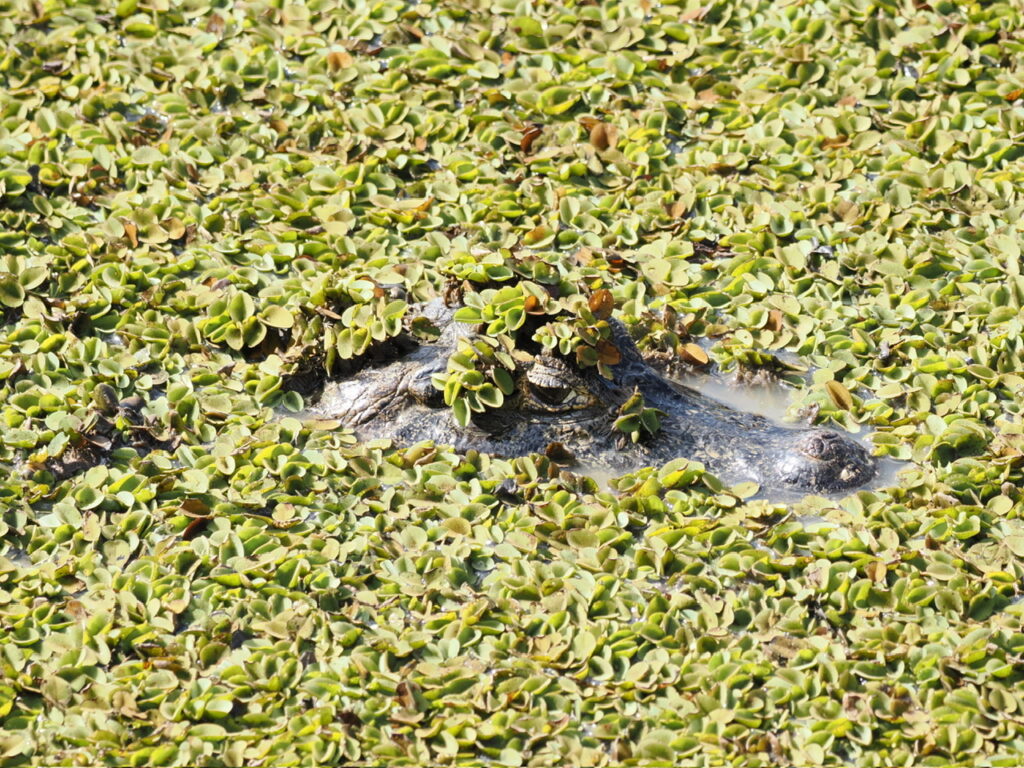
There are well-disguised yacare caiman and distant capybaras. This is just incredible and so different to Guyana where we really struggled to see any wildlife on the savannahs.

We finally arrive at our lodge after 27 hours of travel. It is 38C, we are tired and in need of refreshing showers. That does not happen anytime soon, because the selfish guests before us did not vacate their rooms at 12.00, but only 5 minutes before we arrived. The only upside was that the lodge grounds teem with wildlife, which we can watch while we wait.

Coati scuttle around the buildings hunting for grubs and hooded capuchins play in the trees.

We depart at 16.30 for our afternoon safari – an hour later than scheduled as we did not gain access to our room until 16.00. A quick shower and out we go. The delayed departure works in our favour as 4 hyacinth macaws have landed in the lodge grounds. The light is great. They pose in the trees then fly down to the nearby waterhole to drink. I could not be happier.

There are so many birds here. A caracara keeps photo-bombing my shots until the macaws eventually fly away.

We then drive to a nearby waterhole-hole in the hope of seeing a giant anteater or tapir. Had we been there earlier we would indeed have seen them but then we would have missed the macaws. We’ll try again tomorrow. The light is fading fast but an array of birds are still coming to drink. As the last of the light appears a toco toucan graces us with its presence. Distant and grainy shots but a real privilege to see one in the open like this.

A new day and it turns out to be even more exceptional than yesterday. This really is a very special place. We set out before breakfast at 6.00 and drive through the giant anteater’s territory in the hope of a sighting. No luck this morning but we do see a horned owl and youngster and there are plenty of other birds about, including a rare rufous tree creeper.

We return for breakfast, which is uninspired but adequate and then set out on foot to visit a viewing platform. It’s about a kilometre walk and, despite it only being 08.30, it is very hot and the sun strong, so the distance seems much further. On our way there we see the most beautiful carmine flycatcher. It stands out like a glistening jewel against the dark foliage.

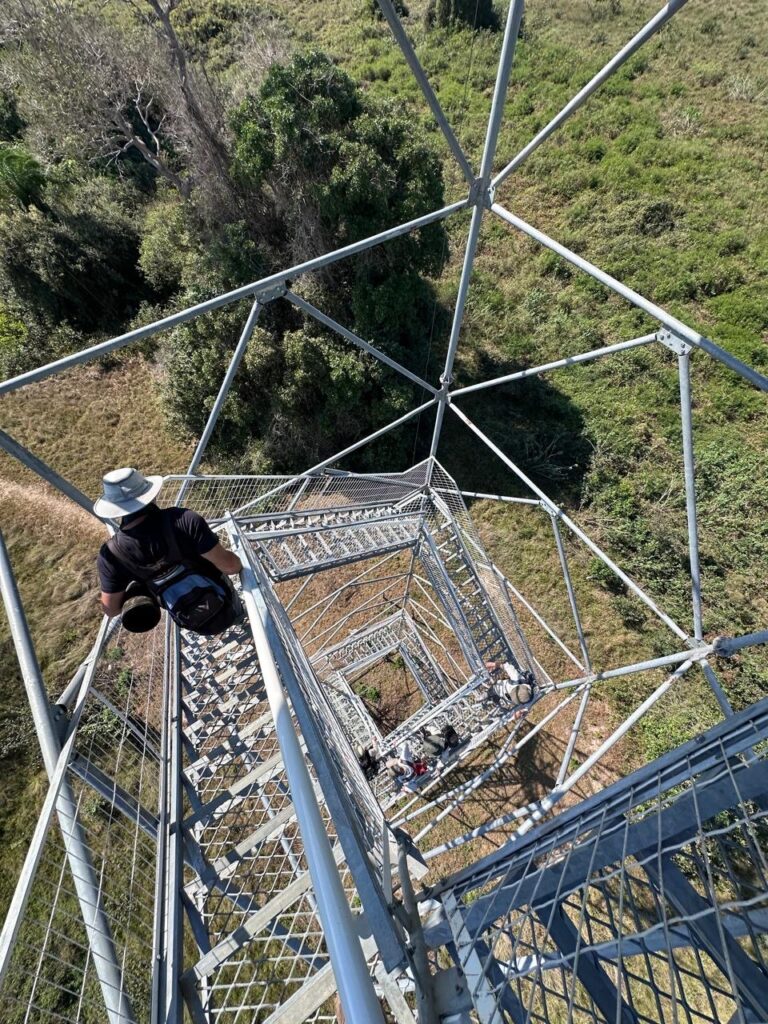
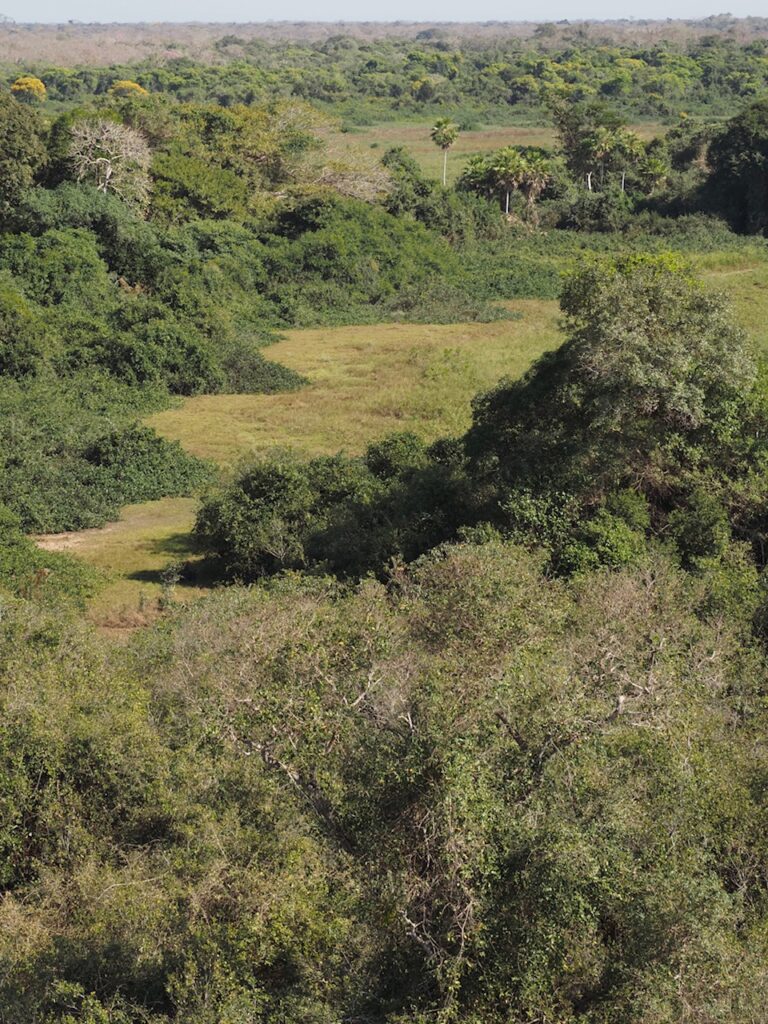
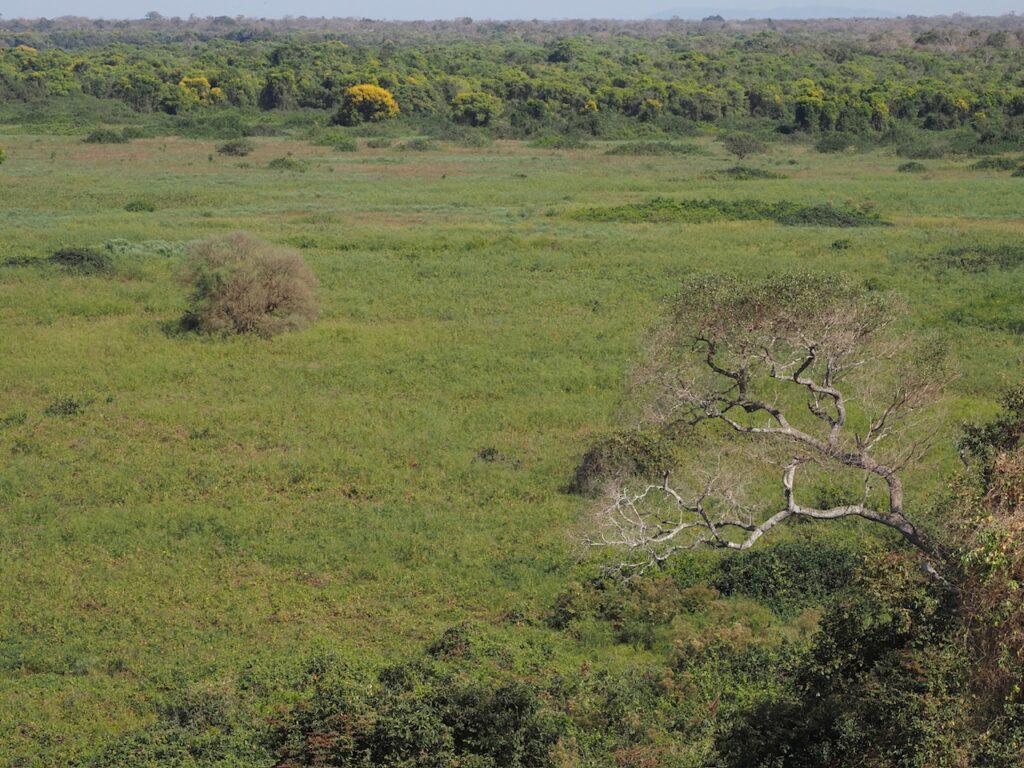
We climb the 120 or so steps to the top of the tower. It is worth the effort as the views are wonderful.

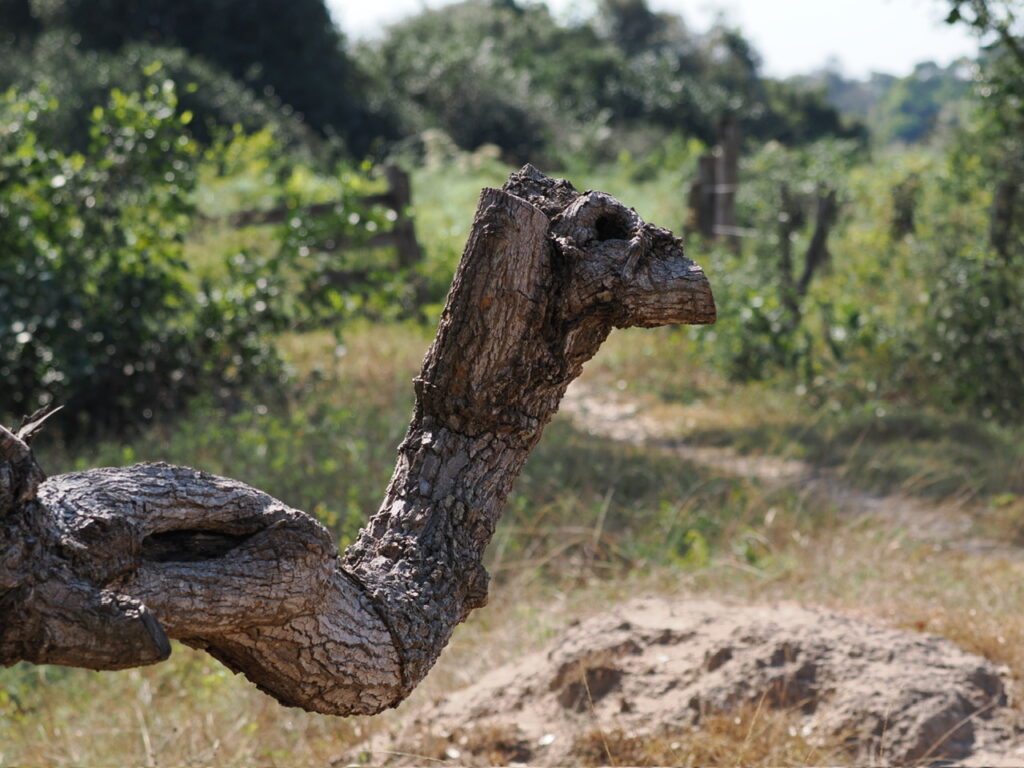
We hoped we might be able to spot a giant eater but they are not co-operating. On the way back we do see a tree pretending to be a camel🤣

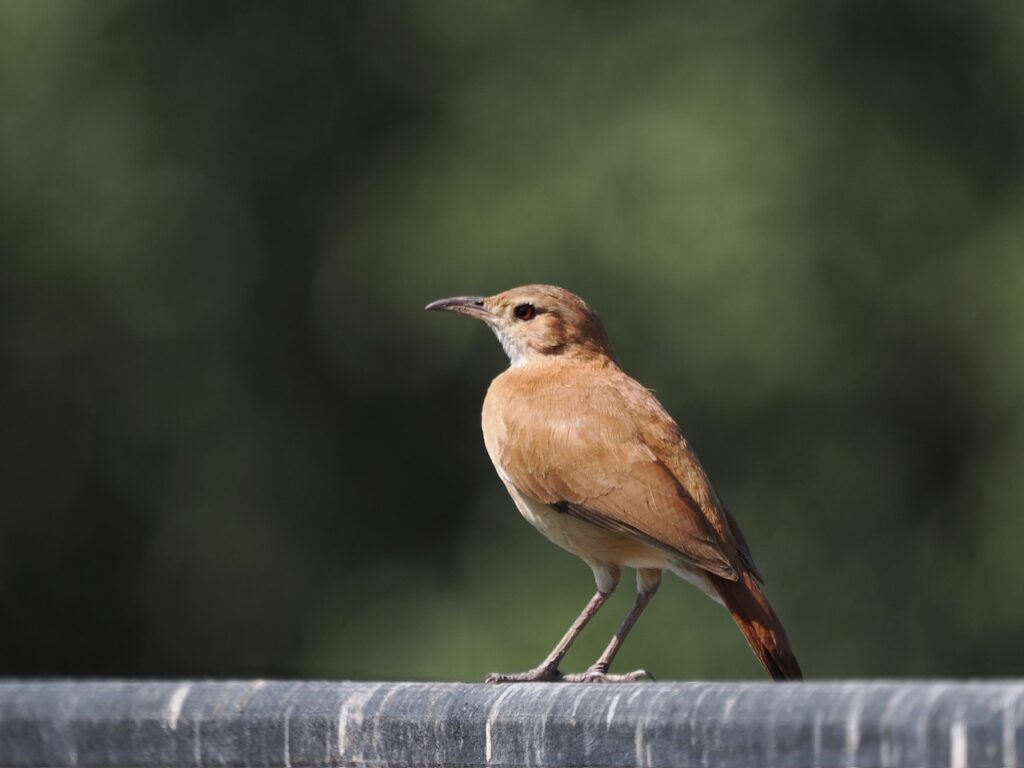
…and a rufous hornero that makes an impressive dome-shaped nest, with an inner chamber, made out of mud.

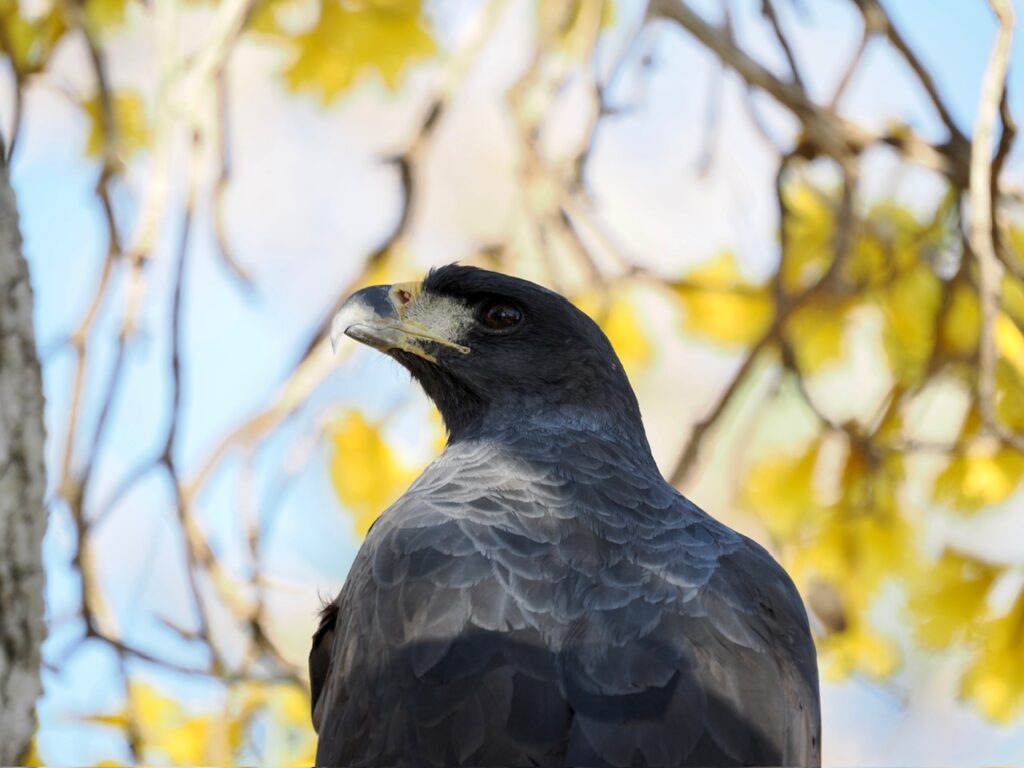
In the afternoon we again search for anteaters but instead find a black eagle…

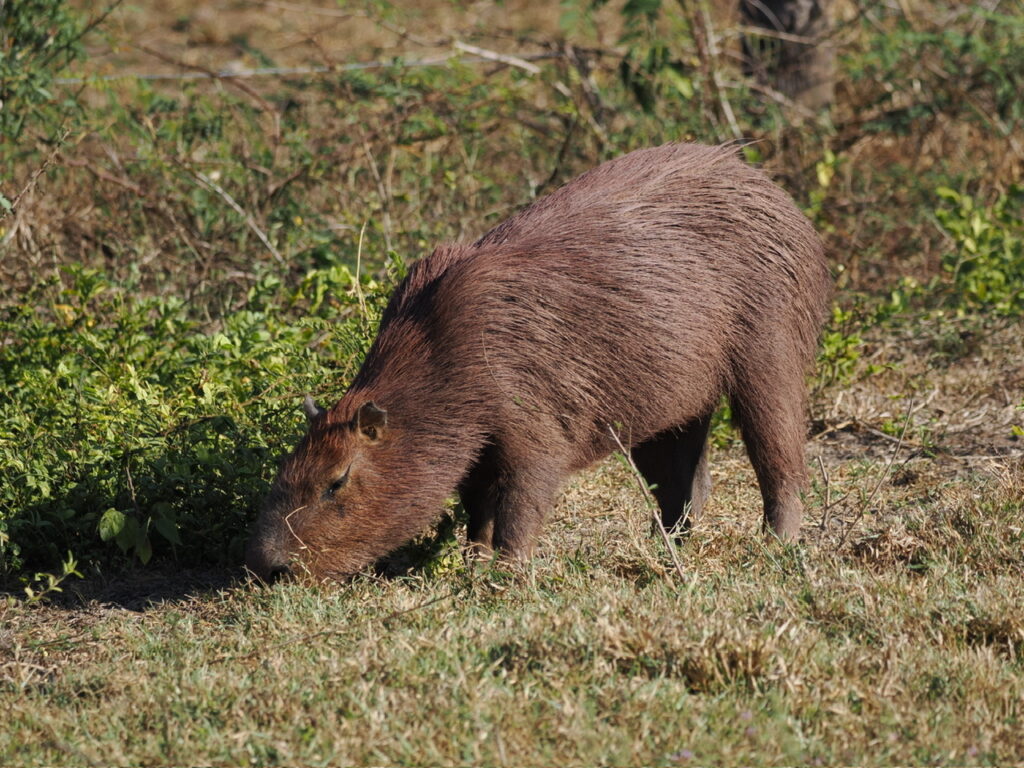
… and a herd of capybaras that allow us to get very close. They are the largest rodent, related to guinea pigs and make similar squeaky noises.

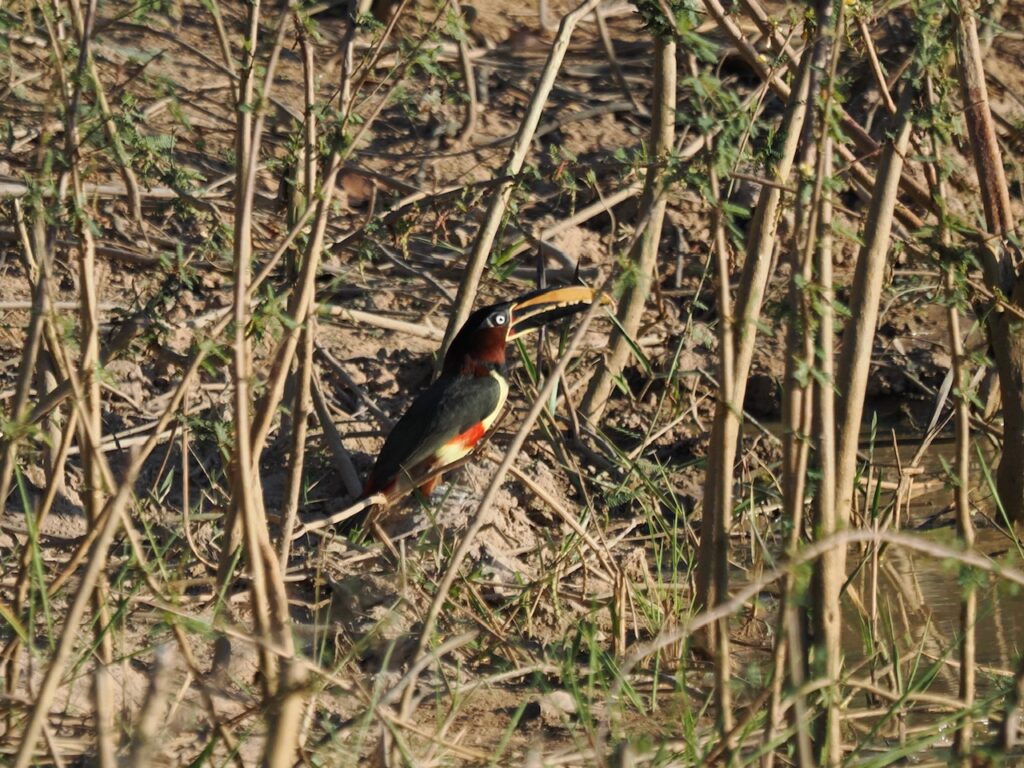
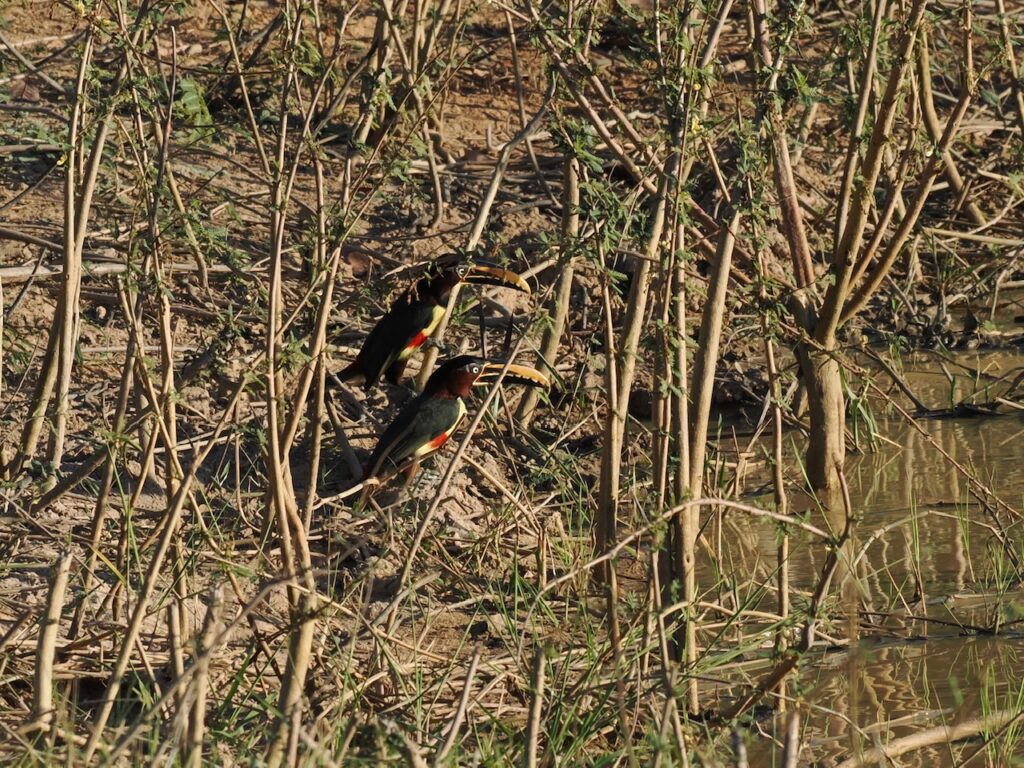
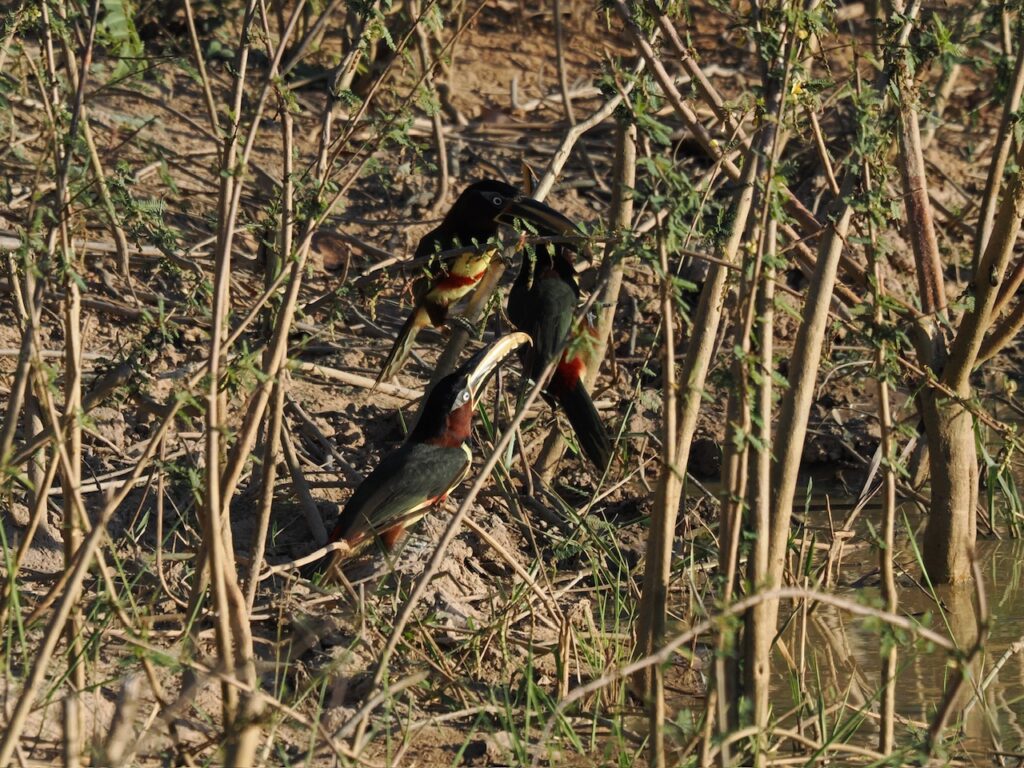
We drove on to the pool we visited last night but there were already two vehicles there. Bruno decided to take us to a different one which was further away but proved to be a brilliant decision. The evening started slowly with an assortment of birds coming down to drink. There was an aracari, joined by one and then two buddies ….

…parakeets, curassow, guan, doves and then a bold toco toucan.

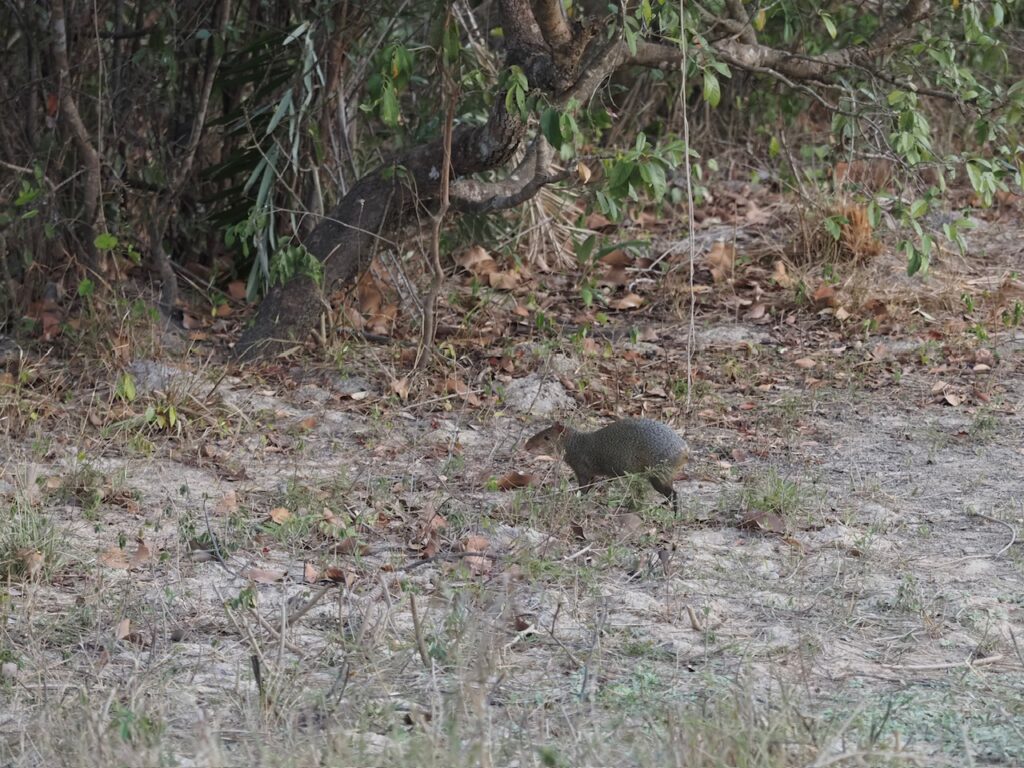
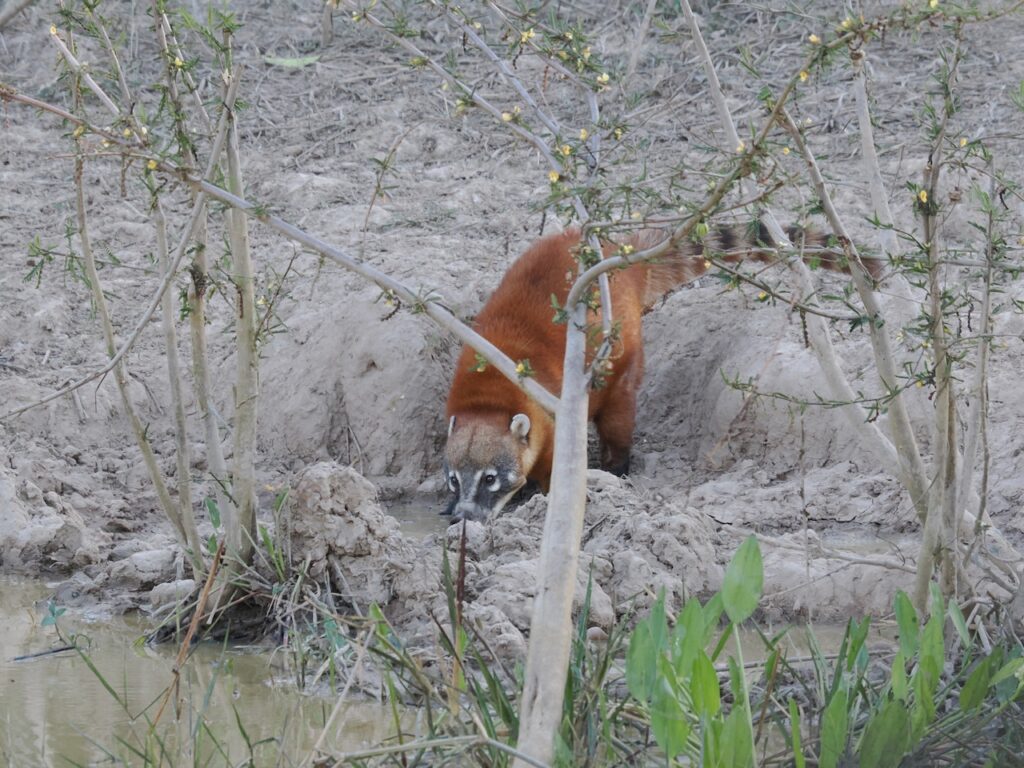
Then the mammals began to appear. An agouti was first, closely followed by a family of coati

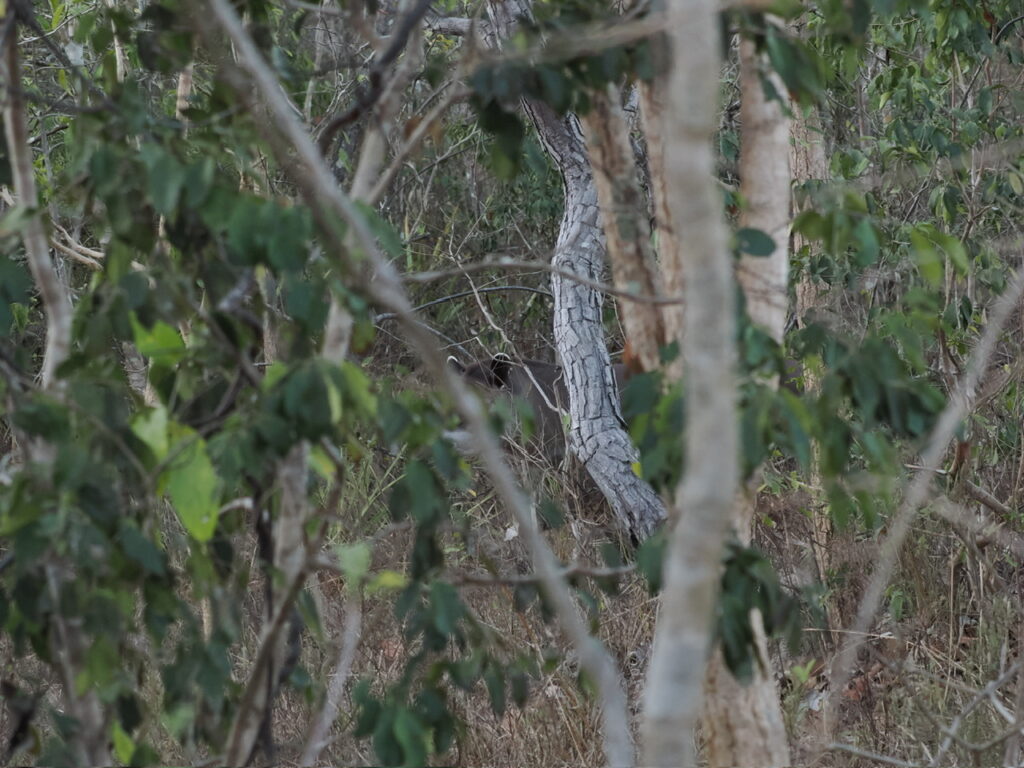
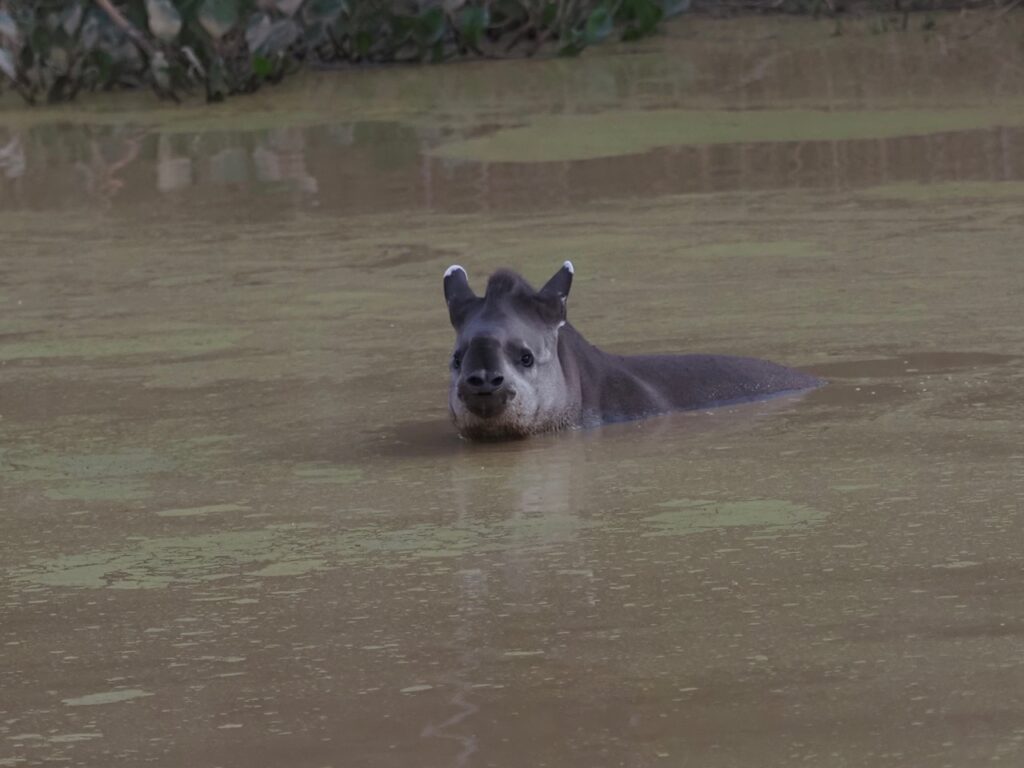
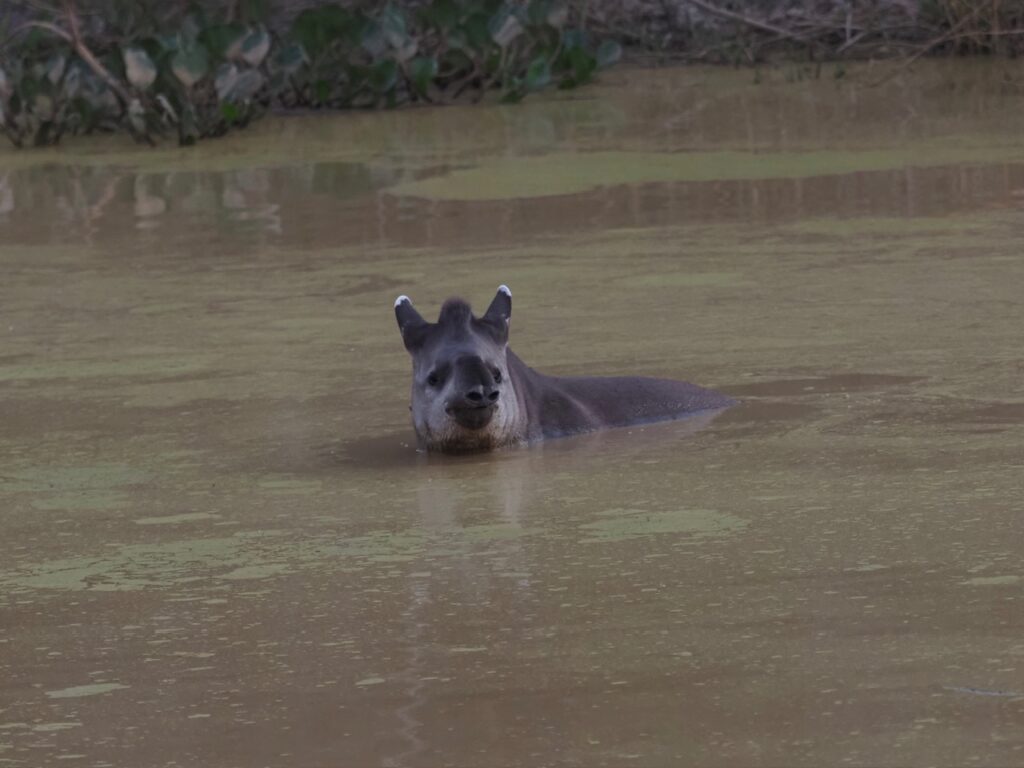
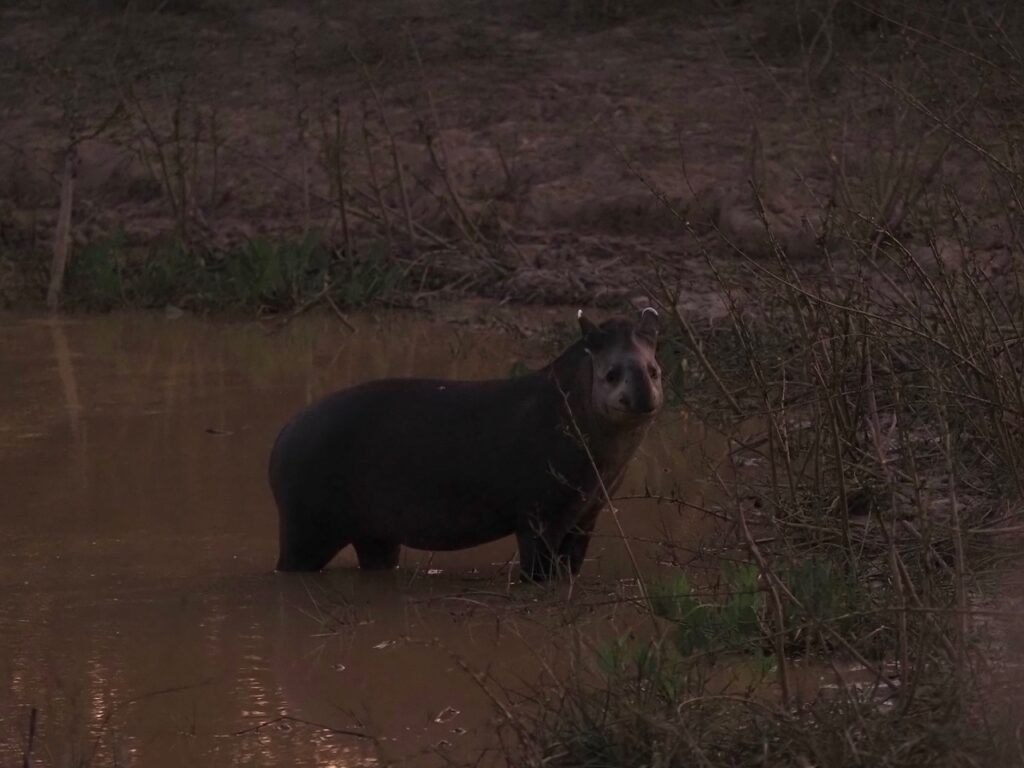
The light was fading fast and photography becoming challenging. I was filming the coati when a tapir appeared in the bushes beside us. I could just see the white tips of its ears.

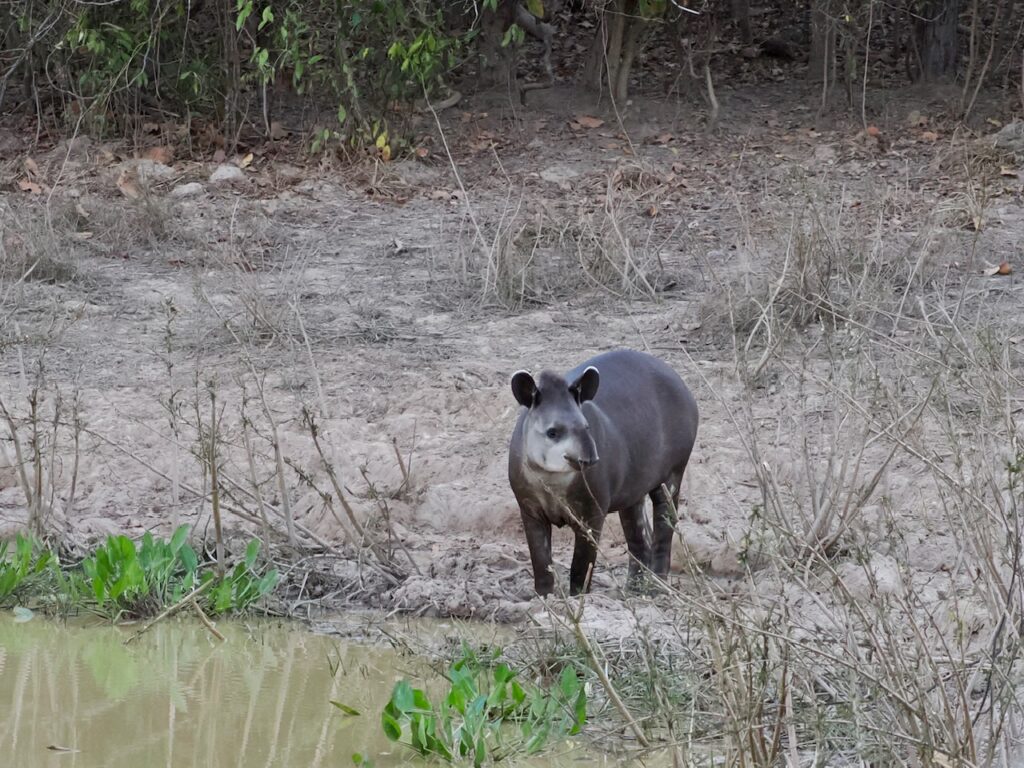
We couldn’t believe our luck. Such a rare creature to see and so shy. We needed to be very quiet indeed. It approached the water cautiously but eventually started to drink.

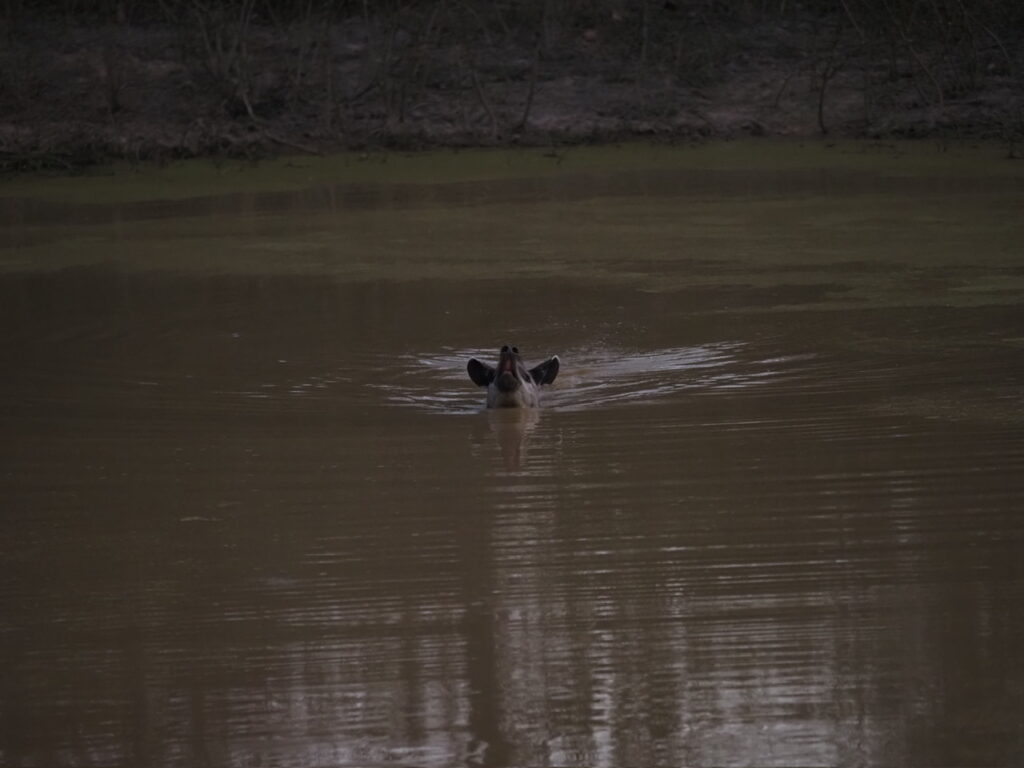
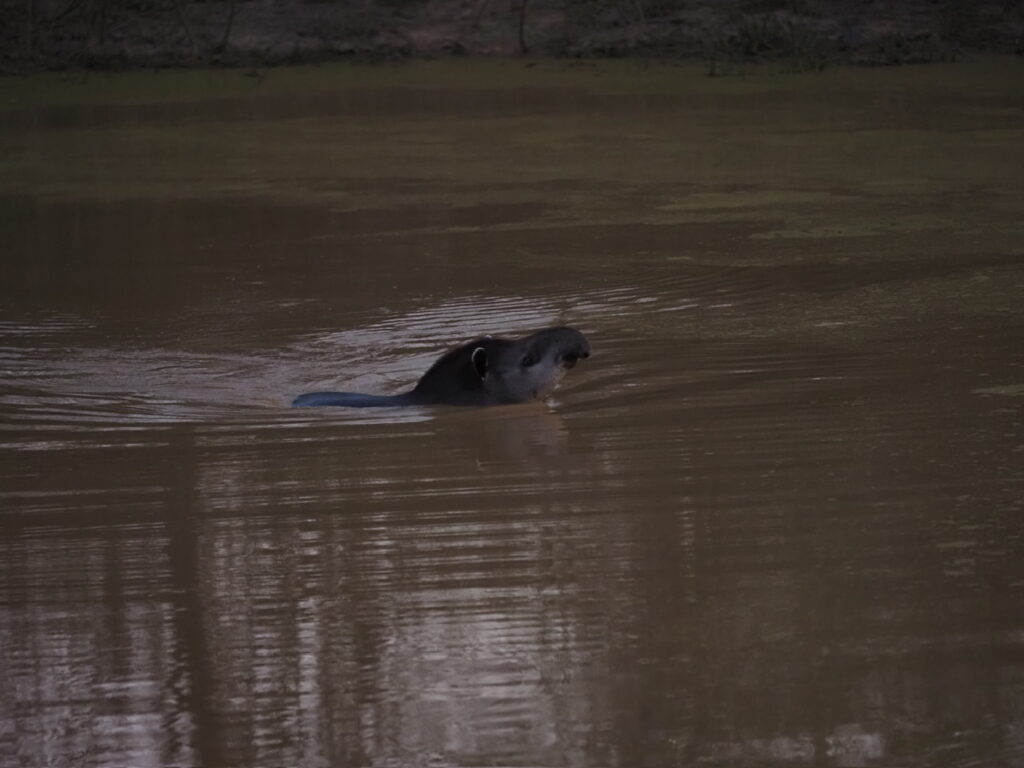
After a few minutes a second tapir appeared, but was spooked by someone in the vehicle moving around. Sadly, it bolted but the first tapir remained and went for a swim. As the light was so poor I switched from photography to video which has come out unbelievably well.

We then noticed the second tapir had re-appeared and he also went for a swim, but the light had almost gone. I tried a few photos and then resorted to video, which was much more successful.

We were all mesmerised. My fingers ached from holding the camera but I had to carry on filming. Oh – and then a marsh deer joined in the action and the coatis returned. Unbelievable! What a special privilege.

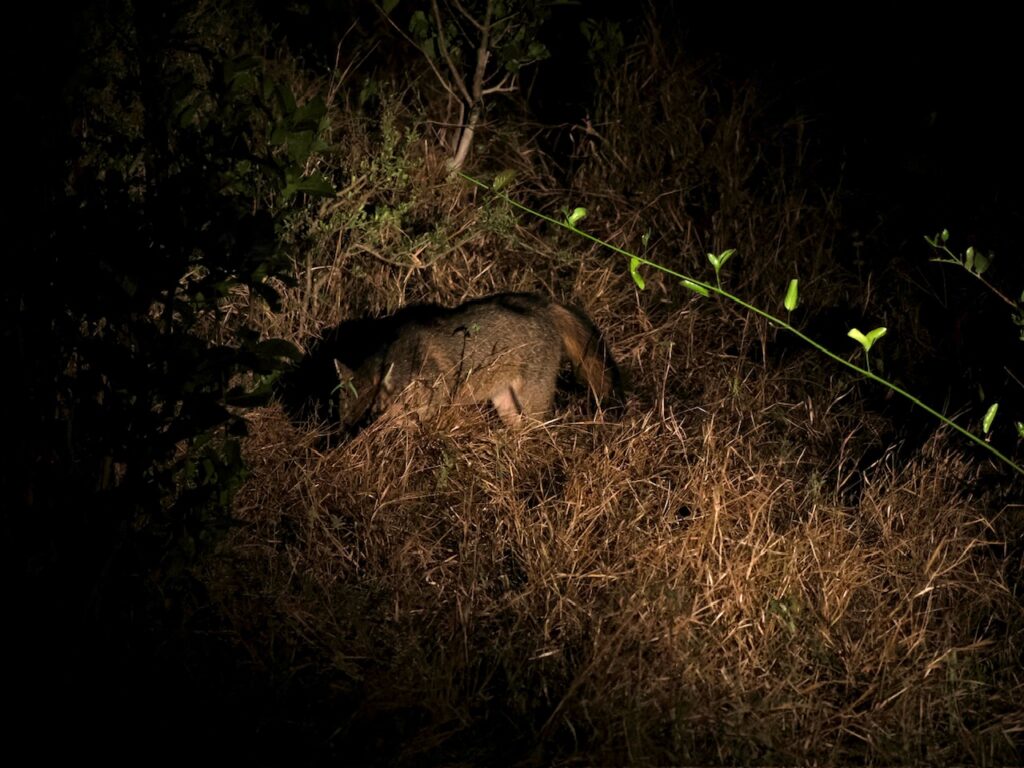
We were all feeling elated and exhausted on our way back to the lodge, especially so when a crab-eating fox crossed the road in front of us.
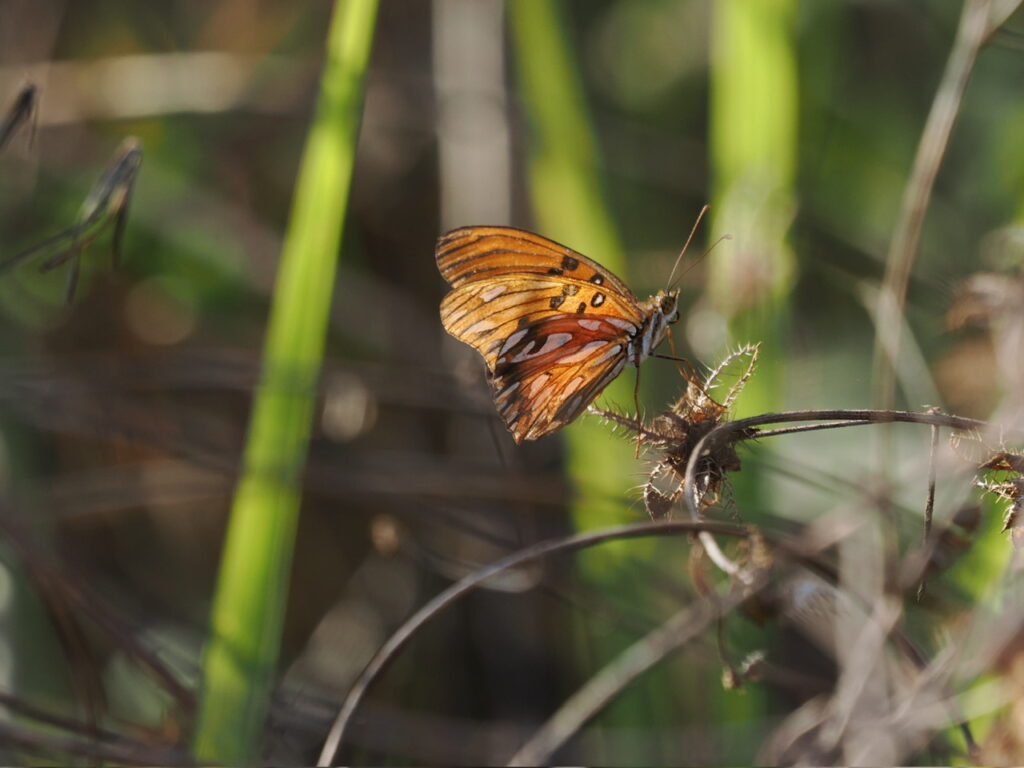
Tomorrow we shall leave and make the 5 hour long road trip to the end of the Transpanteneira in Porto Jofre. We go for a final walk before breakfast, which should have been a drive had our truck not developed a puncture. However, this was a good thing as we could stretch our legs a little before being cramped up in the open truck all morning.
Powered by WordPress & Theme by Anders Norén