My Wild Travels

Photography and Travel Blog

Puerto Varas

We take the 2 hour flight from Puerto Natales to Puerto Montt. From there it is a thirty minute drive to Puerto Varas. To be honest we did not put a lot of research into this part of the trip. We regarded it as very much a stop off for some R&R but I have to say Swoop Patagonia have come up trumps. The hotel – Cabaña Del Lago -is wonderful. It is built in an alpine style and set on a hillside overlooking the bay.

Our room has a large picture window with super views by day and night.
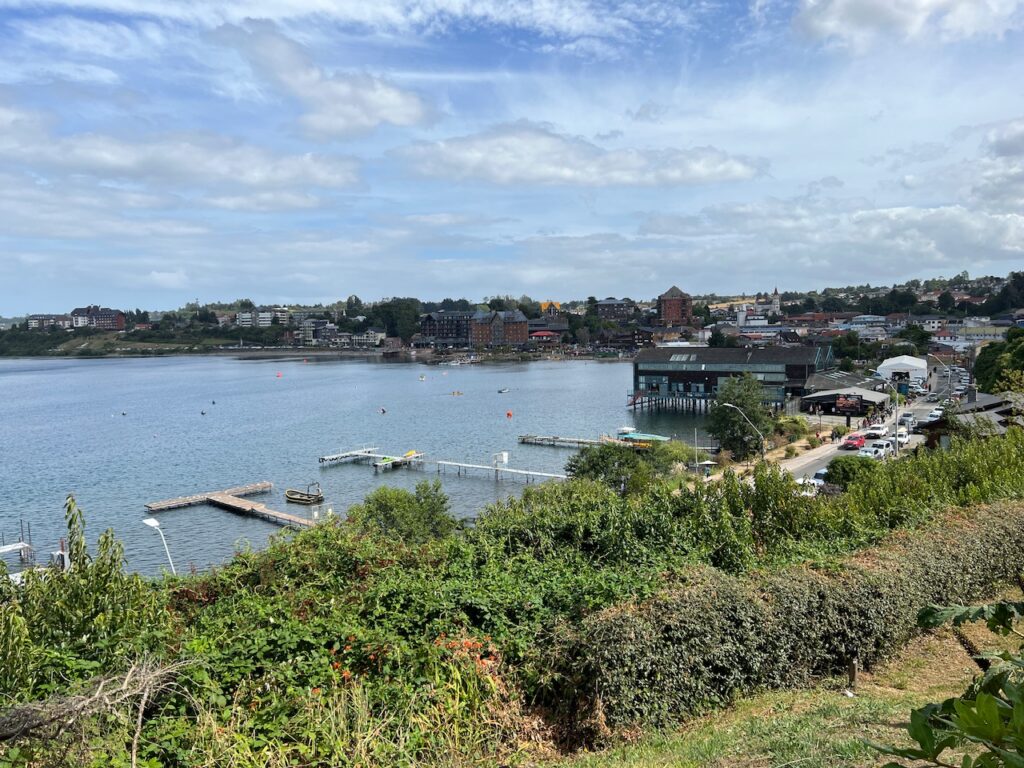
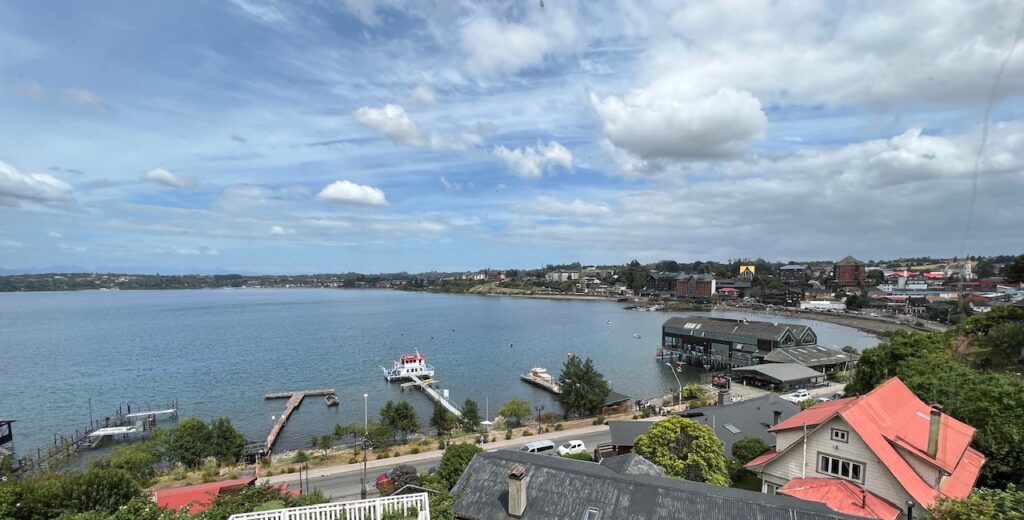
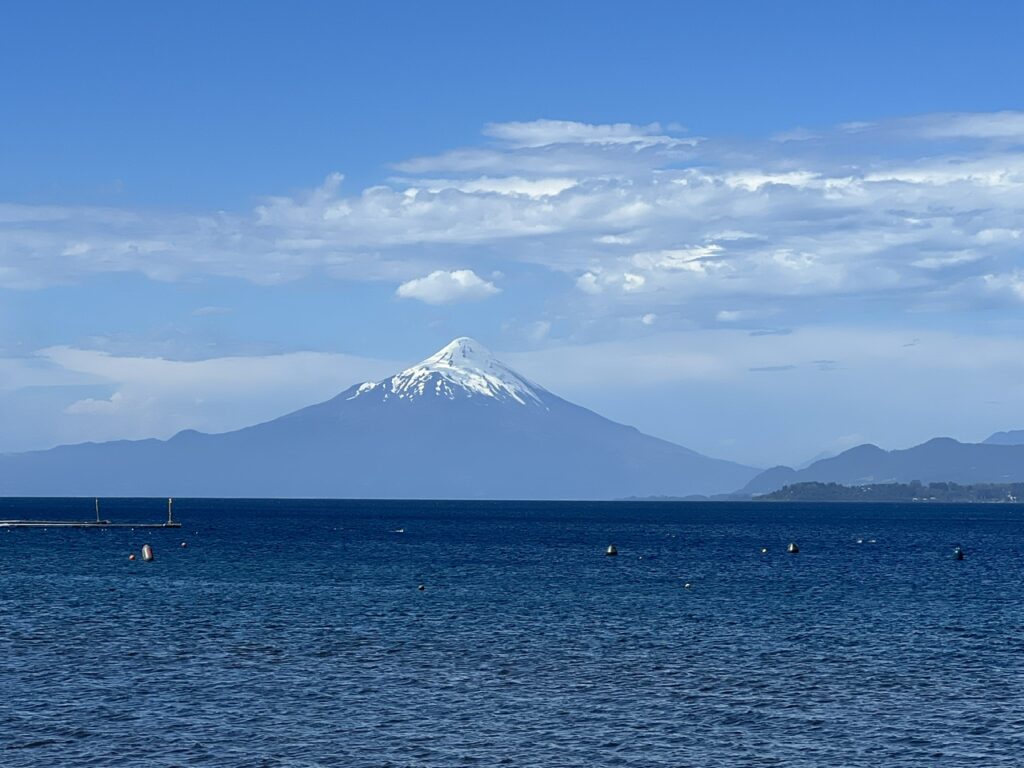
Puerto Varas is within the Chilean Lake District and set on the shores of Lake Llanquihue facing the 2650m snowy peak of Osorno Volcano. It has been dubbed Chile’s ‘City of Roses’, and was settled by German immigrants in the 1850s. Each family was given 70 acres of land but this was not the gift it seemed. They would have had a very hard time indeed. The area was densely forested so needed to be cleared by hand with axes. It took two generations to fully establish a comfortable settlement here. As a result you could mistakenly think you were in a lakeside resort in the Black Forest.

We have three nights here so decide to take it easy on our first day. We eat in the hotel and have an early night. Next day we wait in reception for our guide, who will be taking us to the Alerces Andino National Park, which is comprised mostly of dense temperate rainforest. One in three species here is found nowhere else.

The alerce is a tree which grows up to 60m high and lives for several thousand years. Alerce wood is both water and insect-resistant, which made it a prized commodity for construction and ship-building. Heavy logging led to the trees becoming endangered until the alerce was declared a national monument in the 1970s. They can be seen in several parks around the Chilean Lake District, but Alerce Andino has the greatest concentration of alerce forest, which covers almost half its area.

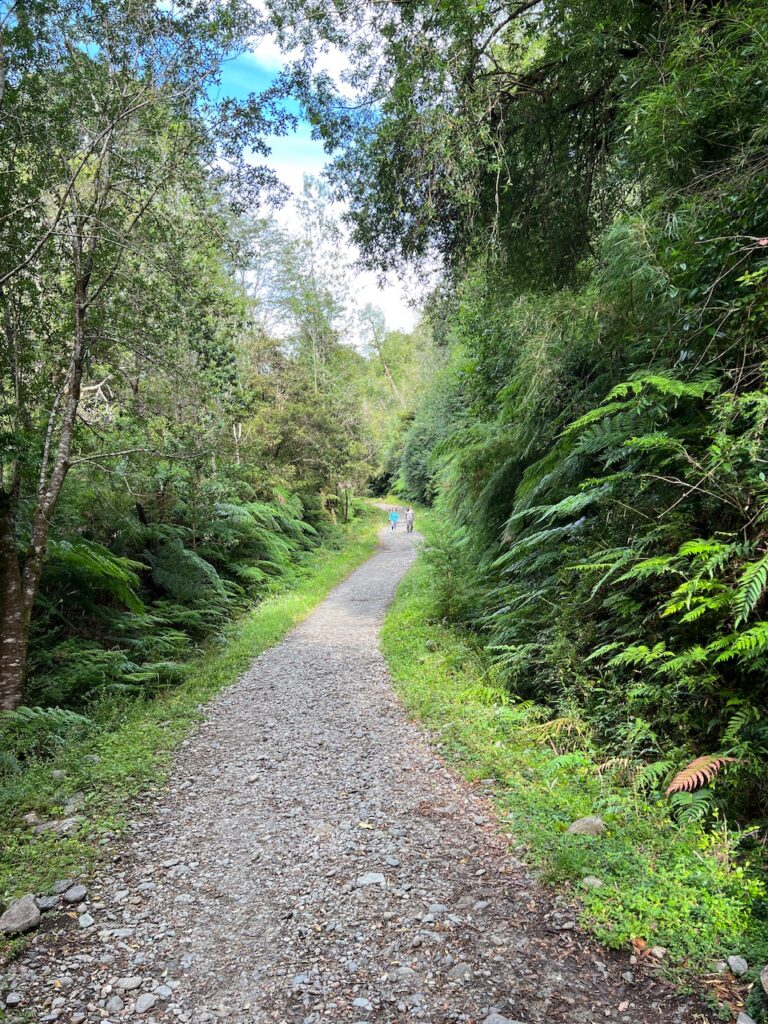
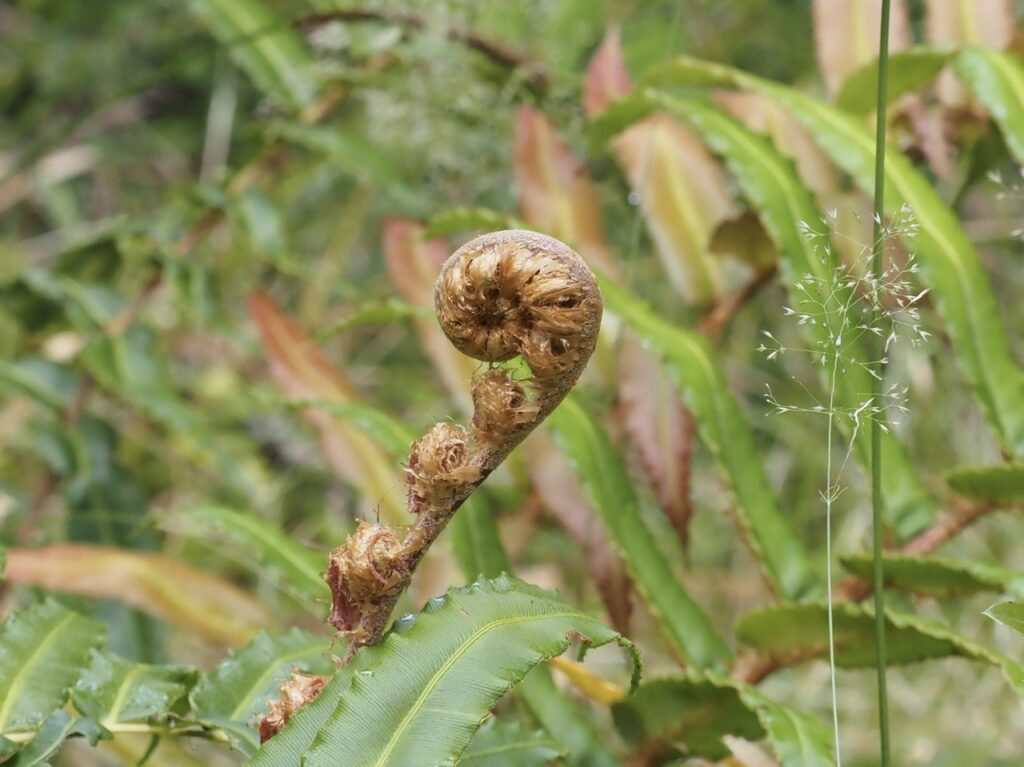
We have a leisurely walk, so have time to observe and talk about the varied flora and fauna.

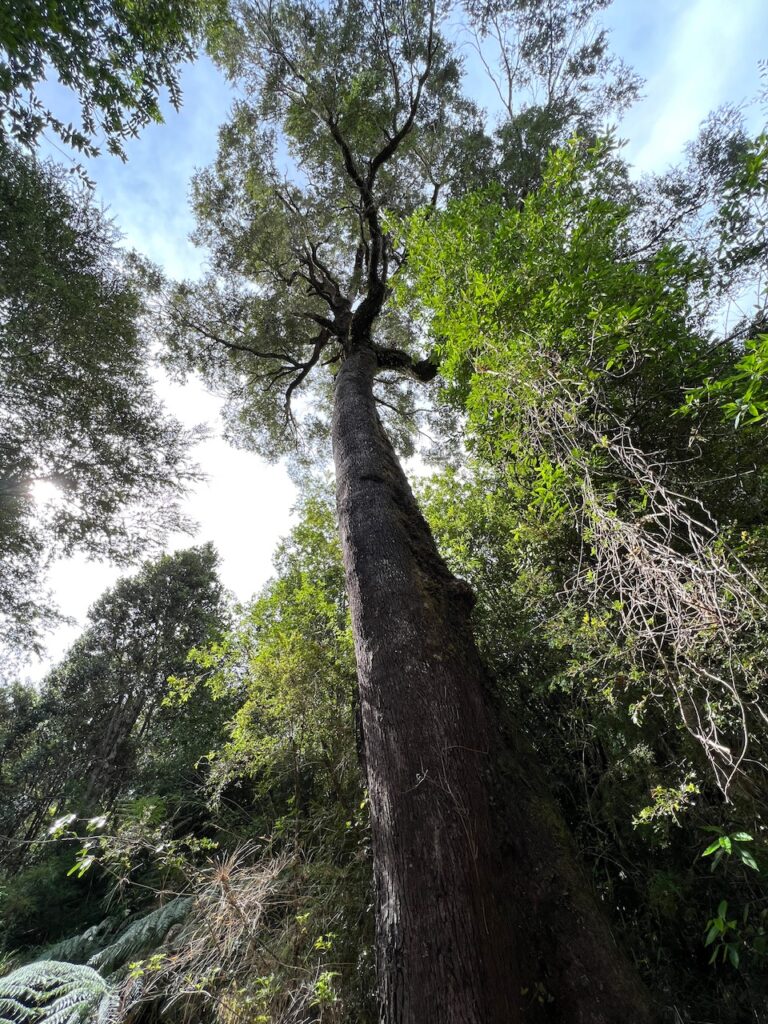
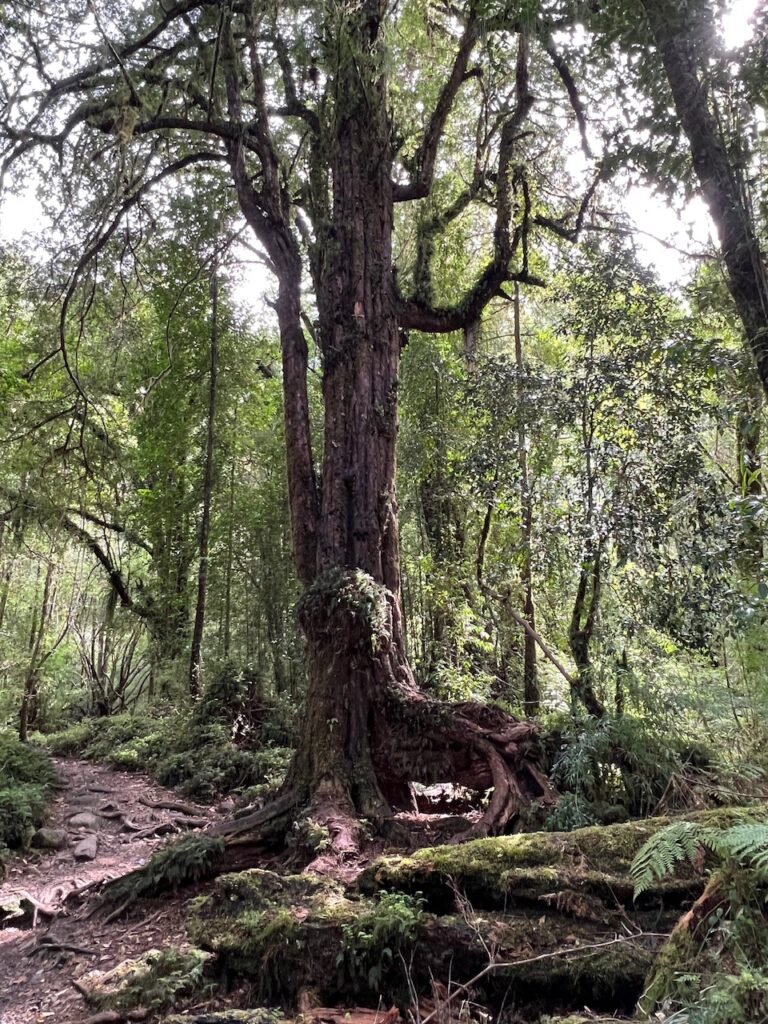
There are other larger trees here too.
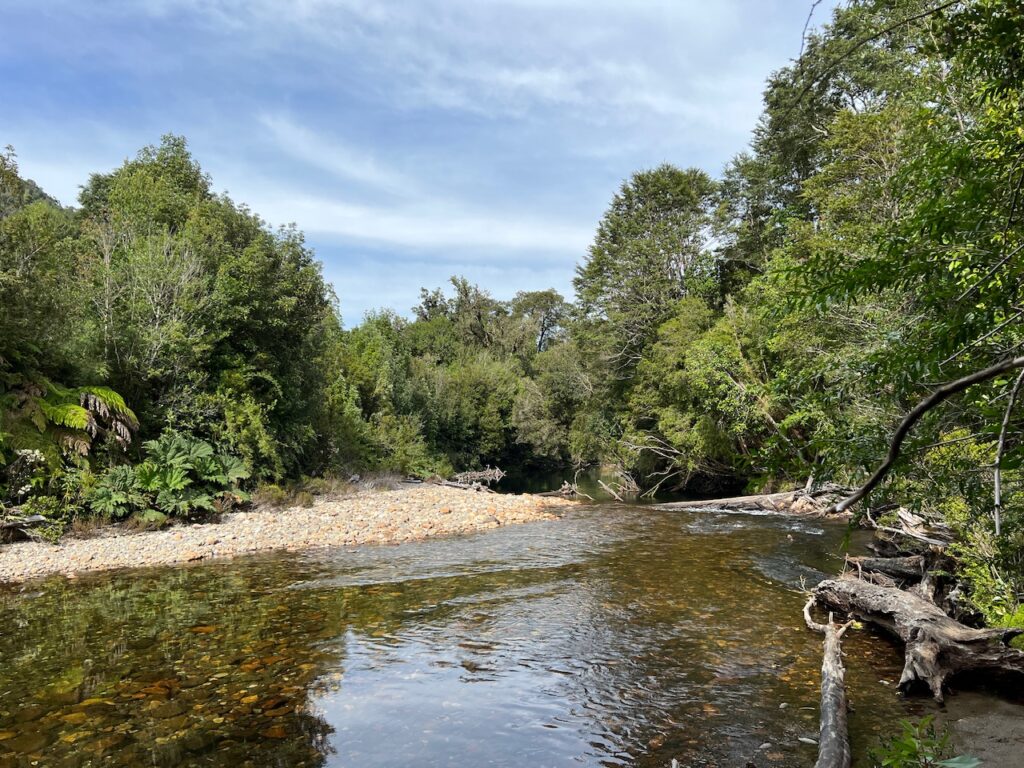
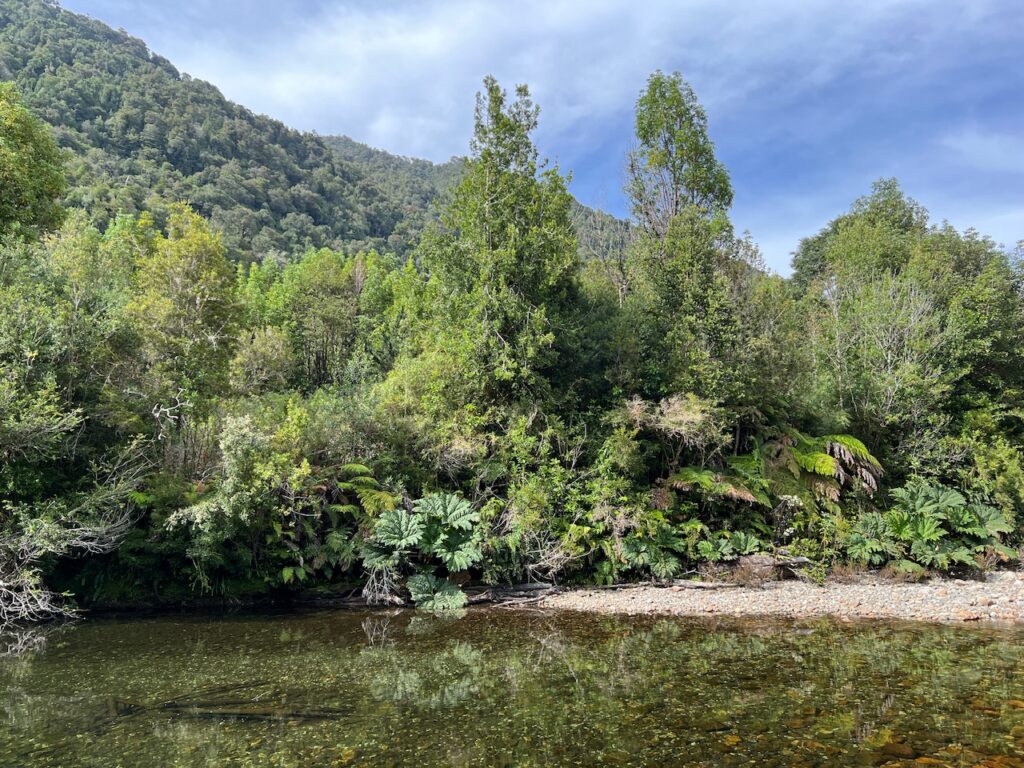
This is a beautiful place and all the time we can hear the gurgle of water as we walk along beside the river – the Rio Chaico, which every so often affords us tranquil scenes…
and a rather lovely waterfall…

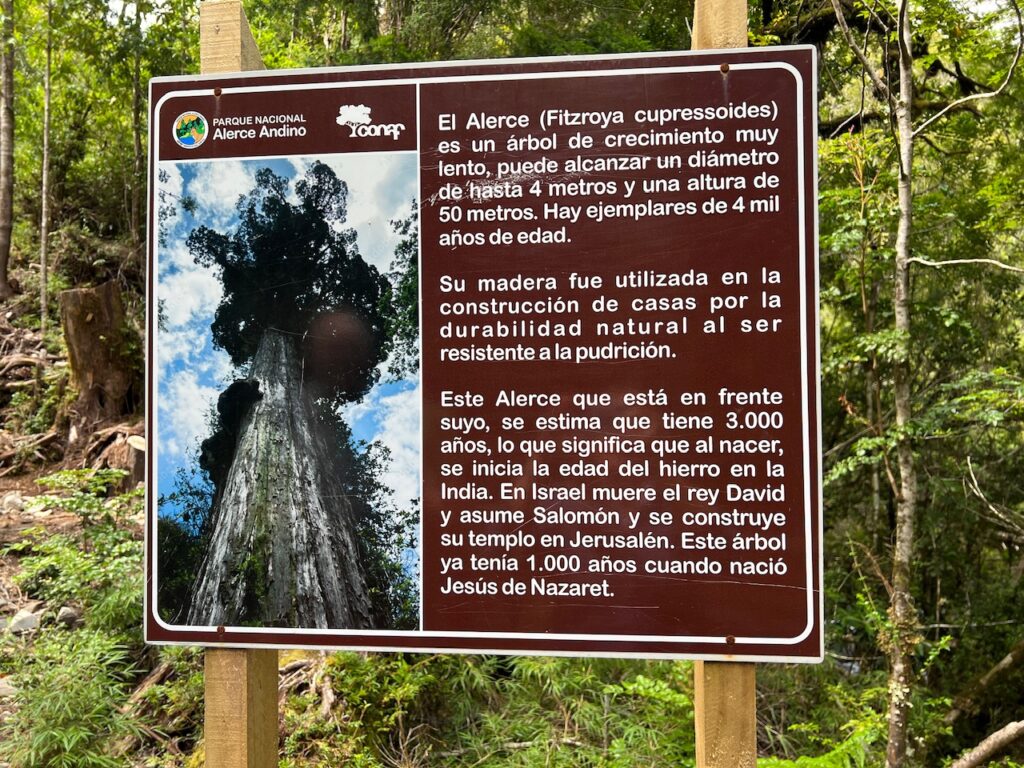
After the falls, there seems to be a never ending series of stairs. We eventually make it to the top, with a few breathers on the way, and arrive at what is thought to be the oldest Alerce tree at 3000 years old. It is quite something and very similar to the giant redwoods that we saw in California in the summer.
Then it is back the way we came. Our guide Manuela is wonderful company and a wealth of knowledge about the history of Chile, as well as the plants and birds that we encounter. She has brought us salads for lunch which are excellent. We sit in a picnic area where we watch caracaras and a black-headed thrush.

As we walk back to the car there are a pair of Patagonian foxes. They are pretty relaxed and I manage to follow them on foot and get relatively close.

On the way back to Puerto Varas we see hundreds of brightly coloured beehives. This is obviously important business here.

Manuela recommends a restaurant to us – La Vinoteca and kindly books us a table. It is only a short stroll from the hotel and is a total delight. The view, food, staff are all quite excellent. The patron is charming and clearly loves wine. He has a large wine shop attached to the restaurant. He is therefore very knowledgeable and we drink some rather nice Chilean wines. As we leave there is a super view of Osorno Volcano and looking for all the world like Mt Fuji!
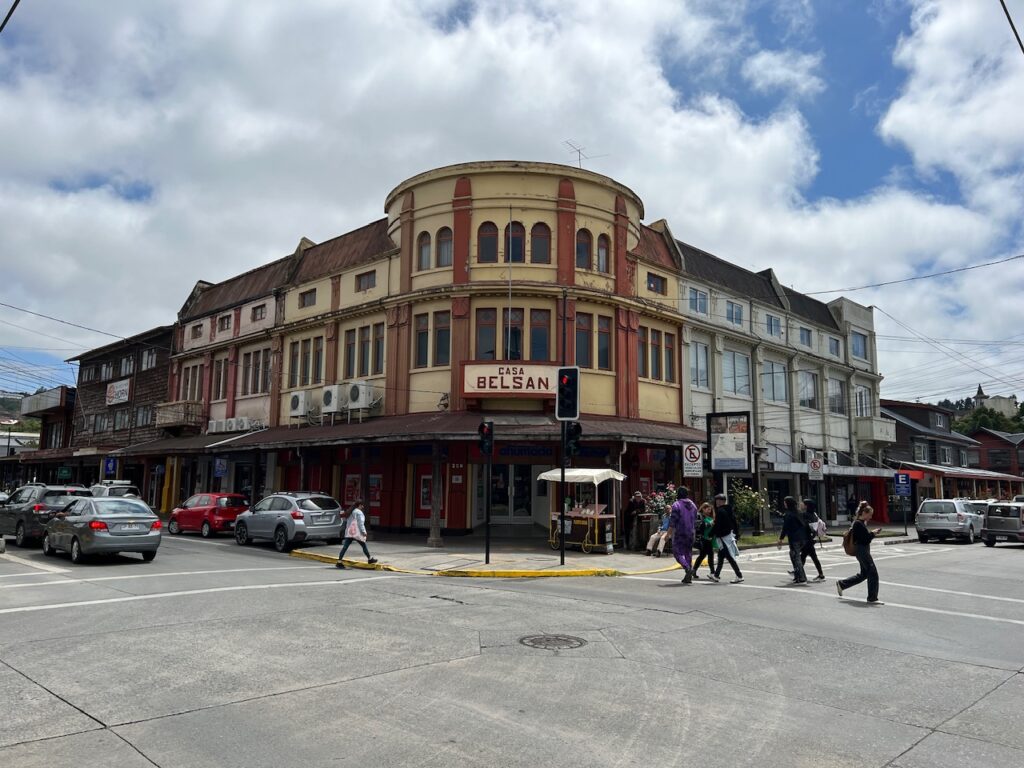
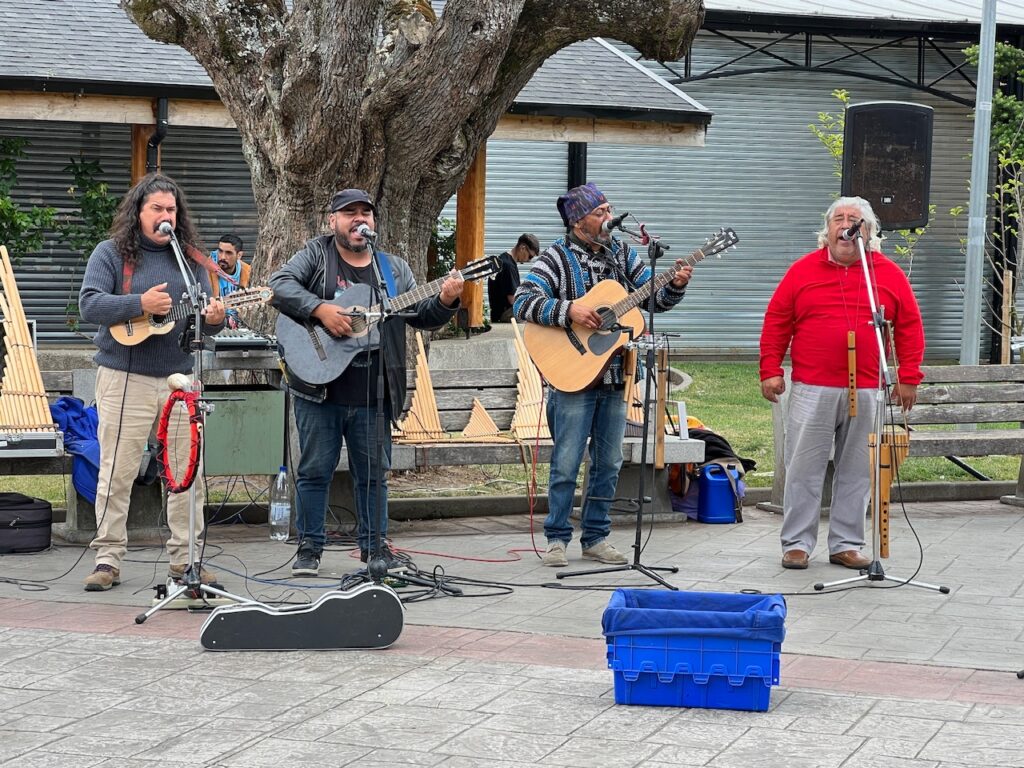
Next day we explore the town a little. It is summer break and this is very much a holiday resort where the wealthy from Santiago come to relax. We sit in the square, where a local band are performing. They are very good and we enjoy their Chilean music.
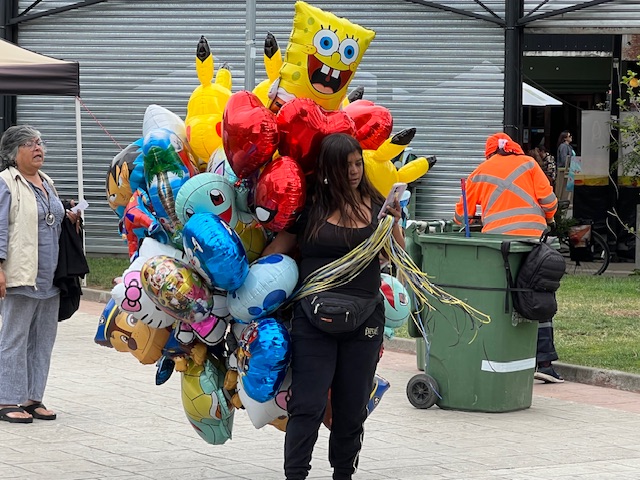
It is pretty windy and we hope the balloon seller has attached the balloons securely to herself.
We wanted to find somewhere authentic for lunch but were having very little success when we suddenly saw a tiny, but beautiful garden tucked into a corner behind some rather unassuming restaurants. We take a look and have found another gem. What a perfect spot for an Aperol spritz and avocado stuffed with king crab. Yum. Oh we might have had some white wine too!

We have loved our time here. It was exactly the break we needed after the full on action and physical exertion of the puma tracking. We finish off the day by returning to La Vinoteca. It was so good last night. “If it isn’t broken, don’t mend it.”
Puerto Natales

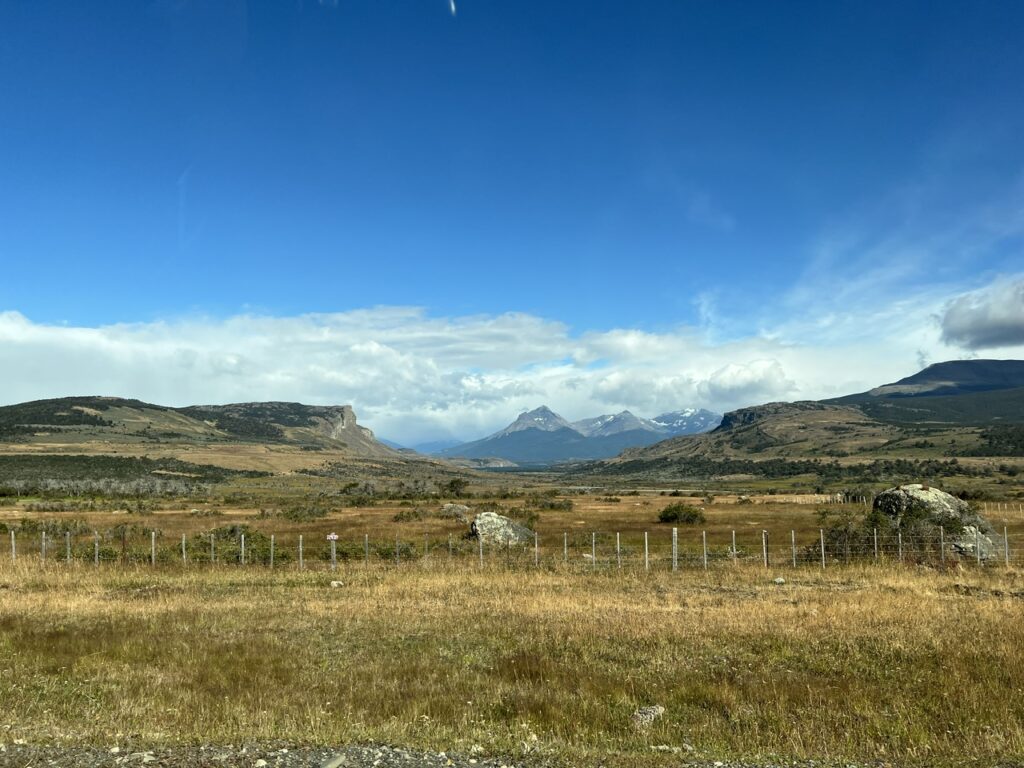
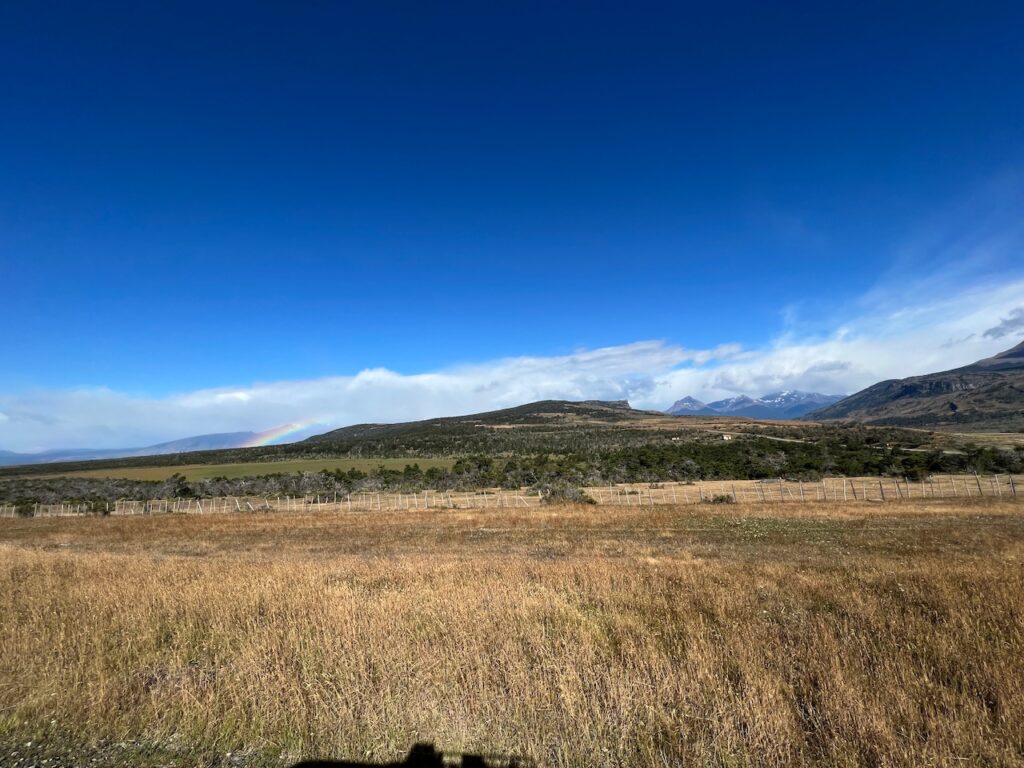
The drive from Cerro Castillo to Puerto Natales takes about fifty minutes. The road is good, as is the weather and yet again affords some splendid views, together with the obligatory rainbow. Condors soar over the plains but as ever are too distant for any reasonable photographs.

Our plan had been to visit the Milodón Cave where in 1896, German explorer Eberhard Hermann found the fur and bones of a Mylodon, an extinct huge ground sloth. Our new guide Diego said we needed to apply for tickets on-line. Well after an abortive 30 minutes I gave up. The site required passport details and pretty well every other detail you could imagine. When I went to pay it told me I had missed something which I had not. Life is too short for this nonsense…. Instead we find a lovely little cafe which sells great coffee and pastries.

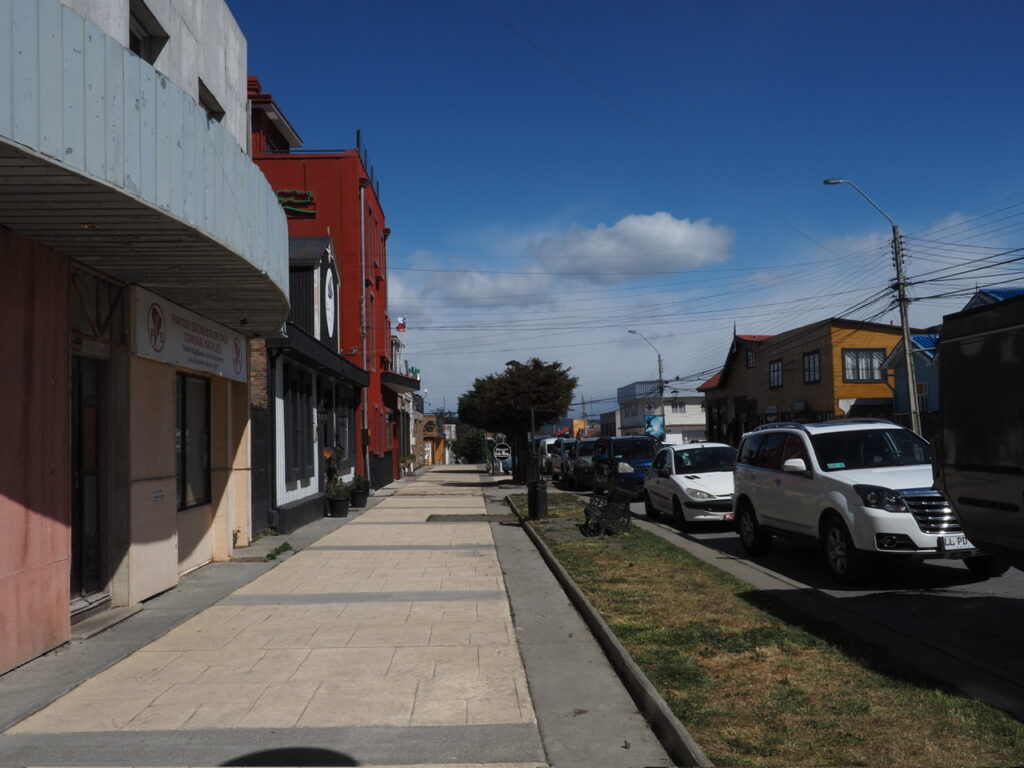
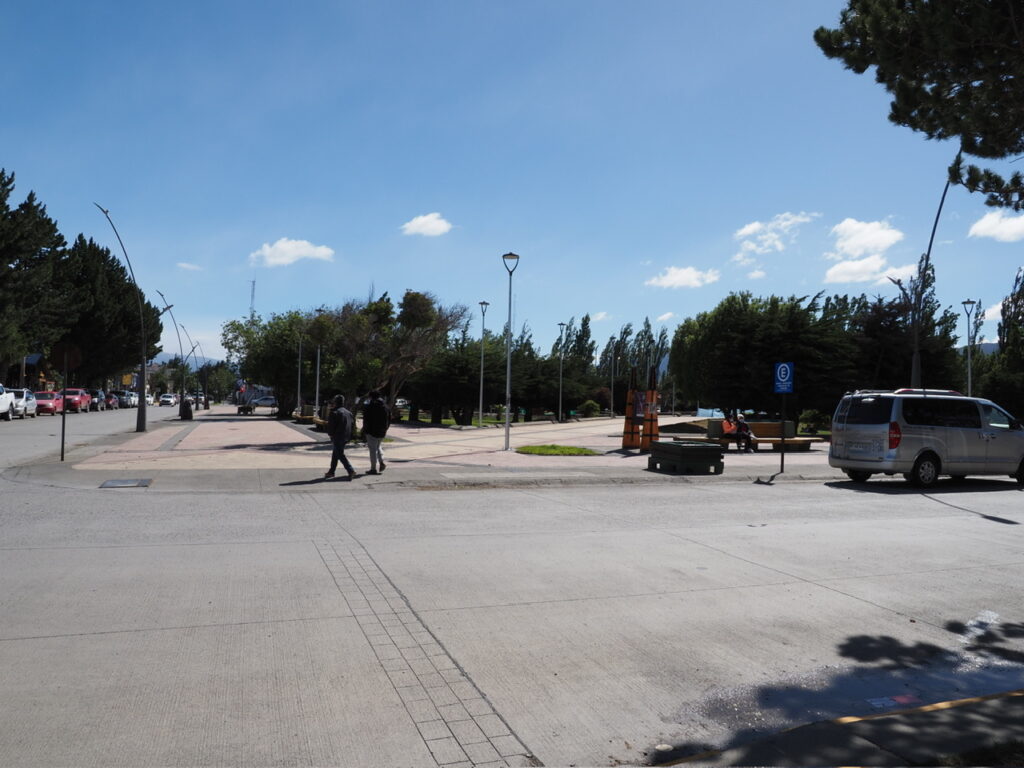
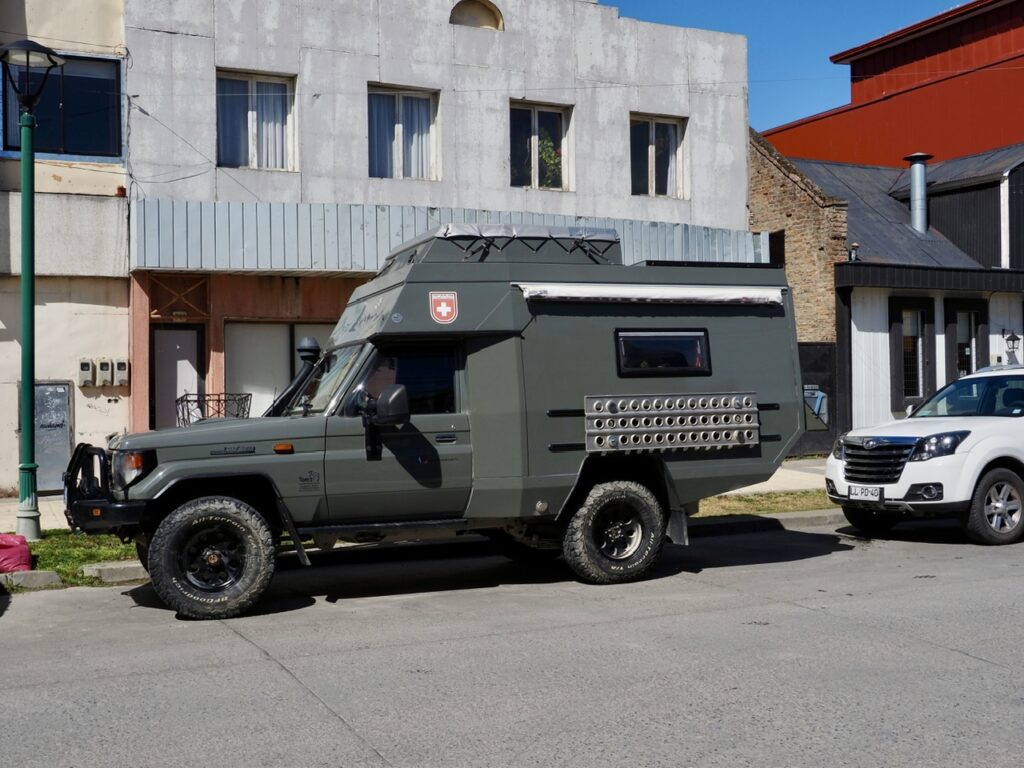
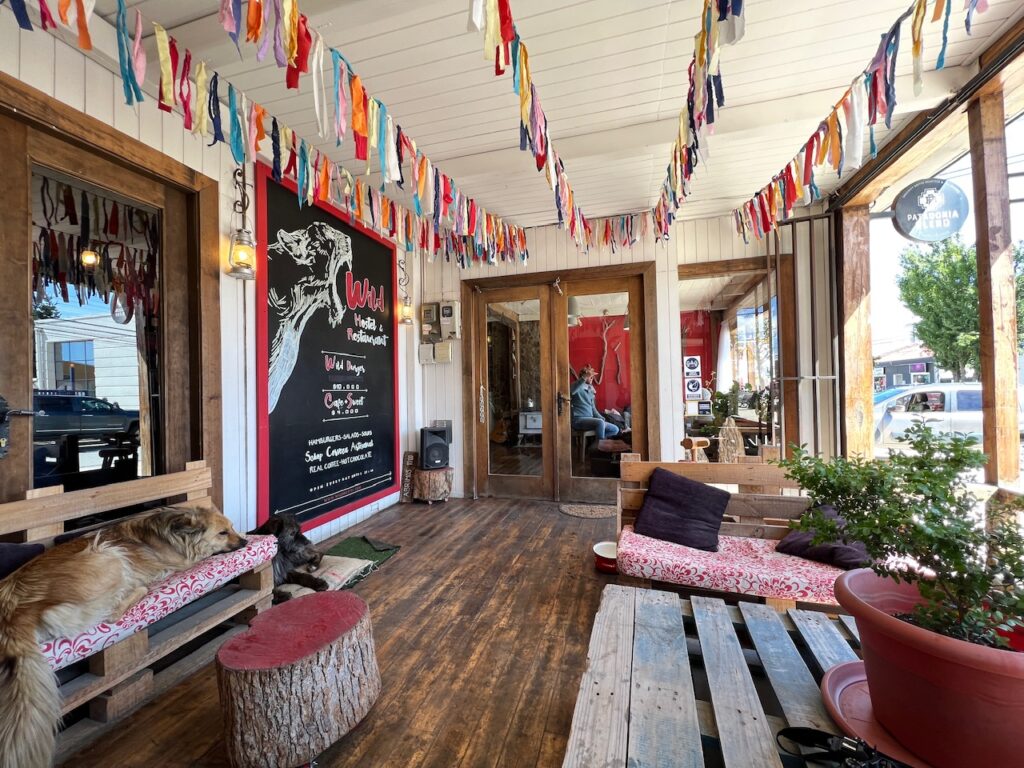
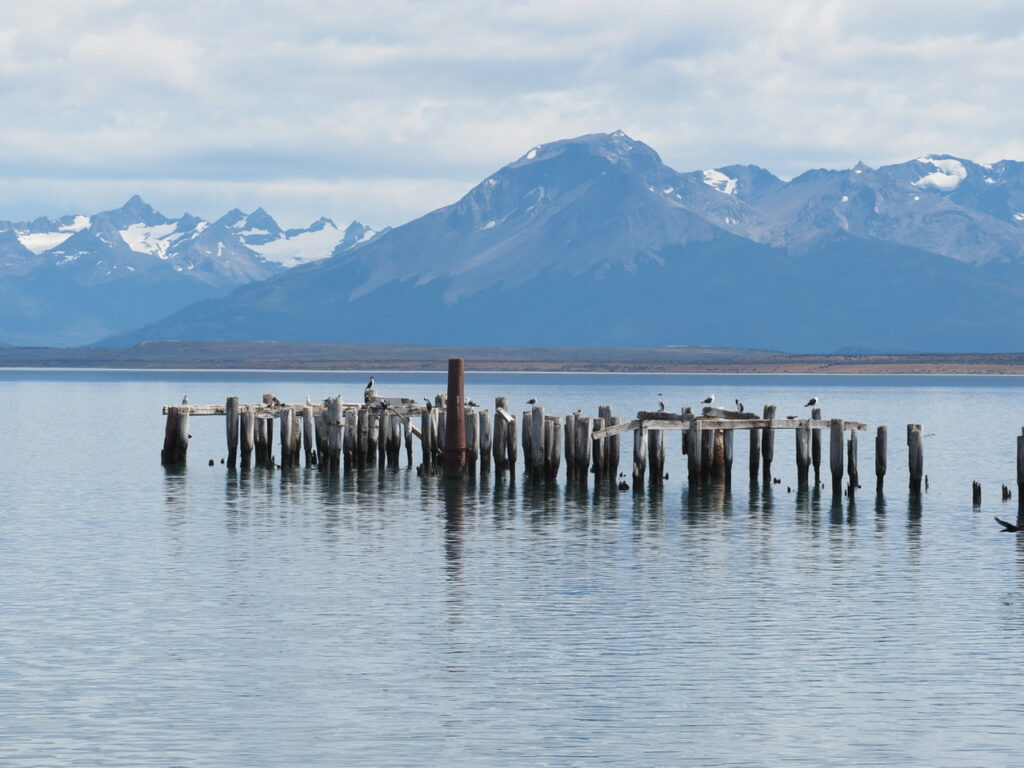
Puerto Natales was originally a small fishing port but as it is the main gateway into Torres del Paine tourism has also become important. The town has that cold, end of the world type feel that you expect in Arctic and Antarctic regions. Buildings are functional and built to withstand the inclement weather. We stroll round to get our bearings, see a vehicle equipped to cope with all the environment can throw at it and settle in a bar that likes to make the local dog population feel at home.

At 15.00 our room is ready so we can finally check-in. We are staying at Noi Indigo which is in a great position on the promenade. It’s a bit quirky. I would say that it is kind of expensive for what is on offer – the room is small, but the bed is comfortable and the view through the large window is excellent.

We are only here two nights. Just enough time to unwind a little and catch up on some sleep. What Puerto Natales has in spades is some very good restaurants. Nana recommended Santolla to us and we are not disappointed. The starter of scallops three ways is sublime and my seafood broth excellent but TOO BIG!!

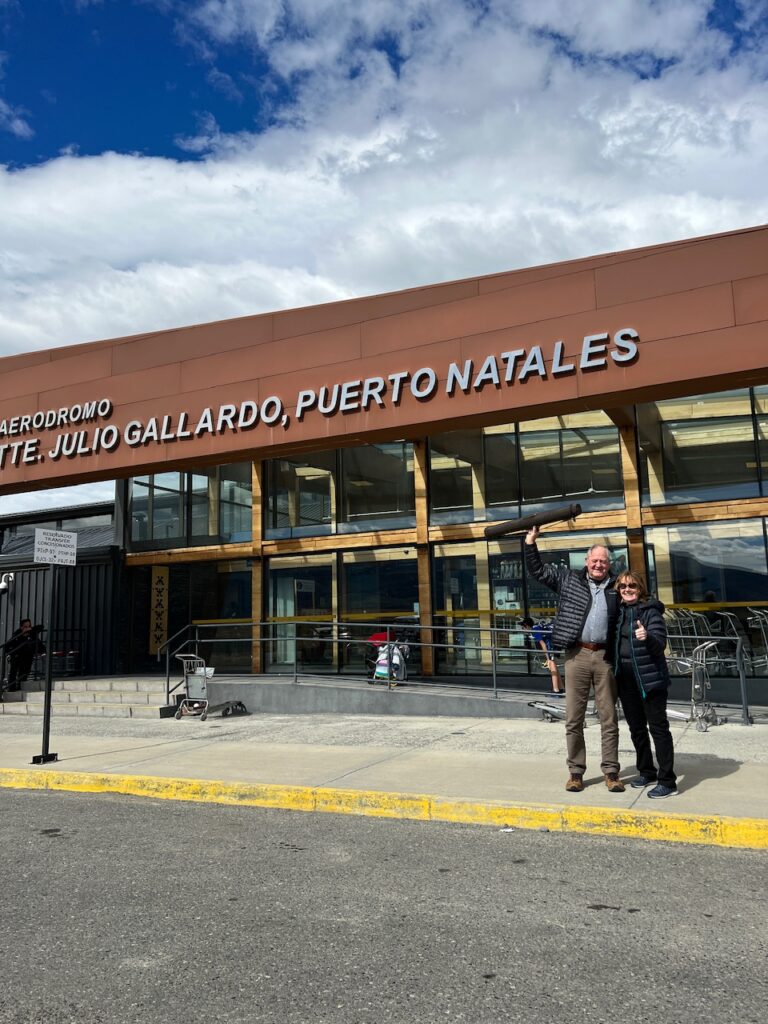
The next day we take a short taxi ride to the airport. I have an email in Spanish, which we think says that Paul’s rods were on a flight from Santiago yesterday. The airport is tiny and there do not appear to be any staff around. I type “Where do we collect lost luggage?’ into a translation app. I find a back office with some staff in it and show them my phone. I describe the item and their faces light up. Yes – they have found the owners of the mystery package. It is rapidly recovered from a back-room and Paul is re-united with his very precious rods.

We take the rest of the day easy with a stroll along the promenade and a coffee stop.

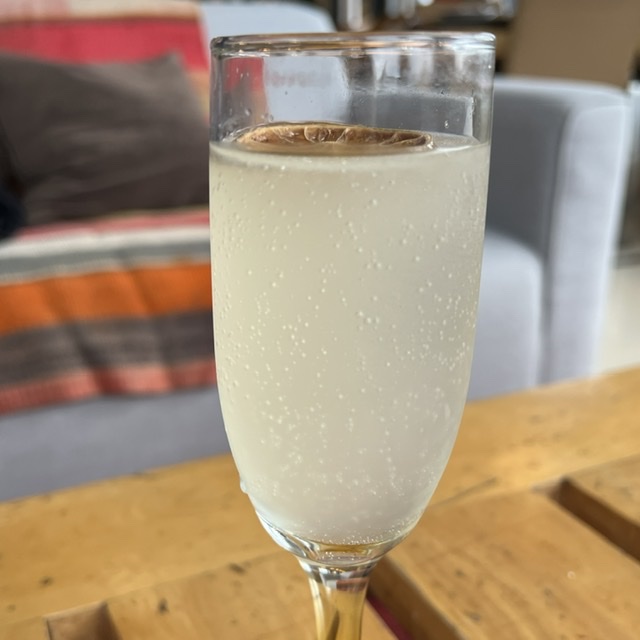
We return to the same restaurant where we had lunch yesterday. We shared quesadillas which were very tasty and prepared three ways accompanied by a nicely chilled Chardonnay. An afternoon nap is followed by more eating and drinking. We order pisco sours in the hotel bar which has great views across the bay. I do not know how it has taken me so long to discover this delicious drink. It is made from pisco (a white brandy) mixed with sugar, lime juice and angostura bitters. Sometimes egg white is added. Delicious…and strong!

We have reserved a table at Bahia Mansa for 19.00 which is when it opens. It is rather strange though as there is no sign of life at 18.55! Eventually someone turns up, tables are re-organised and we are seated by the window. By 19.15 they finally seem to be setup and we order our meal. We are in an adventurous mood so choose starters of guanaco carpaccio and salmon & scallop tartare. We share them and they are both good though way too much lime juice for my palate. Seafood is very good here and we order the hake two ways which is cooked perfectly but again it is overly acidic. With no bread or potato to counteract the experience I do wake up in the night with serious heartburn.

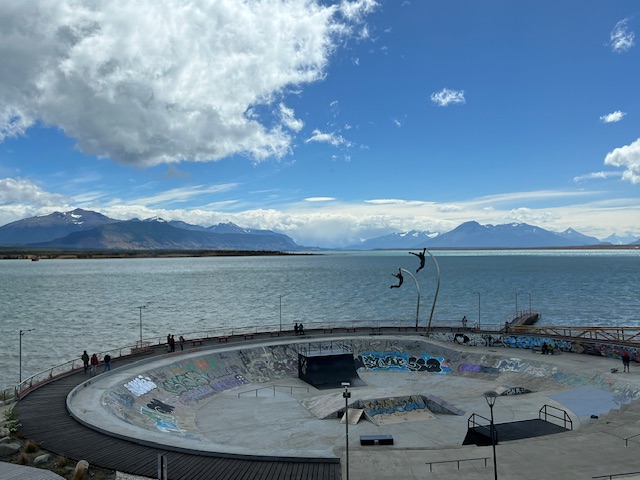
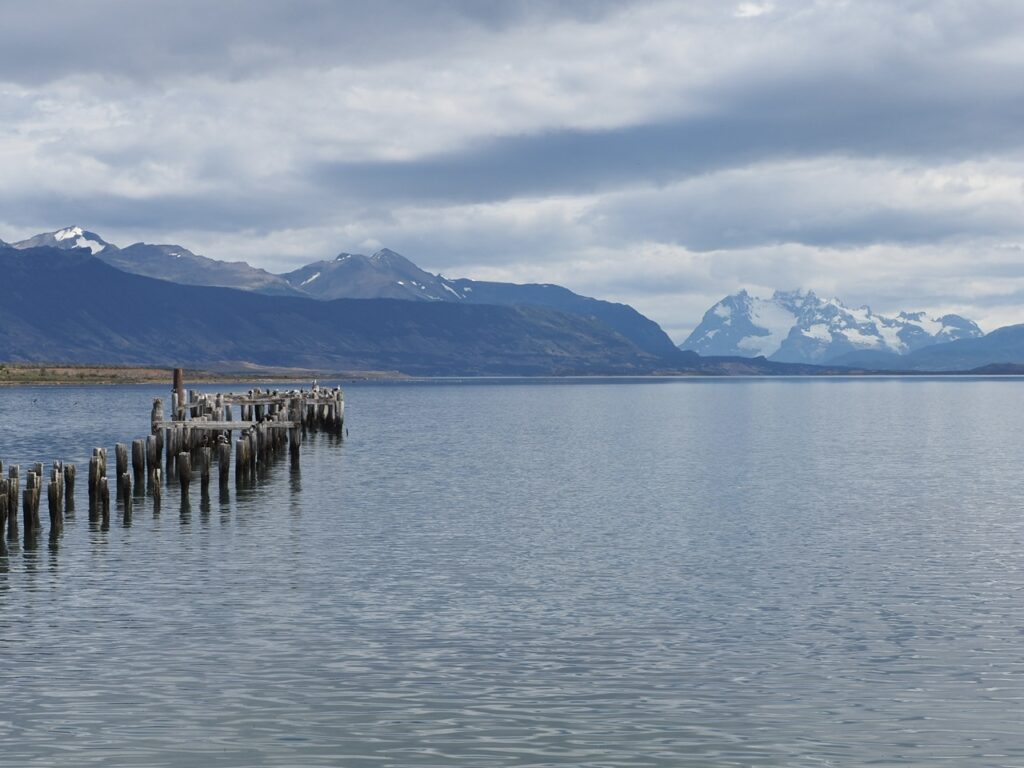
We leave Puerto Natales, say farewell to the ‘Amor al viento’ (Love of the Wind) sculpture of a bronze man and woman floating on the air and take the short flight to Puerto Montt for our next adventure.

Puma Action

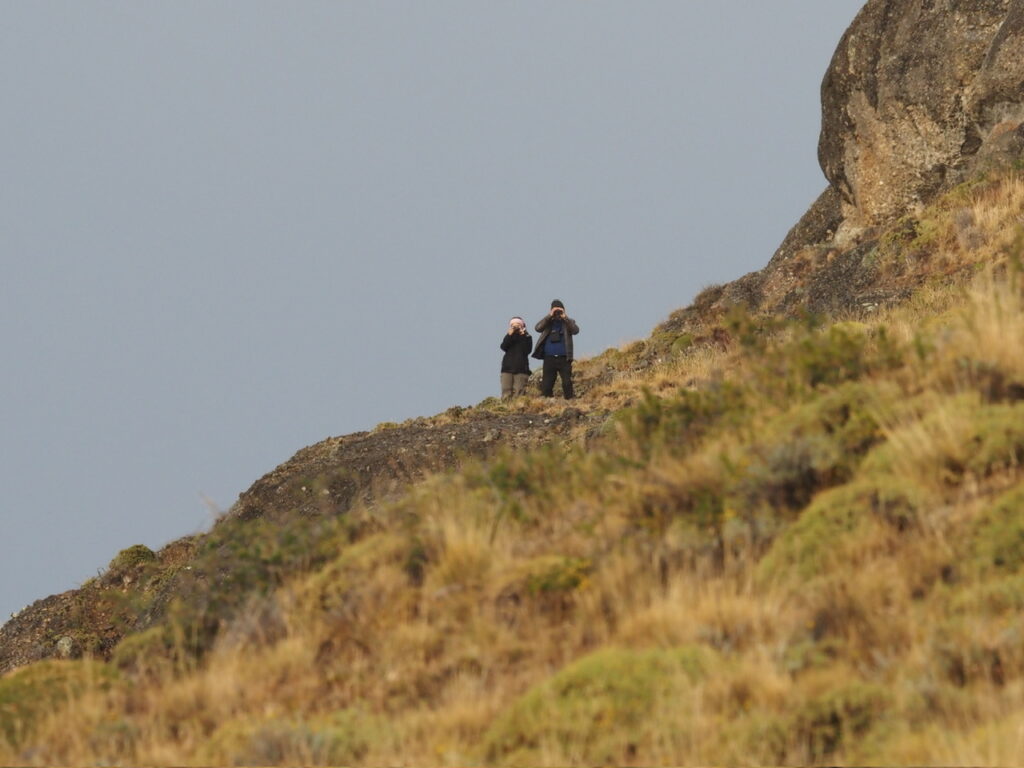
We think it would be a good idea to return to where we saw the pumas last night. They may still be there. There are three more groups going out this morning. A guide and his guest stand on a distant hill trying to see what we are looking at. They will have a very long and difficult walk!

Nana has gone ahead of us and confirms that she can still see the male puma in the bush. We drive along the bumpy track to the top of the hill and walk downhill to join her. It is raining and cold. The ground is steep and slippery underfoot so we must tread carefully. We take a wide course around the bush but have to suddenly change our direction as we see a second puma lying in the grass directly ahead of us. This is SOOOOOO exciting. The male is Carnasa. He is huge and still eating the carcass.

Carnasa

When he looks straight at you, it makes a chill run down your spine. This is the first time I have been a little apprehensive as the males are less tolerant than the females. They deserve an extremely large measure of respect.

Carnasa

From our position we can now see the female puma – it is Ginger. She is waiting patiently for Carnasa to leave the kill.

Ginger

This will be a long wait. Carnasa is in no rush. We then notice a third puma on the ridge above Carnasa. This turns out to be Coiran.

Coiran

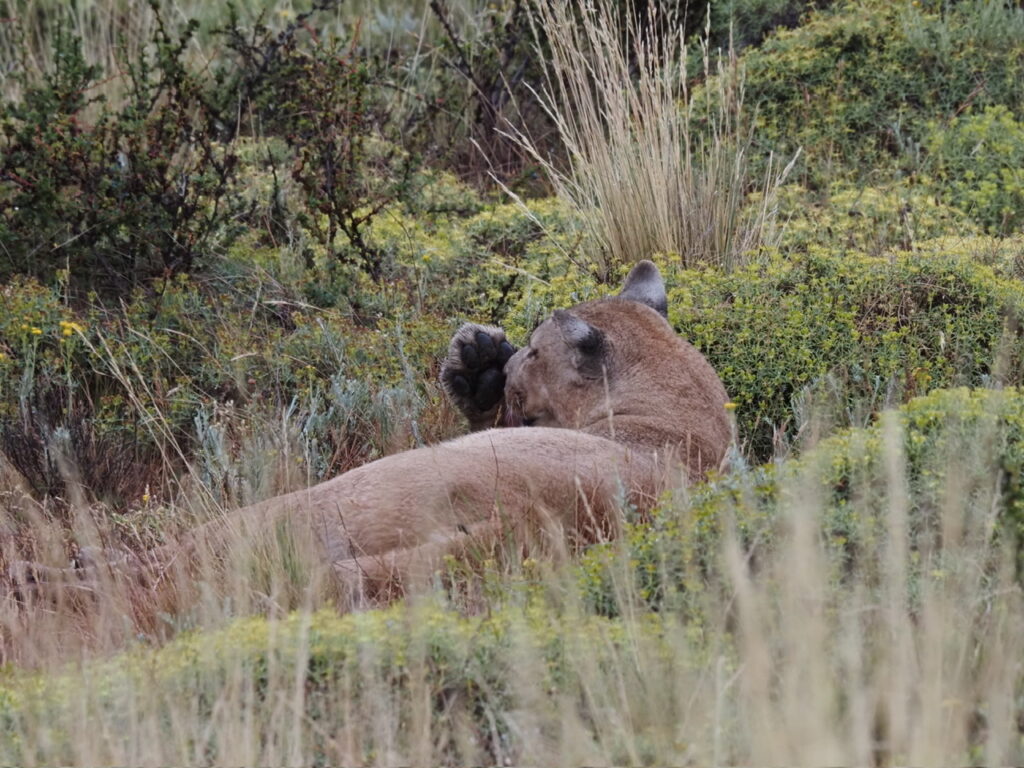
Carnasa eventually stands up and starts to cover the kill with foliage to hide it from birds and other scavengers. I had no idea that pumas did this. He then moves a few feet away and settles down for some grooming and relaxation. He licks his paws, which are huge.

As it is our sighting, the protocol is that we shall choose our viewing position and anyone else must setup around us. We are joined by one of the cameramen who was involved with the filming of Dynasties. We sit and wait for movement. I have marked the position of the three pumas in the photo below.

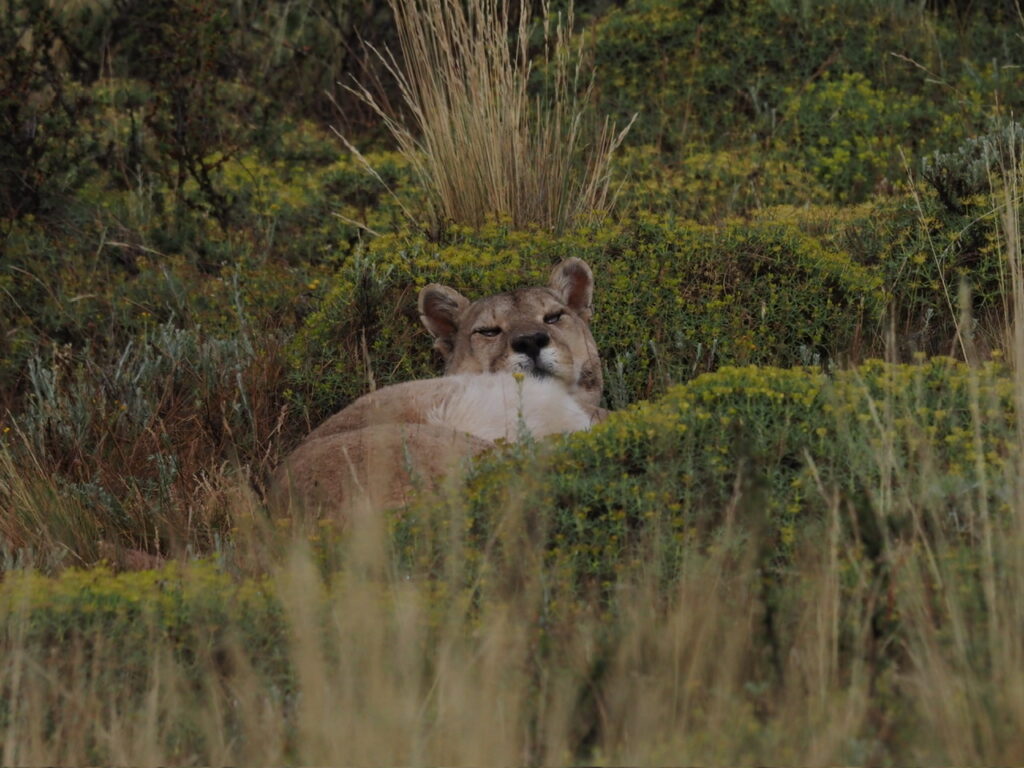
Eventually Carnasa walks away and settles down in the shelter of a bush on the edge of the hillside. Here he can survey the landscape and check if any more pumas are approaching. Ginger sees her chance and stealthily creeps down to the kill.

Ginger

She starts eating but Carnasa notices. What will happen now? He gets up and comes back to the kill, slowly at first and then with a charge. Ginger springs back quickly but there is no direct conflict. They stare at each other for a few minutes and then Carnasa decides he is pretty full and goes back to his resting spot. Ginger now tucks into the kill and it is not long before Coiran inches down the hillside and joins her.

Coiran

This is all pretty awesome but becomes even more so as a fourth puma is spotted on the ridge behind us. This turns out to be Dania – easily distinguishable as she has a torn left ear. She is much more wary and takes her time to descend down the mountain.

There is some hissing, followed by some deep growls as Dania joins Ginger and Coiran but then they all peaceably go back to eating. Eventually they are fully sated and one by one saunter off into the distance.

We have spent over three hours with the pumas and it feels like no time at all despite the fact it was cold, wet and uncomfortable for we are standing and sitting on steep uneven ground. What an adrenalin rush though. A totally AWESOME morning!

We decide to have a leisurely afternoon and will be driving to a nearby estancia in the hope of seeing some of the other wildlife that lives here. The weather has changed completely. It is now hot with a strong wind blowing. You really can get four seasons in a day here.

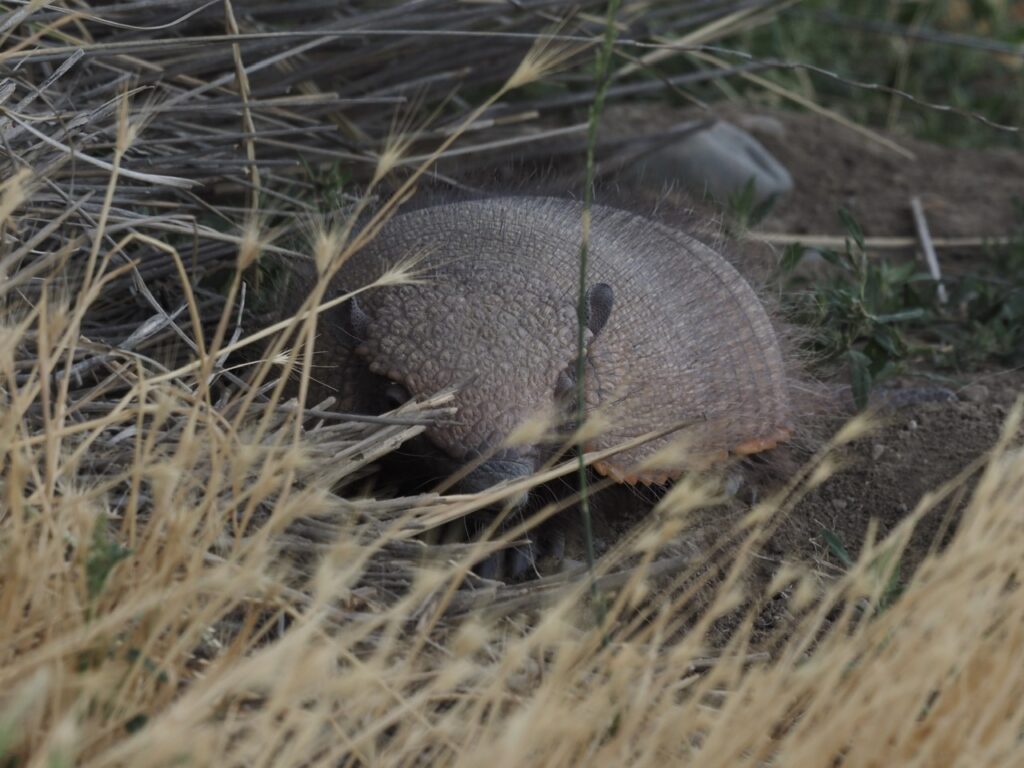
We spot an armadillo along the roadside. He is sitting beside his burrow and ready to disappear at any moment. I do at least capture a few shots of him, though he is a bit hidden.

At the estancia a family of guanacos graze casually in the meadow. We watch a young guanaco feeding.

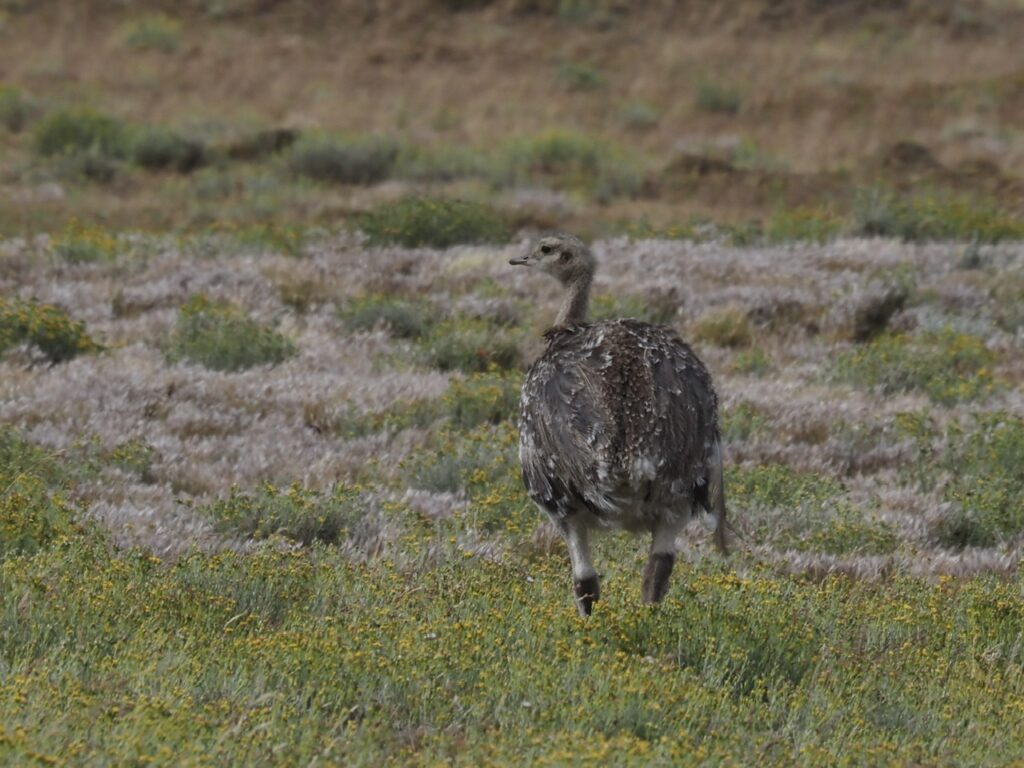
A lapwing and crested caracara search amongst the flowers for seeds and insects and a rhea runs across the plains disturbing clouds of insects as it passes by.

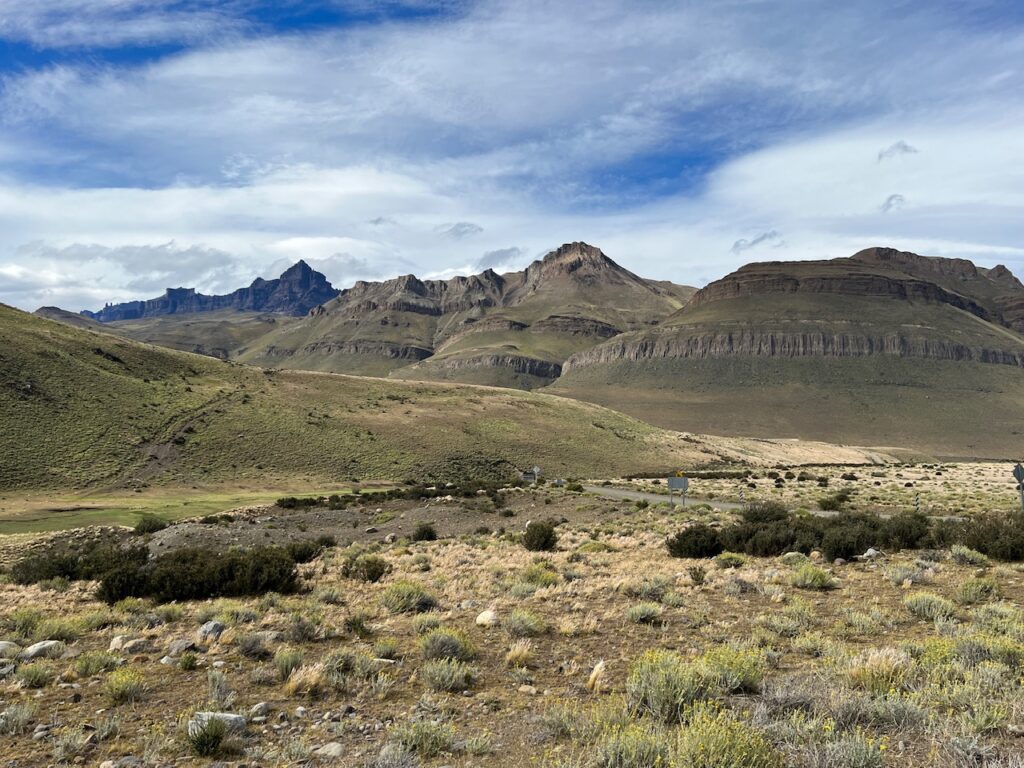
The scenery is different here but still spectacular.

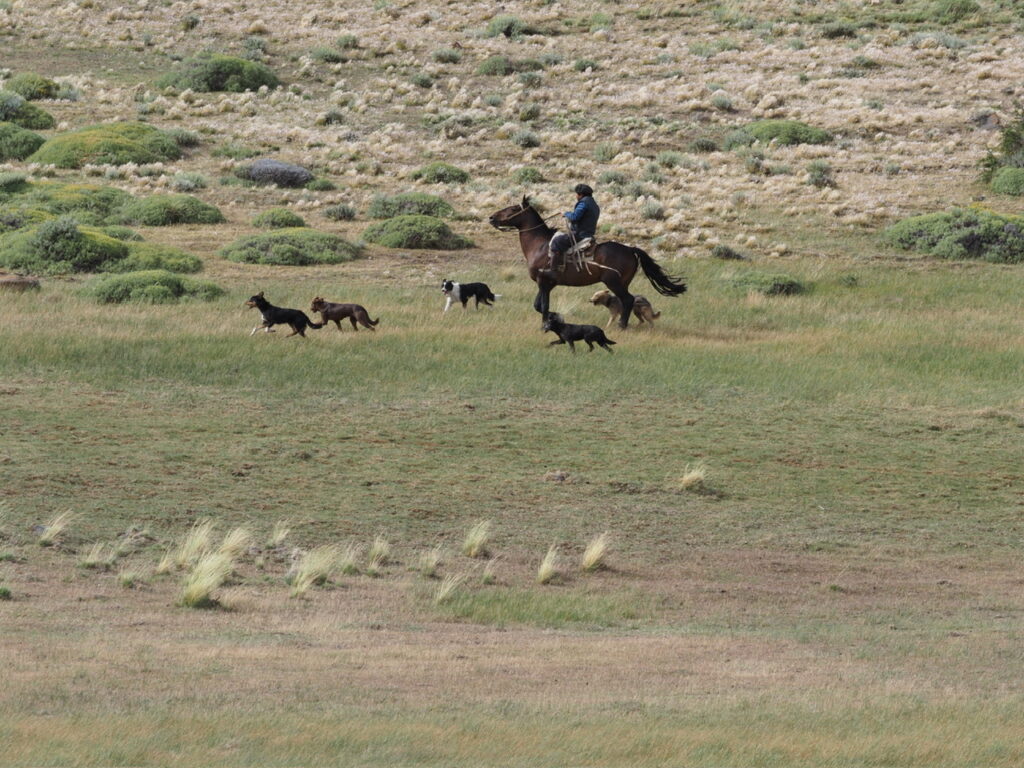
Sheep are grazing in the valley and being herded by a gaucho on horseback. The sheep are protected from pumas by large white dogs. This is a step in the right direction to prevent the pumas being shot, which until recently happened in huge numbers. Hopefully times are changing, though many pumas are still being hunted and killed.

We discovered, whilst walking through the brush in the pursuit of pumas, that there are lots of tiny and very prickly seed heads, which generously attach themselves to your shoe laces, trousers and socks. During the process of trying to remove them, tiny thorns inevitably break off and im-bed themselves in your fingers where they remain for the next few days. Annoying (and painful). The poor sheep below is absolutely covered in them.

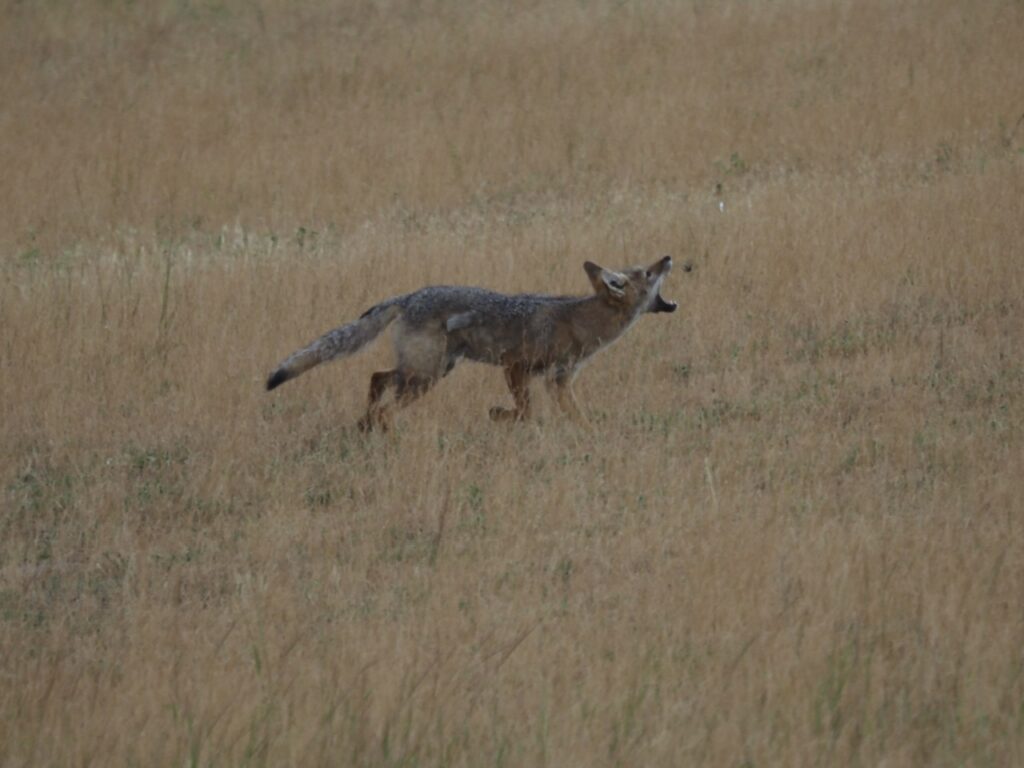
We head back and see a large family of rheas and a distant fox trying to catch butterflies.

Our final stop is at a huge estancia called Cerro Guido. It is huge at 100,000 hectares and owned by an extremely well-connected family. They have huge wealth and influence and the resources to market themselves as the main instigators behind conservation here, although this is not the case. Until four years ago, they were killing vast numbers of pumas every year. Following the puma documentaries, they have changed their ways, which has to be a very positive thing. However, the reality is that they are late to the party. Estancia Laguna Amarga (where we did all our tracking) were the front runners in puma conservation some 20+ years ago.

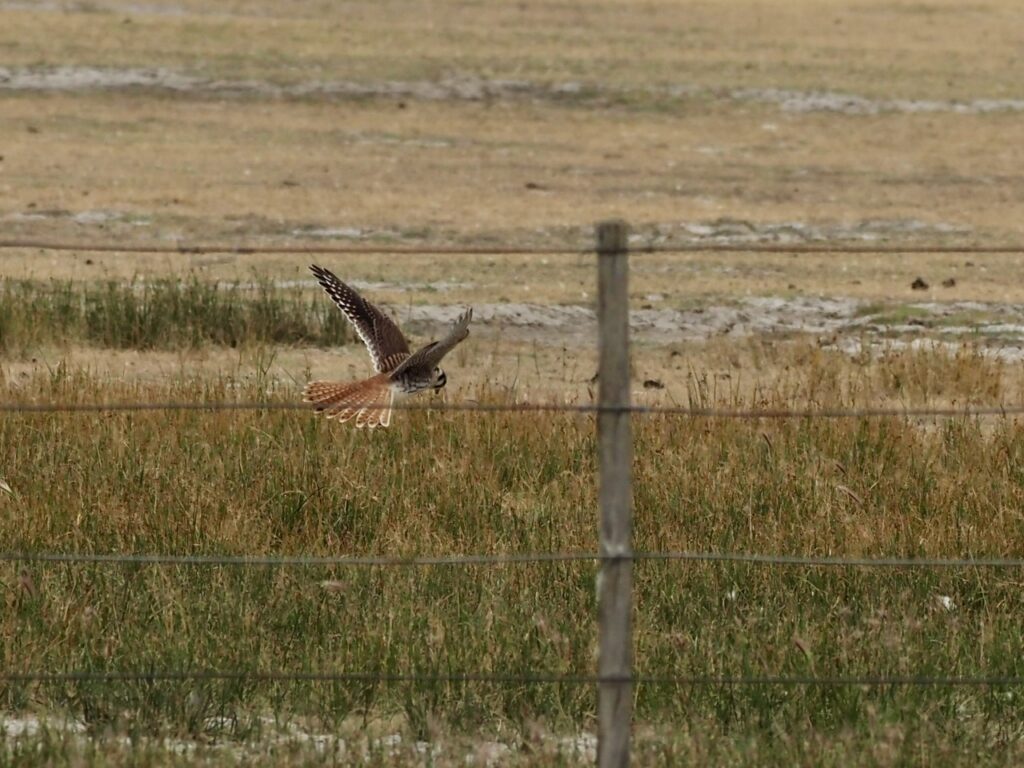
Our final sighting for the day is of an American kestrel, which perches on fence posts to spot prey and then hovers over the grass and swoops down to catch them. Again it is distant but at least we have seen one and they are very beautiful birds.

As we drive back the wind is very strong indeed and blows clouds of dust and gravel across the road. The car is often buffeted and knocked slightly off course. Victor tells us this is nothing. He once was driving, along this stretch of road with guests, when the wind was so powerful that it hurled rocks at the back window which broke. The vehicle was immediately filled with dust and stones. He says it was quite terrifying. I imagine it was. In fact we were told, when we first arrived, that the only thing that might inhibit our puma tracking would be the wind. Sometimes it is just much too dangerous to venture out.

This is our last night here. It has been exhausting but a truly once in a lifetime experience. The hotel was so clean and staff welcoming. Food was somewhat repetitive with every meal (lunch and dinner) comprised of soup followed by a choice of steak, chicken, lamb or salmon with rice or chips and salad. However it was always cooked nicely and I discovered they made a very good lemon meringue pie which became my go to dessert. Yum!

Victor and Nana are heading back to Puerto Natales tonight. We say our farewells and thank them profusely for their company and truly astonishing guiding and tracking skills. What an absolutely fabulous time we have had here. It has exceeded all our expectations a hundred times over.

Patagonian Splendour

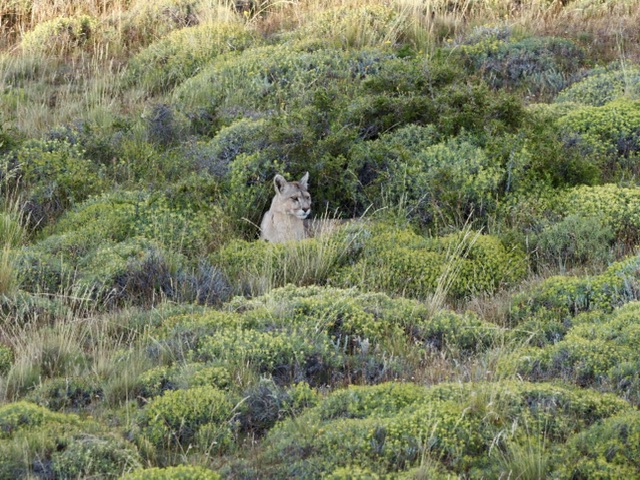
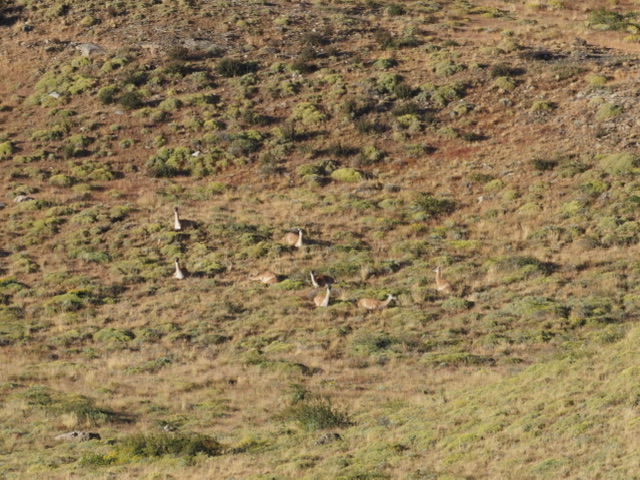
The weather today is much improved, which is good as the plan is to enter Torres del Paine National Park and see some of the spectacular scenery. On our way there we receive a call from another guide that he has found a puma. Of course we have to investigate. A puma is lying in the scrub and watching a group of guanacos across the valley.

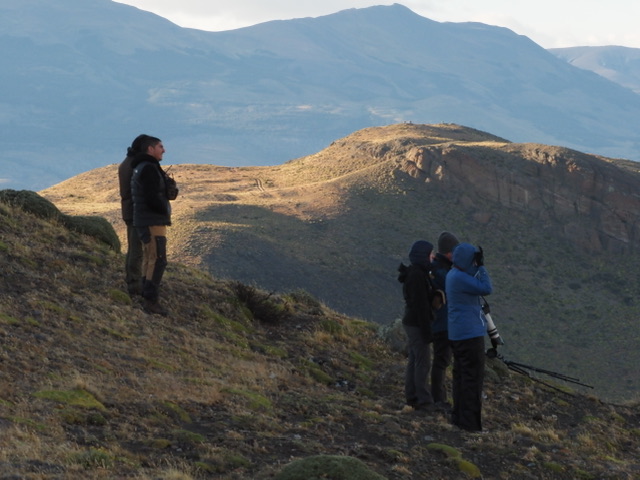
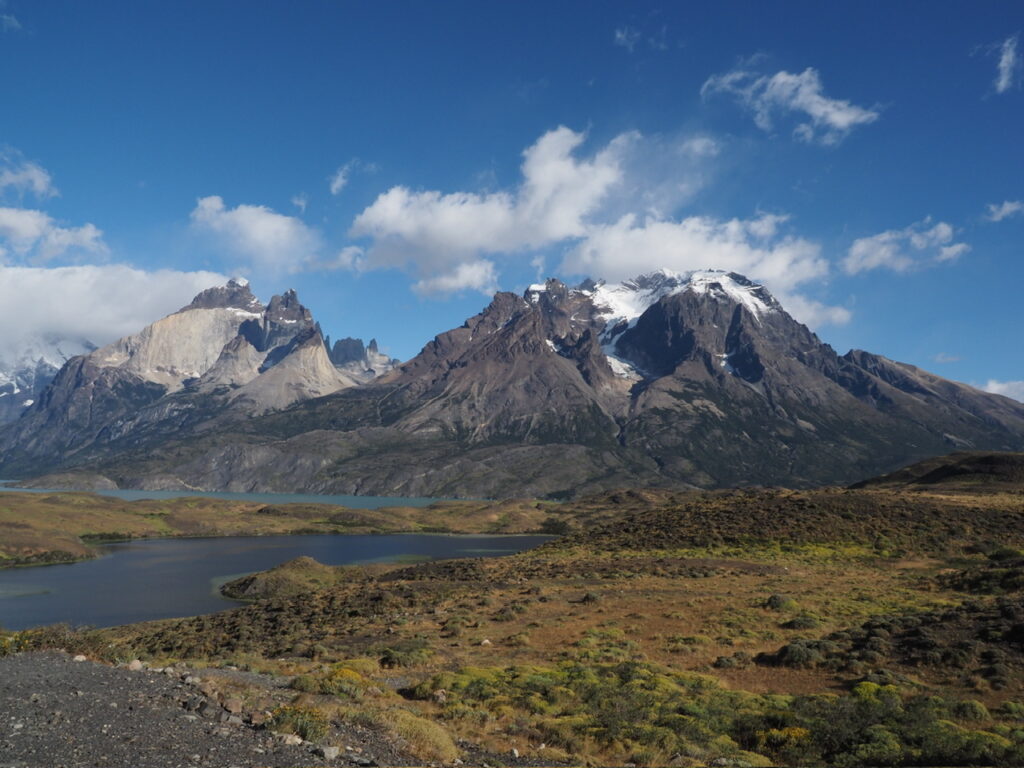
It is early and cold on the slope where we are standing but the view is quite something. It is very reminiscent of the Scottish Highlands but on a much grander scale.

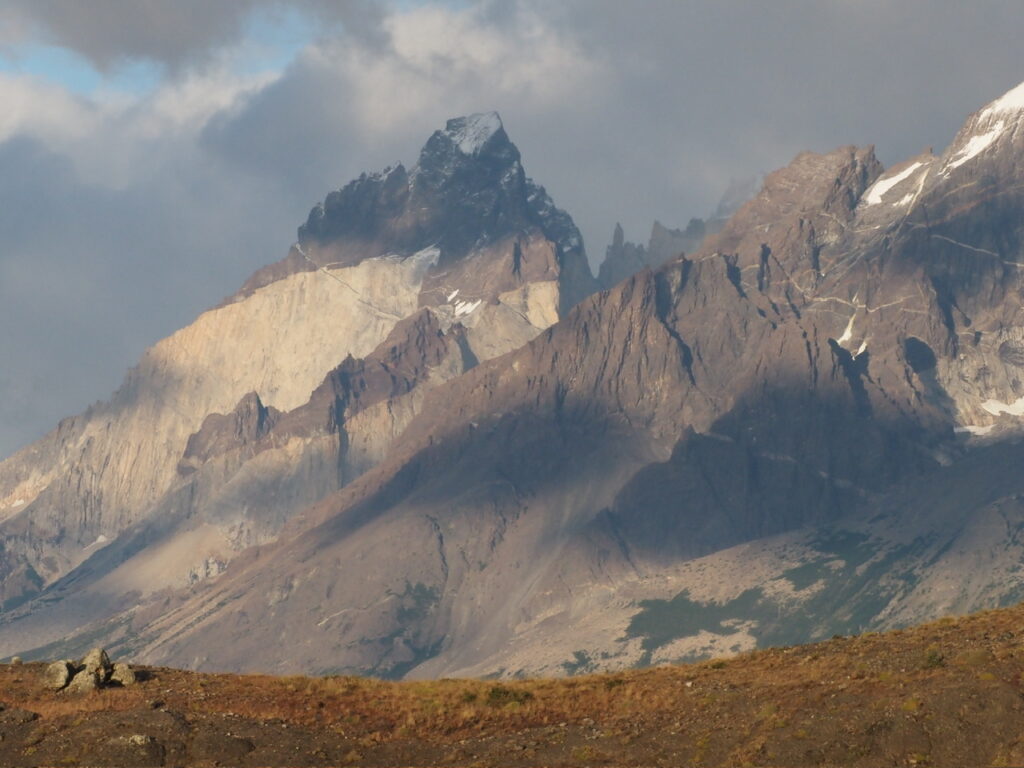
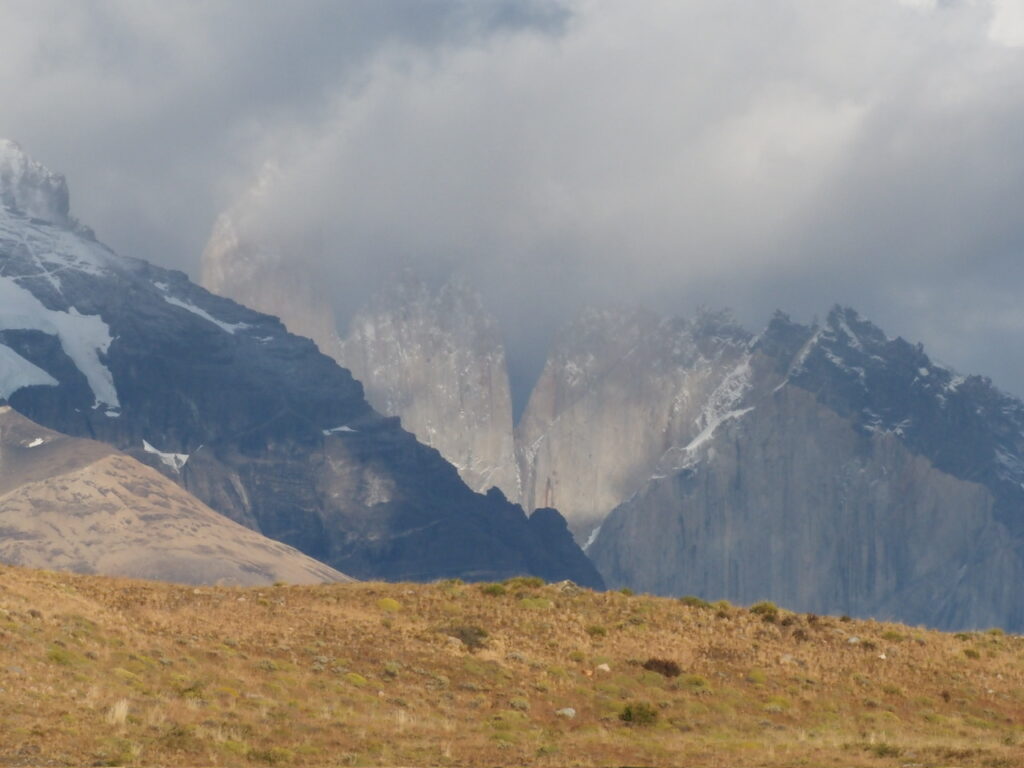
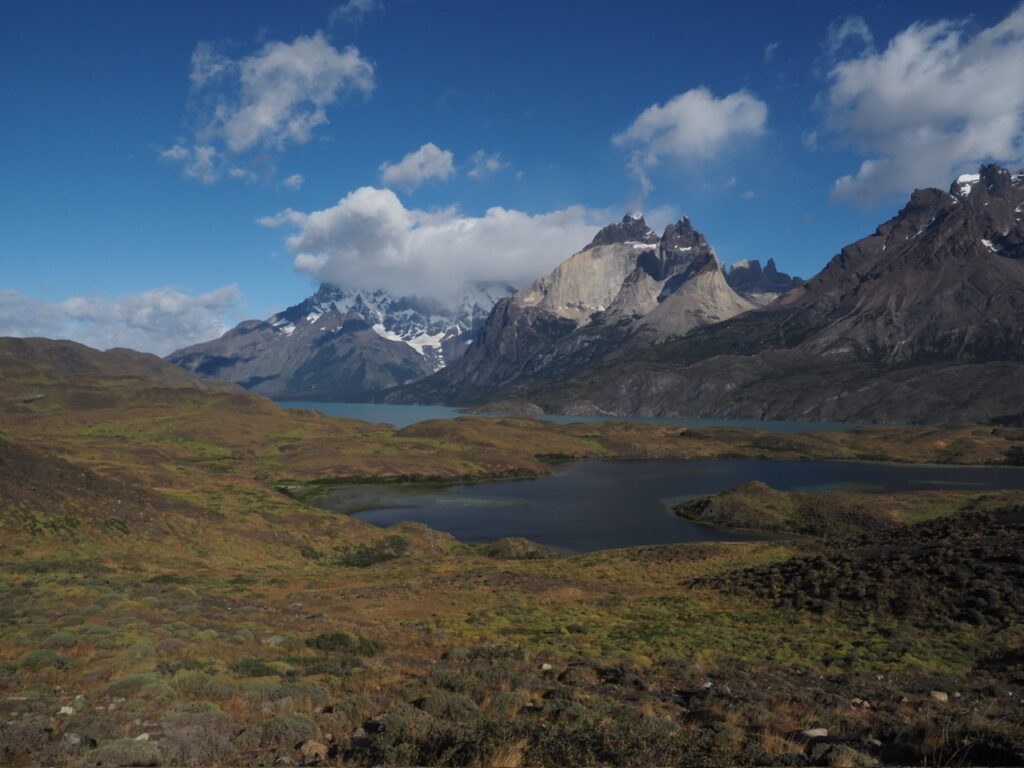
There does not look like there will be much action for a while so I walk back up the hill to where the rising sun is providing a little warmth. The view from here is breathtaking with the sun illuminating the huge granite massifs.

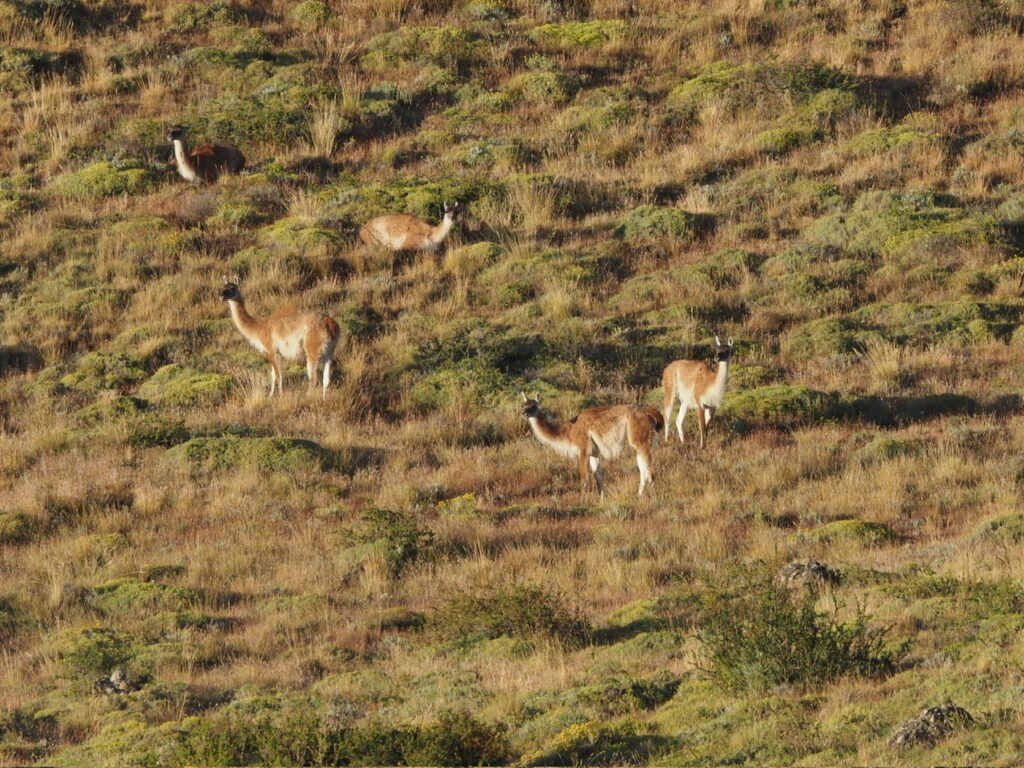
We return to look at the puma who is now lying down. This looks like a Mexican standoff. There is no cover for the puma between him and the guanacos so it is not about to move any time soon. They will need to come to him. We do not think that likely – they are grazing but very aware of where the danger lies.

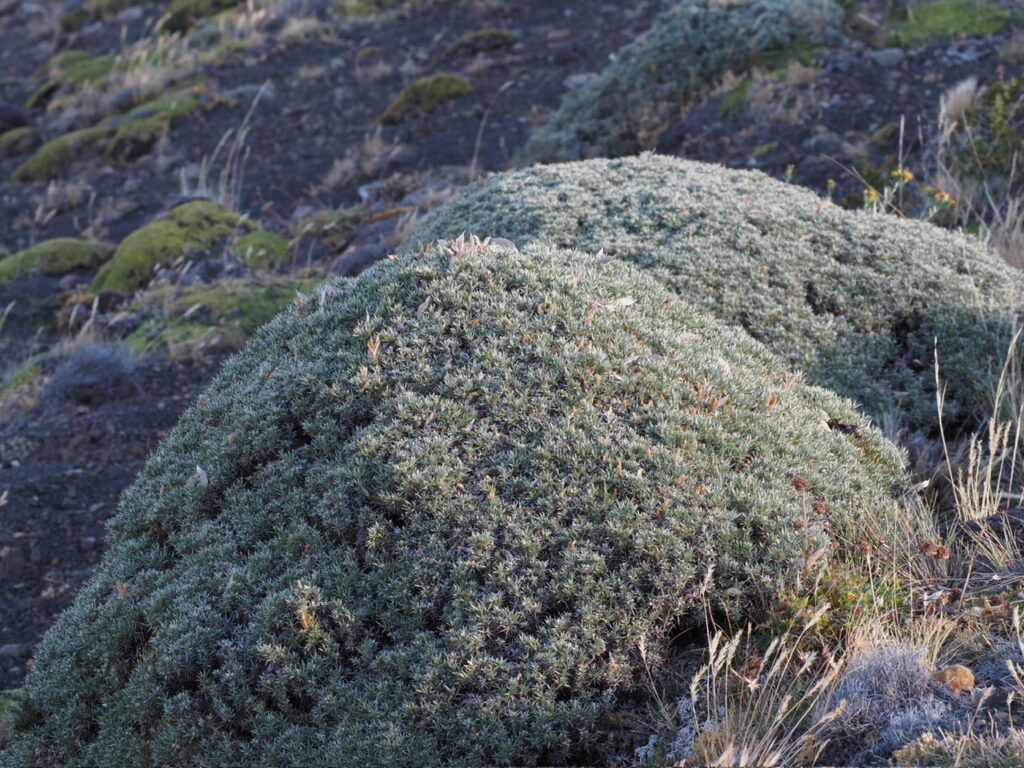
We decide to leave but not before photographing the cushion forming shrub and a beautiful slipper orchid.

As we depart a small group of guanacos are grazing by the side of the track.

The entrance to the park is teeming with people – buses bringing in day-trippers and lots of hikers. There are pumas here but the odds of seeing them will be low. I am so glad I did my research and found a private guide with access to Estancia Laguna Amarga. It is where all the recent puma documentaries have been filmed. There are only 20 guides allowed to operate in it and yesterday we were the only ones there, so it is a real wilderness experience with the ability to go off road and track on foot. Despite the people, the park is a real wow. The views are just stunning.

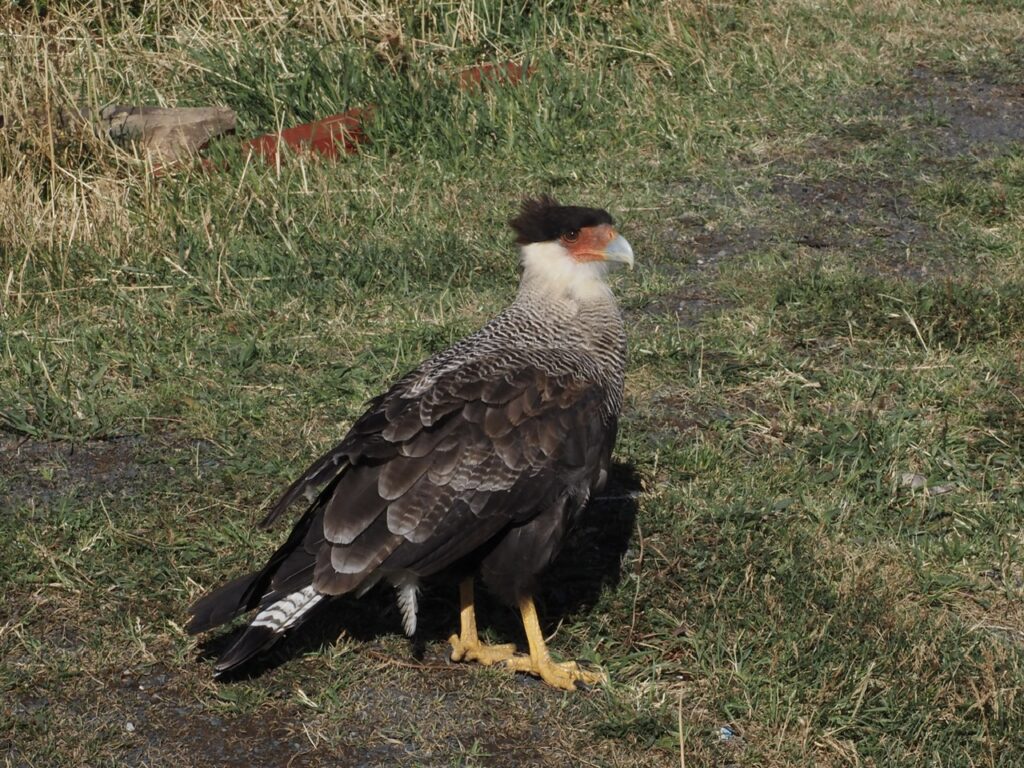
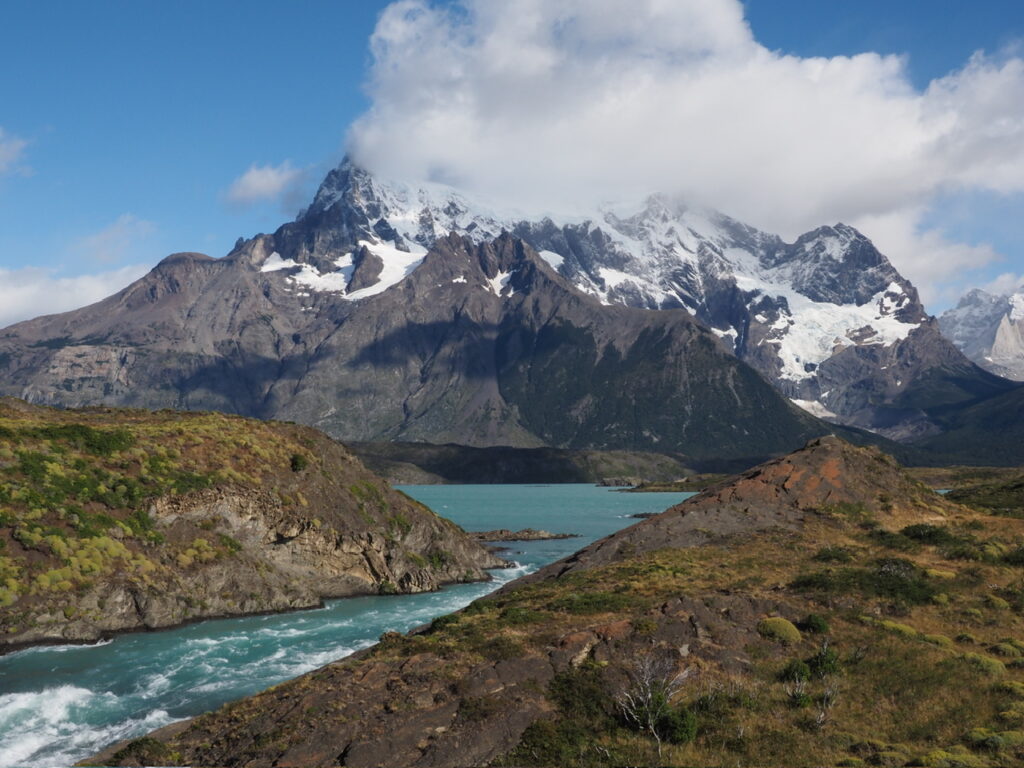
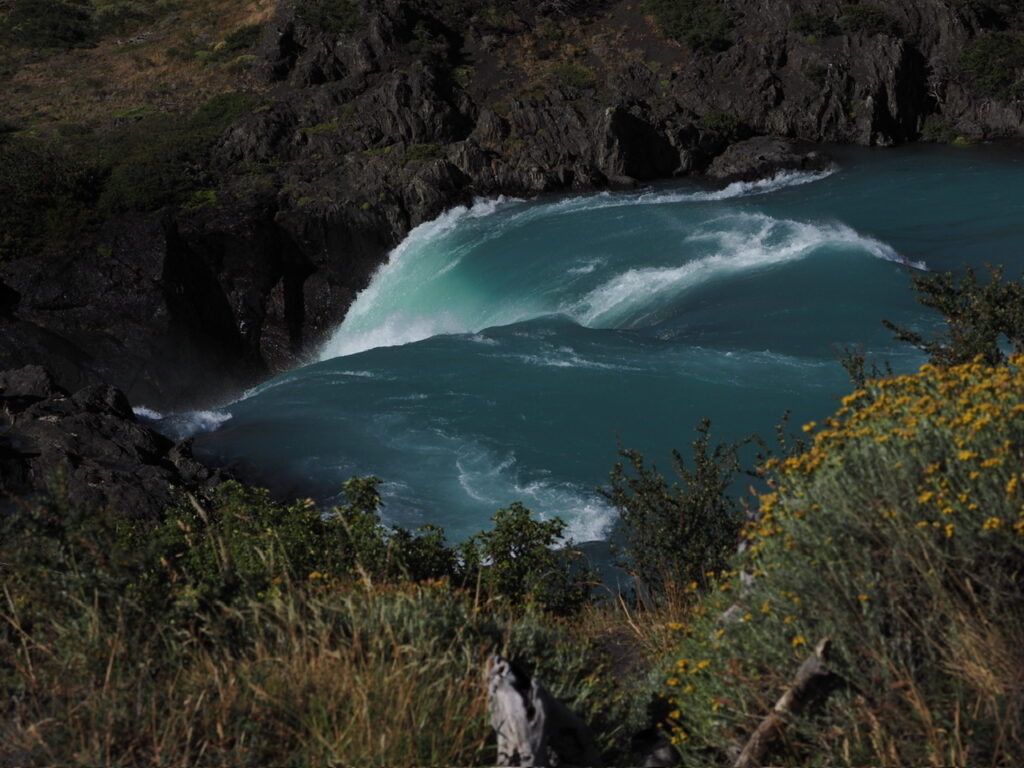
Victor is taking us to see the Salto Grande waterfall with its impressive water flow from Lake Nordenskjöld. We park the car and are warned to open the doors carefully. It will be very windy. Caracaras are common here. They are handsome birds – quite eagle like. They are opportunistic and are scavenging the carpark edges.

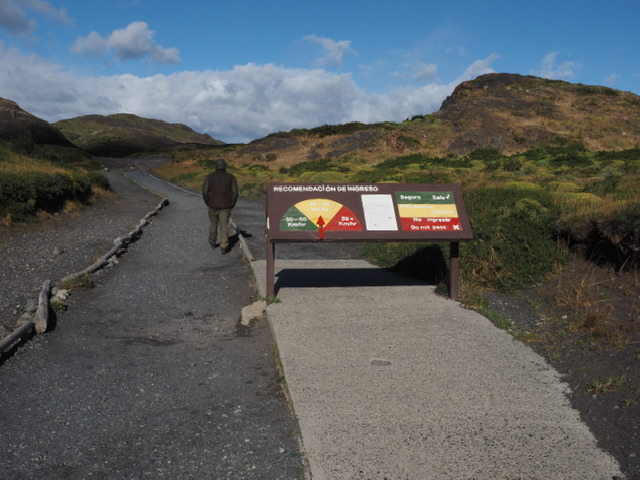
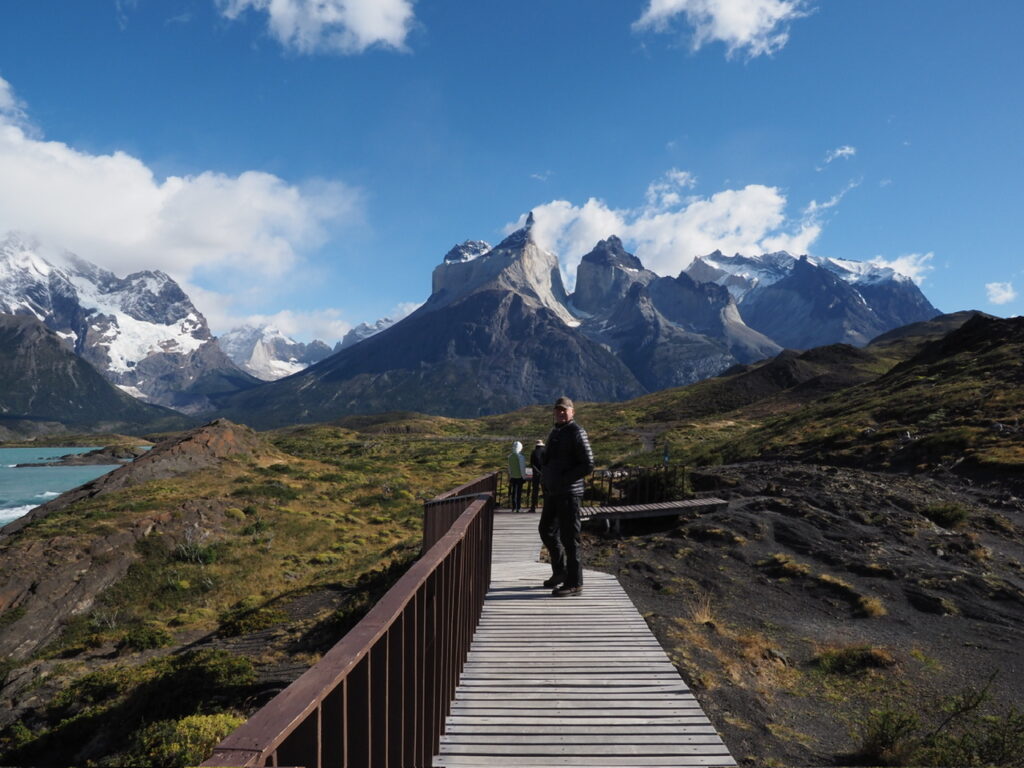
We head off along the path to the waterfall. Until now we have not really experienced the Patagonian wind. Oh my! To say it is windy is somewhat of an understatement. It is seriously powerful. The board below indicates the wind is between 50-80 km/hr and we estimate verging on the 80km/hr limit.

When the falls come into view we gasp. They are powerful and stunning. The immense wind makes it hard to hold the camera steady or even stand. It just adds to the intensity of the experience.

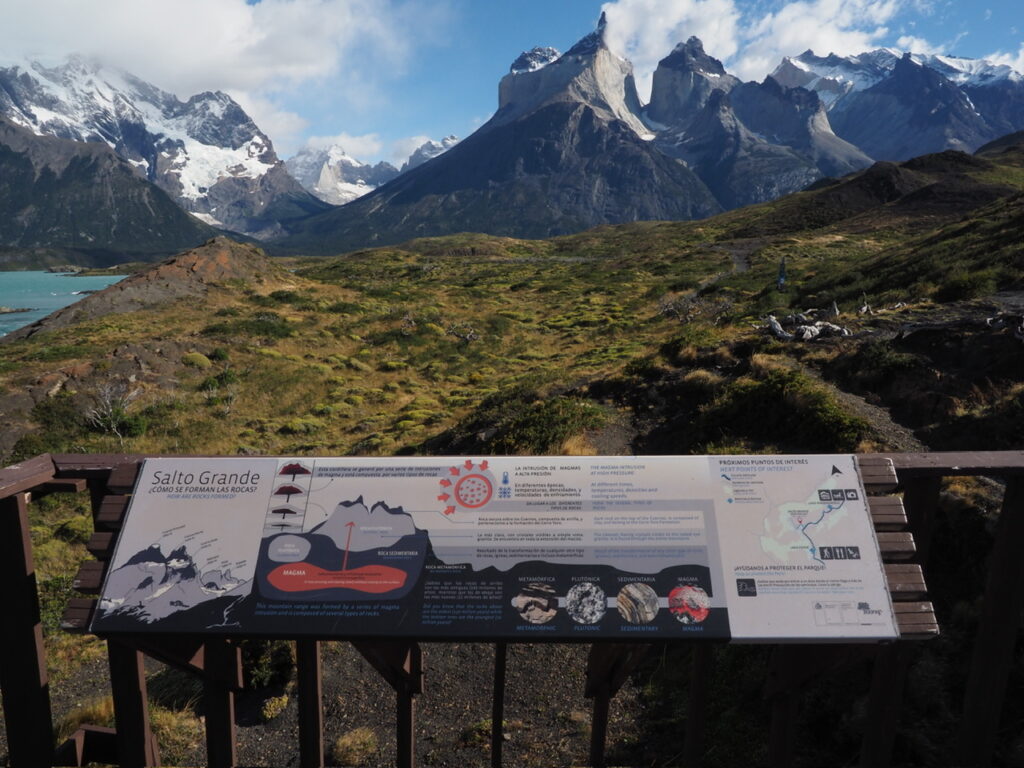
A board describes how the massif was formed. Magma forced its way through sedimentary rock. Over the years erosion has just left the granite core protruding. Strictly speaking Torres del Paine is not part of the Andes but an independently formed geological formation.

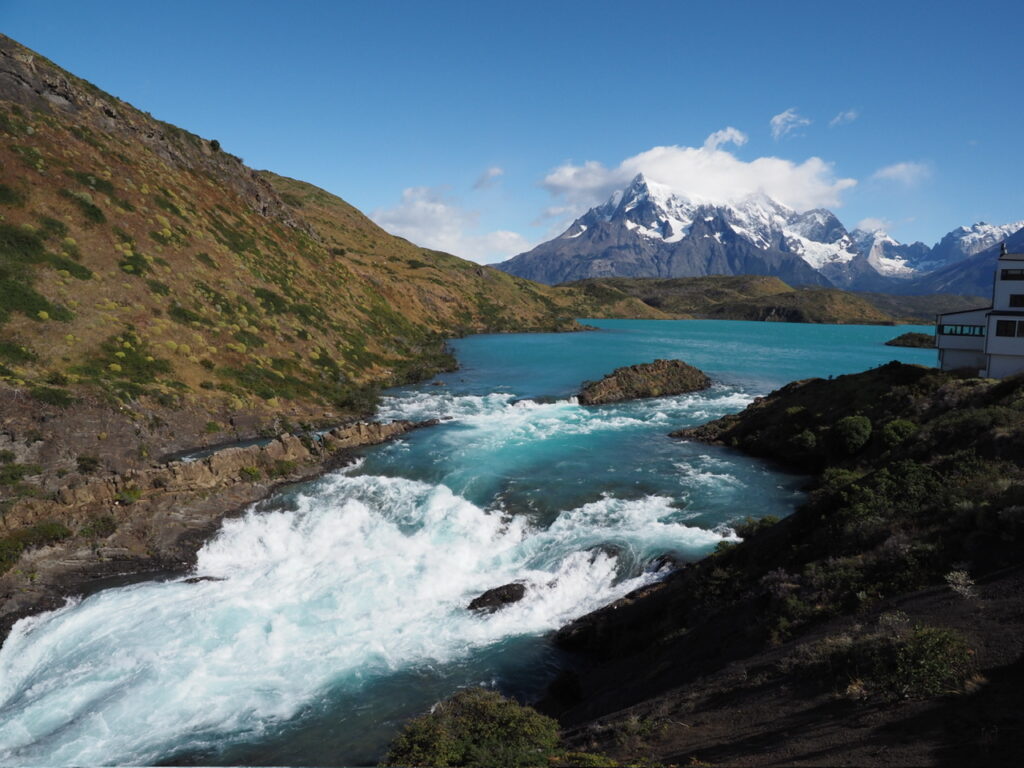
The view looking over the lake is also amazing – in fact every direction affords gorgeous scenery. We continue on our tour around the park and the views just keep coming! Lake Pehoe and it’s waterfall are also spectacular.

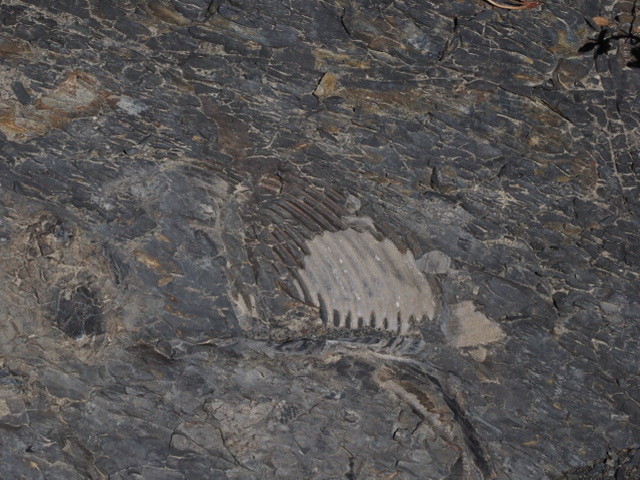
Victor shows us the outline of a large fossilised scallop on the rock, proving that all of this land was originally beneath the ocean.

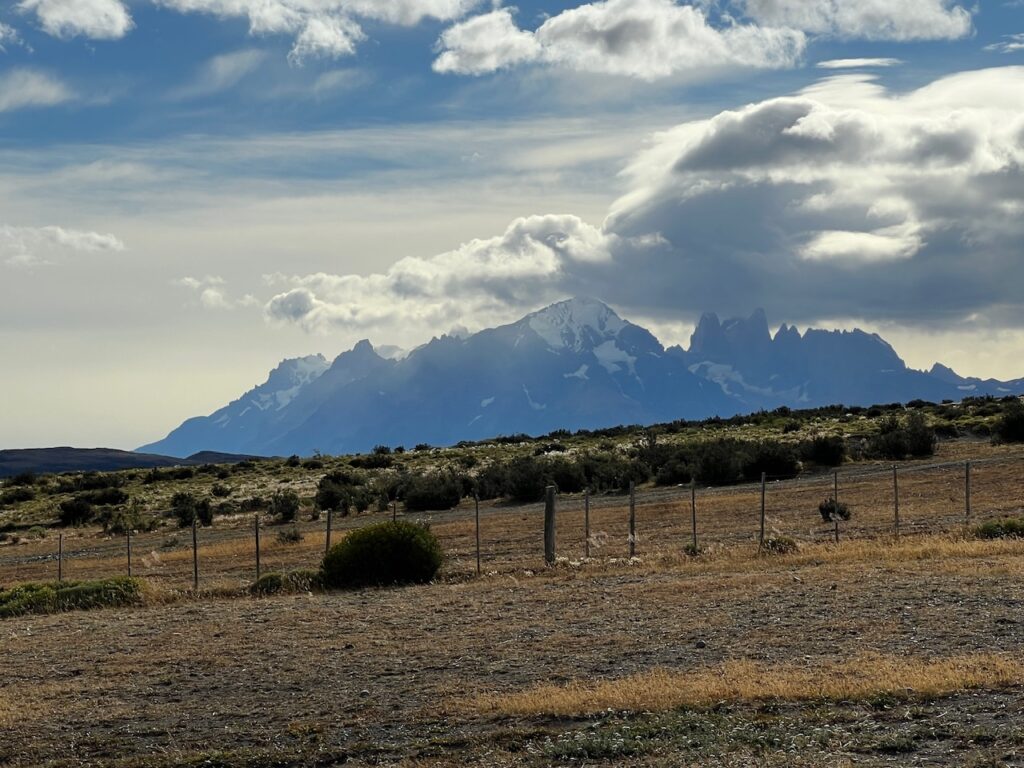
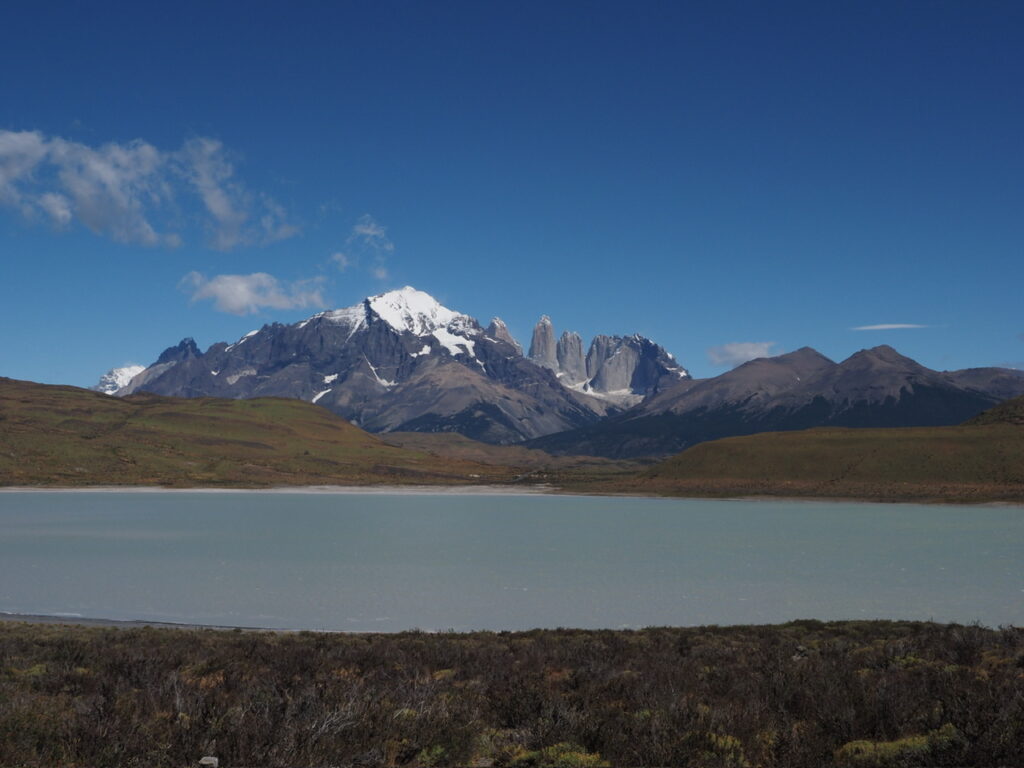
When we head back for lunch the cloud has completely lifted and we can see the towers and landscape in their full glory. We also see a few flamingos on the lake edges.

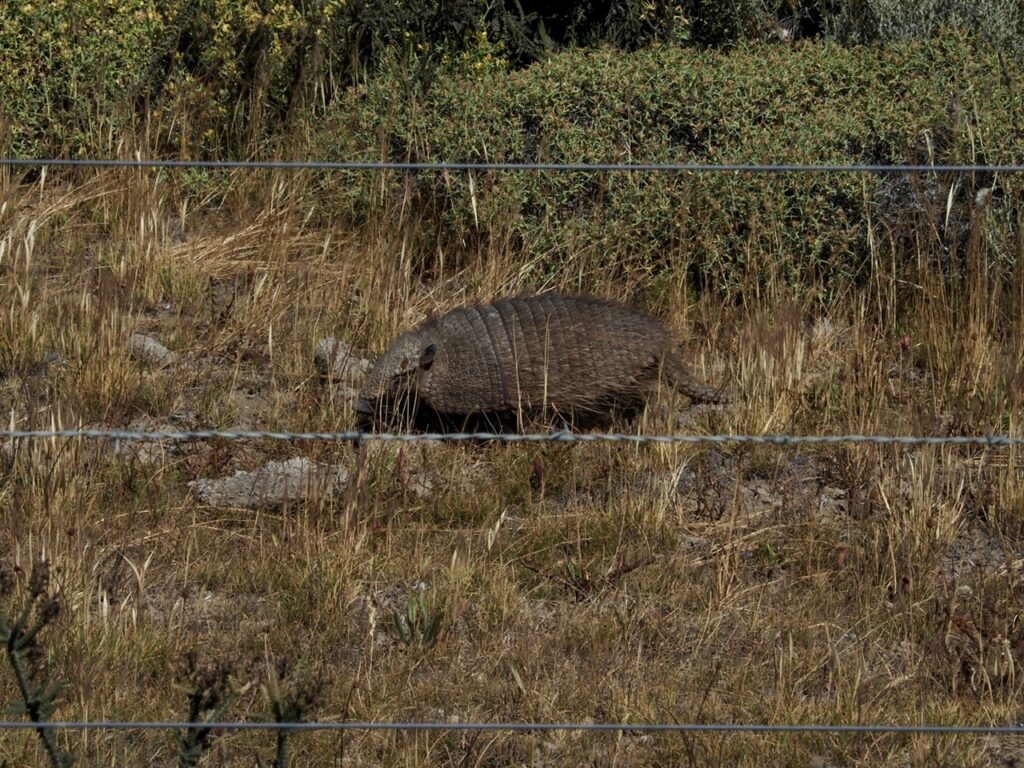
The afternoon’s drive turns out to be uneventful. All is very quiet apart from an armadillo crossing the road. They are surprisingly fast but we capture a little video and one decent shot though it is a shame about the barbed wire!

We have had a lovely day but our guide is sure that he can still find us a puma. It is 20.15 and the light is poor. He says “Yes – puma!” Well all I can say is he has awesome eyesight. We peer at a hill a mile away and he says look at the bush half way up. Now all I can see, even through binoculars, is a beige dot beneath the bush and a beige spot above it. Nana is standing on top of the hill and walks down to get a closer look. She reports that there is a male puma with a kill and there are also two females. Do we want to go? It will be a hard half hour climb uphill on slippery wet shale. It is late in the day and we decline. Who knows though? They might still be there in the morning…..

Closer Encounters

Again we rise at 4.45 for a 5.20 departure. The weather is miserable, dark clouds and heavy rain and 6C. Paul makes the comment that there is no such thing as bad weather – just inappropriate clothing. Fortunately we have the appropriate attire so all should be fine….

We enter the estancia and Victor scans the hillsides for guanacos.

The reasons for this are:-

  • They are a puma’s favourite food
  • They are easier to spot than pumas (though not that easy in the dawn half light)
  • If they look nervous a puma may well be the reason and could be in the direction that they are looking

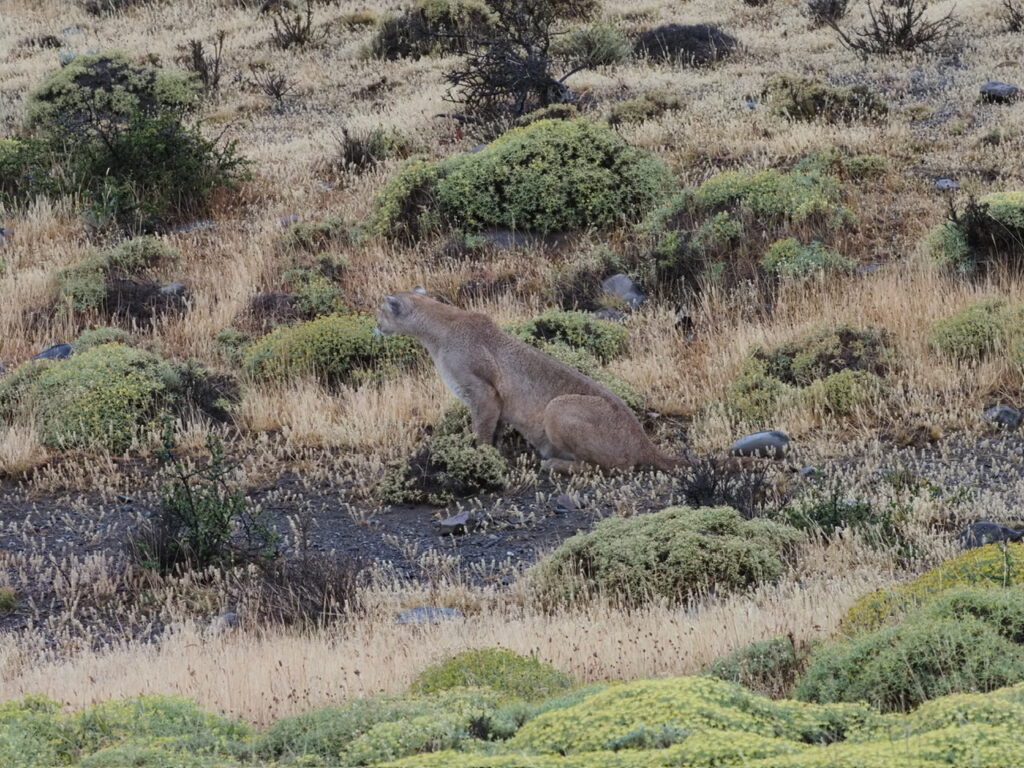
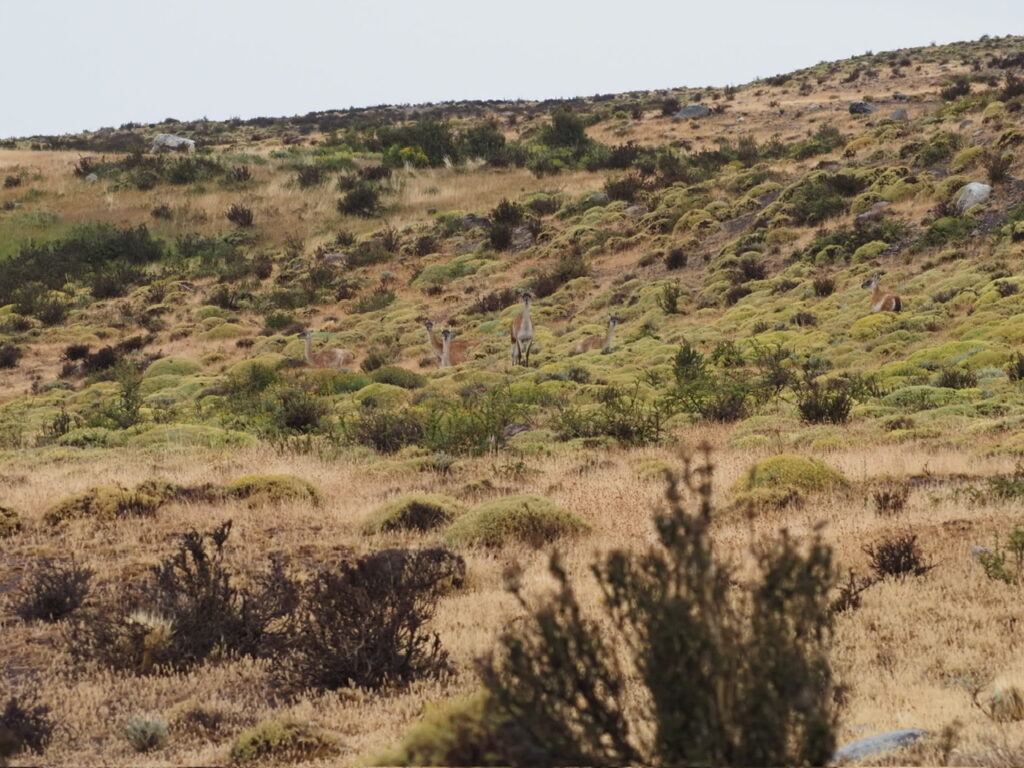
Victor spots two guanacos who are several hundred yards apart but both looking in the same direction. He mentally triangulates the spot and calls Nana on the radio. She has gone ahead of us and he tells her where to look. Hey presto! There in front of her is a puma. It is in hunting mode with its eyes firmly fixed on a group of guanacos four hundred yards away.

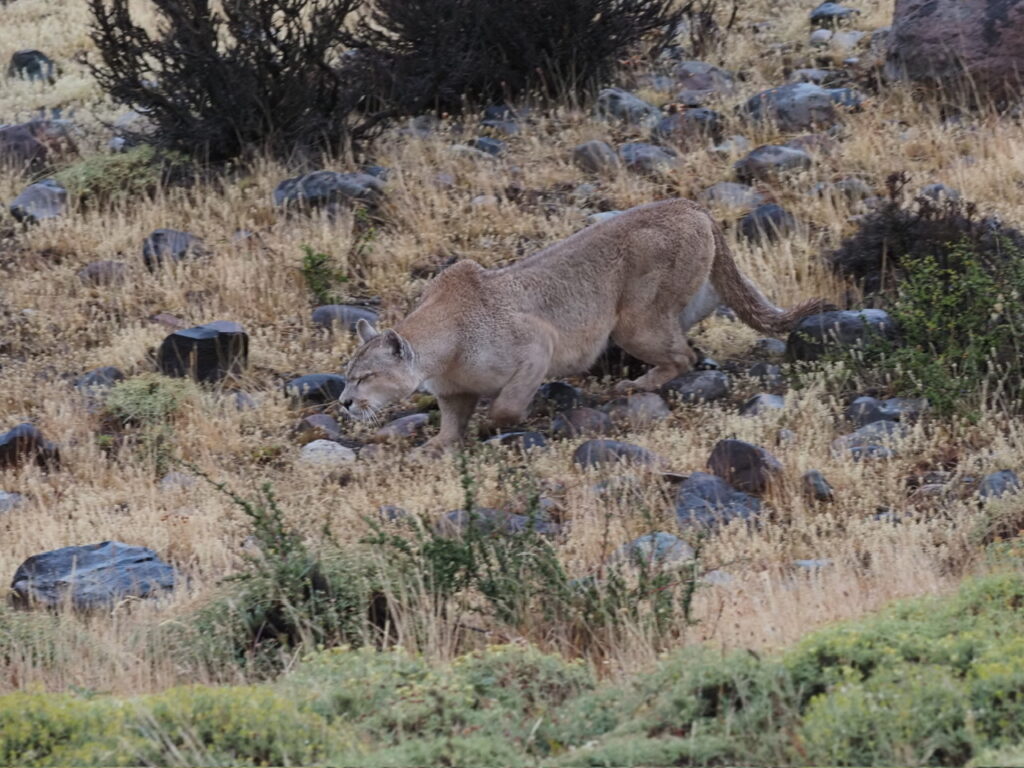
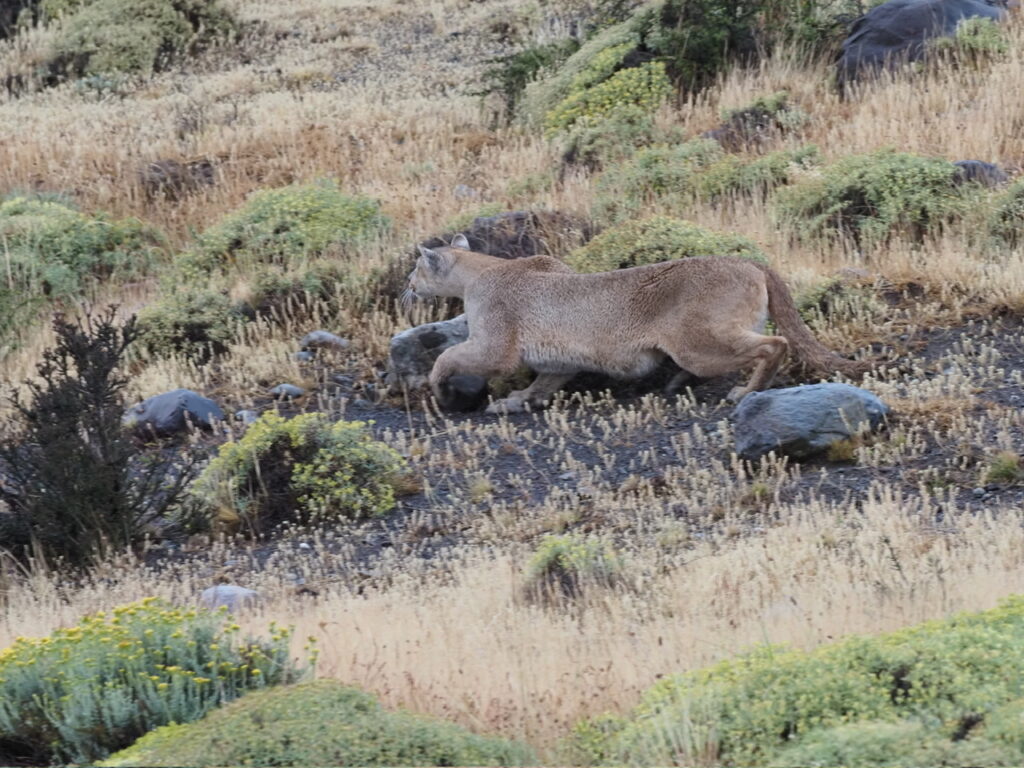
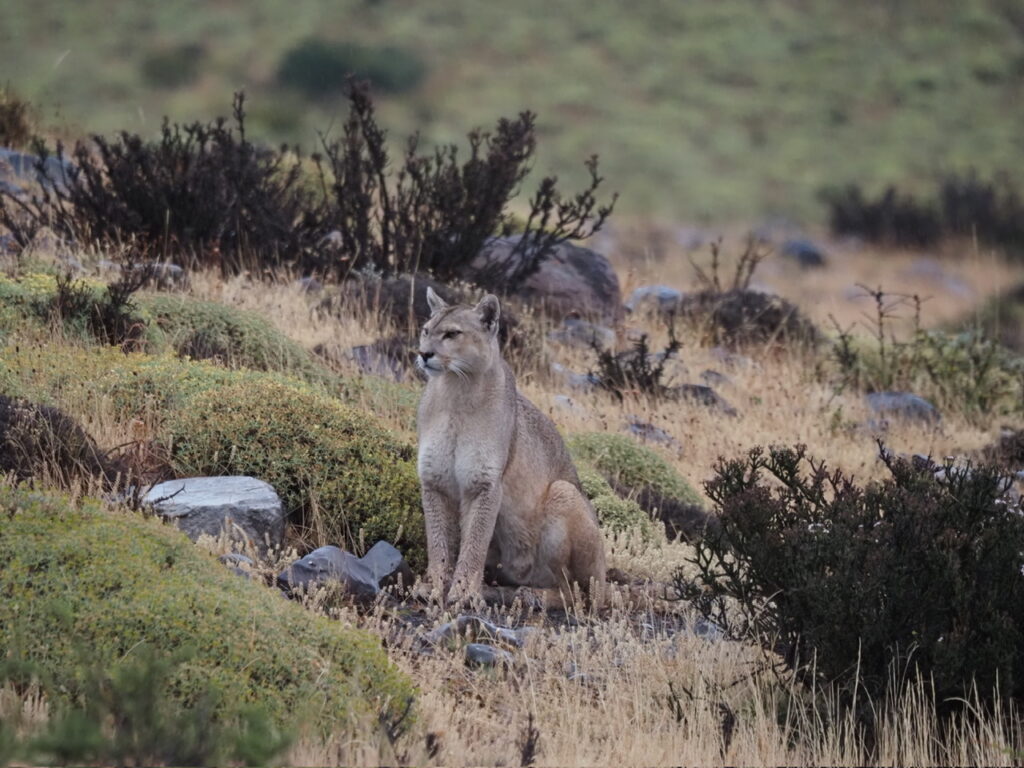
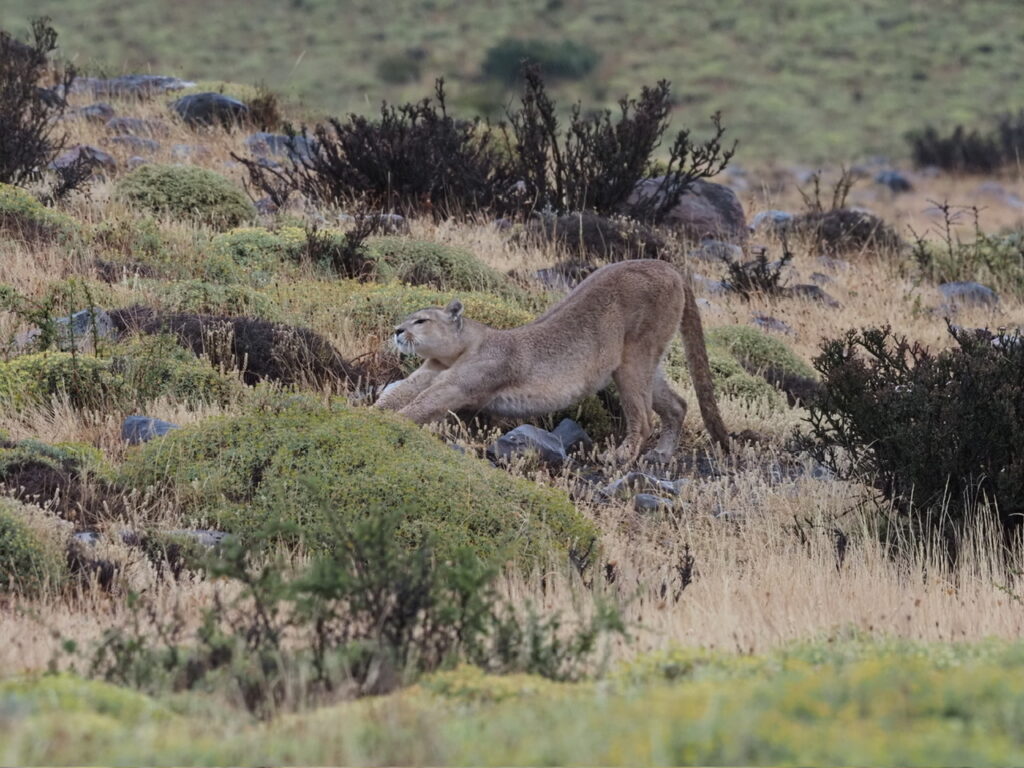
We join her, park up, don rainproof clothing and slowly walk down the hillside until we are parallel with the puma and maybe 30 yards away. This is Coiran, sister of Dania that we saw yesterday. She is a beautiful cat in prime condition. Eventually she decides to move and stealthily creeps forward.

This now necessitates us re-positioning ourselves further down the hill. The guanacos seem unperturbed by this activity though remain vigilant.

We settle down again and watch her periodically peer forward, stretch and yawn.

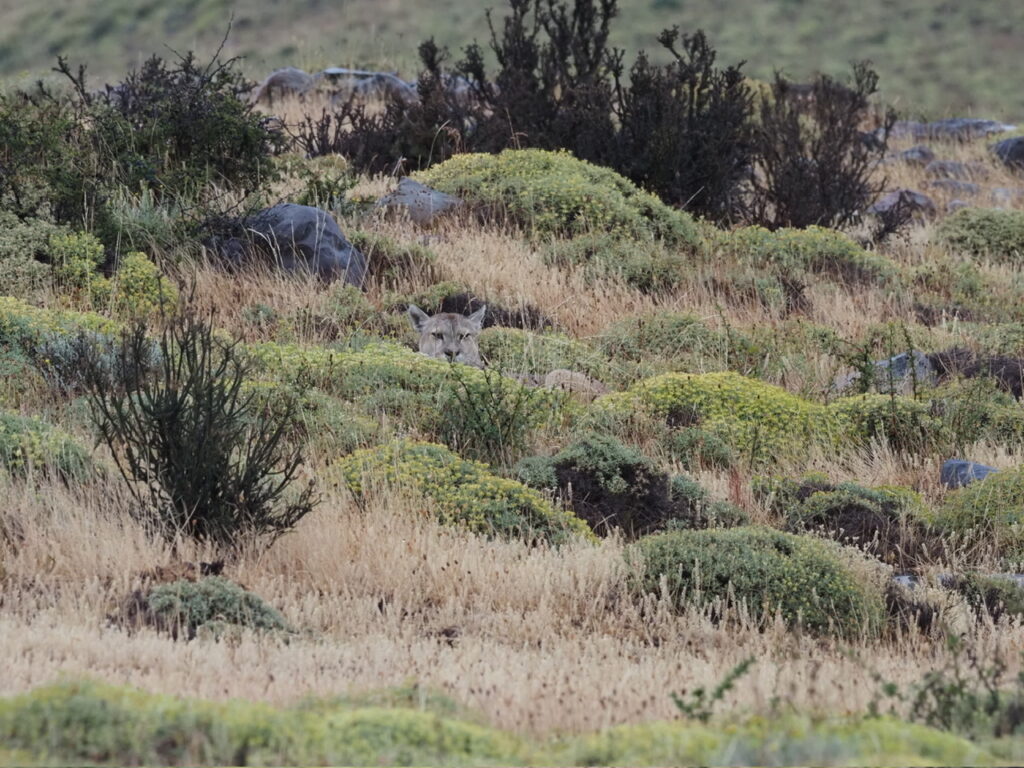
Victor thinks we should move much further down the hill so that if the puma starts to hunt the guanacos, then we shall be in prime position. From our new location Coiran is almost invisible and indeed it takes me a while to locate her.

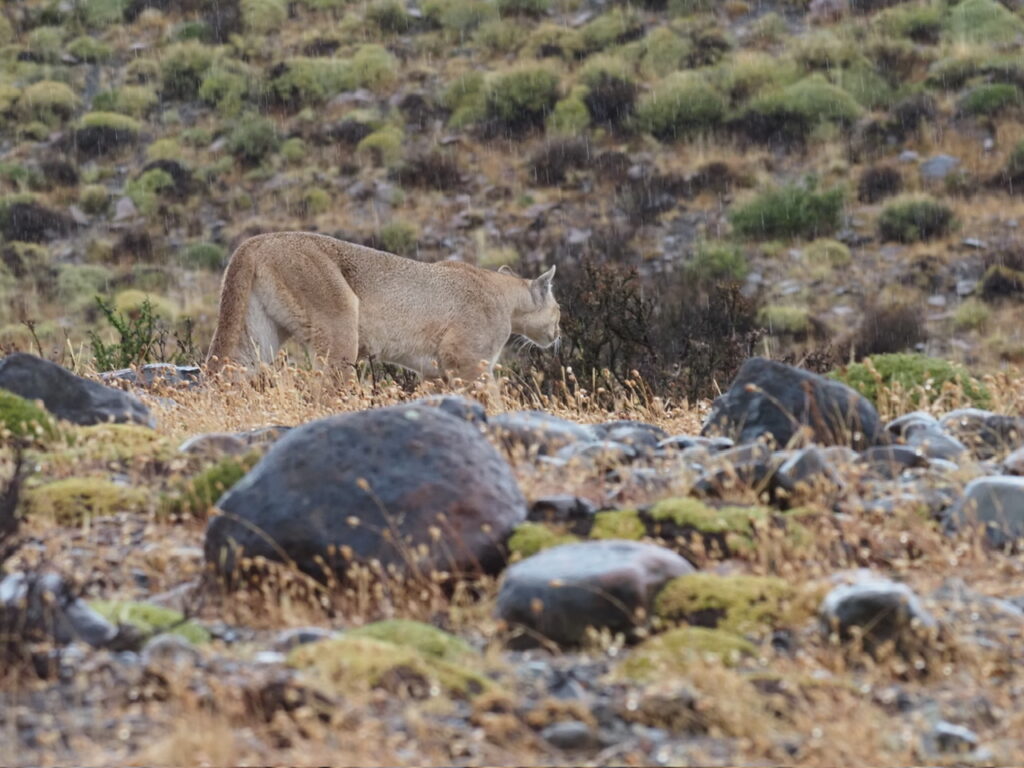
After much more patient waiting even Coiran has had enough of the cold and wet. She stands up and saunters up the hillside. We maintain a respectful distance of 20-30 yards but capture some pretty ace photos and video in the process. If you zoom in on the bottom two photos you can see the heavy rain which is still falling.

We return to camp early. We have had a fabulous morning but are wet and tired. The adrenalin rush and excitement of the pursuit takes its toll and a rest before lunch will be welcome. The afternoon brings a break in the weather and the rain thankfully ceases.

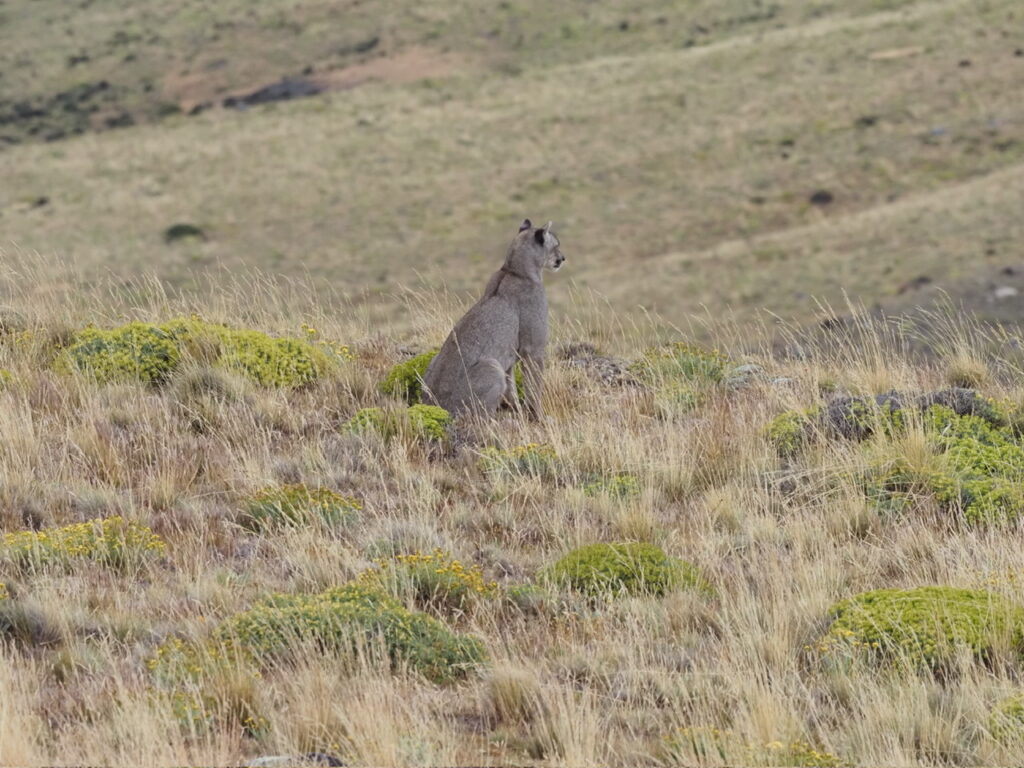
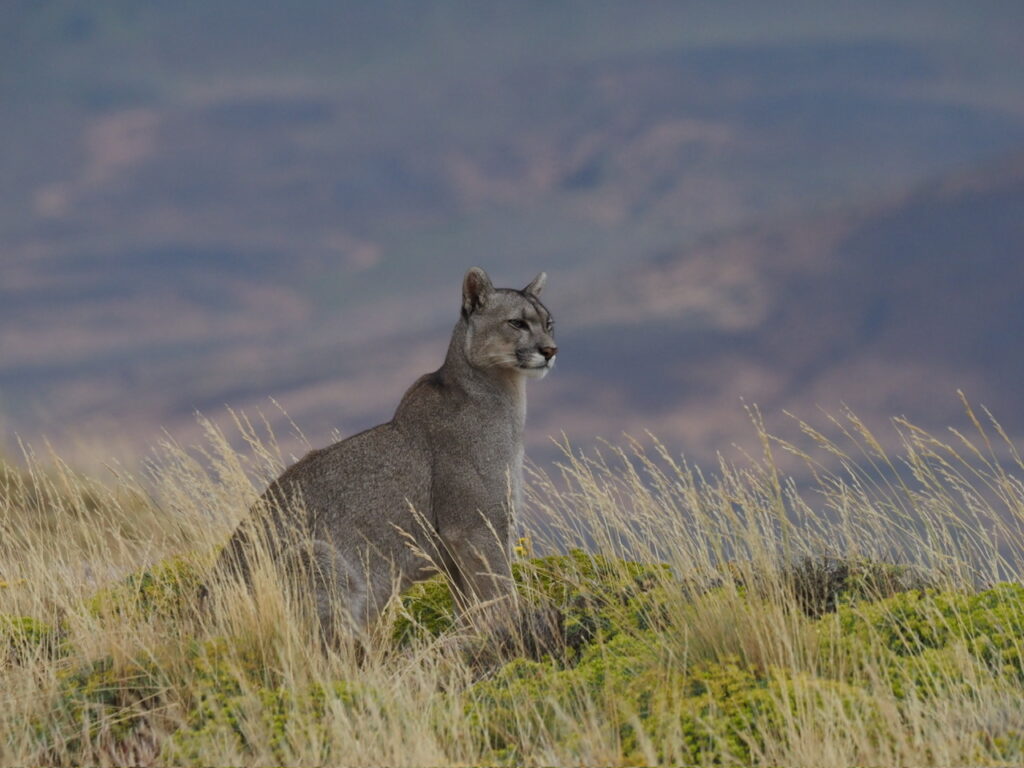
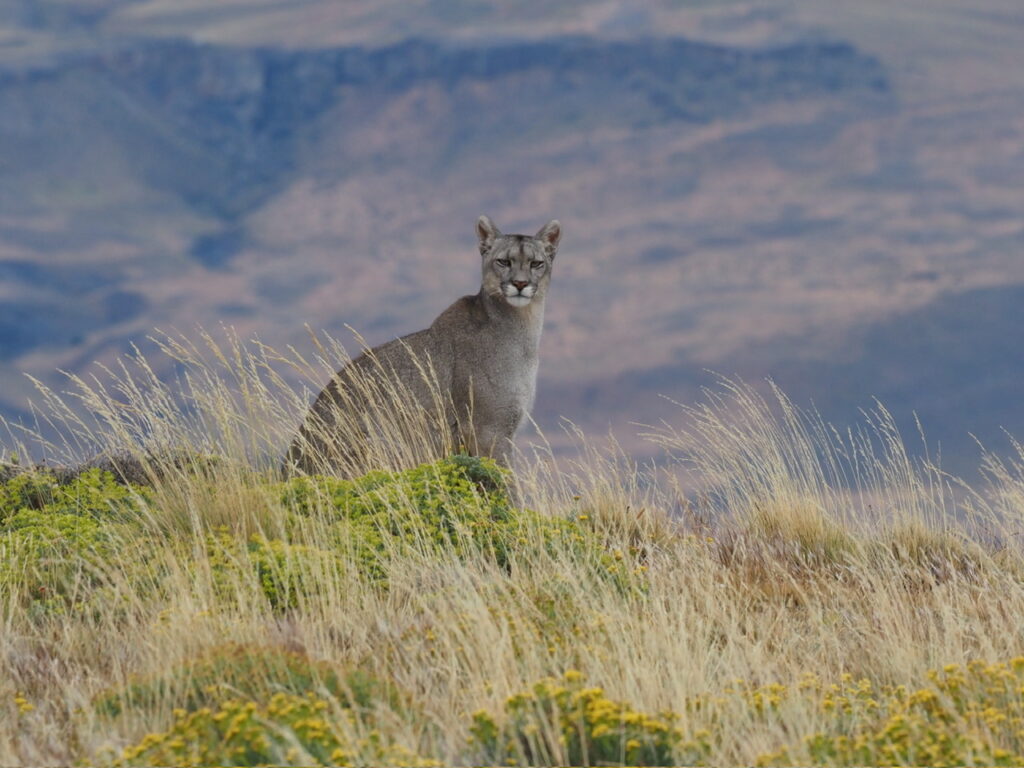
We head for the hills above Laguna Amarga and almost instantly encounter Amarga. She is a beautiful young puma with a dark, greyish coat. She is sitting on the hillside surveying the horizon. We approach on foot and I take a preliminary picture. It is always wise to get one in the bag!

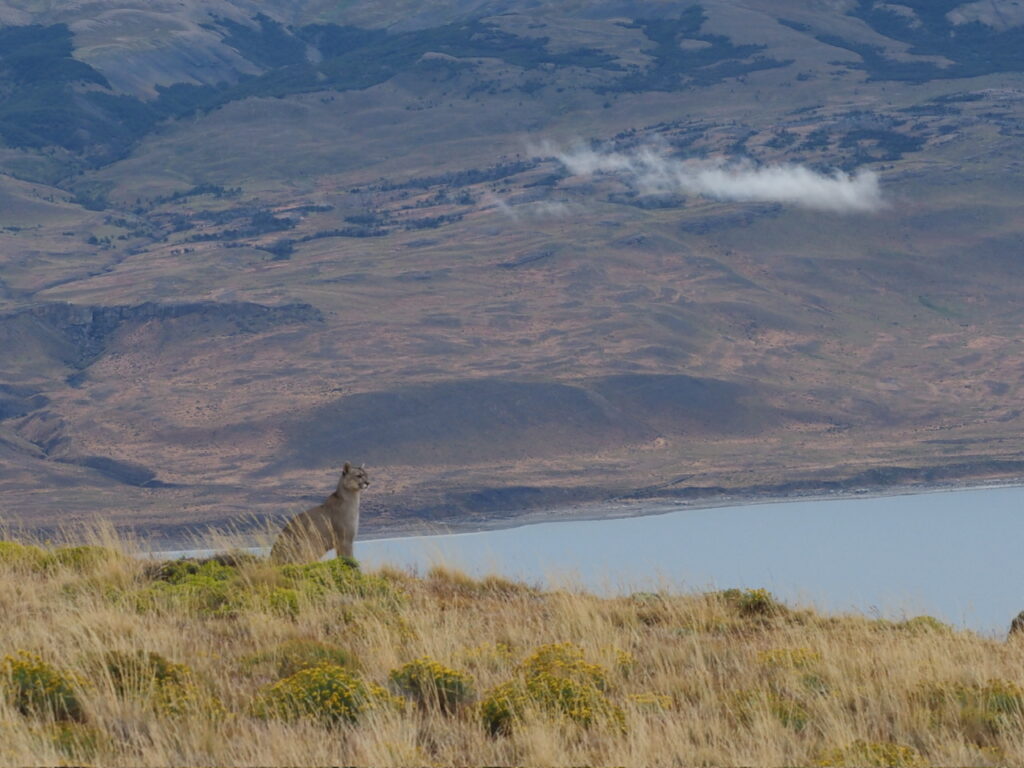
Victor beckons to me to follow him down the slope to a point where Amarga stands out against the hills and lake behind. The light is perfect and Amarga poses for us beautifully. The pictures I think speak for themselves.

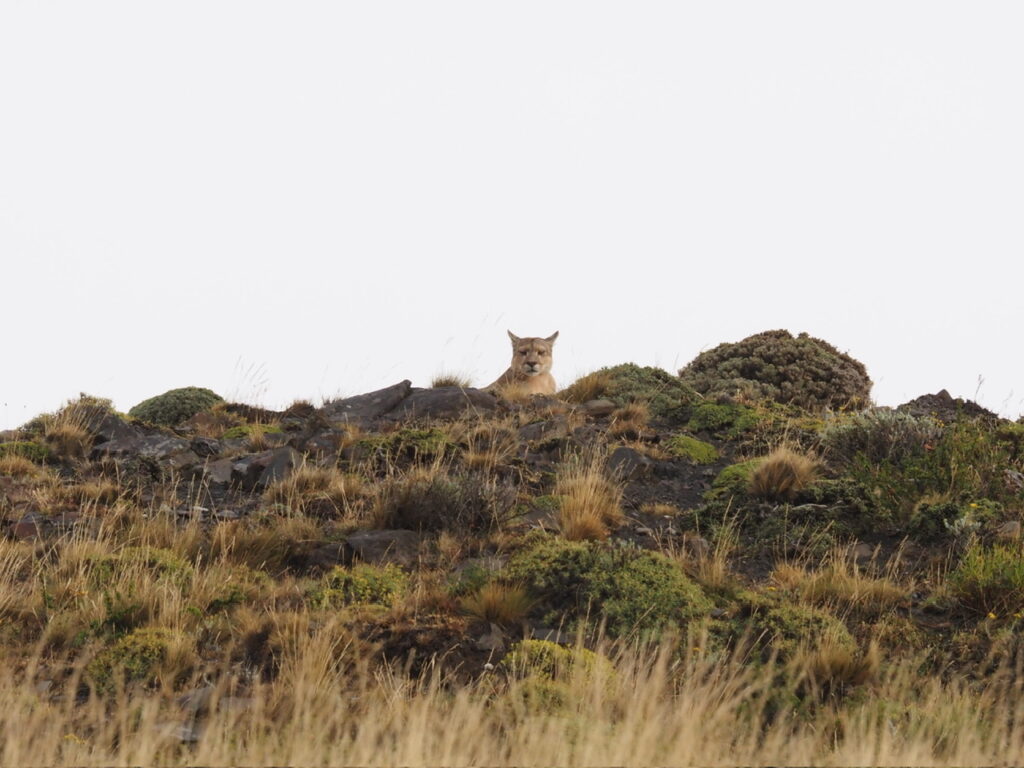
Eventually Amarga stands and saunters off. We drive to the bottom of the hill in the hope that we will be in a prime position if she starts hunting. In her new position however, and ¼ mile away she is almost invisible. She’s in the middle of the picture to the left of the rocks.

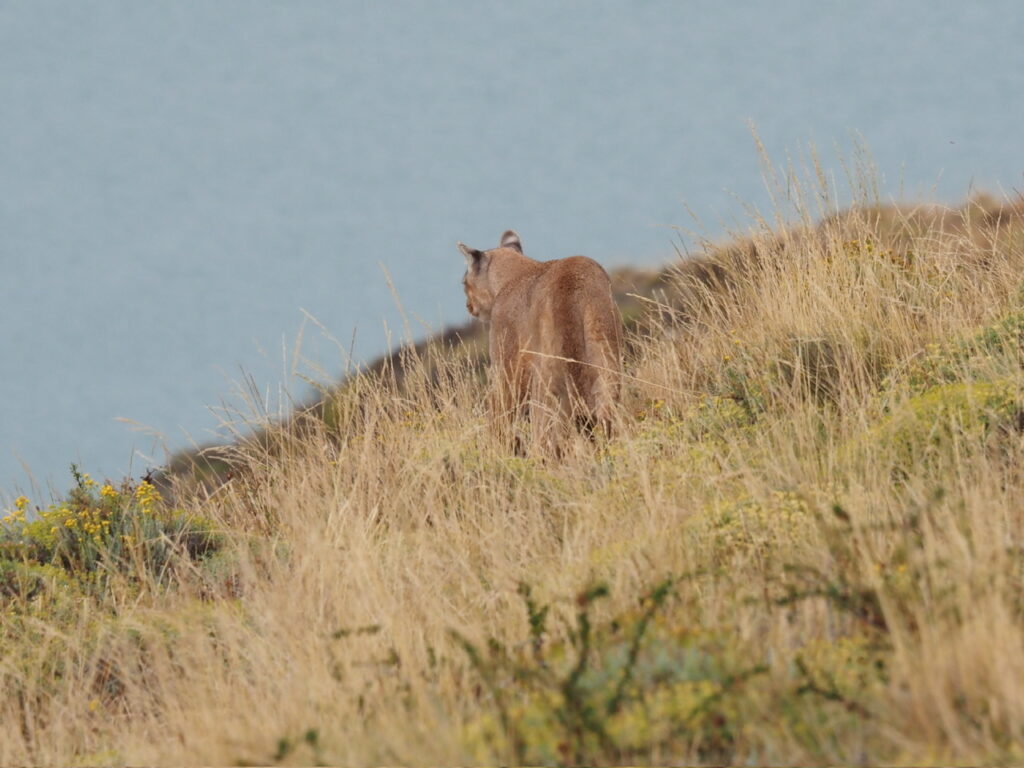
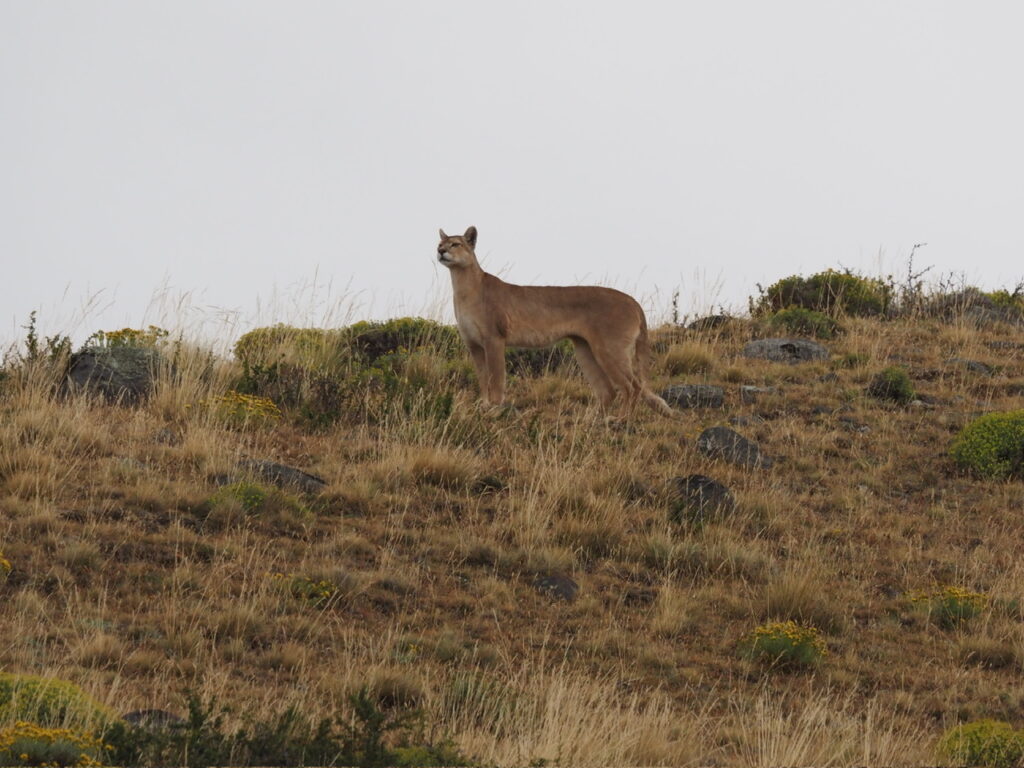
Amazingly whilst waiting for Amarga to move, we spot another puma and she’s coming our way. This is ginger. She is on the move, fast and in hunting mode. Victor and I follow her on foot with our cameras but it is hard work. Victor is young and fit. I am not and it is all uphill on rocky, scrubby ground. In the end, after a km or two we have to admit defeat. She starts running and we have no chance. The light is fading fast too, but we are close much of the time and do get some photos to at least record the episode.

What an astonishing two days. We have seen six different pumas and had close encounters with five of them. Wow! Wow! Wow!

Page 6 of 34

Powered by WordPress & Theme by Anders Norén