My Wild Travels

Photography and Travel Blog

Espanola

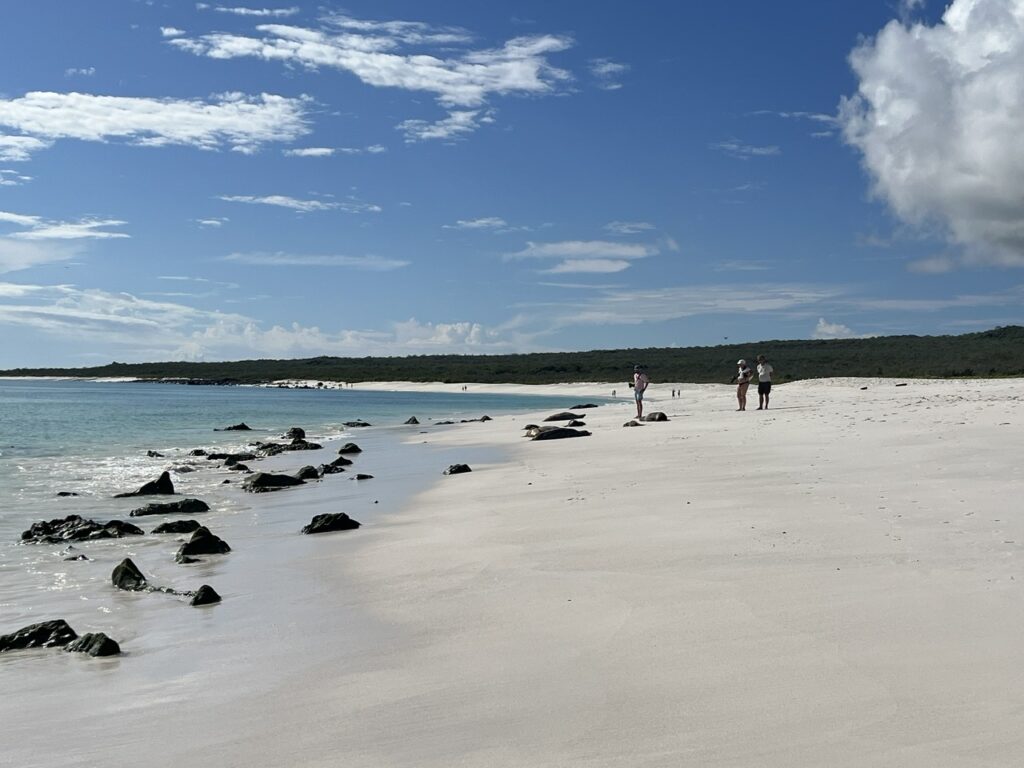
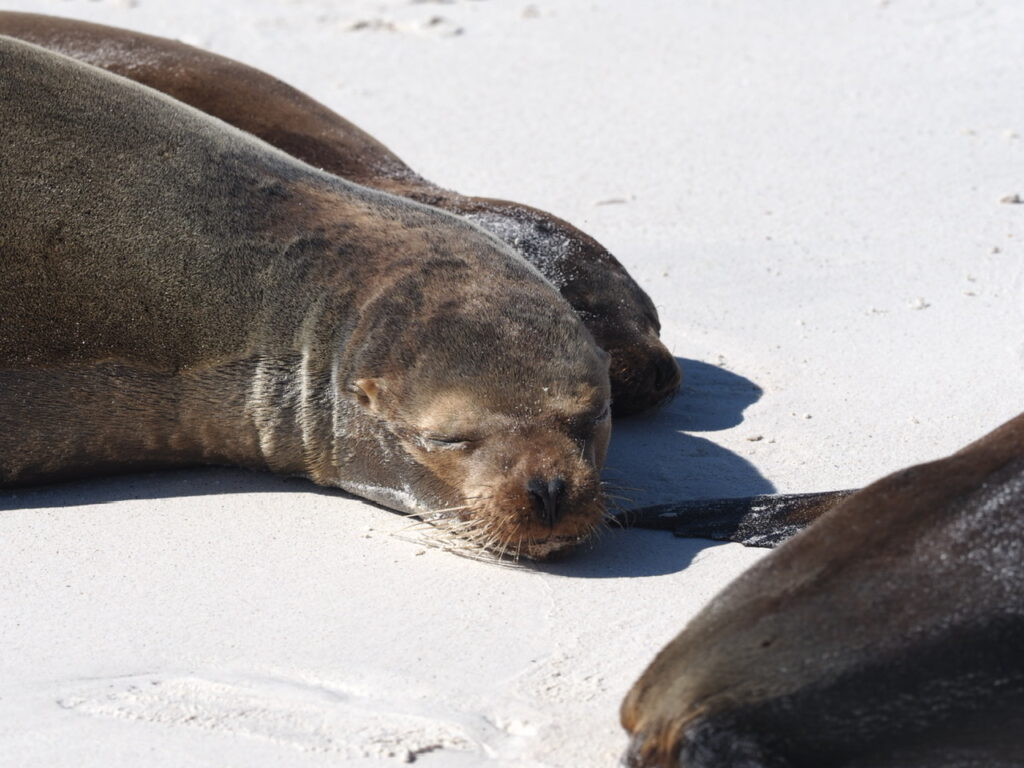
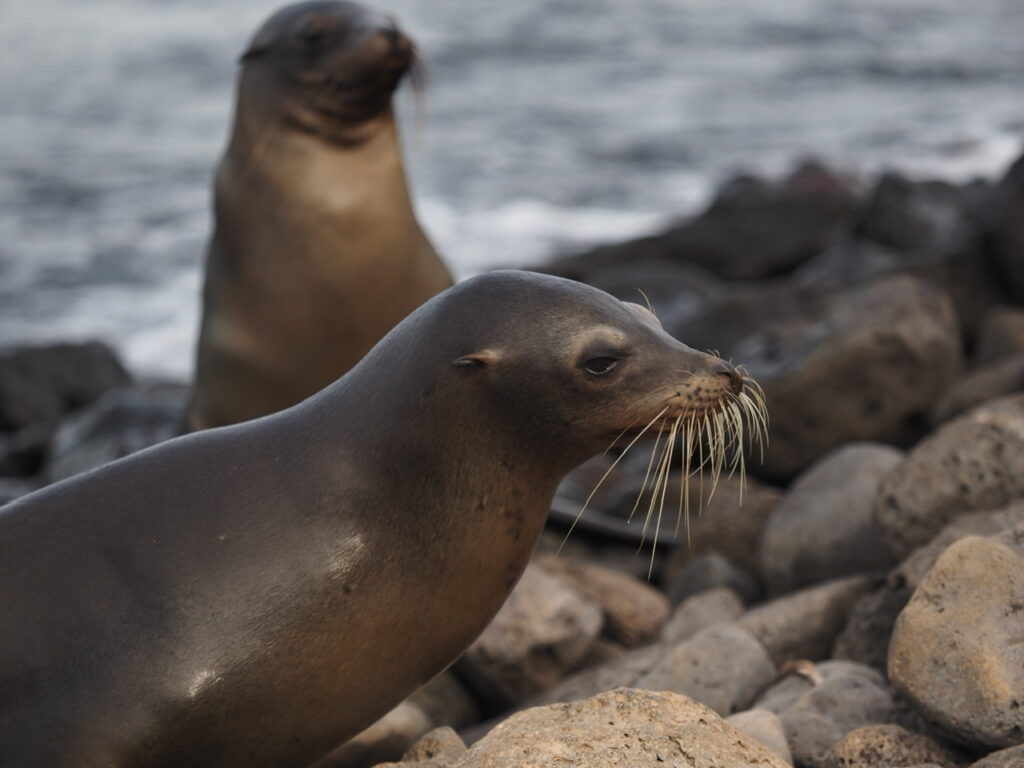
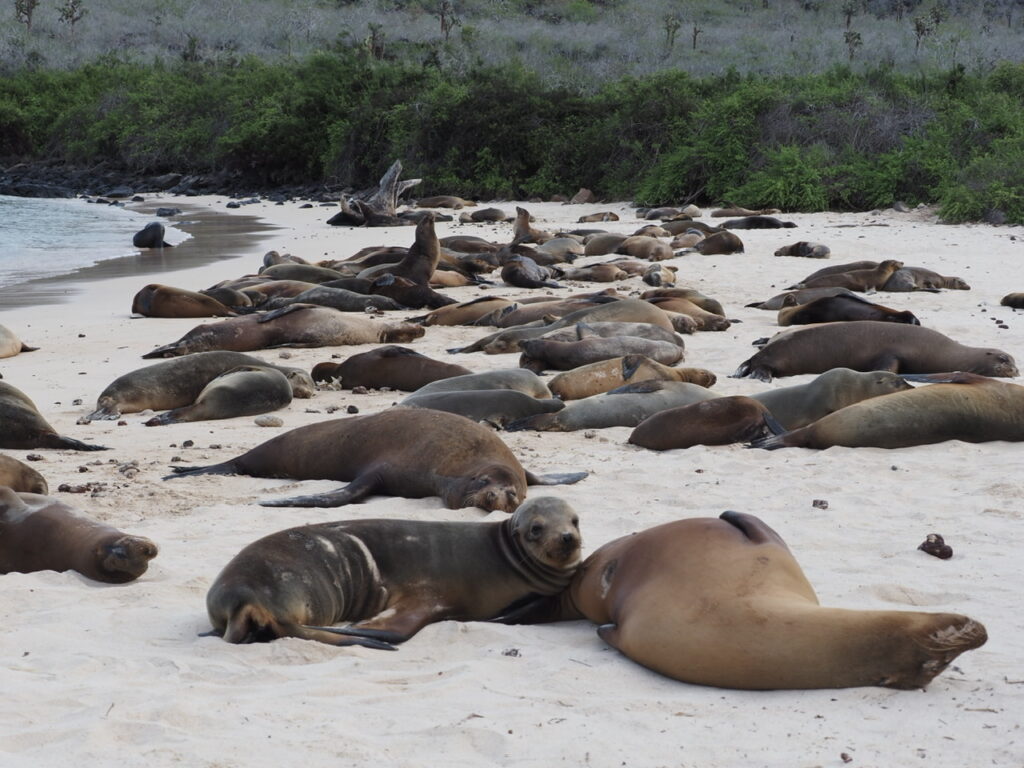
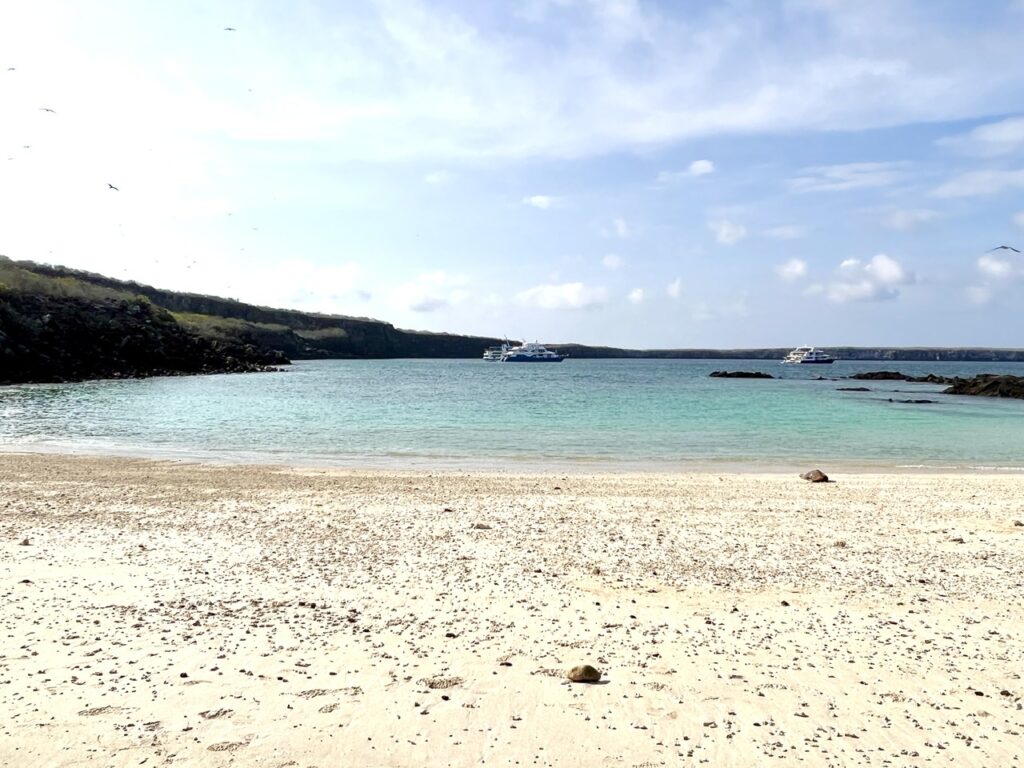
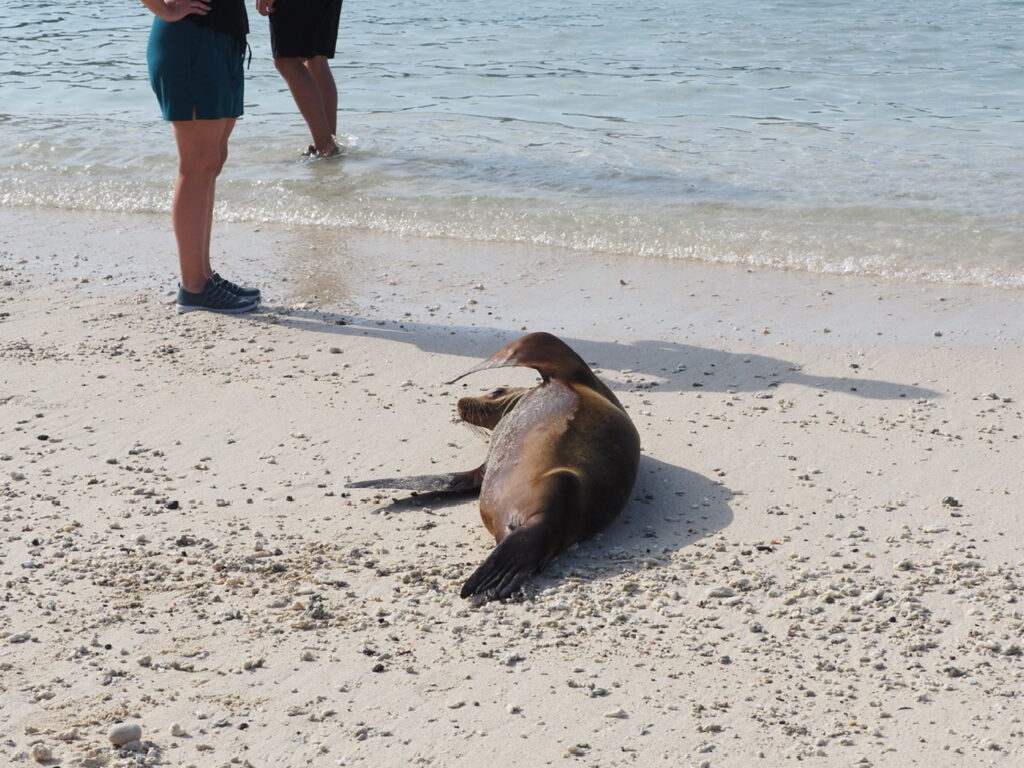
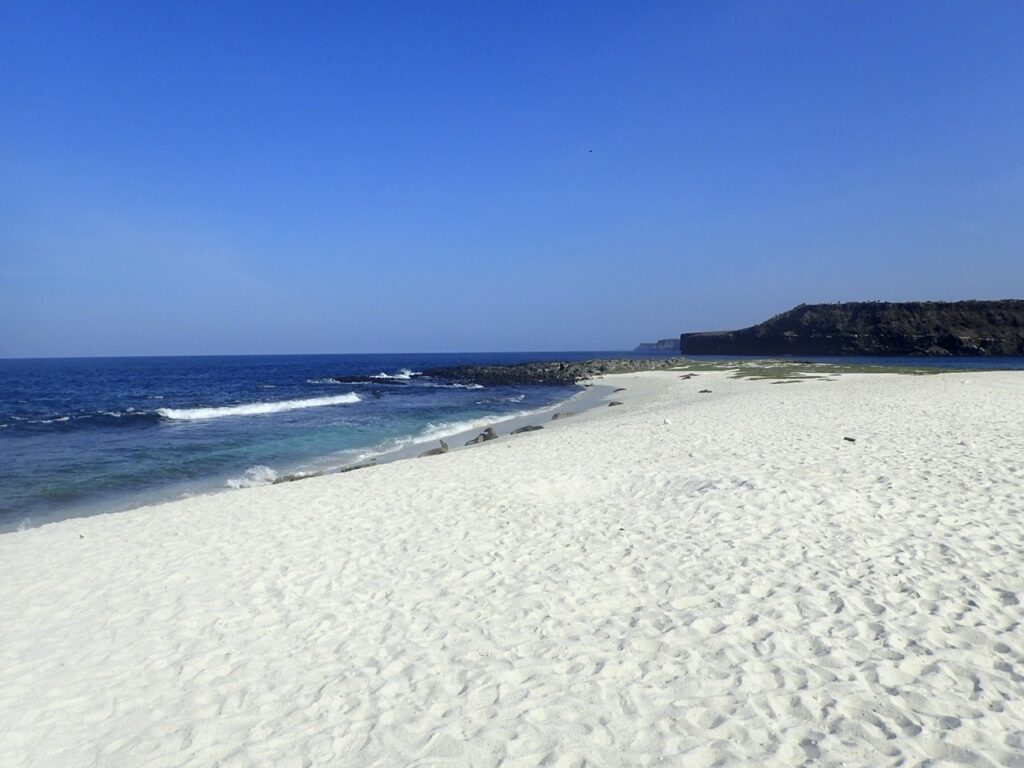
It is 07.00 and already 36C! It will be a scorcher today. We are anchored in Gardner Bay, Espanola where we can enjoy the beach, sea lions and laze in the warm, azure water.
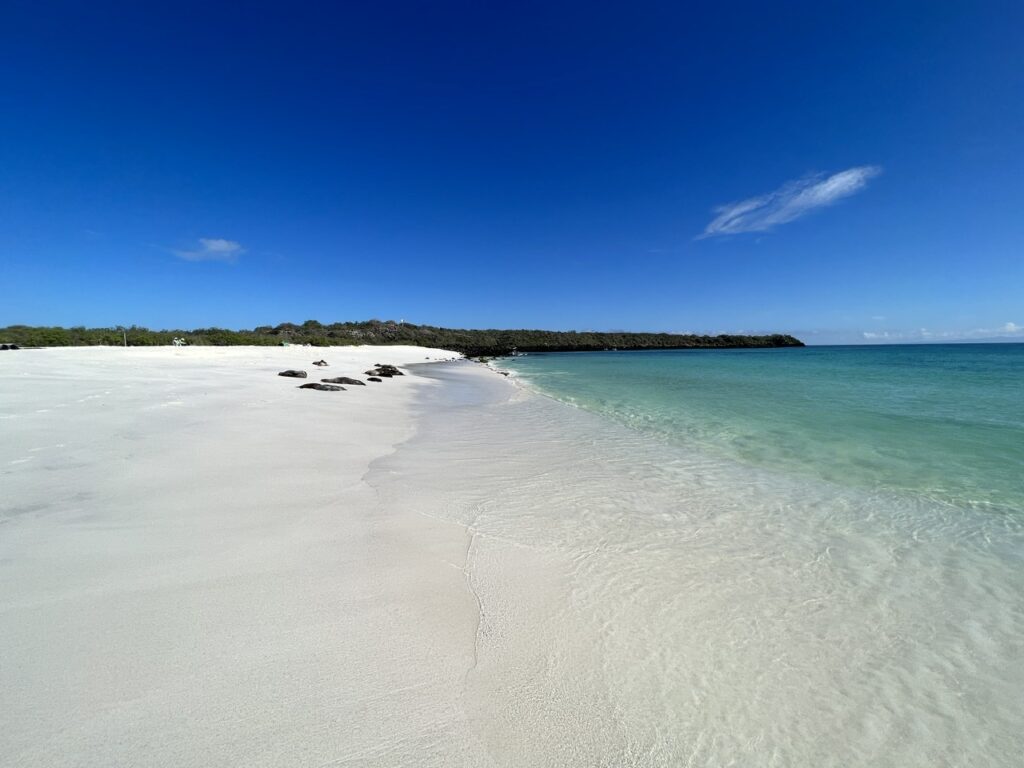
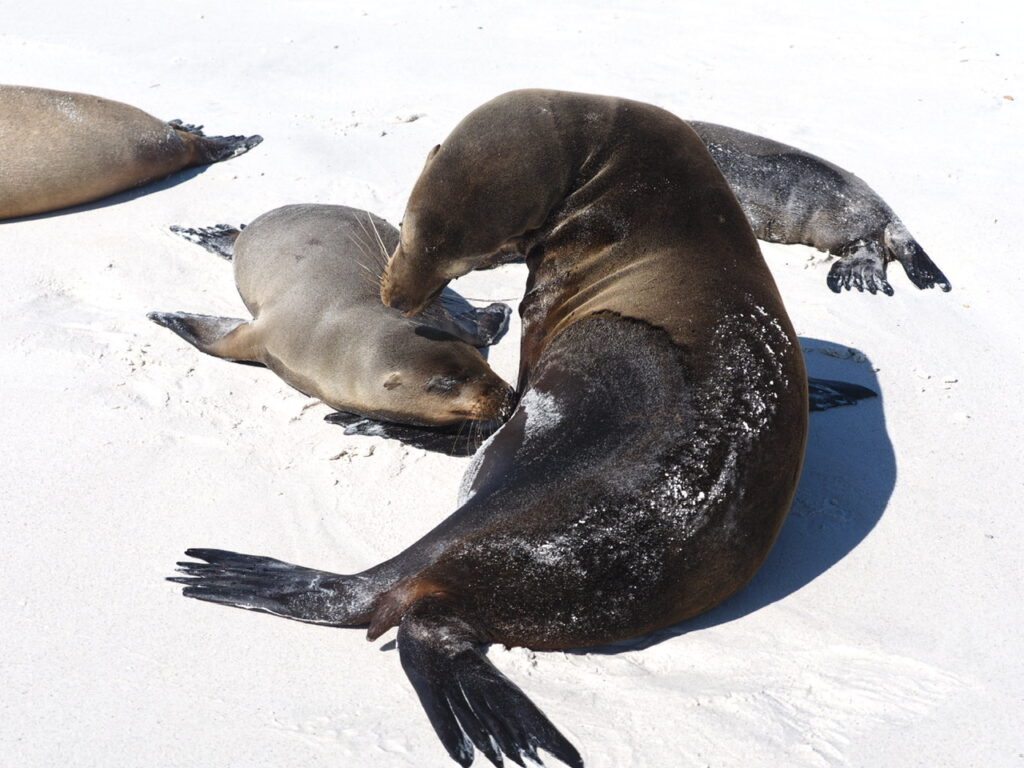
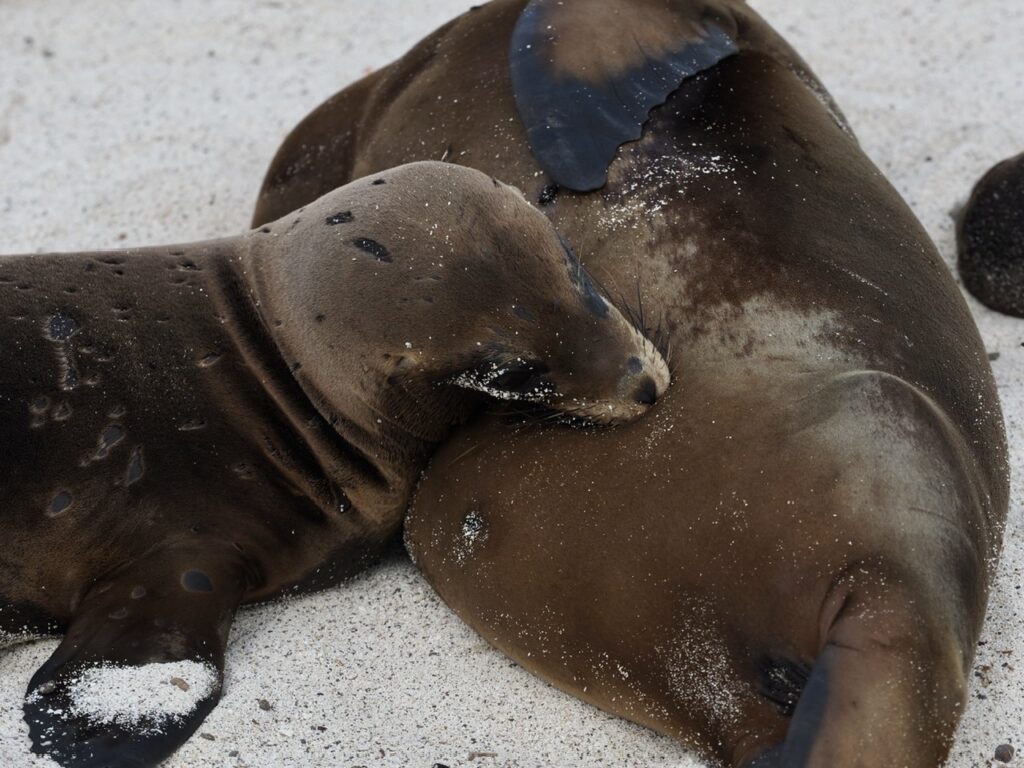
I am entertained by one particularly hungry pup.

We return to the boat for snorkelling gear and to move a short distance to an outlying island. There is a massive fish ball below me. There are thousands of fish here and I enjoy diving down and swimming through them.

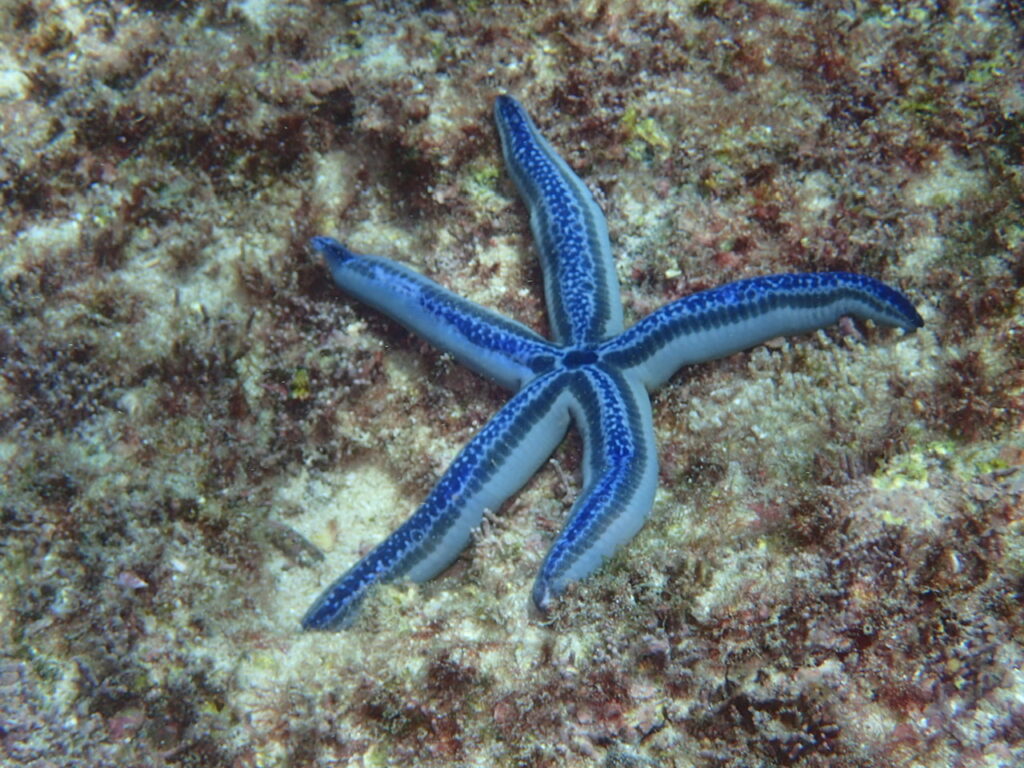
We then climb back into the pangas and move to a rocky headland. Here I see a reef shark, an iguana swimming, a giant damsel fish, starfish, a large blenny and a Guineafowl pufferfish which is golden yellow. I have never seen one before.

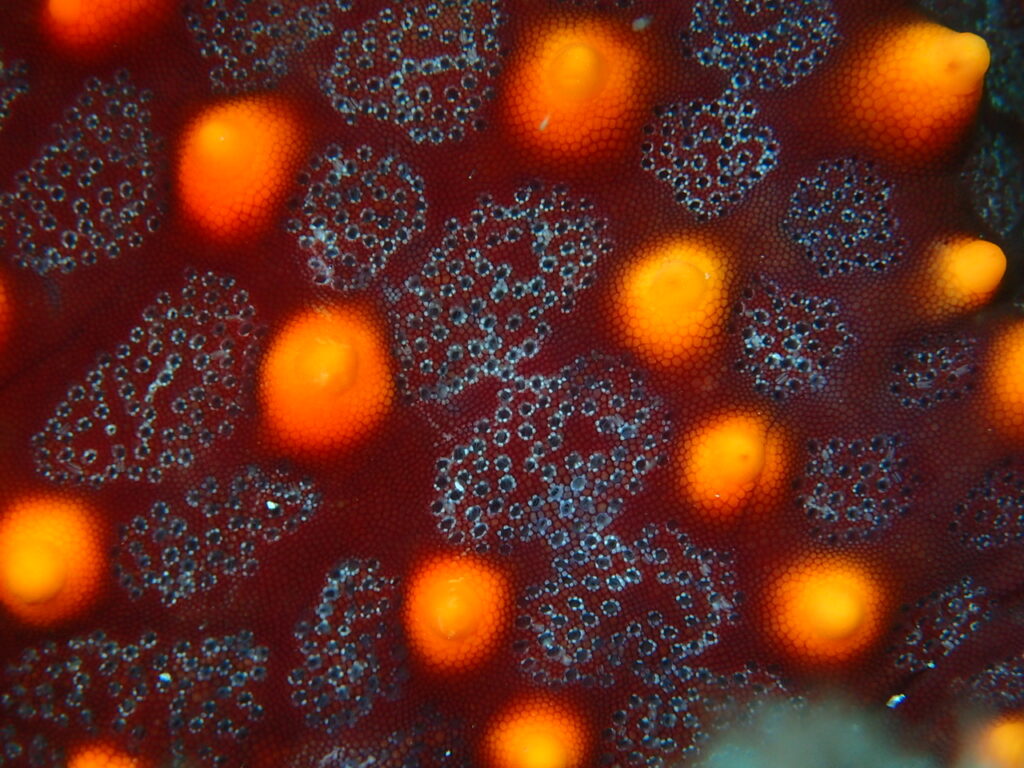
Fabian can free-dive and takes my camera. He captures some super macro shots of a starfish. I have never thought to use that mode underwater but certainly will in future.
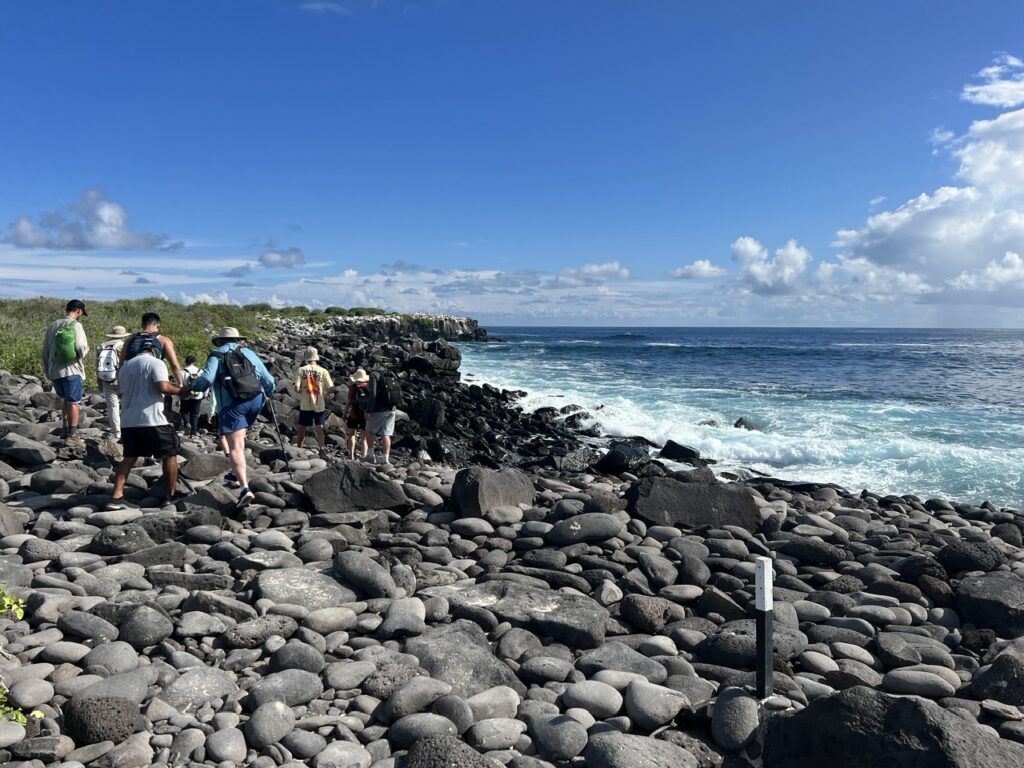
After lunch the plan is to make a dry landing on Punta Suarez. It is full moon at the moment and the tide is high with an impressive swell. The planned dry landing is aborted as the steps are below water and the path is being covered by breaking waves.

Plan B is also a dry landing, but this involves racing the surf and somehow clambering off the tender in the swell, onto very uneven and jaggedy rocks. We are not successful in racing the surf. A wave similar to the one below breaks on the reef and engulfs us.

I am sitting on the side of the boat with my back to the approaching wave. I am completely soaked. Water even goes inside my timberland boots! I am really grateful that I bought a 100% waterproof bag for the camera. Jane is still not feeling very well and says something like “That is not ****ing funny”. Rare for her to swear! Sea lions line the beach and honk noisily. It is scorchingly hot with high humidity. We are aiming to walk 2.5 miles around the island on very rugged terrain and, although that is not very far, in the heat it will be demanding.

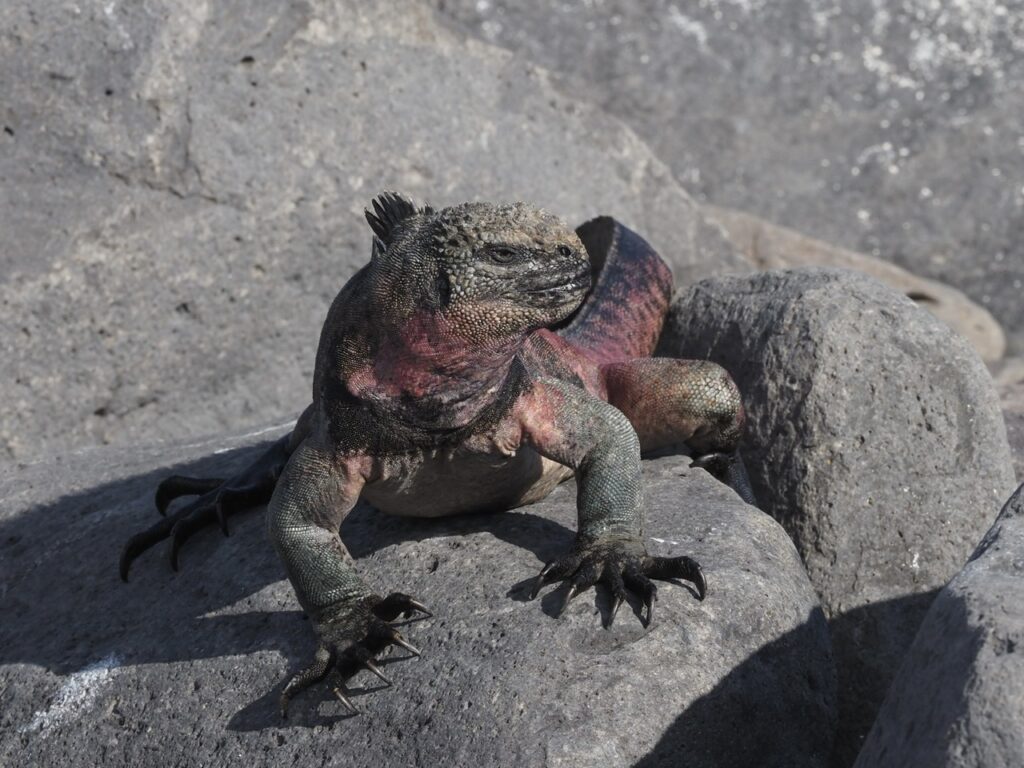
Marine iguanas laze on the rocks and have taken on a reddish colouration as this is the end of  mating season.
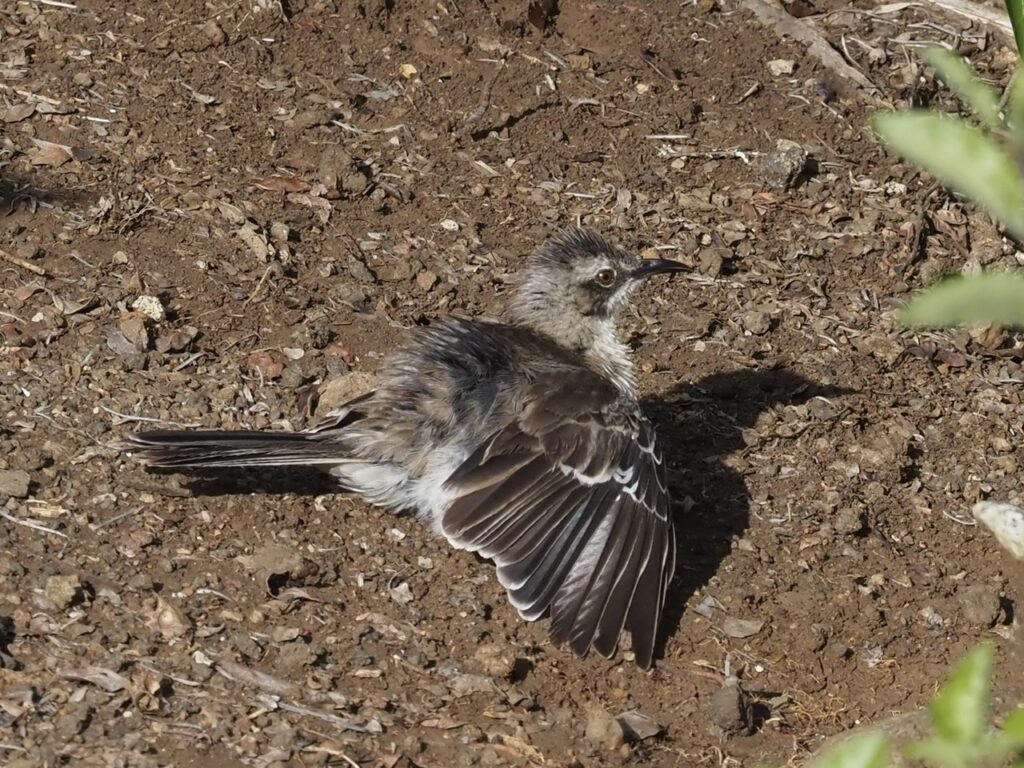
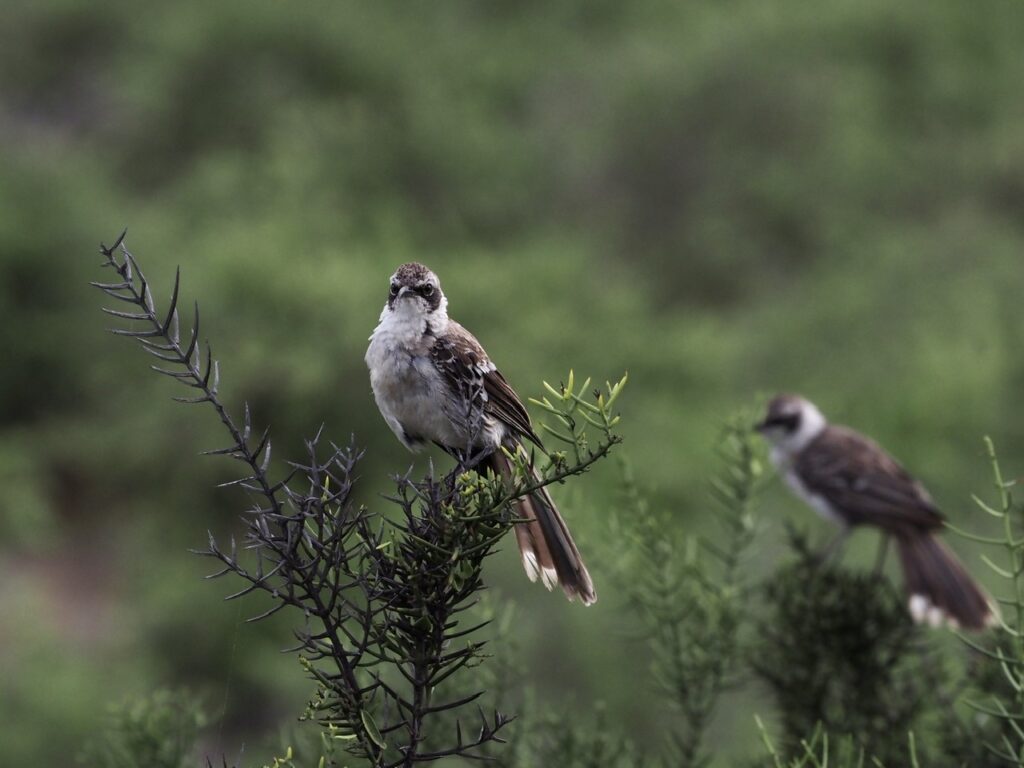
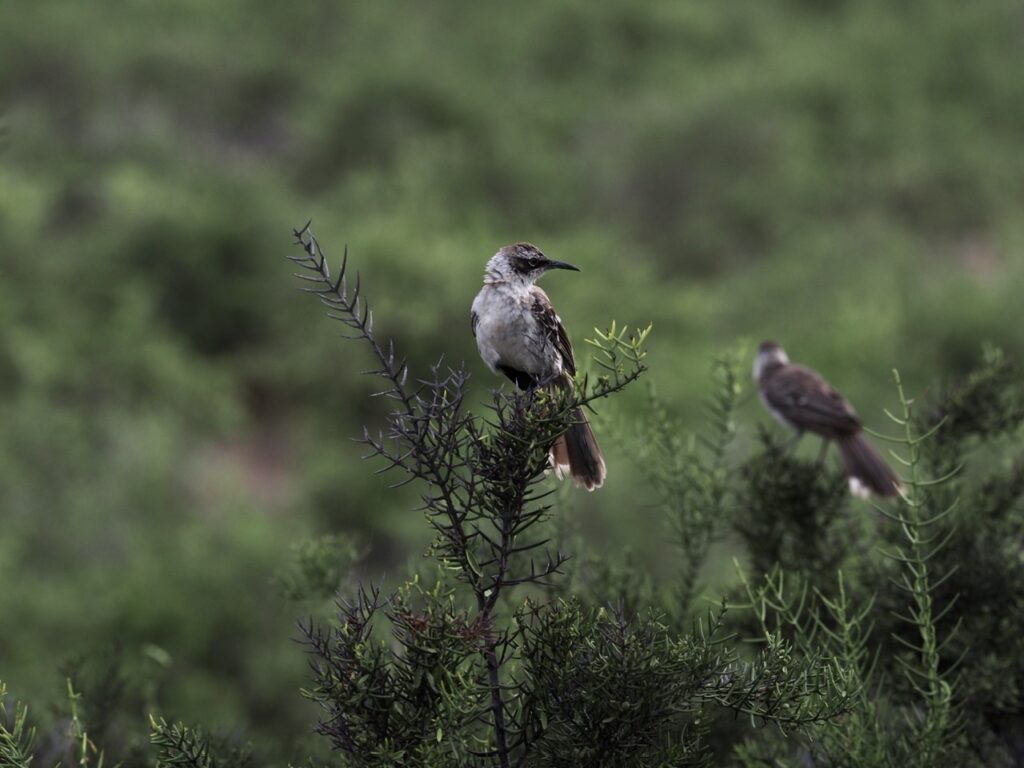
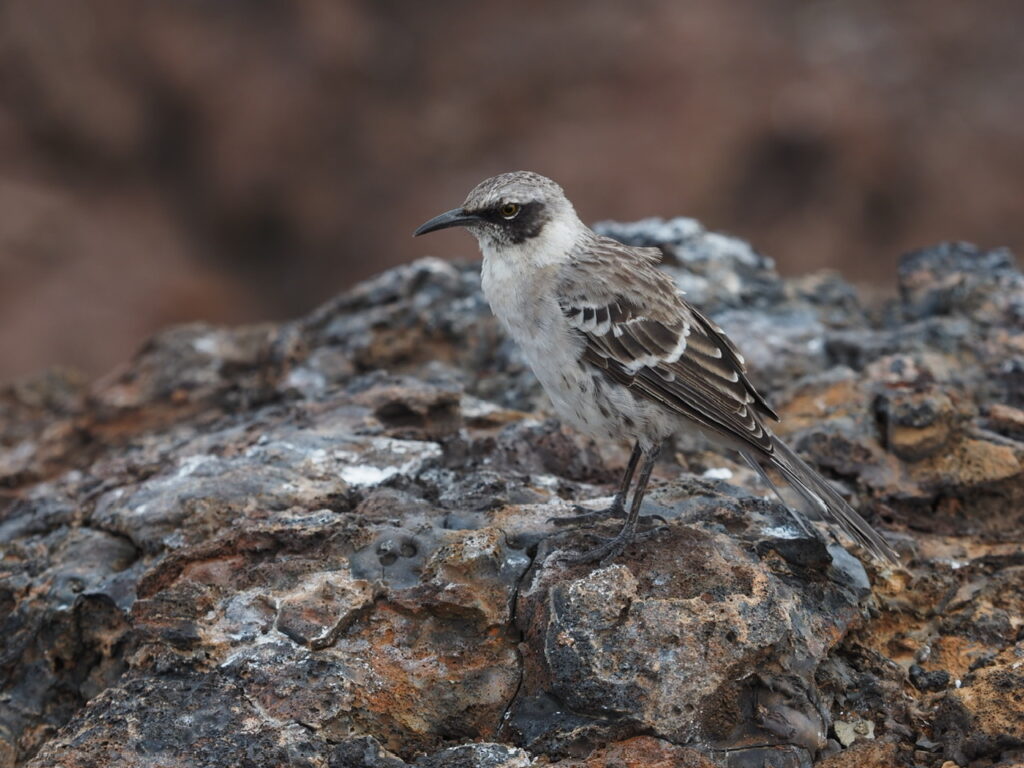
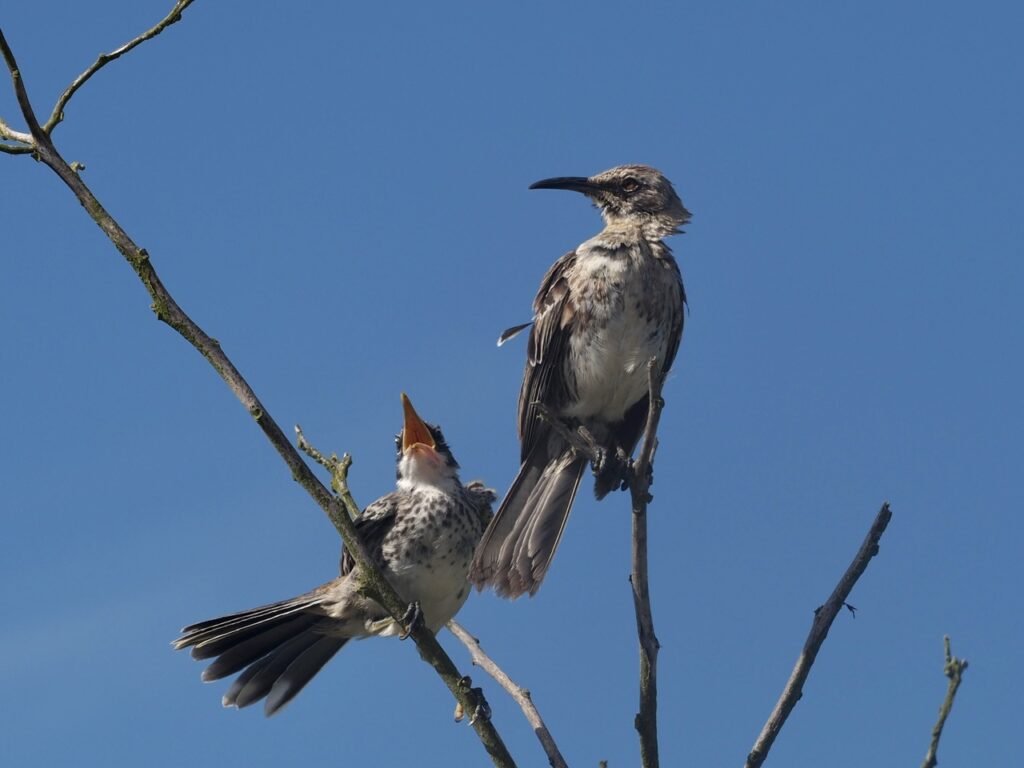
Espanola mockingbirds (a different variant) chirrup and chatter in the bushes and Galapagos doves are ever present.
The shoreline is rocky and huge waves crash against the cliffs.
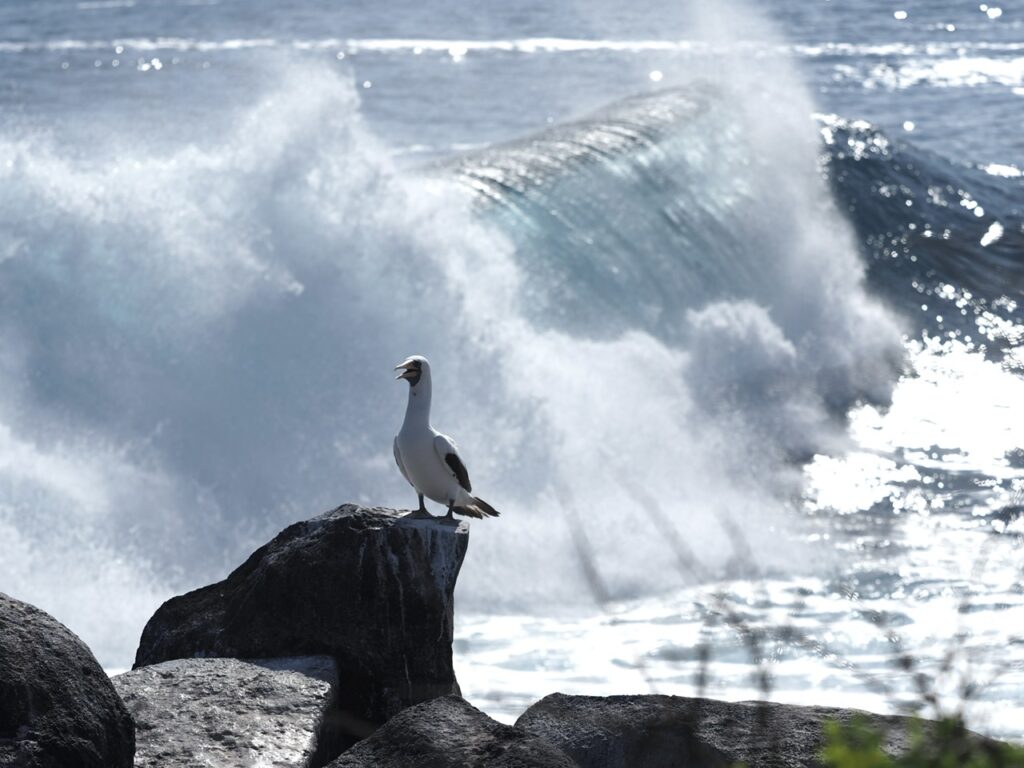
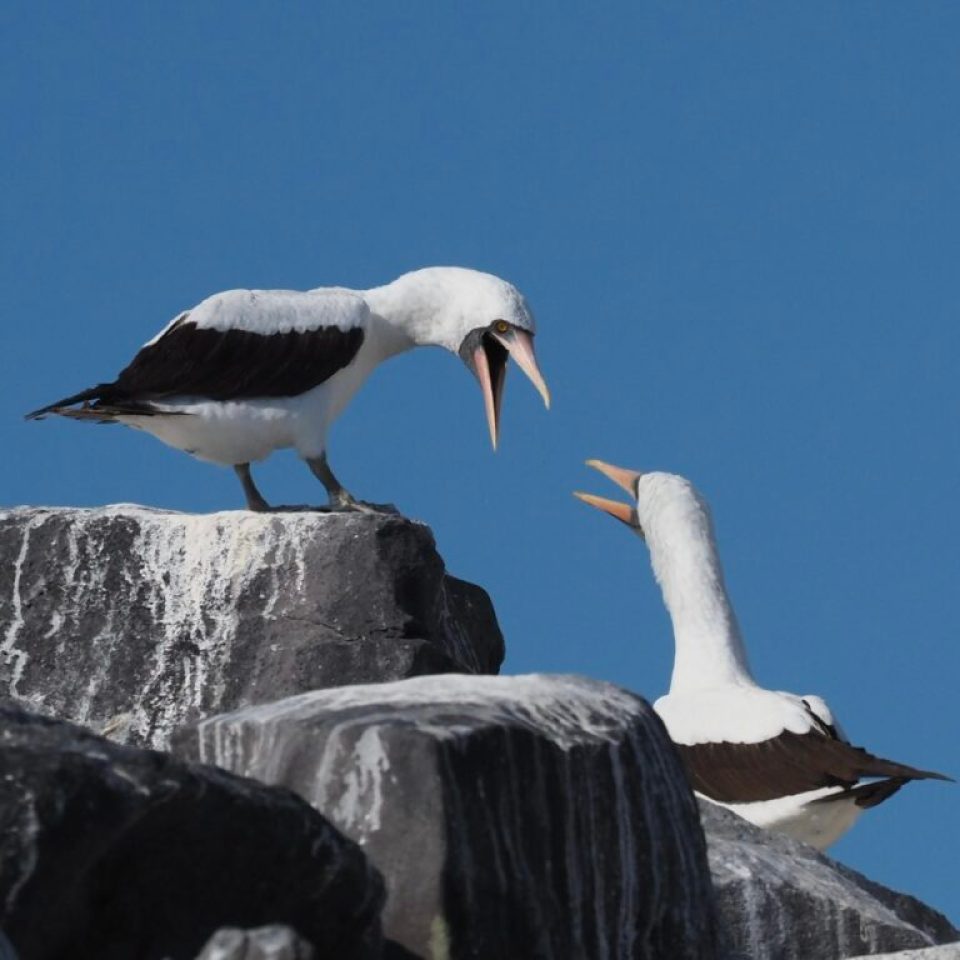
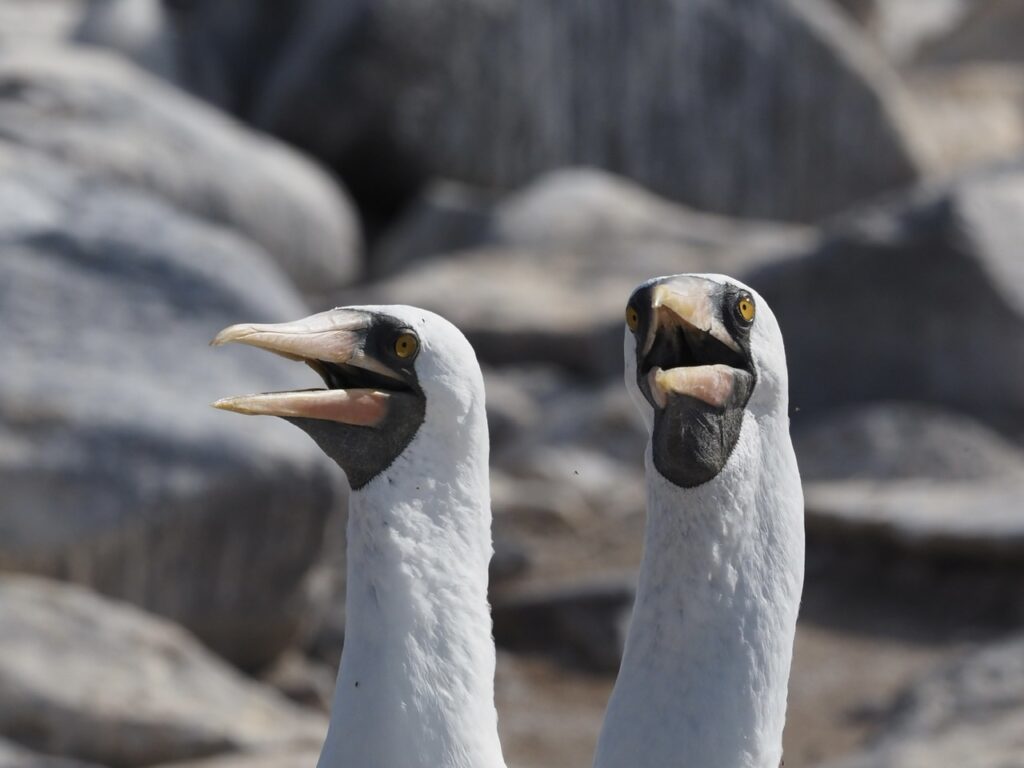
Nazca boobies nest in large numbers along the cliffs and ammonia fills the air.
There are a few blue-footed boobies here too. There are lots of young chicks and photo opportunities abound.

What also abound are swarms of sandflies and mosquitos. Bug spray is re-applied and I am glad I am wearing my Craghoppers nosilife shirt which is incredibly effective in preventing me getting bitten. At the end of the day I have only one bite. Some people have loads. We continue on our walk.

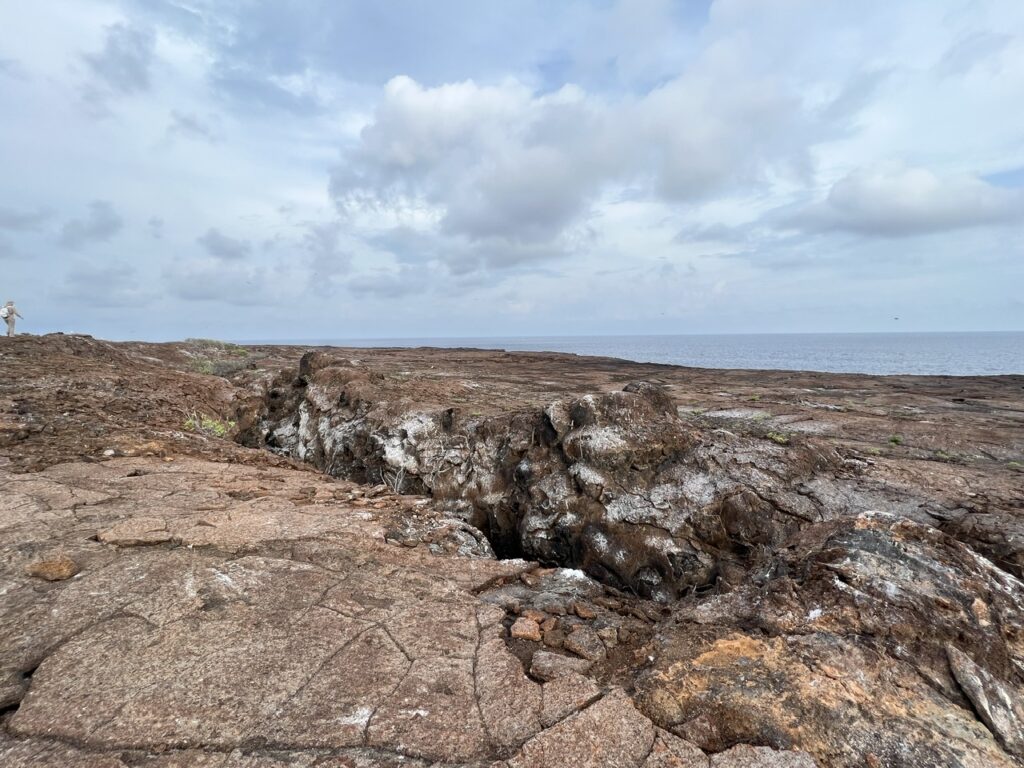
Everyone is feeling the heat but Jane is suffering more than most. She was sick this morning with probably the same bug I had the night before. She thought that she would cope OK but lack of breakfast and de-hydration take their toll. She is feeling very ill. I take her backpack and camera and one of the crew help her back towards the beach. She misses viewing a blowhole which is spectacular and noisy – it sounds like thunder as the waves pound into it.

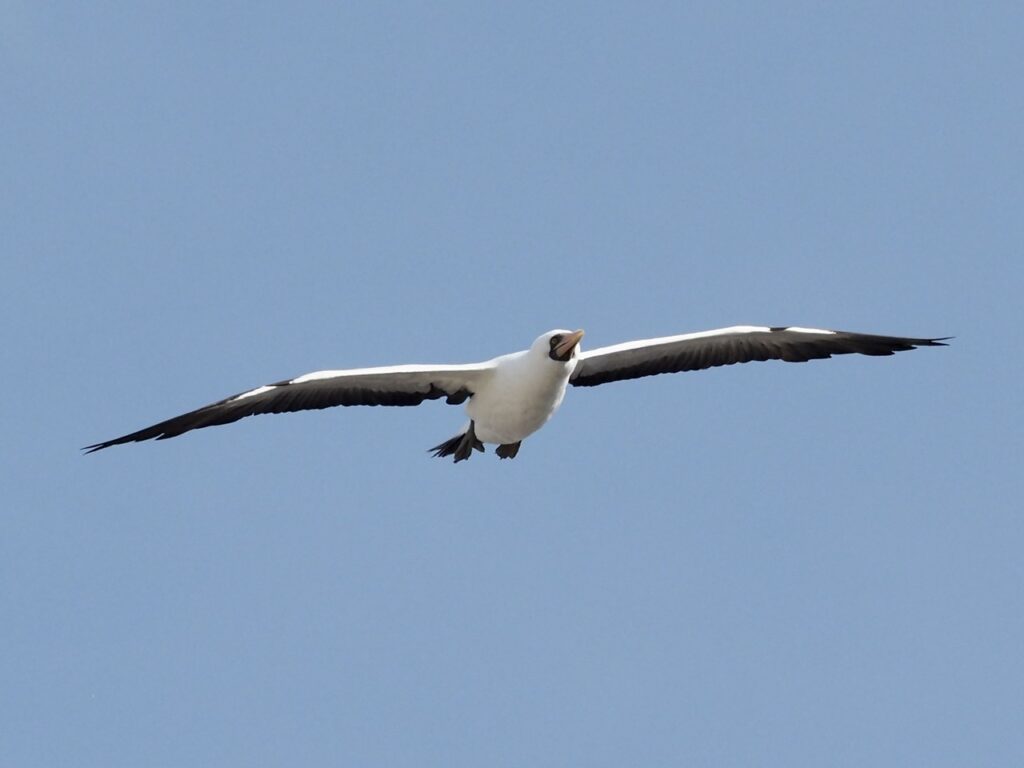
Fabian then shouts “Albatross”. We are so lucky. They do not usually arrive until the end of April but a lone bird soars above us and I even manage to capture photographic evidence.

As we make our way back Fabian spots a Galapagos hawk. They also can be hard to find.
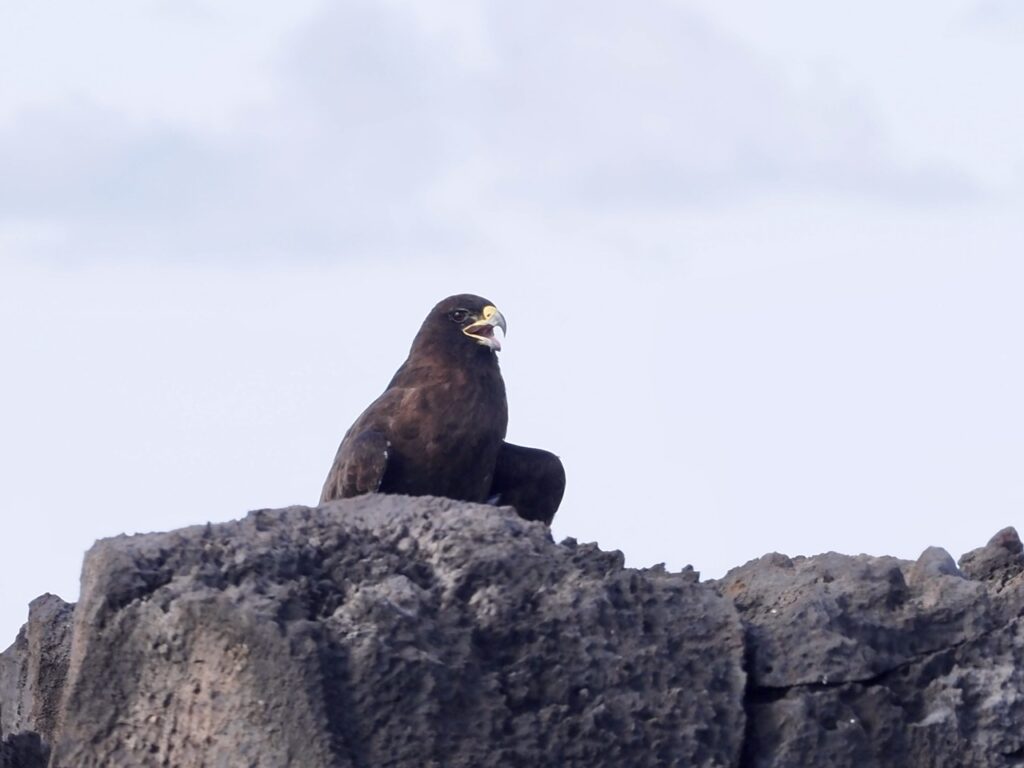
We meet up with Jane on the rocky path and she is not at all well – dizzy and feeling very nauseous. The crew bring her a stretcher. She is reluctant to use it but the terrain is hostile and if she fainted on the rocks it probably would lead to serious injury.

The humidity and heat have inevitably created big black clouds which now decide to dump copious volumes of water on us. It is actually really welcome. We are so hot that being drenched is just the best thing!

The surf is now even bigger than when we landed and it is decided it will be much safer to make a launch from the beach. The sea lions are unimpressed and reluctant to give us space….and we still have to make it out through the breaking surf without capsizing. The waves are now even bigger than when we landed. I would describe our launch as terrifying, exhilerating and fun in equal measure. I think Jane was just relieved to get back on board and go to her cabin for a sleep. Hopefully she will be fine by the morning.

After dinner we stand on deck to look for sharks. We are not disappointed. I count 14 huge Galapagos sharks patrolling the area around the boat. We have just raised the anchor and set sail when a flying fish crashes into the side of the boat. There is a loud splash. I think something has fallen from the deck above but realise it was a seagull diving for the fish. No sooner had the bird touched the surface than a large shark gulped it down. It all happened so fast. There really is nothing quite like watching nature in action.
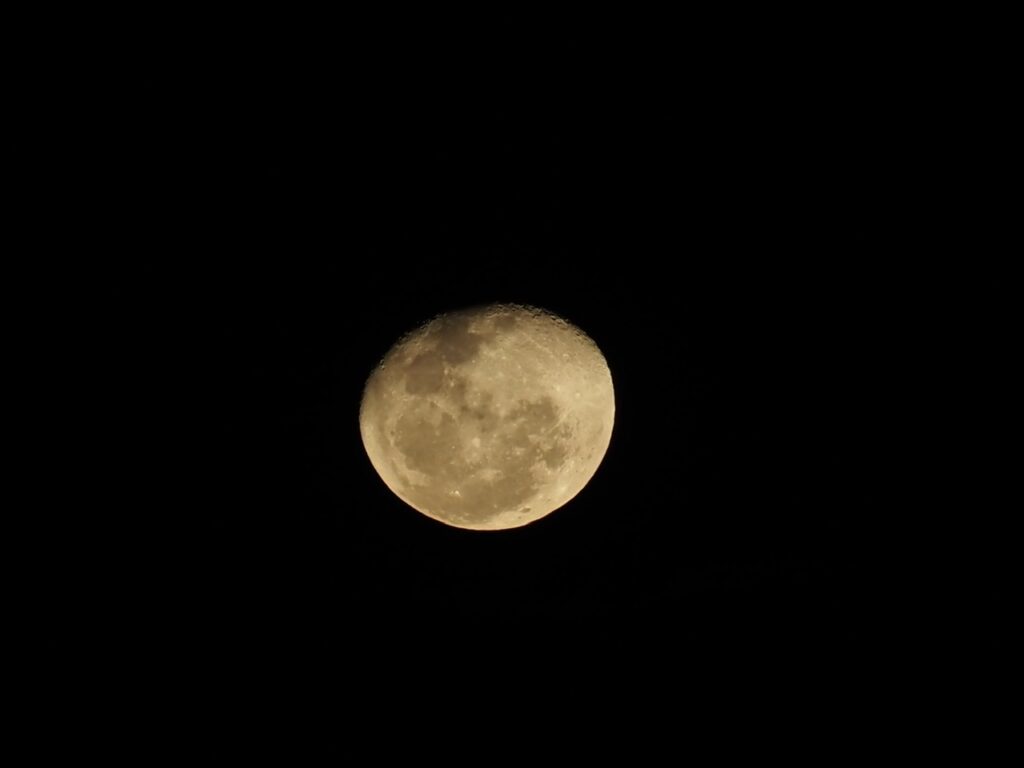
The moon is almost full. The sky is cloudless and full of stars. What a perfect end to a totally amazing day.
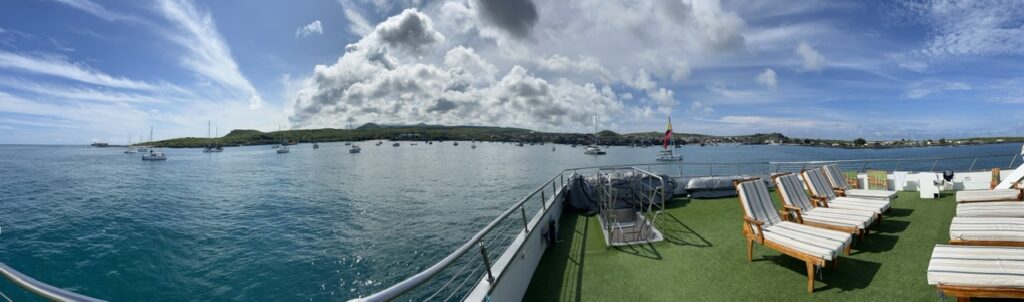
San Cristobal

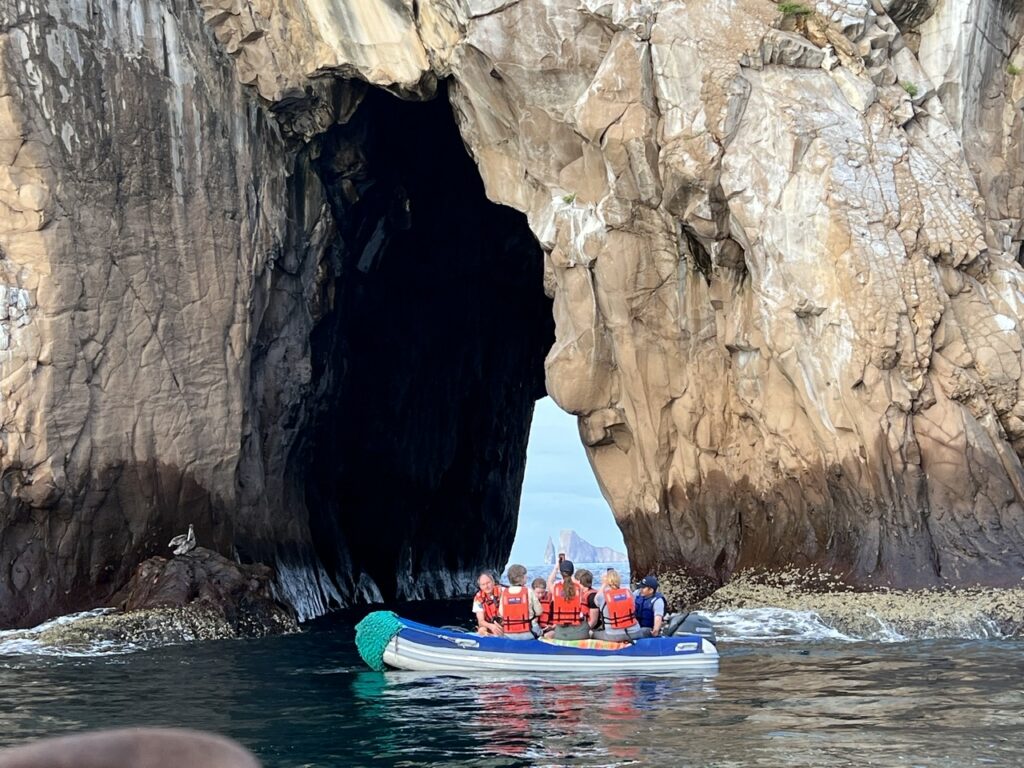
I did not get much sleep last night. I felt a bit rough with stomach cramps and worse….. I was probably dehydrated after yesterday morning’s exceedingly hot walk or maybe the water on the swim with the sea lions was less than hygienic. I only have fruit and water for breakfast and soon start to feel better. Today is a changeover day so I can take it easy. We go for a panga ride before breakfast to see Cerritos Bruno which is a very rugged piece of coastline with occasional inlets and a tunnel that leads through to the far side. There is a big swell and it takes some carful manoeuvring to transit the tunnel.

The cliffs are massive and looking up as we go through the tunnel feels very much like we are in a cathedral. We can see kicker rock – a huge monolith protruding from the sea. We return to the boat and a short sail takes us directly past Kicker Rock, which does look somewhat like a boot.

A two hour sail brings us into San Cristobal harbour.

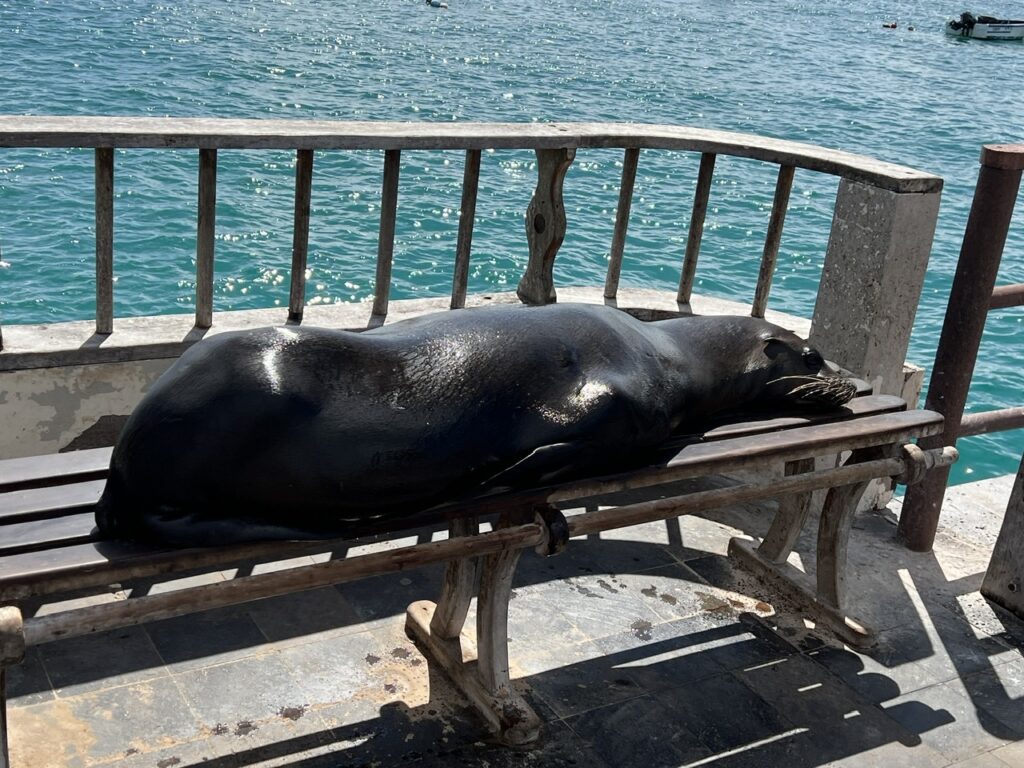
Sea lions have pretty much taken over the port. They laze on the docks, benches and sidewalks and refuse to budge.

We have time to go shopping then return to the Solaris for lunch. The new guests arrive and we visit another tortoise breeding centre on the far side of the island at Colorado Hill.

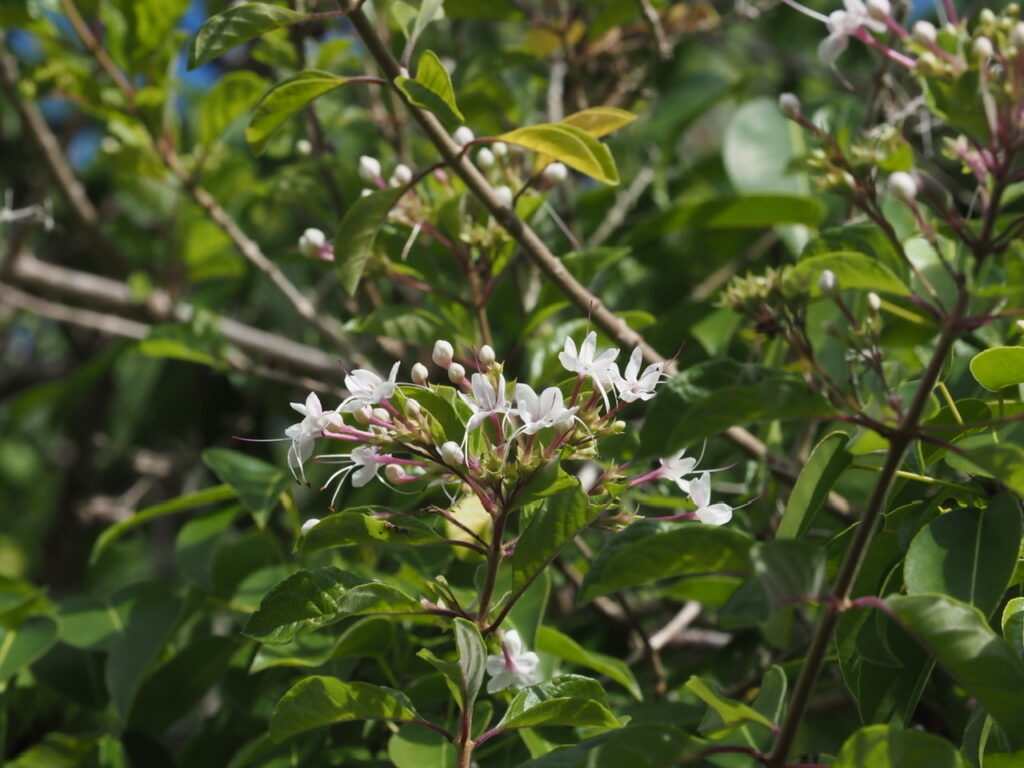
This is the 4th tortoise experience and I have to admit to being a little tortoised out. I concentrate on the flowers and bird life.

Finches are elusive and have been on the entire trip. I watch a San Cristobal mocking bird – unique to this island and am taunted by a yellow warbler that darts in and out of the branches.

We have more time in town where we buy postcards to send home from Post Office Bay on Floreana tomorrow. It is an old naval tradition and I shall tell you more about that later….

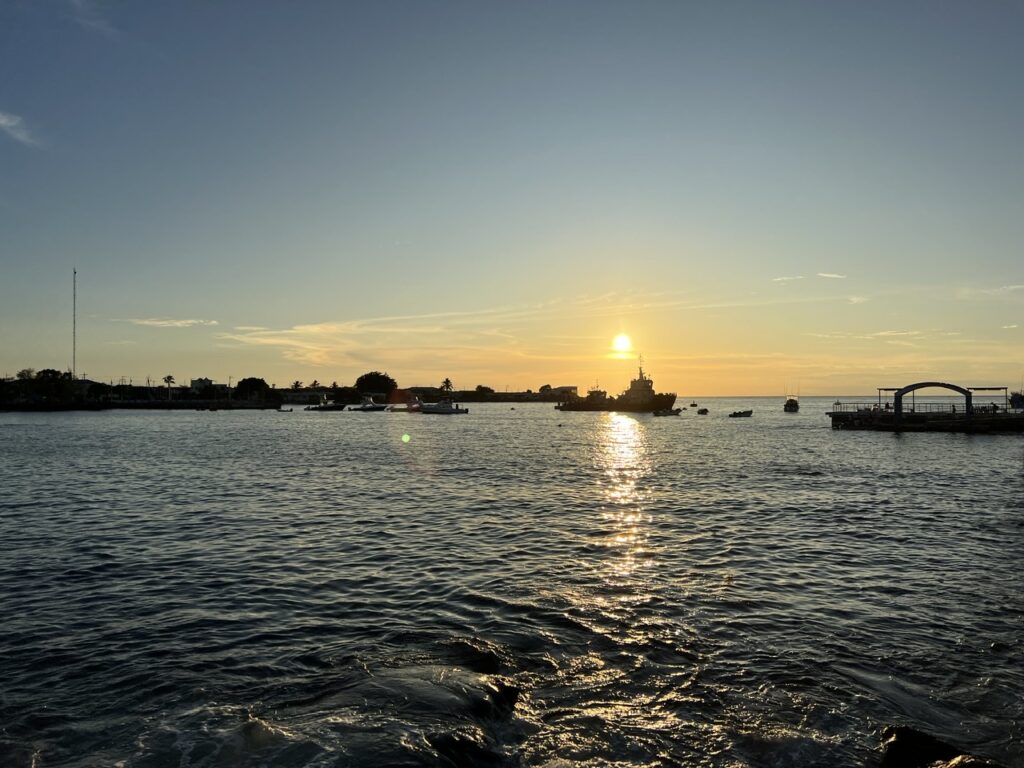
One other couple have stayed on the boat – Kev and Wes. They are good company and we sit in a bar together until it is time to leave. It is very, very hot. The sea lions play in the water. They are entertaining but I have to admit they do not smell delightful. We return to the boat and watch the sun set.

We have a pre-dinner welcome drink with the crew and yet another boat briefing. I think I know it by heart. This is the downside to doing the 3 circuits but at least we stay on the same boat. Upside is of course that you see all the islands and just doing one circuit would have been a huge mistake. The four of us spread ourselves between the four dining room tables so the new guests are forced to mix. They seem more reserved than previous guests and it turns out that this was a good ploy and ice-breaker.

South Plaza and Santa Fe

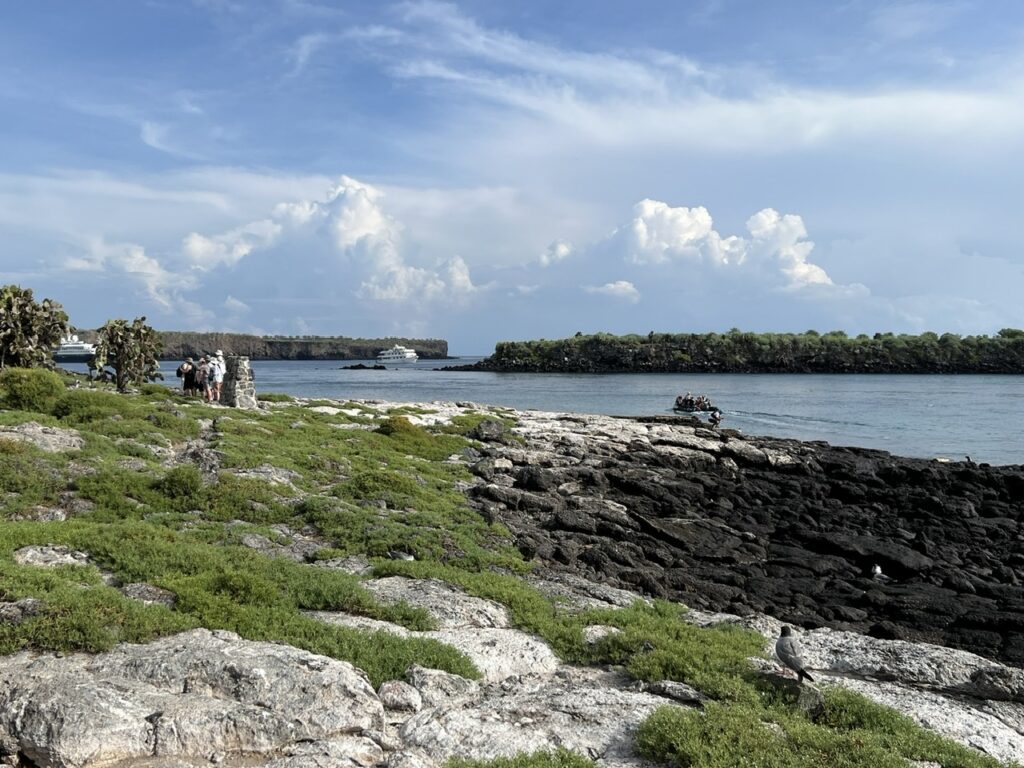
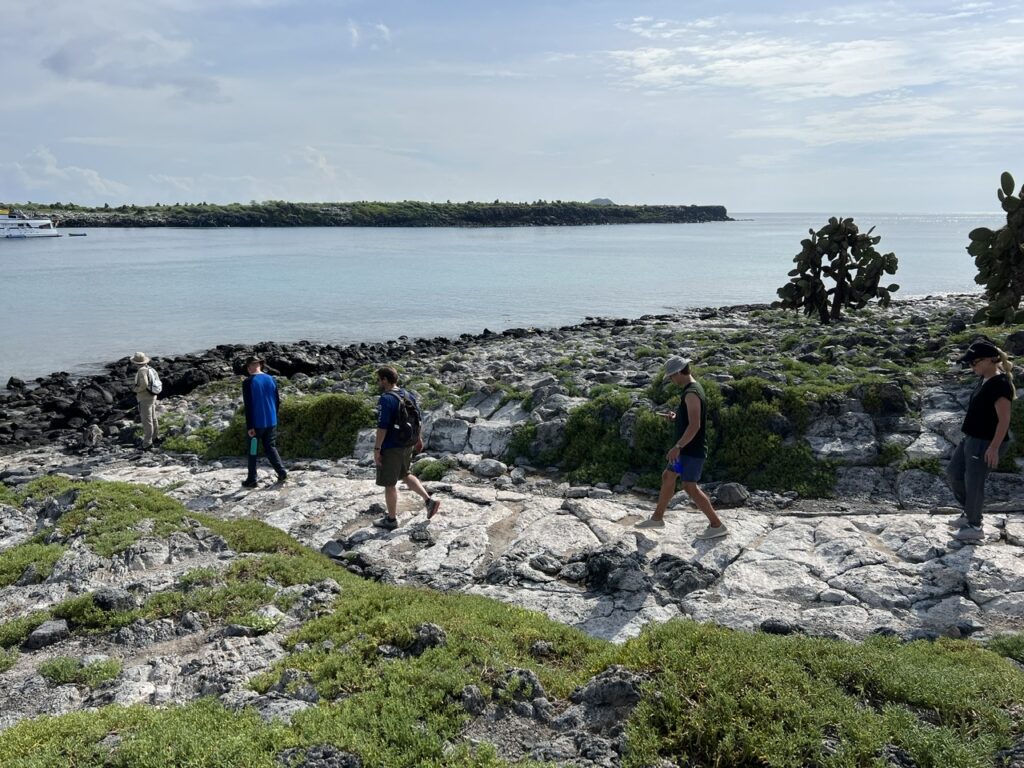
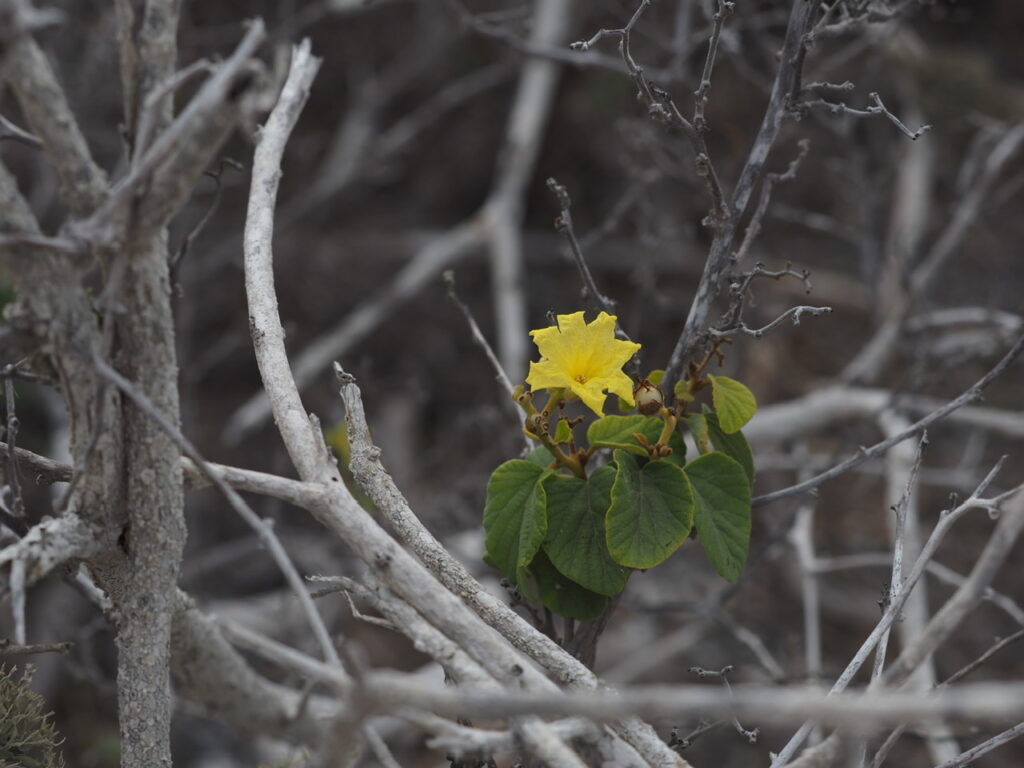
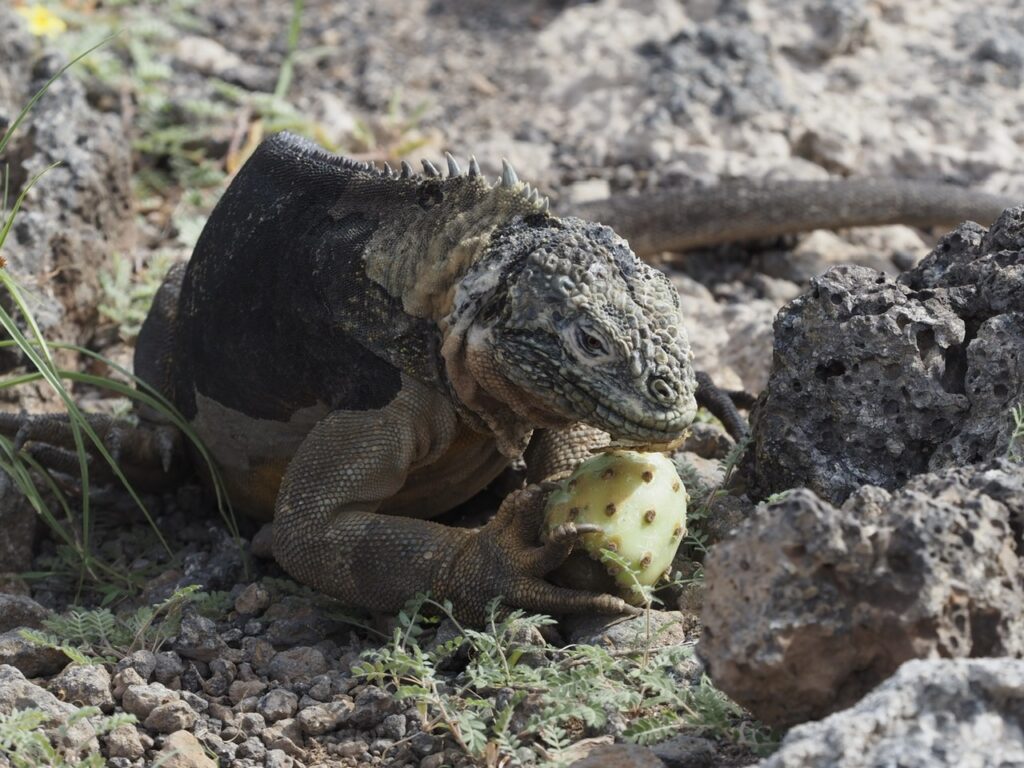
We make a dry landing on South Plaza Island at 08.00. It is overcast but that does not mean that is not hot or humid. The path is rocky and we initially make our way uphill. This is the leeward side of the island and and there is not a breath of wind. The flora on this island is very different. There are low-growing drought resistant plants with yellow and tiny pink flowers.

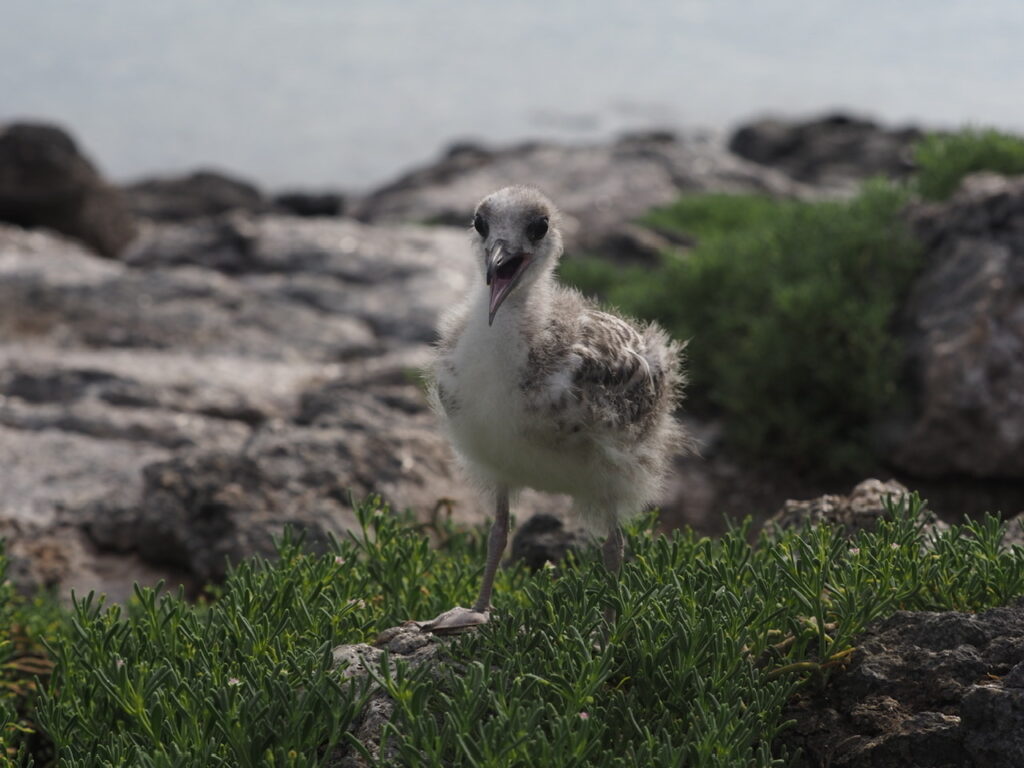
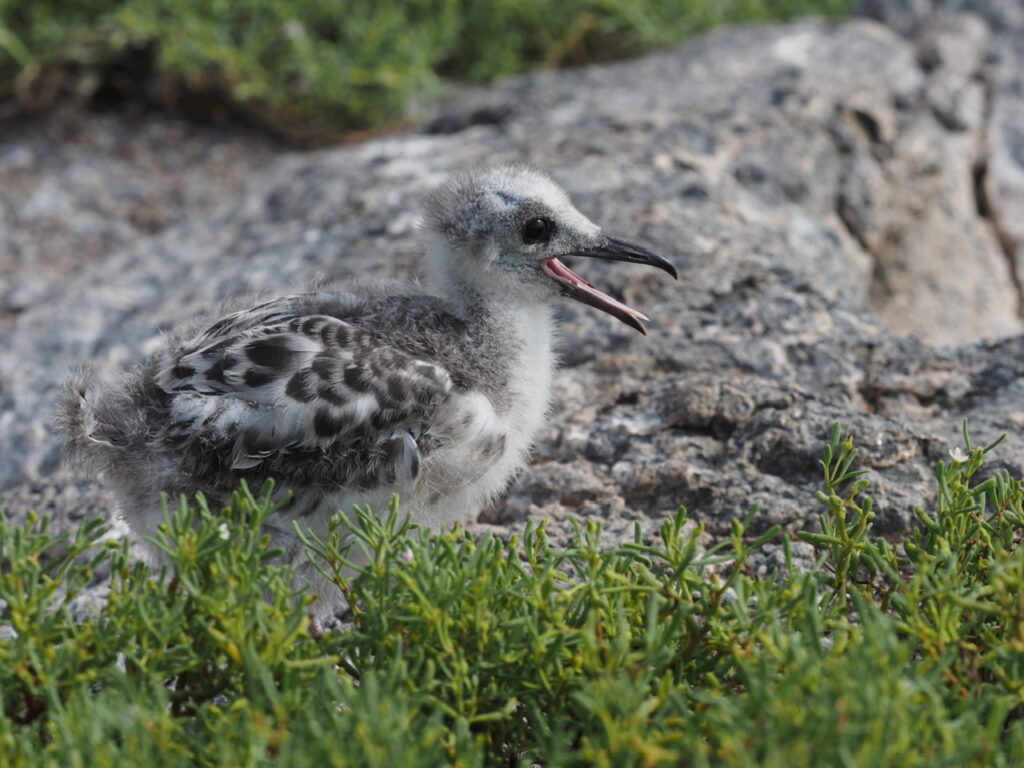
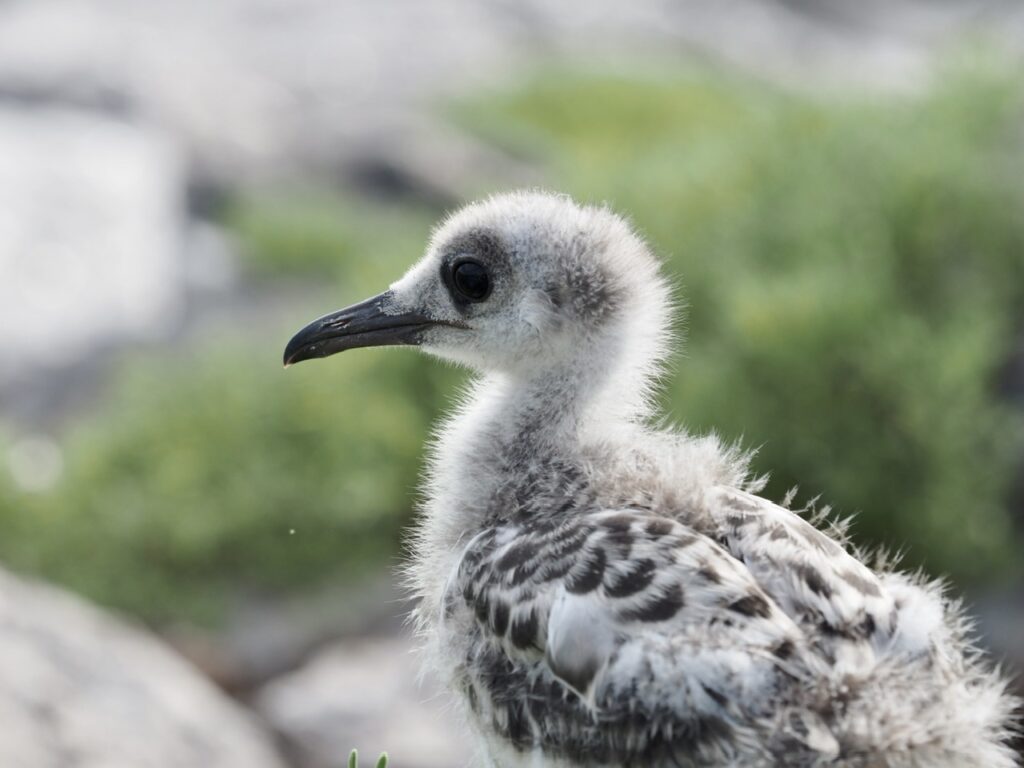
There is lots of low lying cover here and fan-tailed gulls are nesting. It is incredible to be able to be so close to them and I spend time photographing this cute and demanding chick and its mum.

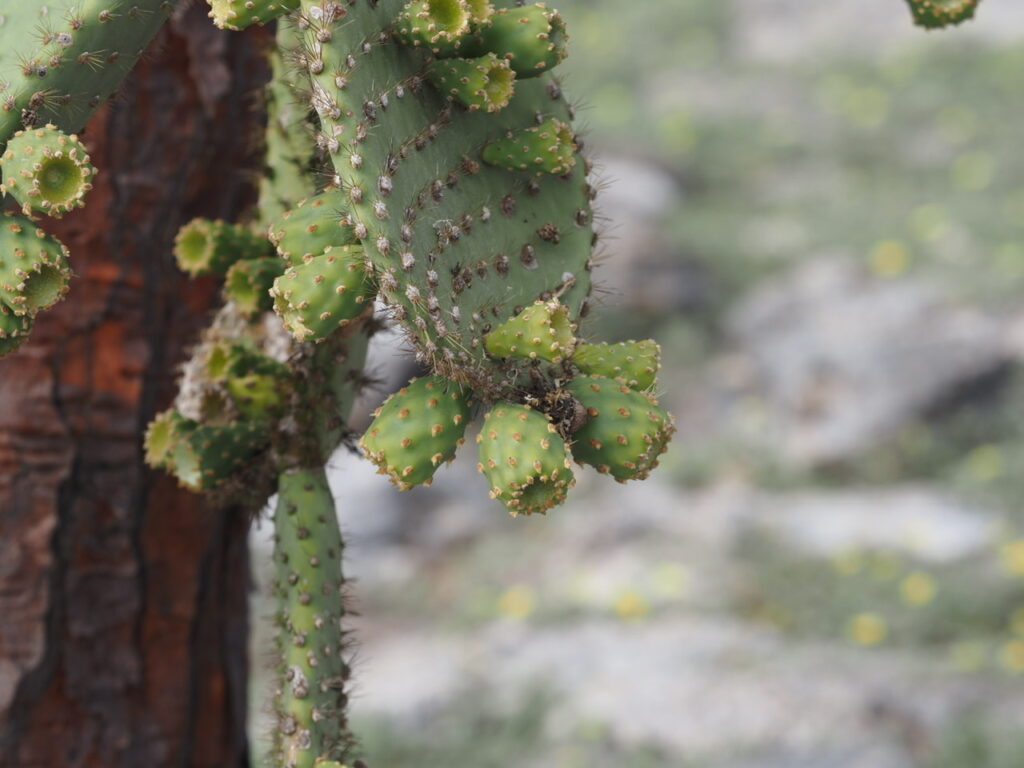
There are scrubby shrubs and giant cactus trees, some of which are probably at least 200 years old. The cactus only grow an inch a year.

Some are in flower and others bear fruit.

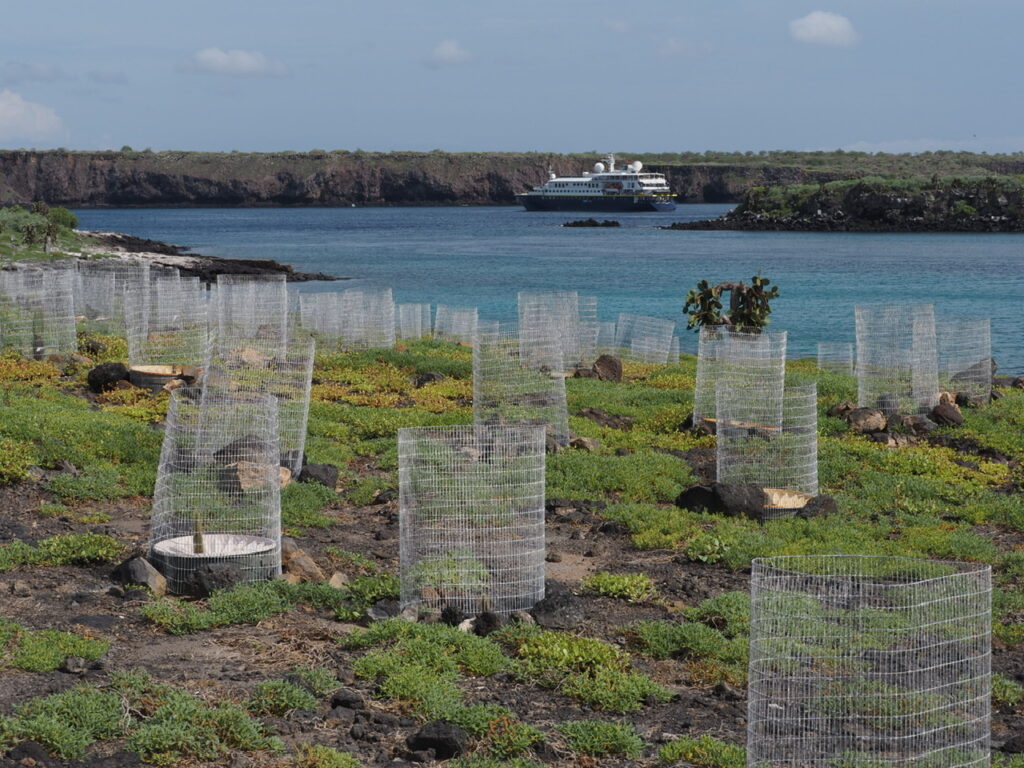
The island had rats which competed for food with the land iguanas. The rats ate the prickly pears and digested the seeds meaning that new cacti were not establishing themselves. A large area has now been re-planted and the cacti are protected by wire cages. The rats have also been eradicated too and the island is gradually recovering.

The views are magnificent but we are all starting to overheat and sweat trickles freely down my face, unable to evaporate and cool me. I drink copious amounts of water to try and stay hydrated. We walk over a lava flow that looks man made. It is white and shiny but just formed from a different substance form the original flow.

We see iguanas that are a cross between marine and land iguanas and only occur on this island. They like to eat the guava fruit and yellow flowers.

Bees abound and love the little yellow flowers…

… and crabs seem to enjoy the flora too.

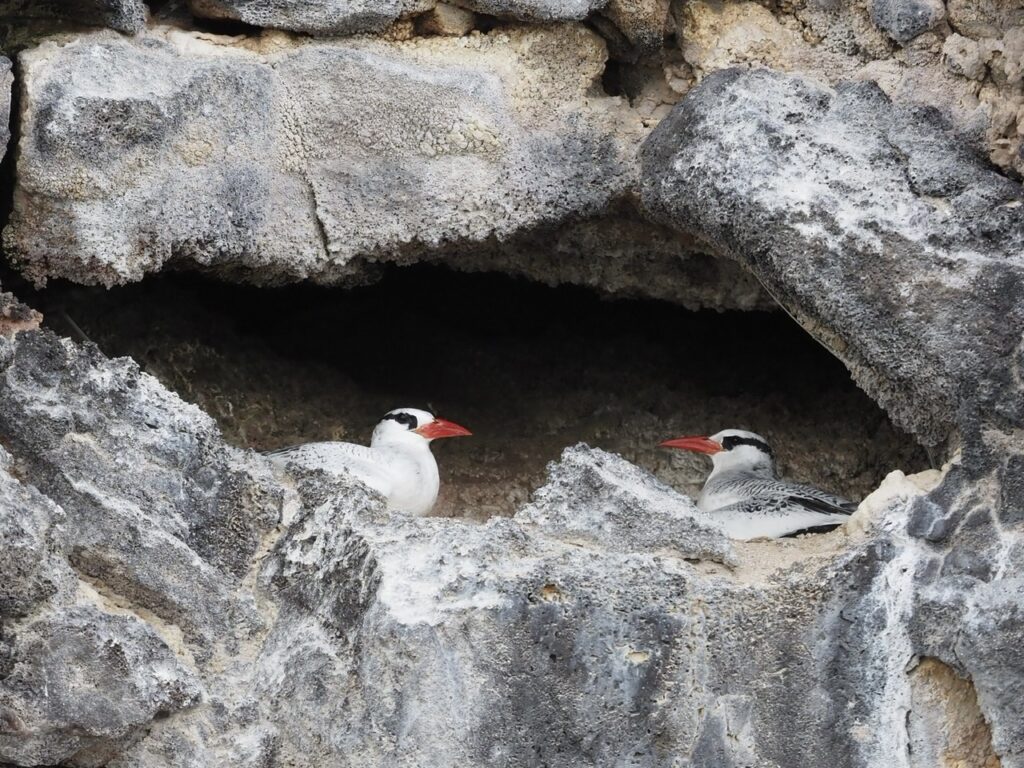
We reach the crest of the island and relief; a breeze. Luxury as we feel our bodies gradually start to cool. We stand on top of the cliffs, savouring the cooling air current and watch tropic birds circling below us, before flying into their nests on the cliffside.

We return to Solaris and while we sail to our next island, Fabian gives us a talk about the ocean currents and effects on the water temperature and marine life. It is interesting. The Galápagos Islands sit on the meeting point of several currents resulting in five distinct environments and a huge range in water temperature between areas and seasons. This explains the huge variety and richness of the ocean here.

He then shows us a video he has made over the last five years of all the marine life that he has seen. It is exceedingly good and I tell him he should put it on You Tube. He would receive a lot of views for sure.

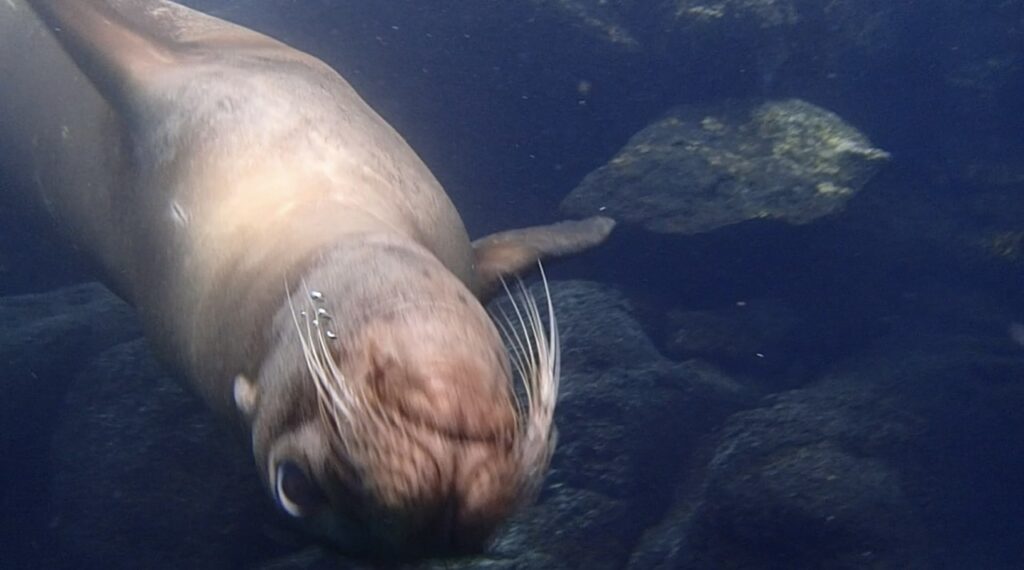
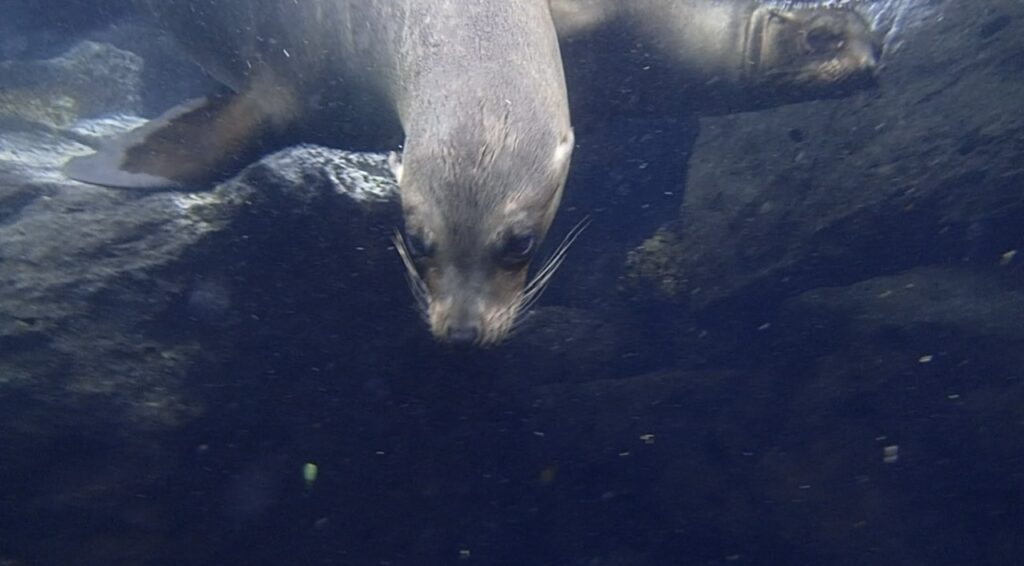
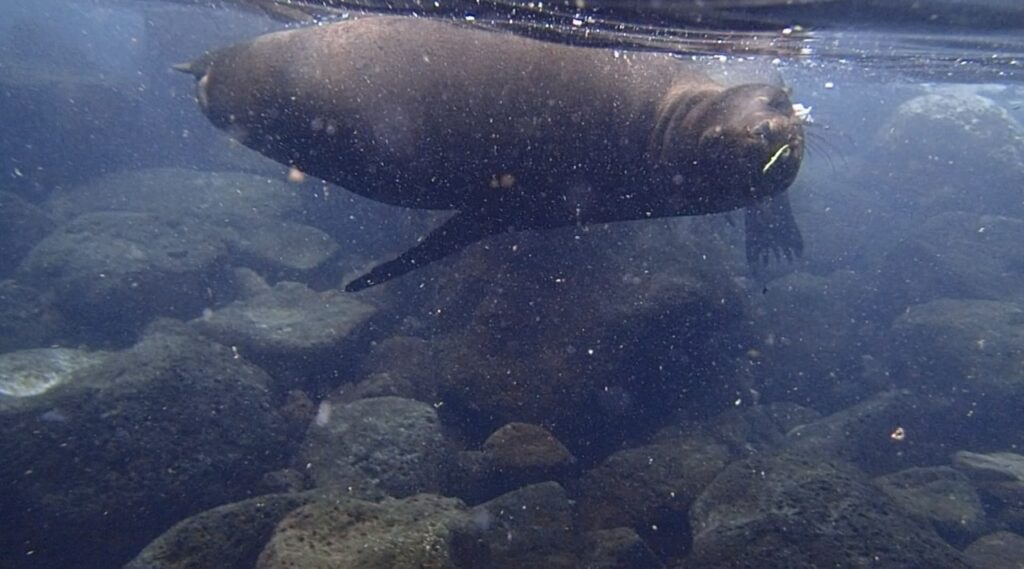
In the afternoon, we anchor at Santa Fe Island and snorkel. It is absolutely magical. Sea lions abound and seem to be everywhere around us. They play with sticks, pebbles, feathers and leaves. They turn somersaults and zoom between us. We stay with them for 20 minutes or so before continuing to the nearby reef. I have loads of video and have taken some stills from it – not the best quality but it gives a little taste of what we saw.

Fish are bountiful too and huge shoals swim below us. It does not seem possible that everyday we have a new encounter that tops the day before. For sure these islands are very special indeed and no two islands that we have visited have been the same.

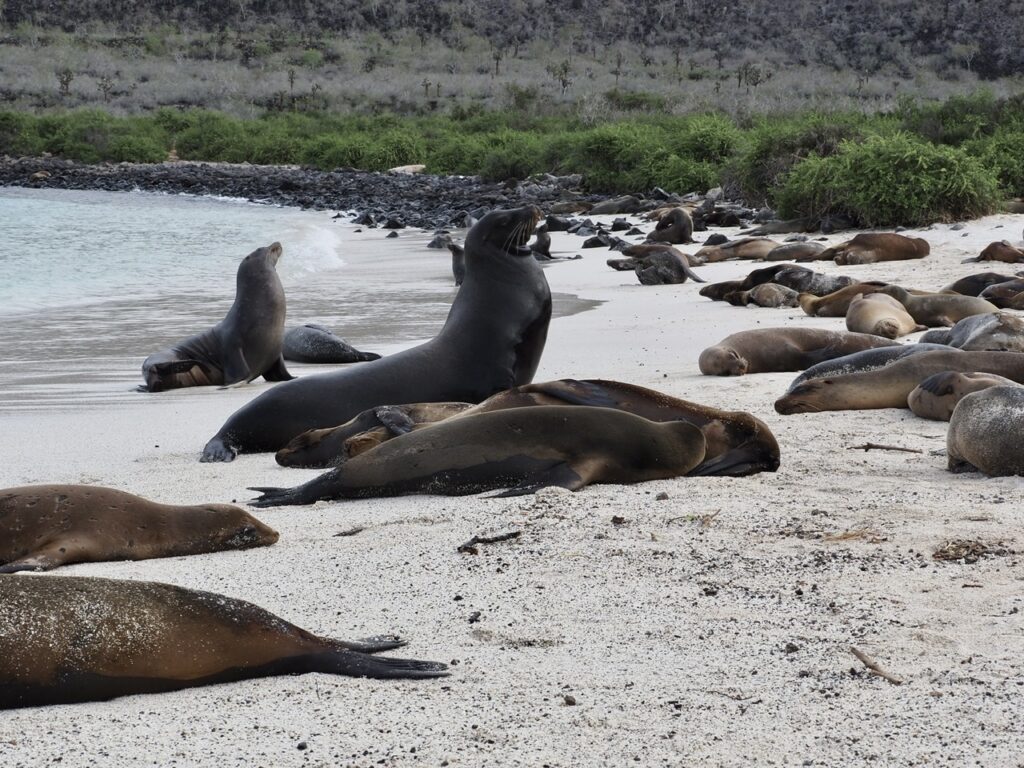
We have half an hour to dry off and change before making a wet landing on the beach. The beach is well populated with sea lions – the most we have seen in one place. It is actually quite difficult to exit the water and walk up the beach without treading on one. There are lots of pups suckling and large males guard their harems. Even the path from the beach is blocked by sleeping sea lions that honk noisily at us as we disturb their rest.

We don walking boots for the rocky trail across the island where we are hoping to find the Santa Fe land iguana and the Galapagos hawk. Although the sea lions are stealing the show somewhat, there are still birds present. Pelicans sit on the rocks and watch the sea lions warily.

Mockingbirds sing loudly in the bushes as we pass by and a blue-footed booby poses on the rocks.

We do manage to find some land iguanas but today the hawk eludes us.

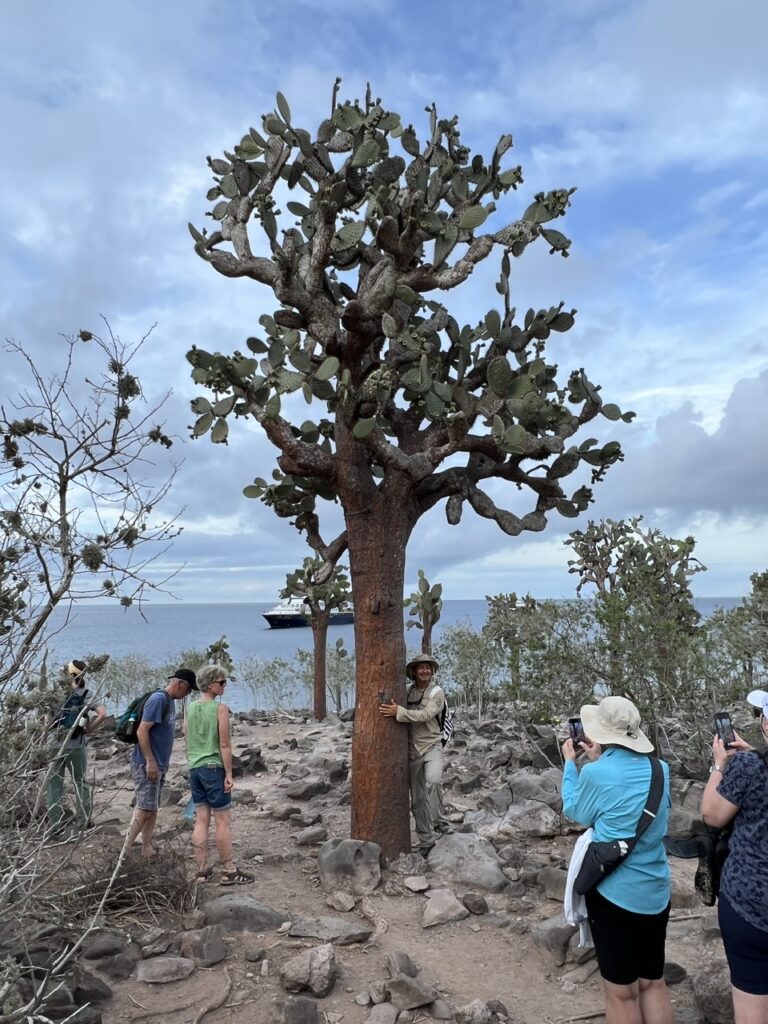
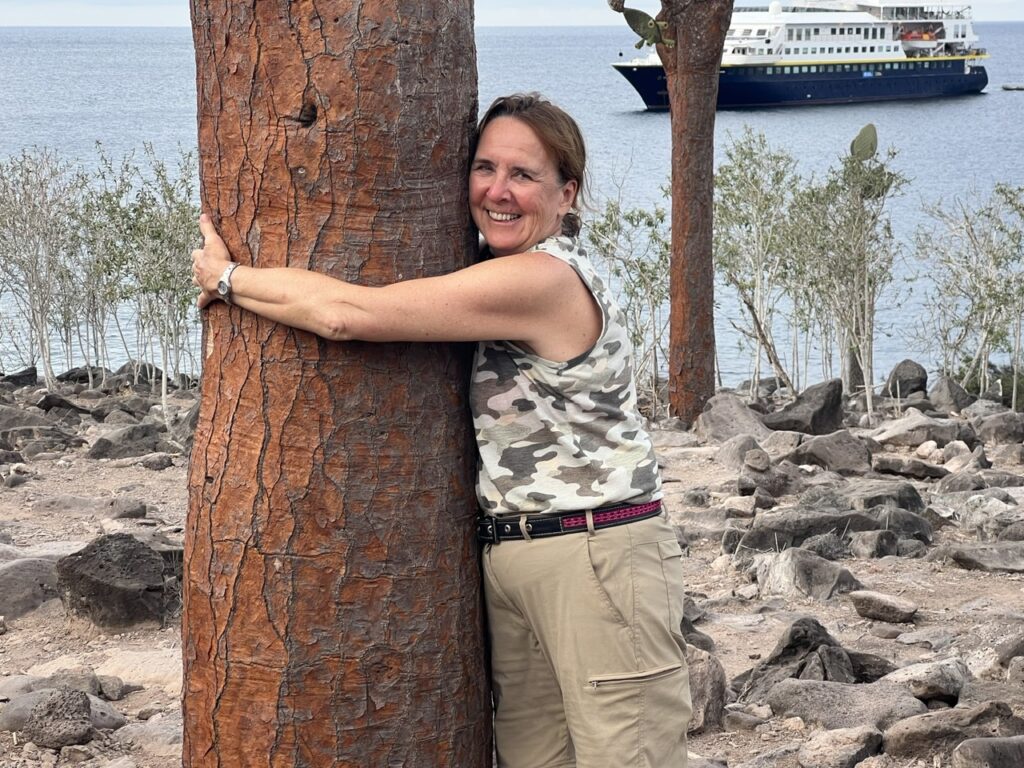
Before leaving Santa Fe, Fabian shows us one of the oldest cactus there – probably 300 years old. He suggests we all hug it and for some reason we do!

Tomorrow is the end of the North circuit so most of the guests will be departing. Just one couple will stay on board with us for the next leg. The passengers for this section have been very good company. Everyone has mixed well and I shall be sorry to say goodbye to them. We have all exchanged emails so I am sure there will be future contact.

Genovesa Island

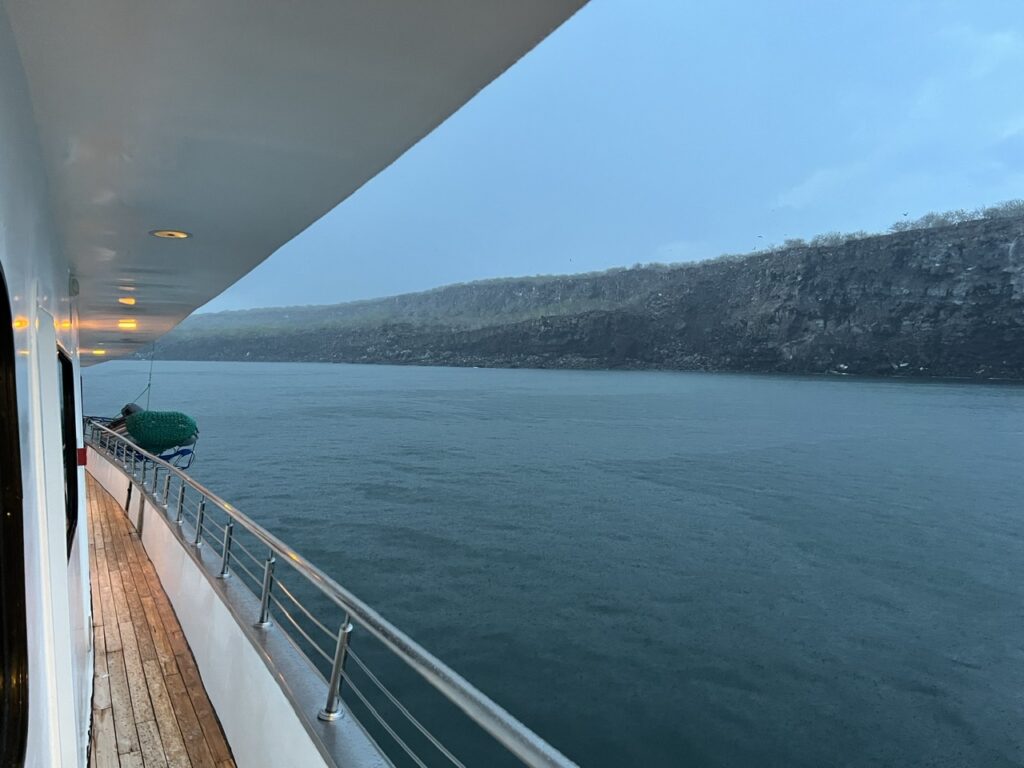
Genovesa is the oldest island here and is now gradually the sinking into the sea. The bay that we are in is about 2 km in diameter and is formed from the collapsing volcanic crater. The number of birds nesting on the cliffs and circling overhead is astonishing. This morning we have a wet landing on the beach. Although it is only 8 o’clock the sun is strong and the coral beach blindingly white. A sea lion lazes on the beach and is guarded by a large bull who patrols the shoreline. We are advised to keep an eye on him as he will be protective of his family.

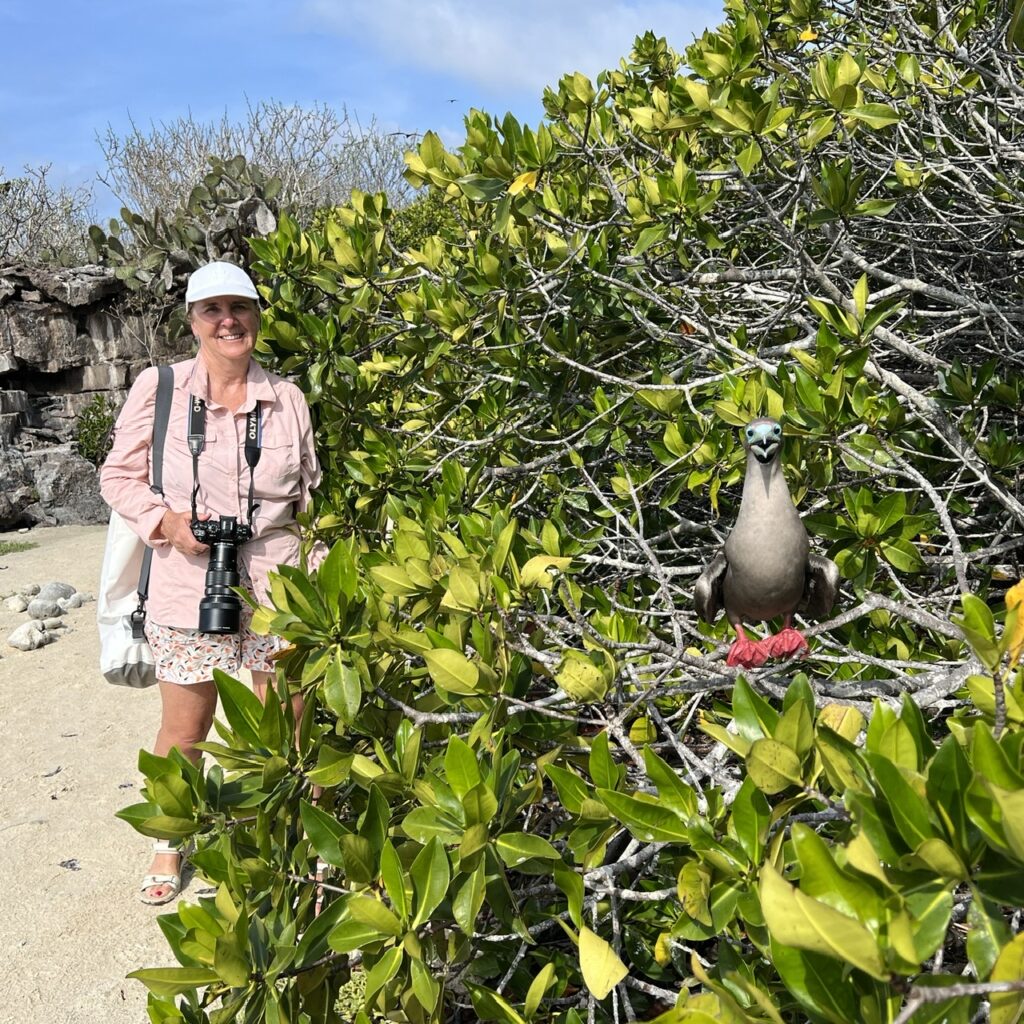
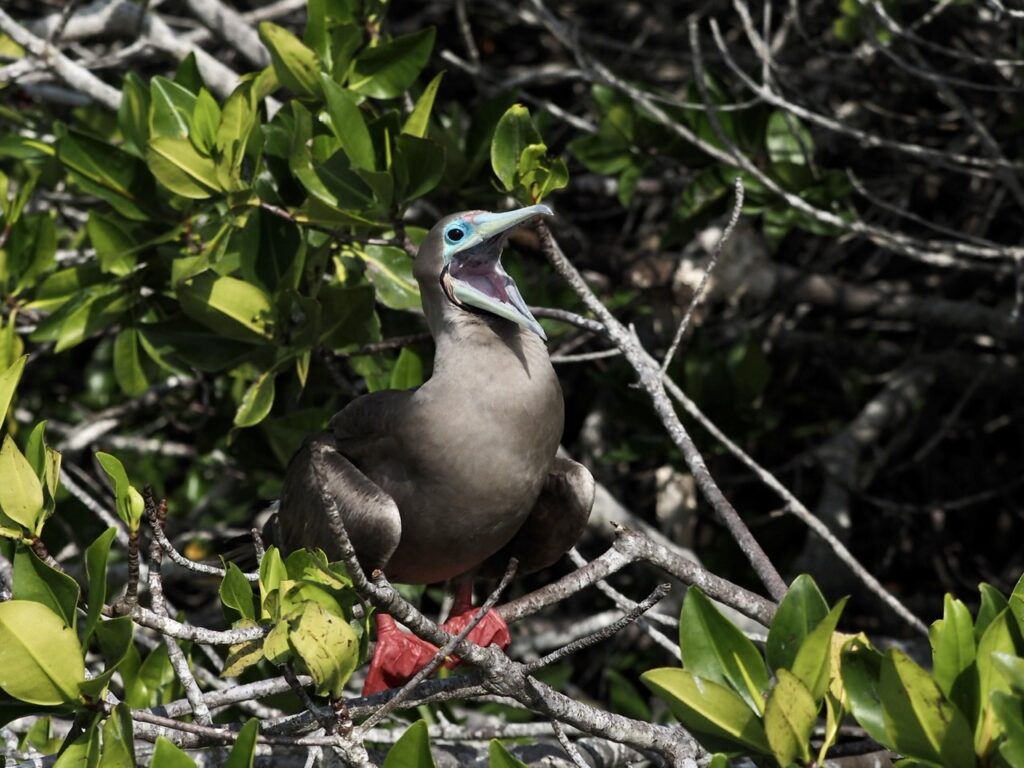
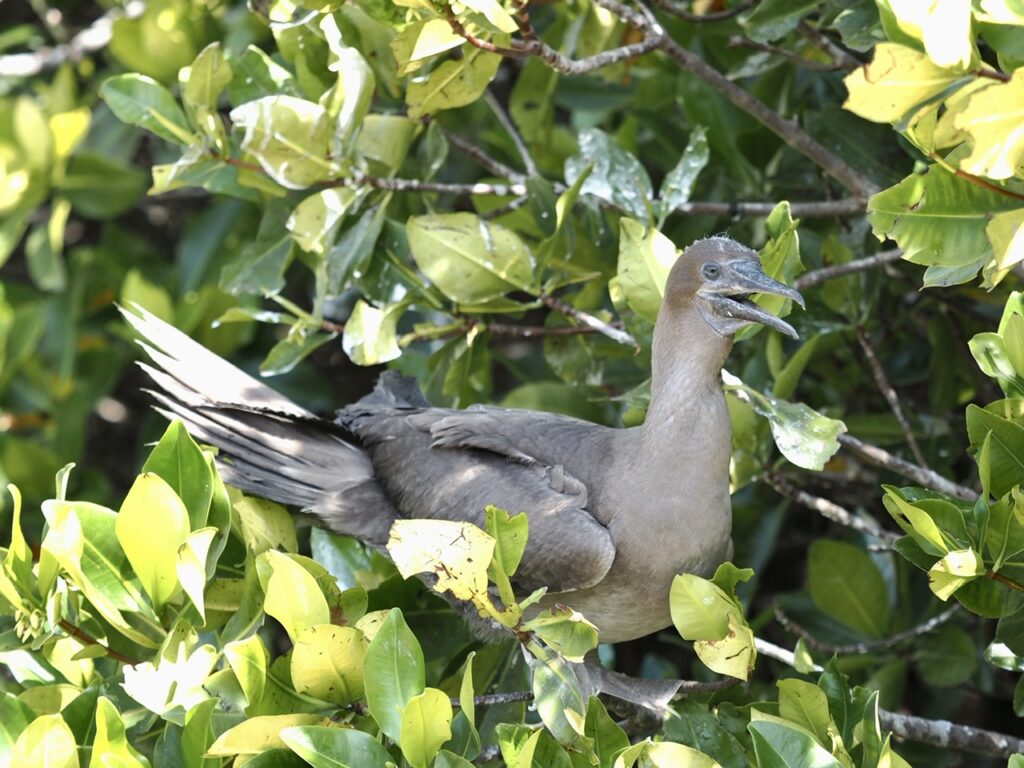
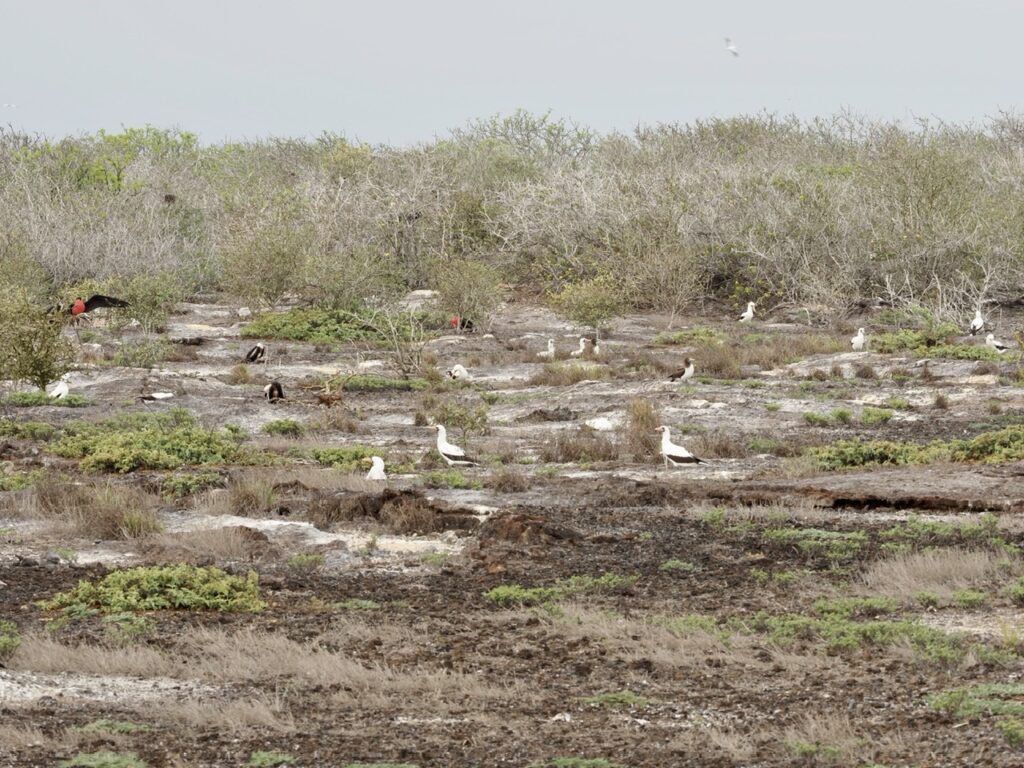
We walk up from the beach and there are thousands of nesting birds in the undergrowth and indeed on pretty much any vacant surface. I am treated to my first sight of a red-footed booby and they have now officially turned into my favourite Galapagos bird.

I presume that most people know about the Galapagos blue-footed booby but I had no idea about the red-footed one. The beak has the most beautiful coloration ranging from blue to turquoise to aquamarine to lemon pink and blue around the eyes. Just incredible.

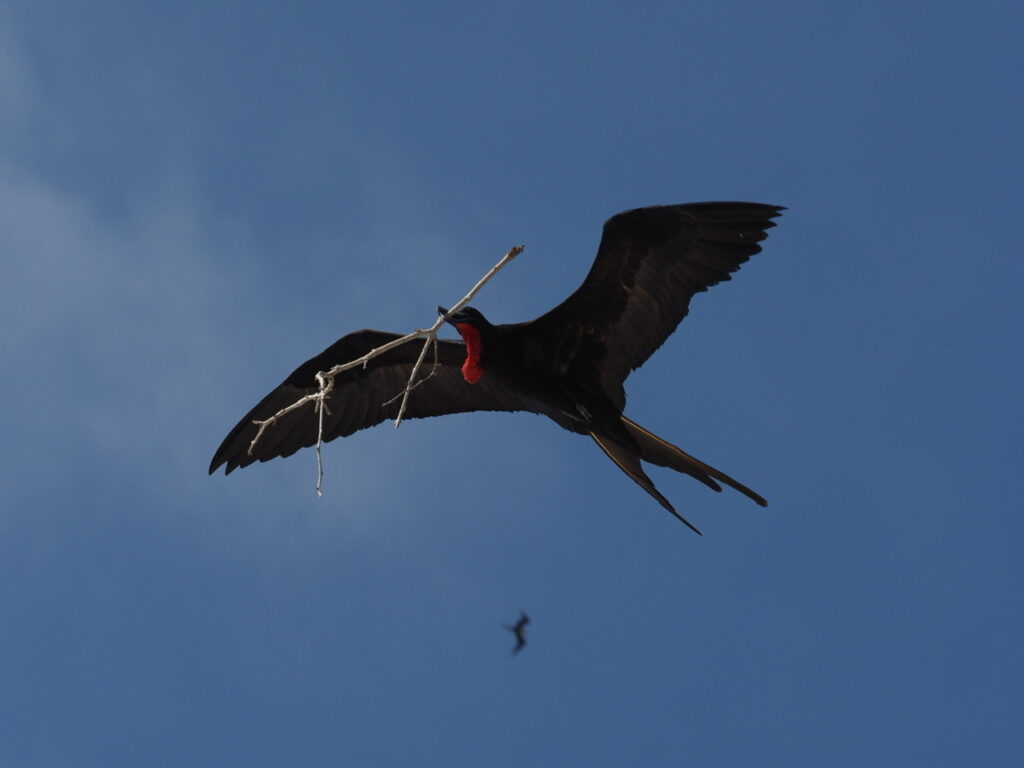
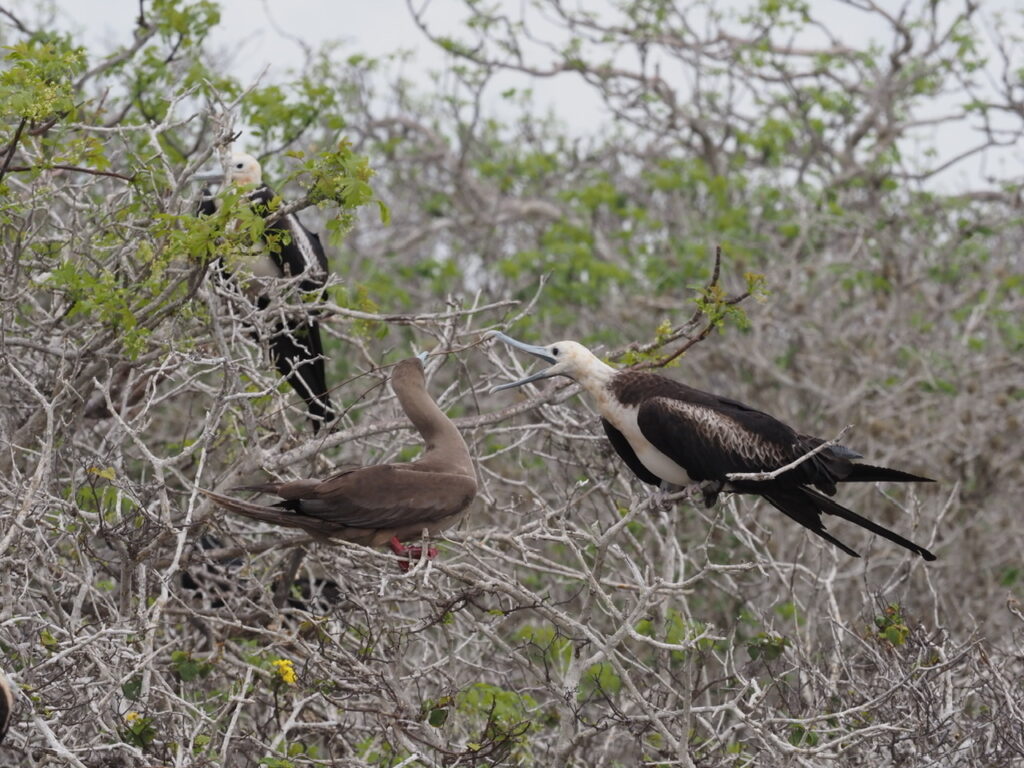
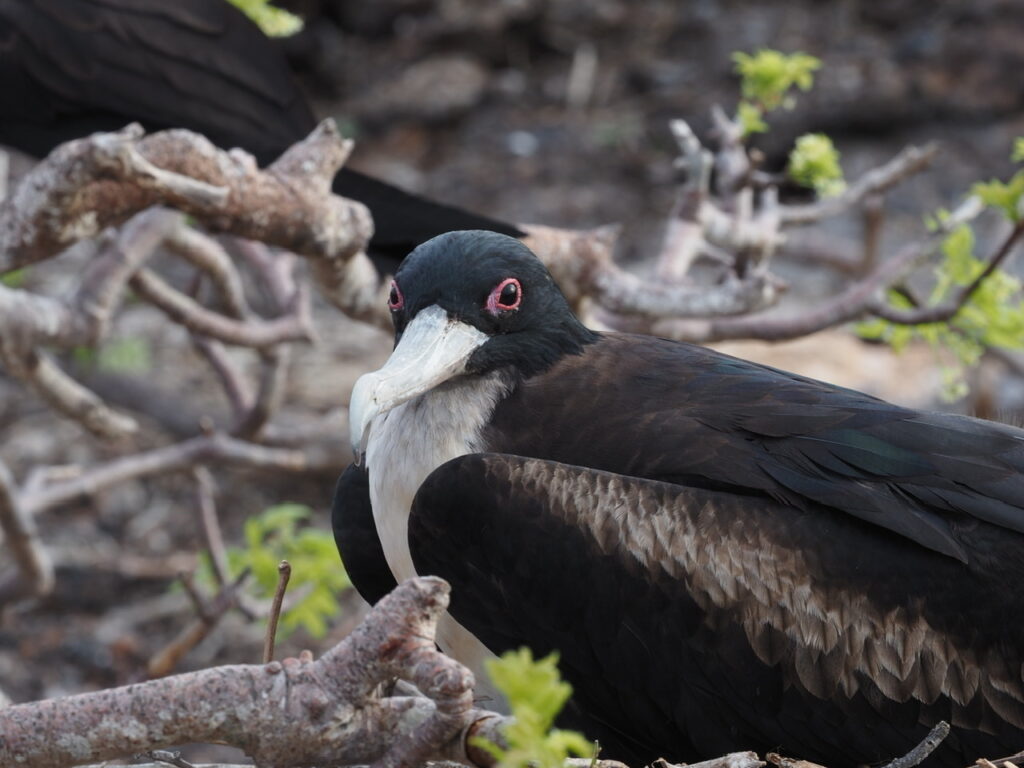
The skies are alive with frigates and boobies. The boobies are collecting nesting material and the frigates are determined to steal it. Noisy battles take place. I try hard to capture the action. It is nigh on impossible as they wheel close above our heads, with the exposure ever-changing, against a brilliant bright blue sky.

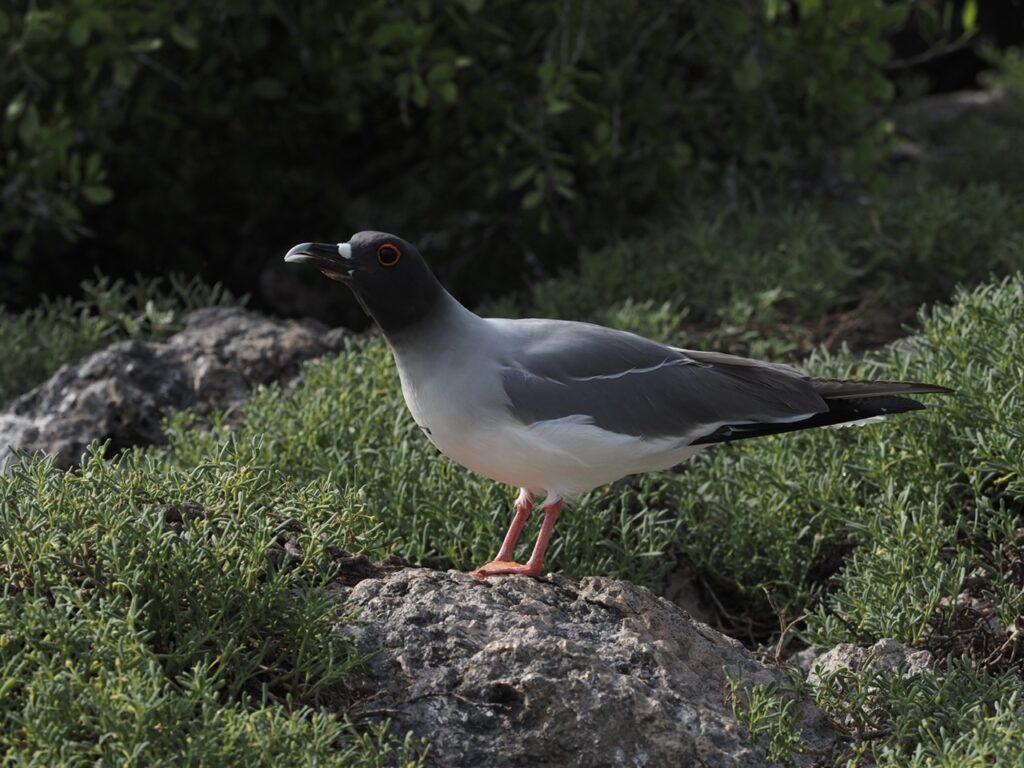
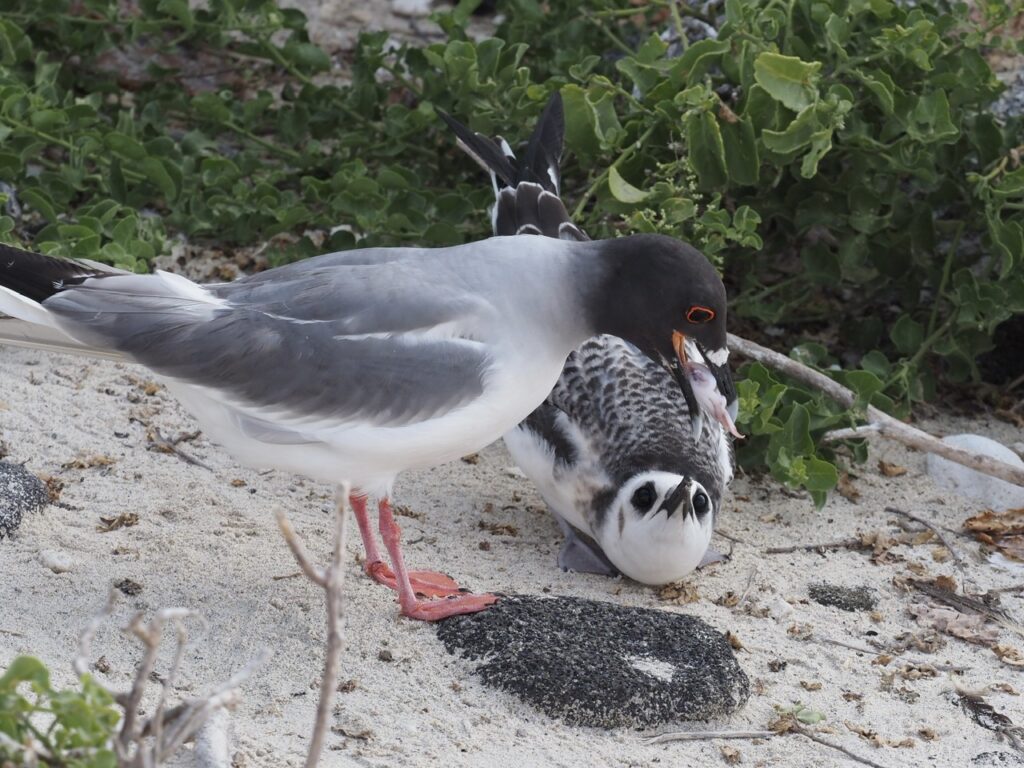
Whilst filming the squabble, a juvenile swallow-tailed gull catches my eye. It has just taken off, the light is perfect and I capture a sequence that I am exceedingly pleased with.

We continue along the path behind the beach. Wow! I mean wow! Proximity to the birds is unlike anything I have ever experienced before. I wish I could just sit here all day with a large bottle of water and photograph the amazing bird life. However, we only have an hour so that must suffice. A mother feeds her chick a small squid.

Frigates and boobies seem to be nesting in every shrub.

We are all very hot after our walk, so go for a dip in the sea. The large male sea lion is still protecting the shoreline. We make sure to enter the water as far away as possible, but every so often he swims towards us and we have to clap our hands and back away. Generally see lions in the water are fine but the big males can be aggressive around mating time.
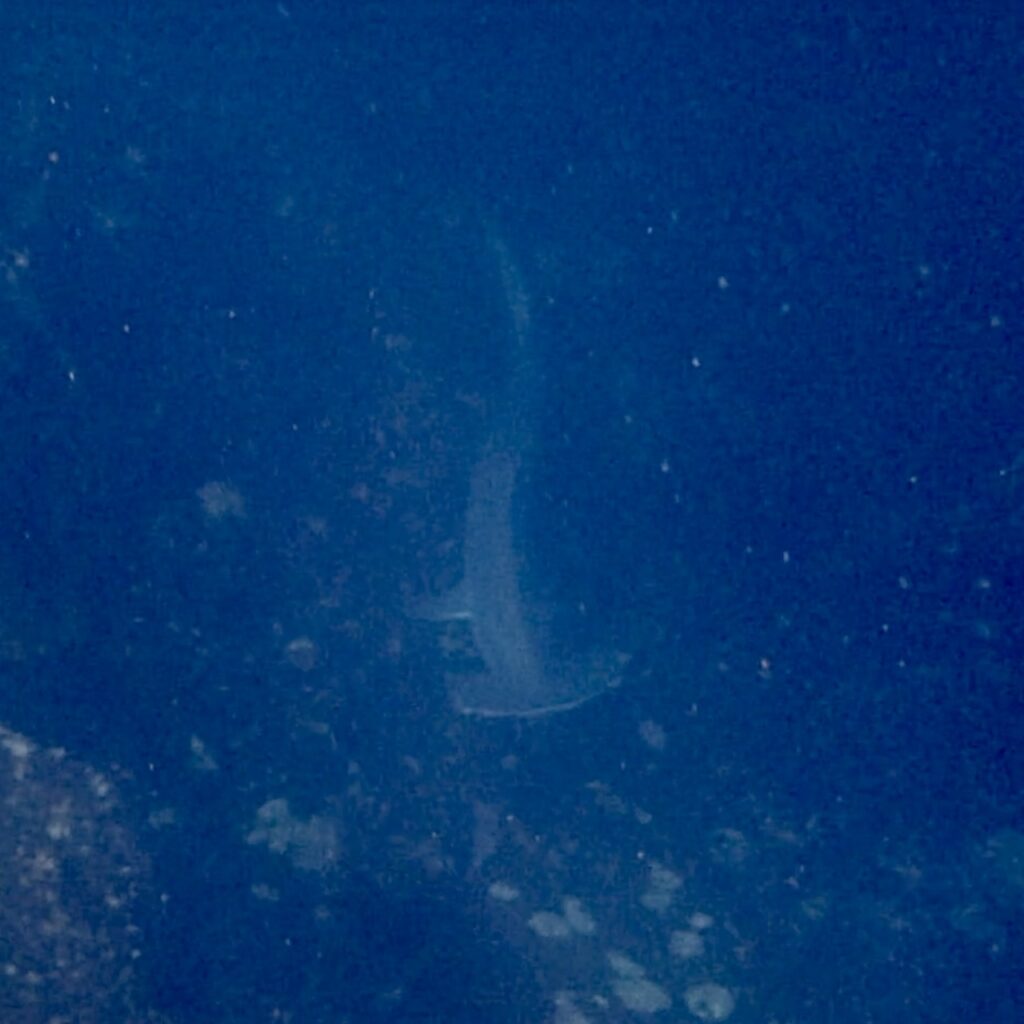
We return to Solaris for a quick change and to grab snorkelling equipment. Then, we deep water snorkel along the rocky coastline of the bay. Visibility is not the best and this is largely down to the vast amount of bird poop that the seabirds deposit in the water. Fabian, our new guide, is so much better than last week’s. He is informative without being contrary and lecturing, and even better, he snorkels with us and is excellent at spotting things that we may have missed. In the murky water we do manage to spot three turtles and then we are supremely lucky. Fabian finds us three hammerhead sharks. I mean hammerhead sharks snorkelling! Really? Oh my gosh! This is just mind blowing. I am lucky enough to see two of them and manage to capture a video of one, which is a scalloped hammerhead with a white frill on the front edge of the hammer.

In the afternoon some of the guests kayak along the coastline. I opt for a zodiac ride so that I can take photographs. We see some fur sea lions which are distinctly different from the sea lions we have seen so far. They have very thick fur, really cute with bear-like faces and big round eyes. Initially they were thought to be seals but, following genetic testing, it has been shown that they are a new species of sea lion.

Tropic birds nest in any available hollow….

Nazca boobies and iguanas occupy most other flat surfaces.

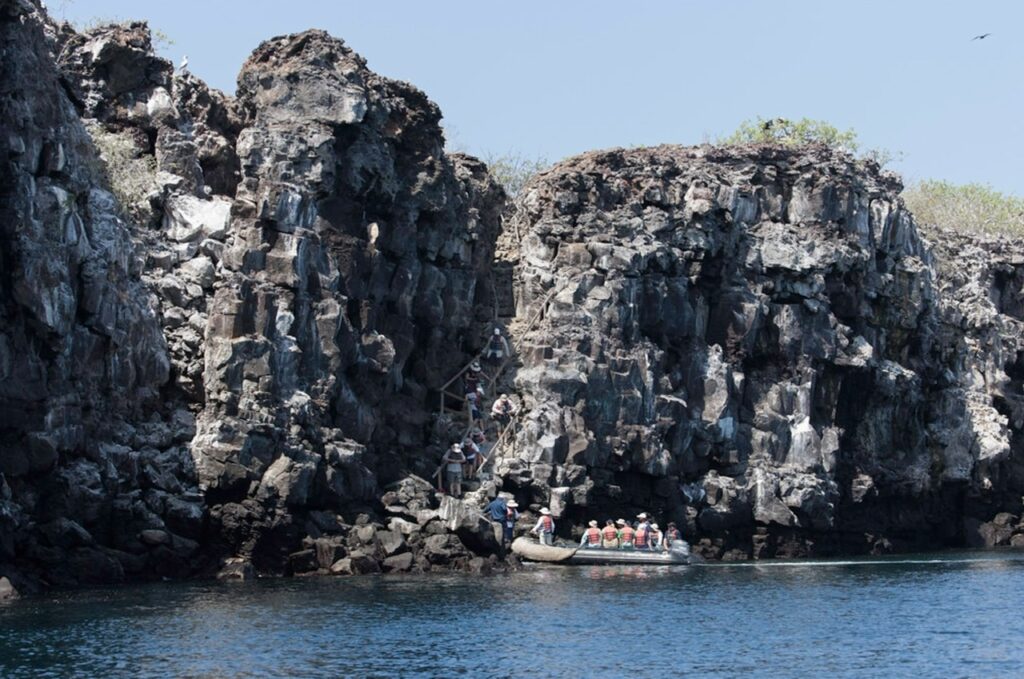
The final activity for the day is to go ashore via dry landing, walk up the steep Prince Philip steps and circumnavigate the top of the island.

The smell of ammonia is noticeable but apparently not nearly as bad as it will be in 4 to 6 weeks time. The birds are just beginning to nest and there are already newly hatched juveniles. Nazca boobies perform their courtship dance and make high whistling calls.

We are feet from the red-footed boobies, frigates, skewers and yet they totally ignore this. A mockingbird sings his beautiful song as it hops along the ground inches away at times.

The terrain is uneven and rocky but easily transversible with scrubby trees giving way to barren flat lava fields as we near the sea.

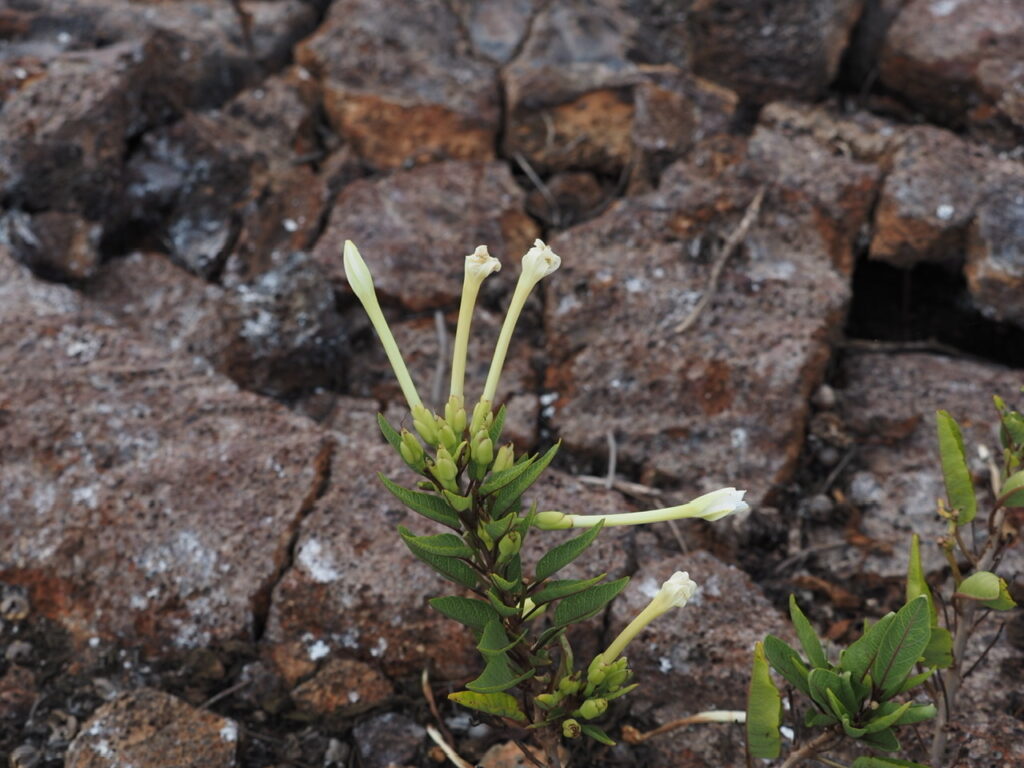
Genovesa Island is pristine. It has had no non-endemic species introduced. No goats, rats or non-endemic flora. It is very much as it has always been. This is totally down to its very remote location. Occasionally we spot flowers, but they are not common place and lichens grow on the low trees.

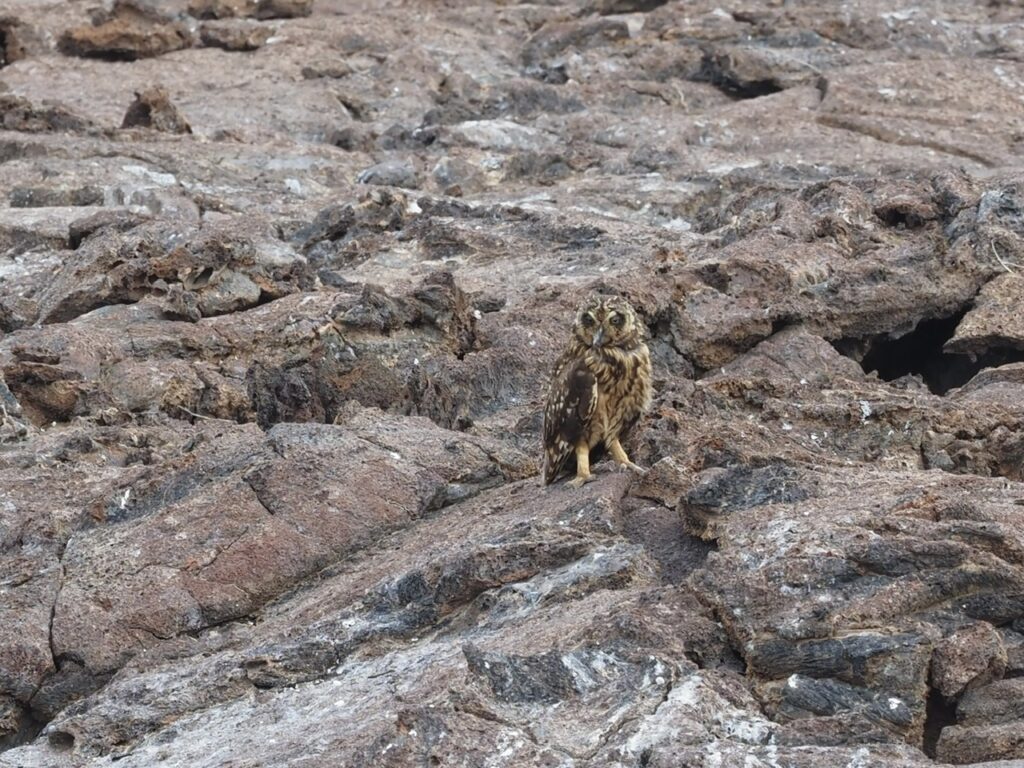
Today we are lucky for we also manage to see a Galapagos short-eared owl. It is a long way off, barely visible to the naked eye.

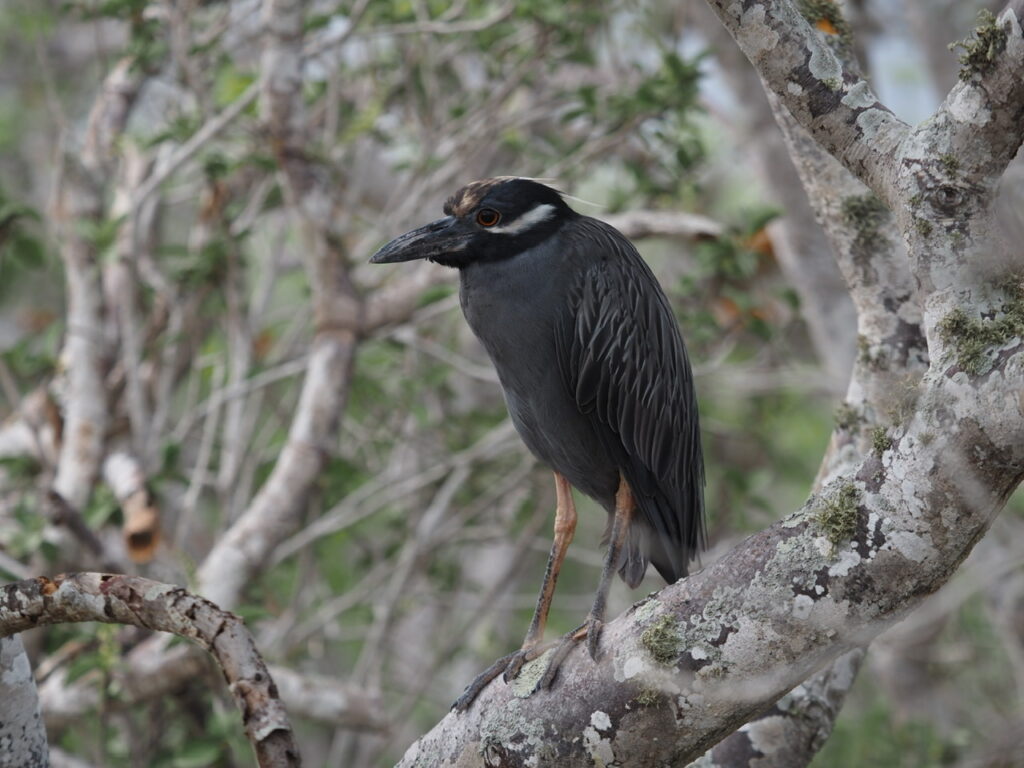
As we make our way back we see a golden-crested night heron sitting by the path and completely unfazed by our presence.

The humidity is high and clouds are forming over the island. As we make our way back to the panga it starts to rain. Fortunately it saves the very heavy stuff for when we have returned to Solaris, but it is still sufficient to drench us. We know, as the sea has now completely flattened and looks like glass, that there is more to come and indeed there is.

Dinner is really good – large garlic tiger prawns and apple pie.

North Seymour and Mosquera

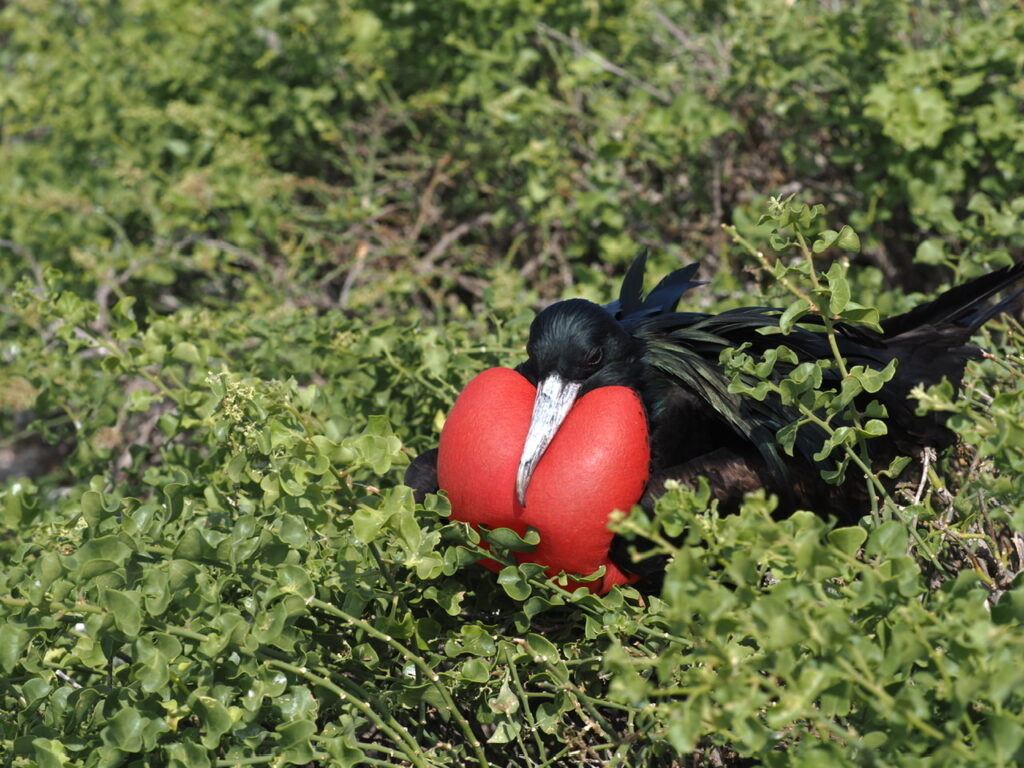
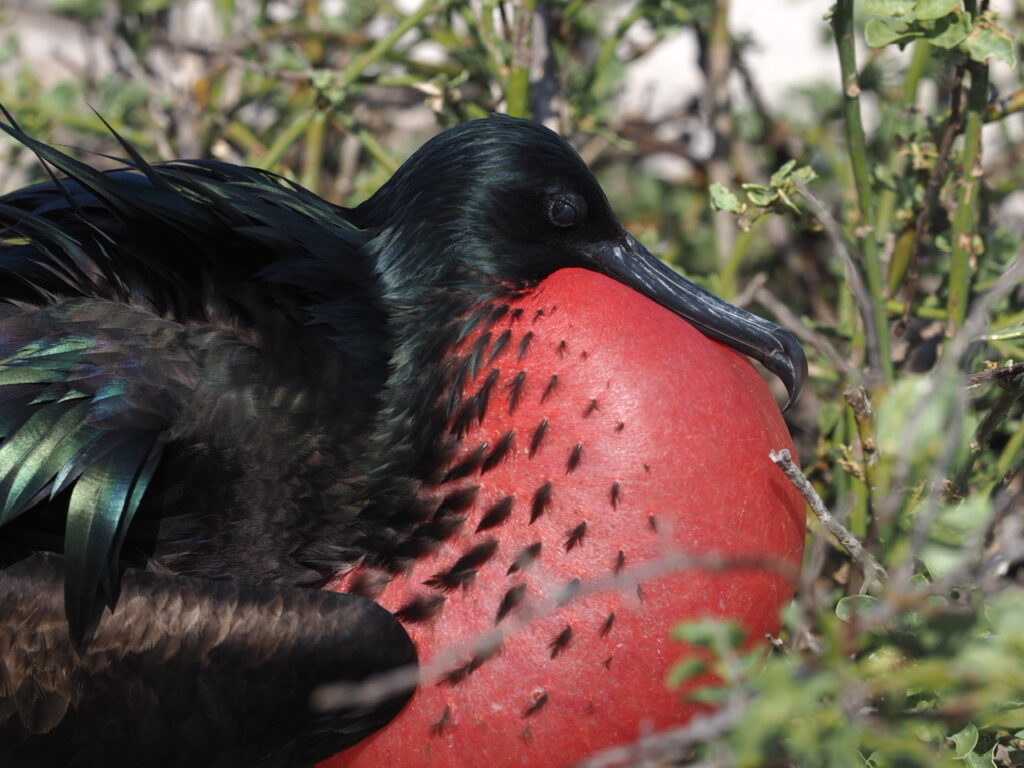
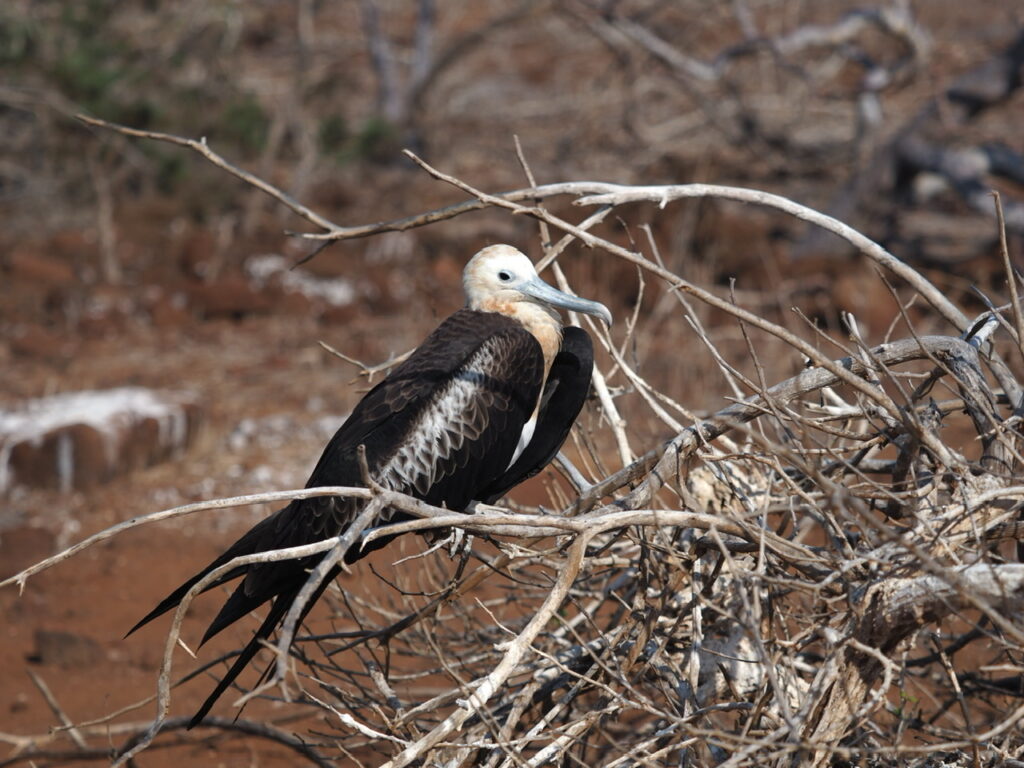
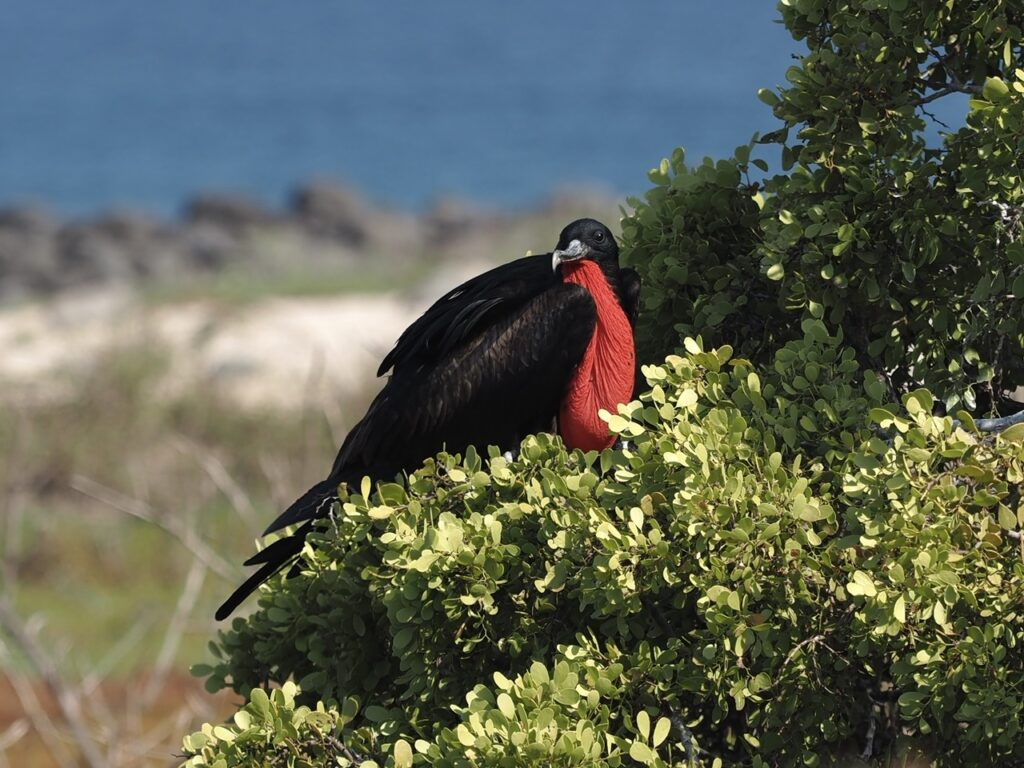
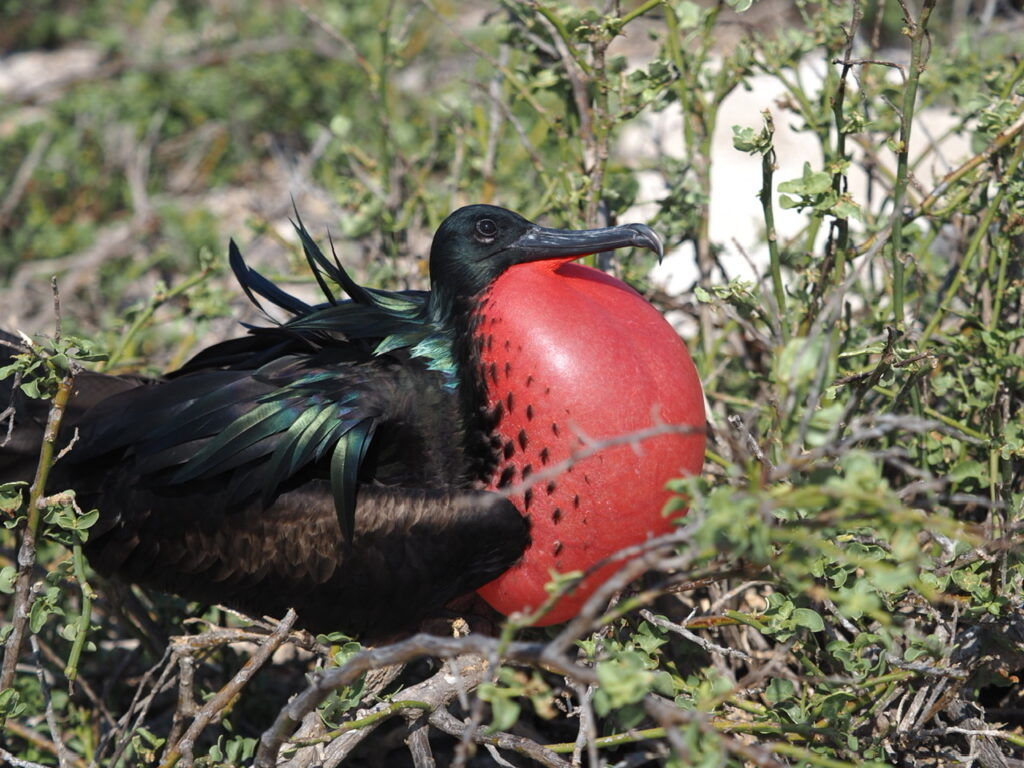
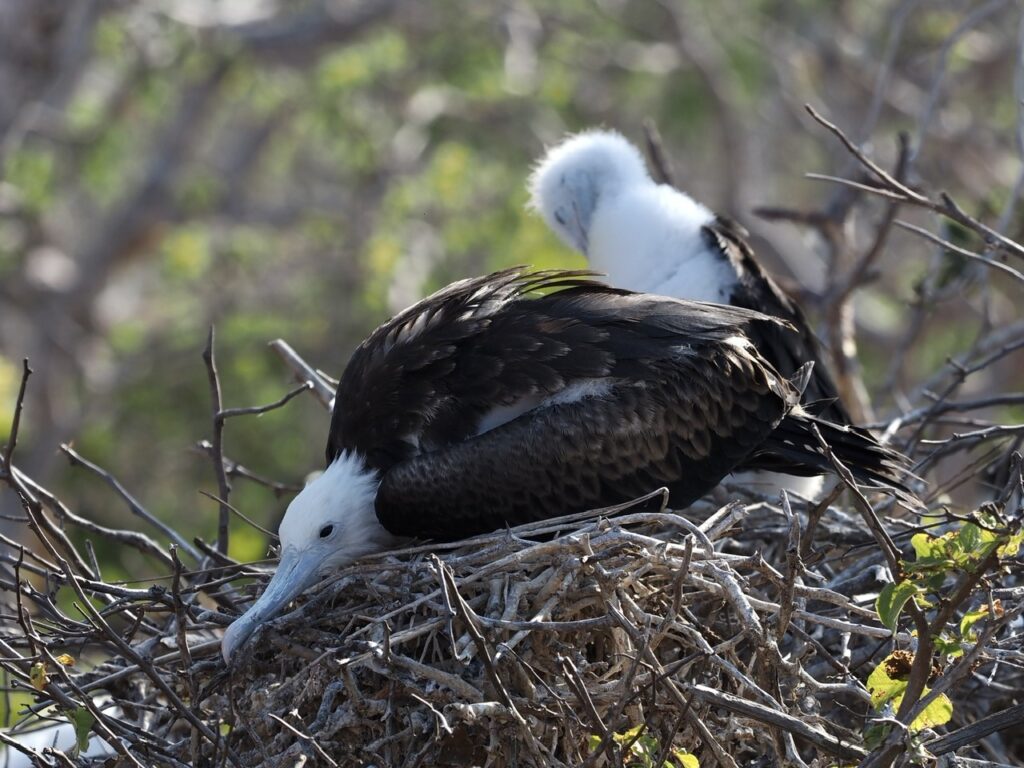
Today we make a dry landing on North Seymour Island. The landing is onto rocks and we have been advised to wear sturdy shoes with toes. The bird life here is quite astonishing. Frigates soar in the sky and glide on the hot air currents. This is breeding season and the males have large red skin flaps beneath their beaks which they inflate like giant red balloons and make distinctive calls. Females sit on nests, some on eggs and some with demanding fledglings.

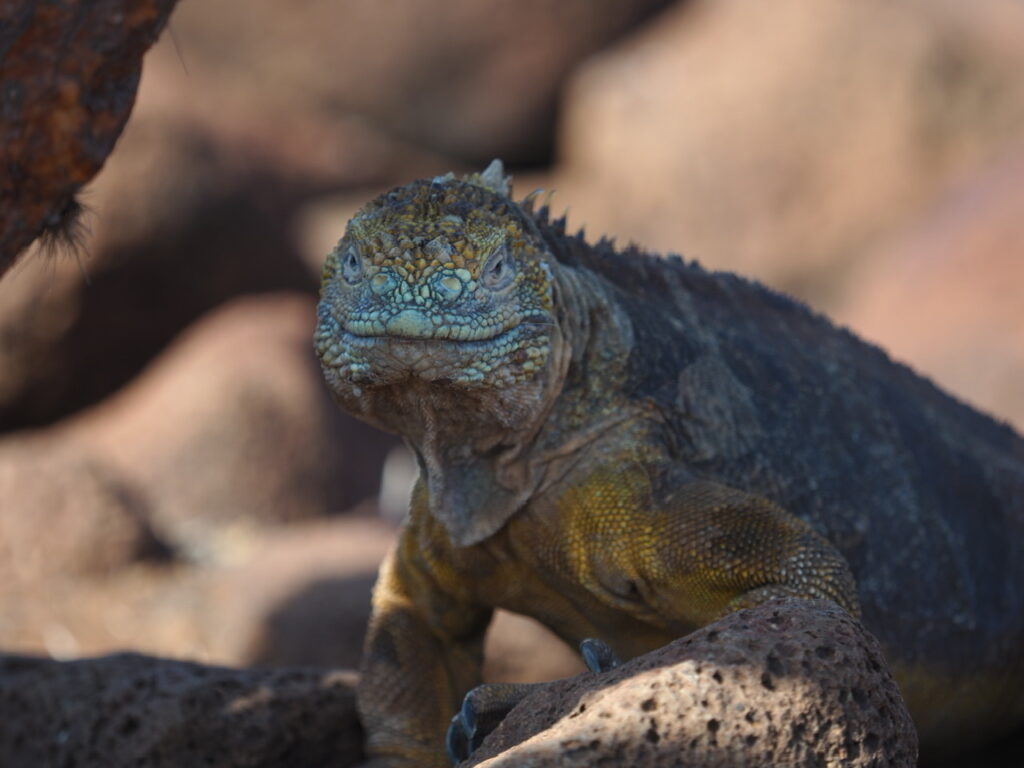
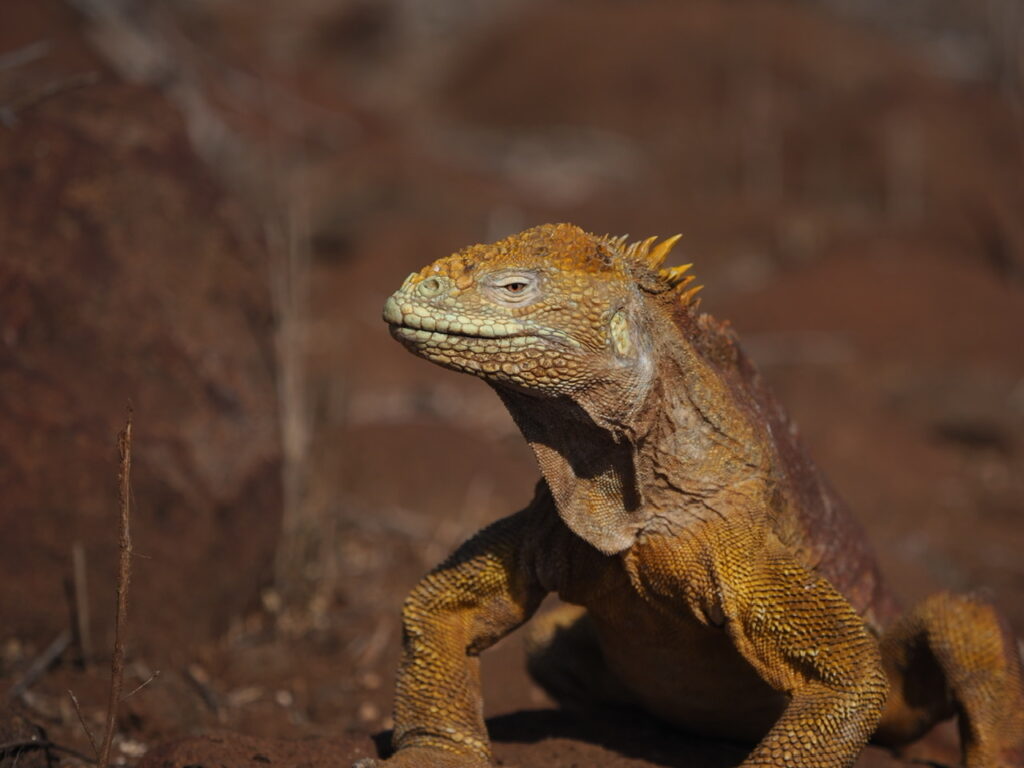
On the ground land iguanas abound…..

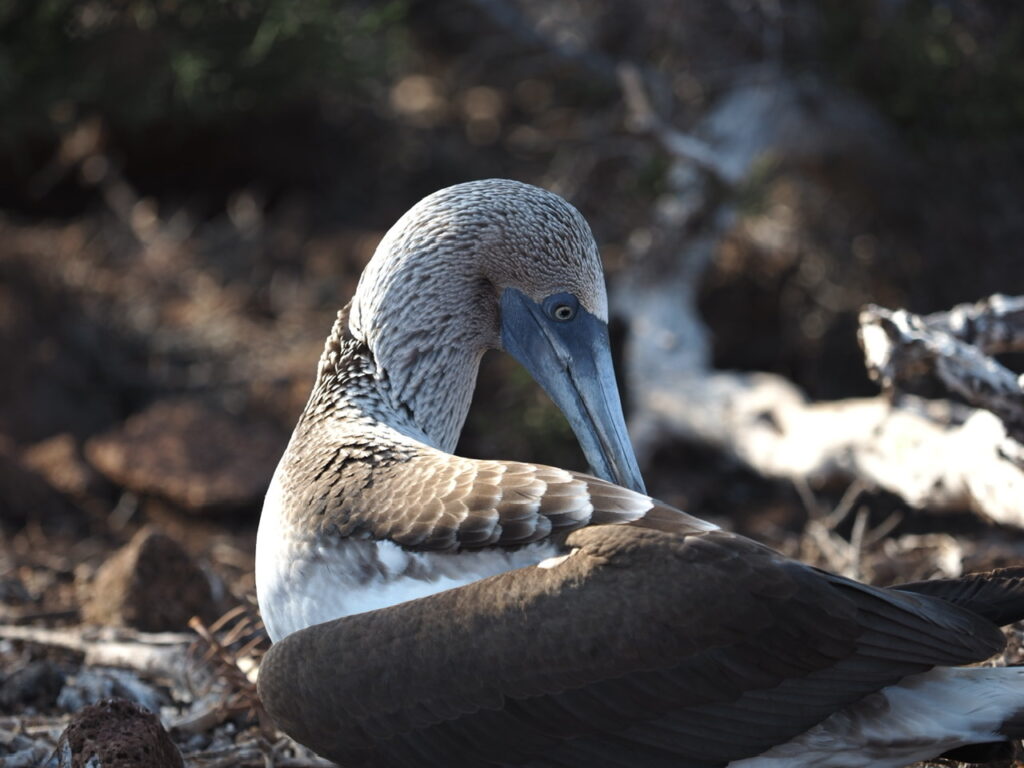
….as do blue-footed boobies. It is mating season for them too. They entertain us with their slow, alternate foot lifting and beak clicking. They are comical birds particularly when they look at you full-faced.

We slowly walk around the island on the designated paths. We need to create as little impact as possible. Both frigates and boobies have nests and we see eggs being incubated and fledglings still in the nest.

We then have a deep water snorkel along the same coastline. There are loads of white-tip reef sharks. I count fifteen during the 45 minute swim. There are also large shoals of fish but not as many as at other sites. I see a large puffer-fish, a large grouper and a pelican dives for fish a couple of yards from me. It surprised me somewhat.

The anchor is lifted and we moor by Baltra airport. A fuel ship docks beside us and we re-fuel. Unsurprisingly, it takes a while. I imagine a boat this size uses quite a bit with it’s three big engines. We are also introduced to a new crew member, Fernando. Yesterday’s issues are now explained. The cabin girl is no longer here, Kerli who served meals and ran the bar has been demoted to cabin girl and Fernando is running the bar and table service. He can make a cocktail, buzzes around with huge energy and makes the previous staff look pretty lazy. I am surmising, but I think the cabin girl quit and he is a manager acting in an emergency stand in role.

We then make the short passage to Mosquera Island. It is tiny and from the sea appears to just be a white sand spit. Not dissimilar to Sandy Spit in the BVIs, slightly larger perhaps and lacking the palm tree in the middle. As we approach the island we see a small hammerhead shark, which is pretty cool, and causes quite a bit of excitement.

I think this trip was undersold. We thought we were just having a walk on the beach and a brief swim. It was so much more. What we didn’t realise is that the sand is powder soft and so your feet sink into it.

The sea is crystal clear and aquamarine. Sea lions abound as do their cute and fluffy pups. They could not care less about people and you have to be really careful not to tread on them.

We have the entire afternoon free to walk, photograph or swim. I do all three and also spend time flat on my stomach trying to get eye to eye sea lion shots. It is a real luxury to be able to have some quality time to take photographs.

At the end of the afternoon there are splashes on the horizon. Modular rays are breaching. The pod must be huge as they seem to be jumping along most of the horizon. Eventually some leap closer to shore and I capture them on video. Nigh on impossible to take a still as you cannot predict where they will next launch themselves into the air. The shot below is taken from the video.

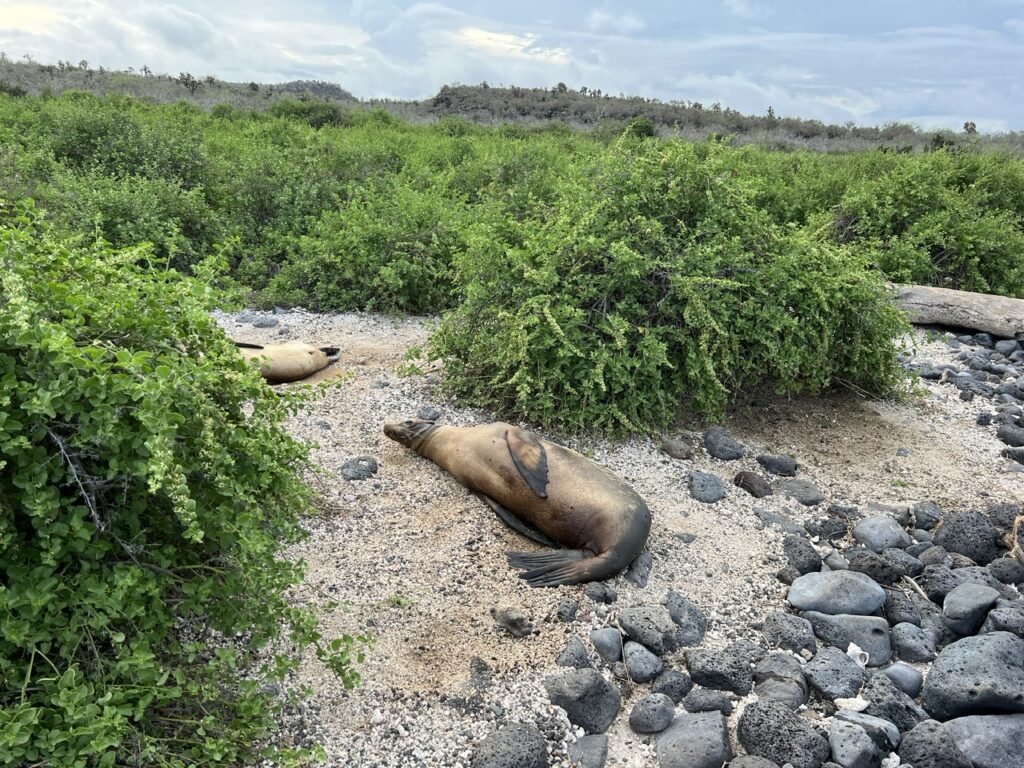
At the same time I am watching sea lions luxuriating in the warm sand.

Another amazing day in paradise.

Oh and there are huge shoals of fish around the boat after dinner and three large Galapagos sharks on night patrol.

Page 10 of 34

Powered by WordPress & Theme by Anders Norén